special
Diesel crisis, fuel price hike deepen harvesting woes for haor farmers
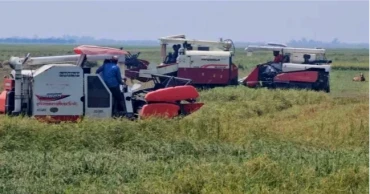
A diesel shortage coupled with the recent hike in fuel prices has sharply increased the cost of harvesting Boro paddy in the haor regions of northeastern Bangladesh, leaving farmers struggling to bring in their crops on time and facing mounting financial losses.
Although the harvesting season has already begun across Sylhet division, many farmers say they are unable to cut their paddy in time due to a lack of fuel and soaring machine rental costs, raising fears of crop damage from untimely rain or early flooding.
According to the Department of Agricultural Extension (DAE), a total of 2,23,511 hectares of land across 137 small and large haors in 12 upazilas of Sunamganj district were brought under Boro cultivation this year, with a production target of 14 lakh metric tons.
With farmers increasingly dependent on combine harvesters to quickly harvest crops in the flood-prone haor areas, rental charges for the machines have risen steeply.
Farmers said where harvesting one acre of land cost Tk 4,500 to Tk 5,000 last year, it has now increased to Tk 7,500-Tk 12,000, with some areas seeing even higher rates.
According to the DAE, a total of 1,473 combine harvesters are currently active across the four districts of Sylhet division, but authorities say the number remains insufficient compared to the demand.
Selim Reza Chowdhury, a farmer of Rajapur union in Dharmapasha upazila of the district, said though the yield is good this year, farmers are facing the greatest difficulty during harvesting.
“Even after offering up to Tk 12,000 per acre, we often cannot get a harvester. Costs are increasing every day and there is always the fear of rain or early flooding damaging the crops,” he said.
Besides, rice prices have not increased proportionately despite rising input costs, including fertiliser, seeds, irrigation and harvesting, pushing many farmers towards financial losses and debt.
Abdul Karim, another farmer said they are being forced to wait for available machines, with many farmers booking harvesters in groups due to the shortage.
Harvester owner Moinul Islam from Balijuri area of Tahirpur upazila said the situation is equally challenging for operators.
“Machines cannot run without diesel, but we are not getting sufficient fuel from dealers even after obtaining permits from agriculture offices. As a result, we are buying diesel from the open market at higher prices,” he said, adding that maintenance costs have also increased.
Jahangir Alam, a harvester operator, said it has become difficult to meet demand despite working day and night due to fuel shortages.
Deputy Director of the Sunamganj DAE Mohammad Omar Faruk said there is no actual fuel shortage in the district, but distribution complexities under a controlled system have created some disruptions.
Fuel is being supplied based on certification and administrative coordination is ongoing to stabilise the situation, he added.
3 months ago

Relentless load-shedding disrupts life, business in Jhenaidah
A deepening power crisis – linked to global fuel shortages triggered by the Middle East conflict – combined with sweltering heat has thrown life in Jhenaidah into disarray, with nearly 21 lakh residents of the district enduring prolonged load-shedding and mounting hardship.
A sharp mismatch between demand and supply is driving the crisis.
According to officials, the combined demand of Jhenaidah Palli Bidyut and West Zone Power Distribution Company Ltd (WZPDCL) stands at around 129 megawatts, but they are receiving only about 77 megawatts, resulting in a daily deficit of 52 megawatts.
Jhenaidah Palli Bidyut Samity Assistant General Manager (Engineering) Nazmun Nahar Jarin said the organisation currently serves 445,264 consumers, including 399,126 residential users, alongside commercial, irrigation, industrial and institutional connections.
She said against a demand of 75 megawatts, the rural power utility received 42 megawatts on Thursday, forcing authorities to carry out rotational load-shedding across feeders several times a day.
Consumers said prolonged outages are making life unbearable amid intense heat. “People in rural areas are falling sick due to long hours without electricity,” said a consumer, Ihsanul Islam.
He said they have to endure load-shedding stretching up to at least seven hours, calling for a fair distribution system instead of extended outages in specific areas.
Zahura Khatun of Bonkira village in Sadar upazila said electricity goes out every hour during the night, while during the day it remains highly erratic, coming and going unpredictably. Farmer Azmul Huda Biswas echoed the same concern.
Meanwhile, Executive Engineer of WZPDCL in Jhenaidah Din Mohammad Mohim said the company has around 155,555 consumers across six upazilas, with peak demand ranging between 54 and 60 megawatts, while supply remains limited to about 39 megawatts.
On Thursday, it received 46 megawatts, leading to a shortfall of at least 8 megawatts.
Mohim added that nearly 90,000 consumers in the district town are also facing similar shortages, leaving both urban and rural areas without electricity for hours.
President of the Jhenaidah Chamber of Commerce Moazzem Hossain said the power crisis is severely affecting small and large industries, causing significant financial losses.
A former principal of a college, Sayedul Islam, said the ongoing outages are increasing public suffering, particularly affecting children, the elderly and students whose studies are being disrupted.
Power officials, requesting anonymity, said they are compelled to impose load-shedding due to reduced supply from the national grid and could not say when the situation might improve.
3 months ago
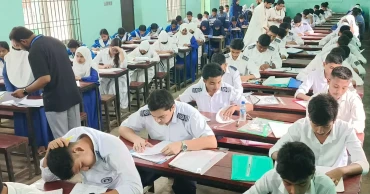
Classroom thinning: SSC candidates fall over 36% in Feni in 4 years
The aftershocks of the COVID-19 pandemic continue to ripple through Feni’s education sector, with the number of Secondary School Certificate (SSC) and equivalent examinees plunging by nearly 13,500 in just four years – a drop of 36.3 percent that has alarmed stakeholders.
According to education office data, 37,085 students took part in the examinations in 2022, but the number has declined since then, falling to 23,609 in 2026.
Officials attributed the downward trend largely to the pandemic period, when examinations were suspended and educational institutions remained closed for a prolonged period.
They said many students dropped out during that time and later got involved in child labour or other work. Although schools reopened, no effective initiative was taken to bring the dropouts back to classrooms, they added.
Data analysis shows that in 2023, the number of examinees dropped sharply to 24,600 from 37,085 the previous year. In 2024, the number was 24,555.
Although the number increased to 29,609 in 2025, it drastically fell to 23,609 in 2026.
The decline is creating concern among stakeholders over the overall state of education in the district.
Alamgir Hossain, General Secretary of the District Teachers’ Association, said many parents turned towards Qawmi madrasahs after the pandemic, while education authorities did not take adequate steps to bring students back to mainstream schools.
District education officers said a total of 23,609 students are participating in this year’s SSC, Dakhil and vocational examinations across 36 centres in Feni.
Of them, 14,943 students are sitting for SSC examination at 21 centres, 5,977 for Dakhil examinations at nine centres, and 1,169 for vocational examinations at six centres.
District Education Officer Mohammad Shafiullah said the decline is partly due to a trend of families sending students abroad or engaging them in work before completing SSC, especially in a migration-prone district like Feni.
He added that many students from the 2020 cohort were in primary school during the pandemic and later dropped out after schools reopened.
Feni Deputy Commissioner Monira Haque said prolonged school closures during the COVID-19 pandemic led to significant dropout rates, the effects of which are still visible.
She also cited economic and social factors, parental preference for Qawmi and Nurani madrasah education, and migration tendencies as reasons behind the declining number of examinees.
The DC said the administration will review the situation to determine whether the overall education rate is also declining, and take necessary steps accordingly.
3 months ago

Power crisis deepens in Mymensingh; up to 8-hour outages hit rural areas
Acute power outages have gripped Mymensingh region at the very start of Baishakh as electricity supply continues to fall short of rising demand, causing widespread suffering for residents, businesses, and key economic sectors.
Frequent load-shedding is being reported across the district with rural and remote areas bearing the brunt more than district and upazila headquarters.
The ongoing crisis is severely affecting fisheries and poultry farms- two of the region’s major economic drivers — while also disrupting the ongoing Secondary School Certificate (SSC) examinations.
With electricity unavailable for hours, people are struggling with intense heat and mosquito infestation, making daily life increasingly difficult.
Business owners have expressed frustration, saying they are already forced to close shops by around 7:00pm and recurring outages of two to three hours throughout the day are adding to their losses.
Masudur Haque, executive engineer of the Mymensingh Grid, said electricity demand in greater Mymensingh zone — comprising Mymensingh, Jamalpur, Sherpur, Netrokona, Kishoreganj, and Tangail — rises to 1,200–1,300 megawatts during peak evening hours amid extreme heat.
However, supply remains between 700 and 900 megawatts.
On Monday, power supply stood at 840MW at 10:00am, he said.
In Mymensingh district alone, peak demand reaches around 400MW in the evening while average demand stands at about 250MW.
Sources said power generation at the Mymensingh Rural Power Company has dropped drastically due to gas shortages.
Against a target of 210MW, production has fallen below 50MW.
Besides ,Jamalpur United Power Development plant, which has a generation capacity of 315MW, is currently producing only 66–67MW due to fuel constraints.
Subrata Roy, executive engineer of the Mymensingh South Power Distribution Division, said demand in the zone ranges from 450–460MW during off-peak afternoon hours to 500–520MW during peak periods, with other times seeing demand between 430 and 450MW.
However, a daily shortfall of around 50–55MW persists, necessitating load-shedding, he said.
Officials of various Palli Bidyut Samities said the situation is particularly severe in their respective service areas.
Md Golam Mostafa, general manager of Mymensingh Palli Bidyut Samity-3, said demand in their area stands at 70–80MW, with 20–25MW of load-shedding required during peak hours.
Md Janab Ali, general manager of Samity-1, said their areas require 160–170MW but receive only 80–100MW, forcing them to impose 30–40 percent load-shedding.
Abdul Majid, deputy general manager (technical) of Samity-2, said demand in their areas exceeds 300MW, with outages affecting 30–50 percent of supply during both peak and off-peak hours.
Visits to different upazilas including Ishwarganj, Gauripur, Tarakanda, Fulpur, Dhobaura, Fulbaria, and Muktagacha in Mymensingh revealed that residents are experiencing power cuts lasting between three and eight hours daily.
In more remote villages, outages can stretch up to seven or eight hours.
SSC candidates are among the worst affected.
Ashrafunnahar Rayda from Bogar Bazar in Trishal, and Naeem and Jobayer from Trishal municipality, said they face power cuts of five to seven hours daily, severely hampering their studies.
The heat and mosquitoes make it almost unbearable to concentrate,they said.
Farmers are also facing mounting losses.
Fish farmer Roman Mia from Chikna Monohor village in Trishal said continuous irrigation is crucial during Baishakh, but outages are disrupting water supply, affecting fish growth — especially for those producing fry.
In Fulbaria’s Rangamatia area, poultry farmer Ayub Ali said many chickens are dying due to heat. “We are spraying water on tin roofs, while some farmers are using generators or IPS systems to run fans,” he said.
Power division sources said hourly load-shedding data and demand reports are being regularly sent to regional offices.
However, unless generation and supply increase significantly, the situation may worsen further with rising temperatures, they said.
3 months ago
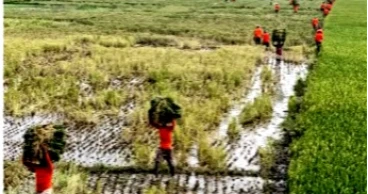
Broken haor roads drain profits as Sunamganj farmers struggle to move Boro paddy
Farmers in the haor areas of Sunamganj district are facing severe difficulties in transporting harvested Boro paddy as dilapidated, earthen roads turn movement into a costly and time-consuming ordeal.
During the peak harvesting season, farmers are struggling to carry ripe paddy from deep haor fields to drying yards, often navigating broken and muddy earthen paths.
In many areas, vehicles remain stuck for hours, while accidents are also being reported, increasing transportation costs and reducing farmers’ profits.
According to the Department of Agricultural Extension (DAE), a total of 2,23,511 hectares of land across 137 small and large haors in 12 upazilas of the district had been brought under Boro cultivation this year, with production target of 12,33,517 metric tons of paddy.
Although the government spends crores of money to protect crops, farmers have expressed frustration over the lack of initiatives to repair or construct proper roads for paddy transportation.
Farmers said repeated appeals over the years to repair and pave haor roads have gone unheeded.
Even light rainfall makes the roads almost impassable for tractors, auto-rickshaws, pickup vans and other vehicles.
“Transporting paddy from deep haor areas requires proper paved roads. Due to the lack of roads, we have to spend Tk 30-40 per sack for transportation by trolleys. If the roads had been better, the cost would have been much lower,” said Jamal Mia, a farmer of Shani Haor.
Farmer Faruk Mia of Matiyan Haor said the rising transportation cost has wiped out expected profits. “We are struggling to recover costs amid harvesting cost, labour shortages and poor road conditions,” he added.
Locals said the muddy and risky roads often lead to accidents involving farmers and labourers. In many cases, paddy has to be unloaded before stuck vehicles can be freed.
Tahirpur Sadar Union Parishad Chairman Junab Ali said some temporary repairs have been carried out under TR-KABITA projects, but a permanent solution requires construction of paved roads.
Tahirpur Upazila Agriculture Officer Md Shariful Islam said this year’s paddy production is good, but farmers are facing increased costs due to the lack of durable roads. “Paved roads would significantly ease transportation,” he said.
Haor residents have urged authorities to give equal priority to building durable roads for paddy transport, similar to crop protection embankments, to ensure fair profits for farmers in future seasons.
3 months ago

Chinese media balance state policy, public demand: Wu Ting
Wu Ting, an editorial board member and publisher of the Shanghai-based media outlet The Paper, has highlighted the delicate balance Chinese media maintain between adhering to state policy and addressing public demand, while emphasising the role of think tanks and diversified sourcing in shaping their coverage of international affairs, including issues related to Bangladesh.
During a discussion with a visiting Bangladeshi media delegation in Shanghai, Wu Ting on Monday explained that when the government makes decisions that experts or the public might find questionable, there are multiple channels for feedback beyond direct media criticism.
China’s economy grows 5% in Q1, shows resilience despite Iran war impact
He noted that think tanks play a significant role by holding discussions and producing papers that offer different perspectives to policymakers.
While acknowledging that media organizations in China must respect the law and Communist Party rules, Wu Ting emphasized that they also strive to meet the demands of a diverse audience, particularly intellectuals.
He described their editorial process as an effort to raise critical issues while remaining responsible and constructive. He added that they must navigate carefully to avoid the pitfalls of “spicy” misinformation that attracts traffic but lacks accuracy.
Addressing differences between the political systems of Bangladesh and China, Wu Ting explained that while they operate within a one-party system, there is sufficient room to explore diverse voices on global issues such as climate change and geopolitics.
He cited climate change coverage as an example, noting that reporters often focus on non-governmental actors to provide a broader perspective beyond official policy.
When questioned about how The Paper collects information on Bangladesh, Wu Ting highlighted a multi-layered approach to sourcing. He identified Xinhua News Agency as a primary and reliable source for context and background, but clarified that they do not rely on a single narrative.
To ensure accuracy, the organization also monitors international news agencies such as AP, Reuters, and The New York Times, while cross-referencing information with specialists.
This includes consulting experts from Chinese international studies institutions and engaging directly with academics and contacts within Bangladesh to understand the local reality, he added.
Wu Ting expressed a commitment to high standards and objectivity, stating that the goal is to provide multiple perspectives to readers, an approach he believes is why audiences choose their platform as a primary news source.
3 months ago
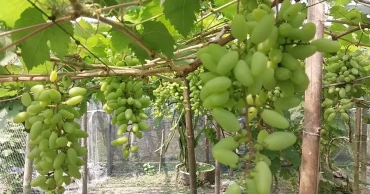
Foreign grape farming brings success in Kurigram, inspires local growers
Two agri-entrepreneurs in Phulbari upazila of Kurigram have achieved notable success cultivating a foreign variety of red grapes, drawing widespread attention and inspiring local farmers to explore new possibilities.
Ruhul Amin and Hashem Ali have developed a vineyard of the ‘Bainur’ variety on about two bighas of land in Ajoyatari area near Gongarhat Bazar after nearly a decade of effort.
The orchard now hosts around 460 grapevines.
They said they began their journey in 2017 with just 40 saplings.
While the initial yields were experimental, they started commercial sales in 2022, selling about five maunds of grapes from 50 plants that year.
Production has since increased steadily — reaching 10 maunds in 2023, 15 maunds in 2024, and 20 maunds in 2025.
3 months ago

Smart tracking for safer roads? Bangladesh rolls out GPS plan amid rising accidents
In a new push to restore order to Bangladesh’s often chaotic transport sector, Bangladesh Road Transport Authority (BRTA) is moving to introduce Global Positioning System (GPS) tracking in public vehicles that could transform enforcement and accountability on the country’s roads.
The proposed system will enable authorities to monitor vehicle movements and speeds in real time, offering a technology-driven solution to long-standing problems such as reckless driving, unauthorised stoppages, passenger overloading and fare irregularities.
“If GPS is introduced, violations can be tracked instantly. Over-speeding or traffic rule breaches will be automatically recorded, allowing legal action against both drivers and owners,” a senior official at the Ministry of Road Transport and Bridges told UNB.
The initiative comes as part of a broader, multi-pronged strategy led by the Roads and Highways Department (RHD) to tackle the country’s worsening road safety situation, according to an official document.
The authorities has already rolled out a mix of engineering, enforcement and management measures, including redesigning accident-prone “black spots,” improving road geometry, and expanding the installation of traffic signs, signals and road markings.
Infrastructure upgrades are also underway, with guardrails, speed breakers, delineators and signboards being installed on key highways.
To protect pedestrians, overpasses, footbridges, zebra crossings and service roads are being constructed in busy commercial areas, while provisions for slow-moving and non-motorised vehicles are gradually being introduced.
Officials said the integration of Intelligent Transport Systems (ITS)—such as CCTV surveillance, Vehicle Detection Systems (VDS) and Variable Message Signs (VMS)—is already reshaping traffic monitoring.
A speed enforcement system currently operational on the Dhaka–Mawa Expressway is expected to be expanded nationwide.
To strengthen institutional capacity, a dedicated Road Design and Safety Circle has been established to analyse accident trends and coordinate safety interventions.
Meanwhile, four rest houses for long-distance drivers in Cumilla, Sirajganj, Magura and Habiganj have been set up to reduce fatigue-related accidents.
Despite these measures, road safety indicators continue to deteriorate.
Data from the Bangladesh Passenger Welfare Association (BPWA) paints a grim picture: at least 9,111 people were killed and 14,812 injured in 6,729 road accidents in 2025.
Compared to the previous year, accidents rose by nearly 7 percent, while fatalities and injuries also recorded significant increases.
The economic toll is equally alarming.
Experts estimate that road crashes cost the country over Tk 600 billion annually, straining both the economy and healthcare system.
Motorcycles remain the single biggest contributor to accidents, accounting for around 37 percent of total incidents.
Pedestrians are the most vulnerable group, making up nearly half of all fatalities, while national highways account for over a third of accidents.
Safety analysts attribute the rising death toll to a combination of reckless driving, unskilled operators, unregulated battery-run vehicles, poor infrastructure and weak law enforcement.
The risks were particularly evident during the recent Eid-ul-Fitr travel rush. Between March 14 and March 28, at least 351 people were killed and over 1,000 injured in road crashes, according to BPWA.
Including rail and waterway incidents, total fatalities climbed to 394.
Separate data from the Road Safety Foundation reported 298 deaths in 373 road accidents over the same period—an average of about 20 deaths per day.
Motorcycles again featured prominently, accounting for nearly 38 percent of fatalities.
Experts say head-on collisions and run-over incidents dominate crash patterns, with more than 40 percent occurring on national highways.
Chattogram division recorded the highest number of deaths during the period.
While the planned GPS tracking system is being welcomed as a step toward modernising traffic enforcement, experts caution that technology alone cannot resolve the crisis.
As Bangladesh grapples with mounting casualties on its roads, the success of the GPS initiative may ultimately depend on how effectively it is implemented—and whether it can bring about the behavioural change that has long eluded the sector.
3 months ago
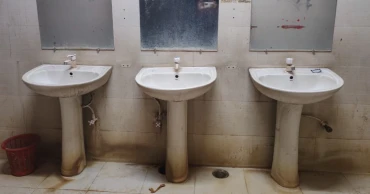
Dirty toilets, rising risks: JU’s sanitation crisis puts 12,000 students in danger
Once known for its environment and residential facilities, Jahangirnagar University (JU) is now grappling with a worsening sanitation crisis, as thousands of students face health risk due to unhygienic and poorly maintained toilets across campus.
Despite its reputation as one of Bangladesh’s leading public universities, JU has failed to ensure basic hygiene facilities in academic buildings, residential halls and public spaces – putting nearly 12,000 students at risk.
A recent campus visit revealed a grim reality: the majority of toilets lack soap, tissue, handwash or sanitisers, while many remain dirty due to irregular cleaning. Broken taps, clogged basins, dirty floors and persistent foul smells have become routine complaints.
3 months ago
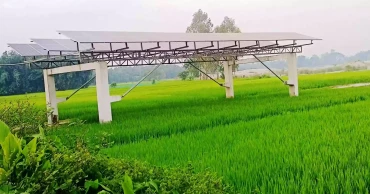
Bangladesh farmers cut costs with solar irrigation, save 7.5m litres of diesel
Amid global energy market volatility triggered by the Iran-Israel-US tensions and concerns over fuel supply Bangladesh’s agriculture sector is feeling the strain particularly during the irrigation season, when diesel-dependent farmers face rising costs and uncertainty.
Against this backdrop, solar-powered irrigation is emerging as a beacon of hope across the Rangpur division.
Officials say around 5.9 megawatts of electricity is being generated daily from solar irrigation systems in different parts of the region, helping save around 7.5 million litres of diesel in a single irrigation season.
Farmers say the shift has eased their worries about diesel shortages, price hikes and power outages, allowing them to irrigate fields on time and reduce production costs.
At a deep tube well run by the Bangladesh Agricultural Development Corporation (BADC) in Doani village of Goddimari union under Hatibandha upazila in Lalmonirhat, operator Atiar Rahman said the solar-powered system is irrigating around 15 bighas of land where maize and vegetables are widely cultivated.
“Even if diesel is unavailable or prices rise, farmers no longer have to worry, as the system runs on solar power,” he said.
However, he pointed out a major untapped opportunity: the solar panels remain largely unused for most eight months of the year after the four-month irrigation season.
Introducing net metering to feed surplus electricity into the national grid during this period could benefit farmers, institutions and the government alike, he added.
On the ground, solar panels are seen directly powering pumps to irrigate fields—without diesel fumes, fuel shortages or power disruptions.
Sudhan Chandra Sen, a farmer from Madhupur village in Kaunia upazila, said, “We don’t have to worry about fuel anymore. Solar power gives us water, crops are better, and costs are lower.”
“Earlier, electricity supply was unreliable, and irrigation was often delayed. Now, with solar, water is available all the time,” he added.
Shafiqul Islam, president of the Lalmonirhat unit of the Teesta River Protection Movement, said such initiatives are crucial for boosting agricultural production, ensuring food security and modernising the sector.
“To improve the livelihoods of marginal farmers, solar irrigation projects should be expanded through both public and private initiatives,” he said.
Hossain Mohammad Altaf, executive engineer (construction) of BADC in Rangpur, said no new solar irrigation projects have been launched since 2022 though existing installations remain operational.
He said a total of 596 solar-powered irrigation units were active in eight districts of Rangpur division in the last irrigation season.
With an average production of 10 kilowatts per unit, total generation stood about 5.96 megawatts—enough to run 80,000 to 85,000 fans daily—while saving around 7.5 million litres of diesel over four months, he said.
Habibur Rahman Khan, supervising engineer ofRangpur circle of the Barind Multipurpose Development Authority (BMDA), said while no new projects have been added existing ones are functioning, and two net metering systems are already operational.
Northern Electricity Supply PLC (NESCO )Rangpur Chief Engineer (Operation) Mizanur Rahman said a faster transition from diesel-based to solar irrigation could save foreign currency and cut carbon emissions.
“For a climate-vulnerable country like Bangladesh, this can be a sustainable pathway for agriculture,” he said, adding that most solar irrigation systems fall under rural electrification areas, and net metering could be introduced with proper initiative from the authorities.
Farmers have called for launching new solar irrigation projects, rehabilitating old ones and enabling surplus electricity to be fed into the grid.
“If sunlight can grow crops in the fields, it can also help meet the country’s electricity needs,” they said.
3 months ago