special

Sylhet reels from load shedding; SSC candidates face mounting hardship
Sylhet is grappling with relentless load shedding – mainly triggered by the global energy crisis following the Middle East conflict – disrupting daily life and putting SSC candidates under mounting pressure just days before their exams begin on April 21.
Officials said the crisis stems from a shortfall in electricity supply from the national grid due to reduced generation amid the global energy crisis, with no sign of immediate improvement.
Residents and traders said electricity disruptions continue throughout the day and night.
According to officials of the Bangladesh Power Development Board (BPDB) in Sylhet, there was a demand of 170 megawatts of electricity on Thursday in district, against which only 130 megawatts were supplied, leaving a deficit of 40 megawatts.
However, common people claim that the real picture is far worse than official figures suggest. Many areas reportedly experienced more than seven hours without electricity within a 12-hour period on Thursday, till evening.
Life on hold: 50,000 Rangpur people pay price for missing bridge
The situation has become particularly alarming for Secondary School Certificate (SSC) examinees, who are struggling to study amid long power cuts and intense heat.
Zakaria Talukder, a resident of Golapganj upazila, said students are facing serious difficulties as electricity remains unavailable for hours at a stretch. “If we get power for one hour, we stay in darkness for the next two,” he said.
Businesses are also reeling from the power crisis. Traders said shops are already required to close by 7:00pm every day, and frequent outages throughout the day are further cutting into operating hours, leading to losses.
Road woes deepen in Beanibazar as 250km fall into disrepair
Matiur Rahman, a businessman, said frequent load shedding has pushed many factories to the brink of closure. “To keep production running, many are being forced to use diesel-powered generators, but diesel is also in short supply. As a result, costs have risen significantly without any increase in output.”
Anwar Hossain, owner of a shopping complex at Zindabazar of the city, echoed Matiur Rahman. “We open late in the morning and close early in the evening. With constant load shedding, we are losing a significant portion of business time,” he said.
Sources said the ongoing energy crisis, exacerbated by fuel shortages linked to the Middle East conflict, has led to limited electricity generation nationwide.
Officials warned that load shedding could worsen if fuel supply is not stabilised.
Chief Engineer of BPDB Sylhet division Mohammad Imam Hossain said demand has surged with rising temperatures, but generation has not kept pace. “As supply remains insufficient, load shedding is unavoidable. There is no immediate prospect of improvement unless national generation increases,” he added.
Fuel crisis hits Rangpur, motorists spend hours in queues
Since early April, load shedding has intensified across Sylhet, particularly in rural areas where outages last between six to eight hours daily. While urban areas receive somewhat scheduled power cuts, rural areas are experiencing prolonged and unpredictable outages.
The government has enforced sweeping austerity measures such as early closure of shops, revised office hours, and partial online education to manage the situation, but these steps have yet to ease public suffering.
Residents say the combined impact of extreme heat and persistent outages has made daily life increasingly difficult, especially for children, the elderly, and the sick.
3 months ago

Governance crisis plagues banking sector
Bangladesh’s banking sector, which should operate as the backbone of the economy, is struggling to regain its footing due to a profound lack of good governance and deepening financial instability.
According to the latest review by Bangladesh Bank, 17 banks failed to generate any net profit in 2024, while 11 banks gave up spending under Corporate Social Responsibility (CSR) altogether in 2025.
Experts view these as a clear sign of the dire state of the industry, fueled by skyrocketing non-performing loans (NPLs), weak boards, and political interference.
Masrur Reaz, Chairman of Policy Exchange Bangladesh and former senior economist at the World Bank, told UNB that the financial health of some banks has revealed the worsening situation of the sector.
He pointed out that these banks will take several years to return to a good financial position. At the same time, the strict policy regulations and skilled management are also required for these banks.
Towfiqul Islam Khan, an economist and the Additional Research Director at the Centre for Policy Dialogue (CPD), said that the scenario was a reflection of the economy of Bangladesh.
The banking sector is like the blood circulation in the financial sector; while banks are in trouble, the overall economy will not be vibrant, he said.
Zero CSR Spending by 11 Banks:
A recent central bank report on CSR activities revealed that 11 banks made no contributions to social welfare in 2025.
These institutions include: Janata Bank, Agrani Bank, BASIC Bank, Bangladesh Krishi Bank, Rajshahi Krishi Unnayan Bank, Bangladesh Commerce Bank, National Bank, Global Islami Bank, Padma Bank, Union Bank, and National Bank of Pakistan.
While CSR funds are typically allocated to sectors like education, health, and climate change, the zero expenditure by these banks suggests they are too preoccupied with internal financial and administrative crises to fulfill their social obligations.
Profitability Crisis:
Meanwhile, the central bank's performance report for 2024 identifies 17 banks that failed to earn a net profit. The list comprises several state-owned and struggling private lenders:
Janata Bank, Agrani Bank, BASIC Bank, Bangladesh Krishi Bank, Rajshahi Krishi Unnayan Bank, AB Bank, Bangladesh Commerce Bank, First Security Islami Bank, ICB Islamic Bank, IFIC Bank, National Bank, NRB Commercial Bank, Global Islami Bank, Padma Bank, Social Islami Bank, Union Bank, and National Bank of Pakistan.
Analysts cite high NPLs, unearned interest income, rising operating costs, and irregularities in loan disbursement as the primary drivers of this unprofitability. Many of these banks are now facing such severe capital shortfalls that they struggle to maintain regular business operations.
Interestingly, the report noted that six banks managed to contribute to CSR in 2025 despite recording no profits in 2024, likely by utilizing previous reserves—a move experts warn may challenge long-term stability.
The crisis points toward systemic issues that have plagued the sector for years. The main challenges identified include:
A significant portion of total loans is stuck with large borrowers who continue to enjoy new facilities without repayment.
Political and influential interference in boardrooms often overrides commercial logic.
Lack of profits has led to a sharp decline in Capital Adequacy Ratios (CAR).
Also, reliance on manual systems and outdated software increases operational risks.
Impact on the Economy:
The fragility of the banking sector is casting a long shadow over the national economy. A weak banking system leads to reduced credit flow to industries, hindered investment, and slowed GDP growth.
In 2025, the total CSR expenditure by the banking sector stood at Tk 345.05 crore, with Tk 98.44 crore going to education and Tk 85.64 crore to health. However, the fact that only a few strong banks carry the bulk of this expenditure highlights a massive disparity in financial health across the sector.
Urgent Reforms Needed:
The economists and industry insiders are calling for immediate intervention to stabilize the sector. Key recommendations include:
1. Strict Loan Recovery: Legal action against willful defaulters.
2. Board Accountability: Ensuring transparency and independence in bank management.
3. Digitalization: Modernizing risk management and banking software.
4. Policy Oversight: Strengthening CSR monitoring to ensure it remains a merit-based, profit-driven obligation.
Without swift reformative steps, this deep-seated governance crisis and financial weakness pose a significant risk to the overall economic stability of Bangladesh.
3 months ago

Bangladesh seeks to maximise diplomatic gains at ADF 2026; steps up UNGA Presidency campaign
Bangladesh is seeking to 'maximise its diplomatic gains' through a series of high-level engagements at Antalya Diplomacy Forum 2026 (ADF2026) with Foreign Minister Dr Khalilur Rahman's presence at this key global diplomatic gathering in Türkiye’s resort city Antalya, officials said.
The country aims to build support for its candidature for the UN General Assembly Presidency while advancing bilateral relations, a senior official told UNB.
The 5th edition of the Antalya Diplomacy Forum (ADF2026), hosted by the Ministry of Foreign Affairs of the Republic of Türkiye, under the auspices of President Recep Tayyip Erdogan, will take place on April 17-19 in Antalya, Türkiye.
In the face of geopolitical tensions, shifting balances of power, rising trade barriers and mounting pressure on multilateralism, the current global landscape is marked by increasing unpredictability.
Foreign Minister Dr Khalilur, who arrived in Turkey on Thursday, will attend the ADF at the invitation of his Turkish counterpart Hakan Fidan.
This year's theme "Mapping Tomorrow, Managing Uncertainties" emphasises the importance of anticipating and addressing emerging issues to be able to shape a better future.
The theme underscores the need to stay ahead of future developments by identifying risks and opportunities, developing strategies and turning insights into action, said the organisers.
The Foreign Minister will attend two panels as a panelist and hold a number of bilateral meetings with his counterparts from different countries, a senior official familiar with his programme schedule told UNB.
In view of his candidature for the UNGA Presidency, he said that this would be a very important forum to attend.
The 81st Session of the United Nations General Assembly (UNGA) will open at historic crossroads.
Eight decades after the UN Charter was signed in San Francisco, the shared system of multilateral cooperation faces profound challenges.
"Yet this moment also presents unprecedented opportunities to renew its promise for ‘we the peoples’ in the twenty-first century," said Dr Khalilur in his vision statement as one of the candidates with over thirty years of experience with the United Nations, both as a representative of Bangladesh to the General Assembly and as a senior official at the UN secretariat in New York and at UNCTAD in Geneva.
Don’t be worried, exercise austerity amid Middle East crisis: PM
Over the years, Dr Khalilur has actively participated in sixteen UNGA sessions, engaging directly in its negotiations, high-level meetings and follow-up processes.
Throughout his career, he has worked extensively on development issues facing the Global South including those related to Least Developed Countries (LDCs), Land-Locked Developing Countries (LLDCs) and Small Island Developing States (SIDS).
"I am convinced that our world now needs a more effective and responsive multilateralism. By working together, we can build a more robust multilateral system that commands the trust of Member States and delivers tangible benefits for all," Dr Khalilur said, who wants to effectively lead the General Assembly to advance this overarching goal.
The election of the President of the United Nations General Assembly for the eighty first session will be held on June 2 in the General Assembly Hall, UNHQs.
In accordance with the established regional rotation, the President of the eighty first session of the General Assembly will be elected from the Asia Pacific Group.
"We are trying to maximise the number of meetings in Türkiye," the official said, noting that there are requests for international media interviews and meeting requests from international organisations as well.
As conflicts remain unresolved, polarisation grows and strategic rivalries expand, numerous critical issues continue to affect people all over the world, said the organisers.
In order to address these challenges and work towards a more inclusive, fair and effective international system, they said, the consolidation of international cooperation, dialogue and solidarity is imperative.
ADF2026 will bring together leaders, policymakers, diplomats, academics, business experts, media and civil society representatives to explore how to best manage uncertainties and address pressing issues while preparing for future challenges.
Through keynote addresses, panel discussions and interactive sessions as well as bilateral meetings, the participants will discuss global trends and regional dynamics, exchange views on possible solutions and share best practices.
The Forum will once again provide a valuable platform for fostering dialogue, restoring trust and engaging in stronger cooperation; mapping the path forward to a more peaceful, stable and resilient world for future generations, organisers said.
Since its launch in 2021, the forum has steadily grown into a leading platform for dialogue, cooperation, and high-level diplomatic engagement worldwide.
This year’s edition is expected to host representatives from more than 150 countries, including heads of state, ministers, and senior officials from international organisations.
More than 20 heads of state, 15 deputy leaders, and over 50 foreign ministers are expected to take part, according to Turkish Foreign Ministry sources.
In total, the forum is set to bring together more than 460 high-level participants, including around 75 representatives from international organisations, alongside nearly 5,000 guests.
The ADF26 will feature broad geographical representation, with nearly half of participating heads of state coming from Africa and Europe.
Brussels Visit
After attending the three-day Antalya Diplomacy Forum, he will leave for Brussels, Belgium, to attend a signing event on the framework agreement on 'Comprehensive Partnership and Cooperation' between Bangladesh and the European Union.
Bangladesh and the EU have prepared to sign the Partnership and Cooperation Agreement (PCA) next week which is aimed at further institutionalising bilateral cooperation.
EU Ambassador to Bangladesh Michael Miller met the Foreign Minister at the ministry on Wednesday and discussed issues of mutual interest.
They discussed the Foreign Minister’s upcoming visit to Brussels to lead a delegation for the initialling of the PCA.
Both sides expressed satisfaction with the long-standing and mutually beneficial Bangladesh-EU partnership, noting that it has evolved into a comprehensive and multifaceted engagement.
They discussed avenues of mutual interest, including reform initiatives, migration management, skills development, rule of law, and good governance.
The EU looks forward to the new Partnership and Cooperation Agreement with Bangladesh which will be ‘initialled’ during the visit of the Foreign Minister to Brussels on April 20, enhancing cooperation across the board.
The Heads of Mission of Denmark, France, Germany, Italy, the Netherlands, Spain, Sweden and the EU recently met Prime Minister Tarique Rahman, a senior official told UNB, noting that the EU has already conveyed its message of readiness to intensify relations with the new government.
The EU expressed support for priority reforms, economic modernisation and managed migration, stressing the importance of a level playing field to promote investment and shared values underpin the EU’s partnerships around the world.
On his way back home, the Foreign Minister is expected to make a stopover in Addis Ababa, Ethiopia and will return to Bangladesh on April 24.
3 months ago
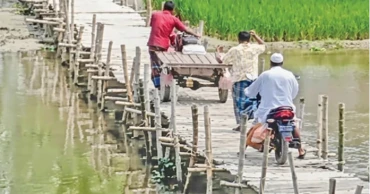
Life on hold: 50,000 Rangpur people pay price for missing bridge
For more than 50,000 people across at least 25 villages in Taraganj upazila of Rangpur, daily life has become a risky struggle due to the absence of a permanent bridge over the Jamuneshwari River.
At Chilapak Kalurghat, about 18 kilometres from the upazila headquarters, the river cuts off Hariarkuthi and Soyar unions, leaving residents dependent on risky and unreliable crossings for years. This route serves as the only key link for the residents.
According to locals, they have been relying on boats in the rainy season and the bamboo bridge in the dry season for transportation for years.
During the dry season, villagers build a temporary bamboo bridge to cross the river. However, the structure goes under water during the monsoon, worsening the situation.
As water levels rise, residents again have to rely on boats for crossing – posing serious risks, especially for women, children and the elderly. Crossing the river at night becomes nearly impossible, in emergencies.
Villagers said they often have to wait for hours for a boat during the rainy season, while currents discourage boatmen from operating, intensifying their suffering.
Farmers in the area are among the worst sufferers.
Although rice, potatoes, maize and vegetables are produced here, farmers are deprived of fair prices as they cannot get their produce to market on time. Often, the goods spoil, causing them to incur losses, pushing agriculture-dependent families into financial strain.
Students also face major setbacks. They have to cross the river daily to attend schools, colleges and madrasahs.
During the monsoon, many guardians hesitate to send their children to educational institutions due to safety concerns, leading to disruptions to their education.
Matinuzzaman, secretary of Kursha Union Parishad, said the lack of a permanent bridge causes immense suffering for residents. “My home is across the river. People here face serious difficulties in movement, especially during the monsoon. For patients, the crossing of the river becomes a nightmare,” he said, adding that delayed transportation often worsens medical conditions.
Service holders and small traders are facing similar challenges, as they often fail to reach workplaces on time. Businesspeople are incurring financial losses as they are unable to transport goods on time.
Around 25 villages, including Chilapak, Patanipara, Dolapara, Baniapara, Ujiyal, Mamunpara, Menanagar, Kalurghat, Dangapara, Pramanikpara and Mondolpara, are directly dependent on this crossing point.
Locals alleged that although several public representatives and political leaders have promised to construct a bridge over the years, no visible progress has been made.
Hariarkuthi Union Parishad Chairman Kumaresh Roy and Soyar Union Parishad Chairman Al Ibadat Hossain Pilot said the issue has been raised multiple times in the upazila coordination meetings and proposals have been sent to the authorieis concerned, but without any fruitful outcome.
Residents have strongly demanded immediate construction of a permanent bridge at Kalurghat, saying it will not only ease communication but also boost education, healthcare, agriculture and overall economic development in the region.
Executive Engineer of Local Government Engineering Department of Rangpur, Abu Musa, said a proposal for the bridge has already been sent to the ministry. “We hope a solution will come soon,” he added.
3 months ago
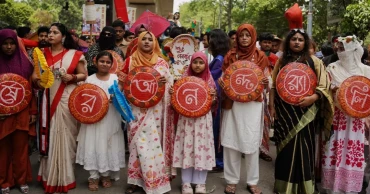
A celebration beyond barriers: Pahela Baishakh brings nation together
Pahela Baishakh, marking the first day of the Bengali New Year, is not merely a festive occasion; it stands as a powerful symbol of unity, inclusiveness and cultural identity in Bangladesh.
The festival transcends religious and social boundaries, bringing together people from all walks of life, regardless of caste, colour or faith. It is one of the rare occasions where diversity is not only acknowledged but celebrated with collective enthusiasm.
Across the country, people join vibrant festivities featuring traditional music, cultural performances and fairs that reflect the rich heritage of Bengal. From urban centres to rural communities, the day fosters a shared sense of belonging and harmony.
One of the most iconic highlights of the celebration is the procession – earlier named Mangal Shobhajatra – organised by students of the Faculty of Fine Arts at the University of Dhaka. Recognised by UNESCO as an Intangible Cultural Heritage of Humanity, the procession symbolises resistance against injustice and the aspiration for a peaceful and inclusive society.
Although the government has renamed the Mangal Shobhajatra as Baishakhi Shobhajatra this year, its spirit and mode of celebration remain unchanged.
In the early hours of the day, thousands of people gathered to take part in colourful processions, welcoming the new year with hopes of renewal and prosperity. The morning air resonated with traditional songs, adding to the cultural depth of the occasion.
Like previous years, Pahela Baishakh was welcomed in a festive atmosphere, as the Baishakhi Shobhajatra from the Faculty of Fine Arts at the University of Dhaka drew large crowds.
Adorned with masks and traditional folk motifs, the procession reflected the rich cultural heritage of Bengal while promoting messages of unity, harmony and resistance to injustice.People from different walks of life – students, artistes and cultural activists – joined the procession, turning it into a vibrant public celebration of the Bengali New Year.
President Mohammed Shahabuddin and Prime Minister Tarique Rahman issued separate messages, greeting the people of Bangladesh and Bangla-speaking communities around the world.
Opposition Party Leader Dr Shafiqur Rahman also greeted the people of the country on the occasion.
Meanwhile, the government undertook extensive initiatives to ensure inclusive and safe celebrations nationwide.
Cultural programmes were arranged at both national and local levels, while law enforcement agencies remained on high alert to maintain security and discipline during public gatherings.
Authorities, including police and other security forces, implemented special measures such as increased patrols, traffic management and surveillance to ensure peaceful festivities.
Beyond the celebrations, Pahela Baishakh serves as a reminder of the nation’s deep-rooted cultural identity. It reinforces the values of unity, secularism and coexistence—principles that continue to shape the social fabric of Bangladesh.
As people welcomed the New Year, they not only celebrated tradition but also renewed their collective commitment to harmony, resilience and cultural pride.
3 months ago
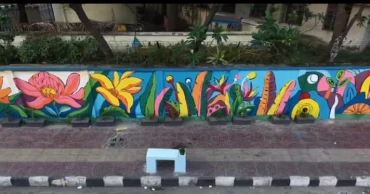
DMCH footpath gets vibrant, pedestrian-friendly makeover
The once-congested and unhygienic road in front of Dhaka Medical College Hospital (DMCH) has undergone a striking transformation, offering a visually appealing and pedestrian-friendly environment on the occasion of Pahela Baishakh.
Where rows of makeshift shops once occupied the footpath, accompanied by piles of waste and foul odours, the stretch from Central Shaheed Minar to the hospital gate has now been redesigned with flower tubs, seating arrangements and vibrant murals.
The boundary walls of the hospital, long hidden behind shops and neglect, have now emerged as a large canvas of artistic expression. Colourful folk motifs and traditional designs now adorn the walls, bringing life to one of the capital’s busiest footpaths.
Locals say even a few months ago, walking through this area was difficult. Due to illegal shops, waste and an unhygienic environment, pedestrians often had to cover their noses while passing through.
A regular commuter Jamir, said the place previously suffered from severe sanitation issues.
“People used to use the place as a public toilet. The smell was unbearable. Now, with flower tubs, benches, and colourful walls—the environment feels much more pleasant,” he said.
Another attendant of the patient who visited the emergency department of the hospital shared his feeling with UNB that it is really a new experience, as he had never seen this scenic view here before. “It will be an example if authorities can continue to monitor the place,” he said.
DSCC Chief Waste Management Officer Air Commodore Md. Mahabubur Rahman Talukdar said the initiative aims to provide a sense of relief to patients, attendants, and visitors amid the pressure of the hospital environment.
“We want people—especially patients and their families—to find a moment of peace here. They should be able to sit, walk, and feel mentally relaxed despite their situation,” he said.
The initiative, taken by Dhaka South City Corporation, is being implemented as a pilot project. Authorities aim to transform the surrounding hospital environment into a cleaner, greener, and more welcoming public space.
3 months ago
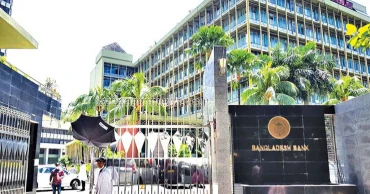
Late addition to ‘Bank Resolution Bill’ sparks outrage: Loopholes may allow ‘looters’ to regain ownership
A last-minute amendment to the ‘Bank Resolution Bill’ has exploded a firestorm of controversy within Bangladesh's banking sector and among economists.
Critics and analysts warn that the new provision could pave the way for disgraced former owners—those responsible for plunging banks into crisis—to reclaim control of their institutions for a nominal down payment.
Economists and banking sector insiders have warned that at the domestic and international level, it would be a bad signal in banks and financial sector reforms activities, which is expected by the IMF and World Bank.
‘Bank Resolution Act’ facilitates corruption and moves to rehabilitate bank looters: TIB
The center of the storm is Section 18(A), a clause reportedly added on the night of April 9, just before the bill was tabled in Parliament. Financial experts describe this move as creating a "staircase for return" for individuals and groups involved in large-scale loan irregularities and mismanagement, said officials of Bangladesh Bank.
The controversy is centred around the newly added Section 18(A). Under this newly incorporated section, former shareholders of weak banks that have undergone merger or resolution can apply to reclaim their shares, assets, and liabilities. Former owners can initiate the transfer of control by depositing only 7.5 percent of the total funds previously injected by the government or Bangladesh Bank to save the institution.
The remaining 92.5 percent of the state-provided funds can be repaid over two years at a 10 percent simple interest rate.
"If the government spends Tk 20,000 crore to bail out a bank, the former owners can effectively take it back by paying just Tk 1,500 crore initially," noted a banking analyst.
"For those who have siphoned off thousands of crores, this is a negligible amount. It’s like returning a bank for a nominal down payment," said a former governor of Bangladesh Bank, preferring anonymity.
Sources within the Bangladesh Bank revealed that the central bank was largely bypassed regarding this specific amendment. A committee formed on April 1 had initially proposed a streamlined version of the law, reducing it from 98 to 74 sections, but Section 18(A) was not part of the final draft submitted by the technical committee.
"We requested the Finance Ministry to exclude this controversial clause the moment we learned of it," a senior central bank official said on condition of anonymity. "Allowing those who destroyed these banks a path back to ownership undermines the entire purpose of the resolution process."
Central bank officials had recommended that if such a provision were included, it should carry much stricter conditions—such as a permanent ban on owners whose negligence led to the crisis and a requirement for full repayment of all debts and depositor funds before any transfer of ownership. Instead, the law now only requires an "undertaking" or promise to pay.
The legislative move has created a wave of anxiety among general depositors. "If the same people who ruined these banks are given the keys again, who can we trust with our savings?" said Arifur Rahman, a retired government official and depositor.
The controversy is particularly focused on the recent merger of five weak banks—Exim, Social Islami, First Security Islami, Union, and Global Islami—into the newly formed ‘Sammilito Islamic Bank’. Four of these banks were previously widely discussed for being under the influence of a single major conglomerate, from which billions of taka were reportedly extracted through irregular loans.
Remaining Provisions:
Aside from the disputed Section 18(A), the rest of the bill maintains the original framework of the ordinance. It empowers Bangladesh Bank to appoint administrators to troubled banks, transfer assets and liabilities to third parties, form temporary bridge banks, establish a dedicated Resolution Fund, and identify and take legal action against individuals responsible for a bank’s downfall.
However, analysts believe the inclusion of the "return clause" threatens to overshadow these reformative measures, potentially leaving the backbone of the economy vulnerable to the same forces that necessitated the bailout in the first place.
3 months ago
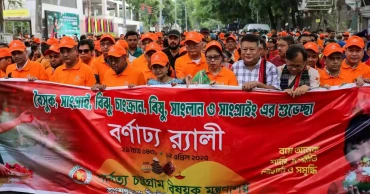
Celebrating the Diversity of the Bangla New Year
Every year, as the April sun climbs high over the delta, the very air in Bangladesh shifts. It isn't just the rising heat of the Boishakhi summer; it’s a palpable sense of a page turning. While the Gregorian calendar marks April 14th as just another date, for the nearly 170 million souls in this land, it is the rhythmic heartbeat of a new beginning.
From the neon-lit avenues of Dhaka to the mist-shrouded ridges of the Chittagong Hill Tracts , the New Year arrives not as a single event, but as a symphony. While the majority celebrates Pohela Boishakh, the hills echo with seven other names: Boisuk, Sangrai, Biju, Changkran, Bishu, Sanglan, and Sangraing. Together, they form "Vaishabi," a celebration that proves unity doesn't require uniformity.
The Colors of the Hill: The Vaishabi Spirit
In the southeast, the New Year is deeply elemental a conversation with the earth, the water, and the ancestors.
Biju (Chakma)
The Chakma festival is a three-day journey of the soul.
● The Flower Ritual: Today, April 13th, children wake at dawn to gather wild blooms. They float them on the rivers (Phul Biju) to let the water carry away the hardships of the past.
● The Legend of Pajon: You cannot understand Biju without tasting Pajon. This isn't just a meal; it’s a medicine. It is a complex vegetable stew simmered with a minimum of 20 to 40 types of wild herbs, bamboo shoots, and forest vegetables. It is a taste of the forest itself.
3 months ago
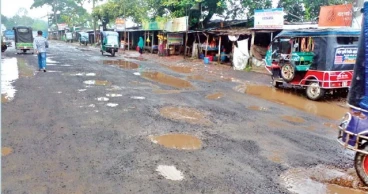
Road woes deepen in Beanibazar as 250km fall into disrepair
Around 250 kilometres of highways and rural roads in Beanibazar upazila of Sylhet have fallen into disrepair, causing severe hardship for commuters.
The roads riddled with potholes and damaged surfaces, have made vehicular movement slow and risky, often triggering long tailbacks.
Commuters say travel time has increased significantly.
Locals alleged that it now takes nearly twice as long as before to reach Beanibazar municipal town due to the poor condition of the roads.
Officials concerned attribute the worsening situation to substandard construction, lack of regular maintenance and the movement of overloaded vehicles.
50,000 people stranded as key bridge collapses in Sunamganj
Sources said about Tk 300 crore would be needed to repair the damaged road network.
Sajjadur Rahman, an official of the Roads and Highways Department (RHD) in charge of Beanibazar, said around 29.5 kilometres of road — from Charkhai to Baraigram and Sheola to Sutarkandi — fall under RHD.
“Of these, at least 10 kilometres require urgent repair. A proposal has already been sent to the higher authorities. Work will begin once approval is received,” he said.
He added that more durable methods including the use of concrete in waterlogged areas are being planned for the upcoming repair work.
According to municipality sources, around 39 kilometres of roads in the municipal area remain unpaved.
Besides, most of the roughly 60 kilometres of paved and brick roads are in need of urgent repair.
Brahmaputra erosion leaves 50 families homeless in Kurigram, over 100 at risk
Limited revenue and budget constraints have made it difficult to carry out development work evenly across all wards over the past year, officials said.
Broken roads have now become the main source of suffering for residents, with most of the approximately 4.5 kilometres of carpeting roads already damaged.
Local Government Engineering Department (LGED) sources said there are 347 roads under its jurisdiction in the upazila, with a total length of 627 kilometres.
Of these, 372 kilometres are earthen, 105 kilometres paved and 182 kilometres semi-paved.
Upazila Sub-Assistant Engineer Saiful Islam said around 202 kilometres of road require urgent repair.
Meanwhile, the upazila project implementation office is carrying out earth-filling and small bridge construction work on rural roads under Kabikha and Kabita projects based on demands from union parishad chairmen.
Tk 1,359cr project aims to transform Munshiganj-Dhaka connectivity
Beanibazar Upazila Nirbahi Officer Umme Habiba Majumdar said repair work on the damaged roads has started gradually.
She expressed hope that public suffering would ease once the repairs are completed.
3 months ago

Govt moves to expand one-stop crisis support for victims amid rising violence
The government is set to expand its support system for victims of violence by establishing 95 one-stop crisis cells at district hospitals and upazila health complexes across the country, in a move aimed at improving access to integrated services for women and children.
Officials say the initiative comes at a time when violence against women and children continues to rise due to gaps in protection, justice and support mechanisms despite existing legal frameworks.
At present 67 one-stop crisis cells are operational—47 at district sadar hospitals and 20 at upazila health complexes—providing medical care, legal assistance, police support and psychosocial counselling under one roof, according to an official document.
According to official data, a total of 166,570 women and children have received services from these facilities till February, 2026.
Besides, the government has planned to establish 37 one-stop crisis centres (OCCs) at medical college hospitals in phases.
At present, 14 such centres are in operation, serving 80,395 victims with integrated support services.
Expanding trauma care and forensic support
A National Trauma Counselling Centre and four regional centres in Dhaka have so far provided counselling to 37,621 victims.
To improve investigation and prosecution, the government has set up a National Forensic Profiling Laboratory along with seven divisional DNA screening labs at Dhaka Medical College.
These facilities have processed 40,405 DNA samples as of February this year, helping strengthen evidence-based justice in violence cases.
Legal framework and emergency support
Bangladesh has enacted a series of laws to combat violence against women and children, including the Prevention of Violence against Women and Children Act, Domestic Violence Act, Child Marriage Restraint Act and Dowry Prohibition Act.
Bedides, women violence prevention cells and “safe homes” for temporary shelter are operating in six divisional cities, while the national toll-free helpline 109 provides round-the-clock assistance.
Officials said the helpline has received over 8.7 million calls till February 2026, reflecting both rising awareness and the scale of the problem.
A worsening reality
Despite these measures, experts warn that violence remains deeply entrenched in society.
A 2024 national survey by the Bangladesh Bureau of Statistics and UN agencies found that nearly three out of four women in Bangladesh have experienced some form of violence in their lifetime.
Intimate partner violence remains the most prevalent, affecting around 70 percent of women.
Child rights indicators are equally concerning.
Around 86 percent of children aged 1–14 face violent discipline at home, while nearly half of girls are married before turning 18, according to the survey.
Human rights groups have also reported a surge in sexual violence.
Analysts attribute this to weak law enforcement, social stigma and lack of awareness, which continue to discourage victims from coming forward.
Rights activists say that while the expansion of one-stop crisis services is a positive step, it must be accompanied by stronger enforcement, community engagement and institutional coordination.
They warn that without systemic reforms, violence against women and children will remain a persistent national challenge.
3 months ago