special
Will digitised land services finally ease public suffering?
For decades land-related services in Bangladesh have been synonymous with long queues, opaque procedures and the pervasive influence of middlemen.
From mutation delays to disputes over records, the system has often tested citizens’ patience and at times their finances.
Now, the Ministry of Land is attempting a major reset.
Through a comprehensive “Digitalised Land Management” initiative, the government is rolling out a series of reforms aimed at simplifying land services, ensuring transparency and making the system more citizen-friendly.
At the heart of this transformation is the digitisation of the mutation process — a crucial step in updating land ownership records.
Citizens can now apply for mutation through the land.gov.bd portal and track the status of their applications in real time, eliminating the need for repeated visits to land offices.
Officials told UNB that the changes are designed to reduce human intervention, long considered a key source of delays and irregularities.
A strict 28-day deadline has been introduced for completing mutation applications.
Failure to meet this timeline without valid justification could lead to accountability measures against the responsible officials — a move that signals a shift towards time-bound public service delivery.
To further enhance transparency, digital Khatiyans (Records of Rights) with QR codes are now being issued.
These can be verified instantly online, reducing the risk of forgery and disputes over authenticity.
The reforms also extend to financial transactions.
Mutation fees can now be paid through Mobile Financial Services (MFS), making the process cashless.
Officials said this will significantly curb opportunities for bribery at the local level.
“Cash transactions with land offices have long been a source of harassment. Going digital effectively closes that door,” said a senior ministry official.
Besides, once a mutation is completed, land holdings are generated automatically, while corrections to Khatiyans are processed through the system with minimal manual handling.
Applicants are kept informed through automated SMS updates — a small but significant step towards improving user experience.
The digital push is not limited to records and transactions.
The government has launched the Bangladesh Digital Survey (BDS) using drones and advanced technology to create accurate land maps.
Officials expect this to reduce boundary disputes — one of the most common triggers of litigation.
Land disputes remain a major burden on Bangladesh’s judicial system.
Around 80 percent of all civil and criminal cases are land-related. Nearly one in seven households — roughly four million families — is entangled in such disputes, many of which drag on for years, even decades.
By improving accuracy in land records and mapping, authorities hope to address the root causes of these conflicts.
Access to land information is also being expanded.
Citizens can now view Khatiyans for any mouza online and request certified copies via post for a fixed fee, bypassing brokers who have traditionally dominated the process.
However, officials acknowledge that not all citizens are digitally equipped.
To bridge this gap, the government has introduced the “Land Service Support Guidelines 2025,” paving the way for around 900 private-sector-led service centres across the country.
These centres assist people in filing digital applications for a nominal charge.
Accountability mechanisms are also being strengthened.
Under the “Land Service Complaint Management Guidelines 2026,” citizens can file complaints online or seek assistance through a 24/7 hotline.
A dedicated Citizen Service Centre has already been set up at Bhumi Bhaban in Tejgaon, with plans to expand similar facilities nationwide.
Despite the ambitious scope of the reforms, challenges remain — from ensuring digital literacy to maintaining system integrity across rural areas.
Yet, for many citizens long frustrated by the complexities of land administration the shift signals hope.
Jahanara Begum, a widow and a resident of Shantibagh, said, “I had to visit the land office more than 7/8 times for mutation purposes but my file did not move until I sought help from an influential person.”
“I have seen how ordinary people suffer there. I hope digitisation will help ease public suffering,” she added.
The government’s stated goal is clear: to build a system where land services are accessible, efficient and free from harassment and where the role of middlemen is reduced to zero.
Whether this digital transformation can fully deliver on that promise will depend on its implementation.
But for now, it marks a significant step towards modernising one of the country’s most problematic public service sectors.
4 months ago
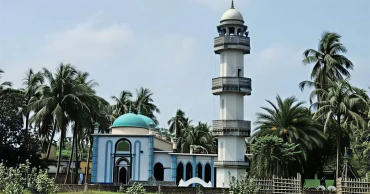
Kusum Bibi’s mosque stands as enduring symbol of faith and heritage in Chuadanga
At the heart of Chuadanga district town stands a nearly 250-year-old three-domed mosque, a timeless symbol of faith, philanthropy and the region’s rich cultural heritage.
Locally known as the Boro Mosque or Minar Mosque, the historic structure was founded in 1208 Hijri (around 1786 AD) by Kusum Bibi, a devout woman who donated 73 decimals of land and personally financed its construction.
Widely regarded as the first mosque in the district town, locals say it was from here that the first Azan echoed across the area, marking the beginning of organised religious life in the region.
Over the centuries, the mosque has served not only as a place of worship but also as a centre for Islamic education and community activities, maintaining its importance through the British and Pakistan periods and into independent Bangladesh.
A legacy rooted in faith and generosity
According to local accounts, Kusum Bibi led a simple life and was deeply committed to the welfare of people. Folklore suggests she discovered some earthen pots filled with gold coins while building her house.
4 months ago

Economy faces multi-pronged pressures as Middle East conflict stokes energy fears: Experts
Bangladesh’s economy is grappling with intensifying pressure from multiple fronts including the Middle East conflict and a volatile energy market which experts warn could destabilise macroeconomic stability.
Dr. M. Masrur Reaz, chairman of think-tank Policy Exchange Bangladesh, told UNB that recent geopolitical tensions have sparked fresh concerns over energy security, threatening to disrupt power generation, industrial output, and the agricultural sector.
A former World Bank economist, Dr. Reaz said the combination of internal structural weaknesses and external shocks poses a significant challenge for the government.
“Middle East conflict and energy volatility, the escalating military activity involving the US, Israel, and Iran has sent ripples through the international energy market. Analysts fear that a prolonged conflict will lead to severe supply chain disruptions,” he added.
Crucially, uncertainty of free vessel movement in the ‘Strait of Hormuz’ and Qatar Energy has reportedly declared "Force Majeure" on several long-term Liquefied Natural Gas (LNG) supply contracts due to production setbacks.
This development threatens gas supplies to major economies like South Korea, China, and parts of Europe, potentially driving up global oil and gas prices. For an import-dependent nation like Bangladesh, this translates into higher transport costs and immediate inflationary pressure on essential goods, said economic analysts Dr. Reaz.
Domestic supply concerns amidst global volatility, domestic fuel supply has come under scrutiny. Despite reports of long queues at petrol pumps and claims of shortages from pump owners, the government maintains that stocks are sufficient, he pointed out.
Minister for Power, Energy and Mineral Resources, Iqbal Hasan Mahmud Tuku, attributed the pressure to "panic buying." He urged citizens to avoid unnecessary hoarding, assuring that supply would remain steady if demand followed normal patterns.
Economists warn that fuel shortages will hit every sector of the economy.
Gas-dependent sectors such as RMG, textiles, cement, and fertilizer face production cuts, which could shrink export earnings and deplete foreign exchange reserves.
Scarcity of diesel and octane threatens irrigation and mechanized farming, raising fears of reduced food production.
Increased production and transport costs are expected to drive the cost of living even higher. Politicians and Experts warning that the political landscape is also reacting to the crisis, which would be affected living cost of people.
BNP Secretary General Mirza Fakhrul Islam Alamgir warned that the Middle East war could have a devastating impact on the national economy, specifically citing the inevitable rise in oil and commodity prices.
Dr. Debapriya Bhattacharya, Distinguished Fellow at the Centre for Policy Dialogue (CPD), described the energy and banking sectors as the "two lungs" of the economy—both of which are currently in a weakened state.
He emphasized that the government must prioritize four areas: maintaining macroeconomic stability, reforming the banking sector, ensuring energy security, and boosting private investment.
CPD reports a decline in private sector credit flow due to high interest rates. The closure of several industries and the migration of some entrepreneurs have exacerbated the employment crisis.
Furthermore, the banking sector remains high-risk due to a massive volume of non-performing loans (NPLs) and a lack of good governance.
Experts suggest that to mitigate these pressures, Bangladesh must intensify domestic gas exploration, find cost-effective LNG sources, and implement rigorous banking reforms. Whether the current administration can navigate these global and domestic hurdles remains the primary focus of the nation’s economists and business community.
4 months ago
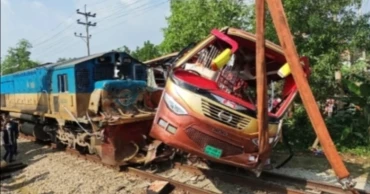
Death traps on rails: Cumilla level crossings claim over 350 lives in 5 years
When a speeding train slammed into a bus at Padua Bazar in Cumilla killing 12 people recently, it was not just another accident—it was a stark reminder of a long-ignored danger along Cumilla’s railway tracks.
Unprotected and poorly managed level crossings across Cumilla have turned into deadly traps.
Over 350 lives in the past five years and leaving over a thousand others injured, said Md Jashim Uddin, Laksham railway police station Officer-in-Charge.
The tragedy was not an isolated incident it was yet another reminder of a long-standing crisis.
Spread across a 102-kilometre rail network, the district has more than 150 authorised and unauthorised crossings.
Many of them lack basic safety system, making accidents—both minor and fatal—a frequent occurrence and posing constant risks to pedestrians and commuters.
The Padua Bazar crash has once again brought the issue into sharp focus.
A pattern of recurring tragedies
The latest accident fits into a disturbing pattern.
In 2024, seven passengers of an autorickshaw were killed after being hit by a train at an illegal crossing in Kalikapur under Burichang. In 2023, five people died in a similar accident in Tuguria area of Monohorgonj.
In 2022, three schoolgirls were killed after being run over by a train near a railway gate in Bijoypur under Cumilla Sadar South. Earlier, in 2011, eight people lost their lives in a train-bus collision on an unauthorised level crossing in Shashidal of Brahmanpara.
According to railway data, at least 347 people were officially recorded killed in train accidents in the Cumilla region over the past five years.
However, the actual figure is believed to be significantly higher, as many incidents go unreported or are not formally documented.
A network riddled with risks
Data from railway sources highlight the scale of the problem as on Laksam–Noakhali route (22 km), there are 14 authorised and 17 unauthorised crossings and Laksam–Chandpur route (14 km), there are 4 authorised and 13 unauthorised crossings.
Besides, Along the Dhaka–Chattogram corridor within Cumilla (66 km), there are 66 authorised and 74 unauthorised crossings.
Experts say the big number of illegal crossings significantly increases the likelihood of accidents, as most lack gates, signals, or personnel.
Encroachment along railway tracks, nearby markets and settlements, reckless driving, and a lack of public awareness further compound the risks.
Allegations of negligence by gatekeepers also surface after many incidents.
Calls for accountability and urgent action
Local rights activists say the problem has been ignored for years.
Abdul Halim Majumder, general secretary of Cumilla Dakshin unit of Cumilla Bachao Manch, stressed the need to bring illegal crossings under strict control.
He also called for extending the railway overpass at Padua Bazar and constructing another overpass on the Laksam–Noakhali road.
OC Jasim Uddin said , “Without greater awareness and caution, it is difficult to prevent railway accidents.”
Steps underway, but concerns remain
Railway officials say initiatives have been taken to reduce the number of illegal crossings and improve monitoring of gatekeepers.
Sub-assistant engineers Md Anisuzzaman and Golam Sarwar said efforts are ongoing to enhance safety system and minimise risks.
Yet for residents who cross the tracks every day, the danger remains immediate and real.
4 months ago
Foreign Ministry prioritises expat safety, trade expansion amid Middle East tensions
The Ministry of Foreign Affairs has set a series of key priorities including ensuring energy security, safeguarding Bangladeshi expatriates and expanding the trade and investment opportunities amid global tensions in the wake of the Israel-Iran conflict.
A major focus will be to assist the government in facing the challenges arising from the ongoing Middle East conflict including ensuring an adequate supply of fuel oil.
The ministry will also prioritise support for Bangladeshi expatriates in the Gulf region, working closely with host countries to minimise any adverse impact of the conflict on their employment.
Ensuring access for Bangladeshi products to global markets and exploring new export destinations will remain another key priority,according to an official document.
The ministry will support the effective implementation of existing trade agreements and consider new ones with major partners including the European Union and South Korea.
It will also work in coordination with relevant government agencies including Bangladesh Investment Development Authority (BIDA)to accelerate foreign investment in priority sectors.
Expanding overseas employment opportunities will be another focus area. The ministry plans to explore new labour markets, enhance skills and training, reduce migration costs, and pursue a comprehensive migration policy to curb unethical practices in manpower export.
A Foreign Ministry official told UNB that manpower export and the welfare of Non-Resident Bangladeshis (NRBs) are central to the country’s current foreign policy.
“However, our labour market is heavily dependent on the Middle East. The safety of our remittance earners has become a major concern amid the ongoing conflict. Ensuring their security is a top priority,” the official said.
He added that diplomatic efforts are being strengthened to diversify labour markets.
“In addition to the Middle East, initiatives are underway to send skilled workers to emerging markets in Europe, Japan, South Korea, Malaysia and Eastern Europe,” he said.
Bangladesh missions abroad have also been instructed to strengthen emergency services to ensure the safety and rights of expatriates.
According to the official document, economic diplomacy remains the government’s top priority. Efforts are ongoing to expand trade, investment, technology and energy cooperation with key partners such as Japan, China, South Korea, the United States, the United Kingdom and European countries.
The Foreign Ministry is working closely with the Ministry of Commerce, BIDA and BEZA to identify new opportunities and expand market access for Bangladeshi products.
Potential markets include the Middle East—particularly Gulf countries as well as Latin America and Africa.
On society's margins, even Eid isn't always a day of joy and celebration
There is significant scope to boost exports of ready-made garments, pharmaceuticals, ceramics and jute products, alongside cooperation in agriculture, energy and sports.
The official also highlighted the importance of people-to-people diplomacy in projecting Bangladesh globally as an emerging economy with a tolerant society and a dynamic young population.
“Embassies have been instructed to actively promote Bangladesh’s positive image. We are also considering greater engagement with expatriates to leverage their experience, networks and success to boost investment and trade,” he added.
Two Bangladeshi nationals have lost their lives and seven others have sustained injuries due to missile and drone attacks in different parts of the Middle East.
Adviser to the Prime Minister on Foreign Affairs Humaiun Kobir on March 2 said they will do everything for the Bangladeshis to ensure their welfare and safety of its citizens amid current situation in the Middle East.
"They are our top most priority," said the Adviser, adding that the government is fully supportive of their welfare and protection.
4 months ago
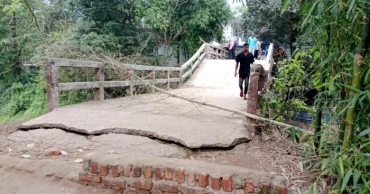
50,000 people stranded as key bridge collapses in Sunamganj
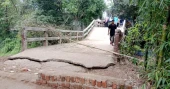
The collapse of Berigaon bridge in Surma union of Sunamganj Sadar has left around 50,000 people effectively cut off, disrupting communication in at least three unions and causing severe hardship for residents.
The decades-old bridge, a key transport link for Surma, Jahangirnagar and Rangarchar unions, collapsed during Ramadan, halting the movement of people and vehicles and forcing commuters to take long alternative routes.
Constructed during the Pakistan era to ensure easier movement for people in the then greater Rangarchar area, the bridge had long been in a vulnerable condition.
Local residents said it had remained risky for nearly three decades despite repeated complaints to authorities and elected representatives.
In early 2024, the bridge underwent temporary repairs after being declared unsafe but those measures failed to hold, eventually leading to its collapse.
With the bridge now completely unusable, residents are forced to travel nearly two kilometres via Mangal Kanta Bazar in neighbouring Jahangirnagar union, significantly increasing travel time and transport costs.
The disruption has particularly affected students, office-goers and patients, many of whom are struggling to access schools, workplaces and healthcare services.
“Transport costs have increased, and we are avoiding travel unless absolutely necessary. It has become very difficult to commute to the town,” said Shah Rukh Mia, a local resident.
Another resident, Abdur Rahman, said the collapse has severely disrupted daily life. “We are facing immense hardship. A new bridge must be built immediately,” he said.
Expressing frustration, Suhel Ahmed said the northern part of Surma has long been neglected in terms of development. “Despite electing representatives repeatedly, our problems remain unresolved,” he added.
Jahangirnagar Union Parishad Chairman Rashid Ahmed said the bridge was the main communication route for the area and its collapse has intensified public suffering. “A new bridge is urgently needed to restore normal life,” he said.
Md Anwar Hossain, senior assistant engineer of the Local Government Engineering Department (LGED) in Sunamganj, said a temporary structure similar to a Bailey bridge will be installed using slab components to restore movement of people and vehicles.
“At the same time, the process of constructing a new bridge is already underway and efforts are being made to complete it as quickly as possible,” he said.
4 months ago
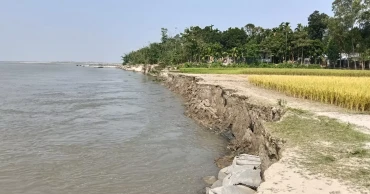
Brahmaputra erosion leaves 50 families homeless in Kurigram, over 100 at risk
Along the shifting banks of the Brahmaputra, uncertainty has once again gripped riverine communities in northern Bangladesh, as relentless erosion over the past week has rendered at least 50 families homeless and pushed many more to the brink of displacement.
The worst-affected areas are Sukherbati and Ghughumari villages in Char Shaulmari union, where nearly 400 metres of homesteads and large swathes of cropland have already been swallowed by the river, said locals.
A visit to the area shows residents scrambling to move their homes and belongings to safer ground.
Many families have already taken shelter with relatives or in nearby areas while others remain in vulnerable condition as cracks widen dangerously close to their houses.
“We have lost everything to the river,” said Sirajul Islam, 45. “I don’t know where to go or how to rebuild my life.”
Kashem Ali, 55, said, “One by one, our land and houses are disappearing into the river. We are becoming destitute,” he said.
Experts attribute the intensifying erosion to both seasonal and structural factors.
Professor Shafiqul Islam, president of the Kurigram district Char Development and Implementation Organisation, said erosion tends to increase during the dry season when water levels in the Brahmaputra fall.
Diesel crisis disrupts irrigation in northern Bangladesh
“The narrowing of the river channel and the weak soil structure along the banks are accelerating the erosion,” he said.
He urged the authorities concerned to take effective steps to rehabilitate affected families.
Local representatives warned that the situation could worsen without urgent intervention.
Iman Ali, former chairman of Roumari upazila parishad, said the matter has been communicated to State Minister for Water Resources Farhad Hossain Azad, seeking immediate action.
Rakibul Hasan, executive engineer of the Bangladesh Water Development Board in Kurigram, said a river management project has been submitted to the Planning Ministry to control erosion along a 16.5-kilometre stretch — from Saheber Alga in Ulipur to Kodalkati in Char Rajibpur.
The proposed project, estimated to cost around Tk 8.5 crore, aims to establish permanent river control measures. “If approved, it will help mitigate erosion effectively,” he said.
Tk 1,359cr project aims to transform Munshiganj-Dhaka connectivity
For now, however, affected families remain in distress, fearing that without swift and effective measures, the erosion could intensify further and trigger a larger humanitarian crisis in the area — a recurring hardship for communities living along the fragile banks of the Brahmaputra.
4 months ago
Diesel crisis disrupts irrigation in northern Bangladesh
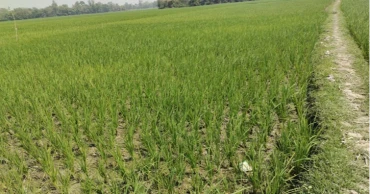
Diesel shortage in Bangladesh’s northern districts is disrupting irrigation at a critical stage of the Boro season, raising fears of a drop in rice production and deepening anxiety among farmers.
Growers in 16 districts including Rangpur, Lalmonirhat, Kurigram, Gaibandha, Nilphamari, Rajshahi, Natore, Naogaon and Chapainawabganj, said they are unable to irrigate their fields due to a lack of fuel.
As vast tracts of cropland are drying up during peak Boro cultivation many fear irreversible damage to the country’s main food crop.
The ongoing fuel crunch has left diesel-run irrigation pumps, tube wells and agricultural machinery idle across large swathes of farmland.
Farmers allege that most filling stations in Rangpur and Rajshahi regions are either out of stock or unable to meet demand, forcing them to turn to the open market where diesel is being sold at Tk 50–80 above the government-set price.
The price surge has added to already rising cultivation costs, pushing many farmers deeper into debt.
A visit to Madhupur Char area in Kaunia upazila of Rangpur found the situation particularly severe.
Farmers there said diesel prices have jumped from Tk 102 to Tk 120 per litre within the past five days, significantly increasing irrigation expenses.
“Costs were already high. Now with rising fuel prices it has become even harder to manage irrigation,” said farmer Saidul Islam.
In Shialkhowa village of Kaliganj upazila in Lalmonirhat, farmer Hasim Mia said he failed to find diesel after visiting several filling stations. “I finally had to buy from a local retailer at Tk 220 per litre,” he said.
Another farmer from Kakina village, Moslem Uddin, said, “I searched the entire msrket on Friday but couldn’t find even a litre of diesel. My Boro field is drying up,” he said, adding that he was willing to pay up to Tk 250 per litre but still could not secure any fuel.
Operators of irrigation pumps said the shortage has made it nearly impossible to continue operations.
Many have been forced to increase irrigation charges, further burdening farmers.
According to the Department of Agricultural Extension (DAE), a target has been set to cultivate Boro rice on around 6,52,000 hectares of land this season in five districts—Rangpur, Kurigram, Lalmonirhat, Gaibandha and Nilphamari-- under Rangpur division and four districts—Rajshahi, Naogaon, Natore and Chapainawabganj-- under Rajshahi division.
Iran-backed Houthis join war, global markets on edge
However, with irrigation in these regions heavily dependent on diesel, the current crisis is disrupting water supply across a vast area.
Roughly 21 percent of irrigated land in these regions relies on diesel-powered pumps.
Of the 21,535 deep tube wells, 615 run on diesel.
Among 210,449 shallow tube wells, 98,268 are diesel-operated. Similarly, of the 17,647 low-lift pumps, 11,458 depend on diesel.
Agricultural economists have urged the government to prioritise fuel allocation for the farming sector to avert a potential food production crisis.
They said the global fuel market has been under pressure due to ongoing Iran-US conflicts, prompting the government to introduce rationing measures.
While such steps may be justified, experts stress the need to clearly prioritise critical sectors like agriculture in fuel distribution.
Agronomist Abdus Salam said Boro rice is Bangladesh’s principal food grain and is highly dependent on irrigation.
“Around 62 to 65 percent of Boro fields rely on diesel-powered irrigation. Ensuring fuel supply to agriculture at this stage is crucial,” he said.
He also suggested that similar to electricity, diesel supply for irrigation should be brought under a structured management system to ensure uninterrupted farming during peak seasons.
However, additional director Dr Azizur Rahman and additional director Sirajul Islam of the Department of Agricultural Extension in Rajshahi and Rangpur, respectively, claimed they have not received complaints regarding diesel shortages or overpricing and said irrigation activities remain normal.
However, farmer said if the fuel shortage continues, irrigation across vast crop fields will be severely affected.
Advocate Palash Kanti Nakh, president of Farmer and Workers Association, in Rangpur division, said the government must stand by farmers despite the global nature of the fuel crisis.
“Boro cultivation requires adequate water at this stage. Without irrigation, yields could drop by half, pushing farmers into deeper financial distress,” he said.
Rangpur Divisional Commissioner Shahidul Islam said efforts are underway to ensure farmers can access diesel more easily.
In a move to mitigate the urgent demand of the country, the Cabinet Committee on Economic Affairs on Thursday approved emergency diesel import proposals amid the unstable Middle East situation.
The decision was taken at a meeting of the Cabinet Committee on Economic Affairs for the current fiscal year held virtually with Finance and Planning Minister Amir Khosru Mahmud Chowdhury in the chair.
The meeting approved in principle two proposals of the Energy and Mineral Resources Division to ensure uninterrupted fuel supply in the country in the context of the ongoing geopolitical instability following tensions involving in the Middle East.
4 months ago
Tk 1,359cr project aims to transform Munshiganj-Dhaka connectivity
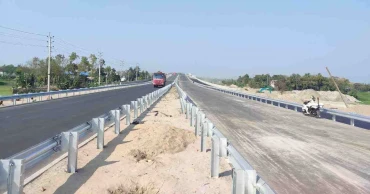
A major road development project in Munshiganj is set to ease chronic travel woes and strengthen connectivity with the capital as authorities move to upgrade key highways linking the district with Dhaka’s main transport corridors.
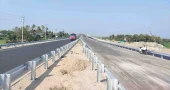
The Tk Tk 1,359cr project fully funded by the government aims to upgrade three regional highways and one district road to modern standards, improving links between Dhaka–Mawa–Bhanga (N-8) and Dhaka–Chattogram (N-1) highways.
Officials say the project to be implemented by the Roads and Highways Department under the Road Transport and Highways Division is expected to be completed by June 2029.
Spanning Munshiganj Sadar, Tongibari, Sirajdikhan and Srinagar upazilas, the project will upgrade roads from Munshiganj Old Bus Stand to Chonbari in Srinagar, creating a more efficient and safer road network.
For thousands of daily commuters and traders, the project promises shorter travel times and smoother journeys to Dhaka, particularly through improved access to the Dhaka–Mawa Expressway.
Residents of Munshiganj, long dependent on congested and narrow routes, are expected to benefit from faster connectivity while transport operators anticipate reduced travel delays and vehicle operating costs.
The project includes widening road embankments, reconstructing pavements for both two-lane and four-lane sections, and carrying out surface development to enhance durability and traffic capacity.
To improve safety and traffic flow, the project includes construction of underpasses, overpasses and bus bays, alongside modern drainage systems,according to project documents .
Bridges and culverts will also be a key focus.
Authorities plan to build six RCC box culverts, 31 additional culverts for local communications, and 14 RCC slab bridges to strengthen linkages between main and feeder roads.
Side drains with footpaths and RCC retaining walls will be constructed in selected stretches, while intersections will be redesigned to handle increased traffic volumes.
The project also involves land acquisition, relocation of utilities such as electric poles, and maintenance arrangements during the construction period.
Key roads under the plan include the Munshiganj Old Ferry Ghat–Old Bus Stand road, Fatulla–Munshiganj–Louhajang–Mawa road, Muktarpur Ferry Ghat road, and the Munshiganj (Hatimara)–Kunderbazar–Srinagar (Chonbari) road.
These routes serve as vital arteries connecting the district’s major upazilas and are widely used for commuting, goods transport and access to Dhaka.
Officials say the upgraded network will significantly improve traffic movement from the Muktarpur Bridge over the Dhaleshwari River to Srinagar on the Dhaka–Mawa Expressway, easing congestion and ensuring quicker access to the capital.
Planning Commission officials believe the project will not only enhance connectivity between the two national highways but also boost economic activity in Munshiganj by facilitating smoother movement of people and agricultural goods.
They added that improved road infrastructure is expected to support broader socio-economic development in the district and beyond.
4 months ago
A Khulna hospital where nurses outnumber patients
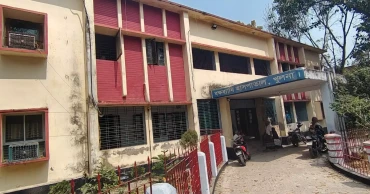
At a time when public hospitals across Bangladesh often struggle with overcrowding and staff shortages a starkly different picture has emerged at the Khulna Divisional Chest Disease Hospital where nurses significantly outnumber admitted patients.
The 100-bed facility at Mirerdanga under Khan Jahan Ali Police Station currently has only 26 patients admitted against a sanctioned 93 nursing posts.
Even with several nurses on leave or in training, the number of on-duty nurses frequently exceeds the patient count, according to hospital sources.
The comparatively lighter workload and fewer complications have made the hospital a preferred posting for many nurses.
Some have reportedly managed to remain stationed here for years avoiding transfers that are common in the public health system.
However, the situation has also sparked allegations of underutilisation of human resources.
Critics claim that with fewer patients to attend to, some nurses spend idle time on mobile phones or in casual conversations during duty hours.
Hospital authorities, however, strongly deny such claims.
Farida Yasmin, acting deputy nursing superintendent, said nurses remain actively engaged in a wide range of responsibilities beyond direct patient care.
“In addition to providing regular services to patients, nurses are involved in ECG procedures, MDR-related tasks, operation theatre duties, computer work, and preparing patient reports,” she said.
She added that nurses are assigned across three shifts — from 8:00am to 2:00pm, 2:00pm to 8:00pm, and 8:00pm to 8:00am — and must also cover emergency duties in multiple wards.
“In four critical wards alone, eight to ten nurses are deployed. Nurses also handle emergency department responsibilities during morning and evening shifts,” she said.
Yasmin further noted that a shortage of doctors at the hospital has increased the burden on nurses, who often have to manage patients round the clock in the absence of physicians.
“There is no scope for idleness or passing time on mobile phones,” she added.
According to hospital data, of the 93 sanctioned nursing positions, 84 are currently filled. Among them, 17 nurses are on leave, nine are undergoing BSc nursing training, one is on maternity leave, two are on quarantine leave, and others are on various types of leave, deputation, or training assignments.
Despite these constraints, the hospital continues to function with a structured duty roster across three shifts.
Yasmin also highlighted structural challenges within the institution including limited training opportunities for nurses compared to other government hospitals.
“Regular training helps improve professional skills, but such opportunities are limited here,” she said.
She added that the post of nursing superintendent has long remained vacant, with a senior nurse supervisor currently performing the duty in an acting capacity.
Another pressing issue is the lack of usable residential facilities.
The hospital’s staff quarters have remained abandoned for years, forcing nurses to commute from distant areas and often making it difficult to report to duty on time.
The unusual staff-to-patient ratio at the hospital has reignited debate over the distribution of healthcare resources.
4 months ago