special
Floating guava market breathes new life into Pirojpur's rural economy
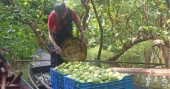
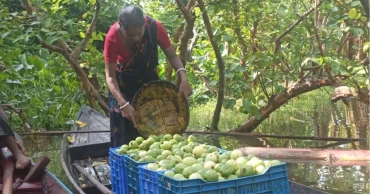
Hidden among a maze of canals in Pirojpur's Nesarabad upazila lies one of Bangladesh's most picturesque agricultural landscapes, where lush guava orchards, bustling boats and a century-old floating market come together every monsoon to create a unique blend of nature, tradition and rural commerce.
The Kuriana, Atghar and Bhimruli areas are among the country's largest guava-producing regions and have long been known as the "Apple Kingdom of Bengal."
With a history spanning nearly two centuries, the orchards have become a symbol of the area's rich agricultural heritage.
During the Bengali months of Shraban and Bhadra, the famous floating market at Bhimruli turns into the centre of economic activity. Farmers from Kuriana, Atghar, Bhimruli, Jalabari, Dhalhar and nearly 20 kilometres of surrounding areas arrive at dawn in boats loaded with freshly harvested guavas, along with hog plums (amra), lemons, bananas, vegetables and other farm produce.
Trading begins early in the morning and continues until noon, as hundreds of boats crowd the canals, creating a vibrant floating marketplace that has become one of Bangladesh's most iconic rural attractions.
The waterways lined with endless rows of guava trees offer visitors a rare opportunity to travel through narrow canals by small boats, pick fresh fruit directly from the orchards and witness a traditional market operating entirely on water.
The region's popularity has increased significantly in recent years, driven by social media exposure and growing domestic tourism. Every monsoon, thousands of visitors travel to Bhimruli to experience the floating market and the surrounding orchards.
The tourism boom has also transformed the fortunes of local farmers.
9 days ago
Jhenaidah-Jashore six-lane project stalls with only 2% progress in six years
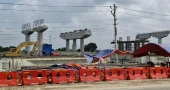
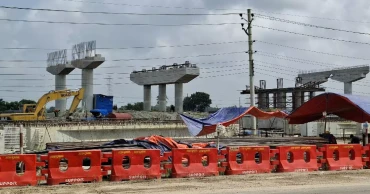
The long-delayed project to upgrade the Jhenaidah-Jashore section of the N-7 national highway into a six-lane road has made only around two percent physical progress in six years despite significant progress in land acquisition.
The project, initially approved in 2020 at a cost of Tk 4,187 crore, has already been revised to Tk 6,626 crore.
The prolonged delays have left the highway riddled with excavated sections, potholes and uneven surfaces, creating serious risks for commuters and disrupting freight movement along one of the country’s key transport corridors.
The highway serves as a vital route connecting the Benapole and Bhomra land ports and Mongla seaport with northern and other parts of Bangladesh.
Local resident Basir Uddin said the road had effectively become a death trap.
“We heard the administration has handed over the land, but because of the contractors’ indifference, the entire road has turned hazardous. Accidents are occurring regularly, vehicles can barely move through the craters, and even critically ill patients face life-threatening delays on their way to hospitals,” he said.
With the extended implementation period set to expire in December 2026, uncertainty looms over whether the World Bank will continue financing the project, said officials.
10 days ago
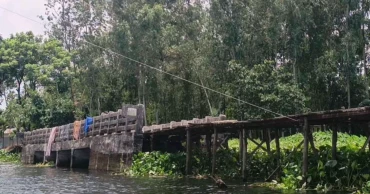
Eroded bridge approach roads leave 50,000 Rangpur residents suffering for years
Over 50,000 people in 10 villages of Kaunia upazila in Rangpur have been enduring years of hardship after floodwaters washed away the approach roads to a bridge, forcing them to cross a fragile bamboo footbridge every day.
Besides, the concrete bridge at Gopidanga Moulvibazar in Balapara union has remained largely unusable for vehicles after the Teesta River eroded its approach roads. The bridge has also developed a noticeable tilt, prompting fears of a major accident.
Locals said the concrete bridge was built in 2014 by the Local Government Engineering Department (LGED) at a cost of Tk 37.24 lakh.
However, a few years later, floodwaters from the Teesta River washed away the approach roads on both sides.
With no repairs undertaken by the authorities, local residents constructed a temporary bamboo-and-wood platform to maintain communication. Since then, thousands of commuters, including school and college students, as well as battery-run auto-rickshaws, vans and horse carts, have been using the risky crossing daily.
Residents alleged that frequent minor accidents occur on the bridge, while travelling at night has become even more dangerous. They said repeated appeals to local authorities and elected representatives for reconstruction of the bridge and its approach roads have yielded only assurances.
Balapara Union Parishad Member Hafizar Rahman said at least 50,000 people from 10 villages depend on the crossing.
UP Chairman Ansar Ali said several proposals had been submitted to the LGED seeking construction of a new bridge.
Kaunia Upazila LGED Engineer Md Manirul Islam said a proposal for a new bridge has already been approved and the feasibility study completed.
"The project is now at the design stage. We hope the tender will be approved soon, after which construction work will begin," he said.
11 days ago
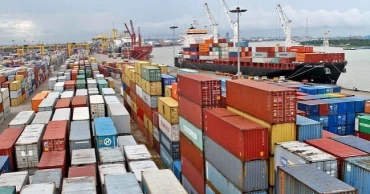
Trade deficit widens 24% as exports fall and capital imports slump
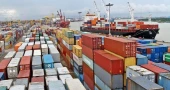
A double-digit drop in capital machinery imports and falling export revenues have driven Bangladesh’s trade deficit up by nearly 24 percent to $23.98 billion in FY 2025-26, leaving a historic $35.5 billion remittance surge to single-handedly cushion the external economy from severe distress.
The external trade is presenting a stark, two-way picture. On one hand, a slowdown in industrial raw material and capital machinery imports points to sluggish domestic manufacturing; on the other, export earnings have failed to meet expectations. Consequently, the country’s trade imbalance has worsened, driving the foreign trade deficit up by nearly 24 percent.
However, a record surge in foreign remittances has significantly cushioned the pressure on external transactions and played a pivotal role in boosting foreign exchange reserves.
Data from Bangladesh Bank's Economic Indicators and Balance of Payments (BoP) reports, combined with Export Promotion Bureau (EPB) statistics, paint a challenging macroeconomic landscape. Economists attribute this subdued trade momentum in FY 2025-26 to global uncertainties, high interest rates, financial distress among major industrial conglomerates, rising production costs, and a lingering deficit in business confidence.
Trade Deficit Surges to $23.98 Billion:
The gap between Bangladesh’s imports and exports widened sharply during the first 11 months (July–May) of the fiscal year 2025-26, according to Bangladesh Bank data.
Total Imports (July–May): $64.02 billion
Total Exports (July–May): $40.04 billion
Trade Deficit: $23.98 billion
This represents a 23.73 percent (nearly 24%) increase compared to the $19.38 billion trade deficit recorded during the same period of the previous fiscal year. Economists warn that if export growth remains sluggish, maintaining this import burden could severely strain the external sector over the long term.
In FY 2025-26, import settlements via Letters of Credit (LCs) stood at $70.4 billion, reflecting a negligible growth of 0.09 percent compared to $70.3 billion in the preceding year. Because import settlements serve as a key barometer for industrial activity, this stagnation signals that the manufacturing sector has yet to regain full momentum.
While fresh LC openings increased by 7 percent to $74.7 billion—hinting at potential future recovery—business owners remain cautious regarding major capital commitments.
The most concerning contraction occurred in essential production inputs:
Industrial Raw Materials: Fell 3.33 percent to $23.18 billion.
Capital Machinery: Dropped 10.68 percent to just $1.80 billion, highlighting a sharp decline in long-term investment.
Consumer & Intermediate Goods: Declined by approximately 7 percent each.
Energy (Exception): Petroleum imports bucked the trend, rising 6.42 percent to $10.68 billion.
Bankers and industrial leaders noted that following recent political shifts, several prominent business groups—including Beximco Group, Nassa Group, and Gazi Group—have had factory operations suspended or restricted to just 30 to 40 percent capacity. Coupled with high interest rates and rising debt costs, new investments have ground to a halt.
Exports miss $55 billion target:
The domestic manufacturing slowdown directly spilled over into export performance. Total merchandise exports for FY 2025-26 reached approximately $48 billion —a 0.58 percent drop year-on-year, missing the government’s target of $55 billion.
The Ready-Made Garment (RMG) sector, which accounts for nearly 80 percent of total exports, generated around $38.7 billion. Exporters attributed the shortfall to:
i) US retaliatory tariffs and intense competition in European markets.
ii) Softening global demand and high domestic logistics costs.
iii) Persistent energy shortages and high interest rates.
Although June recorded a 26 percent spike in exports, analysts note this was primarily driven by a higher number of working days rather than a genuine surge in international demand or new market penetration.
Record remittances provide critical relief:
Amid trade pressures, the remittance sector emerged as the economy's strongest pillar. Bangladesh received a record $35.5 billion in remittances in FY 2025-26, marking a 17.3 percent increase year-on-year.
This robust inflow significantly narrowed the current account deficit and helped generate a $4.16 billion surplus in the financial account, preventing severe balance-of-payments distress.
In response to trade headwinds, the government has initiated steps to launch the country’s first Free Trade Zone (FTZ). Bangladesh Bank has already issued comprehensive guidelines allowing duty-free import, storage, processing, repackaging, re-labeling, and re-exporting of raw materials on a consignment basis without needing conventional LCs. Business leaders anticipate this move will reduce lead times, optimize working capital, and enhance supply chain efficiency.
Commenting on the economic trajectory, Mohiuddin Rubel, Founder & CEO of Bangladesh Apparel Voice and former Director of BGMEA, emphasized the need for structural policy support.
"Exporting is not solely dependent on foreign demand; it is directly tied to domestic production capacity, raw material supply, energy, logistics, and the investment climate. The decline in raw material and capital machinery imports is a clear warning sign for future production. The investments we lack today will manifest as reduced output and exports months down the line," he added.
"Global competition is fierce, with rival nations like Vietnam and India leveraging various Free Trade Agreements while Bangladesh prepares for LDC graduation. To stay competitive, we must reduce the cost of doing business, enhance port efficiency, guarantee uninterrupted energy, and accelerate trade facilitation reforms. The FTZ is a positive initiative, but realizing its full potential requires effective policy execution, rapid customs clearances, product diversification, and new market entry," said Mohammad Hatem, President of Bangladesh Knitwear Manufacturers and Exporters Association (BKMEA).
There is no alternative to reforms to increase competitiveness. Professor Mustafizur Rahman, distinguished fellow of CPD told UNB, “The coming days will be more difficult due to global conflicts, transition from LDCs and free trade agreements with competing countries.”
According to him, Bangladesh’s competitiveness must be increased by reducing business costs, improving logistics systems, implementing a National Single Window, facilitating trade, diversifying export products and quickly concluding a Free Trade Agreement (FTA).
Entrepreneurs in the garment sector also say that competing countries like India and Vietnam are getting additional benefits in the European Union market. Therefore, reducing production costs, ensuring energy supply and increasing the efficiency of ports and logistics are the biggest demands of the time.
Masrur Reaz, Chairman and Founder, Policy Exchange Bangladesh, also former senior economist of World Bank Group told UNB that there is no alternative to product diversification to enhance Bangladesh’s export share in the global markets.
Bangladesh is earning 83 percent of its export from a single Readymade Garment (RMG) sector. Whearese, Vietnam and other competitor countries are exporting huge diversified products, as a result, the export volume of those countries is increasing at desired level, he pointed out.
Masrur also emphasised upgradation of smart technology and appointment of tech-know how skilled people in the manufacturing sector through a long term policy to increase export and set stability in the domestic economy.
11 days ago
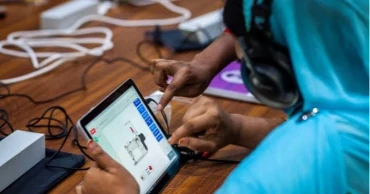
Building tomorrow’s workforce: Govt plans major science, STEM expansion
The government has outlined an ambitious plan to strengthen science, technology and research as part of its strategy to develop a technology-driven skilled workforce capable of meeting the demands of the Fourth Industrial Revolution (4IR).
According to the budget document, priority has been given to addressing the challenges of automation and creating opportunities through emerging technologies, with emphasis on science, technology, engineering and mathematics (STEM) education, advanced research and innovation.
The government said, in line with its Election Manifesto 2026, it aims to foster a science-oriented nation by producing a technology-driven workforce and promoting modern, employment oriented education.
As part of this strategy, STEM education will be expanded to the grassroots level, while research activities will be aligned with global market demand to improve employability and commercial outcomes.
The budget document said the government has moved beyond conventional research models by introducing the Research to Market (R2M) and Innovate to Market (I2M) approaches, under which innovations, technologies and research products will receive direct support for commercialisation.
The government also plans to establish national capabilities in several frontier technologies including space research, semiconductor technology, earthquake and seismographic research.
To prepare young people for future industries, specialised laboratories for Artificial Intelligence (AI), semiconductors, robotics, machine learning and big data analysis will be established, according to the budget paper.
Officials believe these facilities will help equip students and researchers with practical skills required in rapidly evolving global technology sectors.
Plans have been taken to strengthen geological research for exploring Rare Earth Elements (REEs) in coastal and riverine island areas, while offshore wind energy potential will be mapped through wind flow analysis in shallow coastal waters.
The government will also continue coral restoration programmes on Saint Martin’s Island as part of its sustainable scientific research agenda.
According to the budget document, the Oceanographic Research Institute is conducting research to unlock opportunities in the country’s Blue Economy.
To encourage scientific curiosity among young people, the government plans to establish modern Novo Theatres in Khulna, Chattogram, Sylhet, Barishal, Rangpur and Mymensingh, in addition to the existing facilities in Dhaka and Rajshahi. The Novo Theatre in Dhaka will also be further modernised.
Science centres will be established in every district in phases to expand access to science education and public engagement.
The Ministry of Science and Technology will continue organising the Bangladesh Innovation Fair to promote innovation among young researchers and entrepreneurs.
The government also plans to continue providing grants and financial assistance for research projects in textiles, pharmaceuticals, agriculture and innovative technologies.
Highlighting recent achievements, the budget noted that Bangladeshi scientists have, for the first time, successfully decoded the complete genome sequences of indigenous Mirakadim cattle, sheep and ducks using domestic expertise.
It also said the Biotechnology Institute is developing climate resilient and high yielding crop varieties through genome editing technology to strengthen food security.
In the healthcare sector, the government has undertaken a comprehensive programme to provide affordable technology based nuclear medicine services across the country.
An Integrated Nuclear Medicine Information System based on online networking will connect 22 Nuclear Medicine Institutes, including the National Institute, enabling improved delivery of both general and specialised nuclear medical services.
The budget emphasised that research remains indispensable for developing new technologies and enhancing national competitiveness.
To sustain research excellence, the government will continue extending financial support to researchers through the Science and Technology Fellowship Trust, aiming to create world class research opportunities both within Bangladesh and abroad.
12 days ago

EC drafts new UP polls code with AI curbs, stricter campaign rules
The Election Commission (EC) has drafted a new code of conduct for Union Parishad elections, proposing a raft of changes, including restrictions on the use of microphones, a ban on collecting voters' NID cards and mobile phone numbers aiming to influence votes, tighter rules on AI-generated campaign content and higher penalties for electoral misconduct.
The proposed code prohibits the use of microphones and other sound-amplifying devices before 12:00pm and after sunset in any election area, replacing the existing campaign hours of 2:00pm to 8:00pm.
The EC has updated the code following amendments to the Local Government (Union Parishad) Act, 2009, under which Union Parishad elections will be held on a non-partisan basis after the abolition of political party symbols.
Among the major changes are a ban on making transactions through mobile financial service (MFS) and traditional campaign posters, formal recognition of digital and social media campaigning under strict regulations, restrictions on the malicious use of artificial intelligence (AI), permission for campaign caravans and a proposal to raise the maximum fine for violating the code from Tk 10,000 to Tk 50,000.
Under the draft, loudspeaker volume during campaigns must not exceed 60 decibels, while only one microphone will be permitted at a time for campaign activities or street meetings within a ward.
The proposed code also prohibits candidates or their supporters from collecting voters' or their family members' NID numbers to influence voting or gathering mobile phone numbers for conducting transactions through MFS, such as bKash, Nagad, Rocket or Upay.
In a significant change, the EC has formally allowed election campaigns through digital and social media, subject to a series of restrictions.
Candidates, election agents and campaigners will have to submit the names of their social media platforms, account IDs, email addresses and other identifying information to the returning officer before launching online campaigns.
The draft bars the malicious use of AI in election campaigns and prohibits the creation or dissemination of harmful content, including hate speech, misinformation, manipulated images, and fabricated election-related information.
It also bans the use of religion, ethnicity, caste, gender or community-based hate speech, provocative language or the misuse of religious or ethnic sentiments for electoral gains.
The proposed code prohibits the creation, publication, dissemination or sharing of AI-generated or AI-edited false, misleading, biased, hate, obscene, vulgar or defamatory content on social media or any other media with a view to misleading voters or tarnishing the reputation of any candidate or person.
The draft code also slaps a ban on traditional campaign posters while permitting the use of billboards under strict conditions.
Each candidate will be allowed to display only one billboard per ward, with a maximum size of 16 feet by 9 feet, provided it does not obstruct traffic, endanger public safety or harm the environment.
Campaign materials such as banners, leaflets and festoons must be biodegradable and cannot be made of rexine, polythene, plastic or other environmentally harmful materials. PVC banners and plastic coverings will also be prohibited.
To make electioneering more festive, the draft code allows caravan or mobile campaign processions using digital technology or biodegradable materials on vehicles from 12:00pm until sunset, provided they do not disrupt traffic or cause public inconvenience.
Election campaigning inside educational institutions will remain prohibited, although playgrounds may be used with permission from the authorities as long as academic activities are not disrupted.
The draft also bars city corporation administrators from participating in election campaigns.
The EC has also proposed increasing the penalty for violating the election code. Anyone found guilty of breaching the code may face up to six months' imprisonment, a fine of up to Tk 50,000, or both. The existing maximum fine is Tk 10,000.
A new provision has been incorporated in the draft code empowering the EC to cancel candidature following an investigation for the violation of the electoral code.
12 days ago
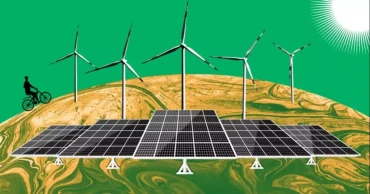
Bangladesh moves to build ‘Strategic Energy Reserves’, supporting facilities amid global uncertainty
In a major step towards bolstering energy security, the government has launched initiatives to build Strategic Energy Reserves and supporting storage facilities to help safeguard fuel supplies against global market volatility and emergency disruptions while maintaining regional balance.
To address volatility in global markets and ensure uninterrupted supply during emergencies, initiatives have been undertaken to develop ‘Strategic Energy Reserves’ and related storage infrastructure, which will play an important role in strengthening national energy security and maintaining regional balance,according to a budget document.
According to the document, measures are being taken to establish cost-effective and sustainable infrastructure to maintain energy prices at affordable levels.
To further enhance energy security, the establishment of an additional LNG terminal at Moheshkhali is under review alongside the two existing floating LNG terminals.
Besides, the process of land acquisition and consultant appointment for a land-based LNG terminal at Matarbari, Moheshkhali is at its final stage.
An action plan is being formulated to supply gas from Bhola region to the national gas grid.
Installation of prepaid gas meters is being accelerated to reduce wastage, eliminate illegal connections and minimise system losses.
To reduce risks associated with imported energy and ensure continuity of supply, the government is pursuing a policy of energy source diversification.
This strategy seeks to reduce excessive dependence on the Middle East by expanding energy import cooperation with other potential regions, including Asia, Africa and Europe.
At the same time, initiatives are being undertaken to attract new investment through increased private sector participation, investment-friendly policies and the expansion of Public-Private Partnerships (PPP) in the energy sector.
Thr budget document said initiatives have been undertaken to ensure maximum utilisation of the existing 601.50 kilometres of fuel transportation pipelines.
To increase petroleum refining and storage capacity, the government has adopted a phased plan to establish a new crude oil refinery with an annual refining capacity of 50 lac metric tonnes in Chattogram or another coastal industrial zone.
As part of this initiative, steps have been taken to establish the Second Eastern Refinery Limited (ERL-2) with a capacity of approximately 30 lac metric tonnes.
In addition, a Smart Fuel Distribution Monitoring System has been introduced in 2,722 fuel tank lorries to strengthen monitoring of fuel transportation.
Measures have also been undertaken to operationalise the Single Point Mooring (SPM) facility for petroleum unloading.
To ensure the optimal utilisation of the country's mineral resources, production targets of 6 lac metric tonnes of coal and 14 lac metric tonnes of stone have been set for FY2026-27.
New projects have been undertaken for the development of the Barapukuria Second Phase and the Dighipara Coal Field to enhance coal extraction.
The government is also working towards the economic evaluation of valuable minerals such as zircon and monazite contained in the sands of the Jamuna and Meghna rivers, as well as the digital transformation of services provided by the Department of Explosives.
The document stated that prolonged policy failures, institutional irregularities, mismanagement and import dependency in the energy sector under the fascist government have plunged the sector into a deep crisis.
During that period, excessive emphasis was placed solely on the import of Liquefied Natural Gas (LNG) and petroleum products.
No meaningful initiatives were undertaken to explore gas resources onshore or in the Bay of Bengal, nor to expand refining and storage capacities for petroleum products.
Due to recent geopolitical tensions in the Middle East, international spot prices of petroleum products (particularly diesel) and LNG have risen abnormally.
Considering the hardships faced by the general people , the government has provided substantial subsidies to the energy sector and made only limited adjustments to fuel prices.
At the same time, gas supply has been maintained and gas prices have remained unchanged.
As per the budget document, the government has undertaken a range of initiatives to strengthen energy security by intensifying oil and gas exploration activities, increasing domestic production, expanding petroleum refining capacity and diversifying import sources.
It will establish a strategic fuel reserve system. The government is prioritising the exploration and production of natural gas both onshore and offshore.
The government is also giving priority to strengthening domestic capacity, the document stated.
Through the Bangladesh Petroleum Exploration and Production Company Limited (BAPEX), plans have been adopted to undertake 270 km of geological surveys, 700 line-km of two-dimensional (2D) seismic surveys and 700 square kilometres of three-dimensional (3D) seismic surveys during the period from FY2025-26 to FY2027-28. BAPEX also plans to drill 69 wells and carry out workover operations on 31 wells using its own drilling rigs.
A new Bangladesh Offshore Bidding Round has been announced to facilitate oil and gas exploration in offshore areas.
In order to attract offshore exploration and production activities and ensure participation by international oil companies, the Model Production Sharing Contract (PSC) has been revised while safeguarding national interests.
Nine shallow-water blocks and fifteen deep-water blocks have been opened for international oil companies, where exploration activities will be undertaken under production-sharing agreements.
Furthermore, initiatives have been taken to procure two new exploration rigs for BAPEX to enhance national exploration capacity. Through the critical mineral exploration initiative, the Government is also placing special emphasis on offshore gas and unconventional hydrocarbon exploration beyond conventional energy resources.
13 days ago
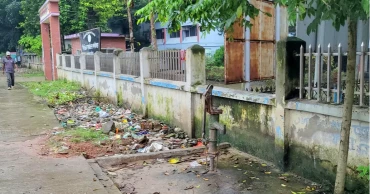
Broken tube wells leave Thakurgaon Sadar Hospital facing drinking water crisis
Patients and their attendants at Thakurgaon 250-bed Modern Sadar Hospital are facing severe hardship due to an acute shortage of safe drinking water caused by malfunctioning tube wells on the hospital premises.
The crisis has affected more than 500 admitted patients, forcing their family members to travel outside the hospital to collect drinking water. Some patients have reportedly been compelled to drink water from bathroom taps at night due to the lack of an alternative.
Hospital sources said the facility usually accommodates around 400 to 500 inpatients daily, while another 600 to 800 people receive treatment through its outpatient department.
To meet the demand for safe drinking water, the hospital has four to five tube wells. However, most have become unusable due to missing handles, nuts and bolts, while some have only the bore pipes remaining with the main structures no longer in place.
With the hospital's tube wells out of service, patients and attendants had been relying on tube wells installed at small roadside hotels and food stalls outside the main gate. But those establishments were removed in a municipal eviction drive about two weeks ago, leaving hospital visitors without their primary source of drinking water.
13 days ago
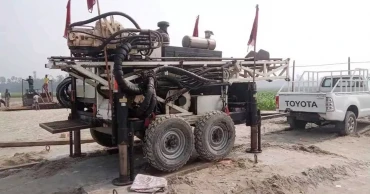
Exploration for iron ore deposit in Pirganj resumes after six decades
Exploration activities have officially resumed at the country's first potential iron ore deposit in Pirganj upazila of Rangpur, six decades after it was first identified.
Mohammad Saiful Islam, Secretary of the Ministry of Power, Energy and Mineral Resources, inaugurated the resumption activities at Velamari Pathar in Chhota Paharpur village under Sanerhat Union recently.
According to officials, the site was first identified in 1965 by the then Pakistan government's Mineral Resources Department. Four exploratory wells were drilled in the Velamari Pathar area, covering parts of Shanerhat and Mithipur unions, and the wellheads were sealed with concrete markers, some of which remain visible.
Officials said a team of geologists carried out an initial survey of the approximately six-square-kilometre area on September 6, 1965, shortly after the outbreak of the Indo-Pak war. Based on the survey, the area was identified as having iron ore potential, but no further exploration took place for decades.
15 days ago

Centuries-old Rath Mela draws huge crowds in Bagerhat
Thousands of Hindu devotees and visitors are flocking to the nearly 400-year-old traditional Rath Mela at Laupala in Bagerhat every day, where religious devotion blends with a vibrant rural fair featuring handicrafts, household goods, amusement rides and giant "Balish Mishti."
The month-long fair, regarded locally as one of the country's oldest and largest Rath festivals, began on July 16 with the Rath Yatra of Lord Jagannath at the Sri Sri Gopal Jiu Temple at Laupala village in Bagerhat Sadar upazila.
16 days ago