special
Every monsoon brings the same ordeal for 10 villages in Lalmonirhat’s Kaliganj
More than five decades after Bangladesh achieved independence, residents of around 10 villages in Lalmonirhat’s Kaliganj upazila are still waiting for a paved road that they say is vital to their daily lives.
For thousands of people living in Duhuli, Barajan, Shialkhewa and surrounding villages under Chalbala Union the more than two-kilometre stretch connecting Duhuli Bazar with the road leading to Kamalabari Union has remained an earthen track since independence, turning into a muddy nightmare during the monsoon.
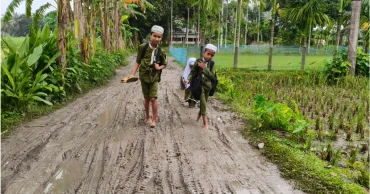
Every spell of rain leaves the road submerged in water and covered with thick mud, making travel extremely difficult for pedestrians, motorcycles, vans and other vehicles, said locals.
A recent visit to the area found knee-deep mud at several points, forcing commuters to wade through slush.
Vehicles frequently get stuck, increasing travel time and transport costs for local residents.
The hardship is particularly severe for schoolchildren.
Hundreds of students use the road every day to travel to Duhuli Government Primary School and Duhuli High School and College.
During the rainy season, many slip and fall while walking through the muddy road, sometimes sustaining injuries.
Parents are also reluctant to send younger children to school when the road becomes nearly impassable.
Farmers are also bearing the brunt of the poor road condition.
Transporting agricultural produce to local markets has become more expensive as vehicles either charge higher fares or refuse to enter the area during the rainy season.
Many farmers fail to market their crops on time, leading to financial losses.
Local resident Suman Adhikari said the road has remained neglected since the country’s independence despite its importance to the union.
“It is unfortunate that such an important road is still unpaved. Due to the lack of sincere initiatives by public representatives, people have been suffering for years. We want the authorities to take immediate steps to improve the road,” he said.
Another resident, Nur Habib, said locals have repeatedly demanded that the road be paved, but no effective action has followed.
“We have approached our elected representatives many times, but all we have received are assurances,” he alleged.
Residents said the road serves not just one village but around 10 villages, with thousands of people, including students, farmers and daily commuters, depending on it every day.
They urged the authorities to prioritise the road’s development to ease public suffering and support the area’s economic and social progress.
Habibur Rahman, an engineer of the Local Government Engineering Department (LGED) in Kaliganj, said a proposal has already been sent to the relevant authorities to obtain a Road ID, a prerequisite for bringing the road under a government development project.
“The gazette notification process is currently underway. Once completed, we will be able to undertake paving work subject to government allocation and approval under an appropriate development project,” he said.
22 days ago

Jaflong's shopping paradox: Indian goods openly sold in markets, seized on the road
For many visitors, a trip to Jaflong in Sylhet is about more than its rolling hills, crystal-clear streams and breathtaking views along the Bangladesh-India border.
It is also an opportunity to browse bustling roadside markets packed with Indian blankets, chocolates, spices, cosmetics, and other products widely believed to have entered the country through smuggling routes.
These illegal goods are displayed and sold openly in shops across the tourist destination. Law enforcement agencies, including the Border Guard Bangladesh (BGB), are also a familiar presence in the area.
Yet many tourists say their shopping experience takes an unexpected turn once they begin the journey home.
Visitors allege that products purchased openly from local shops are often seized at police checkpoints on the road, as they are being labelled as illegal. The situation has left many wondering why goods that can be bought so easily in the market are later treated as prohibited.
Every day, people from different parts of the country visit Jaflong to enjoy its natural beauty. Most shops in Jaflong Bazaar sell Indian products widely believed to have entered the country through smuggling routes, and tourists buy them without hesitation.
Meanwhile, police regularly operate checkpoints at different locations on the Sylhet-Tamabil highway, where such goods are confiscated on the grounds that they entered the country without legal customs clearance.
Tourists argue that if these products are illegal, action should first be taken against those selling them openly in the market. Instead, they say buyers who purchased the goods in good faith face questioning, confiscation and inconvenience on their return journey.
The issue has created growing frustration among visitors, who say they often buy products with receipts from local shops but still encounter complications on the road.
According to multiple sources, Indian goods are regularly seized in different border areas as part of ongoing drives by law enforcement agencies to prevent the illegal entry of foreign products into the country.
People concerned with the region's tourism sector believe the current situation is damaging Jaflong's reputation as a tourist destination.
They say the authorities should adopt a clear and consistent policy. If such illegal products are allowed to be sold in the markets, tourists should not face harassment after buying them.
If the goods are illegal, they argue, enforcement should focus on the supply and sales network rather than on visitors.
Inspector (Investigation) of Jaintapur Model Police Station Usman Gani said bringing foreign goods into Bangladesh, transporting them or marketing them without paying the required customs duties and taxes is a punishable offence.
He said they regularly conduct operations on the Sylhet-Tamabil highway to prevent smuggling and seize illegally imported goods entering through the border.
Jaflong Tourist Police in-charge Tapan Talukder said the tourist police does not have the authority to seize illegal goods.
"Although we are deployed in the tourist area, our main responsibility is to maintain law and order, ensure the overall security of tourists, prevent theft and robbery, and provide necessary assistance for visitors," he said.
Gowainghat Upazila Nirbahi Officer (UNO) Ratan Kumer Adhikari said businesses must comply with government regulations to operate legally, something many traders in the Jaflong tourist area are not doing.
"For this reason, we conduct drives from time to time and take legal action against those involved, including seizing Indian goods," he said.
25 days ago

Maijbari: the village that builds the haor’s lifeline, yet struggles to stay afloat
In Bangladesh’s haor region where monsoon waters transform roads into waterways for nearly half the year, boats are not merely a means of transport—they are a lifeline and for decades, Maijbari, a village in Sadar upazila, has quietly kept that lifeline afloat.
Located just three to four kilometres from Sunamganj town, the village has earned a reputation as the district’s “boat village,” where generations of artisans have preserved the craft of wooden boat building.
More than 3,000 residents depend directly on the trade, producing a wide range of traditional boats, including barki, khilua and dingi.
Boatbuilding continues throughout the year, although demand peaks during the rainy season when the haor landscape becomes a vast expanse of water.
According to local sources, around 400 small and large boats leave Maijbari every month.
The annual market value of the industry is estimated at nearly Tk 22 crore, with buyers travelling from Sylhet, Habiganj, Moulvibazar, Netrokona, Kishoreganj and other districts.
The boats serve multiple purposes—from carrying passengers across flooded villages to transporting fish, feeding fish in ponds and navigating rivers, canals and wetlands.
Depending on their size and design, prices range from Tk 12,000 to Tk 150,000.
Yet behind this thriving business lies a difficult reality.
Despite producing boats worth crores of taka every year, most craftsmen struggle to make ends meet.
Rising timber prices have become one of their biggest challenges, said the boatmakers .
With quality wood becoming increasingly scarce locally, artisans now have to source timber from distant districts, pushing production costs sharply higher.
Lack of capital presents another obstacle. Many craftsmen rely on advance payments from moneylenders or traders to finance production.
In return, a significant portion of the proceeds from each sale goes to these financiers, leaving the builders with only a modest share despite months of labour.
“We’ve been in this business since the time of our forefathers,” said veteran boatmaker Tajud Ali.
“But profits are shrinking as costs continue to rise. Somehow we’re managing to survive. We cannot abandon a tradition that has been passed down through generations. If the government provided loans on easy terms, it would help us greatly.”
Another craftsman, who has spent around 45 years building boats, said financial security has remained elusive despite a lifetime devoted to the trade.
“From sunrise to sunset, we work with wood. Boat building is the only source of income for my family,” he said, expressing hope for greater government support.
The craftsmen believe the industry has significant untapped potential.
They said easier access to institutional credit, modern technical training and better marketing support could help preserve the traditional craft while improving the livelihoods of thousands of families who depend on it.
M.N.M. Asif, deputy general manager of the Bangladesh Small and Cottage Industries Corporation (BSCIC) in Sunamganj, said the organisation has introduced programmes to support artisans involved in the boat industry.
“BSCIC is providing training programmes, and small loans are also available under certain conditions,” he said. “We will continue taking necessary initiatives to further develop this traditional sector.”
27 days ago
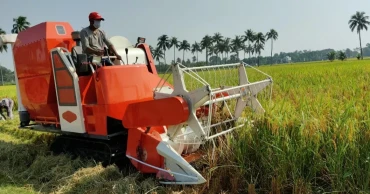
Govt unveils roadmap to modernise agriculture, strengthen food security
The government has taken a series of measures to modernise agriculture through expanded support for farmers, climate-resilient farming and greater use of technology, aiming to strengthen food security.
The initiatives, announced in the FY2026-27 budget, seek to transform agriculture into a self-reliant, technology-driven and climate-resilient sector, reduce production costs and improve rural livelihoods.
A key feature of the plan is the nationwide rollout of the Farmer Card programme, for which the government has allocated Tk 1,062.5 crore in the new budget.
Launched formally on April 14 this year, the programme has so far covered 22,065 farmers under a pre-pilot phase in 11 upazilas across 10 districts.
Fish farmers, livestock farmers and salt cultivators have also been brought under its coverage.
The government plans to distribute 4.25 million Farmer Cards across 100 upazilas in FY2026-27 before expanding the programme nationwide.
Eligible landless, marginal and small farmers will receive an annual one-time cash assistance of Tk 2,500, along with 10 additional benefits promised in the government’s election manifesto.
The budget also provides Tk 1,567.96 crore to implement the government’s decision to waive agricultural loans of up to Tk 10,000, including interest, in the crop, fisheries and livestock sectors.
To strengthen farmers’ resilience against climate shocks, the government said it is preparing to introduce agricultural insurance while continuing concessional credit programmes.
Loans at four percent interest will remain available for cultivating pulses, oilseeds, spices and maize, as well as for salt cultivation in coastal areas.
Farmers in hill districts will continue to receive loans at five percent interest through Bangladesh Krishi Bank.
The government also pledged to continue agricultural rehabilitation and incentive programmes through free distribution of seeds, fertilisers and other inputs while expanding farm mechanisation and building a comprehensive digital database of farmers.
Among new initiatives is the revival of the Voluntary Canal Excavation Programme, aimed at restoring natural water flows, improving irrigation efficiency and reducing dependence on groundwater.
To promote environmentally sustainable irrigation, the government plans to install 98 solar-powered irrigation pumps and 27 solar-powered dug wells, alongside expanding drip irrigation and aquifer recharge technologies.
Fertiliser subsidies will continue, while 30,000 metric tonnes of fertiliser donated by Russia through the World Food Programme will be distributed free among farmers during the fiscal year.
The budget also focuses on reducing post-harvest losses by expanding cold storage facilities, packaging houses and cold-chain infrastructure through public and private investment.
A specialised cold storage facility will be established in the Barendra region to support mango growers.
Agricultural research will prioritise developing high-yielding, salt-tolerant and drought-resistant crop varieties.
The government also plans to introduce an Agropreneurship Start-up Policy and an Agricultural Cooperative Policy to create employment opportunities for young people.
On food security, the government has set a food grain procurement target of 4.129 million metric tonnes for FY2026-27, up from the revised target of 3.819 million tonnes in the current fiscal year.
Food grain storage capacity is expected to increase from 2.316 million tonnes in FY2024-25 to 2.45 million tonnes by FY2026-27.
The government also plans to procure paddy directly from farmers across all upazilas through the Krishaker App, alongside expanding digital food management systems.
To support low-income families, 5.5 million beneficiaries will continue to receive 30 kilograms of rice per month at Tk 15 per kg for six months under the Food-Friendly Programme.
Open Market Sale operations have been expanded to 419 upazilas, where rice is being sold at Tk 30 per kg, while subsidised rice and flour will continue to be distributed through more than 1,000 sales centres across the country.
A digital database for Food-Friendly Programme beneficiaries and an online food grain price monitoring system are also being developed.
The budget gives renewed attention to the fisheries sector, setting a production target of 5.635 million metric tonnes of fish in FY2026-27.
Under its blue economy strategy, the government plans to expand commercial tuna fishing, promote seaweed cultivation and increase fisheries export earnings to US$1 billion by 2030.
Kuakata and Salimpur will be declared new Marine Protected Areas, while a modern fishing port will be established at Matarbari to encourage sustainable exploitation of marine resources.
The government also plans to expand fish sanctuaries and nursery management to conserve indigenous fish species. Under the principle of “Jal Jar, Jola Tar” (Those who fish shall own the water), local fishers and low-income communities will receive greater access to water bodies, canals and haor areas.
Coverage under the Vulnerable Group Feeding programme will be expanded to include 1.5 million fisher households, including newly enlisted families from haor regions and the Sundarbans.
The government further announced plans to introduce the country’s first fisheries insurance scheme and promote mechanisation in commercial fish farming.
In the livestock sector, authorities said locally developed vaccines against Avian Influenza and Goat Pox have completed field trials and will soon be supplied nationwide.
The government also plans to ensure adequate stocks of animal disease prevention medicines at every upazila while strengthening the production of safe and quality feed for poultry and fish farms.
29 days ago

Invasive parthenium emerges as threat to crops, health in Chuadanga
At first glance, it looks harmless. Standing two to three feet tall with lush green leaves and clusters of tiny white flowers, the plant resembles coriander. But beneath its innocent appearance lies a growing threat to agriculture, public health and livestock.
Parthenium (Parthenium hysterophorus), one of the world’s most invasive and toxic weeds, is spreading rapidly across Chuadanga, prompting concern among farmers, agricultural scientists and health experts.
They warn that failure to contain it now could have serious long-term consequences.
Field visits and local inquiries found the weed spreading across all four upazilas of the district—Chuadanga Sadar, Alamdanga, Damurhuda and Jibannagar.
It is increasingly visible along roadsides, railway tracks, fallow land, border areas and even around cropland.
Yet most residents remain unaware of the plant’s identity or the dangers it poses.
Originally native to North and South America, parthenium is believed to have entered Bangladesh through neighbouring India before gradually expanding across different regions.
Despite its relatively short life cycle of just three to four months, a single plant can produce thousands of seeds several times during its lifespan.
The seeds are easily dispersed by wind, rainwater, vehicles and animals, allowing the weed to colonise new areas rapidly.
Farmers said the plant has become noticeably more common over the past few years.
30 days ago

Govt plans sweeping health sector reforms to take specialised care beyond Dhaka
Bangladesh is preparing for one of the most ambitious restructurings of its healthcare system promising to move specialised medical services closer to people, recruit over 100,000 health workers, modernise medical education and strengthen pharmaceutical and medical equipment industries.
The roadmap, outlined in the FY2026-27 budget, seeks to address some of the chronic weaknesses that have plagued the health sector for years: overcrowded hospitals in Dhaka, shortages of doctors and nurses in rural areas, rising out-of-pocket medical expenses and an overdependence on imported medical devices.
If implemented effectively, the reforms could significantly reshape healthcare delivery across the country.
A shift away from Dhaka-centric healthcare
Instead of forcing patients to travel to the capital for advanced treatment, every district hospital will be integrated with surrounding upazila health complexes under a new “Secondary Healthcare Unit.”
Under the proposed structure, upazila health complexes will handle most maternal, neonatal, child and reproductive healthcare services while district hospitals will provide specialised treatment and surgeries, according to budget document.
The objective is allowing patients to receive quality care near their homes while easing the overwhelming burden on tertiary hospitals in Dhaka.
For decades, thousands of patients have travelled long distances to the capital because district-level facilities often lack specialists, equipment and diagnostic services. The resulting congestion has strained both hospitals and patients’ finances.
The government believes strengthening district hospitals could reduce unnecessary referrals, lower treatment costs and improve healthcare equity.
Expanding access through private hospitals
Recognising the limitations of the public health system, the government also plans to increase collaboration with the private sector.
Under a Strategic Purchasing model, selected healthcare services will be purchased from accredited private hospitals for poor and low-income patients who face long waiting times in government hospitals.
If properly regulated, the approach could shorten waiting lists while making better use of existing private-sector capacity.
The budget also proposes converting 192 unused government properties into modern primary healthcare centres under Public-Private Partnership (PPP) arrangements.
Addressing workforce shortages
Bangladesh continues to face shortages of doctors, nurses and community health workers, particularly outside major cities.
The government says recruitment has already begun for 5,000 MBBS doctors to fill long-vacant posts.
It has also launched recruitment for another 100,000 health workers, around 80 percent of whom are expected to be women to strengthen maternal and community healthcare.
Additional nursing positions have already been created, including 941 senior staff nurse posts and 947 midwife positions.
The government also plans to train 60,000 frontline workers engaged in health, nutrition and family planning services.
Modernising medical education
Medical education is also set for a major overhaul.
The existing MBBS curriculum will be redesigned using competency-based learning, integrated modular teaching, expanded clinical training and artificial intelligence-assisted medical technologies.
An expert committee under the Bangladesh Medical and Dental Council has begun preparing the new curriculum, which is scheduled for implementation by 2030.
The reforms extend beyond doctors.
The government plans to strengthen nursing education through a specialised Nurse Teacher Training Centre, expand master’s programmes in government nursing colleges and introduce additional Bachelor of Science in Nursing courses.
Medical and dental students will also receive access to student loans, while talented students pursuing higher education abroad will be eligible for special bank loan facilities.
To expose future physicians to rural healthcare realities, five Residential Field Site Training centres will be established using underutilised government facilities.
Strengthening preventive healthcare
A new national nutrition programme will target child stunting and malnutrition through coordination among the health, agriculture, education, sanitation, food security and social protection sectors.
Priority areas include maternal nutrition, adolescent health, breastfeeding promotion, complementary feeding and nutrition awareness.
Meanwhile, the government says it has rebuilt momentum in immunisation following the recent measles outbreak, claiming that nearly all eligible children were vaccinated against measles and rubella within its first 100 days in office.
Affordable medicines and local production
Another major pillar of the reform agenda focuses on reducing healthcare costs through improved access to medicines.
Authorities are updating the National Essential Medicines List and preparing a modern drug policy to ensure safe, effective and affordable medicines.
The pharmaceutical sector will continue receiving government support, including development of the Active Pharmaceutical Ingredient (API) Industrial Park and expansion of medicine and vaccine supply chains.
Beyond pharmaceuticals, the government wants Bangladesh to emerge as a manufacturing base for medical equipment.
The budget document identifies products such as syringes, ventilators, pulse oximeters, ECG machines, X-ray equipment, hospital beds and diagnostic kits as items with strong domestic production potential.
To encourage investment, authorities plan export incentives, internationally accredited testing laboratories, online licensing systems, a specialised medical technology park and easier access to low-interest financing.
Biomedical engineering education and research will also receive increased emphasis as the country seeks to build an export-oriented medical technology industry.
1 month ago
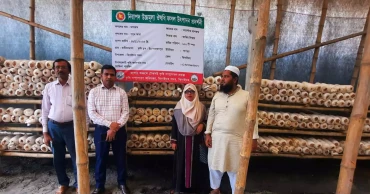
Mushroom farming transforms fortunes of Jhenaidah youth
A young entrepreneur from Jhenaidah has transformed his fortunes through mushroom farming after quitting a private-sector job, building a thriving business that now also provides employment for four others.
Shahjalal, from Batikadanga village in Sadar upazila, started his mushroom farm with an investment of just Tk 20,000 and 200 spawn packets after receiving training in mushroom cultivation.
His farm now houses around 5,000 spawn packets worth an estimated Tk 2.5 lakh.
Mushrooms produced at the farm are supplied not only to local markets in Jhenaidah but also to Dhaka, Chattogram and several other districts across the country.
Shahjalal said he sells mushrooms worth around Tk 150,000 every month, earning a net profit of Tk 50,000 to Tk 60,000 after meeting production costs.
He sells mushrooms at Tk 250 per kg wholesale and Tk 300 per kg retail.
In addition to mushroom production, he has introduced an environment-friendly method of utilising used spawn packets by converting them into high-quality organic fertiliser through the Farmyard Manure (FYM) process.
The organic fertiliser is sold at Tk 10 per kg, providing him with an additional source of income.
Shahjalal said he started the venture with the aim of supplying safe and nutritious food to consumers. He has employed four workers at his farm.
He now plans to expand the farm and establish an inoculation laboratory but requires equipment such as a laminar airflow cabinet and an autoclave machine.
The youth expressed hope that government support will help him increase production several-fold and create more employment opportunities.
Jhenaidah Sadar Upazila Agriculture Officer Md Nur-e-Nabi and Sub-Assistant Agriculture Officer Rojina Khatun described Shahjalal as a hardworking and promising entrepreneur.
They said he achieved success by adopting modern farming techniques with support from the Department of Agricultural Extension and added that government assistance and modern equipment will enable him to expand the business further.
The officials also said mushroom cultivation has strong potential to generate employment while contributing to improved nutrition across the country.
1 month ago
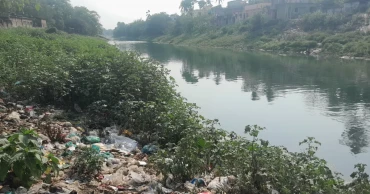
Call for urgent action as pollution, encroachment choke once-thriving Mathabhanga River
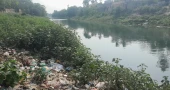
The Mathabhanga River, once known for its strong current and clear water, now faces severe pollution and encroachment, raising concerns among local residents and environmental activists over its future.
The 121-kilometre transboundary river, which flows through Chuadanga district town, has lost much of its natural flow due to years of pollution, encroachment and poor management.
While some stretches hold water during the monsoon, large parts of the river dry up in the dry season, resembling a stagnant canal.
Visiting different areas along the river, it was found that several municipal drains discharge untreated wastewater directly into the river. Waste from households, hotels, restaurants and markets, including plastic and other solid waste, is regularly dumped into the water, turning it black and producing a foul smell along the riverbanks.
Residents also alleged that illegal structures have been built on both sides of the river, narrowing its channel. Silt accumulation and the lack of regular dredging have further reduced its flow.
"I used to swim in this river with my friends when I was young 25 years ago. There was plenty of water and a strong current. Now, it is difficult to stand near the river because of the bad smell," said local resident Rimon Ali.
Another resident, Rabiul Mia, said boats once sailed on the river, but it has now become heavily silted and resembles a drain.
Principal Shahjahan Ali, former general secretary of the Save Mathabhanga River Movement, alleged that influential individuals and institutions had occupied parts of the river and its banks, affecting its natural course.
Hamidul Haque Munshi, convener of the organisation, blamed poor municipal waste management for the river's condition and called for immediate administrative action to protect it.
Executive Engineer of the Chuadanga Water Development Board Arif Ahmed acknowledged that the river has been affected by encroachment and pollution. He said the issue has been reported to the ministry and steps are being planned to restore the river.
Sharmin Akhter, administrator of Chuadanga municipality and deputy director of the Local Government Division, said some municipal drains discharge waste into the river.
She said the relevant officials have been instructed to take necessary measures after the matter came to her attention.
Experts say the Mathabhanga is an important source of several rivers in the south-western region, including the Chitra, Nabaganga and Bhairab.
They warned that further degradation of the river could have serious consequences for the region's environment, biodiversity and river ecosystem.
1 month ago
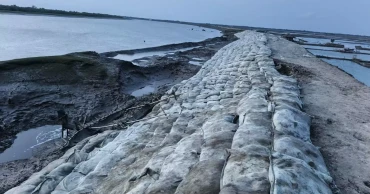
Coastal embankment sinks midway through repair in Khulna’s Koyra
A government-funded embankment repair project along the Kapotaksha River in Khulna’s Koyra upazila has begun showing signs of collapse even before completion, raising fresh concerns over the quality of work and the long-term effectiveness of flood protection in one of Bangladesh’s most climate-vulnerable coastal regions.
Residents and environmental campaigners alleged that the embankment is being repaired without removing saline water intake pipes used by nearby shrimp farms—an issue they say has repeatedly weakened the structure and caused breaches in the past.
They fear the latest project worth Tk 26.80 lakh may suffer the same fate unless the underlying problem is addressed.
The repair work covers a 240-metre stretch of the embankment along the Kapotaksha River from Dashhaliya towards Hogla under the Water Development Board’s (BWDB) Non-Development Revenue (NDR) programme.
Contractor Messrs Amin & Co began work on February 9 with completion scheduled for July 20.
However, a visit to the site on June 30 revealed that four large pipes—three within the first 100 metres of the repaired section and another farther along—remain embedded inside the embankment.
Instead of removing the pipes, workers have raised the embankment by piling earth over them.
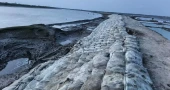
Two sections near the pipes have already subsided, with one portion partially collapsing into the river.
Emergency protection work using geo-bags and bamboo piling was underway at the site.
No project signboard displaying construction details was found.
Large pits were also visible along the riverbank where soil had apparently been excavated for the repair work, while the embankment slope appeared unusually steep.
Local residents also alleged that some geo-bags were filled with muddy or insufficient sand instead of standard materials.
A recurring problem
Local residents Babu, Mostafiz and Abdul Hai said around 30 to 35 pipes have been installed along a two-kilometre stretch of the embankment to bring saline river water into shrimp enclosures.
They said tidal flows through these pipes gradually wash away the surrounding soil, weakening the embankment from within.
The embankment has failed several times before, flooding large areas, Babu said. “Repairing it without removing the pipes will only repeat the same cycle.”
Former union parishad member Didarul Islam said, “All pipes, including the four inside the new repair section, should be removed first. Otherwise, the embankment will become vulnerable again within days, wasting public money.”
Experts urge long-term solution
Environmentalists argue that the recurring repairs reflect a failure to tackle the root cause.
Tarikul Islam, president of the Coastal and Sundarbans Protection Movement, said the Dashhaliya embankment collapsed multiple times in recent years, causing losses worth crores of taka.
“Despite government restrictions on saline shrimp farming adjacent to embankments, enforcement remains weak. As a result, public funds are being spent year after year on repairing the same sections,” he said.
He suggested supplying water to shrimp farms through canals connected to the Shakbaria or Koikhali canals instead of installing pipes through embankments.
“That would eliminate the need to puncture the embankment and significantly improve its durability,” he said.
Authorities acknowledge damage
Palash, who supervises the work on behalf of the contractor, said the project was being implemented according to specifications.
“The subsidence occurred because of the pipes, not because of the repair work itself. The damaged sections are being repaired again,” he said.
BWDB Sub-Assistant Engineer Solaiman Hossain said the contractor has been instructed to restore the collapsed portions.
Koyra Upazila Nirbahi Officer Md Abdullah Al Baki said removing the pipes involves multiple stakeholders and cannot be done immediately.
“There are several challenges in removing the pipes. We will hold discussions with elected representatives, relevant government agencies, civil society members and shrimp farm owners before taking a decision,” he said.
For many residents, however, the latest collapse has reinforced an old concern: unless the embankment’s structural vulnerabilities are addressed rather than patched over, repeated repairs may continue to consume public funds while offering little lasting protection against coastal flooding.
1 month ago
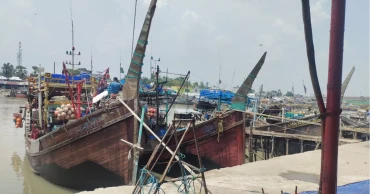
Illegal trawling in Patuakhali threatens marine biodiversity, coastal livelihoods
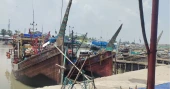
Illegal and converted artisanal trawling boats are increasingly operating in the coastal waters of the Bay of Bengal off Mahipur, Alipur, Kuakata and Ashakhali in Patuakhali’s Kalapara upazila, raising concerns over the depletion of marine resources.
Using banned fine-mesh nets and modern fish detection technology the trawlers are indiscriminately harvesting fish fry, juvenile fish, egg-bearing brood fish, shrimp larvae, crabs and other marine organisms, according to local fishermen and fisheries stakeholders.
Experts said the practice is severely disrupting the natural breeding cycle of marine species, threatening long-term fish production and the country’s blue economy.
Local fishermen said the number of converted trawling boats operating in Mahipur-Alipur region has increased significantly over the past year.
While around 40 to 45 such vessels were active in 2025, the figure has now risen to nearly 60.
New wooden fishing boats are reportedly being converted into trawlers at a cost of Tk 3-4 million each in pursuit of higher profits.
Marine experts say the bottom trawling method used by these vessels is particularly destructive.
Heavy nets dragged along the seabed damage corals, seagrass, shellfish habitats and other benthic ecosystems, disrupting the marine food chain and reducing fish reproduction over the long term.
Although large trawlers are legally required to fish in deeper waters, fishermen alleged that many are operating close to the coast, often within a few nautical miles of the shoreline. As a result, coastal breeding grounds and fish sanctuaries are being damaged, they said.
The vessels are also equipped with advanced technologies such as fish finders, GPS, radar, echo sounders and winch machines, enabling operators to locate and harvest fish shoals with high efficiency.
This has left traditional fishermen using small boats and conventional gear unable to compete.
Fishermen at Mahipur and Alipur fishing ports alleged that large trawlers frequently run over their fishing nets, causing losses worth hundreds of thousands of taka.
They also claimed that protests are sometimes met with intimidation and threats.
“We spend days at sea only to return empty-handed, while a handful of influential trawler owners continue destroying fish stocks through illegal trawling,” said fisherman Anwar Hossain. “If the authorities are serious, they can stop it within a day.”
Another fisherman, Abul Kashem, said juvenile fish are being destroyed before they can mature.
“Millions of fish fry are being wiped out every day. If this continues, there will be little left for future generations of fishermen,” he said.
According to fisheries experts, climate change, marine pollution and illegal trawling are jointly placing Bangladesh’s marine fisheries under severe pressure.
The destruction of brood fish and juveniles could significantly reduce the production of hilsa as well as other commercially important species, including lakha, poa, pomfret and shrimp.
They said continued overexploitation could undermine national food security, export earnings and the country’s blue economy.
Some fishermen alleged that illegal trawlers have continued operating openly for years due to the alleged protection or indirect support of a section of dishonest officials at district and upazila levels, as well as some members of the river police.
However, no independent evidence was available to substantiate the allegations.
Mahipur Fish Market Owners’ Association Vice-President Raju Ahmed Raja said repeated discussions have failed to curb illegal trawling.
“Instead, the number of illegal trawlers is increasing every year. Without strict monitoring and enforcement by the authorities, the problem is unlikely to be resolved,” he said.
Fisheries Officer Bakhtiar Ahmed acknowledged that illegal nets are destroying brood fish and juveniles, resulting in declining fish production.
“Strict enforcement of fisheries laws and a complete ban on illegal nets are essential to protect biodiversity, food security and the livelihoods of millions of people dependent on marine fisheries,” he said.
Kuakata River Police Outpost In-Charge Moniruzzaman said legal proceedings over illegal trawling boats are currently pending before the court.
“We are conducting drives against illegal fishing and banned nets. However, logistical limitations sometimes affect operations in deeper waters,” he said.
Patuakhali District Fisheries Officer Bijon Kumar Nandi said the issue was being treated with utmost importance.
“The matter is under judicial consideration. Surveillance and enforcement drives will be intensified in coordination with the Coast Guard, River Police, relevant government agencies, local public representatives and fishermen’s organisations,” he said.
1 month ago