special

Forced merger of five Shariah banks in Bangladesh faces daunting challenges
Bangladesh Bank’s plan to merge five weak Islamic Shariah-based banks into a single state-owned entity has been hailed as a bold attempt to stabilise the banking sector, but experts warn the move faces enormous challenges and could take years to achieve meaningful results.
The five banks—First Security Islami Bank, Union Bank, Global Islami Bank, Social Islami Bank, and Exim Bank—are mired in crisis, with non-performing loans (NPLs) now at a staggering Tk1,47,000 crore, or 77 per cent of their total loans. Union Bank tops the list with an almost complete default ratio of 98 per cent.
Depositors’ funds are effectively frozen, while the banks rely on massive central bank support to stay afloat.
“The biggest challenges are recovering stolen assets, securing skilled management, and ensuring political interference does not derail the process,” said Dr Zahid Hussain, former lead economist at the World Bank’s Dhaka office.
He stressed that forged documents and smuggling of assets abroad complicate recovery efforts.
Adding to the difficulty, forced mergers in Bangladesh differ sharply from international norms.
Dr Fahmida Khatun, Executive Director of the Centre for Policy Dialogue, explained, “Globally, weak banks propose mergers to stronger banks after thorough audits. A forced merger risks worsening the crisis, though it may protect depositors’ money.”
The merger process is also costly. Bangladesh Bank estimates it at Tk35,000 crore—Tk25,000 crore from the national budget and Tk10,000 crore from the Deposit Insurance Trust Fund—requiring amendments to existing law to use public funds.
S&P Global Ratings warns that structural problems will keep Bangladesh’s banking sector under pressure until 2026. High credit risk, fragmented operations, executive failures, and weak lending standards are cited as long-standing issues.
Access to credit for agri sector can enhance food security: Bangladesh Bank Governor
The merger faces resistance from some banks, particularly Exim Bank and Social Islami Bank, whose directors and shareholders have petitioned to be excluded.
Meanwhile, concerns over potential branch closures and job losses persist, though Bangladesh Bank promises new rural branches and local investment of deposits to minimise layoffs.
With capital shortfalls, soaring bad loans, and political sensitivities, the path to a successful merger is fraught with obstacles. Experts say it may take several years before the new bank stabilises—leaving depositors, employees, and the broader financial system in a tense waiting game.
The latest data from the Bangladesh Bank reveals a dire situation for the five banks. Their combined deposits plummeted to Tk1,36,546 crore in May, down from approximately Tk1,59,000 crore just a year ago. In contrast, their total loans have surged to Tk1,95,413 crore.
Banks in Bangladesh back away from CSR; spending hits 10-year low
The most alarming aspect is the skyrocketing default ratio of loans. These five banks' non-performing loans (NPLs) now stand at a staggering Tk1,47,000 crore, which represents 77 percent of their total loans. Union Bank's NPL is nearly 98 percent, followed by First Security with 96 percent, Global Islami Bank with 95 percent, Social Islami Bank with 62 percent, and Exim Bank with 48 percent.
This means that a significant portion of the money deposited by customers is now stuck in defaults, leaving the banks struggling to repay depositors. They have had to take thousands of crores of taka in special assistance from the central bank. The banks also face a massive provision shortfall of Tk74,501 crore.
10 months ago
Off-season watermelon farming brings bumper gains to Narail farmers
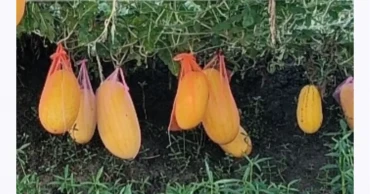
Under the warm September sun, Narail’s fields glow with an unusual sight -- plump, red watermelons ripening on the vines.
Traditionally grown across Bangladesh from December to April, these luscious fruits are now flourishing out of season, bringing remarkable success – and handsome profits – to enterprising local farmers.
At present, each kilogram of watermelon commands between Tk 80 and Tk 100, a price that has turned this off-season venture into a golden opportunity.
Visitors are thronging the fields, eager not only to sample the sweet bounty but also to marvel at the sight of watermelons dangling in netted pouches, suspended neatly from bamboo frames.
According to the Department of Agricultural Extension (DAE) in Narail, some 23 hectares have been brought under off-season cultivation this year: 10 hectares in Sadar upazila, two in Lohagara, and 11 in Kalia.
With technical guidance and timely incentives from the agriculture department, farmers – many of them first-timers – have discovered that this crop is both cost-effective and richly rewarding.
A recent field visit to Mirzapur, under Bishali union of Sadar upazila, revealed the quiet industry behind this success. There, farmer Akinur Mallik leaned towards around 200 plants grown along the embankments of his fish enclosure.
Bagerhat’s watermelon harvest brings a sweet summer promise
“This is my first attempt, using 33 decimals of land. The agriculture office provided me with seeds, fertilisers and inputs. Prices are good and buyers come directly here. Next year, I’ll cultivate on a larger scale,” he said.
The spectacle of off-season melons has become a local curiosity. Families stroll among the trellised plants, while young visitors snap selfies and record TikToks beside the burgeoning fruits.
“We never saw watermelon farming in our area before. Now it’s become a place to hang out, take selfies and even make TikToks ,” said Suma Akter, a cheerful onlooker.
Encouraged by Akinur’s success, farmer Zakir Hossain voiced his own enthusiasm for trying the method in the coming season.
Further afield in Kalia upazila, veteran grower Pradip Barman recounted three years of cultivating watermelons.
This year alone, he planted 10,000 seedlings across 95 acres of fish farms, including 7,000 watermelon plants.
“The yield is excellent. The Banglalink variety weighs five to seven kilos each, while Tripti weighs two to three. I invested Tk five to six lakh, but expect Tk 12 lakh in returns,” he said.
Agriculture officials are also optimistic about the trend.
Jaintapur’s Watermelon Boom: From fallow lands to flourishing fields
Roknuzzaman, Narail Sadar Upazila Agriculture Officer, confirmed that farmers are being encouraged with seeds, fertilisers and continuous field-level guidance.
District DAE Deputy Director Md Jasim Uddin added that the acreage under cultivation is increasing every year thanks to this support.
With enthusiasm spreading and yields proving bountiful, officials foresee Narail blossoming into a thriving hub for off-season watermelon farming, a sweet promise for the district’s agricultural future.
10 months ago

Climate change behind world’s worst dengue death rates in Bangladesh
Bangladesh continued to log one of the world’s worst case fatality rates during dengue outbreaks, apparently almost throughout the last two decades, underscoring the strain put on the country’s already fragile healthcare system and the people, particularly the poor.
The case fatality rate represents the percentage of people dying out of the total infected population.
Often called the CFR, the rate stood at 0.4 per cent until September 13, with 147 deaths recorded against the total dengue cases of 37,206. The current CFR is one of the highest in the world.
Bangladesh has constantly produced very high CFR, which even exceeded 2 per cent in 2003 and was above 1.5 per cent in 2000, 2001, and 2010. Over the last five years, the rate remained about 0.5 per cent.
In 2023, Bangladesh experienced its worst dengue outbreak, resulting in 1,705 deaths from the mosquito-borne viral disease. It was the highest number of deaths in the world that year. The CFR reached 0.5 per cent, also the highest in the world.
“High death rate implies a high number of critical cases,” said epidemiologist Mohammad Mushtuq Husain, an adviser to the Institute of Epidemiology, Disease Control, and Research (IEDCR).
Dengue claims 5 more lives in 24 hours, 622 hospitalised
While the changing climate is increasing the virulence of the dengue virus and facilitating its vector’s population growth, it is also ensuring a relentless supply of vulnerable people, evicted from their homes by natural disasters, who mostly constitute critical cases.
Bulu’s Nightmare and Others
After spending Tk 14,000 for the treatment during the 24 bedridden days of his sickness from dengue fever, the only choice Muhammad Bulu had to deal with his many debtors was to sell his three-wheeler van, the source of his income.
Bulu represents hundreds of thousands of people displaced frequently by natural disasters before they end up in slums of cities and towns, in search of a place to live and a livelihood. Bulu had come to the Begunbari slum in Tejgaon one and a half decades ago after river erosion took away most of his ancestral land.
Spending in a stupor after being struck by the fever, Bulu had realized he had no place in the city to seek treatment or care. With a high fever, he headed back to his village home in Lalmonirhat, where his wife and parents live.
“The fear of catching the disease again haunts me everywhere,” said Bulu, constantly waving his hand to scare away groups of mosquitoes teasing him from all around at a tea stall near Begun Bari in the afternoon of September 11.
Dengue claims 1 more life; 665 hospitalised in 24hrs
“I am already broke. Getting the disease again would be like getting a death sentence,” he said, resting a vacant look onto a nearby waste pile, littered with things perfectly positioned to hold freshwater during rains, a prerequisite for Aedes mosquito population expansion.
Bulu is in his 30s. Historically, most dengue cases concerned people in the age group of 18-30. Children and elderly people also get frequently infected and are considered highly vulnerable.
“More children from villages are now getting infected with the disease,” said Mohammed Hanif, a pediatrician based in Dhaka.
The spread of dengue among children in rural areas indicates that the disease is getting out of hand, he said.
Obese children and elderly people with comorbidities are most exposed to dengue fatality, he explained.
Children accounted for nearly 7,500 of the total 37,200 cases reported so far this year. They also accounted for 24 of the total 147 deaths this year.
Public health under strain
Epidemiologist Mohammad Mushtuq Husain, who is also an adviser to the IEDCR, explained that the high case fatality rate underscored late hospitalisation of dengue patients, mainly due to the unavailability of primary healthcare services in most of Bangladesh.
“Poor people can’t afford timely dengue diagnosis. They come for the treatment only when their condition is bad,” said Mushtuq.
Primary healthcare is almost non-existent across rural Bangladesh.
Someone suffering from dengue fever must travel to the upazila level to get tested for dengue, mostly in private clinics, often involving an inconvenient journey.
Dengue outbreak worsens: 5 dead, 636 hospitalised in 24 hours
But patients often do not get the desired treatment at upazilas either, mostly depending on private medical facilities for dengue diagnosis. District government hospitals tend to refer serious dengue cases to Dhaka to reduce strain on their limited resources.
Many dengue deaths occur while patients are on the way to Dhaka.
Mushtuq emphasized the need to decentralize the health service to reduce the number of critical cases and deaths.
Experts have long called for an early dengue warning system. Sending mobile laboratories to poor communities could also be a way of fighting the disease by its early detection.
“Public healthcare service needs expansion,” said Mushtuq.
AM Zakir Hussain, a former director of the IEDCR, explained factors increasing the vulnerability of the poor to Aedes mosquitoes, the vector of the disease.
“People living in high-rise buildings are well outside mosquitoes' reach, for they cannot fly very high,” he said.
A study by the Bangladesh Institute of Development Studies on the 2019 dengue outbreak reported higher dengue infections among people who could not afford mosquito nets or mosquito repellents.
Dengue outbreak worsens: 5 dead, 636 hospitalised in 24 hours
The study also found that dengue cases were higher where wastes were dumped. Millions live in sprawling Dhaka city slums, mostly sitting on the city’s waste dumps.
The Economic Burden
A 2021 BIDS study revealed that the average economic cost of treating a dengue patient was Tk 33,817 during Bangladesh’s worst outbreak of the disease in 2019. In public hospitals, the cost was around Tk 22,000. The cost of the treatment was Tk 47,230 in private hospitals.
Another independent study revealed that the average income of a fourth of the studied dengue patients, treated at public hospitals in 2019, was Tk 10,000 per month.
A 2023 study estimated that the annual economic cost of dengue disease in India in 2016 was about US$ 5.71 billion.
The Climate Connection
The year of the worst dengue outbreak, 2023, witnessed an unprecedented shift in rainfall with a substantial wet spell beginning in the last month of the winter season—February.
Provided with an abundant supply of fresh water, just ahead of the temperature rising in pre-monsoon months, Aedes mosquitoes had a great opportunity to boom its population, epidemiologists said.
A World Bank report published in October 2021 said that Bangladesh marked a seasonal shift over the past 44 years following a 0.5°C temperature increase. The dengue season stretched because of the change, the report said.
"The number of cases of dengue fever, which is spread by mosquitoes, recorded annually has doubled every decade since 1990, and one of the potential factors that contributed to this increase is climate change," read a line of the WB report.
The report revealed that dengue cases increase in the range of 25°C to 35°C, with a peak at 32°C. The capacity of mosquitoes to transmit dengue fever has increased by up to 9.5 per cent globally, compared with 1950, the report said.
Bangladesh’s first report of a dengue outbreak dates back to 1964. There were only sporadic outbreaks of the disease until the 1990s.
“There is a marked shift in rainfall pattern and this will continue in the years ahead,” said AKM Saiful Islam, a lead author on the IPCC's sixth assessment report.
“We need to invest more in research to study the changing climate and develop our capacity to predict its potential consequences, such as a surge in dengue cases,” he said.
10 months ago

Shrimp: Khulna’s ‘white gold’ eyes Tk 22,600cr export goal
Shrimp, once known as the ‘white gold’ of Bangladesh’s southwest and a major export from Khulna, has declined due to fierce global competition and the growth of vannamei shrimp farming in neighbouring countries.
Now, after years of stagnation, the sector is showing signs of recovery as the Department of Fisheries has rolled out a series of measures aimed at restoring the industry’s lost luster, and the results are beginning to show.
According to the Export Promotion Bureau (EPB), shrimp exports from Khulna over the last five years totalled Tk 11,300 crore.
Authorities have now set an ambitious goal to double that figure within the next five years.
Department of Fisheries data reveal that the region exported 1,53,388 metric tonnes of fish between FY2020 and FY2025, generating Tk 13,456 crore in revenue. Of this, shrimp accounted for 1,02,339.629 tonnes, bringing in Tk 11,301 crore.
500 shrimp enclosures washed away after an embankment collapsed in Satkhira
In FY2024-25 alone, Khulna produced 1,23,151.17 metric tonnes of shrimp, with 19,512 tonnes exported — earning Tk 2,499 crore. The shrimp export rate for the region during the year stood at 42.19%.
To boost output, the Khulna office of the Department of Fisheries has adopted several strategic initiatives. These include advanced training in shrimp cultivation for 10,750 farmers, supplying equipment to 7,500 of them, and promoting cluster-based farming to help traditional farmers multiply their yields two- to fivefold.
Demonstrations under ‘Field Days’ are motivating farmers, while biosecurity and hygiene measures are being enforced to ensure better quality. Officials are also encouraging farmers to pursue third-party certification for improved prices in international markets.
Lipton Sardar, Divisional Fisheries Inspection and Quality Control Officer in Khulna, stressed the need for long-term, shrimp-focused projects.
“There needs to be a dedicated policy framework for shrimp, including zoning of shrimp farming areas, infrastructure development, timely supply of disease-free larvae and guaranteed access to quality feed,” he said.
He also highlighted the importance of strict testing of fry, feed, medicines and chemicals, alongside the establishment of a separate staffing structure to oversee production and quality control in shrimp-rich districts.
“Building institutional capacity to diagnose and treat shrimp diseases, while ensuring responsible practices among exporters, is essential to restore buyer confidence,” Sardar added.
Tariqul Islam Zahir, Senior Vice President of the Frozen Foods Exporters Association, said the region once had 63 shrimp processing companies, but declining production and global market demand forced 33 to close.
“Despite increased bank interest rates and rising electricity bills, some companies are still operating. The frozen shrimp sector is now beginning to recover,” he said, urging the government to provide subsidies for power and production costs.
Exporters say shrimp remains vital to the national economy. However, falling demand and prices in Europe, coupled with irregular payments from foreign buyers, have hurt earnings.
Viral outbreaks have further dented production, while the COVID-19 pandemic, the Russia-Ukraine war and domestic political turbulence compounded challenges.
Repeated shipment cancellations pushed many exporters to the brink of collapse. Yet a recent surge in exports has rekindled hope across the industry.
Stakeholders in Khulna believe that, with continued policy support and improved production standards, the ‘white gold’ can reclaim its former glory and secure an even stronger foothold in the global seafood market.
Read more: Khulna falls short of jute production target for lack of incentives
10 months ago

Bangladesh not ready yet to tap booming $1 trillion semiconductor industry
With zero investment and no planning, Bangladesh is far from being ready to enter the globally thriving semiconductor industry, which is projected to generate $1 trillion in revenue in 2033.
Successive governments, including the incumbent one, aimed at building the industry by applying only rhetoric, failing to attract any investment to the industry that has been on an expansion spree in Asia for some time now.
The revenue of $8 million that Bangladesh generated in the last financial year was the fruit of the hard work of freelancers and private information technology firms.
Government incentives proved crucial to the industry’s growth in Asian countries, where nations offered tax waivers, land to the investors and even subsidies.
“Taiwan, China, India, Vietnam—all top-performing countries in the semiconductor sector—received substantial government support. If Bangladesh wants to succeed, the government must provide continuous subsidies and duty-free incentives for several years,” said Professor A.S.M.A. Haseeb of BUET’s Department of Nanomaterials and Ceramic Engineering.
Semiconductors are considered the building blocks of modern electronic technology. They work at the same time as a conductor and an insulator in an electronic device, ensuring its smooth functioning. A semiconductor can be microscopic, existing in millions in just a small part of the device.
Semiconductor industry creating jobs for Bangladeshi graduates
Christopher Miller, an economic historian and a teacher of International History at Tufts University in the USA, in his 2022 book Chip War predicted that semiconductors will become more valuable than oil in the future.
In the modern world, he wrote in the book, a person with a smartphone, laptop, and smartwatch uses 60–110 billion semiconductors daily.
Silicon Valley, the Mecca of technology and innovation, owes its success to the semiconductor industry. Initially using in-house semiconductors, Silicon Valley later shifted packaging, design, and various transistor chip manufacturing to Asia, mainly to cut costs, taking advantage of cheap labor, Miller noted in his book.
Apple, for instance, sources its components, such as memory chips from Japan, frequency radio chips from California, audio chips from Texas, while manufacturing processors in Taiwan and assembling smartphones in China and India.
The invention of the transistor marked the dawn of the semiconductor industry in 1947. The world has since only witnessed an increase in the demand for semiconductors, with electronic devices flooding modern lives.
Asia Hosts World’s Largest Semiconductor Market
The world’s largest semiconductor manufacturing company is in Taiwan, which started making semiconductors in the 1990s. The company’s total investment in the United States is expected to reach US$165 billion this year. Taiwan’s current annual production of semiconductors is one quintillion. The Taiwanese government announced a subsidy program of $9.3 billion up to 2033.
Introduced in 2010, the semiconductor industry fetched $15 billion for Vietnam. Vietnam is involved in the packaging, testing and designing of semiconductors. In 2024, Vietnam attracted approximately 174 FDI projects worth US$11.6 billion. Last March, the Vietnamese government invested US$500 million in the industry.
Bangladesh can boost export to Malaysia by developing halal products and semiconductor sector: Chamber
India started producing semiconductors in the 1970s. With an estimated revenue generation of a maximum $50 billion in 2025, India expects to make $100 billion in 2030. The latest target is about three times what India earned in 2023. In August, India announced a $7 billion incentive to the semiconductor industry.
In 2024, Malaysia exported semiconductors worth $130 billion in 2024. Malaysia’s semiconductor industry dates back to the 1970s.
China, on the other hand, exported $142 billion worth of semiconductors in 2024 following an investment of $48 billion.
Where Bangladesh Stands
Bangladesh lacks even a plan to enter the industry.
Bangladesh’s 200,000 engineers entering the job market annually with electrical and electronic engineering and computer science engineering degrees struggle to find jobs.
“Although Bangladesh is not yet prepared for semiconductor manufacturing, it can enter the packaging market. Due to low costs, many countries will be interested in investing here,” said Haseeb.
In 2023, BIDA projected the semiconductor export market to be $3 billion in five years. The past government promised a comprehensive plan and a roadmap that never materialised.
The incumbent government that replaced the past AL government had some strategies formed for developing the semiconductor industry with goals set for the short, medium and long terms.
“Current foreign investments in Bangladesh are mostly in traditional sectors. We need more investment in semiconductors than in garments. This will reduce dependency on single-product exports and develop skilled human resources. A separate investment model is essential,” said Fazlee Shamim Ehsan, president of the Bangladesh Employers Federation.
BIDA presents final recommendations of National Semiconductor Task Force to CA
BIDA’s head of business development, Nahian Rahman Rochi, said that they were preparing a proper plan.
“This is a new sector for Bangladesh. Attracting investment requires a concrete plan and proposal. Efforts are underway to remove investment hurdles. BIDA sees strong investment potential in this sector,” Rochi added.
10 months ago

Dangerous Crossing: Kurigram villagers plead for permanent bridge
For more than three years, over 10,000 residents of eight villages in Phulbari upazila of Kurigram district have been risking their lives every day to cross the Nilkamal River via a narrow bamboo bridge.
The makeshift structure, linking Balatari and Chandrakhana villages under Phulbari Sadar Union, has become the sole means of crossing the river after a wooden bridge collapsed years ago.
Despite repeated assurances from local representatives and government officials, a permanent bridge has yet to be constructed, leaving villagers increasingly anxious over the issue.
Frequent Accidents
Crossing the shaky bridge is a perilous task. Many villagers have been injured, and one young man tragically lost his life after falling from it. With no alternative, residents continue to rely on the bridge for their daily commute. Those transporting heavy goods are forced to use boats, incurring additional costs.
Ehsan Ali, a 60-year-old farmer, lost his 36-year-old son, Atikur Rahman, last year after he fell from the bridge.
Half a lakh people held hostage by Kurigram’s broken promise of a bridge
“I myself have fallen twice and been injured. Every time, we are promised a bridge, but nothing happens. Only Allah knows when a permanent bridge will be built over Nilkamal,” he said, fighting back tears.
Local college student Faruk Hossain, 19, shared that he was injured just a week ago while crossing the bridge.
“My mobile phone also broke. Accidents happen here almost every week. Earlier, when we had a wooden bridge, it was much safer. Now around 80 families of the Abashan area live in constant fear, especially women carrying babies. A concrete bridge is urgently needed,” he added.
Akter Ali, a 58-year-old farmer, explained that villagers themselves repair and rebuild the bamboo bridge each year.
“I contribute around 50 to 60 bamboos annually, while others provide labour. Without experience, crossing is nearly impossible. Even after years, every step feels dangerous. If a concrete bridge cannot be built immediately, at least a wooden one should be constructed to ease our suffering,” he urged the authorities.
The bamboo bridge serves as the only link for residents of Balatari, Chandrakhana, Jelepara, Kumarpra, Bamanatari, Abashan, Boiragipara, and Dashiar Char. Students are among the most affected, having to cross it daily to attend schools, colleges, and madrasas.
Public outcry over poor construction prompts bridge demolition in Pirojpur
Upazila LGED engineer Mamunur Rahman said a proposal has been submitted to construct a 120-metre bridge over the Nilkamal. “We are in touch with the higher authorities for approval,” he said.
Phulbari UNO Rehenuma Tarannum added that funds have already been allocated for a temporary bamboo-wooden bridge, with work set to begin soon. “We have also sent a proposal for a permanent structure. Now we await approval and funding,” she said.
10 months ago

NBR unveils 10-year strategy to strengthen domestic revenue mobilisation
The National Board of Revenue (NBR) has stressed the need for sustained reforms and strengthened institutional capacity to boost Bangladesh’s domestic revenue mobilisation (DRM) even as the country has achieved notable progress through comprehensive tax reforms.
These observations came in the Medium- and Long-Term Revenue Strategy (MLTRS) FY2025-26 to FY2034-35, unveiled by the NBR recently to guide fiscal reforms over the next decade.
The strategy noted that while Bangladesh has expanded its revenue base significantly further efforts are essential to support the nation’s goal of achieving upper middle-income status by 2031.
The reforms have covered the entire tax architecture, including customs, VAT, and income tax and continuous efforts are needed to enhance regulatory, institutional, human, and voluntary compliance capacities, the strategy said.
75% of CFOs believe AI agents will boost company revenue: Salesforce study
In the income tax wing, the Government introduced the Income Tax Act 2023, replacing the decades-old ordinance of 1984.
The new Act incorporates global best practices to simplify return submission and curb evasion.
NBR has also expanded its operational footprint, adding 10 new tax zones, three specialised units — the Income Tax Intelligence and Investigation Unit, the e-Tax Management Unit, and the Withholding Tax Management Unit — along with 220 new circles and 40 range offices to bring more taxpayers under the net and strengthen compliance.
Shipping Ministry generates significant revenue in FY25, up almost 10%
Despite these reforms, income tax remains the weakest link in Bangladesh’s tax system, contributing only 2.58 percent of GDP in FY2021-22, according to Finance Division data.
Although the per capita income has more than doubled in the last decade income tax collection has grown only marginally.
To close the gap, NBR is accelerating automation, including an online return filing system, e-TDS filing for corporates, online tax payments through bank cards and mobile banking, and verification of audit reports through the Document Verification System (DVS).
Tax records, arrears, litigation cases, and registers are now managed digitally via the Office Management System (OMS) while real-time tax collection can be tracked through the Automated Challan System (ACS).
On the customs side, the Customs Act 2023 has replaced the outdated 1969 legislation, introducing a modern legal framework to streamline trade, strengthen compliance, and align with international customs standards.
Central to this effort is the National Single Window (NSW), scheduled for completion by 2026, which will integrate multiple government agencies on a single platform for trade-related documentation.
The initiative is expected to improve clearance efficiency, reduce business costs, and enhance transparency.
Since 2019, NBR has also automated bonded warehouse management to address revenue leakages in export-oriented industries.
Other automation tools include e-Advance Ruling, e-Appeal, e-Auction, and a Detained Goods Management System.
To manage rising trade volumes, NBR has set up a Customs Risk Management Commissionerate and is developing an Automated Risk Management System (ARMS) to better monitor high-risk consignments, including e-commerce shipments.
The Customs Strategic Plan (2024–2028) includes structured career development for officials, domain-specific training on trade policy, data analytics, and risk management, and investment in infrastructure such as a modern Customs, Excise and VAT Training Academy with an e-learning platform.
The VAT wing, meanwhile, is tackling long-standing challenges linked to multiple rates, cascading effects, and rebate complexities that increase effective VAT burdens.
To improve accountability, NBR has been conducting VAT expenditure analysis since 2023, with annual publications planned.
NBR is also reviewing VAT exemptions and Statutory Regulatory Orders (SROs) to expand the base. The Integrated VAT Administration System (IVAS), operational since 2015, is being upgraded and linked with company accounting systems to curb evasion by large firms.
The introduction of Electronic Fiscal Devices (EFDs) and the Sales Data Centre (SDC) in 2020 has expanded transparency in the retail sector. In addition, NBR is pushing e-invoicing in select industries, improving online return systems, and hosting awareness programmes such as VAT Day and VAT Week to promote voluntary compliance.
The NBR strategy also stresses better fiscal management of tax expenditures with annual reports estimating forgone revenues since FY2020-21.
By institutionalising expenditure tracking, the government aims to improve decision-making and reduce leakages.
The revenue authority said its strategy not only aims to raise collections but also to foster transparency, strengthen taxpayer services and build a more robust institutional framework to meet Bangladesh’s development goals.
10 months ago
Chandpur’s century-old municipal clinic closes leaving poor in distress
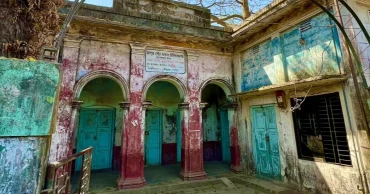
The century-old ‘Chandpur Pouro Databbo Chikisaloy’ (Chandpur Municipal Charitable Clinic), a longstanding symbol of primary healthcare in Chandpur district, has been shut down, leaving the area’s most vulnerable residents struggling for medical care.
The municipal administration said the closure was due to a shortage of doctors and that the hospital would reopen once medical staff are assigned.
Locals reported that the clinic, which serves impoverished communities along the banks of the Meghna River, has remained closed for the past month, sparking frustration among residents who depend on its services.
Many of them live in extreme poverty and are affected by riverbank erosion and all are now calling for the reopening of the 105-year-old facility.
A visit to the clinic in Puran Bazar, Chandpur’s main commercial hub, revealed its historical significance. Established during the British colonial era, the facility has provided medical care for the poor for over a century.
After Bangladesh’s independence, the clinic continued to offer essential treatments, including surgeries, at a nominal fee of just Tk two, earning national recognition as a “beacon of humanity.”
Several elderly residents recalled the clinic’s services over the decades. 75-year-old Habibur Rahman said that while specialist doctors were once available, financial constraints later led to only two municipal health assistants managing basic healthcare services.
Despite this, the clinic remained a critical refuge for minor illnesses, serving around 80 to 90 patients daily.
On Tuesday morning, elderly patients Karimjan and Rahima Begum told UNB that they had been coming to the clinic for doctors’ care for 50 years.
Hospital-based health education improves maternal, newborn care practices in Bangladesh: Study
They said that in the past few days they had come and gone, but there were no doctors and the facility remained closed. At their age, they had nowhere else to go and wondered where they would turn if the clinic remained shut.
Local BNP leader Dulal Khan expressed concern, saying, “This century-old municipal facility has been a lifeline for poor people of Chandpur and neighboring riverine areas. People received healthcare for just two taka, and it has gained national attention."
He went on to say, "We repeatedly requested at least one specialist doctor be appointed, even once a week, alongside infrastructure improvements. Instead, citing a shortage of doctors, the clinic has now been shut down. We urge the municipal administrator and civil surgeon to assign doctors immediately and resume the clinic’s services to restore public confidence and safeguard the government’s image.”
Patient dies jumping 9 floors at Sylhet Women’s Medical College Hospital on eve of operation
Former Puran Bazar ward No-1 councillor and social worker Nazrul Islam Nazu Bepari said, “Several colonies and riverbank poor communities in Puran Bazar have relied on this charitable clinic for over a hundred years. We do not know why or for what reason it was closed. It must be reopened promptly.”
Freedom fighter and president of the River Erosion Prevention Committee Md. Mujibur Rahman added, “There used to be MBBS doctors here, and health assistants maintained vaccination centers and healthcare."
"Even during the COVID-19 pandemic, the services were commendable. Shutting it down against public interest is wrong. This is the only treatment center for the poor of Puran Bazar. We appeal to the district and municipal administrators for urgent attention,” he mentioned.
Chandpur Municipal Administrator Md. Golam Zakaria told UNB that the charitable clinic was municipally funded and had been closed due to a lack of doctors. He explained that previously the facility had been managed by two health assistants, but without doctors, patients could not be properly treated.
He added that the issue had been discussed with the civil surgeon and expressed hope that the clinic would reopen once doctors were assigned. Meanwhile, he requested everyone to remain patient until services resumed.
10 months ago
Bangladesh Polls: Lines redrawn, but 22 upazilas still stranded between 2 seats
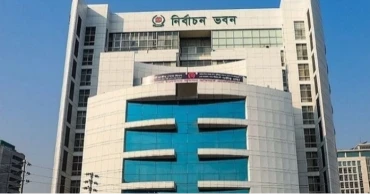
The long-awaited redrawing of Bangladesh’s 300 parliamentary constituencies promised a cleaner map, yet for at least 22 upazilas the boundary lines still cut straight through their heart.
After months of hearings and revisions, the Election Commission (EC) has managed to shave the tally of ‘split’ administrative units by just one, leaving pockets of voters caught between two seats as the 13th national polls loom.
The EC on September 04 issued a gazette notification finalising the delimitation, which brought changes to the boundaries of 46 constituencies across 16 districts ahead of the national election, scheduled for early February 2026.
The 22 upazilas that remain divided among more than one constituency are Ranisankail of Thakurgaon, Sirajganj Sadar, Chuadanga Sadar, Jhenaidah Sadar, Jashore Sadar, Magura Sadar, Narail Sadar, Dighalia of Khulna, Manikganj Sadar, Keraniganj and Savar of Dhaka, Gazipur Sadar, Narsingdi Sadar, Bhanga of Faridpur, Kashiani of Gopalganj, Madaripur Sadar, Vedarganj of Shariatpur, Bijoynagar of Brahmanbaria, Sonaimuri of Noakhali, Noakhali Sadar, Lakshmipur Sadar and Satkania of Chattogram.
Of them, three upazilas – Bhanga, Bijoynagar and Noakhali Sadar – were freshly split into two constituencies. Conversely, four previously divided upazilas – Bera of Pabna, Kaliganj of Satkhira, Narayanganj Sadar and Boalkhali of Chattogram – were integrated into single constituencies in the new delimitation.
During the re-demarcation, the EC considered three factors – administrative convenience, compactness of area and the size of voters.
Before the delimitation, the Election Commission said every constituency would have on average 4.20 lakh voters – the average figure would be 4.22 lakh for Dhaka and Chittagong cities and 4.18 lakh for other areas.
Read: Faridpur protesters block highways, railways for 5th day over constituency demarcation
As per the article 6 (2) of the delimitation of constituencies ordinance 1976, the Constituencies shall be so delimited, having regard to administrative convenience, that each constituency is a compact area and in doing so due regard shall be had, as far as practicable, to the distribution of population as given in the latest census report.
People in several areas, including Bagerhat, Faridpur and Brahmanbaria, protested the new boundaries. The last census, published in 2022, recorded the country’s population at nearly 170 million. Based on this, the constituency-wise average population could be more than 550,000. With around 126 million voters in the country, the average number of voters per constituency is more than 4.20 lakh.
The current commission headed by Chief Election Commissioner AMM Nasir Uddin re-demarcated 46 constituencies: Panchagarh-1 and 2, Rangpur-1 and 3, Sirajganj-1 and 2, Pabna-1 and 2, Bagerhat-1, 2 and 3, Satkhira-2, 3 and 4, Manikganj-2 and 3, Dhaka-2, 4, 5, 7, 10 and 14, Gazipur-1, 2, 3, 5 and 6, Narayanganj-3, 4 and 5, Faridpur-2 and 4, Shariatpur-2 and 3, Brahmanbaria-2 and 3, Cumilla-1, 2, 6 and 10, Noakhali-1, 2, 4 and 5, and Chattogram-7 and 8.
In the final delimitation, the number of constituencies in Gazipur rose from five to six, while Bagerhat’s fell from four to three.
Earlier, on July 30, the EC had published a draft delimitation of the 300 constituencies, proposing boundary changes in 39 constituencies across 14 districts. In the draft delimitation, six constituencies were also proposed for Gazipur district, reducing the number of parliamentary seats to 3 in Bagerhat.
Following the draft publication, the commission received some 1,893 applications containing claims, complaints and suggestions over 84 constituencies.
Read more: Demarcation talks: Gazipur backs EC; Manikganj, Munshiganj demand more seats
Then the Election Commission arranged a four-day hearing on the claims, objections and recommendations regarding the re-demarcation of parliamentary constituencies on August 24-27.
The previous Election Commission, headed by Kazi Habibul Awal, re-demarcated 10 constituencies ahead of the 12th national election, while the KM Nurul Huda-led commission changed the boundaries of 25 constituencies ahead of the 2018 general election and Kazi Rakibuddin Ahmad-headed commission redrew the boundaries of 87 constituencies ahead of 10th parliamentary election.
In 2008, the ATM Shamsul Huda-led commission made massive changes in the 133 constituencies before the 9th general election.
According to Article 7 of the 1976 Ordinance, the validity of any delimitation or formation of constituencies, or of any proceedings taken under the authority of the Commission, cannot be challenged in any court or other authority.
10 months ago

Price Crash: Potato farmers’ hopes in northern Bangladesh fading fast
Potato farmers, traders and cold storage owners in northern Bangladesh are facing steep price drops, even though the government set a Tk 22 per kilogram wholesale rate.
In practice, potatoes are changing hands at Tk 12–14 per kg in cold storages, while retail prices remain at Tk 20–22. The gap has left stakeholders fearing heavy losses ahead of the arrival of new crops in late November.
On Tuesday night, the Ministry of Agriculture announced a floor price of Tk 22 per kg at cold storage facilities and pledged to purchase 50,000 tonnes of potatoes. Yet farmers and traders remain sceptical about whether the pledge will be fully realised.
Cold storage operators, most of whom run their businesses on loans and offer credit to growers and traders, say they are under severe financial strain.
“Our storage capacity is over 200,000 tonnes but potatoes are selling well below the government-set price. If farmers do not get a fair price, we also will face huge losses,” said Obaidul Haque, proprietor of Uttamasha Cold Storage in Mithapukur upazila.
Farmers point out that cultivating one hectare of potatoes costs around Tk 400,000–420,000, covering seeds, fertiliser, labour and storage fees. With yields of 20–22 tonnes, production expenses amount to Tk 26–28 per kg.
At the current market price of Tk 12–14, growers are losing Tk 20–22 on every kilogram.
Babul Mia and Abu Hanif, farmers from Gangachara upazila, said they had stored their potatoes in cold facilities but were unwilling to sell after buyers rejected the floor price.
“We had hoped to cover costs, but now we are being forced to sell small amounts at a loss just to manage household expenses,” Babul said.
Minimum price of potatoes at cold storage gates set at Tk 22 per kg
Mizanur Rahman, another grower, said he had kept 1,200 sacks of potatoes in storage at a cost of Tk 22 lakh.
“If I sell now, I will recover only Tk 800,000. That means a loss of Tk 14 lakh. I don’t know how to survive this,” he lamented.
Wholesale dealers in Rangpur city confirm that transactions are taking place far below the government’s minimum rate.
“It costs another Tk 120 per sack to transport potatoes from cold storages to warehouses. With such margins, there’s no profit left. Retailers are selling at Tk 18–20 per kg,” said wholesaler Nazrul Islam.
This season, potato cultivation exceeded official projections by roughly 20,000 hectares in the Rangpur region.
The Department of Agricultural Extension (DAE) had set a target of 160,200 hectares, but farmers planted close to 180,000. With yields surpassing 26 tonnes per hectare, the total output in the division’s five districts reached 3.2 million tonnes.
Based on prevailing market rates, stakeholders estimate losses exceeding Tk 50 billion, with every tonne incurring losses of more than Tk 20,000.
“Farmers are on the brink of ruin, and cold storages are also at risk of defaulting on loans,” warned an agricultural officer.
The region has 71 cold storage facilities with a combined capacity of 750,000 tonnes, but an estimated 2.2–2.4 million tonnes of potatoes remain outside, stored by farmers using traditional methods.
Lalmonirhat potato farmers watch profits rotting as prices plunge
Much of this stock faces spoilage in the hot weather, compelling farmers to sell at distress prices.
Local authorities say they are working to steady the market.
“We are monitoring markets to ensure compliance with the government-set prices,” said Rangpur Deputy Commissioner Rabiul Faisal.
Deputy Commissioner Rakib echoed the assurance, noting that strict monitoring is in place.
DAE Additional Director Shafiqul Islam added that authorities were striving to implement the Tk 22 floor price but admitted that ‘market realities’ posed major challenges.
With early harvests expected by late November, growers warn that demand for stored potatoes will soon plummet.
Govt to procure potatoes to support farmers: Adviser
Unless the government’s procurement plan takes effect promptly, farmers, traders and storage owners fear they will face crippling losses and mounting debts, they said.
10 months ago