special

Bangladesh Election: Intelligence-based crackdown planned as police seek missing weapons
In a bid to prevent potential subversive activities ahead of the national election, the police are preparing to launch intelligence-driven operations across the country, targeting illegal arms and ammunition, particularly those looted from various police stations, outposts and other establishments during last year’s July uprising.
A Deputy Inspector General (DIG) at Police Headquarters, speaking to UNB on condition of anonymity, said that, unlike previous elections, law enforcement agencies this time would rely solely on intelligence-led actions rather than combing or special operations.
“Law enforcement agencies usually conduct special operations or combing exercises before every national election, especially to recover illegal weapons. But considering the gravity of the situation this year, we are going for precise, intelligence-based operations. We are already conducting analyses and strategic planning,” the DIG said.
Asked about the timeline for launching the operations, the officer said, “It will begin whenever the government instructs us to go for it.”
The move comes in the wake of serious security concerns triggered by the large-scale looting of arms and ammunition following the political upheaval on August 5, 2024, the day former Prime Minister Sheikh Hasina fled the country.
Former DIG Nahidul Islam arrested in Dhaka
Enraged protesters launched coordinated attacks on various police stations and installations across the country.
According to documents obtained from the Police Headquarters, a staggering 5,753 firearms and 651,832 rounds of ammunition were looted during the movement.
Besides, a significant number of non-lethal weapons and devices were stolen during the anti-discrimination movement in July-August last year, including 32,005 teargas shells, 1,455 teargas grenades, 4,692 sound grenades, 290 smoke grenades, 55 stun grenades, 893 multiple-bang stun grenades and 177 teargas sprays.
Among the looted firearms and ammunition, 4,395 firearms and nearly 394,117 rounds of ammunition have so far been recovered. However, around 1,368 firearms and 257,715 rounds remain missing, raising concerns that they could be used to sabotage the upcoming election process.
Cash Rewards for Recovery
In response, the Home Ministry has announced substantial rewards for the recovery of looted arms.
At a press briefing following a law-and-order core committee meeting held at the Secretariat on 25 August, Home Affairs Adviser Lt Gen (retd) Md Jahangir Alam Choudhury revealed the reward structure: Tk 500,000 for each Light Machine Gun (LMG), Tk 100,000 for each Chinese rifle or Submachine Gun (SMG), Tk 50,000 for each shotgun or pistol, and Tk 500 per recovered bullet.
Despite this incentive, another senior DIG told UNB that no new weapons have been recovered since the reward announcement.
3,797 cases filed, Tk 26.38 cr fines realised in nationwide anti-pollution drives
“We’re monitoring public movement and trying to trace the networks involved in the coordinated attacks on police establishments, including police stations. Intelligence agencies are on high alert,” the officer said.
Election Security
The decision to opt for intelligence-led operations follows a high-level meeting at the Home Ministry on August 6, where law enforcement agencies were instructed to remain on maximum alert.
Officials were warned that the stolen weapons could be used by anti-state elements to create unrest during the upcoming national election period.
Police officials anticipate that this election may face unprecedented challenges. Police Headquarters is focusing on intelligence-based strategies rather than massive raids to neutralise threats quickly and surgically, without causing public panic or widespread disruption.
They said law enforcement agencies are now working closely with intelligence agencies to identify and dismantle networks involved in the arms looting and any subsequent attempts at destabilisation.
10 months ago
Water crisis deepens in Pirganj as Tk 20cr project hits a snag
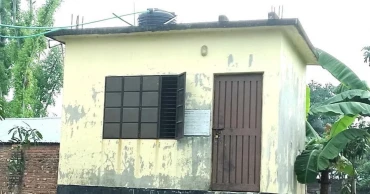
Around 15,000 residents of Pirganj Municipality in Rangpur are enduring severe hardship after their clean water supply was cut off following the breakdown of three pumps installed under a Tk 20-crore project.
The pumps, set up by the Department of Public Health Engineering as part of its Water Supply and Environmental Sanitation System Improvement initiative during the 2021–22 fiscal year, stopped working some 15 days ago. Since then, households have been left without access to safe water for drinking, cooking and other daily needs.
Many families have been forced to purchase bottled water, spending Tk 50–60 a day, an amount that is especially burdensome for low-income earners. Those unable to afford bottled supplies are now at risk of contracting waterborne diseases.
Frustration has mounted among residents, who accuse the municipal authorities of failing to resolve the crisis promptly. Allegations of corruption linked to the water project have also surfaced.
Locals allege that the former mayor, Tajimul Islam Shamim, reportedly on the run since the collapse of the previous government, and a public health assistant engineer, Al Mamun, benefited financially from the scheme.
Concrete span, broken hopes: Gaibandha awaits the road ahead
The three pumps were installed in 2022 at different locations: one on land owned by former councillor Saheb Ali near the Pirganj bus stand in Osmanpur Mouza; another in Sonakantar Mouza on land belonging to Lal Mia, said to be a close associate of the fugitive mayor; and a third in front of the Garabed Jame Mosque.
Since their installation, the system has only delivered clean water for about four months. On August 27, the supply abruptly ceased again, leaving large parts of the municipality dry.
“We can’t cook or wash properly. We have to buy drinking water from shops at high prices,” said a resident of Ward 4.
Similar grievances have been reported from Wards 5 and 8, which are among the hardest hit areas.
Municipal Executive Officer Abdur Rahim explained that the pumps had developed leaks in several places, forcing the authorities to suspend the supply.
He also noted that overdue water bills had slowed repair efforts.
“Despite the challenges, we are trying to restore the water supply as soon as possible,”
he said.
Meanwhile, locals continue to urge immediate intervention, warning that the prolonged shortage could escalate into a public health crisis.
10 months ago

Bangladesh’s tourism sector reels from political and safety issues
Bangladesh’s tourism industry continues to lag behind its South Asian peers, with a decline reported in the business last year, apparently due to deterioration in political stability and law and order.
The situation is feared to deteriorate further, with sites of cultural heritage and events of traditional celebration being constantly targeted in attacks, often by radical Islamists, and their masterminds enjoying impunity.
In stark contrast to other South Asian countries, the contribution of the tourism industry to Bangladesh’s economy is only about three per cent.
“Bangladesh is not considered a safe tourist destination by many nations,” said Kamrul Hassan, who teaches tourism and hospitality at Dhaka University.
“You could say the level of security tourists expect is largely absent. Bangladesh’s portrayal in foreign media also discourages a lot of international travelers,” he said.
Tourism experts preferred to call Bangladesh not tourism-friendly.
Govt seeks to build skilled manpower in tourism sector: NSDA
Fresh areas, such as peaceful political settlements, evaded the Chittagong Hill Tracts, while Rohingya infiltration into Cox’s Bazar, the main tourist destination of the country, gave rise to a sense of insecurity.
The World Economic Forum placed Bangladesh in 109th position in its latest ranking of countries in regard to the size of their tourism industries. The ranking covered the year 2024 and was published in January.
Published every three years, Bangladesh lost 9 places on the ranking, considering its 100th position in 2021. The latest slip came following consecutive improvement in the business since 2017, when the WEF ranked Bangladesh at 125th.
Tourism businesses rebound following political unrest and the Covid-19 pandemic in Sri Lanka, the Maldives and Thailand.
“It did not happen randomly. The countries took strong steps to revitalise their tourism business,” said Kamrul.
According to the Bangladesh Parjatan Corporation’s latest data, while tourism accounts for around 10 percent of global GDP, its contribution to Bangladesh’s GDP remains only 3 percent.
In contrast, all of Bangladesh’s neighbors—India, Nepal, Bhutan, the Maldives and Sri Lanka—boast stronger tourism sectors. The World Travel & Tourism Council (WTTC) reported that India earned INR 3.1 trillion (USD 37 billion) from tourism in 2024.
TOAB to host Bangladesh's largest International Tourism Fair from October 30
According to the Nepal Rastra Bank (NRB), tourism income rose from NPR 62.3 billion in FY 2022-23 to NPR 82.33 billion in FY 2023-24, contributing 6 percent to the country’s GDP. In 2024, Nepal welcomed nearly 1.2 million foreign tourists, compared to just around 650,000 in Bangladesh.
Even Pakistan ranked above Bangladesh at 101st position on the WEF’s latest Travel and Tourism Development Index 2024, scoring 3.41 out of 7 compared to Bangladesh’s score of 3.19.
The Pakistan Business Council estimates tourism contributes over 5 percent to its GDP, generating nearly USD 20 billion in 2024—far higher than Bangladesh’s earnings of under USD 3 billion.
The Maldives remains the most tourism-reliant economy in South Asia, with 68 percent of its GDP dependent on the sector. Over 1.5 million tourists visit the island nation annually, each spending an average of USD 2,500, according to its statistics bureau.
Sri Lanka, despite economic setbacks, managed to increase foreign tourist arrivals and income. An Asian Development Bank (ADB) report noted that India’s tourism receipts grew from USD 32.2 billion in 2023 to USD 35.02 billion in 2024. Sri Lanka’s income also rose by USD 1.01 billion year-on-year to USD 3.17 billion.
Tourism restrictions lifted in parts of Bandarban nearly after a year
In sharp contrast, Bangladesh’s earnings from foreign tourists fell in 2024. The ADB report said the country earned USD 453 million in 2023, which dropped to USD 440 million in 2024.
Industry insiders blame lack of diversity as another major obstacle to expanding Bangladesh’s tourism business. They say that tourists often have little reason to revisit tourist destinations.
“Bangladesh has no plan to attract tourists. The sector looks as it did decades ago,” said Shoeb-Ur-Rahman, associate professor at Dhaka University’s Tourism and Hospitality Management Department.
He stressed the need for detailed data on tourist arrivals—both domestic and foreign—their preferences, repeat visits, and feedback, to redesign the sector.
“We must learn why Bali or Pattaya attract repeat visitors while Cox’s Bazar does not,” he said.
Tourists often complain of syndicates controlling every aspect of travel—from hotels to food to transport, leaving tourists with the feeling of being ripped off.
“In Cox’s Bazar, hotel rates and food are excessively high, with almost every trader exploiting tourists,” said Humayun Rashid, who recently visited the beach town with his family.
Labiba Habib, founder of the tour group Let’s Explore World, noted that unlike Bangladesh, where tourism is limited to hills and beaches, other countries offer diverse attractions.
“In many destinations, tourists enjoy freedom in both urban and natural sites, while here people feel judged for what they do,” she said.
Urban tourism is also overlooked. Cities like Delhi, Bangkok, Jakarta and Tokyo attract millions, while Dhaka lacks any major tourism plan or appeal, experts say.
“Dhaka’s haphazard urban landscape with its infamous traffic tailbacks scares away tourists,” said Adil Muhammed Khan, president of the Bangladesh Institute of Planners.
Political stability is another prerequisite to expand tourism, said Md Rafeuzzaman, president of the Tour Operators Association of Bangladesh (TOAB).
Bangladesh is expecting to hold its national election in February next year with political parties confronting each other or the police in violent clashes. Major city streets often get blocked by protesters without any prior announcement.
Security experts warned that the situation might not improve until well after the national election, prompting fears of the tourism business further declining in the coming days.
10 months ago
Bangladesh’s low-compliance export industry faces enormous challenges
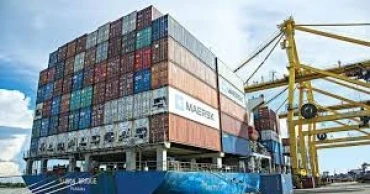
Bangladesh’s export to the European Union faces an enormous challenge from the newly adopted legally binding EU requirement to ensure safety across the supply chain, protecting the environment and human rights.
Bangladesh’s main export item to the EU is ready-made garments, which accounted for 60 per cent of $42 billion RMG exports last year.
Under the new requirement adopted by the European Parliament and the Council last year, Bangladesh will have to identify actual and potential risks and harm to human rights and the environment at all levels of its supply chain and address them, said Md Awrangajeb Akon, who teaches criminology and police science at Mawlana Bhashani Science and Technology University.
NBR to allow exporters to import duty-free raw materials: Chairman
The safety standards will have to be institutionalised by 2029, or Bangladesh risks losing the market, with the potential of its businesses facing fines or reduced orders for work.
The newly introduced directive is known as the Corporate Sustainability Due Diligence Directive (CSDDD), a legal directive to implement the Human Rights and Environmental Due Diligence (HREDD), a concept that evolved through a series of international standards and soft-law instruments in the 2010s.
The CSDDD explicitly requires companies to have a climate transition plan, pushing Bangladeshi exporters to reduce their carbon footprint and adopt renewable energy sources, explained Syed Sultan Uddin Ahmmed, executive director of the Bangladesh Institute of Labour Studies.
He observed that Bangladesh particularly made some progress with regard to workers’ safety and labor rights in recent years, but many challenges remained.
Bangladesh needs to make many changes to its law and existing practices, he added, particularly in line with the International Labor Organisation requirements.
Some of the factories in the RMG sector have already received accolades for their green transition efforts. But they are not enough, given the scale of fossil fuel dependence Bangladesh has, with more than 90 per cent of its energy demand met through burning fossil fuels.
NBR issues directive to resolve HS Code disputes, speed up export clearance
In the 15 years from 2009, Bangladesh’s energy investments and policies targeted a development almost entirely relying on fossil fuels – mainly gas, coal, and oil. Bangladesh is at the moment locked into large-scale fossil fuel use for at least the next two decades.
Energy transition initiatives are still not enough and the current energy mix is unlikely to undergo any substantial change anytime soon, with a discriminatory financing regime blocking renewable energy expansion.
Despite factories, particularly those in the RMG, setting up many solar power stations to power their operations, their supply chain is riddled with a carbon footprint.
“The new law looks like a double-edged sword to Bangladesh,” said Md. Motaher Hossain, team leader of the Factory Improvement Program for the EU Market Access Project at the GIZ.
Besides formulating stringent new standards and laws, removing human rights risks across the supply chain also means implementing labor rights at all stages while ensuring fair wages and decent workplaces, he said.
Companies that fail to comply with it could face severe penalties, Motaher said, including fines and civil liability for their actions or inaction.
“This is a major departure from the previous ‘soft law’ approach, which relied on voluntary corporate social responsibility initiatives,” he added.
The new EU directive will also require its buyers to pay fair prices to source countries and respect human rights.
By embracing the requirement, Bangladesh could enhance its business with the EU, experts said.
“The cost of business is going to go up with the buyers paying more,” said Mohammad Hatem, an executive president of the Bangladesh Knitwear Manufacturers and Exporters Association.
The reason for the EU and other Western companies choosing Bangladesh for an RMG manufacturing destination is purely rooted in the abundance of the country’s cheap labor supply.
Bangladesh still faces substantial protests at factories where workers do not get their legitimate payment. Workers often get fatally shot by law enforcers for raising their voices over fundamental rights being missing.
Bangladesh’s business leaders have urged EU buyers to pay fair and ethical prices to enable fast implementation of the CSDDD.
10 months ago
Concrete span, broken hopes: Gaibandha awaits the road ahead
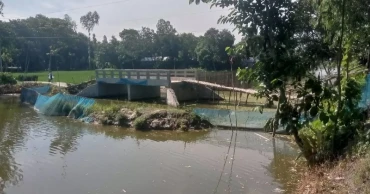
A newly built bridge over a canal in Sundarganj upazila of Gaibandha has remained virtually unusable due to the absence of approach roads on either side, leaving several hundred local residents in prolonged distress.
The structure, constructed under the Department of Disaster Management during the 2023–24 fiscal year, was completed six months ago in Ghaghoa village under Tarapur Union.
Yet, no earth-filling was done to connect it to nearby roads, rendering it little more than a concrete span over water.
Students, teachers and pedestrians in the surrounding areas are bearing the brunt, struggling to cross safely. With schools, madrasas, markets and homes located on both sides of the canal, locals say the bridge’s potential to ease their movement remains unrealised.
In a desperate bid to make the bridge usable, villagers, along with the local union chairman and members, have put up bamboo walkways on either end. But the improvised paths are unstable and risky, with several students already falling into the canal, damaging their books and belongings.
“Once the land on both sides of the bridge is filled, everyone will be able to come and go happily,” said Habibur Rahman, a local resident.
“Vehicles including rickshaws and vans, as well as emergency health service vehicles, will be able to operate. This will benefit everyone. However, hopes remain unfulfilled. The bridge has been built, but without connecting roads, it is not serving its purpose,” he said.
Another resident, Sujan, alleged that the bridge was constructed with substandard materials. “There are doubts about whether the length and width of the bridge are according to the schedule. But the money for the 30 lakh taka bridge was taken away while party influence was exerted without completing the construction,” he said.
Majnu Mia, a member of Ward No. 1 of Tarapur Union, said people have been crossing the canal at great personal risk by walking over bamboo laid across deep holes on both sides of the bridge.
“Despite repeated requests to the contractor to complete the approach roads, no action has been taken,” he added.
When contacted, the contractor, Nur Maula, said over the phone that earth-filling work to link the bridge to the roads would begin within a few days.
Tarapur Union Parishad Chairman Aminul Islam confirmed that the bridge construction had been finished five to six months ago, but the contractor had since left without completing the approach roads. “Despite several attempts to contact him, we couldn’t reach him. We were forced to install bamboo walkways temporarily,” he said.
Fragile bamboo bridge puts Kurigram’s Phulbari residents in danger
Engineer Nasir Uddin from the Sundarganj Upazila Project Implementation Office acknowledged that the contractor had taken payment but failed to finish the job. “We’re currently looking into the matter,” he said.
Sundarganj Upazila Nirbahi Officer (UNO) Raj Kumar Biswas said, “I have just come to know about the issue. Necessary steps will be taken soon.”
10 months ago

Fuel crisis hits five northern districts as Rangpur depots run dry
A prolonged shortage of fuel has hit filling stations across five northern districts, with depots in Rangpur running nearly empty due to disrupted rail supplies from Chattogram.
Officials at the Padma, Meghna and Jamuna depots said the crisis has dragged on for about five months, severely straining the supply chain.
Against a monthly demand of roughly 2.5 crore litres for the region, only about 30 lakh litres were delivered in August.
Fuel from the Rangpur depots normally serves Rangpur, Lalmonirhat, Kurigram, Gaibandha and Nilphamari.
Bangladesh Petroleum Corporation (BPC) sources and depot officials blamed the railway’s shortage of locomotives for the persistent disruption.
Md Azizur Islam Mintu, president of the Rangpur District Petroleum Dealers Association, warned, “For the past five months supply has been far below demand. If this continues, it will cause a serious impact on agriculture, industries and transport in the region.”
Govt to raise job-entry age for doctors, persons with disabilities to 34
With deliveries by train stalled, operators are sourcing fuel from distant hubs.
Mizanur Rahman, owner of Mizan Filling Station at Rangpur’s Charitala Mor, said, “As fuel is not arriving by train we are trying to bring it from Chattogram and Parbatipur at higher costs. If we got supply from Rangpur depot the expense would be much lower.”
Another dealer, Manzur Azad, said they have been forced to collect supplies from Parbatipur and Baghabari.
“It doubles transport costs and takes two to three days due to long queues, affecting not only businesses but also agriculture and transport sectors,” he said.
The squeeze has also sidelined hundreds of workers.
“More than 600 workers have become jobless due to the crisis. Despite several letters to the authorities nothing has changed. If regular supplies don’t resume soon, we will be forced to protest,” said Alaul Mia Lallu, general secretary of the Rangpur Tank-Lorry Workers’ Union.
Standard passenger services to be ensured at HSIA’s new terminal: Adviser Bashir
Dealers’ associations have written to the Power, Energy and Mineral Resources Adviser and the Divisional Commissioner, but there has been no solution yet.
Jakir Hossain Patwari, in charge of Meghna Petroleum Depot, said, “There is no shortage of fuel in Chattogram. The problem is the lack of wagons to carry it. Against our monthly demand of 25 lakh crore litres, we are receiving only 5 lakh litres.”
Aminur Rahman, in charge of Padma Petroleum Depot, explained, “Earlier, two engines used to carry fuel to Rangpur, allowing 8 to 10 trips a month. Now with only one engine that has reduced to 4 to 5 trips. Even that engine has been reassigned elsewhere, leaving the depots almost empty.”
Rangpur Deputy Commissioner Rabiul Faisal acknowledged the disruption, “Fuel supply has been disrupted due to the railway engine shortage. We expect the situation to improve within a week.”
Coast Guard Boost: Govt revises project to tackle facilities, logistics gaps
10 months ago

Govt to raise job-entry age for doctors, persons with disabilities to 34
The government has decided to raise the upper age limit for doctors and persons with disabilities applying for government jobs to 34, after a recent ordinance set the maximum age for all candidates at 32.
The upper age limit for doctors and persons with disabilities will, however, be 34 years under the new decision.
A senior official of the Ministry of Public Administration said the ministry has, in principle, agreed to provide a two-year additional benefit for doctors and persons with disabilities based on recommendations from the Public Service Commission (PSC).
The ministry has also accepted proposals to maintain the upper age limit of 35 and 40 years for certain computer-related positions in grades five and six, he said.
No decision has yet been made on whether the age limit for children of freedom fighters will be increased, with the matter left to the Council of Advisers in consideration of past experiences.
According to the Ministry of Public Administration, the Government Office Computer Personnel Recruitment Rules, 2019, state that the maximum age for direct recruitment to the posts of Director, General Manager, Deputy Director and Deputy General Manager is 45 years.
The age limit for direct recruitment to Deputy Director/System Manager positions is also 45 years, along with Chief Maintenance Engineer, Senior System Analyst and Senior Maintenance Engineer posts.
Meanwhile, the maximum age for System Analyst, Senior Programmer and Operations Manager positions is 40 years, while Assistant System Analyst, Programmer, Computer Supervisor and Maintenance Engineer posts have an age limit of 35 years.
With the issuance of the ordinance on October 18 last year, these benefits were abolished, reducing the age limit for all candidates to 32 years.
On November 18, the government had issued the Ordinance 2024 on Maximum Age Limit for Direct Recruitment in Government, Semi-Autonomous, Autonomous, Statutory Authorities, Public Non-Financial Corporations, and Autonomous Bodies, which fixed the maximum age at 32 years for all levels of government employment.
As a result, the existing age benefits for doctors, children of freedom fighters, persons with disabilities, and certain computer-related posts were removed.
Government cracks down on lobbying for promotions in bank jobs
The move sparked discontent among various quarters, prompting job applicants to protest. In response, a committee recommended raising the maximum age to 35 years for men and 37 years for women.
The government eventually decided to maintain the age at 32 years for general candidates while allowing 34 years for doctors and persons with disabilities.
Abdul Muyeed Chowdhury, former secretary and adviser to the caretaker government, headed the committee, which submitted its report to the Chief Adviser’s office on October 9.
Before the ordinance, the maximum age for general candidates was 30 years, while children of freedom fighters, doctors and persons with disabilities could apply up to 32 years.
Certain grade five and six computer-related positions allowed direct recruitment up to 35 and 40 years. The new ordinance, however, removed these special provisions, aligning their age limit with general candidates.
To address these difficulties, proposals were submitted to the Ministry of Public Administration by various departments and job seekers.
Doctors, who must complete an internship before entering service, demanded that their age limit be extended by two years to 34 years. Following this, the PSC sent a proposal to the ministry.
The PSC recommended adding a new clause to the ordinance, stating, “For positions in any government, semi-autonomous, autonomous, statutory authorities, public non-financial corporations, or autonomous organisations where the maximum age limit before the issuance of this ordinance was 33 years or above, such age limits will remain unchanged.”
Government scraps contract of BFIU head Shahinul Islam
The PSC also suggested implementing this amendment from 18 November 2024.
Later, at the request of the Ministry of Public Administration, the PSC further recommended that the age limit for children of freedom fighters, doctors and persons with disabilities should be higher than for general candidates.
It also suggested retaining the previous age limits of 35 and 40 years for certain grade five and six computer-related positions.
10 months ago
Standard passenger services to be ensured at HSIA’s new terminal: Adviser Bashir
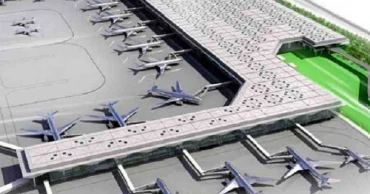
Civil Aviation and Tourism Adviser Sk Bashir has said passenger services at the new terminal of Hazrat Shahjalal International Airport (HSIA) will be made ‘dignified and respectable’ standard as Bangladesh looks to be able achieve the highest international benchmarks anytime soon.
“We have already made a decision on ground handling and will reveal it soon…likely next week,” he said.
To ensure service quality, the government is weighing the option of appointing a second international ground handler at HSIA’s newly built third terminal, alongside Biman Bangladesh Airlines, Civil Aviation and Tourism Adviser S K Bashir told UNB at the Secretariat on Thursday.
He emphasised that the goal is to foster competition and raise standards. “We want to enhance services by utilising the capacity of everyone engaged in ground handling through a coordinated approach,” he said.
“Our aim is not to make Biman uncompetitive, but at the same time we cannot let passenger services decline,” the adviser said.
Meanwhile, the final phase of a three-day negotiation between the Civil Aviation Authority of Bangladesh (CAAB) and a Japanese consortium began on Thursday to settle operational matters for the new terminal.
CAAB Chairman Air Vice Marshal Mostofa Mahmud Siddiq presided over the first two sessions, while Adviser Bashir is scheduled to chair the concluding one. The discussions involve all stakeholders, including the International Finance Corporation (IFC) as transaction adviser.
10 months ago
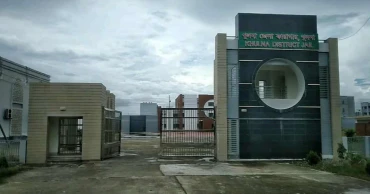
From Cells to Care: Khulna’s new central jail promises real change
On the outskirts of Khulna, where the city meets the serene banks of the Bhairab River, a long-awaited transformation in the region’s penal system is nearing completion.
The new Khulna Central Jail, a sprawling modern correctional complex, is expected to be handed over to prison authorities by October.
The facility, which has been under construction for more than a decade, has now reached 95% completion, according to officials from the Public Works Department (PWD).
Once operational, it will begin the gradual relocation of inmates from the century-old, overcrowded existing jail, a facility that has long been a concern for prison authorities, human rights activists and local residents alike.
Constructed in 1912, the current Khulna Central Jail was designed to house 678 prisoners. Today, it holds over 1,400 inmates, far beyond its intended capacity, leading to inhumane conditions, safety hazards and administrative difficulties.
“The old jail is no longer suitable for modern correctional needs. This new facility is not just an expansion…it’s a complete reimagining of what incarceration should look like in a modern society,” said Nasir Uddin Pradhan, Superintendent of the Khulna Jail.
The new prison complex, located on 30 acres along the Khulna City Bypass (Rupsha Bridge Road), will initially accommodate 2,000 inmates, with a future capacity of 4,000. Its 52 buildings, spread across a campus more reminiscent of a modern residential colony than a prison, include landscaped gardens, tiled walkways and brightly painted structures.
Facilities That Reflect Reform
Beyond increased capacity, the new jail introduces facilities aimed at rehabilitation, dignity and health. Separate units for under-trial and convicted prisoners, dedicated barracks for juvenile inmates, a women’s unit with its own hospital, work area and motivation centre, a 50-bed general hospital, a school for staff children, a library, dining hall, salon, and laundry are part of the design.
Special wards and daycare facilities for female inmates with children, educational and recreational resources, separate prayer rooms, workspaces and cultural activity zones for men and women are also included.
“This is not just a prison. It’s a step toward a more humane and reformative correctional system,” said Sheikh Ashrafuzzaman, President of the Greater Khulna Development Coordination Committee. “It addresses the long-standing issues of overcrowding, while also respecting the dignity of inmates.”
Delays, Deadlines and Determination
The project was originally approved by the Executive Committee of the National Economic Council (ECNEC) in 2011 with a budget of Tk 144 crore and was scheduled to be completed by June 2016. However, multiple deadline extensions and two budget revisions have pushed the cost to Tk 288 crore.
The latest handover date was initially set for May 25, but construction delays from the contractor’s end forced a postponement.
“We were supposed to take over the facility by the end of July,” said Jail Superintendent Nasir Uddin, adding, “We’ve requested PWD to ensure handover by October so we can begin transfers and resume operations.”
Overcrowded prisons: Khulna Jail to release 482 inmates
10 months ago

Bangladesh on the cusp of a fintech boom, if challenges addressed
Experts are calling to tackle regulatory, cybersecurity, and inclusion challenges as Bangladesh’s fintech industry enters a transformative era.
Driven by rapid growth in mobile financial services, the launch of digital banking, high reshaping payments, lending, and wealth management are contributing to shape Bangladesh cashless economy.
According to data highlighted by the Bangladesh Fintech Innovation Council (BFIC), with more than 500 startups now active across payments, lending, wealth management, and digital banking, Mobile Financial Services' transactions amounted to $158 billion (Tk 17.37 trillion) in 2024, according to Bangladesh Bank's figures.
That reflected a 28 percent year-on-year increase from 2023. On average, over Tk 4,800 crore is now transacted daily, placing Bangladesh among the world’s busiest mobile money markets.
The country has more than 239 million active MFS accounts, outnumbering its population, and is supported by a network of 1.8 million agents in both urban and rural areas. Market leaders bKash, Nagad and Rocket continue to dominate, with bKash reporting Tk 5,058 crore in revenue and Tk 315 crore in profit last year.
The Era of Digital BanksThe growth momentum is set to intensify as Bangladesh Bank has formally begun receiving applications for digital banking licences from September 1, 2025, with submissions open until September 30. The central bank has also raised the minimum paid-up capital requirement to Tk 300 crore, seeking to ensure financially strong entrants in the sector.
Fintech consultant and public speaker Engineer Md Firoz Kabir said the move marks “a breakthrough event for Bangladesh’s financial sector,” adding that it would accelerate the journey toward a cashless economy, fintech innovation and digital financial inclusion.
Industry insiders say competition will be intense as traditional banks, telecom-linked firms and technology startups prepare to expand their footprint in fintech. Beyond established players, platforms such as Chaldal, Pathao and Sheba.xy have begun integrating financial technology into their services, using their extensive customer data to launch new digital offerings.
“Fintech is no longer a peripheral story; it is reshaping how Bangladeshis save, borrow and transact,” said Ahmed Nazim, an AI and data science enthusiast. He noted that while some startups may struggle, those that succeed will drive financial inclusion for SMEs, lower transaction costs and make services more accessible to ordinary citizens.
BFIC's Road to Cashless Bangladesh
Looking ahead, BFIC outlined key trends in its 'Fintech Time Machine' that projects the road ahead from 2025–2030. They said the next five years won’t just transform financial services, they’ll "dissolve the line between finance and life itself, making money management borderless, intelligent, sustainable, and invisible".
By the end of 2025, it projects AI-Driven Hyper-Personalization, in which banking evolves into a personal financial companion. Predictive AI anticipates user needs, automates savings, and optimises investments in real time.
Next year, 2026, it envisions "Cross-Border Digital Currencies." Central Bank Digital Currencies and stablecoins become standard, powering instant, low-cost global payments and reshaping remittances.
In 2027, BFIC expects to establish "Blockchain-Backed Trust". Decentralized identity, smart contracts, and tokenized assets enter mass adoption, redefining compliance, transparency, and asset ownership.
That is followed by the adoption of "Green & Sustainable Fintech" in 2028, as climate-conscious finance goes mainstream. Platforms integrate ESG scoring, carbon tracking, and green lending as default features.
The year 2029 is earmarked for a "Quantum Finance Breakthrough". Quantum computing reshapes financial modeling, enabling real-time risk assessment, fraud detection, and ultra-secure cryptography.
Finally in 2030, BFIC predicts the "Rise of Autonomous Finance". Self-learning financial ecosystems emerge—machines trading, insuring, and investing autonomously, creating an economy that operates at machine speed.
Experts believe Bangladesh stands at the threshold of a historic leap in financial services. With strong regulatory backing, rising digital adoption and the entry of powerful new players, the country’s fintech sector is poised to become a cornerstone of its economic transformation.
Challenges to be addressedAt the recently held Cashless Bangladesh Summit 2025, Policy Exchange Bangladesh Chairman and CEO M Mansur Reaz presented a keynote paper titled ‘The Role of Fintech in Building a Cashless Economy’, highlighting gaps in digital banking policies. He pointed out that Bangladesh has around 120 million adults, yet only 46 million are currently covered under digital banking.
During the panel discussion in the same event, it was revealed that 60% of the population remains unbanked, while 65% of bank accounts are not connected to digital banking services. Additionally, only 2.6 million bank users currently use credit cards.
President of The Institute of Cost and Management Accountants of Bangladesh (ICMAB) Mahtab Uddin Ahmed said, “Bangladesh is at a critical juncture in its financial evolution. The shift to a cashless economy is no longer a distant goal but an immediate necessity. This summit has brought together the right stakeholders to act on creating a digital-first financial system that promotes transparency, security, and inclusion.”
The number of people in Bangladesh who have little access to the banking system is still very high. Therefore it could be a challenge to bring them all under the digital financial network. And that makes it all the more imperative to take this challenge seriously.
10 months ago