special
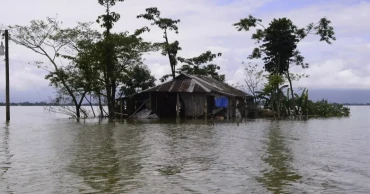
Bangladesh’s climate resilience hinges on tripling Delta Plan budget
Bangladesh needs to triple its annual expenditure to successfully implement the Bangladesh Delta Plan 2100 (BDP 2100), the country’s long-term strategy to safeguard water resources and enhance resilience against climate change and natural disasters.
The government currently spends around 0.8 percent of GDP on delta management projects, according to officials.
Implementing 80 priority projects under the plan will require spending to rise to at least 2.5 percent of GDP in the coming years, said the Climate Financing for Sustainable Development Budget Report 2025-26 of the Finance Ministry.
The Delta Plan 2100 was approved in 2018 aiming to harness the huge potential of Bangladesh as a Delta country through water resource management, ensuring food and water security and tackling disasters.
It sets three national goals and six specific goals for delta regions after identifying six hotspots: coastal areas, Barendra and drought-prone areas, Haor and flash flood-prone zones, the Chittagong Hill Tracts, riverine areas and estuaries and urban areas.
Under its first-phase investment plan up to 2040, the government prioritised 80 projects — 65 infrastructure-related and 15 focused on institutional capacity-building and research, the report says.
Achieving BDP 2100’s targets, including food and water security and disaster preparedness will require an estimated $37 billion by 2030, according to an official document, obtained by UNB.
The document shows that the plan will be implemented in three phases: short-term (up to 2030), medium-term (up to 2050) and long-term (up to 2100).
The Green Climate Fund (GCF) was formed to help developing countries adapt to climate change by limiting or reducing greenhouse gas emissions to combat the damaging effects of climate change.
Although Bangladesh has been somewhat successful in receiving funding from the GCF through multilateral organisations, direct funding through government institutions is rare, said Finance Ministry officials.
The main challenge for public institutions in the region is the inconsistency of the conditions for receiving funds from the GCF with the domestic methods and practices of public financial management.
If the government institutions fail to fulfill these conditions, Bangladesh will be deprived of GCF funds, they said.
In view of extreme threats caused by climate change, it is necessary to reconsider the conditions of receiving funds from the GCF for Bangladesh, taking into consideration the existing financial management system and process.
The GCF currently has eight projects running in Bangladesh.
The total funding amount for the projects is $619.23 million of which $164.86 million is received as grants while the amount of GCF loan is $290 million. The remaining $164.86 million is categorised as Government co-financing.
Officials said Bangladesh expects to secure around $2 billion annually from the Green Climate Fund (GCF) while the rest of the financing will come from development partners, foreign direct investment and private sector contributions.
The BDP 2100 also projects that the private sector could contribute around 0.5% of GDP annually to support delta management initiatives.
Out of the 80 projects, 34 qualify for climate financing, with some, such as the ‘Navigation Protection and Restoration of River Environment around Dhaka City’ under the urban hotspot, offering significant opportunities for both climate and private sector financing.
The government has prioritised climate resilience in coastal, riverine, and urban areas under the Bangladesh Delta Plan 2100 (BDP-2100) but drought-prone regions remain largely overlooked, according to official data.
Out of 80 priority projects identified for the first phase of implementation till 2040, 34 are climate-relevant, focusing on adaptation, mitigation and resilience.
Coastal areas have received the highest attention with 13 out of 23 projects targeting protection against sea-level rise, salinity, and cyclones. River areas and estuaries follow, with five of seven projects addressing erosion and flooding risks.
Urban areas, particularly Dhaka and other major cities, also feature prominently, with five climate-related projects tackling waterlogging, pollution, and river restoration.
Haor and flash flood-prone zones have four of six projects marked as climate-relevant, reflecting their vulnerability to seasonal flooding.
The Barendra and drought-prone regions, however, have no climate-relevant projects, despite being highly exposed to water scarcity and temperature extremes.
11 months ago

Train of rough weather events exposes Bangladesh's disaster vulnerability
In three and a half months since the third week of May, rough weather events, including heavy rains, squalls and high tides, prompted the Bangladesh Meteorological Department to issue a marine cautionary signal 13 times.
Back-to-back low pressures together with strong monsoon triggered the rough weather events, leading to frequent announcements of cautionary signal number three, with its direct and indirect consequences felt across Bangladesh.
The direct consequences saw strong waves and tides lashing Bangladesh’s coast, rivers rapidly swelling and frequently crossing their danger marks, and heavy rains abruptly disrupting life and business.
Well-off city dwellers mostly felt the rough weather consequences indirectly, in the high prices of Hilsa and vegetables.
“Bad weather greatly reduced Hilsa production. The sea remained rough so often that we could barely afford to go fishing,” said Al Amin, a fish trader based in Mohipur of Patuakhali.
Three trawlers that Al Amin recently sent for fishing in the Bay of Bengal returned in less than two days. The trawlers caught Hilsa worth Tk 5 lakh on average, a fifth of a regular seasonal production.
“Sea fishing accounts for at least 70 per cent of annual Hilsa production,” said Md. Anisur Rahman, a Hilsa researcher and former director at the Bangladesh Fisheries Research Institute.
Fishing usually requires farmers to travel 12 hours to the sea. In a recent field visit, officials at the Bangladesh Meteorological Department found that fishing by ordinary trawlers along the Bangladesh coast starts about 50km off the coast. The BMD’s forecast reaches a maximum distance of 57km off the coast.
Two of the latest low-pressure systems originated in the gap of less than two days. The last one formed on August 27 and dissolved on August 29.
Hilsa catching usually goes on in full swing in August, flooding the kitchen markets. Schools of Hilsa fish are expected to be swimming through sweet water along rivers and salt water along the coast in August. Hilsa season continues until the ban comes in October.
In the ongoing month alone, particularly after August 13, the BMD issued the cautionary signal four times. July saw the signal issued four times, June three times and May twice. The signals signified a great disruption in fishing, particularly after the universal ban on the activity for two months from March to April.
A cautionary signal could remain in effect from three to five days when heavy rain, wind rising up to 50 kmph and tide leaping up to five meters could occur, separately and simultaneously.
Such weather conditions prevailed on 39 to 65 days of roughly the last 100 days due to the interaction between wind and temperature in the Bay of Bengal, which is roughly 15 times the size of Bangladesh.
“The monsoon was rather strong this year and the overall weather condition was not comfortable for many people,” said Muhammad Abul Kalam Mallik, a senior meteorologist at the BMD.
Worse than Before?
Bangladesh this year saw the earliest onset of monsoon, which signifies a seasonal shift in wind flow, particularly from the south to the north, in four and a half decades. Since 1981, according to the Changing Climate of Bangladesh report released by the BMD in 2024, the monsoon arrived at Bangladesh’s coast in late May 11 times, eight of them occurring since 2000. Monsoon officially begins in June.
The influence of global warming on monsoons, which impact South Asian and Southeast Asian regions, is still being studied. Some studies indicated less generation of low-pressure systems in the Bay of Bengal due to global warming. The BMD’s changing climate study further corroborated a World Bank report stating that global warming was altering Bangladesh’s seasonal pattern.
Ten or more low-pressure systems formed in a single monsoon season only six times, according tolow-pressure data released by the BMD covering the years from 1981 to 2019. The highest 13 low-pressure systems formed during the monsoon of 1989.
The ongoing monsoon saw the generation of at least six low pressure systems with a month in the season still to go. The last monsoon month, which is September, historically sees more low-pressure systems compared with other monsoon months.
In April this year, the US-based private research university Massachusetts Institute of Technology predicted that monsoon and cyclone seasons would overlap due to changing climate, which will also unleash a once-in-a-century storm tide once every decade.
A low-pressure system, on the other hand, is born when more air rises, leading to low surface pressure. Scientists say increased temperature causes more air to rise while increasing the atmosphere’s capacity to hold water vapor.
Both monsoon and low-pressure systems move toward land, packed with rain, wind and tide.
Inside the Impact Zone
Frequent low pressures, with the potential to intensify into cyclones, could bear long-term consequences for the inhabitants of Bangladesh, a low-lying delta ranked as one of the most climate-vulnerable countries in the world.
Since the ongoing monsoon set in, low-pressure-triggered inclement weather breached levees, washed away houses and crops and frequently disrupted electricity supply to millions of people. Inclement weather during the period also frequently suspended waterway communication, swamped villages, cities and towns and caused hundreds to leave home to escape flash floods and landslides.
Though well-off citizens saw their livelihood intact despite bad weather, many of the poor, accounting for nearly a third of 171 million people, found it to be crippling. Livelihood requires the poor to go outside, whether they are farmers in villages or rickshaw pullers or transport workers or construction workers living in cities and towns.
Almost record-breaking rains swept parts of Bangladesh in June, with Teknaf, Bangladesh’s farthest southern land tip, recording more than 1,144mm of rainfall, which is slightly below its historical record of 1,290mm and more than four times the normal amount of rain expected in the first monsoon month, according to data released by the Flood Forecasting and Warning Centre. Khagrachhari’s Ramgarh and Feni’s Parshuram also recorded far higher than usual rainfall in the same month.
In July, the FFWC data showed, Teknaf witnessed over 1,384 mm of rainfall, slightly below the historical record of rain of 1,432mm and over four times the normal expected rain. Cox’s Bazar recorded 1,401 mm of rainfall against the month’s normal rainfall of about 945mm, while Noakhali witnessed 1,171mm of rainfall against the normal rainfall of about 739mm. Parshuram recorded 872 mm of rainfall against the month’s usual rainfall record of about 562mm.
On July 7, the FFWC reported, the Muhuri River swelled 509 cm in six hours until 3:00pm while the Belonia River rose 532cm in eight hours until 5:00pm.
Newspapers reported that the spell of heavy rainfall had continued for at least two more days, sinking many villages, towns and cities under up-to knee-deep water, and washing away houses, crops and fish enclosures. A flash flood struck Feni, Noakhali and Cumilla districts.
For many living along the coast, the July disaster came on the heels of the previous one that struck on May 30. Millions were left without electricity in 14 districts along the coast hit by heavy rains and high wind and tides.
11 months ago
Lack of experts forces one-year extension for Bangladesh’s Carew project
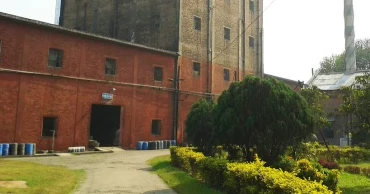
The interim government has approved a one-year extension of a major project, ‘BMR of Carew & Co (BD) Ltd (2nd Revised)’, attributing the decision to the unavailability of experts amid shifting circumstances following August 5, 2024.
“…the delay in the arrival of Indian experts due to the changing circumstances, it was not possible to conduct a trial run during the last threshing season,” says the project document obtained by UNB.
The project period has been extended for the sixth time, without involving any additional costs, as the trial run of the newly installed machinery could not be completed in the last crushing season due to delays in the arrival of Indian experts.
The project, overseen by the Ministry of Industries and implemented by the Bangladesh Sugar and Food Industries Corporation (BSFIC), is now scheduled for completion by June 2026.
It aims to replace the 83-year-old sugar unit of Carew & Company (BD) Ltd, while maintaining the mill’s existing sugarcane crushing and sugar production capacity. It also seeks to minimise process losses through the modernisation of sugarcane crushing and sugar processing machinery.
According to project officials, almost all machinery installation and related civil works have been completed by Bangladesh Machine Tools Factory (BMTF). But the trial run, necessary to test the performance parameters of the upgraded sugar unit during a full crushing season, could not be carried out in the 2024-25 season, which ended on March 8, 2025.
“The trial run requires the presence of Indian experts to supervise and certify the performance of the modernised equipment. Due to changing unavoidable circumstances, they could not arrive in time,” an official at BSFIC told UNB.
As of June 2025, the project achieved 98% physical progress and incurred an expenditure of Tk 80.06 crore, representing 78.32% of its estimated budget of Tk 102.21 crore.
Planning Commission officials said the project, once completed, will enhance sugarcane crushing and production capacity while reducing processing losses at the country’s oldest state-owned sugar mill, which is over 83 years old.
The revised deadline will allow the mill to conduct a comprehensive trial run during the 2025-26 crushing season and ensure full commissioning of the modernised unit.
The 2024-25 threshing season ended on 8 March 2025. Due to the delay in the arrival of Indian experts due to the changed situation, it was not possible to conduct a trial run in the last threshing season.
In that context, it has been proposed to extend the period of the project with a view to completing the trial run in the current 2025-26 sugarcane threshing season.
The Economic Committee of the National Economic Council (Ecnec) approved the plan on April 20, 2012, involving Tk 46.57 crore to modernize Carew & Co (Bangladesh) Ltd, aiming to reduce production costs and increase output.
The project cost was later revised to Tk 102.21 crore on November 4, 2018, reflecting a 120% increase to accommodate expanded modernization needs.
Located inside the Darsana Sugar Mills compound in Chuadanga, Carew & Co is the only licensed distillery in Bangladesh, operating under the Bangladesh Sugar and Food Industries Corporation (BSFIC). It is also one of the 15 state-run sugar mills, and notably, one of the few that consistently generate profit.
Carew & Co traces its origins to 1803, when British businessman John Maxwell established the first distillery in the Indian subcontinent in Kanpur, Uttar Pradesh. Later, Robert Russell Carew, a spirits specialist, partnered with Maxwell and eventually took over the business with two other investors.
In 1897, the company became a joint-stock company and expanded operations to Asansol, Katni, and Darsana in what is now Bangladesh.
After Bangladesh’s independence in 1971, the government nationalised the Darsana facility in 1973, transforming it into Carew & Co (Bangladesh) Ltd.
Carew & Co now covers 3,572 acres of land, including 2,450 acres where sugarcane is cultivated. It mainly produces sugar and utilizes by-products to make liquor, vinegar, spirits and organic fertilizers.
It has more than 200 agents and 13 distributors for marketing nine brands of high-quality liquor, both domestic and foreign-style.
This industrial plan remains a vital player in the country’s agro-industrial sector as a profitable, tax-paying state enterprise along with upholding a historical legacy.
11 months ago

Spotlight on urban poet Hashim Mahmud as Coke Studio returns with ‘Baaji’
When the opening chords of ‘Baaji’ rolled out on Coke Studio Bangla’s Season 3, marking the return of the platform after more than a year - listeners expected another reimagined track that fused folk lyricism with modern instrumentation.
What they didn’t expect was a moment of quiet revelation - a glimpse of the poet himself, whose words had long travelled beyond him.
At the 4:12 mark of the song, the camera shifted, and there he was: Hashim Mahmud. Not just a name in the credits, not just a ghost behind beloved verses, but a living presence, lending his own fragile yet resonant voice.
Sometimes, a song finds its way into the world long before its singer does. It drifts across radios, lingers in conversations, seeps into crowded streets, carrying the echo of a name - and still unfortunately remains unknown to many.
For decades, that was the story of poet-lyricist-singer Hashim Mahmud. His words travelled far, his melodies endured, but the man himself seemed to slip quietly into the shadows.
For years, Mahmud’s poetry has coursed through Bangladesh’s cultural bloodstream. Around Dhaka University’s Faculty of Fine Art, popularly known as Charukala - and other places in the campus including the popular Chhobir Haat, he was once a familiar figure, scribbling in notebooks, crafting songs that married the rawness of folk with the grit of his urban bohemian life.
Speculations and curiosity around artist Hashim Mahmud began through the massively popular song ‘Sada Sada Kala Kala’ from Mejbaur Rahman Sumon’s 2022 film ‘Hawa’.
Hashim Mahmud’s long-time friend, teacher at the Faculty of Fine Arts and its current Dean, Professor Dr Azharul Islam Sheikh Chanchal, first published the now widely discussed song ‘Baaji’ on Facebook in 2019. It was recorded on mobile at the veranda of the Department of Ceramics, Faculty of Fine Arts, featuring his friend Hashim; and from that Facebook post, Hashim Mahmud once again gained recognition at home and abroad.
Peers call him a 'modern urban poet' and for good reason; his words bear an edge, transforming everyday speech into haunting lyricism. Songs like ‘Kotha Koiyo Na’ from Coke Studio Bangla’s second season and the crowd favourite ‘Sada Sada Kala Kala’ etched themselves into the memory of Bangladesh’s cultural circles.
Yet while his words resonated, the man himself receded into the margins. A cruel illness of forgetting began to erase what he had created.
11 months ago
Road safety still elusive in Cumilla: 141 killed in 8 months
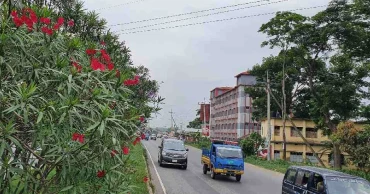
At least 141 people were killed in road accidents on highways in Cumilla, including the Dhaka-Chattogram highway and other connecting roads, in the first eight months of this year.
Among them, 20 lives were lost at a single U-turn point in Padua Bazar on the Dhaka-Chattogram highway, according to Highway Police data.
From January to August, 209 accidents left over 250 people injured, while 140 cases were filed in connection with the accidents, said the Cumilla regional office of Highway Police.
The month-wise death toll shows 16 fatalities in January, 16 in February, 10 in March, 22 in April, 20 in May, 25 in June, 18 in July and 14 in August.
Highway Police attributed the rising number of accidents to reckless speeding, wrong-way driving, careless pedestrian crossings, illegal U-turns and risky conditions of damaged roads.
They said while bus-truck collisions claim multiple lives at a time, fatal crashes involving high-speed motorcycles are also rising sharply.
Crashes are being reported not only on the Dhaka–Chattogram highway (104 km within Cumilla) but also on the Cumilla-Sylhet regional highway (66 km), the Cumilla–Noakhali highway (48 km), and other major roads in the district.
Tragic accidents frequently destroy the dreams and existence of entire families.
One of the deadliest incidents occurred on August 22 when a private car carrying a family was crushed under a lorry at Padua Bazar U-turn.
Omar Ali, his wife Nurjahan Begum, and their two sons Hashem and Kashem died instantly while returning to their home in Hosainpur village, Barura upazila.
CCTV footage showed the car attempting to cross without a safe gap before colliding with a bus coming from the wrong direction. A speeding lorry then lost control and smashed into the car, also hitting a CNG-run auto-rickshaw nearby.
Highway Police (East) Superintendent Khairul Islam said Cumilla’s highways lack proper infrastructure to handle the growing volume of traffic and pedestrians.
“Alongside police vigilance, the roads must be redesigned with service lanes, underpasses and overpasses. We are working on speed control, removing unfit vehicles and restricting three-wheelers, but manpower is limited,” he said.
He also said many U-turns, built near businesses and hotels, should be closed.
“These U-turns may benefit local businesses but they are killing people. The Roads and Highways Department must take responsibility to shut them down,” he added.
Abdul Hannan, organiser of Nirapad Chalok Chai, said the recurring deaths highlight systemic negligence.
“Reckless driving, unskilled drivers and weak enforcement keep fueling the death toll. Authorities show temporary vigilance after major crashes but soon everything goes silent. Planned highways and responsible drivers are the only way forward,” he said.
11 months ago

Ctg’s mega road project delayed as land acquisition hits deadlock
The government has granted a one-year extension for the Kalurghat Bridge to Chaktai Canal Road project, now due in June 2026, as bureaucratic snarls in land acquisition stall critical work despite 82% completion and over Tk 2,200 crore already spent.
The Tk 2,779.39 crore project, being implemented by the Chattogram Development Authority (CDA) under the Ministry of Housing and Public Works, was originally set from July 2017 to June 2020, then extended multiple times, officials said.
Road collapse paralyses 12 villages in Cumilla
It was first extended to June 2021, then to June 2022, with the second revision approving an extension to June 2024, followed by another extension to June 2025, and most recently to June 2026, all without any additional cost increase.
Initially approved in July 2017 with a deadline of June 2020, the project has undergone several deadline extensions to overcome land acquisition delays and technical hurdles, according to an official document obtained by UNB.
The project, fully funded by the government, was initially approved at Tk 2,275.52 crore, later revised to Tk 2,310.24 crore in the first revision, and further increased to Tk 2,779.39 crore in the second revision.
According to the ministry, the project is crucial for protecting key industrial and commercial areas, including Chaktai, Khatunganj, Bokshirhat, Bakalia, Chandgaon and Kalurghat industrial zones, from flooding and tidal surges.
The project aims to ease traffic congestion by linking the Dhaka-Chattogram and Chattogram-Cox’s Bazar highways, while also improving Chattogram’s communication system and protecting the city from tidal flooding as part of the proposed outer ring road.
Despite significant progress — with 82% of physical work completed and Tk 2,203.59 crore (79.28%) spent up to March 2025 — delays in land acquisition, due to complexities in the economic code for land purchase, stalled work on 2 km of the road and two regulators.
Moulvibazar’s roads in ruins, locals plead for repairs
The ministry has justified the extension of the project period without any cost increase, stating that the ‘Construction of Road along the Bank of the Karnaphuli River from Kalurghat Bridge to Chaktai Canal’ project is a publicly significant initiative.
Under the project, a 1.50-kilometre embankment-cum-road, 12 regulators at the mouths of 12 canals falling into the Karnaphuli River, slope protection work, retaining walls and waterways will be constructed.
The second revised DPP was approved by ECNEC on August 16, 2022, and tenders for the remaining works were invited in line with the approved DPP.
The Cabinet Committee on Government Purchase approved the tenders on July 13, 2023, and the contractor signed the contract on July 30, 2023. But the Ministry of Finance withheld land acquisition funds in 2022-23 and 2023-24, leaving a 2-km stretch uncompensated and halting work on two regulators and the embankment-cum-road.
“Currently, the DPP is being amended to facilitate the release of funds for the remaining land acquisition activities,” said an official wishing anonymity.
As the current project deadline is June 2025, he said, an additional one-year extension until June 2026, without any increase in cost.
The Implementation Monitoring and Evaluation Division (IMED) also approved the extension with strict conditions, including completion of all remaining work within the new deadline under a specific action plan and submission of the Project Completion Report within three months of finishing.
It also instructed faster land acquisition for the remaining 2 km after fixing the relevant issues.
11 months ago

Mysterious livestock-linked disease sparks panic in Rangpur
A mysterious disease has broken out in Pirgacha Upazila of Rangpur, leaving over 200 people infected and triggering widespread panic.
Locals report that the outbreak began after livestock fell ill and subsequently died.
Despite weeks of emerging cases, neither the health nor the livestock departments have taken visible measures, often blaming each other for inaction.
Thousands in Pirgacha now live in fear as patients develop painful skin lesions. The symptoms initially appear as rashes, which then progress into large sores and, eventually, deep wounds, according to the locals.
Local health workers shared that the symptoms resemble anthrax, a serious bacterial infection often transmitted from animals to humans.
Civil Surgeon of Rangpur Dr Shahin Sultana said she was unaware of the outbreak. “If such cases exist, the livestock department should first act. Once our field staff report back, we can form a medical team,” she said.
A field visit to Pirgacha revealed the scale of the crisis. Nearly every union, including Sadar, Tambulpur, Chawla, Parul and Itakumari, reported similar cases.
The worst affected areas are Sadar, Chawla and Tambulpur unions.
Excess salt in processed foods fueling rise in Non-Communicable Diseases: Experts
Sabina Akhter of Anantarampur village described how her livestock fell ill earlier this month.
“One by one, my cows and goats developed high fevers and died within days. While caring for them, I suddenly noticed rashes on my hands. Within two days, they turned into painful sores,” she told UNB.
Sabina is among more than 200 confirmed patients, all of whom had either handled sick animals or processed their meat.
Infected villagers say the outbreak has persisted for at least six weeks. Many livestock die within 24 hours of showing symptoms. Without veterinary intervention, farmers are selling off sick animals at throwaway prices, which has further spread the infection.
Fifty-year-old Zaheda Begum recalled how a small itch on her finger escalated into a rotting wound. “The skin turned black and now the pain is unbearable. Another finger has started showing the same signs,” she said tearfully.
Farmer Azizul Haque, from Chawla union, explained, “We care for sick animals, and when they get worse, some villagers slaughter them. People who touch or cook the meat later fall sick themselves.”
71% of deaths in Bangladesh are caused by non-communicable diseases: Experts
11 months ago
Students fear collapse as river threatens to swallow Feni school
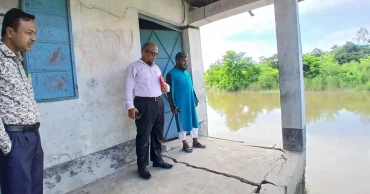
The students and staff of Karim Ullah High School in Matubhuna Union of Daganbhuiyan upazila are facing a growing crisis as relentless riverbank erosion threatens to swallow the school building, putting education in danger.
Built in 2016 with funding from the founder’s sons, Tareque Mahtab Rahim and Javed Salam Rahim, the school, having 405 students and 13 teachers, now hangs precariously over the Katakhali River as heavy rainfall and rising water levels accelerate erosion along its banks.
A massive crack has appeared on the northern side of the structure, raising fears that the building could collapse at any moment.
The five-room building, which accommodates class-7 students, elective subjects for classes 9 and 10, a library and a prayer space for female students, has become unsafe due to the river’s powerful current intensified by prolonged rainfall.
Cracks have also developed in the nearby Shaheed Minar structure, adding to the anxiety of the local community.
“We attend our group subject classes in that building. We're scared it might collapse into the river any time. Authorities must act quickly to protect it,” said Adnan Bin Alam, a class-10 student.
Parents are equally concerned, as Minal Das Gupta said, “We’re in a state of constant anxiety. A major accident could happen if the building falls. If flooding occurs this year, the building could be completely lost.”
Local resident Abul Kashem recalled past protective measures, “A few years ago, a grid wall was built by the district council to protect the erosion, but it’s now gone due to the intense flow of water.”
284 flood-hit schools in Feni remain unrepaired; Tk 12.99 crore goes back unspent
School authorities have also raised an alarm.
“The building is extremely risky now. Any moment it could collapse into the river. We’ve informed the Upazila Nirbahi Officer (UNO) and the Upazila Secondary Education Officer,” said Golam Basir Bhuiyan, the school’s headmaster.
Main Uddin Azad, president of the School Management Committee, urged urgent government intervention, stating, “The current condition of the building is critical. Without a permanent riverbank protection project, future flooding could wash away more infrastructures. We’re seeking urgent government support for the building’s reconstruction.”
11 months ago

Experts call for strategy, skilled workforce to lift Biman from setbacks
Biman Bangladesh Airlines is struggling with frequent technical glitches, schedule disruptions and mismanagement, raising serious concerns over the national carrier’s service reliability.
While foreign passengers remain hesitant to fly with Biman, an increasing number of Bangladeshis are also losing confidence in the national carrier.
“I try to visit Bangladesh, my motherland, every year. But I rarely fly with Biman for several reasons beyond technical issues. The attitude of staff matters, too,” said Humayun Kabir, a Bangladeshi-born British citizen.
Kabir also mentioned the behaviour of airport staff in Bangladesh is often unpleasant. “They don’t know how to receive their expatriate brothers. Sometimes it really hurts,” he said.
Sharing similar frustrations about domestic operations, M Farhad Ullah, a businessman from Chattogram, said, “I’m less worried about in-flight services, but flight safety is really worrying! Biman must improve its service quality if it wants to revive its image.”
Amid these concerns, aviation experts have stressed the urgent need for management reforms and the development of skilled pilots, engineers, and cabin crew before acquiring or leasing additional aircraft.
They warned that without addressing internal inefficiencies, the airline risks deepening its operational crisis. “Operating aircraft on an ad hoc basis or through bureaucracy will not work. Flights must be managed by permanent, skilled and commercially trained professionals,” one expert said.
Panel formed to investigate recent technical glitches in Biman flights
Experts also advised prioritising smaller, regional aircraft, citing significantly lower maintenance costs compared to wide-body planes.
The warnings come amid an increasing number of mechanical faults plaguing Biman’s fleet. Official sources said while some aircraft have been repaired and returned to service, others remain grounded, leading to frequent schedule disruptions and cancellations.
In the last month alone, at least nine aircraft on domestic and international routes have experienced various technical faults, according to media reports.
Though major accidents were avoided, the incidents have raised questions about Biman’s maintenance standards and passenger services.
To ease passenger suffering, the airline is finalising the lease of two aircraft, with a fresh procurement plan also under way.
Separately, the Bangladesh government has decided to purchase 25 aircraft from US manufacturer Boeing as part of a broader diplomatic initiative to reduce trade imbalance with the United States and ease tariffs.
Frequent technical glitches in Biman flights spark passenger safety concerns
The purchase will be implemented in phases, though no formal agreement has yet been signed, airline officials confirmed.
Speaking to UNB, Kazi Wahidul Alam, former Biman board member and aviation analyst, underscored the need for restructuring management before expanding the fleet.
He said although aircraft shortages are a concern, the core issue lies in the lack of aviation expertise. “We must first stabilise the organisation. Then we can focus on expansion,” he said.
Wahidul Alam emphasised developing skilled aviation professionals within the country, noting that hiring pilots, engineers, or cabin crew from abroad would cost about $10,000 per person per month.
He also cautioned against nepotism in recruitment, stressing that only qualified individuals should be appointed.
According to him, Bangladesh’s aviation needs should shape future purchases.
He said, “Our long-haul routes are limited to only four or five countries, while short-haul routes dominate. Smaller regional aircraft are more suitable and less costly to maintain. For the price of eight wide-body jets, we could acquire twelve smaller ones. Among them, the Boeing 737 is a good option, while the 777 or 787 could serve larger routes.”
Biman's Bangkok flight returns to Dhaka amid mid-air technical fault
He added that many of Biman’s ageing aircraft are contributing to recurring mechanical issues and urged stricter oversight and regular quality control.
Currently, Biman operates a fleet of 19 aircraft, including 14 Boeing jets from the United States and five Dash-8 Q400s from Canada. The Boeing fleet comprises four 737-800s, four 777-300ERs, four 787-8 Dreamliners, and two 787-9 Dreamliners.
11 months ago

Jucsu polls: What keeps female students away from election race?
Despite making up nearly half of the voters female students at Jahangirnagar University (JU) are showing little interest in contesting the upcoming Jucsu election as many are citing cyber bullying and social harassment as the main deterrents.
Due to female students’ reluctance to participate in Jahangirnagar University Central Students' Union (Jucsu) election there has been a shortage of candidates in both the central student council and hall council elections.
In most of the female halls, no candidates were found for several posts highlighting a clear lack of competition.
Talking to UNB, several female students said they fear online propaganda, distorted images, personal attacks and a lack of equal opportunities in a male-dominated political culture.
As active political organisations are dominating the scene it has become more of a political platform than a representative forum and so general students are less interested, they said.
Some of them said Jucsu election is being held after 33 years and many are still unclear about its procedures.
Assistant General Secretary (AGS) candidate from “Shikkharthi Oikya Forum” panel, Malihah Namla said, “The main reason behind women’s reluctance is cyber bullying. Lack of equal opportunities also plays a major role. Families discourage their daughter fearing personal attacks and propaganda.”
Read: 328 forms collected for JUCSU election after two days; deadline extended till Aug 21st
She said raising social awareness, holding seminars and campaigns, and ensuring exemplary punishment for cyber bullies will encourage greater female participation.
AGS candidate Ayesha Siddika Meghla from the “Somonnito Shikkharthi Jote” panel said, “When a woman tries to take the lead she is bullied, tagged, and bashed. She is labelled differently depending on her ideology. Families, too, hesitate thinking their daughters will face humiliation. As a result, many women cannot step forward despite their competence and willingness.”
According to election commission data, a total of 813 nomination papers were distributed for central and hall-level posts but only 740 were submitted.
Of them, 273 were filed for central positions and 467 for hall-level posts.
In the male dormitories, nearly all posts have multiple candidates but in female halls show significant gaps.
Jahangara Imam Hall received 16 nominations, Pritilata Hall 13, Begum Khaleda Zia Hall 11, and Sufia Kamal Hall 10, Nawab Faizunnesa Hall and No 12 female dormitory saw only six submissions each, the lowest among all halls.
Read more: JUCSU elections: Non-students ordered to leave halls by August 16
The shortage of female candidates has sparked mixed reactions on campus. Students and teachers believe structural barriers, lack of family support, and inadequate understanding of the election process have contributed to women’s reluctance.
Chief Election Commissioner of Jucsu Dr Md Moniruzzaman said the commission has not yet received any formal complaint of cyber bullying or harassment.
“If we get such complaints we will investigate and take action. After 33 years we are arranging the Jucsu polls and all students should have the opportunity to participate. No one should be pushed away by harassment,” he added.
11 months ago