special
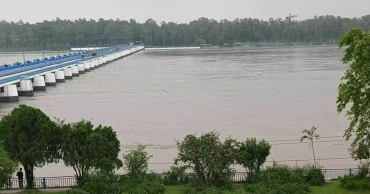
Mismanagement, extortion threaten Teesta barrage, farmers’ livelihoods at risk
The Teesta Barrage, the largest irrigation project in Bangladesh, has allegedly become a center of mismanagement, corruption, extortion, and land grabbing, putting the lives and livelihood in the northern region under risk.
Located at the Lalmonirhat-Nilphamari junction, the barrage was constructed in 1988 with 52 gates to protect five northern districts—Rangpur, Lalmonirhat, Kurigram, Gaibandha, and Nilphamari—from Indian water aggression and to ensure irrigation.
Officials tasked with protecting state resource are allegedly involved in these illegal activities under political protection.
Experts said unless action is taken immediately, the barrage may fail to fulfill its core purpose—ensuring irrigation and saving farmers’ livelihoods in drought-prone areas.
Political party leaders of successive governments have collected tolls illegally from the vehicles over the years and the situation has not changed after political changeover, alleged locals.
According to engineering design, the barrage can handle a maximum load of 20 tons but 300–350 trucks carrying 30–40 tons pass through daily.
An official involved in the barrage’s maintenance, speaking on condition of anonymity, said, “Around Tk 15 lakh is extorted daily. We cannot intervene as our jobs would be at risk.”
The official said the reckless toll collection threatens the barrage’s structural integrity, with cracks appearing in several points.
An Ansar member said, “They collect a big amount of toll from each truck. We only do our duty; the real share goes up the chain.”
In 2014, heavy vehicles passing through gates 24, 27, and 28 of the barrage was prohibited after cracks appeared.
Read: Teesta, Dharla erosion leaves thousands in Lalmonirhat at risk
Although toll collection was officially halted on paper a new chapter of extortion began.
Several people preferring anonymity said after political changeover in August last year, leaders of different political parties from Hatibandha, Patgram, and Dimla formed alliances to continue extortion.
DIG Aminul Islam of the Rangpur police range said, “Since 2024 July uprising we have not received credible reports of extortion at the barrage. Appropriate measures will be taken if we get information.”
Ahsan Habib, Superintending Engineer of the Rangpur region under WDB, said, “We are trying to prevent any misuse of the barrage.”
Besides, irrigation canals have allegedly been occupied by influential people.
Although mineral extraction is prohibited within a one-kilometer radius of the barrage sand is being extracted from the barrage site, altering river paths and endangering the structure.
A Water Development Board official said repeated written complaints were ignored due to the syndicate’s influence.
Police and RAB records show over 1,200 bottles of Phensedyl and thousands of Yaba pills were recovered from the barrage area last year.
Read more: Lalmonirhat flood: Teesta water recedes, miseries mount
Local residents question how drugs can bypass CCTV, Ansar battalions, and police patrols.
Two weighing scales built at a cost of Tk 1.5 crore remain nonfunctional for years as political influence and corrupt officials allegedly delayed repairs intentionally.
Locals said if the barrage was properly managed it could support farmers and attract tourists but it has now become a stronghold of corruption.
Monirul Islam, Executive Engineer of the Mechanical Division at Dalia WDB, said, “Vehicles should not exceed 20 tons. Requests for scale repair have been submitted.”
Amitabh Chowdhury, Executive Engineer of the Power Division at Dalia WDB, said, “Heavy vehicles are not allowed. We are working on 35 packages for canal renovation and 10 have been completed. We will take step for land acquisition once we get the budget. We are helpless in stopping extortion.”
Read more: Govt is prioritising efforts to prevent erosion along the Teesta: Adviser Rizwana
Dr. Tuhin Wadud, Chairman of river research institute Riverain People, said, “Improper Teesta flow causes nearly Tk 1 lakh crore in annual flood damages. Mismanagement of the barrage endangers the entire region including Nilphamari, Lalmonirhat, and Kurigram. Authorities must act now and the extortion around the barrage must be stopped immediately.”
11 months ago
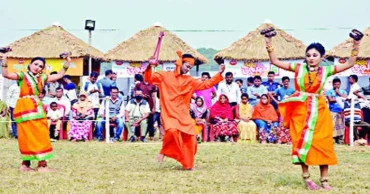
Life in Bangladesh gets dull with traditional festivals vanishing
Life in Bangladesh has become rather dull and monotonous across villages, towns, and cities due to vanishing traditional festivals, underscoring a sharp decline in cultural diversity and tolerance.
Once regarded as a land of festivals, with a major festival every season, Bangladesh, home to one of the largest populations, now boasts very few, mostly celebrating the power of the majority.
The disappearance of traditional festivals is a bleak reminder of aggressive urbanisation, replacing rural, agrarian Bangladesh, where rituals and collective activities were central to life not very long ago.
Over the past three decades, Bangladesh has undergone a rapid transformation, with thousands of people leaving villages willingly and unwillingly, laboring for an economy that displaced them from their roots, both literally and metaphorically.
“Villages today are not what they used to be, nor are their festivals. This is not unique to Bangladesh—it is a global transformation shaped by industrialisation and capitalism,” said Tariq Manzoor, who teaches Bangla at Dhaka University.
In the decades before independence, sacrificing animals during Eid-ul-Azha was commonplace among middle-class families, as some animals were within their purchasing capacity. Many people sacrificed animals in the villages as well, using the animals they reared at home.
Buter after independence, sacrificing animals increasingly became a religious festival affordable to a certain section of society.
Muharram used to be a very important religious festival in parts of Bangladesh, including Dhaka, Manikganj and Tangail. The festival extended over days, involving nightlong rituals in which devotees gathered around a bonfire to commemorate Hasan and Husain.
Read: Festivals like Pitha Utsab needs to be spread all over Bangladesh: KM Khalid
The bonfire was used to cook a mixture of ground chicken and rice. The cooking took hours as the devotees cried by the fire, remembering Hasan and Husain. The food, locally called Root, was shared among all.
“We consider the festival a thing of the past,” said Meherun Nesai, a 60-year-old woman from Tangail.
“We crossed a line there. Such festivals are not permitted in Islam. We pray for God’s forgiveness,” she said.
Some festivals related to the crop calendar also lost their lustre over time.
The Nabanna Utsab or the rice harvest festival faded over time. The festival used to mark the harvest of Aman rice, which became second to Boro cultivation over time in the race to produce more rice. Aman is a variety of the staple rice that farmers preserved for their own consumption.
A writer and researcher, Manjur Hossain, explained, “The word ‘Aman’ comes from the Arabic ‘Amanat,’ meaning a trust. Farmers sell Boro for cash but store Aman to feed the family throughout the year. The Nabanna celebration revolves around this Aman harvest.”
He recalled the age-old tradition of collective harvesting: “Farmers set out in groups right after the Fajr call to prayer, cut and gathered the paddy by noon, and threshed it with oxen late into the night. The first batch of rice was cooked into khichuri, payesh, or hot rice with country chicken by evening.”
“By late Kartik, the sheaf of green paddy would turn golden, and the harvest would begin on the first day of Agrahayan,” recalled Abdul Khalek, an 80-year-old farmer from Barishal.
“Harvesting completed by the first Friday of Agrahayan. I can still recall the joy I felt two to three decades ago; the joy that day was no less than what we feel during Eid,” Khalek added.
The loss of joy is directly influenced by the economic transformation that, in a way, left farmers behind, caught in a debt trap from frequent disasters and never to recover the loss.
Read more: Cultural festivals mark Buddha Purnima across six districts
Aman rice is cultivated during the rainy season for the variety’s ability to grow with an increase in water level.
Nowadays, aman cultivation often fails because of monsoon floods changing nature under the influence of climate change.
The Nabanna was a rare moment of festivity for people regardless of religion. Landlords took two-thirds of the harvest, while tenant farmers received a third—their survival stock for the year. Yet, in every farmer’s household, new rice meant joy, marked by pitha, payesh, and hospitality for visiting daughters and sons-in-law.
Alongside Nabanna came village fairs—vibrant gatherings that stretched for weeks. In the southern part of the country, horse races were the highlight; in the north, earthenware and brass utensils drew crowds. Villagers would buy oil lamps to light up their homes in those electricity-less days.
The village fair constituted an important part of the traditional agricultural marketing channel.
“Those oil lamps are long gone, replaced by electric lights. But even in this abundance of brightness, the pure joy of Nabanna is missing. Sometimes, you need to look back to find beauty in those dimly lit days,” said Mehedi Hasan Rajon, an agro-entrepreneur from Naogaon.
11 months ago
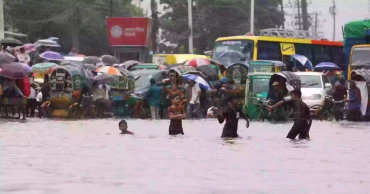
Chattogram’s crucial canal project stuck in revisions, cost cut by Tk 19.40cr
After years of delays and repeated revisions, a much-sought project to excavate the Bahaddarhat Baroipara canal to the Karnaphuli River, which was expected to ease Chattogram’s devastating waterlogging problem, has been revised for the third time, this time reducing the estimated cost by Tk 19.40 crore.
According to a Planning Commission official, the project, being implemented by Chattogram City Corporation (CCC) under the Local Government Division will now cost Tk 1,343.21 crore, down from Tk 1,362.62 crore in the second revision.
The project, as per an official document, first approved by Ecnec in 2014 at Tk 326.84 crore, has seen multiple revisions and implementation delays. Now the timeline has been extended to June, 2026.
The aim of the project was to prevent waterlogging through canal excavation, improving the communication system and eliminating traffic congestion by constructing roads on both sides of the canal and creating new recreational facilities for the city dwellers by constructing sidewalks on both sides of the canal.
Despite investing thousands of crores over more than a decade and initiating several large-scale drainage projects, Chattogram still faces severe waterlogging during the monsoon.
Read: Chattogram’s costly failure: Waterlogging persists despite mega drainage projects
The canal was recommended in the drainage master plan formulated by Chittagong Development Authority (CDA) in 1995 but the recommendation has not been implemented in the last 30 years.
Project delays, uncoordinated efforts, poor urban planning and public apathy have turned this issue into a persistent problem for city residents.
The master plan recommended the renovation of the existing natural canals for rapid removal of rainwater, the excavation of some new canals and the excavation of ponds to retain water.
Later, the project witnessed first revision in 2018 as an Ecnec meeting approved it in November, 2018 raising the cost to Tk 1256.1556 crore (GOB 942.1167 crore + CCC's own financing 314.0389 crore) for implementation by June 2020, which was later extended to June 2021 in view of the decision of the NEC due to the Coronavirus pandemic.
The 2nd revision proposal of the project was approved at an estimated cost of Tk 1362.62 crore (full GOB)) on January 19, 2022 for implementation from July 2014 to June 2026.
Planning Commission officials said the cost reduction has been possible despite new additions such as a maintenance yard for excavation machinery and the installation of safety railings along 5,500 metres of walkway to prevent accidents.
Read more: 5 dead in Chattogram flood, over 250,000 stranded
The revised design also includes durable Reinforced Cement Concrete (RCC) roads instead of (Herringbone Bond) HBB to ensure movement of heavy vehicles like excavators and dump trucks.
By June 2024, the project recorded 85% financial progress and 93.14% physical progress, according to the document.
Planning Commission officials said the project, once completed, will significantly reduce waterlogging in the port city and enhance the quality of life for residents.
11 months ago
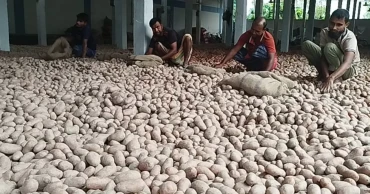
Lalmonirhat potato farmers watch profits rotting as prices plunge
Farmers, traders and warehouse owners in Lalmonirhat are expressing growing concern over unsold potatoes stored in cold storage in five upazilas, fearing significant financial losses this season.
A 60-kg sack of potatoes, which costs around Tk 1,500 to produce and store, is now selling for only Tk 700-800 in the market, leaving farmers counting a minimum loss of Tk 600 per sack.
Local growers say the lack of demand has forced them to leave their stock in cold storage, further reducing turnover.
Compared to last year’s 40 percent sales by this time, less than 20 percent of this season’s stored potatoes have been sold, sparking concerns among warehouse owners.
According to the Department of Agricultural Extension (DAE) office in the district, potatoes were cultivated on 7,800 hectares this season, yielding 204,000 metric tonnes (MTs). Of this, 78,000 MTs are now stored in nine district cold storages.
Many farmers, encouraged by last year’s higher returns, stored potatoes this season hoping for good prices, but have yet to receive the expected gains.
Read: Govt to procure potatoes to support farmers: Adviser
Storing a single sack in a warehouse costs between Tk 1,000 and Tk 1,100, bringing total expenses to around Tk 1,500 per sack, and the present market prices leave farmers with only Tk 250–300 per sack after four months of storage.
Expressing frustration, Sohag, a farmer from Charitabari village in Aditmari upazila, said, “I stored 100 sacks of potatoes expecting a good turnover. After two months, I earned only Tk 28,000. Selling during the season could have brought about Tk 60,000. We are left financially ruined.”
11 months ago

Red tape blocks access to SME finance in Bangladesh
The taka lost nearly a third of its value in the time Nasima Akter spent waiting for a loan to expand her tailoring shop in Kalihati of Tangail.
Nasima waited for about two long years. At the end of 2023, she finally received a loan of Tk 2 lakh, less than half of what she had sought for buying five sewing machines, for accommodating which she had already invested in space expansion immediately after applying for the loan.
She had no idea that a small business loan could take so long to be granted and involve so much trouble—production of 31 types of documents while keeping the patience to face her unfriendly bank lenders and their rather rude questions.
“This was quite a journey. Getting 31 types of documents is like making the impossible possible. But it was not enough. Bank officials were highly unfriendly and in the habit of easily losing their temper to refuse loans,” she added.
Nasima eventually managed to buy three sewing machines by borrowing from other sources. She decided she would never go through so much suffering again for an SME loan.
“I don’t dream of expanding my business anymore. I just want to survive,” she said.
For a long time, Nasima pondered the need for all those documents—business license, VAT & tax certificates, land and outlet deeds, and business transaction records. She even had to obtain a recommendation from a local influential person to get the loan.
Shopowners’ Association seeks immediate withdrawal of 1% supervision charge in CMSME loans
“I believe they tried their best to make me feel bad. They are trying to discourage small businesses from going to them,” said Nasima.
Nasima’s experience is not an isolated incident. Owners of small and medium enterprises often complain about red tape blocking their access to finance.
SMEs also complain about high interest rates. On paper, the interest rate is around nine per cent when the loan is accessed from a bank. But banks make every effort possible to keep SMEs at bay. Banks prefer to disburse loans through microcredit institutions, borrowing from which means the interest rate doubles.
Many educated and trained youths are wasting away their lives because they do not have the money to start their businesses, or the existing financing mechanism is too hard to navigate through.
The outcome is that the SME sector never achieves its target.
The central bank, Bangladesh Bank, has an SME & Special Programmes Department (SMESPD), established in December 2009. The SME sector accounts for 25% of GDP. Banks and financial institutions are guided by the central bank's framework when formulating their SME credit policies.
A specific refinance scheme of 25000 crore has been introduced to ease loan disbursement in the Cottage, Micro, Small, and Medium Enterprises sector. The Bangladesh Bank provides guidelines, acting as a minimum benchmark for financial institutions to follow in their SME lending practices.
Bangladesh Bank has so far disbursed a total of Tk47821 crore among 323734 entrepreneurs in the CMSME sector till March of 2025. Of which 10 percent disbursed to the informal sector, 9 percent to the cottage, 39 percent to the micro to CMSME, and 38 percent to the small to CMSME.
The central bank data shows that in 2024, different banks disbursed over Tk2.14 lakh crore in the country, which is lower than the Tk2.29 lakh crore of the previous year.
“The BB should revise its policy to ease access to finance, particularly for small traders,” Professor Mustafizur Rahman, distinguished fellow at the Centre for Policy Dialogue, told UNB.
SMEs and CMSMEs are vital sources of employment generation, he said.
'Women entrepreneurs get less than 4% of MSME loans'
Studies indicated that over 40 percent of SMEs lacked access to formal finance. Women-led SMEs, in particular, face additional systemic biases and limited support mechanisms.
Life for SMEs grew even more troublesome, for the cost of their raw materials and energy went through the roof over the past several years, increasing their production cost, leading many to bankruptcy.
The Ministry of Industries is preparing the "SME Policy 2025," which is expected to provide a comprehensive roadmap for growth in the sector.
Experts and trade body leaders find a robust growth of the SME sector essential for Bangladesh to achieve its economic development goals.
11 months ago
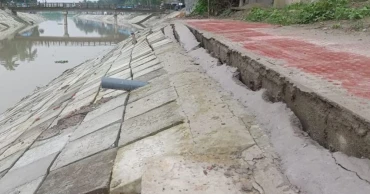
Riverbank embankment sinks into Akhira before completion!
Before it could even be finished, the much-hyped embankment along the Akhira River in Pirganj upazila of Rangpur has collapsed.
Locals alleged that the use of substandard materials and hasty construction are the reasons behind the collapse.
Under the supervision of the Bangladesh Water Development Board (BWDB), some 100 metres of the riverbank protection embankment in Chatra Union of Pirganj upazila collapsed recently even though work on the 800-metre-long structure is still going on.
Visiting the site on Saturday afternoon, the UNB correspondent found that much of the project completed and the concrete blocks being placed along the embankment. Several blocks had fallen off before installation was finished and walkway tiles were also seen getting loose.
The riverbank protection project is being implemented under the 'Riverbank Protection, Canal Re-excavation, and Waterlogging Elimination (1st Revised)' project, with a budget of Tk over 5.34 crore.
Rangpur-based contractor Bharat Prasad was awarded the contract in July 2024 with a scheduled completion date of 30 June 2026.
Local residents expressed concerns over the integrity of the work saying that during floods the embankment would fail to protect their homes and agricultural land.
Over 35 Feni villages flooded as dams collapse at 17 points
“Soil was dumped without proper compaction and the blocks are not holding due to the soft base,” one resident alleged.
A number of locals, speaking on condition of anonymity, claimed that the work was carried out hastily during the rainy season which has now led to the structural damage.
They said the embankment, constructed wasting taxpayers' money, may not last long.
Shyamal Chandra Roy, a manager from the contractor’s firm, acknowledged the issue but attributed the collapse to soil condition rather than poor-quality work.
“The project period is still on. We are repairing the problematic sections as needed,” he said.
When contacted, contractor Bharat Prasad confirmed that approximately 480 metres of work on both sides of the river was completed, with 130 metres in stable condition.
“There were issues in soil layers which led to the collapse. We’ve tried fixing it once, but the problem reappeared. This cannot be fully resolved in the current season. We will fix it once condition improves,” he added.
BWDB Assistant Engineer TM Israfill Haque denied allegations of irregularities saying, “This project was intended for aesthetic development. There was no clause for dumping in the contract. The collapse occurred due to excess water pressure. We’ve already instructed the contractor to carry out repairs.”
Over 5,000 homes damaged as storm, tidal surge hit Bhola
Responding to the allegations of substandard materials, he said, “There is no scope for irregularities. The blocks were tested by Buet, and any of that failed initial tests were discarded. As per the contract, the contractor is bound to repair any damage within a year.”
BWDB Executive Engineer in Rangpur Robiul Islam said the canal was under lease and retained water until April and again in May. “The sudden saturation of soil likely caused the collapse."
The contractor is bound to repair any faults within one year and they are working accordingly, he asserted.
11 months ago
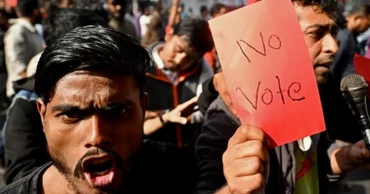
Bangladesh elections could see ‘No Vote’ choice, candidate caps
The Election Commission has drafted the Representation of the People Order (Amendment) Ordinance, 2025, proposing major changes, including a ‘No Vote’ option to avoid uncontested elections, involving the armed forces as a law enforcement agency and limiting candidates to contesting in no more than two constituencies.
The draft RPO also enhanced the EC’s authority to stop the polls and cancel the candidacy of an elected member of parliament even during the post-election period on charge of inconsistent or false information in an affidavit and the statement of income and expenditure.
If the draft RPO is enacted, the Commission’s authority over the government departments and officers and the presiding officer’s authority to stop the polling would go up.
“The draft of RPO is almost finalized. But only one thing related to expatriate voters is now being reviewed. The draft RPO will soon be sent to the law ministry (to make it law by promulgating an ordinance),” Election Commissioner Abdur Rahmanel Masud told UNB on Monday.
He said the draft RPO, if passed, would allow the Election Commission to stop voting in a whole constituency for irregularities, a power the Awami League removed in 2023 before the 2024 polls.
The current commission, headed by Chief Election Commissioner AMM Nasir Uddin, drafted the RPO (Amendment) Ordinance, 2025 ahead of the 13th parliamentary election planned to be held in early February 2026.
In the draft law, the Armed Forces, — Bangladesh Army, Bangladesh Navy and Bangladesh Air Force —have been added to the definition of law enforcing agencies alongside Police, Armed Police Battalion, Rapid Action Battalion, Ansar Force, Battalion Ansar, Border Guard Bangladesh and Coast Guard.
PR system possible if only law is amended: CEC Nasir
The Armed Forces had earlier been included in the definition of law enforcement agencies, but the Awami League government dropped them during its first term after the 2008 general election. As a result, the armed forces were deployed as just striking forces in the past three general elections in 2014, 2018 and 2024.
The draft law empowers the Election Commission to declare the candidacy of an elected contestant illegal and even cancel the election within five years if it finds any inconsistency or false information in the candidate’s affidavit or the statement of income and expenditure.
EC’s Priority
Two new provisions — Articles 5(3) and 5(4) of the RPO, 1972 — have been inserted to ensure the EC’s dominance and enhance its authority over government officials and departments.
The Article 5(3) stipulates that if any dispute arises between the government and the EC regarding assistance, the EC’s requirements shall take precedence.
The Article 5(4) authorises the EC to take necessary punitive action against any officer, employee or government department if it is satisfied that they have neglected their duties.
A new provision proposed in the Article 7 of RPO states that the disciplinary action taken in response to the recommendations of this Commission shall be recorded in the personal records, service records and annual confidential report of the officer or person. The appointing authority shall inform the Commission in writing about the actions taken against the officers concerned within ten working days, it added.
BNP against PR system, says Fakhrul
Another amendment proposes that no person can contest in more than two constituencies simultaneously. Under the existing Article 13A of the RPO, a person can be a candidate in more than three constituencies. The draft law says if someone contests in more than two, all his nomination papers will be void.
‘No Vote’
The EC has incorporated a ‘No Vote’ option to ensure no one is elected uncontested. If only one person remains as a contesting candidate after scrutiny or withdrawal of candidature, that candidate must contest against a ‘No Vote’ option in that constituency.
If ‘No Vote’ gets more ballots than the candidate, a fresh schedule must be announced for the election. If the candidate gets more votes, he will be declared elected.
The provision for the ‘No Vote’ option along with other electoral symbols was incorporated in the RPO ahead of the 2008 national election but was dropped before the 2014 election.
Single Platform for Candidates
A new provision requires returning officers or assistant returning officers to take measures for bringing all candidates on a single platform after symbol allocation to announce their manifestos and pledge to abide by the code of conduct in a spirit of harmony among them.
Polling Suspension
Under the proposed Article 25, a presiding officer could stop the polling, if it is interrupted beyond control, or if ballot boxes are unlawfully removed, destroyed, lost or tampered to such extent that the result of the poll at the polling station cannot be ascertained. The current RPO does not permit a presiding officer to stop polling before seeking help from law enforcement agencies and failing to restore order.
Post-Polls Candidacy Cancellation
The proposed ordinance allows the EC to investigate any affidavit or statement of income-expenditure return submitted by an elected candidate for discrepancies or false information even after the election. If, after a hearing and investigation, the commission is satisfied that such discrepancies exist, it can declare the candidacy unlawful, cancel the election, and arrange a fresh poll in that constituency.
'No vote' to return only for single-candidate seats: EC
The draft law also made it mandatory for an aspirant to mention the statements of income sources and assets of the persons and dependents.
The next national election in Bangladesh is likely to be held in the first half of February, as indicated by Chief Adviser Prof Muhammad Yunus and Chief Election Commissioner AMM Nasir Uddin.
The Chief Election Commissioner also said the Election Commission has stepped up preparations across the country for the election.
11 months ago
Monsoon brings deadly snakebites, Thakurgaon hospitals helpless
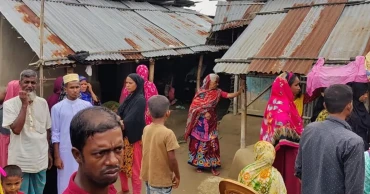
Israil Uddin had taken his 11-year-old son to four different hospitals in Thakurgaon district after a venomous snake bit him, but none had the life-saving anti-venom and the boy tragically died.
“I went to four hospitals but nowhere could I find the vaccine (anti-venom). At last my son, Sakibul, breathed his last on my lap. I couldn’t save him. I urge the government to act now so that no other parent suffers like this,” said a heartbroken Israil Uddin, a resident of Kadamtala village in Baliadangi upazila.
Baliadangi Upazila Health Complex, Haripur Upazila Hospital, Thakurgaon General Hospital and Birganj Hospital in Dinajpur all failed to save the boy’s life as none had the vaccine to treat snakebite victims.
Similar deaths have been reported from other parts of the district.
Among the deceased are Tareq, a seventh-grade student from Pirganj, Moksed Ali, a college student from Ranisankail, and Shampa Rani, a housewife from Haripur.
Family members said they died from venomous snakebites after failing to access anti-venom in time.
Shampa’s husband, Jiten, recalled a desperate search for treatment, taking her to three upazila hospitals — Haripur, Ranisankail and Thakurgaon Sadar — none of which could provide the necessary care.
HSC examinee dies of snakebite in Magura
“Out of desperation, we even took her to a traditional healer but she didn’t survive. Now I’m left with a young child and unbearable grief,” he said.
As the monsoon rains swell rivers and flood low-lying areas, venomous snakes increasingly enter human settlements in search of shelter, a seasonal phenomenon that has turned deadly in northern Bangladesh’s Thakurgaon district.
The situation has become particularly alarming this year, as no hospitals in the district have anti-venom injections in stock.
Locals said snakebite deaths are a recurring issue during the rainy season.
Rural doctor Azmul Haque said that every year 10 to 15 people in Thakurgaon die from snakebites during the monsoon. “Although hospitals send requests for antivenom in advance, the supplies often arrive after the monsoon is over,” he said.
Thakurgaon Civil Surgeon Dr Md Anisur Rahman admitted the shortage of anti-venom in district hospitals.
“Despite sending demand letters we haven’t received any supply from Dhaka. We’ve heard there’s a shortage at the central medical depot. We are trying to procure some doses through alternative channels,” he said.
Child dies from snakebite in Manikganj
Although snakebites and related deaths are common, hospitals in Bangladesh continue to lack sufficient supplies of anti-venom, which is not produced locally.
A government study released in 2023 found that around 4.03 lakh people are bitten by snakes every year in Bangladesh and 7,511 of them die.
Meanwhile, the High Court on August 18 directed the Health Ministry Secretary, the Director General of the Directorate General of Drug Administration (DGDA) and other authorities concerned to ensure availability of anti-venom in all upazila health complexes across the country as soon as possible.
2 farmers die from snakebites in Dinajpur
The directive came following a writ petition seeking adequate supplies of anti-venom in hospitals.
Citing newspaper reports, the writ stated that at least 38 people had died and 610 were injured from snakebites between February and July 1 this year across the country.
11 months ago

Govt moves to strengthen disaster response with new fire stations in 14 districts
Amid rising disaster risks caused by rapid industrialisation and urbanisation or fuelled by climate change, the government has taken up a project to set up and rebuild 20 Fire Service and Civil Defence stations in different parts of Bangladesh.
The project aims to save lives and property during human-made or natural disasters in the country, said a Planning Commission official wishing anonymity.
Under the Tk-650.96 crore project, he said, 20 fire stations will be built in vulnerable locations in 14 districts to strengthen the disaster management capacity in one of the world’s most disaster-prone countries.
The country frequently experiences severe cyclones, floods, major fire incidents in high-rises or factories, road or waterway accidents.
Besides, earthquake risk is high due to Bangladesh’s position at the collision zone of tectonic plates.
Although not well-equipped, the Department of Fire Service & Civil Defence in Bangladesh has a crucial role to ensure quick responses during such disasters.
The fire stations will be built or renovated in 10 important areas in 14 districts under Dhaka, Chattogram, Rajshahi, Khulna, Sylhet and Mymensingh divisions which are not under the coverage of the Fire Service, the official said.
Of them, there will be new fire stations at 12 places and other eight will be renovated.
The three-year project, to be implemented between July 2025 and June 2028, will be fully funded by the government and implemented by the Fire Service and Civil Defence Directorate with delegated works to the Public Works Department.
Besides, it has been decided to form specialised units and expand fire service and civil defense services nationwide, considering the changing nature and type of disasters.
At least 25 injured in fireworks storage blast in Karachi
According to the project document obtained by UNB, the initiative aims to bring the country under a stronger disaster safety network by ensuring quick and effective response to both natural and human-made disasters, thereby reducing casualties and property losses.
In the context of increasing industrialisation and urbanisation, the nature of disasters is also changing, the project document says.
Alongside natural disasters, disasters such as chemical-caused accidents, building collapses, fires in multi-storey buildings, gas cylinder blasts, fire incidents in power plants, oil refineries, and container depots are increasing.
Fire stations have already been set up in important places in districts and upazilas of the country under various development projects.
The government has decided to establish at least one fire service and civil defence station in each upazila with the aim of developing an effective and sustainable response system to deal with disasters, the document says.
Key components of the project include construction of main station buildings, utility and residential facilities, water supply systems, external electrical works, training towers, reception areas, drainage systems and procurement of fire-fighting and rescue equipment.
Fire at Mohakhali’s Saat Tola slum brought under control
A total of 8.71 acres of land will be acquired or purchased for the stations to be built in various city corporations, municipalities and upazilas under six administrative divisions.
For the main buildings of 20 fire stations Tk 211.8227 crore has been allocated while Tk 12.08 crore for external water supply (car wash and hose wash) of 20 fire stations, Tk 49.8860 crore for external electricity of 20 fire stations, Tk 80.8364 crore for Utility cum residence building of 20 fire stations, Tk 9.7387 crore for drain, training tower, reception, walkway and fuel store of 20 fire stations, Tk 33.8391 crore for acquisition/purchase of 8.71 acres of land, and Tk 190.60 crore for fire fighting equipment and rescue equipment.
The Planning Commission official said the project aligns with the 8th Five Year Plan’s objective to enhance the capacity of the Fire Service and Civil Defence through necessary technology, and supports the Sustainable Development Goals (SDGs) target of reducing disaster risks at all levels.
Once implemented, he said, the project will expand fire service coverage to key disaster-prone areas, strengthen institutional capacity and make immediate and effective disaster response more achievable.
11 months ago

Rising costs, falling demand push bamboo craft to the brink
The centuries-old tradition of bamboo craft in the northern districts of Bangladesh is fast fading, as modern lifestyles, high prices and declining demand drive artisans away from their ancestral trade.
For generations, bamboo has been an inseparable part of rural life, providing baskets, trays, hand fans, fishing traps, poultry cages, mats and other essentials that once defined the household economy of Bangladesh.
But today, the craft that once flourished in villages across Rangpur and adjoining districts is struggling to survive.
According to the Rangpur Divisional Office of the Department of Small and Cottage Industries, people in 114 villages across eight northern districts were directly engaged in bamboo craft.
Additional Divisional Commissioner of Rangpur, Abu Zafar, points out that nearly 70,000 families once earned their living from this profession, but today only around 12,000 families remain.
“Every day the usage of bamboo products is decreasing, forcing artisans to leave their profession,” he said.
In Moniram village, 85-year-old Abdul Wahed still works with bamboo.
His voice carries both pride and pain as he recalls the past, “I learnt this work from my father. He raised our family of 14 siblings only by making bamboo products. In his time, we never faced needs. But nowadays, even though I make the same products, they do not sell like before.”
The crisis has been deepened by deforestation and urbanisation, which have made raw bamboo scarce and costly.
A single piece of bamboo, which once cost Tk 50–100, now sells for Tk 300–400.
Another artisan, Kenzul, laments the fall of what was once a thriving livelihood.
“The golden past of bamboo craft is now only a memory. From one bamboo we can make six poultry cages. Each cage sells at Tk 100 to wholesalers. After all the hard work, nothing much remains for us,” he said.
Needle to Nations: Bagerhat’s women weave global impact with eco-friendly crafts
For women artisans, the struggle is even harsher. Hasna Begum, who learnt the craft from her mother-in-law and later passed it down to her children and grandchildren, says they are trapped in debt.
“Now the prices of everything, including bamboo, are too high. We borrow money from local moneylenders with interest. If we take Tk 1,000 every month, we pay Tk 100 as profit. On Tk 5,000, we must pay Tk 500. This loan is a huge burden. Sometimes we fail to pay on time and face humiliation. With government help, we can continue this profession," she said.
Another artisan, Dulali, echoed her frustrations, “Even if we buy bamboo at high prices and make products, these do not sell. No one is willing to give us loan nowadays. Government also does not provide us any help.”
A Lost Heritage
Local Union Parishad member Lebu Mia insists that Moniram village is home to many skilled artisans but lacks financial support, training, and marketing facilities.
“If the government takes proper initiative, this tradition can be revived,” he said.
Academics, too, see the heritage value of bamboo craft.
11 months ago