special
Waterlogged and forgotten: Over 5 lakh trapped in Jashore’s Bhabodah
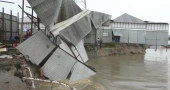
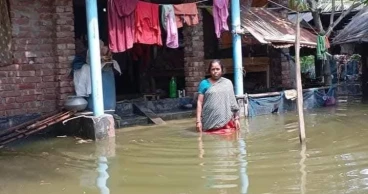
What was once a mosaic of fertile fields and vibrant villages in Bhabodah of Jashore district has now been swallowed by weeks of floodwater, showing no sign of receding!
More than five lakh people in over 150 villages across Jashore and Khulna districts are trapped in a worsening humanitarian crisis, their homes, schools, farmland and livelihoods devastated.
The deluge, triggered by torrential July rainfall, has been compounded by years of river siltation, poor drainage and what locals describe as ‘decades of mismanagement’.
The worst-hit areas are Abhaynagar, Manirampur, and Keshabpur in Jashore and Dumuria and Phultala in Khulna.
On August 7, the Bhabodah Water Management Songram Committee submitted a six-point demand to the Jashore Deputy Commissioner, holding the Water Development Board (WDB) directly responsible for it.
Among their demands are the opening of all sluice gate vents, acquisition of land for the Amdanga canal, and fast-tracking the 81-kilometre river dredging project.
At present, only eight of the 21 vents in the Bhabodah sluice gate are operational, far from sufficient to drain the floodwaters. The committee alleges that poor decisions by the WDB have severely hindered natural water outflow.
Though an estimated Tk 1,250 crore was spent on Bhabodah-related projects over the past decade, locals claim no sustainable solution has been achieved. Allegations of corruption in project implementation are rife, with much of the funding reportedly misappropriated.
A Chinese expert team recently visited the Bhabodah sluice gate and offered long-term solutions, yet public trust remains low. Repeated unfulfilled promises and a lack of transparency have eroded confidence among flood-affected residents.
Severe waterlogging forces closure of two schools in Kushtia
Experts continue to advocate for the TRM (Tidal River Management) method, which utilises natural tidal flows to remove silt and restore river navigability.
A pilot TRM project in Beel Khukshia was previously successful and is now seen as a potential long-term remedy for Bhabodah.
The local committee has urged immediate implementation of TRM as part of their demands.
Nearly five lakh residents face an uncertain future, their only hope lying in urgent government action—grounded not merely in funding and promises but in transparent and accountable delivery of sustainable solutions.
Experts also point to unplanned human interference in natural waterways as a major cause of the crisis. Tidal flows, once instrumental in keeping local rivers navigable, have been disrupted by the construction of coastal polders in the 1960s and poorly planned sluice gates and embankments.
Excessive silt buildup now causes floodwaters to spill into residential areas during monsoons.
A visit to several villages in Manirampur upazila, including Kultia, Lakhidanga, Baje Kultia, Aminpur and Hasadanga, revealed the dire conditions.
Laxmi Rani Biswas of Lakhaidanga lamented, “How long must we live in water like this? There’s no point in asking anyone for help anymore.”
Mita Khatun of Aminpur said their home has remained flooded for over a month, forcing them to cook on the veranda.
Waterlogging hampers goods handling at Benapole port
11 months ago
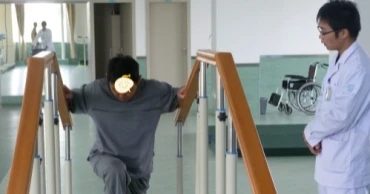
Bangladeshis turning to Kunming for critical medical treatment
Leading hospitals in Kunming, the capital of China’s Yunnan province, are increasingly attracting Bangladeshi patients seeking advanced but affordable medical treatment for critical diseases, with authorities pledging faster visas, smoother procedures and language support to ease medical tourism.
Chinese officials said urgent visas can be issued within a day under a ‘green channel’, with many requirements already eased.
They said their hospitals provide high-quality treatment at about one-fourth the cost of Thailand, cheaper than Malaysia, and only slightly higher than top Indian hospitals.
Bangladesh authorities said China offered support while the interim government explored alternatives beyond India, Thailand, Singapore and Malaysia for timely and cost-effective treatment.
“We are exploring how to expand services and work with travel agencies to attract more Bangladeshi patients,” Yunnan Health Commission deputy director Wang Jiankun told a Bangladesh media delegation during a visit to the First Affiliated Hospital of Kunming Medical University.
He said strengthening medical cooperation is part of broader ties aimed at improving healthcare access, disease control and people-to-people links.
During hospital visits, Bangladeshi journalists saw patients receiving treatment for serious conditions, including liver cirrhosis, breast cancer and heart problems.
Treatment for intellectually disabled patients available in China
Patients said facilities were modern, staff attentive, and care affordable. Language remains a challenge, but hospitals are recruiting Bangladeshi exchange students and Chinese medical students as volunteer interpreters.
The 23-member media delegation, led by Chief Adviser’s Deputy Press Secretary Mohammad Abul Kalam Azad Majumder, visited Kunming from August 6–9 to review medical facilities.
Wang said the province has 29,678 health institutions, including 1,319 hospitals, 122 tertiary hospitals, and 472 secondary hospitals, with 370,000 beds in total.
Of them, he said five major hospitals – Yunnan First People’s Hospital, the First Affiliated Hospital of Kunming Medical University, Yunnan Cardiovascular Hospital, Yunnan Cancer Hospital, and Zhongshan Hospital – are prepared to treat Bangladeshi patients.
“These hospitals have special units for international patients, official contact channels and staff to respond quickly to queries. Our international medical pricing is fair, and Bangladeshi patients in pilot hospitals have expressed high satisfaction,” Wang said.
Lu Jiang, assistant to the president of Fuwai Yunnan Hospital, said treatment costs in Kunming are much lower than in neighbouring countries, depending on the type of examinations and equipment used. “The quality is comparable to Thailand but about one-fourth the cost. Prices are also lower than in Malaysia,” he said.
Chinese officials responded to queries on language barriers, accommodation, travel expenses, credit card use, follow-up care, billing and repatriation of deceased patients.
Wang said they are aware of the challenges and are working to ensure a smooth treatment experience.
China vows hassle-free healthcare for Bangladeshi patients in Yunnan
The delegation also visited Kunming Tongren Hospital, a leading private facility. Vice-President Shen Ling said the hospital has sufficient doctors and medical staff, with international-standard diagnostic and laboratory tools ensuring accurate diagnoses and treatment.
She said the hospital has a strong team dedicated to treating intellectually disabled children and presented case studies of Bangladeshi patients treated for critical illnesses and disabilities.
Shen said the hospital’s new International Medical and Oncology Centre will open in 2026, offering advanced services and making it an ideal choice for Bangladeshi patients seeking high-quality care.
Two attendants of Bangladeshi patients expressed satisfaction over Tongren Hospital’s services.
Omar Faruque from Jashore, who brought his cousin Jannatul Naim for a back problem, praised doctors’ hands-on care and careful use of medicine, though he mentioned language barriers and high food costs.
Sagor Hossain from Chattogram, who brought his mother for cancer treatment, said he was pleased with the services but stressed the urgent need for English-language documentation, as Bangladeshi doctors cannot read Chinese.
Hospital authorities said they offer overseas patients full support, including halal meals, prayer facilities, interpreters, and detailed treatment information.
Chinese Ambassador to Bangladesh Yao Wen said 2025 marks the 50th anniversary of China–Bangladesh diplomatic relations and the year of people-to-people exchanges.
“Healthcare cooperation has become a key achievement. The first Bangladeshi patients travelled in March, and about 600 have since received treatment. We expect 4,000–5,000 by year-end,” he said.
Deputy Press Secretary Azad Majumder said only one direct Dhaka–Kunming flight operates at present, keeping fares high, but a Chattogram–Kunming route is being planned.
“A direct Chattogram–Kunming flight is expected by year-end, making travel easier for patients and businesspeople,” he said.
Official sources said some 800,000 Bangladeshi citizens travel abroad each year for medical treatment, mostly to India, Thailand and Singapore, citing higher standards of care and specialised services.
According to data from the Bangladesh Investment Development Authority (BIDA) and figures referenced by the Ministry of Health and Family Welfare, this medical tourism results in an annual outflow estimated between $2 billion and $5 billion.
11 months ago
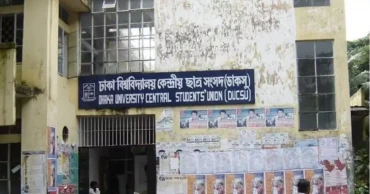
Festive mood sweeps DU campus as Ducsu polls approach
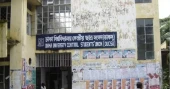
Dhaka University is now abuzz with festivity and anticipation as the much-hyped Ducsu election edges closer.
With the deadline for the nomination submission wrapped up on Wednesday, various panels, including Chhatra Dal Chhatra Dal, the student wing of BNP, and Bangladesh Jamaat-e-Islami's student body Chhatra Shibir, are drafting manifestos and setting campaign strategies to woo voters.
Zakaria Ahmed, a student of Muktijoddha Ziaur Rahman Hall, expressed excitement, saying, "We are thrilled because Ducsu elections are being held after a long time. The campus has turned festive and we hope this election is conducted fairly so that representatives truly work for students’ welfare."
From Chhatra Dal panel, Sheikh Tanvir Bari Hamim, who is contesting for the General Secretary post, said their priority is to ensure students’ basic rights and build a student-friendly, research-oriented environment on the campus.
"Our manifesto will reflect the demands raised by students. We want a democratic space where opinions can be freely expressed. But accountability is lacking—those involved in past violence and irregularities have not been brought to justice. Without addressing this culture of impunity, a free Ducsu election will be difficult," he said.
Hamim, however, welcomed the Election Commission’s efforts so far, saying that they expect the administration to deliver a neutral election.
Chhatra Shibir has announced its panel under the banner of 'Oikyoboddho Chhatra Jote' (United Students’ Alliance), fielding activists from diverse backgrounds, including women, indigenous students and July Uprising participants.
Shibir-backed Vice President candidate Md Abu Shadik Kayem, said, "After the July changeover, we must set an example of inclusive democracy at DU. Our panel represents not only our activists but also student leaders from different communities, including the Chakma. We want everyone’s voice heard and we will compel the administration to recognise students’ rights."
Expressing concerns over administrative neutrality, he said the level playing field must be ensured and extending the deadline for nominations without consulting panels shows favouritism. Many provosts and officials represent a certain camp.
He pledged that, if elected, his panel will focus on safety, security and welfare.
Ganatantrik Chhatra Sangsad announces 27-member panel for Ducsu polls
'Female students' dormitories need urgent reconstitution and renovations. Non-residential students must have access to facilities. Guardians should have waiting lounges, and campus transport must be modernised. Female students are strongly supporting us, and we will not betray their trust," he said.
Responding to complaints, Returning Officer Prof SM Shamim Reza explained that the nomination deadline was extended by a day due to overcrowding at submission centres.
Another Returning Officer Prof Kazi Maruful Islam, said, "No major violations of the code of conduct have been reported so far. Minor incidents are being investigated and strict action will be taken if necessary."
Panels and Key Candidates
From JCD, Abidul Islam Khan is running for Vice President (VP), Sheikh Tanvir Bari Hamim for General Secretary (GS) and Tanvir Al Hadi Mayed for Assistant General Secretary (AGS).
Chhatra Shibir’s panel has nominated Kayem for VP, SM Farhad for GS and Mohiuddin Khan for AGS.
Bangladesh Ganatantrik Chhatra Sangsad has announced a panel titled ‘Anti-Discrimination Students’ Union fielding Abdul Kader for VP, Abu Bakar Mojumdar for GS and Ashrefa Khatun for AGS.
Chhatra Dal announces full panel for DUCSU elections
Left-leaning organisations have formed the Democratic Students’ Alliance under the banner of 'Protirodh Parishad' (Council of Resistance). Its VP candidate is Sheikh Tasnim Afroze Emi, former VP of Shamsunnahar Hall Students’ Union in 2019. Meghmallar Basu, president of Dhaka University unit of Bangladesh Chhatra Union, will contest for GS, while Jaber Ahmed Jubel of Revolutionary Students’ Unity will vie for AGS.
Former student leader and anti-discrimination activist Umama Fatema has also submitted nominations with her panel, yet to be formally announced.
She is expected to contest for VP, with journalist leaders Al Sadi Bhuiya (GS) and Mahmudun Mujahid Mahi (AGS) also in the lineup.
Swadhin Bangla Chhatra Sangsad’s panel includes Jamal Uddin Khalid (VP), former NCP leader Mahin Sarkar (GS), and Fatema Sharmin (AGS).
Several independent candidates have also emerged, including Julius Caesar and Shamim Hossain, both running for VP.
Massive Participation
According to the EC, a total of 658 nomination papers were sold for 28 positions, of which 509 were submitted while 149 were not returned.
DUCSU election: Leftist alliance announces full panel ‘Protirodh Porshod’
A draft list of candidates is scheduled to be published today (Thursday). The deadline for withdrawal is August 25 and the final list of candidates will be released on August 26 at 4 pm.
With colourful posters, slogans and promises filling the campus, DU students now await what many see as a landmark election, one that could reshape campus politics and revive the historic role of Ducsu in national democratic life.
11 months ago
Major shake-up in admin: New DCs in all districts by Sept
The government is set to appoint new deputy commissioners (DCs) in all districts ahead of the upcoming national election to hold it in a credible manner.
Sources at the Ministry of Public Administration said the appointments of new DCs are expected to be finalised within September as the national election is scheduled to be held in February 2026.
Amid criticisms over appointing officials who benefited during the Awami League’s tenure as DCs, the government is now exercising greater caution in making such postings, sources said.
Like the previous years, the DCs are expected to be appointed again as returning officers during upcoming parliamentary elections. The preparation of the new ‘fit list’ is already at its final stage.
According to the sources at the Ministry of Public Administration, this time no controversial official or those who have political affiliation will be made a DC.
If anyone secures a DC appointment through deception or concealing information, administrative action will be taken against him or her once verified.
On August 18, Md Sarwar Alam, a well-known executive magistrate for his strict action against food adulteration and irregularities, was appointed DC of Sylhet.
The change came amid much-talked-about allegations of large-scale stone looting from Bholaganj, Jaflong and other areas of Sylhet.
The ministry started preparing the ‘fit list’ on January 11 this year.
As part of the process, interviews were held in six phases with 269 deputy secretaries from the 25th and 27th batches of the BCS Administration Cadre.
Local administration involved in Bholaganj stone looting: Rizwana Hasan
Over 50 officers have been included in the fit list so far and viva voce for officers of the 28th batch are underway, according to the Public Administration Ministry.
Currently, 26 officers of the 24th batch, 25 officers of the 25th batch and 12 officers of the 27th batch are serving as DCs.
Although 21 officers of the 24th batch were promoted to joint secretary on March 20 they have not yet been withdrawn from field administration.
Earlier, on September 8, 2023, DC appointments were made in 61 districts from a fit list of 108 officers, sparking huge controversy.
Many officers claimed they were ‘deprived,’ and created unprecedented disorder in the ministry.
Md Erfanul Haque, Additional Secretary (Appointments, Promotions & Transfers) of the Ministry of Public Administration, said, “The DC appointment process is underway. The Public Administration Committee will decide the timeline but we expect the appointments to be made soon.”
Senior Secretary Dr Mokhles-ur Rahman said, “The DCs will be appointed from the fit list. Qualified and competent officers will be placed ahead of the election to avoid any question of credibility.”
Former secretary and administrative expert AKM Abdul Awal Majumdar said, “Interim governments (caretaker governments) in 1991, 1996, and 2001 did not face such disorder. The current administrative weaknesses must be addressed quickly. Governance is impossible without an honest, skilled and professional bureaucracy. There is still time to restore the administration by appointing capable officers in key positions.”
According to the Public Administration Ministry, a ‘Public Administration Committee’ comprising four advisers, the Cabinet Secretary, and the Secretary of Public Administration has been formed to provide guidance on appointments, transfers, and disciplinary matters for divisional commissioners, DCs, joint secretaries and higher positions.
This committee makes the final decisions on DC appointments and other matters.
Govt to fast-track implementation of ‘Administrative Reform’ proposals
In February, Chief Election Commissioner (CEC) AMM Nasir Uddin instructed the DCs of all 64 districts to apply the full extent of the law in their roles as returning officers in the upcoming national election, according to official sources who preferred to remain anonymous.
The interim government has already taken action against the government officials who played key roles in the engineered elections during the previous Awami League regime.
This year the government has sent 21 former DCs into compulsory retirement due to their roles in the controversial elections as they had served as returning officers in the general elections of 2014, 2018, and 2024 which are widely criticised for fraudulence.
Besides, 43 former DCs were made officers on special duty (OSD).
Those with less than 25 years of service experience were made OSD while those who have served for more than 25 years were sent on compulsory retirement.
11 months ago
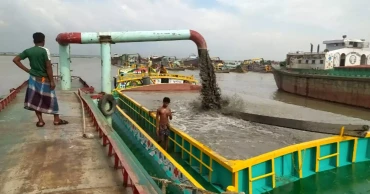
Sand lifting from Meghna riverbanks threatens embankment, irrigation project in Chandpur
Unchecked sand extraction from the banks of the Meghna River in Matlab North upazila of Chandpur is putting the 64-kilometre embankment under the Meghna-Dhanagoda flood control project in serious risk.
The embankment protects 14 unions of Matlab North and a village of Matlab South, home to around seven lakh people.
As per the Sand Fields and Soil Management Act), 2010 extraction is prohibited within one kilometre of critical infrastructure such as bridges, culverts, dams, roads, and residential zones.
Locals alleged that despite months of open sand lifting no strict action has been taken by the local administration.
Erosion threat looms over historic Munshiganj Market
Miscreants extracted soil with dredgers from Dashani, Shatnal, Nasira Kandi and Borchar areas along the river recently, they said.
They alleged that a sand syndicate led by Kibria Miaji have been running the illegal business for years.
Rivalries over such activities led to clashes and even deaths in the past and cases are still ongoing.
“They are lifting sand day and night with dredgers. Our croplands and homesteads being washed away due to riverbanks erosion,” said Majedur Rahman, a resident of Dashani village.
Moulvibazar’s roads in ruins, locals plead for repairs
“If the embankment collapses, vast areas of Matlab North and South will go under water but no action is being taken,” he said.
11 months ago
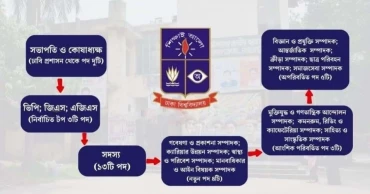
What makes DUCSU a leadership incubator?
Towards the end of July, the highly anticipated date for elections to the Dhaka University Central Students’ Union was announced, delivering on a key promise of the interim government to restart the culture of student politics centering students’ union elections at the country’s leading public universities.
DU will hold its first students’ union election in six years on September 9. The final voter list containing 39,775 eligible voters- 20,871 male and 18,902 female- was published last week.
Through its long yet chequered history DUCSU has authored some glorious chapters in the history of Bangladesh.
From fiery speeches and protest rallies on the DU campus to the corridors of parliament, DUCSU’s influence over the life of the nation has been unmistakable — not just as a student body, but as a breeding ground of leadership, courage and conscientious rights-based movements from its birth.
As a leadership incubator, it shaped many prominent figures who began their political life through activism on the DU campus.
According to political analysts, several factors contribute to DUCSU’s role in grooming national leaders.
From the beginning, DUCSU has contributed to many democratic movements. Its political environment and students’ active participation on issues make it a political incubator.
Dr. Rushad Faridi, assistant professor of economics at DU, said, “Any organisation is a place for developing leadership qualities. Various posts in DUCSU and the hall's unions are platforms for practicing and nurturing leadership. I wouldn’t say only DUCSU is a place for producing leaders—any organisation, no matter how small, can serve as a ground for leadership development.”
Before the 2019 election that was won by Nurul Huq Nur, the last DUCSU election was held six months before the fall of the Ershad regime, in June 1990. Yet strangely, the advent of democracy on the national stage spelled doomsday for DUCSU and its equivalent bodies in the other public universities, as nearly all of them went into limbo around the same time.
Why or how this was allowed to happen, is still worthy of deeper study.
One theory is that the university administrations failed to organise the elections under pressure from the ruling parties, or their student wings.
Yet history tells us that when what would’ve been the first DUCSU election following the fall of Ershad was announced in 1994, it eventually couldn’t be held due to opposition from the Awami League.
It was the same again the following year. Whatever the reason may have been, one thing that almost everyone can agree on is that the absence of SU elections has a very negative impact on the overall standard of student politics.
“We know why elections are not held. One major reason elections have not taken place since the 1990s is that whichever party comes to power, its affiliated student organisations do not want elections as they already hold leadership positions on campus. They fear that if elections are held, leadership might pass into others hands. As a result, the campus ends up under the control of the ruling party. No work is then done to protect the interests of general students,” Dr. Rushad said.
He added that the path for the development of new student leadership or those who want to engage in genuine politics gets blocked.
“Consequently, we don’t see any new energetic and mature politicians at the national level either. Thus, a culture of thuggery is practiced on campus, and this trend is reflected in national politics as well.”
Years in the Wilderness
After the 1990 election, the last DUCSU election was held in 2019. In a case of supreme irony, the advent of democracy following the fall of the autocratic government of H.M. Ershad saw DUCSU pushed to the backburner. There are allegations that due to pressure from the ruling party’s student organisation and various quarters, the university administration could not organise the election. However, experts opine that there are harmful consequences of not holding the DUCSU election.
Rushad Faridi said that the absence of elections has a very negative impact.
“We know why elections are not held. One major reason elections have not taken place since the 1990s (till 2019) is that whichever party comes to power, its affiliated student organisations do not want elections as they already hold leadership positions on campus. They fear that if elections are held, leadership might pass into others hands. As a result, the campus ends up under the control of the ruling party. No work is then done to protect the interests of general students.”
He added that the path for the development of new student leadership or those who want to engage in genuine politics gets blocked.
“Consequently, we don’t see any new energetic and mature politicians at the national level either. Thus, a culture of thuggery is practiced on campus, and this trend is reflected in national politics as well.”
DUCSU leaders who became MPs:
Over the decades, a number of leaders of DUCSU have gone on to become members of the parliament.
Ataur Rahman Khan, GS in 1929-30; Farid Ahmad, VP in 1946-47; Professor Ghulam Azam, GS 1947-49 (twice); S. A. Bari, VP, and Julmat Ali Khan, GS in 1953-54; K M Obaydur Rahman, GS in 1962-63; Rashed Khan Menon, VP and Matia Chowdhury, GS in 1963-64; Ashraf Ud-Doullah Pahloan, GS in 1964-65; Tofayel Ahmed, VP and Nazim Kamran Choudhuri, GS in 1968-69; A. S. M. Abdur Rab, VP in 1971, Abdul Kuddus Makhan, GS in 1971, Zia Uddin Ahmed Bablu, GS in 1982, Sultan Mohammad Mansur Ahmed, VP in 1989-90, Amanullah Aman, VP in 1990-91 and Khairul Kabir Khokon, GS in 1990-91.
11 months ago
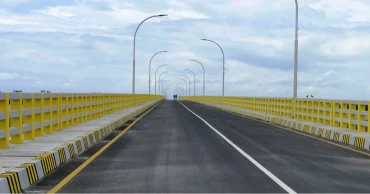
Much-awaited 3rd Teesta Bridge to open on Wednesday
The long wait for residents along the Teesta riverbank is finally coming to an end, as the much-hyped Third Teesta Road Bridge will officially open to traffic on Wednesday.
Stretching 1,490 metres, the new bridge fulfills a long-cherished dream for the people of Chilmari in Kurigram and Sundarganj in Gaibandha district.
Although the project deadline had been pushed back five times, the bridge is now ready and will be inaugurated on Wednesday.
Constructed under the supervision of the Local Government Engineering Department (LGED), the main structure cost Tk 367 crore.
An additional Tk 363.85 crore was spent on approach roads, river training, culverts and land acquisition, bringing the total project cost to more than Tk 730 crore.
This is the third, and by far the longest, road bridge over the Teesta River.
The first Teesta Bridge, 750 metres long, was built in 2012 at Gokunda in Lalmonirhat Sadar upazila at a cost of Tk 87 crore.
The second one, an 850-metre span, was completed in 2018 at Mahipur in Rangpur’s Gangachara upazila, costing Tk 131 crore.
Country's longest railway bridge to open over Jamuna in Sirajganj
Now, the third and most modern Teesta Bridge is set to transform the economy and connectivity of northern Bangladesh.
According to LGED sources, construction of the 3rd Teesta Bridge began in September 2020 with funding from the International Fund for Agricultural Development (IFAD) and implementation by China State Construction Engineering Corporation.
Initially scheduled for completion in June 2023, the project faced several delays. After five extensions, work was finally completed in August 2025.
The bridge is supported by 290 piles, 30 piers, 28 spans and 155 girders.
For proper drainage and connectivity, 12 small bridges and 58 box culverts have also been built.
Passenger terminal building, “Maitri Dwar” at Patrapole land port set to open Sunday
11 months ago
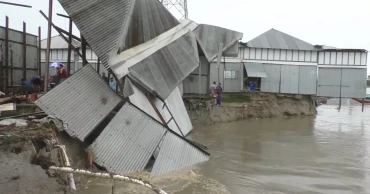
Erosion threat looms over historic Munshiganj Market
The 200-year-old Dighirpar Bazar in Tongibari upazila is facing an alarming erosion threat, as the Padma River has already swallowed at least six business establishments in recent days.
The sudden collapse began last week, shocking local traders and residents who now fear that the remaining market structures could be lost if the erosion continues unchecked.
“We are terrified that if this goes on, everything we have will vanish into the river,” one businessman said.
Locals have called on the authorities to take urgent action to protect the market, a vital commercial hub for the area and their livelihoods.
The crisis comes at a time when the district’s Water Development Board (WDB) is implementing a Tk 525.50 crore project aimed at halting erosion.
The 15-km long project, launched in April 2021, stretches from Dhighirpar in Tongibari to Shimulia in Louhajong.
So far, the WDB claims to have completed over 60 per cent of the work, which includes placing Geo bags to reinforce riverbanks.
Allegations, however, are there that illegal sand extraction by influential groups at night is worsening the erosion.
Erosion hits Paturia ferry ghat from strong Padma currents
Abdul Aziz, a local businessman, alleged that extensive sand dredging in the past had deepened the riverbed and triggered the current collapse. “The geo bags they are dropping are not enough. They just come, throw a few bags and leave, as there’s no follow-up,” her said.
Another local resident, Suman Bepari, claimed that entire villages such as Sarishabari and Haldar Bari have been lost to the river due to illegal sand cutting. “Even though the High Court has a petition to stop this, it continues at night. They just pause in the day and resume under darkness,” he said.
Tongibari Upazila Nirbahi Officer (UNO) Md Mostafizur Rahman visited the site on Wednesday morning, assuring affected traders of government assistance.
He also confirmed that a dredger from neighbouring Shariatpur had been spotted operating at night. “We will take action after speaking to the police station. Geo bags were placed before, but the strong current has made the erosion severe,” he added.
All Daulatdia ferry terminals face erosion threat as Padma swells
11 months ago
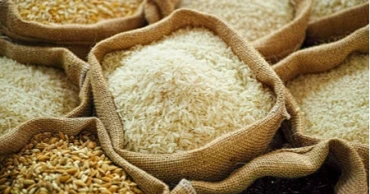
Bangladesh to distribute 36.6 lakh tonnes of food grains among poor in FY26
The government has taken a move to distribute some 36.61 lakh metric tonnes of food grains in 2025-26 fiscal year among low-income people under various social safety net programmes in the country to contain the inflationary pressure.
Inflation in the country rose to 8.55 percent in July 2025, according to the latest data released by the Bangladesh Bureau of Statistics (BBS).
The rise was attributed to a modest rise in food and non-food inflation, the BBS report mentions.
Under the programmes, 30.57 lakh metric tonnes of rice and 6.04 lakh metric tonnes of wheat will be distributed, according to a Food Ministry document.
In the previous fiscal year, 33.05 lakh metric tonnes of food grains, 26.30 lakh metric tonnes of rice and 6.75 lakh metric tonnes of wheat-were distributed.
Social security programmes get bigger allocations in national budget for FY26
A total of 2.40 lakh metric tonnes (MT) of rice and 3 lakh MT of wheat will be distributed through Open Market Sale (OMS) allocation in FY2025-26.
Although some 1,066 OMS centres are currently operating in city corporations and major municipalities (as of July 2025) the demand is far higher.
The annual rice requirement under the OMS programme is around 3,06,240 MT against the current allocation of over 66,000 MT.
Besides, the daily wheat allocation requirement is 1,391 MT( or 30,602 MT of flour) per month.
The monthly requirement stands at 39,743 MT of wheat which pushes the annual demand to around 4,76,915 MT against 3 lakh MT currently allocated.
Officials say the shortfall highlights the need to revisit allocation levels to meet actual consumption patterns and ensure uninterrupted supply for low-income consumers who rely on subsidised rice and wheat through OMS channels.
Rice prices in Bangladesh continue to exert significant pressure on food inflation as well as overall inflation, according to the latest economic update by the General Economics Division (GED) of the Planning Commission of the Planning Ministry.
The contribution of rice to food inflation rose sharply from 40 percent in May to 51.55 percent in July. Medium and coarse rice accounted for the bulk of the increase, contributing 24 percent and 18.39 percent respectively, the GED report shows.
A note from the Directorate says that the matter could be placed for discussion and decision-making regarding potential increases in OMS allocations for both rice and wheat.
Rice and flour are sold at subsidised rates under OMS programme across Bangladesh to stabilise prices and support vulnerable groups particularly in urban areas.
Bangladesh’s food grains distribution programmes are a key pillar of the government’s efforts to ensure food security for low-income and disaster-affected populations.
Managed primarily by the Directorate General of Food under the Ministry of Food these initiatives combine social safety nets, targeted subsidies, and emergency relief to address both chronic poverty and seasonal hardships.
Bangladesh targets record $63.5 billion exports for FY26: Commerce Adviser
The largest components include the Vulnerable Group Feeding (VGF) and Vulnerable Group Development (VGD) schemes which provide rice and wheat to millions of rural and urban poor households, particularly during lean agricultural seasons and ahead of major religious festivals.
Under the Food for Work (FFW) and Test Relief (TR) programmes, food grains are distributed as payment for labour in rural infrastructure projects such as road maintenance, embankment repair, and irrigation canal construction, helping communities build resilience while generating employment.
The Open Market Sale (OMS) initiative operates through trucks and dealers nationwide to sell rice and flour at subsidised prices to stabilise markets and support low-income consumers.
Besides, during floods or cyclones, the government mobilises rapid-response relief channels to distribute food grains directly to affected families.
These programmes are supported by the development partners including the World Food Programme (WFP) which collaborates with the government on capacity building, targeting systems and supply chain management.
Officials said such programmes are vital for reducing hunger, protecting livelihoods, and protecting the most vulnerables against price shocks and climate-related disruptions.
A top Food Ministry official said some 55 lakh families in the country which was 50 lakh previously will get 30 kilograms of rice per month at the rate of Tk 15 per kilogram.
This will be distributed in August, September, October, November, February and March.
“We hope that the market price will be lower comparatively as our storage is satisfactory,” said an official wishing anonymity.
11 months ago
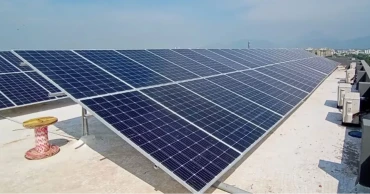
Bangladesh’s national rooftop solar programme of 3,000MW overly ambitious: IEEFA
The US-based Institute for Energy Economics and Financial Analysis in a briefing note released on Monday called Bangladesh government’s target to install 3,000-MW solar capacity in public buildings’ rooftops by the end of this year overly ambitious.
The Bangladesh Power Development Board announced the rooftop solar project on July 7.
Bangladesh has been battling an acute energy crisis for years.
This is the second rooftop solar initiative introduced in the country. The first initiative required new buildings to have rooftop solar to get connected to the national power grid.
Many of those rooftop solar installments ended up becoming stranded assets, leaving banks and other financial institutions with a negative impression on rooftop solar, creating a major financing challenge, the note said.
The combined power demand in government offices, hospitals, educational and religious institutions is 1,500MW, half the target, said the IEEFA briefing note.
“The Sustainable and Renewable Energy Development Authority should assess and document rooftop solar potential in these buildings,” Shafiqul Alam, IEEFA’s lead energy analyst for Bangladesh and the author of the note, was quoted in a media release issued on the occasion of releasing the briefing note.
Rooftop solar panels may influence urban temperatures: Study
“Furthermore, fund allocations for various projects, tendering, evaluation of bidding documents, issuing work orders and project implementation will likely require an extension of the December 2025 deadline,” said Shafiq.
The note stated that achieving new rooftop solar capacity of 3,000MW in less than six months implies scaling up installations to more than 12 times the capacity of 245MW built so far until June 2025.
The note highlighted that only 15-20 high-quality Engineering, Procurement and Construction companies operate in the country, and they may not have enough capacity to install 3,000MW in less than six months.
Under Bangladesh’s new rooftop solar programme, government offices will roll out installations via the CAPEX model supported by public funds, while hospitals and educational institutions will operate under the OPEX model with no upfront cost, said the press release.
Poor coordination, lack of maintenance, and rushed developer selection stand in the way of implementing the government’s rooftop solar plan under the CAPEX model.
On the other hand, the OPEX model ensures quality, but offers lower savings, and could face financing hurdles and risks from load-shedding in rural areas.
“If projects are small and scattered in rural areas, they may fail to attract companies to invest in the OPEX model,” said Shafiq.
Chinese solar panel giant Longi to invest in Bangladesh: Ambassador Yao
The note also underscored that utilities should find a way to address load-shedding in rural areas.
The advice is for Bangladesh to draw on the experience of its neighbouring countries like India, Pakistan and Sri Lanka, which boast of a greater share of renewable energy in the power mix, ranging from 47% to 63%.
For instance, Pakistan’s rooftop solar sector success is an example that push factors, such as energy supply crunch and unaffordable power tariffs, can spearhead change.
In Sri Lanka, the government addressed financing barriers to expand rooftop solar, supported by a multilateral agency, the note said. Later, the government provided funds for rooftop solar on public buildings.
Similarly, India’s rooftop solar capacity of more than 18 gigawatts in May 2025 can be attributed to the consistent policy and regulatory support extended by the government.
China wants to invest in solar panels manufacturing; deepen ties with Bangladesh
Shafiq also called for establishing an independent monitoring mechanism to ensure the implementation of the government’s rooftop solar programme.
11 months ago