special
Bangladesh’s national rooftop solar programme of 3,000MW overly ambitious: IEEFA
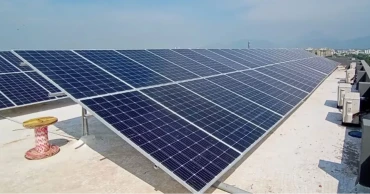
The US-based Institute for Energy Economics and Financial Analysis in a briefing note released on Monday called Bangladesh government’s target to install 3,000-MW solar capacity in public buildings’ rooftops by the end of this year overly ambitious.
The Bangladesh Power Development Board announced the rooftop solar project on July 7.
Bangladesh has been battling an acute energy crisis for years.
This is the second rooftop solar initiative introduced in the country. The first initiative required new buildings to have rooftop solar to get connected to the national power grid.
Many of those rooftop solar installments ended up becoming stranded assets, leaving banks and other financial institutions with a negative impression on rooftop solar, creating a major financing challenge, the note said.
The combined power demand in government offices, hospitals, educational and religious institutions is 1,500MW, half the target, said the IEEFA briefing note.
“The Sustainable and Renewable Energy Development Authority should assess and document rooftop solar potential in these buildings,” Shafiqul Alam, IEEFA’s lead energy analyst for Bangladesh and the author of the note, was quoted in a media release issued on the occasion of releasing the briefing note.
Rooftop solar panels may influence urban temperatures: Study
“Furthermore, fund allocations for various projects, tendering, evaluation of bidding documents, issuing work orders and project implementation will likely require an extension of the December 2025 deadline,” said Shafiq.
The note stated that achieving new rooftop solar capacity of 3,000MW in less than six months implies scaling up installations to more than 12 times the capacity of 245MW built so far until June 2025.
The note highlighted that only 15-20 high-quality Engineering, Procurement and Construction companies operate in the country, and they may not have enough capacity to install 3,000MW in less than six months.
Under Bangladesh’s new rooftop solar programme, government offices will roll out installations via the CAPEX model supported by public funds, while hospitals and educational institutions will operate under the OPEX model with no upfront cost, said the press release.
Poor coordination, lack of maintenance, and rushed developer selection stand in the way of implementing the government’s rooftop solar plan under the CAPEX model.
On the other hand, the OPEX model ensures quality, but offers lower savings, and could face financing hurdles and risks from load-shedding in rural areas.
“If projects are small and scattered in rural areas, they may fail to attract companies to invest in the OPEX model,” said Shafiq.
Chinese solar panel giant Longi to invest in Bangladesh: Ambassador Yao
The note also underscored that utilities should find a way to address load-shedding in rural areas.
The advice is for Bangladesh to draw on the experience of its neighbouring countries like India, Pakistan and Sri Lanka, which boast of a greater share of renewable energy in the power mix, ranging from 47% to 63%.
For instance, Pakistan’s rooftop solar sector success is an example that push factors, such as energy supply crunch and unaffordable power tariffs, can spearhead change.
In Sri Lanka, the government addressed financing barriers to expand rooftop solar, supported by a multilateral agency, the note said. Later, the government provided funds for rooftop solar on public buildings.
Similarly, India’s rooftop solar capacity of more than 18 gigawatts in May 2025 can be attributed to the consistent policy and regulatory support extended by the government.
China wants to invest in solar panels manufacturing; deepen ties with Bangladesh
Shafiq also called for establishing an independent monitoring mechanism to ensure the implementation of the government’s rooftop solar programme.
11 months ago
Moulvibazar’s roads in ruins, locals plead for repairs
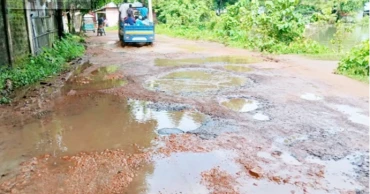
The southwestern part of Moulvibazar Sadar Upazila is groaning under the relentless weight of heavy vehicles, leaving thousands of locals caught in the daily misery of crumbling roads.
For people in several unions of Moulvibazar and two neighbouring upazilas, what once were vital lifelines have now become stretches of broken asphalt and deep potholes.
The worst-hit are the Moulvibazar–Kagabala and Moulvibazar–Shamsherganj–Sreemangal roads.
Together they connect markets, schools, industries, and healthcare facilities over a stretch of roughly 16 kilometres.
But today, travelling those roads feels less like a journey and more like an ordeal.
At points such as Dighirpar, Aloha, Surya Pasha, Athangiri, and Dhandash, the surfaces have given way completely.
Potholes and broken patches make each trip unpredictable, whether for students heading to class, workers rushing to jobs, or families trying to reach a hospital.
Dilapidated road hampers trade through Sheola land port
“I drive for Pran Food, and what should take 30 minutes now takes more than an hour,” said Milon Mia, a weary driver.
“Our vehicles are getting damaged, and passengers are frustrated,” he said.
The frustrations go beyond delays. For people like Jagadish Chandra Dey, a village doctor in Dighirpar Bazar, the roads have turned into a serious threat to patients’ lives.
“The road has been in a terrible state for years. For serious cases, especially for expectant mothers, the suffering is unimaginable,” he said.
Students too are among the worst affected. Jibon Dey Palash, who studies at Jashore University of Science and Technology, blamed the endless stream of heavy vehicles from nearby industries.
“Covered vans carrying eggs and feed from Kazi Farms, and trucks loaded with bricks, are ruining the road,” he said, urging the Local Government Engineering Department (LGED) to act promptly.
The LGED, for its part, admits the problem and promises relief.
Shahed Hossain, engineer at the LGED office in Moulvibazar Sadar, said they inspected the damaged stretches in July.
“A renovation proposal has been submitted under the Road Maintenance and Repair Programme. Work will begin as soon as funding is approved,” he assured.
People suffering due to dilapidated road in Munshiganj
Until then, the residents of Amoil, Kagabala, and Nazirabad unions in Sadar Upazila, along with those in Mirzapur and Bhunabi of Sreemangal, and Gajnaipur and Paniumda of Habiganj’s Nabiganj Upazila, continue to live in limbo.
For them, every commute is a gamble between necessity and endurance.
With classrooms, clinics and markets hanging in the balance, locals can only hope the wheels of bureaucracy turn quickly enough to mend the wheels of their daily lives.
11 months ago
Nationals from 5 countries involved in BB heist, CID probe finds
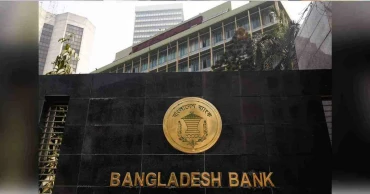
Nationals from five countries were involved in the Bangladesh Bank reserve heist that occurred in February of 2016, according to a senior official at the Criminal Investigation Department, the investigating agency of the cyber heist.
The foreign nationals involved in the crime are from Sri Lanka, the Philippines, China and the USA, said the official with in-depth knowledge of the investigation, seeking anonymity.
The investigation that has been going on for almost a decade now also found the involvement of several Bangladesh Bank officials and employees, particularly from the central bank’s Information and Communication Technology Department.
Some top officials of the central bank were also involved in the heist, the CID official said, adding that the investigation was at the final stage.
A sophisticated malware was used to hack into the BB system, the CID official said.
The malware-linked file was knowingly opened from the ICT department, enabling the illegal transfer of US $101 million from the central bank’s account with the Federal Reserve Bank of New York.
Bangladesh Bank issues master circular to simplify import procedures
The ongoing investigation will soon end with the submission of a chargesheet before the court, said the CID official.
The chargesheet will include the detailed report from the US Federal Bureau of Investigation (FBI) into the heist, which conclusively proves the involvement of foreign nationals, the official said.
The investigating agency has requested the FBI to send a copy of this report formally, he added.
The central bank’s reserve heist was one of the largest cyber robberies in history.
It occurred in the early hours of February 5. Hackers attempted to transfer about US $1 billion from the BB’s account at the New York Fed, of which US $101 million was successfully moved.
The majority of the funds were laundered using the Philippines’ casino industry’s secrecy law and limited oversight. Of the stolen foreign currency, US $81 million went to the Philippines and about US $20 million to Sri Lanka.
The Sri Lankan funds were recovered in time, but retrieving the amount sent to the Philippines proved more complicated. So far, the Bangladesh government has recovered about USD 18 million from the Philippines.
The investigation was jointly conducted by the CID, the FBI, the Philippines’ National Bureau of Investigation (NBI), and the Central Bank of Sri Lanka.
Bangladesh Bank’s new agro-rural credit policy fails to excite farmers
Zubair Bin Huda, the then deputy director of Bangladesh Bank’s accounts and budgeting department, filed a case with Motijheel Police Station under the Money Laundering Prevention Act on March 15 in 2016 against unidentified individuals.
The case was later handed over to the CID.
In nearly nine years of the investigation, over a hundred witnesses and extensive technical evidence, including IP addresses, network logs, banking transaction trails and Dridex malware code, have been examined.
The investigation exposes how such an international financial crime was committed, how Bangladeshis collaborated in the crime, and the vulnerabilities of our cyber system, another senior CID official told UNB.
We want the chargesheet to be prepared in a way that ensures the perpetrators face justice at the international level as well, the official said on condition of anonymity.
11 months ago
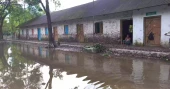
284 flood-hit schools in Feni remain unrepaired; Tk 12.99 crore goes back unspent
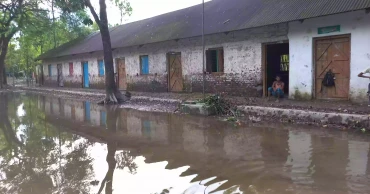
Over a year after devastating floods, 284 government primary schools in six upazila of Feni district, which were damaged due to flood, still await repair work despite having an approved allocation of over Tk 12.99 crore.
With deadlines missed and procedures stalled, a staggering Tk 12.67 crore has been returned to the national coffer, leaving the authorities of 284 schools in disrepair and thousands of students in limbo.
The government had earlier allocated Tk 12,99,70,812 crore for the repair and renovation works for 314 government primary schools in six upazilas of the district.
But the authorities concerned carried out repair work on only 30 schools, spending Tk 31,73,334.
As the authorities failed to carry out the repair work in time, a total of Tk 12,67,97,478 was returned due to non-implementation of the planned repair work.
The upazila engineer expressed reluctance to carry out the repair work for not receiving any instruction from the Local Government Engineering Department.
As a result, the allocated money was returned to the Directorate of Primary Education (DPE).
According to the DPE, Feni, after receiving the allocation on April 29, the renovation activities of 284 schools did not start in time, leading to the fund return.
Besides, 30 schools that received allocations of less than Tk 1, 50,000 have completed their repair work.
Due to the allocation of more than Tk 1.50 lakh, to 284 schools, the upazila primary education officer sent a letter to the upazila engineer to take necessary measures regarding the repair work.
As no instructions were received from the Local Government Engineering Department, the upazila engineer was unwilling to move ahead with the repair work.
As a result, the allocated funds for the 284 schools were returned to the Directorate of Primary Education.
The allocated amount could not be spent as the project’s designated period expired for failure to invite a tender in time.
There are 559 government primary schools in Feni. Of these, 151 in Sadar upazila which received Tk 5,02, 26,514 while only 5 schools were repaired, at a cost of Tk 5,62,159 and Tk 4,96,64,355 was returned.
Struggle for survival begins anew in flood-hit Feni as waters recede
In Dagonbhuiyan upazila, out of 102 government primary schools, 16 schools' furniture and infrastructures were damaged during the last year's floods.
A fund of Tk 76, 11, 960 was allocated for the repair work, officials said.
Due to the alleged lack of support from the upazila engineer for the implementation of the repair work, the allocated funds were returned, they said.
In Sonagazi upazila, an amount of Tk 2,83,29,941 was allocated for the repair of 102 out of 110 government primary schools.
Among those, 25 schools spent Tk 26,11,175 on repair work, while Tk 2,57,18,766 allocated for the repair of 77 schools was returned.
In Chhagalnaiya upazila, out of 78 schools, 65 schools have received Tk 3,51,66,987 for repairs, while, in Parshuram upazila, a total of Tk 29, 58, 875 has been allocated for 7 schools and in Fulgazi upazila, Tk 55, 76, 546 was allocated for nine schools that have gone unutilised.
The headmasters of the affected schools reported that due to the lack of time, this allocation could not be utilised.
As a result, the schools have not become suitable for teaching.
Many teachers have been compelled to spend their own money on urgent repair work, creating uncertainty about the reimbursement.
Upazila Executive Officer Sultana Nasrin Kanta said that the funds could not be utilised due to insufficient time for floating tenders.
“Efforts are underway to request fresh allocations next fiscal year,” she said.
District Primary Education Officer Firoz Ahmed said that if funds arrive early or project durations are extended, future repair works could be implemented effectively.
Feni faces flood risk again as embankment work stalls
He also clarified that allocations under Tk 1.5 lakh can be spent directly by school authorities, but larger amounts require involvement of the Upazila Engineer.
Executive Engineer of the Local Government Engineering Department (LGED) Md Mahmud Al Faruque said he was unaware of any returned allocations and had not been contacted regarding them.
Additional Deputy Commissioner (Education and ICT) Fatima Sultana said “We have contacted the ministry. We hope that if we receive the funds back by August of the current financial year, the repair work on the newly affected schools will begin.”
Meanwhile, a teacher from Paschim Chilonia Government Primary School, Kishore Chakrabarty, said that teachers had already spent personal funds to make the schools functional due to post-allocation delays and now face uncertainty over reimbursement.
Last year, a total of 323 primary schools in Feni were partially damaged due to flood, involving an estimated loss of Tk 1,62,87,799.
11 months ago
Dhaka’s survival at stake; how realistic is the expectation to make it ‘smart’?
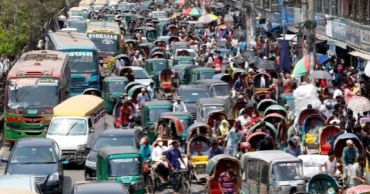
With more than 50,000 people living per square kilometre, over 500,000 buildings, a population of nearly two crore, chronic air pollution topping global charts, and waterlogging after light rain, simply surviving in Bangladesh’s capital Dhaka is a big challenge, making the vision of turning it into a smart city seem distant to many.
According to the latest data from Global Forest Watch, Dhaka’s tree cover is less than 1% of its total land area.
Over the past four years, 198 hectares of greeneries in the capital have been destroyed for housing and other projects, releasing nearly 60 kilotonnes of carbon dioxide into the atmosphere.
A report by Sustainability Advocates Station states that alongside improvements in other key indicators, urban greeneries must be prioritised for a city to become smart.
The report highlights the “3-30-300” model as the best approach.
Under this model, every resident should be able to see at least three trees from their home window; 30% of the surrounding area should be allocated for trees; and a park or playground surrounded by greenery should be within 300 metres.
A decade ago, Melbourne, Australia was struggling with environmental crises.
By adopting this model, it improved liveability, set a target to raise forest cover from 22% to 40%, and began working to lower city temperatures by 4°C by 2040.
In contrast, urban planners say that in South Asian countries, especially Bangladesh, no such initiatives in Dhaka amount to a suicidal approach.
In Copenhagen’s Frederiksberg, a similar pilot project has been undertaken.
According to the Frederiksberg Municipality’s 2024 data, its initial goal is for every resident to be able to see at least one large tree from any window.
The project also includes planting trees along footpaths and road dividers.
In Asia, Singapore aims to increase greeneries by 30% through similar initiatives, according to the Nature-Based Solutions Institute.
Struggling to Survive
While smart cities across the world aim for 30% greenery, Dhaka’s forest cover remains at just 1%, a figure that experts say threatens residents’ very survival.
President of the Bangladesh Institute of Planners (BIP) Adil Muhammed Khan said, “From the very beginning, Dhaka’s urbanisation has been unplanned. Buildings have been constructed haphazardly without any plan. Most areas of Dhaka lack playgrounds or parks and there is no arrangement for planting trees around buildings. Altogether, Dhaka has been turned into a suffocating city for housing.”
He said there have been calls for years to focus on planning to turn Dhaka into a smart and well-organised city.
Environmentalists demand steps against Dhaka’s park, open space encroachers
“But decades have passed without change. Buildings keep going up, footpaths are being occupied, and trees are being cut down. Most areas lack the qualities of an ideal residential zone, and commercial areas are also developed without proper guidelines. From a Dhaka window, you see concrete towers, not trees,” he said.
Tree Cutting Outpaces Planting
Visits to several green areas of Dhaka reveal that hundreds of trees have been felled in the name of various projects, with parks and gardens being cleared.
The once tree-covered Panthakunja in Karwan Bazar, Shaheed Anwara Park in Farmgate, and Suhrawardy Udyan in Shahbagh have all lost significant numbers of trees in recent years.
In some cases, large trees have been removed altogether, pushing Dhaka further towards environmental peril.
Abdus Sobhan, president of "Paribesh O Jalabayu Paribartan Andolon (PARIJA)", a voluntary social organisation working on environmental protection, biodiversity conservation, and climate change adaptation, said, “Dhaka cannot be saved with a single step. The city is a product of severe lack of coordination.”
“There is no collaboration between RAJUK and the Ministry of Environment. WASA and the city corporations do not interact. Buildings keep rising, trees are being cut, but the Environment Ministry shows no concern. We had expected Environment Adviser who was once involved in environmental movements, to take steps to save Dhaka’s environment, but she has joined the ranks of her predecessors,” he said in a said voice.
Sobhan alleged that many engaged in environmental work are themselves benefiting from its destruction.
“The environment is a sensitive issue, and a few influential groups are exploiting it for gain. In their grip, Dhaka has become uninhabitable. Even ignoring air pollution, this city cannot be considered liveable,” he added.
Population and Housing Pressure
According to RAJUK’s official figures, Dhaka has fewer than 200,000 buildings.
House Rent Issues in Dhaka: A Growing Concern
Planners and stakeholders, however, claim the actual number exceeds 500,000, as new buildings are being constructed every day.
Planners say that the booming housing business faces little oversight in Dhaka, with buildings continuing to rise even as trees are lost.
Housing sector representatives say the influx of new residents fuels demand. Senior Vice President-1 of the Real Estate and Housing Association of Bangladesh (REHAB), MA Awal, said, “Dhaka’s population is growing daily, and housing developers are working to meet their needs.”
“Population is also increasing outside Dhaka city and we are expanding housing accordingly. Those who oppose housing projects should be asked how they plan to accommodate this vast population,” he added.
Urban planners believe that to save Dhaka, decentralisation must begin immediately. Moving important offices and major factories outside the city would reduce population pressure, improve the environment and create an opportunity to redesign the capital.
11 months ago
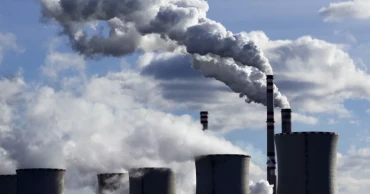
New, revived fossil fuel projects to heighten Bangladesh’s economic woes
Moves taken over the past year since the incumbent government assumed power to launch new fossil fuel projects or revive scrapped ones threaten to worsen Bangladesh’s economic woes, said energy experts.
Two of the moves involved liquefied natural gas import, though energy experts warned about it increasing expenses in the energy sector, which is highly subsidised.
The latest move regarding LNG supply took place during the recent visit of chief adviser Prof Muhammad Yunus to Malaysia where a memorandum of understanding was signed over the supply of LNG and petroleum products and building their infrastructures.
In January, Bangladesh Investment Development Authority (BIDA) signed a non-binding deal with the US-based Argent LNG to purchase five million tonnes of LNG annually.
In a bid to facilitate LNG use, the government waived 15 per cent VAT on LNG imports in the budget for the financial year of 2025-26, potentially reducing its revenue income by more than Tk 5,000 crore, considering last year’s VAT income from LNG imports.
“Can Bangladesh afford more LNG imports? No, it cannot,” said Hasan Mehedi, member secretary of Bangladesh Working Group on Ecology and Development.
Bangladesh slipped into its worst economic crisis in decades in 2021, three years after it started importing LNG to make up for depleting local gas production. LNG imported through long-term deals and spot market purchases is meeting roughly a fourth of all gas demand. Blended with locally produced gas, LNG is supplied through the national grid at a subsidised price.
Arbitrary deals and policy shifts build mountains of unsold stones at MGMCL
The import of LNG put so much financial burden on Petrobangla that it proposed early this year that the gas price should be increased by 152 per cent in one go for industries, drawing scathing criticism from business communities.
The price was increased by 33 per cent in April.
Some industries suffered up to a 179 per cent gas price increase in January 2023 as energy bills frequently went up to reduce the mounting deficit, which Petrobangla forecasts to exceed Tk 22,000 crore in the ongoing financial year.
In the last financial year, the BWGED said, the cost of a unit of LNG was Tk 75.72. The average production cost of the same amount of locally extracted natural gas was a little over Tk 5.
But the selling price of a unit of gas to power producers, who consume half of all gas used annually, is Tk 14. Domestic consumers pay even less.
About half of Bangladesh’s gas-based power generation capacity remains idle due to fuel shortages. The fuel shortage reflects Bangladesh’s poor import capacity following a rapid decline in the dollar reserve since LNG import started.
Shafiqul Alam, lead energy analyst at the Institute for Energy Economics and Financial Analysis, said that Bangladesh imported around 1,511Bcf of LNG between August 2018 and July 2025, spending more than US$17.6 billion.
Bangladesh’s average LNG import cost has been US$12 per MMBtu, he said.
Bangladesh currently has 1,100mmcfd of LNG import capacity through two floating storage and regasification units. But the capacity was substantially unused largely due to the failure to have enough money to purchase gas.
Until November of last year, the average LNG import was 579mmcfd. In 2023-24, the highest annual LNG import of 676mmcfd was recorded.
“Bangladesh should scrap some of its existing fossil fuel-based power plants and increase industrial power consumption to recover its economy,” said Shafiq.
But instead Bangladesh is resuscitating or planning to resuscitate scrapped fossil fuel projects.
Power Development Board chairman Rezaul Karim said that they decided to build the second phase of the 1,200MW coal-based power plant.
In June, 2022, Japan International Cooperation Agency (JICA) cancelled its plan to finance the second phase of the Matarbari power plant following criticism over potential harms of implementing such projects.
In February, the Hydrocarbon Unit of the power and energy ministry hosted a discussion attended by energy experts, geologists and consumer rights activists with a proposition that categorically promoted open-pit coal mining, particularly in Phulbari.
Malaysia’s labour market reopening at risk over unresolved legal disputes
The move threatens to revive a controversy settled through the loss of three lives two decades ago, potentially adding to the current political instability, a reason for economic activities slowing down.
All these fossil fuel-friendly developments came on the heels of the incumbent government cancelling 31 renewable energy projects.
The projects were cancelled for they were passed without tender, a condition that was an integral part of implementing all fossil fuel projects as well during the past Awami League rule.
But almost all fossil fuel-based projects built during the past AL regime were retained. New renewable project is unlikely to be taken up by this year.
In the newly published renewable energy policy, there is no plan of phasing out fossil fuels anytime soon, despite global fossil fuel market volatility, recently manifested in a series of events—war, disaster, geopolitical tension and pandemic.
The recently adopted Integrated Energy and Power Master Plan ensures Bangladesh continues to rely on fossil fuels for decades to come.
Over 95 percent of Bangladesh’s current installed power generation capacity of more than 28,000MW is based on fossil fuel, mostly based on imports.
Bangladesh spent about $2 billion annually on energy imports. But an acute energy crisis persisted.
Energy experts already warned that the LNG import deal with the American company, Argent LNG, will be beneficial for the company. Importing LNG from the US implied a surge in transportation cost, they said.
“Thinking about further LNG expansion is a dangerous move. Increasing fossil fuel use even more would be suicidal,” said Hasan Mehedi.
Bangladesh is believed to be sitting on substantial gas reserves because of its geological standing as a delta. But successive governments ignored calls for exploration for decades.
11 months ago
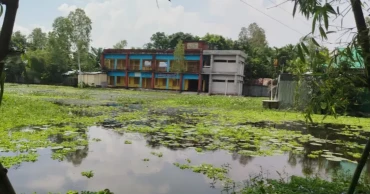
Lalmonirhat flood: Teesta water recedes, miseries mount
Although water levels in the Teesta River have started to recede the suffering of thousands of flood-hit people continues as waterborne diseases spread in Lalmonirhat district .
The water level of the Teesta started to drop below the danger mark on Friday morning bringing slight relief but various waterborne diseases are on the rise due to the scarcity of drinking water, further exacerbating the suffering of flood victims.
The Water Development Board recorded the Teesta’s water level at 51.92 metres at the Dalia Barrage point in Hatibandha upazila—23 centimeters below the danger mark around 2 pm on Friday.
According to the Flood Forecasting and Warning Center, the river began swelling from the night of August 11 due to continuous rainfall and onrush of water from the upstream.
Floodwaters submerged large portions of Lalmonirhat Sadar, Patgram, Hatibandha, Kaliganj, and Aditmari upazilas and low-lying areas along the riverbanks, leaving nearly 10,000 people stranded.
The worst-hit areas are Dahagram in Patgram upazila, Goddimari, Dowani, Choyani, Saniajan, Singimari, Sindurna, Holdibari and Dowabari in Hatibandha upazila, Bhotmari, Shoilmari and Nohali in Kaliganj upazila, Mahishkhocha, Gobordhan and Bahadurpara in Aditmari upazila and Khuniagachh, Kulaghat, Mogolhat, Rajpur, Borobari and Gokunda unions in Sadar upazila of the district.
Over 40,000 stranded in 5 districts as Teesta flows above danger mark
Families faced severe hardship as floodwaters entered homes and women were cooking once a day on makeshift stoves inside their houses or on embankments and roads.
Many villagers sheltered their cattle under polythene tents on high grounds.
Salma Begum, a resident of Gaddimari village in Hatibandha upazila said, "The roads have been submerged. There is water from knee to waist in every house in our village. Cooking, eating, living and using the toilet have all become difficult. We couldn't sleep at night. I am in panic with the children, wondering when someone will fall into the water."
Executive Engineer of the Water Development Board in Lalmonirhat, Sunil Kumar, said, “ Now the Teesta water levels have dropped below the danger mark but it will take some time for the situation to improve. Residents are being urged to remain alert.”
Teesta swells above danger mark again; low-lying areas flooded in Nilphamari
As of Friday afternoon (August 15), Teesta’s water was flowing 23 cm below the danger level.
"We are monitoring the situation round the clock," he added.
11 months ago
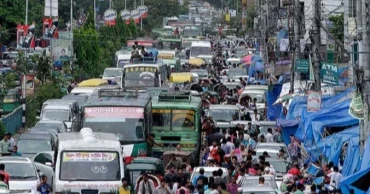
Fighting noise pollution: Tougher rules, ban on import of high-decibel horns in the offing
There are multiple reasons that has made Dhaka unlivable and one of those that keeps its residents in constant and invisible agony is sound pollution.
Loudspeakers, hydraulic horns, or sound of construction works, factory work, generators continue from morning to night amid people’s ignorance about its health hazards.
Lack of public awareness and official apathy has turned sound pollution into a largely overlooked offense in Bangladesh despite its serious health impacts.
Although the government has introduced some measures, results on the ground remain disappointing.
Noise pollution control must to protect hearing health: Rizwana
Despite the declaration of the area surrounding Hazrat Shahjalal International Airport in Dhaka as a “Silent Zone,” nothing has changed.
Previously, the Department of Environment announced 12 silent zones across Bangladesh, with five located in Dhaka, including the Secretariat, Agargaon, and the Parliament area but vehicles kept honking horns ignoring the restriction.
A recent study by the Center for Atmospheric Pollution Studies (CAPS) revealed that no silent zones in the country were effectively enforced.
The Center for Atmospheric Pollution Studies (CAPS) at Stamford University carried out a year-long study from April 2021 to March 2022, measuring noise levels across ten locations in Dhaka.
Adviser Rizwana urges students to join in reducing noise, plastic pollution
The study found that noise pollution exceeded acceptable limits in every area surveyed. Specifically, excessive noise was recorded 96.7% of the time in designated quiet zones, 91.2% in residential zones, 83.2% in mixed-use areas, 61% in commercial zones, and 18.2% in industrial zones.
These results highlight the widespread nature of noise pollution in Dhaka, with 82% of monitored sites consistently registering noise levels above 60 decibels.
This occurs despite the Noise Pollution Control Rules of 2006, which cap permissible noise levels at 45 decibels at night and 55 during the day in residential areas, and 60 at night and 70 during the day in commercial zones.
However, enforcement of these regulations remains a major issue.
Aiming to fight the silent killer, the Ministry of Environment, Forest and Climate Change has planned to amend the Sound Pollution Control Rules, 2006 with provision of harsher punishment and some restrictions to combat the severe noise pollution.
A draft of the new Noise Pollution (Control) Rules, 2025 has been prepared with proposal to increase the penalty for violation of rules.
Battling the nighttime noise nightmare in Dhaka
Under the old rules, the maximum penalty for causing noise pollution was one month imprisonment or a fine of Tk 10,000 or both.
Violations related to noise limits, unauthorised use of loudspeakers, firecrackers, or failure to follow noise regulations at construction sites and factories can lead to up to one month imprisonment, fines up to Tk 50,000, or both per offense.
Specific violations related to vehicle horns may attract up to one month imprisonment, a fine up to Tk 20,000, or both per incident.
Manufacturing, importing, or marketing horns beyond prescribed limits may result in up to two years imprisonment or a Tk 200,000 fine, or both.
Unauthorized selling or distribution of excessive noise horns may lead to one month imprisonment or a Tk 50,000 fine.
The draft rules also include a prohibition on the import, marketing, and use of vehicle horns that produce noise beyond accepted limits.
Besides, specific permissible decibel levels for different types of vehicle horns have been set in the proposed law.
Besides, the use of noise-producing firecrackers and crackers will be banned unless special permission is obtained.
Restrictions on the use of microphones, loudspeakers, and music systems will also be introduced, prohibiting loud music or cultural programs after 9 pm.
Dr. Farhina Ahmed, Secretary of the Ministry, said the 2006 rules lacked clarity on several points.
The new draft clearly addresses issues related to horns, firecrackers, and other noise sources, alongside increasing penalties, she said
She added that the draft law is expected to be finalised soon.
“We have already held inter-ministerial meetings and received feedback from 21 ministries. The draft was published on our website for public comments. After collecting opinions, another meeting will be held,” she said.The draft law is slated to be finalised by the end of August before being sent to the Ministry of Law for vetting and then published in the official gazette.
The draft exempts noise rules for religious places such as mosques, temples, churches, pagodas, and other worship sites; religious events including Eid prayers, sermons, funerals, and processions; ambulance and fire services; government broadcasts during Iftar and Sehri; and certain official government activities.
According to the draft law, the Ministry of Commerce and relevant authorities will not grant permission for importing or marketing horns exceeding the acceptable noise limits.
Use of such horns on motor vehicles, boats, or other transport means will be strictly prohibited.
Vehicles that ill not allowed to honk horns in designated quiet zones. Drivers, owners, and operators won’t be allowed to install or use any devices or parts that produce excessive noise, nor authorise others to do so.
The proposed law set noise limits based on area type:
Silent zones: 50 dB (day), 40 dB (night)
Residential: 55 dB (day), 45 dB (night)
Mixed-use: 60 dB (day), 50 dB (night)
Commercial: 70 dB (day), 60 dB (night)
Industrial: 75 dB (day), 70 dB (night)
Daytime is defined as 6 am to 9 pm, and nighttime from 9 pm to 6 am.
For vehicle horns, permissible noise levels are:
Light vehicles (two/three-wheelers, cars, microbuses, pickups): 85 dB
Medium vehicles (minibuses, medium trucks, vans): 90 dB
Heavy vehicles (buses, trucks, lorries): 100 dB
Mechanical boats: 100 dB
Authorities must install noise barriers near overpasses, flyovers, elevated expressways, or railway lines to reduce noise pollution , according to the draft.
Noise pollution awareness training and testing will be mandatory for obtaining or renewing professional or non-professional driving licenses. The Bangladesh Road Transport Authority, in consultation with the Department of Environment, will design the training curriculum.
Use of noise-producing firecrackers is prohibited unless special permission is granted for festivals or events, with strict limits on timing and noise levels.
Local bodies such as Union Parishads, municipalities, city corporations, and urban development authorities will identify noise zones and install standard signage.
11 months ago

Mounting stranded assets expose a new Achilles heel of BPDB
Bangladesh’s power sector stranded assets are increasing by leaps and bounds, exposing a new Achilles heel of Bangladesh Power Development Board (BPDB), which bled fiscally dry after pursuing a flawed energy policy during the 15-year rule of the past Awami League government.
With large power plants awaiting commissioning for months or sitting substantially idle after launch, the stranded asset problem is more pronounced than ever before.
Newly-built or under-construction fossil fuel-based power plants worth about 7,000MW are set to add to BPDB’s financial burden, energy experts said.
The 2,400-MW nuclear power plant expected to join the power fleet by next year might deepen the problem even more, energy experts pointed out, rendering many power plants currently in use redundant amid a rather dull economic scenario with no increase in power demand for almost a year.
“Stranded assets might become a significant burden for the BPDB over the next three years,” said Shafiqul Alam, lead energy analyst, the US-based Institute for Energy Economics and Financial Analysis.
assets are investments that have stopped yielding return before the expiry of their economic life.With an installed power generation capacity of 28,132MW, the peak power demand this year barely touched 16,000MW, marking a drop in the demand compared with last year.
The decline in the power demand is due to industrial consumption declining. There were widespread power outages during this summer as for one reason or the other about half of the installed power production capacity could not be used.
Mounting stranded assets imply an increase in capacity charge payment. The BPDB paid over Tk 1 lakh crore in capacity charge, a sum payable by the government to private power producers regardless of electricity produced, guarantying the investors 16 per cent return.
The payment of huge capacity charge, often in dollars, incurred the BPDB astronomical losses while draining Bangladesh’s foreign currency reserve.
An acute fuel shortage, owed to factors such as the dollar crisis and inadequate import infrastructure, was to a great extent responsible for creating stranded assets.
Machinery problem was also a reason behind some power plants going frequently out of order.
“Some power plants regarded as stranded assets were dropped from the official list over the last several years,” said Hasan Mehedi, member secretary, Bangladesh Working Group on External Debt, a platform of green activists.
BPDB moves to meet this summer’s power demand with capacity production at gas-based plants
Energy experts believe the need to scrap more power plant will become more evident over the next few years to keep overcapacity from further growing to reduce energy subsidy.
Years of arbitrary energy project implementation without any tender, protected under a controversial indemnity law, bred power projects that would remain under use or unused within years of or immediately after their costly construction.
Some Scrapped Power Plants Performance Record
At least seven power plants worth 582MW were scrapped since 2013. Three of the scraping took place after the incumbent government took over last year.
power plants included some of the most controversial business groups with a shady record of doing business under Awami League rule.Two of the power plants - Bosila 108MW and Jamalpur 95MW - were scrapped in September last year after passing of only 50 per cent of their supposed lifetime.
Based on furnace oil, Bosila 108MW power plant, which commenced operation on 22 February 2017 for 15 years, was supposed to retire on 21 February 2032.
The plant did not generate any electricity in the three years prior to itsscrapping.
The Jamalpur power plant, also based on furnace oil, was supposed to retire on November 28 in 2031 after running for 15 years. Jamalpur had also been out of operation for a while before it was scrapped.
Companies owning both the power plants were at the center of shady loan deal scandal, one of them involving Tk 1,732 crore.
Independent private power plants contracted to supply uninterrupted electricity for 15 years are allowed to have time off for maximum 17 per cent of their lifetime for repair and maintenance.
The power purchase agreement with a power plant is liable for termination for willful and unexcused abandonment for 30 consecutive days without BPDB’s consent.
Failure to return to operation for 30 days after repair and maintenance also makes a power plant eligible to be cancelled, among other reasons.
An analysis of official data revealed that the furnace oil-based Kathpotti 52 MW (Sinha) power plant was scrapped in December last year, more than five years before it was supposed to retire. The plant produced no power in a year before it was scrapped.
BPDB's tender floating for 10 key grid-connected plants faces setback
The diesel-based 110MW Bheramara power plant scrapped in June 2013 after three years of operation gave its best output in 2011-12 with 26.7 per cent of its generation capacity used.
In the three years of operation, the power plant took away over Tk 510 crore in capacity charge.
Despite poor power generation record, the purchase deal with the power plant had been extended for eight years until December, 2018.
The furnace oil-based 105MW Nawapara power plant was scrapped months after its tenure was extended for eight additional years after the completion of its initial deadline in early 2014.
power plant used sub-standard machines. The Nawapara power plant’s best production record comes with the use of 16.7 per cent of its capacity in 2011-12.Brand New Large Power Plants Facing Stranded Asset Risk
The gas-based 800MW power plant in Khulna’s Rupsha has been awaiting commission since early 2024.
There was no gas even to test-run the power plant, built with $1.14 billion, mostly given as loans by the Asian Development Bank, the Islamic Development Bank, and the Japan Fund for Poverty Reduction.
The fuels crisis is unlikely to be over soon with domestic gas reserve fast depleting.
Bangladesh’s capacity to import gas is also limited because of infrastructure shortage.
Construction of new infrastructure to raise liquefied natural gas import capacity from the existing 1000mmcfd could take three to six years, given the type of infrastructure – floating storage and regasification unit and land-based LNG terminal. No such infrastructure construction is currently going on.
Constructed with $235 million given by the ADB, the 225MW dual-fuel Khulna power plant, commissioned in 2013-14, has been running at a reduced capacity on diesel as there is no gas supply.
In 2019-2020, the plant factor of the Khulna power plant plunged to 0.3 percent, producing a unit of electricity for a staggering Tk 533.
BPDB to prepare position paper on its financial and economic condition within a week
The best use of the power plant – at 50.5 per cent of its capacity – was recorded in 2017-18.
Gas shortage delayed the commissioning of the 718MW JERA power plant at Meghnaghat in Narayanganj, built with $200million ADB loan.
Following commissioning, the JERA power plant often remained shut down due to gas shortage. Similar situation caught the two large gas-based Meghnaghat power plants - 583MW and 584MW.
The public sector is building four new gas-based power plants worth 1,865MW which are set to be operational by the start of 2027.
During the time, another private gas-based power plant worth 590MW will come online beside a 1,247MW coal-based power plant.
On August 13, Power Grid Company data showed, power generation peaked at 15956MW at 9:00pm, with 36 percent generated from Gas, 19 per cent from furnace oil, 28 per cent from coal, and 15 per cent from import.
The day’s peak generation was achieved using less than 50 per cent of the installed gas generation capacity, 55 per cent of the installed oil generation capacity, and 78 per cent of installed coal generation capacity.
Energy transition, replacing fossil fuels with renewable energy, threatens to add to Bangladesh’s stranded asset capacity over time amidst forecast of coal and gas power generations becoming too costly – financially, physically and environmentally, compared with new technologies.
“The problem highlights the mismatch between forecast and reality,” said Zahurul Islam, member, generation, BPDB.
“Careful planning is needed to deal with the stranded asset problem,” he said, explaining, “Industrial power consumption will have to be increased and construction of new power plants in the pipeline will have to be delayed or cancelled for the time being."
11 months ago

A simple rural app brings veterinary care to Bangladesh farmers’ doorsteps
In the quiet farming villages of rural Bangladesh, a sick cow can mean far more than an animal in distress, as it can threaten a family’s livelihood.
But for many farmers, the nearest veterinary hospital is miles away and help often comes too late.
Now, a mobile app developed by a professor at Bangladesh Agricultural University (BAU) is changing that reality.
Digital Khamari, meaning 'Digital Farmer', is putting vital livestock care advice directly into the hands of those who need it most.
The app’s creator, Professor Dr Md Sahiduzzaman from BAU’s Department of Parasitology, says the idea was born from witnessing the struggles of rural farmers.
“The shortage of veterinarians in rural areas is acute. Farmers often cannot reach remote veterinary hospitals. This app helps by providing the names and addresses of nearby veterinary doctors, giving farmers timely assistance when they need it most," he said.
From identifying swollen udders in cows to spotting the signs of worm infestations, the app guides farmers through recognising and preventing common livestock diseases, Dr Shahiduzzaman said.
It even offers advice on tackling lumpy skin disease, a serious condition that has affected cattle in many parts of the country, he said.
Online veterinary service launched in city
One of its most valued features is a built-in directory of local veterinary doctors, complete with contact numbers.
Once downloaded from the Google Play Store, 'Digital Khamari' can be used entirely offline, critical in areas where internet coverage is unreliable.
The app also contains disease-specific treatment guidelines, awareness material, and practical farm management tips. All of it is free.
11 months ago