special
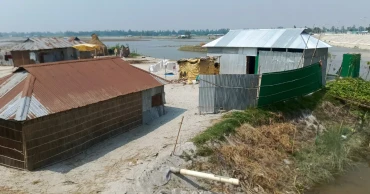
'Cluster Homes' gaining popularity in Kurigram char areas as flood protection
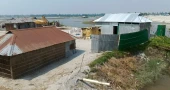
In the flood-prone char regions of Kurigram, “cluster homes” are emerging as a beacon of hope, offering safe shelter during floods.
Built as high structures through joint community efforts, these homes are providing vital protection for families in some of the country’s most vulnerable areas.
Located along rivers such as the Brahmaputra, Teesta, Dharla, and Dudhkumar, the char areas are highly susceptible to seasonal floods and river erosion.
In response, many families have come together to build high-rise cluster homes — structures elevated 8 to 10 feet above ground — to escape the water and avoid the annual cycle of displacement.
Each cluster home typically shelters 5 to 10 families and costs around Tk 40,000 to Tk 60,000 to construct, depending on size and materials. The land used usually spans 15 to 25 decimals.
There are approximately 469 chars in Kurigram, and the concept is spreading rapidly across many of them.
Mizanur Rahman, 55, a daily wage earner from Char Mantala in Chilmari upazila, shared his experience: “Last year, 10 families built a cluster home on 25 decimals of land at a cost of Tk 60,000. When floods hit, our home stays dry, and even people from surrounding areas come here for shelter.”
Nazrul Islam, 65, a farmer from Bajra in Char Ulipur upazila — an island on the Teesta River — said that they have been living in a cluster house with five families for three years now.
“We’ve planted trees and made it more livable. Living together during floods makes us feel safer and more united,” he added.
Sekender Ali, 70, of Char Gorkamandal in Naodanga Union of Phulbari upazila, explained, “Before, our homes would sink every year. We had to take refuge in schools or on roadsides. Now, eight families have built a cluster house together. It’s 10 feet high, and we feel safe.”
Chan Mia, 56, a daily labourer from the same area, said, “I couldn’t afford to build a house on my own. Every year, we suffer from floods. Now, I’m talking to a few families so we can build a cluster home together.”
Gumti flood protection embankment collapses affecting hundreds in Cumilla
11 months ago
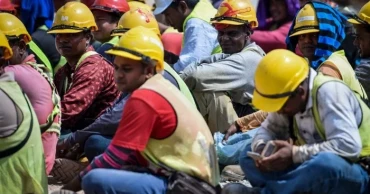
Malaysia’s labour market reopening at risk over unresolved legal disputes
Bangladesh’s manpower export to Malaysia is facing disruption over ongoing human trafficking and money laundering cases under investigation by the ACC and CID, prompting diplomatic concern from Kuala Lumpur.
Industry insiders warn that failure to resolve the issues could hurt Malaysia’s global TIP ranking, risk US sanctions, and delay reopening its labour market to Bangladeshi workers.
The Malaysian government has expressed serious concerns over several human trafficking and money laundering cases filed in Bangladesh, saying these could undermine the credibility of its Foreign Worker Centralized Management System (FWCMS), the digital platform used to recruit workers from 15 countries, including Bangladesh.
Industry insiders warn that unresolved legal issues could hurt Malaysia’s Trafficking in Persons (TIP) ranking.
A downgrade may lead to US trade sanctions and make it harder for Malaysia to secure loans from the IMF and World Bank, threatening its economic stability.
While Malaysia is keen to resolve the matter, Bangladeshi authorities appear to be moving slowly. In a letter dated April 23, Malaysia’s Ministry of Human Resources urged Bangladesh’s Ministry of Expatriates’ Welfare and Overseas Employment to withdraw what it called “unsubstantiated” and “harassment-driven” cases.
Bangladesh pledged to act, and the CID has submitted a final report on a human trafficking case filed with Paltan Police Station.
A related money laundering probe, however, remains ongoing.
Between 2022 and 2024, the ACC (Anti-Corruption Commission) filed several cases against recruiting agency owners, many of which are still under investigation.
Malaysia argues these cases lack merit and harm bilateral ties.
According to ministry sources, Malaysia sent another letter on April 26 to Adviser Dr Asif Nazrul, reiterating its concerns.
It said Malaysian investigations found no evidence to support the allegations and urged Bangladesh to withdraw them completely and avoid reopening previously dismissed cases.
Bangladesh's travellers take to the skies to escape traffic chaos
Official records show about 480,000 Bangladeshi workers went to Malaysia during that period under government arrangements, with no trafficking complaints from any migrants.
Malaysian authorities stressed that protecting its TIP standing would also safeguard the image of both nations.
The issue came up again at a joint working committee meeting in Dhaka in May.
In August, Senior Secretary Dr Neyamat Ullah admitted in writing that the allegations were largely unsubstantiated and had damaged both governments’ reputations.
He noted recruitment had taken place with bilateral approval and proper licensing.
Migration sector stakeholders say the cases were mostly the result of disputes between business groups, with no victims or workers themselves filing complaints.
They emphasise that workers were sent under high-level government decisions, with no incidents of human trafficking or money laundering.
They stress the urgency of resolving the matter ahead of Chief Adviser Prof Muhammad Yunus’s visit to Malaysia on August 11, which they see as a last chance to secure a positive decision on reopening the Malaysian labour market for Bangladeshi workers.
Ali Haider Chowdhury, immediate past Secretary General of the Bangladesh Association of International Recruiting Agencies (BAIRA), said, “We want the Malaysian labour market to reopen immediately. This issue goes beyond individual business interests – it doesn’t matter which agency benefits. The priority is safe, low-cost migration that protects workers’ interests and sustains remittance growth. The government should do everything necessary, including withdrawing the remaining cases.”
11 months ago

Bangladesh's travellers take to the skies to escape traffic chaos
In a country where congested roads and punishing traffic often define everyday travel, a new mode of movement is quietly soaring in popularity, literally.
Helicopter services, once a symbol of luxury and reserved for high-profile government or military use, are now becoming a practical and sought-after choice among Bangladesh’s business elite, upper-middle class and experience-driven tourists.
From the skies above Dhaka’s chaotic streets to the serene landscapes of Cox’s Bazar and the Sundarbans, private helicopter charters are carving out a new path in domestic transport.
The rise is more than symbolic as it reflects a shift in the aspirations and expectations of modern travellers in Bangladesh.
“Due to severe traffic jams and the increasing need to save time, helicopters are becoming a viable alternative, especially for the elite,” said an official from one of the country’s leading helicopter service providers.
Today, the country is home to a growing number of private helicopter operators, including Probashir Helicopter, Meghna Aviation, Square Air, Bashundhara Airways, and Impress Aviation, offering tailored charter services.
A few other companies, such as Sikder Group and South Asian Airlines, currently remain grounded, their helicopters inactive for various operational reasons.
The growth has not gone unnoticed by regulators. Since the early 2000s, the Civil Aviation Authority of Bangladesh (CAAB) has licensed around a dozen non-scheduled helicopter operators and the number continues to rise steadily.
A Price for Altitude
Hiring a helicopter in Bangladesh is still a high-end affair, but increasingly within reach for affluent families or corporate clients.
A round trip from Dhaka to Cox’s Bazar can cost anywhere between Tk 2.5 lakh to Tk 4 lakh, depending on aircraft type and availability.
Shorter trips, such as to Narayanganj, Cumilla, or Munshiganj, range from Tk 80,000 to Tk 1.5 lakh.
Air passengers on Sylhet-Dhaka route facing severe ticket crisis
Beyond leisure and business, helicopters are also serving critical functions: Emergency medical evacuations, disaster response, survey work, and film production are among the rising non-tourism demands. Meanwhile, a growing number of families are now booking helicopters for weddings, family events, and even quick visits to remote hometowns.
“Though the service was once exclusive to top executives and political figures, it is now gradually being used by the upper-middle class for various purposes, including special occasions,” said a senior executive officer of a private service provider, requesting anonymity.
The Sky as a Stage
The routes are becoming more diverse and so is the clientele.
Helicopters now frequently land in Shariatpur, Cumilla, and Bogura, while scenic and tourist-heavy destinations like Sylhet, Bandarban, Saint Martin’s, and the Sundarbans are increasingly popular among domestic and international travellers alike.
According to operators, peak demand hits during winter and festival seasons, with many companies reporting fully booked calendars weeks in advance.
To meet this growing appetite, many service providers have expanded their fleets, overhauled maintenance protocols and adopted digital booking systems for a smoother experience.
Voices from Cockpit
Among the most ambitious players in the sector is Probashir Helicopter.
Its Managing Director, Byjed Al Hassan, told UNB that his company aims to provide a one-stop helicopter service, especially useful for international travellers arriving at the airport and seeking quick transit to destinations across the country.
He said the firm operates two types of helicopters — one with four seats and another with six.
“In the past, the minimum fare was Tk 75,000 per flying hour, but now it has increased to Tk 85,000 due to growing demand and a shortage of available helicopters. Many aircraft from other companies are grounded,” he explained.
Probashir Helicopter has even more ambitious plans on the horizon.
Indian airlines eye BD air passengers amid growing Dhaka-Delhi link: Envoy
The company aims to launch a Dhaka–Chattogram–Bandarban route to attract both local and foreign tourists.
If they receive clearance from the army, the route could begin operation as early as next year.
As per their plan, the fare would be Tk 20,000 per person from Dhaka to Chattogram, and Tk 7,000–8,000 from Chattogram to Bandarban.
For those seeking a more urban thrill, the company has introduced aerial city tours over Dhaka, showcasing landmarks such as Lalbagh Fort, Hatirjheel, Savar National Memorial, and even the Taj Mahal replica in Narayanganj’s Sonargaon.
The fare is $200 per person for foreign nationals and Tk 10,500 for locals.
For food-loving flyers, there is a unique journey to Munshiganj, where the helicopter lands on the banks of the Padma River, near the iconic Padma Bridge.
There, passengers are treated to a meal featuring Hilsa fish and other traditional delicacies before returning to the capital. The cost? $250 per foreign passenger.
Challenges
Despite the momentum, challenges persist. The cost remains prohibitive for the general population, and weather conditions often disrupt operations.
Industry insiders acknowledge that broader adoption will require infrastructure expansion, regulatory clarity and improvements in weather forecasting. Even so, optimism prevails.
Access of air passengers’ relatives restricted at Dhaka Airport from Sunday
Helicopter usage in Bangladesh dates back to the 1980s, primarily for government and military operations. While commercial services began taking off in the early 2000s, the real turning point came after 2015, when rising disposable incomes and increased demand for time-saving alternatives fuelled rapid growth.
Now, as CAAB works on updated safety protocols and supports infrastructure development, many see helicopter travel as not just a status symbol, but a meaningful contribution to Bangladesh’s evolving transport landscape.
In a country where progress often battles with bottlenecks, the rising of helicopter blades may well signal a new era in how people move, connect and experience the skies.
11 months ago
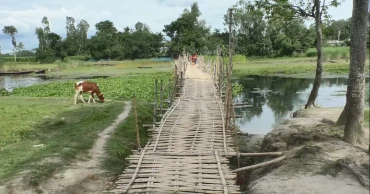
Half a lakh people held hostage by Kurigram’s broken promise of a bridge
More than 50,000 residents across 30 villages in Rowmari upazila of Kurigram district are struggling with everyday difficulties due to the absence of a concrete bridge over the Holholia River.
People living in three unions, Datbhanga, Char Shoulmari and Saheber Alga, face frequent accidents, risking lives and property amid poor connectivity.
The situation worsens during the monsoon, when muddy roads and rising waters make travel perilous, especially for vulnerable groups like pregnant women, the elderly, children and the sick.
In Kazikata village under Datbhanga union, the neglect feels painfully enduring.
Despite numerous visits by political leaders since Bangladesh’s independence 54 years ago, no lasting infrastructure progress has been made.
Local residents say elected public representatives often make promises before elections, but disappear afterward, leaving communities stranded.
“We have lived with this hardship for decades. The absence of a concrete bridge over the Holholia River has made life extremely difficult,” said Sohel Rana, a villager.
Public outcry over poor construction prompts bridge demolition in Pirojpur
His co-villagers Marzina Begum, Mojibur and Shamsher Ali echoed the same sentiment.
In a bid to ease the suffering, villagers built a 400-foot-long makeshift bamboo bridge, now used by thousands daily, though it remains unsafe.
11 months ago
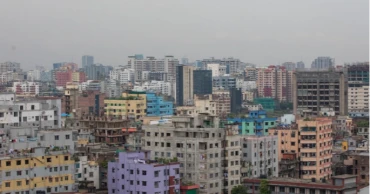
Will the housing boom in Dhaka bury it alive?
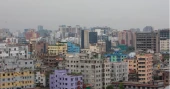
Afzal Hossain, a resident of a condominium in Shantinagar, enjoys the convenience of daily services within his high-rise building and he dreams of buying another flat in a similar complex for his children in the future like many in the city’s middle class.
Owning one or more flats is not Afzal’s alone aspiration; it has become a hallmark dream for many upper-middle-class families in Dhaka.
Since the 90s, hundreds of housing companies have emerged in the capital, focusing on constructing tall buildings to meet this demand, while also aiming for maximum profit.
Landowners have joined the trend, hoping to secure partial ownership of such projects, even if they lack the means to build themselves.
According to the Bangladesh Portal, Dhaka Metropolitan Area spans 360 square kilometres. Following administrative realignment in 2016 by the National Implementation Committee for Administrative Reform (NICAR), the combined area of Dhaka’s two city corporations stands at 270 square kilometres.
This area constitutes less than 1% of Bangladesh’s total land but is home to nearly 20 million people, pushing population density to over 50,000 people per square kilometre.
To accommodate this massive housing demand, towering buildings have continuously sprung up over the last three decades.
Rajuk data estimates around 200,000 buildings in Dhaka city, though urban planners believe the actual number exceeds 600,000 across the two city corporations and is rising annually.
Though Dhaka remains far from ideal planning, the Ministry of Housing and Public Works, through Rajuk, took an initiative to draft a Detailed Area Plan (DAP) aimed at saving the city from becoming unlivable. But the plan remains stalled amid debates and numerous revision drafts.
A critical aspect of the DAP is regulating building height based on road width and plot size.
Narrow roads should limit building size accordingly. Yet, housing developers have resisted the Floor Area Ratio (FAR) limits set by the plan.
In May, Rajuk was pressured by developers who protested demanding increased FAR. Environmental activists and planners claim these changes favor developers at the city’s expense.
Land Prices Soar Amid Housing Pressure
Fifty years ago, land prices in upscale Gulshan ranged between Tk 5,000 to Tk 8,000 per katha (approx. 720 sq ft). Today, prices have skyrocketed to Tk 50-80 million per katha depending on location in gulshan.
Sabbir Hossain, a Gulshan resident, said, “My father bought four and a half kathas of land for Tk 10,000 per katha in the early 80s. We built our house there. The current market value is over Tk 80 million.”
Decades ago, Baridhara land was less sought after and sold cheaply. Today, it ranks as the most expensive residential area in the capital according to government rates -- officially over Tk 75 million per katha, while actual market prices reportedly reach Tk 100-150 million.
In some cases, prices have increased by hundreds of thousands of percent compared to post-independence values.
Commercial land prices are also soaring. In Motijheel, prices range between Tk 30-60 million per katha; in Banani, Tk 40-70 million; and in Shantinagar, Tk 30-50 million.
Vacant plots in these prime areas are nearly nonexistent, with most privately owned land occupied by housing company apartments. Developers are now eyeing comparatively affordable land in peripheral areas of Dhaka.
For example, a decade ago, land prices in northern Badda’s Shadhinota Sarani area ranged from Tk 200,000 to Tk 300,000 per katha, rising to Tk 1-1.5 million ten years ago.
With the arrival of housing companies, prices reached Tk 3-3.5 million and currently land sells for Tk 5-6 million per katha.
Sultan Mia, a longtime resident of the area, recalled, “There used to be ponds and forests here, with paddy fields further inside. Near the road, many had tin-shed houses.”
Today, a few tin houses remain, but the area is dominated by 8-10 story high-rises, mostly built by housing companies.
Landowners, unable to afford multi-story construction themselves, often rent out land to developers who promise them half ownership in tall buildings, a proposition many accept eagerly.
The crowded neighbourhoods of Beribadh, Badda and Vatara lack wide roads, playgrounds, or parks. High-rises keep rising as middle-class buyers flock here, leading to increased traffic congestion and strained living conditions.
Poor drainage, crumbling roads plague Chuadanga Municipality
RAJUK’s Role: Saving or Sacrificing Dhaka?
On Sunday (Aug 10), the Ministry of Housing and Public Works is expected to finalise revisions to the DAP following intense pressure from housing developers.
A meeting held August 3 ended without announcements, but sources indicate major amendments favouring the sector.
Several Rajuk officials confirmed the revised plan will likely increase the floor area ratio significantly, enabling taller buildings.
Alongside this, the city’s building regulations are expected to undergo substantial changes to ease construction permissions.
Developers and landowners alike seek approval to build higher, arguing there is strong demand for flats and questioning why the government should hinder this.
Rajuk officials declined to comment directly.
Attempts to reach Rajuk Chairman Reazul Islam went unanswered, and Chief Engineer Nurul Islam and Chief Urban Planner Ashraful Islam were unavailable for comment due to health reasons.
A senior Rajuk official, speaking on condition of anonymity, revealed, “Housing developers are exerting strong pressure to double or more the floor area ratio in the revised DAP. Besides, exemptions will be granted to developers in other aspects.”
He said increased FAR will be allowed in high-demand areas such as Rampura and Badda and also in peripheral zones like Savar, Aminbazar, Hemayetpur and Tongi.
Developers vs. Planners
The Real Estate and Housing Association of Bangladesh (REHAB) demands uniform FAR policies across Dhaka, calling the current area-wise variations discriminatory.
MA Awal, REHAB’s Vice President-1 and Managing Director of Haveli Property Development, said, “DAP must be universal. Having different FAR in different areas is unfair. Giving higher FAR in Basundhara and lower in Mirpur discriminates against Mirpur residents.”
Asked about the logic of allowing tall buildings on narrow roads, Awal responded, “Every small road in Dhaka connects to a major road. It is incorrect to compare government-planned areas like Gulshan-Baridhara with private projects.”
Contrary to planners’ concerns about Dhaka losing livability, Awal dismissed these as propaganda.
He argued environmental degradation is widespread and blaming the housing sector is unjustified.
Bangladesh Institute of Planners (BIP) President Adil Mohammed Khan rejected developers’ claims, stating, “Their talk of discrimination serves business interests. Urban planning requires schools, parks, and playgrounds, not just roads. Narrow roads limit building size and height—this is urban planning’s basic grammar. Denying this endangers Dhaka’s livability while protecting the housing business.”
Khan warned that planners may take legal action if the revised DAP undermines planned development.
He emphasised the urgency of decentralising Dhaka to ease population pressure, warning that failure to do so will leave the city increasingly unlivable.
11 months ago

Rice procurement faces disruption due to 0.5% source tax
Rice procurement activities across the country are facing disruptions following the imposition of a 0.5% source tax on domestic rice procurement, according to an official document.
The document was placed in a recent meeting of Food Planning and Monitoring Committee (FPMC) held at Bangladesh Secretariat with Finance Adviser Dr Salehuddin Ahmed in the chair.
As per the meeting document, the target for Boro Crop collection as paddy was 3.50 lakh metric tonnes while the collection as of July 15 was 3,76,942 tonnes, which means 108% achievement.
Parboiled Rice collection target was 14.00 lakh metric tonnes where the achievement of the stipulated time was 9,60,802 tonnes, which means 68.3% of the target.
The target for Atap Rice Was 35,000 metric tonnes while collection was 27,908 tonnes, which means 79.4% of the target.
The document mentioned that some 26,942 MT of paddy procurement has been achieved ahead of schedule; which is a record so far.
The Food Department has sent a proposal for the ex-post facto approval of procurement of 26,942 MT of paddy procurement in the current Boro season.
In the case of rice procurement, the target of 67.6% parboiled rice and 78.2% parboiled rice has been achieved till July 15, 2025.
Rice shortage unlikely this year due to steady supply, strong stocks
“Rice procurement activities are being disrupted due to imposition of 0.5% source tax on domestic procurement of rice,” the document stated.
Considering the potential demand for distribution of 31.23 lakh MT of rice in the food budget of the fiscal year 2025-26, it said that some more quantity of parboiled and parboiled rice can be procured from domestic sources in the ongoing Boro procurement 2025 season.
“This will help in ensuring fair price of paddy and rice in the market. Besides, the quantity of rice imports will be reduced and foreign exchange will be saved,” it added.
The Food Department has proposed to procure 50,000 MT of Boro parboiled rice and 15,000 MT of Boro parboiled rice in the current season, as per the document,
In the current Boro procurement season 2025, permission may be given to procure 26,942 MT of paddy in addition to the target, the official document said adding that the procurement of 50,000 MT of Boro parboiled rice and 15,000 MT of parboiled rice in the current season might be considered.
A top official of the food ministry mentioned that the target for rice collection is 14 lakh metric tonnes whereas some 9.50 lakh has been collected.
High price of rice in Bangladesh bucks the trend of easing inflation
“Hopefully we will be able to reach the target. We will stop the process to procure the rice in the middle of August,” he said.
The Food Ministry official said source tax is creating trouble for the field officials to procure rice.
He mentioned that usually the farmers who used to sell rice and paddy to the government system do not have any income tax file or they do not know anything about the income tax, tax at source and others.
“When they see their total amount reduced in the name of source tax, they become frustrated and express unwillingness to sell their rice,” the official said.
When asked he said that till now there is no move from the ministry to the Finance Ministry or the National Board of Revenue (NBR) to withdraw this source tax.
11 months ago

Kunming hospitals assure easier access for Bangladeshi patients
Authorities from various hospitals in Kunming have assured easier access to their medical services for Bangladeshi patients, as China wants to attract medical tourists from Bangladesh.
The assurance was given during exchange of views with a 23-member delegation of Bangladeshi journalists, who concluded a four-day visit to Kunming on Saturday, the capital of Yunnan Province, aimed at strengthening bilateral cooperation in the healthcare sector.
On Friday, the journalists visited Kunming Tongren Hospital and Kunming Eye Hospital among the places, witnessing advanced treatment facilities and observing high standards of patient care.
At Kunming Tongren Hospital, the journalists were introduced to its comprehensive capabilities as a Level 3, multi-specialty private general hospital, that offered a broad spectrum of services including clinical treatment, prevention, rehabilitation, health management, medical education and international academic exchanges.
Bangladeshi journalists begin four-day visit to China’s Kunming
11 months ago
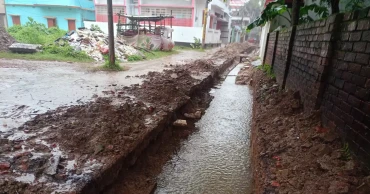
Poor drainage, crumbling roads plague Chuadanga Municipality
Almost three decades after being upgraded to a first-class municipality, Chuadanga still struggles to deliver the basic urban facilities its residents had hoped for.
A faulty drainage network and crumbling roads have left the town’s nine wards vulnerable to flooding, even after a spell of light rain.
For many here, the problem has become part of daily life. Every monsoon, rainwater accumulates on the streets, drains overflow and stagnant pools linger for days, turning neighbourhoods into muddy obstacle courses.
While the entire municipality suffers, the situation is particularly dire in Buzrukgargari, Banani Para, Shantipara, Sabuj Para, Sadek Ali Mallik Para, Palash Para, Gulshan Para, Mukti Para, South Hospital Para and Mosque Para areas.
Chattogram’s costly failure: Waterlogging persists despite mega drainage projects
“Every monsoon brings panic,” said Pial Khan, a resident of Palash Para.
“The roads go underwater and walking with children at night becomes a dangerous adventure," he said.
From Gulshan Para, Mustafizur Rahman Konok shared a similar account.
“The drains haven’t been cleaned in three years. The outlets are blocked and rainwater submerges the whole area,” he said.
11 months ago

Kunming Eye Hospital keen to treat July Uprising victims
Kunming Eye Hospital, a private medical facility in China’s Yunnan province, has expressed its willingness to provide affordable treatment for those who suffered eye injuries during the July Uprising in Bangladesh.
"You may have concerns about eye treatment for people injured in the July Uprising in your country. Our hospital can provide quality eye care for them at a reasonable cost," said Zhang Min, the CEO of Kunming Eye Hospital.
Zhang made the remarks while talking to a group of Bangladeshi journalists who visited the hospital on Friday.
The offer shows the hospital’s willingness to support treatment for the July Uprising victims and to strengthen medical cooperation between China and Bangladesh.
The CEO said although it is a private hospital, it provides very good treatment and services at a low cost. "Our hospital is one of the best in Yunnan for eye treatment.”
She said they handle patients with serious eye problems and injuries, and perform major surgeries, including cornea replacements.
Zhang said the hospital has 28 years of experience in providing quality eye care with skilled doctors, medical staff and very advanced equipment.
Drone show stuns crowd marking July Uprising Day
“Our doctors are experienced in treating foreign patients and can speak English fluently. So, Bangladeshi patients don’t need to worry about the language barrier,” she said.
Zhang also said that Bangladeshis who want to get treatment at Kunming Eye Hospital can contact the hospital authorities by sending an email with details about their eye problems. “We’ll give you the feedback.”
She said patients with critical eye problems from India, Russia, Korea, Japan and some neighbouring countries often receive treatment at their hospital.
The Chinese government invited the 23-member media delegation as part of the celebration of the 50th anniversary of the establishment of diplomatic ties between China and Bangladesh.
Chief Adviser’s Deputy Press Secretary Abul Kalam Azad Majumder is leading the Bangladesh delegation.
11 months ago

Tougher policy soon to regulate battery-run rickshaws in Bangladesh
The government has taken a move to introduce a tougher new policy to regulate the rampant and risky movement of unregistered battery-operated three-wheelers, commonly known as electric auto-rickshaws or easy bikes across the country, including the capital.
The reckless movement of these vehicles has created chaos on city roads and highways, leading to worsening traffic congestion and increasing accident risks.
The government attempts to remove them from major roads in Dhaka failed to see success amid protests and movements by drivers and owners.
Although there is no definite count, the Bangladesh Road Transport Authority (BRTA) estimates that there are over 60 lakh battery-run rickshaws in the country with 10 to 12 lakh operating in Dhaka alone.
To bring discipline in their operation, the draft of the 'Electric Three-Wheeler Management Policy 2025' has been prepared by the Road Transport and Highways Division under the Road Transport and Bridges Ministry.
As per the draft policy, all battery-operated three-wheelers must be registered with the Bangladesh Road Transport Authority (BRTA) and drivers must obtain valid driving licenses.
The vehicles will be restricted to designated routes outside national highways with separate limits set for medium- and low-speed electric three-wheelers.
A passenger and goods transport committee formed under the Road Transport Act will determine how many vehicles can operate in an area.
Road Transport and Highways Division Secretary Ehsanul Haque told UNB that the uncontrolled growth of fitness-lacking battery-run rickshaws has disrupted traffic systems nationwide.
A draft for a news policy has been prepared to bring them under regulation and that stakeholder feedback is now being reviewed, he said.
Battery-run rickshaws won’t be allowed on Dhaka's main roads: DNCC Administrator
“We hope the policy will be approved very soon. Once implemented, it will end the ongoing disorder caused by unregulated electric rickshaws,” he added.
As per the draft, one person can own a maximum of three medium-speed and five low-speed rickshaws.
All rickshaws must be transformed into safe models within a year, according to the draft.
It says medium-speed rickshaws will be limited to a maximum speed of 50 km/h, and low-speed rickshaws to 30 km/h.
The vehicles must be constructed following BRTA-approved designs and only parts and components approved by the Bangladesh Standards and Testing Institution (BSTI) will be allowed.
All components such as motors, controllers, gearboxes, axles, wheels, brakes, headlights, shock absorbers, batteries and chargers must be BSTI-approved and manufacturers and assemblers must be registered with BIDA (Bangladesh Investment Development Authority).
All imported or locally assembled electric three-wheelers and parts must have BRTA approval and only new vehicles and new parts (BSTI-approved) can be imported.
Charging stations must comply with the 2021 guidelines issued by the Power Division.
BRTA will set fares for these vehicles.
Manufacturers must be listed by BRTA and cannot operate without being listed.
The vehicle must display the owner and driver's contact numbers visibly for passengers.
BRTA will arrange district-level training for drivers in consultation with local transport committees.
According to the draft, electric three-wheelers will not be allowed on national highways except in service lanes.
These will be allowed to operate in designated areas, including city corporations, ‘A’ category municipalities, district, upazila and union-level local roads.
Only local passengers and goods transport committees will determine the number and route allocations in these areas.
On the matter of penalties, the draft clearly states that violations will be addressed as per the Road Transport Act 2018, and necessary legal action will be taken against offenders.
Don't ride battery-run rickshaws and buy anything from hawkers on footpaths:DNCC
Regarding the timeline, all current unsafe low-speed vehicles must be converted to safe models within one year as per the Electric Motor Vehicle Registration and Operation Policy 2023.
After this deadline, unapproved vehicles will be subject to legal action.
The draft also stressed the need for a complete phase-out of unauthorised locally made vehicles such as diesel and petrol-engine vehicles used in agriculture and waterways.
Local transport committees are to replace them with approved alternatives.
11 months ago