special

Bangladesh Bank likely to ease monetary policy amid interest rate shift
Bangladesh Bank is expected to revise its long-standing contractionary monetary policy, with an eye towards easing interest rates.
This crucial shift comes in response to lower-than-desired credit growth observed in the previous fiscal year, a direct consequence of the tight monetary stance.
For the past three fiscal years, the central bank has maintained a contractionary policy, primarily aimed at taming persistent inflation and stabilising the volatile foreign exchange market.
The central bank’s Monetary Policy Committee (MPC) now suggests measures to reduce interest rates in a bid to stimulate credit flow and boost employment.
Bangladesh sees sharp drop in bank deposits over scams, mergers: Report
Sources close to the MPC indicate that inflation is on a decreasing trend and has already fallen to a significant level.
This positive development is paving the way for a review of the contractionary policy, which economists and policymakers believe has severely impacted investment, credit growth and overall employment in recent fiscal years.
"The monetary policy significantly affected investment, credit growth and employment in the previous fiscal years. The central bank must now consider these major macroeconomic issues in the new monetary policy," said a prominent economist associated with the MPC.
The forthcoming monetary policy announcement on Thursday will reveal the extent of the central bank's adjustments.
GED projects cautious optimism for Bangladesh economy in FY2026
This move signals a potential shift in focus from solely inflation containment to balancing price stability with economic growth and job creation.
Types of Monetary Policy
Expansionary (Loose) Monetary Policy aims to stimulate economic growth, reduce unemployment and prevent deflation. This involves measures like lowering interest rates, buying government securities and reducing reserve requirements.
Contractionary (Tight) Monetary Policy aims to curb inflation and cool down an overheating economy. This involves measures like raising interest rates, selling government securities, and increasing reserve requirements.
The primary goal of monetary policy is to achieve macroeconomic objectives such as:
Price Stability: Keeping inflation low and stable. This is often the most important objective as high and volatile inflation erodes purchasing power and creates economic uncertainty.
Bangladesh needs to adapt strategically in order to navigate complex challenges of 2025: ICCB
Economic Growth: Promoting sustainable economic expansion and a high rate of employment.
Financial Stability: Ensuring the health and stability of the financial system, including banks and financial markets.
Exchange Rate Stability: Managing the value of the domestic currency in relation to trade with other currencies.
How Monetary Policy Works
Central banks implement monetary policy by adjusting the availability and cost of money in the economy. They do this primarily through various tools that influence interest rates, bank lending and the overall money supply. The mechanism through which these actions affect the economy is known as the monetary transmission mechanism.
Banking sector needs $35 billion for reconstruction as 80% funds embezzled: Finance Advisor
1 year ago

Experts urge caution as Bangladesh plans Boeing aircraft purchase to ‘ease US tariff pressure’
As Bangladesh has planned to purchase 25 Boeing aircraft as part of a strategic move to persuade US to lower tariffs on the country, aviation experts have urged the government to prioritise economic and operational viability of the big purchase.
They find it as a government strategy to deal with the US pressure by deepening commercial ties with Washington as the US is set to impose a 35% tariff on Bangladesh’s export items from August 1.
“We have included Boeing aircraft in the list of products to purchase to reduce the trade deficit with the US. We plan to acquire 25 aircraft from Boeing, and the deal will be implemented gradually,” Commerce Secretary Mahbubur Rahman told UNB.
He said recent agreements to purchase wheat from the US have been concluded while talks to buy soybean and cotton are at the final stage.
Priority will also be given to acquiring military equipment from the US, he added.
Aviation experts, however, have warned against hasty procurement without assessing route viability and demand.
“Buying planes purely for diplomatic reasons without considering passenger flow or route viability could become a financial burden for the national carrier,” said ATM Nazrul Islam, a retired Wing Commander and aviation analyst.
Nazrul Islam added that ideally the airline itself should initiate such plans to ensure alignment with route planning and operational needs.
Indian medical team holds 2nd round of consultations for treatment of aircraft crash victims
He also warned against relying solely on Boeing pointing out that leading global airlines operate both Boeing and Airbus fleets.
Ignoring alternatives may be risky, he added.
Nazrul Islam said the government is using the aircraft purchase plan as a “trade negotiation tool” to counter the US tariff hike.
Another aviation analyst and former Biman board member Kazi Wahidul Alam said the government’s announcement signals interest rather than a finalised deal.
“Biman does face an aircraft shortage, so the purchase could be done gradually based on 10-15 years’ demand,” he added.
Alam said aircraft model selection, routes and procurement methods must align with the airline’s strategic plans.
Purchasing from a single manufacturer warrants careful assessment of competitive pricing as buying from both Boeing and Airbus might yield better deals, he added.
The estimated cost of buying 25 Boeing aircraft could be around six billion US dollars.
Bangladesh Biman currently operates 19 aircraft, including 14 Boeing planes from the US and five Canadian-made Dash-8 Q400 turboprops.
The Boeing fleet consists of four 737-800, four 777-300ER, four 787-8 Dreamliners and two 787-9 Dreamliners.
Biman sources said Boeing recently offered 14 advanced aircraft models, including the 787-10 Dreamliner, for Bangladesh’s consideration.
Biman’s techno-finance committee is analysing the proposal taking into account routes, revenue, and passenger traffic.
Biman officials said they have not yet finalised any deal with Boeing or Airbus.
As Boeing’s proposal is under review and if the government decides on a diplomatic basis, the airline will carry out implementation.
In 2023, the previous government signed a Memorandum of Understanding with France to buy 10 Airbus aircraft with initial plans to acquire two A350 models.
Later, Boeing offered at least two 787 Dreamliners.
Meanwhile, a Bangladesh trade delegation is holding its third round of talks in Washington to negotiate the tariff issue with the US.
Bangladesh officials are still hopeful that the US may reduce the tariff to 18-20 percent or lower through dialogue.
Bird strikes threaten aircraft safety in Bangladesh; monitoring system lies inoperative
The US administration has already indicated discussions on tariffs for Indonesia (19 percent) and India (20 percent), and also Bangladesh expects a similarly negotiated tariff rate.
1 year ago

Big investors regain interest in Bangladesh’s capital market, BO accounts on the rise
Bangladesh’s capital market is regaining momentum, attracting major investors amid rising trading activity and a sharp increase in Beneficiary Owner (BO) accounts over the past year, according to the Bangladesh Securities and Exchange Commission (BSEC).
While some quarters have suggested that investor participation in the stock market is shrinking, official data tells a different story.
Recent BSEC statistics indicate that while small investors are gradually pulling back, the presence of high-net-worth individuals and institutional investors has strengthened significantly.
The number of portfolios valued between Tk 50 crore and Tk 500 crore has seen a marked increase compared to June 2024.
Similarly, portfolios exceeding Tk 50 lakh have also gone up, pointing to a clear shift in investment patterns toward larger stakes.
Retail participation, particularly investments below Tk 1 lakh, has, however, dipped. As of June 30 this year, the number of portfolios below Tk 1 lakh stood at 831,748, down from 916,157 in the same period last year.
Rise in Millionaire Investors
BSEC data further reveals a steady growth in the number of millionaire investors.
Sikder Group issues clarification on freezing of its BO accounts
In June 2024, 12993 investors held portfolios valued over Tk 1 crore. That number has now risen to 13316.
Although portfolios above Tk 10 crore have declined slightly, portfolios valued over Tk 50 crore have increased.
In June last year, there were 696 investors in the Tk 50 crore-plus category; the number has now climbed to 733.
The number of investors with holdings over Tk 100 crore has gone up by 22, and portfolios exceeding Tk 500 crore have increased by two.
Market insiders say large investors are holding firm, driven by the belief that the market will recover over time.
"Unlike small investors who are more vulnerable to market shocks, large investors are committed for the long term. They understand that patience in the capital market pays off," said Asad Mia, Branch Manager at Global Securities in Motijheel.
Echoing this, Tarek Hossain, a veteran investor with nearly a decade of experience, noted, "Small investors tend to trade frequently for short-term profits, while big investors invest in fundamentally strong companies and stay invested for years, riding out temporary downturns."
Demand for Quality IPOs
Despite the ongoing recovery, the market has yet to witness the listing of any major fundamentally strong company over the past year. However, efforts are underway to change that, officials say.
Dr. Anisuzzaman Chowdhury, Special Assistant to the Chief Adviser said the government is preparing a list of both state-owned and private companies to engage them in discussions about potential market listings.
Number of BO accounts increased in August
"Improving market surveillance is equally important. Strong oversight will deter manipulative activities and help restore investor confidence," he added.
Abu Ahmed, Chairman of the Board of Directors at the Investment Corporation of Bangladesh (ICB), stressed the importance of quality listings. “One good company can change the entire market sentiment. We must also consider bringing in multinational firms alongside domestic entities,” he said.
BSEC Chairman Khondoker Rashed Maqsood reaffirmed the Commission’s commitment to listing high-quality companies, and emphasised implementing taskforce recommendations to ensure sustainable growth in the capital market.
1 year ago

Golden fibre glows again; Faridpur fields promise Tk 2,000cr harvest
Weeks of worry over water scarcity have given way to a renewed hope, as timely monsoon rains ease retting woes and raise prospects for a bumper jute harvest in Bangladesh’s jute heartland.
This season, more than 86,500 hectares of land in the district have been brought under jute cultivation. Agricultural officials now expect production to surpass two lakh metric tonnes, with a market value exceeding Tk 2,000 crore.
Faridpur, a central district with an agriculture-based economy, has recorded a relatively good yield this season despite soaring production costs.
Farmers note that expenses have multiplied, especially due to the absence of early rainfall, which forced many to depend on irrigation to sustain their crops.
Water shortage disrupts jute retting in Lalmonirhat, sparking price concerns
Jute has been cultivated in eight of the district’s nine upazilas, with Charbhadrasan upazila being the only exception.
Surrounded by major rivers like the Padma, Arial Khan and Madhumati, Faridpur is naturally suited for jute cultivation thanks to its fertile land and favourable climate.
According to the Department of Agricultural Extension (DAE), over 75% of Faridpur’s arable land is currently dedicated to jute cultivation, engaging more than five lakh farmers directly and indirectly.
1 year ago

Hajj packages likely in August amid pressure to meet Saudi deadlines
The Religious Affairs Ministry has begun preparations for the 2026 Hajj, as the Saudi government has set a strict timeline for all participating countries including Bangladesh to complete the entire process well in advance.
Under the new roadmap, missing any deadlines including registration, payment, or signing of service agreements could risk pilgrims' chances of performing Hajj, according to the ministry officials.
Religious Affairs Secretary AKM Aftab Hossain Pramanik said, “Hajj is a bilateral arrangement between two countries and this time we must start earlier. We've already met with Hajj Agencies Association of Bangladesh (HAAB) and we are working in phases to finalise the package.”
“We're still waiting on service provider costs and airfare. Once we have those, we’ll hold an executive committee meeting to finalise and announce the package — hopefully by August.”
Saudi Arabia has allocated a quota of 127,198 pilgrims for Bangladesh for 2026, similar to previous years, through its Nusuk Massar platform.
Hajj is expected to begin in the last week of May 2026, subject to moon sighting.
However, this time, the final registration must be completed by October 12, and the full amount must be deposited by then.
The government will need to transfer the service package fees to Saudi Arabia by December 21, followed by signing final agreements with Saudi service providers by January 4, and the housing and transportation payments must be completed by January 20.
The Bangladesh-Saudi bilateral Hajj agreement is scheduled to be signed on November 9.
Officials said completing such a comprehensive process so early poses a major challenge.
In 2024, the primary registration for Hajj started in September, and the package was declared at the end of October whereas this year’s preparations are beginning in July.
The primary registration for 2026 Hajj began on Sunday (July 28).
Prospective pilgrims must deposit Tk 4 lakh to secure their preliminary registration.
Many Hajj agency owners have expressed concern saying that the initial deposit is too high and may discourage many potential pilgrims, especially given that the final package has not yet been announced.
Officials at the Ministry of Religious Affairs said they are currently waiting for cost details from the Saudi side and the finalisation of airfare by Biman Bangladesh Airlines.
In 2024, under government arrangements, Package-1 cost Tk 4,78,242, while Package-2, a special package with additional amenities, cost Tk 5,75,680.
The minimum cost set for private Hajj agencies was Tk 4,83,156.
This year, the ministry is working on offering two government packages again, aiming to reduce the cost of Package-1 and bring airfare below Tk 1.5 lakh, down from the previous Tk 1,67,820.
Agencies will base their own packages on the government-declared costs.
Package-2 is expected to offer enhanced services, including accommodations within 500 to 700 metres of the Haram in Makkah, with costs projected to be around Tk 7 to 7.5 lakh.
Govt to refund Tk 8.28 crore to 4,978 hajj pilgrims: Religious Affairs Adviser
The Religious Affairs Secretary also said the ministry is working to reduce costs both from the Bangladesh and Saudi sides. "Our goal is to make Hajj more affordable so that more people can go," he said.
Responding to questions about the proposed special package, he said, “Some pilgrims want to stay closer to the Haram and are willing to pay more. We’re considering a package with accommodation within 500 to 700 metres. We’ll decide after consulting with the Adviser.”
“Our Hajj mission in Saudi Arabia is negotiating with their authorities. We are also discussing airfare with Biman. Once we receive all cost components, we’ll finalise the package,” he added.
Joint Secretary of the Hajj Division Md Manjurul Islam said, “We’ve started working on next year’s Hajj, but the timeline set by Saudi Arabia is a major challenge. Everything needs to be completed six months earlier than usual.”
He added, “Many pilgrims usually wait until two or three months before Hajj to make preparations. This new schedule will require a major shift in mindset.”
HAAB Secretary General Farid Ahmed Mozumder said due to the Saudi roadmap this year’s package must be declared earlier than usual.
He criticised the decision to collect Tk 4 lakh upfront for primary registration.
“Most people are not ready to pay such a large amount so early. We proposed collecting Tk 2 to 2.5 lakh initially, which would be more realistic,” he said.
He also expressed concerns over Saudi Arabia’s plan to centralise Qurbani and meal arrangements, saying it might not suit Bangladeshi pilgrims’ preferences and budgets.
“Some pay 500 riyals for Qurbani, others 1,500. A single standard package won’t work. As for meals, Saudi-provided food has not been satisfactory in the past. If they take over food responsibilities for a full month, there’s a risk of health issues,” he said.
He urged the government to address these concerns through discussions with Saudi counterparts.
Registration can be done through the e-Hajj system at www.hajj.gov.bd, via the “Labbayk” app, Union Digital Centres, Islamic Foundation offices, Baitul Mukarram office, or Ashkona Hajj office.
1 year ago
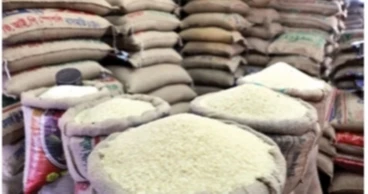
High price of rice in Bangladesh bucks the trend of easing inflation
Despite a record Boro harvest, rice prices in Bangladesh remain unusually high, raising questions about market manipulation amid weak monitoring as well as regulation.
A visit to several rice wholesale markets in Dhaka reveals only a marginal decrease in prices. Coarse rice is selling at Tk 55 per kilogram, while the “Atash” variety is priced at Tk 65 per kg.
Medium-quality Nazirshail and Miniket varieties are going for Tk 70–75 per kg, while premium Kataribhog and Miniket are fetching Tk 85–90 per kg in some areas. All of these prices are roughly Tk 5 per kg higher than in the period just prior to the last Eid ul Azha.
Human chain in Ctg demands urgent action to curb rice price hike
The price of 50-kg sacks has increased by Tk 350–500, depending on the variety.
At Uttar Badda’s rice market, popular brands like Diamond, Mozammel, Palki, Royal, and Rasid are being sold at higher prices. Retailers claim they’re not receiving enough supply from millers and are being forced to purchase at higher prices. A similar situation exists at Karwan Bazar, where long-established syndicates between rice agencies, millers and corporate houses can essentially collude to control the price of rice.
Defying The Trend
The latest monthly report of the Planning Commission’s General Economics Division notes that inflation has finally started easing in recent months. Point-to-point inflation in June was recorded at 8.48% by the Bangladesh Bureau of Statistics, marking the first time in 27 months that the inflation rate had fallen below 9%.
The decline of 57 basis points (from 9.05% to 8.48%) was substantially larger than the one in May, when it declined by just 12 basis points (to 9.05% from 9.17% in April). Although this has been attributed mainly to a decline in food inflation, which fell quite sharply by a full 120 basis points, or 1.2% in June (from 8.59% in May to 7.39%), the price of rice has bucked the trend and continues to exert upward pressure on the price level.
Rice market remains volatile despite large-scale imports from India
Inflation in rice markets was recorded at an eye-watering 15% in June by BBS. It means even though Boro paddy collection started in late April, the market has seen little relief. With harvesting complete in many districts, the anticipated market correction has not materialised.
The Department of Agricultural Extension (DAE) reports that around 5 million hectares were cultivated for Boro this season, targeting a final output of 22.6 million metric tons (MT)—1.6 million MT more than last year. However, increased costs for fertilizer, irrigation, and diesel have raised production expenses. Farmers say per-kilogram costs have risen from Tk 25 to Tk 28–30 this year.
Farmers Blame Millers
Farmers from Barishal, Jhalakathi, Barguna, Patuakhali and Pirojpur districts report that increased input costs — not adverse weather—are hurting them the most.
Khokon Hawlader from Jhalakathi’s Nalchity upazila said, “Diesel prices are up by Tk 15 per liter, and fertilizers aren’t being sold at the government rate. We had to buy them without receipts at inflated prices. But even then, millers are not offering fair prices.”
Abdul Khalek of Barishal’s Bakerganj said, “Millers set the price themselves. Until Eid-ul-Azha, paddy was in farmers’ hands and prices were stable. But once it reached the millers, prices spiked.”
Neyamat Ali from Pirojpur’s Bhandaria echoed, “People think high rice prices benefit us. But we sell paddy cheap and buy rice at high prices. There’s no oversight—neither on fertilizer dealers nor on stockpiling millers.”
Can Imports Pull Down the Price?
The government began procuring Boro paddy on April 24 and will continue until August 31. It plans to buy 3 lakh MT of paddy at Tk 36 per kg and 1.4 million MT of rice at Tk 49 per kg, according to Food Adviser Ali Imam Majumder.
Fearing poor Aman yields due to erratic weather, the government also plans to import 4 lakh MT of rice from international markets and allow private import of another 5 lakh MT, adding up to 9 lakh MT.
Finance Adviser Salehuddin Ahmed told reporters that lower global rice prices will help stabilize the market once imports begin.
The Consumers Association of Bangladesh (CAB), however, argues that rice imports are not a sustainable solution. Vice President SM Nazer Hossain said although private companies get import approval, they rarely open LCs (Letters of Credit) to follow through.
“Last year too, traders showed no interest in importing rice. That’s because they already had stocks and preferred selling them at high prices,” he said, adding, “No one monitors why they aren’t importing even after getting approval.”
Agricultural experts say the DAE increases paddy production targets yearly without verifying whether the targets are met.
CAB’s Nazer said, “Whenever prices rise, these narratives emerge. It’s a tactic to divert public attention and protect unscrupulous traders.”
Strict monitoring from production to retail, punishment for hoarding, and cracking down on inflated production costs are the key to stabilising rice prices with the existing domestic supply.
1 year ago
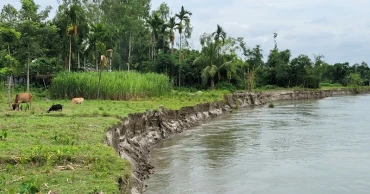
Dharla erosion steals homes and hopes in Lalmonirhat
As the Dharla River silently eats away at its banks, hundreds in Lalmonirhat watch their homes and hopes vanish into the current.
As the water level rises and falls, severe erosion has occurred at 13 points along the river, leaving many families disoriented and desperate.
The hardest-hit areas are Debnathpara, Kurul, Megharam, Chaymatha and Char Budaru in Mogolhat Union; parts of Patgram; Gorkamandal and Char Gorkamandal in Naodanga Union of Phulbari Upazila; and Haker Bazar and Sardob in Holokhana Union.
Sunamganj villagers haunted by river erosion blamed on illegal soil cutting
Despite the worsening crisis, affected residents have alleged inaction on the part of the Water Development Board (WDB), which is responsible for preventive measures.
Abdar Hossain, 65, a farmer from Debnathpara, said he lost 16 bighas of land to the river—his last four just last week. “Now only a small hut is left, nearly 800 metres from the river. I have a family of seven. How will we survive?” he asked.
Bholanath Debnath, 60, from the same village, said five bighas of his land had already been swallowed by the river.
“The remaining land is also under threat. We were once a well-off family. Now we’re on the verge of homelessness,” he lamented.
Local UP member Jonab Ali said more than 100 bighas of land in Debnathpara have already been lost, and another 300 bighas are at risk.
Kurigram riverbanks people struggle with worsening river erosion
“The Water Development Board comes to inspect, takes notes and leaves. No preventative work is being done. If they had started dumping geo bags earlier, much of this land could have been saved,” he claimed.
Char Gorkamandal in Phulbari is facing a similar fate.
Ala-Baks, 65, a farmer from the area, said, “All my two bighas of land are gone, and most of my house has collapsed. I’m now living by the roadside. I have no way to buy land or rebuild.”
Mahmuda Begum, 34, from the same area, said the river is now right behind her house. “It could swallow it at any time. I had three bighas of land—now there’s nothing,” she said, holding back tears.
Ayaz Uddin, a local UP member, said over 200 houses, including schools, madrasas, and Mujib Kella buildings, are under threat in the area. “In just one week, 15 houses and over 100 bighas of arable land have been lost. Still, no effective action has been taken,” he said.
Shunil Kumar, executive engineer of the Lalmonirhat Water Development Board, said they have sought allocation from higher authorities. “Once received, we will begin dumping geo bags and also implement permanent erosion control measures,” the UP member said.
Padma River erosion threatens homes and agri land in Faridpur
Rakibul Hasan, another WDB engineer, said 7,000 geo bags were dumped in Char Gorkamandal last year, but the stock has now run out. “A new allocation has been requested."
Lalmonirhat Deputy Commissioner Rakib Haider said they have inspected the erosion-affected areas and directed the Water Development Board to take immediate measures to prevent further damage.
As the river continues to consume land and livelihoods, the residents of Lalmonirhat are left waiting—hoping for swift and decisive action before it’s too late.
1 year ago

Eyes that no longer see; Cumilla’s Tk 2cr surveillance cameras fall silent
When the high-tech CCTV cameras were installed across Cumilla city in late 2021, they arrived with a promise of safety, security and smarter streets.
Mounted at bustling intersections and shadowy corners, the cameras were the city’s new digital guardians, boasting artificial intelligence, facial recognition and round-the-clock vigilance. Now, nearly three years later, those mechanical eyes have all but gone dark.
Today, many of Cumilla’s 90 surveillance cameras sit idle -- some cloaked in layers of dust, others with drooping wires or skewed angles, silently recording nothing of use.
CCTV, electronic monitoring to leave no blind spots in bus terminals: Adviser Asif
For a project that cost taxpayers over Tk 2 crore, it is a disheartening sight.
They were supposed to change the way Cumilla fought crime and managed traffic. Instead, they have become yet another symbol of good intentions gone unattended.
A City Watched, But Briefly
The Cumilla City Corporation (CuCC) had envisioned a smart surveillance system capable of not just recording footage, but recognising faces, scanning number plates and helping police respond swiftly to crimes.
Locations like Fouzderhat Mor, Eidgah Char Rasta, Chawkbazar, Madina Bus Stand, Moynamoti Medical College Road and Kandirpar were handpicked for their strategic importance.
The system initially showed promise, but signs of neglect soon became evident. Within months, cameras stopped rotating, night vision failed and most units remained non-functional for over a year.
Dysfunctional Cameras
Residents speak with a mixture of resignation and frustration. “Most cameras are out of order, and no one is maintaining them. Still, the contractor continues to draw bills regularly. It’s become a joke,” said one local man, gesturing toward a camera pole near Tomchom Bridge.
The project was implemented by Nice Power IT Solution Ltd, a firm owned by former Cumilla-6 MP AKM Bahauddin Bahar.
The company reportedly began work in 2018 through a quotation-based process, a method that insiders allege violated public procurement norms. While installation wrapped up in 2020, cracks in maintenance appeared almost immediately.
Even the camera at the main gate of CuCC’s own building has gone dark.
Tanvir Alam Abhi, who works at a private bank, shared his concern, “Mugging and eve-teasing have increased in the city. If these cameras had been functional, at least some incidents could have been prevented.”
Broken CCTV network leaves Feni defenceless against rising crime
When Surveillance Fails
The failure of Cumilla’s camera network is not just a technical issue--it’s a breakdown in public trust. “The city has seen a rise in theft and mugging. CCTV is the only way to identify criminals,” said Kazi Enamul Haque Faruk, President of the Cumilla Press Club, adding, “The 90 cameras are now virtually useless. I hope the city corporation will act swiftly.”
1 year ago

Can Bangladesh reverse the decline in farming hands?
The number of active farmers in Bangladesh is rapidly declining, sparking concern among experts and policymakers over the country’s future food security, rural economy, and sustainable development.
Although Bangladesh is on course for Middle Income Country status by 2021, agriculture remains the largest employer in the country by far; and 47.5% of the population is directly employed in agriculture and around 70% depends on agriculture in one form or another for their livelihood.
Agriculture is the source of food for people through crops, livestock, fisheries; the source of raw materials for industry, of timber for construction; and a generator of foreign exchange for the country through the export of agricultural commodities, whether raw or processed. It is the motor of the development of the agro-industrial sector.
According to recent data from the Bangladesh Bureau of Statistics and other sources, the share of people employed in agriculture has dropped significantly—from 48.8% in 2010 to just 41% in 2022 among youth, and from 19% to 15.7% in the general workforce. Analysts attribute the shift to rural-to-urban migration, low profitability in farming, and the effects of climate change.
Govt to import 4 lakh tonnes of rice to avert food risk in flood season
"This is a red alert for our food system," said Dr. Mizanur Rahman, an agricultural economist at Dhaka University. “If young people continue to leave farming behind, who will produce our food in the next decade?”
The economic disparity between farming and other professions is a major driver of this exodus. On average, agricultural workers earn 30 to 40 percent less than those in the service or industrial sectors. Rising input costs—such as seeds, fertilisers, and irrigation—have made farming increasingly unprofitable, especially for smallholders.
Additionally, farmland is vanishing. Bangladesh has lost nearly 2% of its arable land in the past decade, mainly due to urbanisation, river erosion, and land conversion for infrastructure projects. Many farmer families, especially in flood-prone or coastal areas, are now landless and forced to work as laborers.
Climate change has added further pressure. Floods, salinity intrusion, and erratic weather have caused billions in crop losses annually. Agricultural experts warn that a 1°C increase in temperature could reduce rice yield by up to 7%.
“There’s no future in farming unless reforms are made,” said Mofiz Uddin, a 55-year-old farmer from Barisal who recently leased out his land to a brickfield. “My sons all left for Dhaka.”
Modern food safety needs skilled human resources: Food Adviser
The government has acknowledged the problem and introduced limited subsidies and mechanisation programs, but critics say they fall short. Only about half of all farmland is mechanised, compared to 80% in neighboring India. Moreover, just 2.6% of vocational training graduates are engaged in agriculture, highlighting a lack of youth interest and training.
Experts recommend urgent steps including price support for crops, investment in climate-resilient farming, and incentives for young entrepreneurs to enter agribusiness. Without these interventions, the country risks importing more food at higher costs and deepening rural poverty.
“Farming is not just a livelihood—it’s the backbone of our national identity,” said Dr. Rahman. “Losing our farmers means losing our food sovereignty.”
Following independence in 1971, agricultural production in Bangladesh increased at around the rate of 2% per year. The growth rate accelerated during the 1990s and early 2000s to around 4% per year. The Sixth Five Year Plan sought to build on the success of such rapid agricultural growth, targeting average growth of 4.5 % during the plan period (6th FYP Mid-Term Report, 2014), and a remarkable 5.1% growth was achieved in 2010-11. However, this momentum could not be sustained subsequently and the growth rate fell sharply in 2011-12 to 2.7%, and weakened further to only 2.2% in 2012-13. Since then it has remained around that level.
However it has been estimated that for achieving the Millennium Development Goals (MDGs) and post-MDGs, and for turning Bangladesh into a middle income country, agriculture should grow at a constant rate of 4-4.5% per year.
In Bangladesh, 85% of farmers are smallholders-braving unpredictable rains, rising temperatures, and shrinking margins. They don't just grow crops; they hold the frontline of climate resilience, food safety, and sustainability.
Md. Shah Jamal Chowdhury, Lead auditor at GAP Wing of Department of Agriculture Extension, shared his experience on this issue.
"We speak of Good Agricultural Practices (GAP)-yet without simplification, support, and market linkage, it remains a policy dream, not a farming reality. We advocate climate-smart agriculture-but where is the climate finance that reaches the hands that till the land?" he said.
"We design frameworks and protocols-yet most farmers still lack access to training, resources, and the dignity of fair prices," he also said.
He said that he had had the privilege of working with thousands of smallholder farmers on GAP implementation and certification, adapting practices to their realities.
"The truth is clear: if we don't invest in our farmers today, tomorrow's food security is a myth. It's time to act: Channel climate funds directly to smallholders. Make GAP practical, localized, and affordable," he said.
He also asked all concerned to ensure that farmers are at the center of every sustainability policy-not just as beneficiaries, but as partners in resilience.
"Let's not wait for an empty plate to remind us what we lost. We need to support farmers to secure food as well as sustain our future," he added.
Chairman and CEO of Harvesting Knowledge Consultancy Mukkan Dutta said, "Farmers are not just food producers-they are climate defenders and guardians of our future. Unless policies translate into practical support and fair markets for smallholders, food security will remain an illusion."
"We must center farmers in every climate and food policy, not tomorrow, but today," he emphasized.
The Ministry of Agriculture (MoA), in collaboration with the Food and Agriculture Organization of the United Nations (FAO) and with financial support from the Gates Foundation, officially launched the “Technical Support to Sustainable and Resilient Investment Towards Agriculture Sector Transformation Programme (AsTP)” on July 23.
The AsTP project marks a major milestone in Bangladesh’s journey to modernize its agriculture sector and enhance sustainability, resilience, and productivity in the face of growing global and local challenges.
Dr. Emdad Ullah Mian, Secretary of MoA, talked about Bangladesh’s priorities for its agricultural transformation in his remarks. He stated, “The AsTP project comes at a crucial time as Bangladesh redefines its agricultural priorities ahead of LDC graduation. It will help us align national policy with evidence, invest strategically, and empower institutions to deliver.”
1 year ago
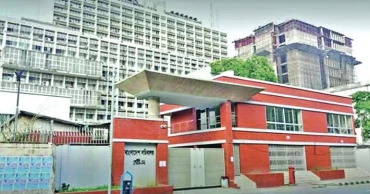
One year after uprising, govt moves to restore order in public service
A year after the July Uprising laid bare the disarray within public administration, the government is intensifying efforts to restore order through a series of tough reforms aimed at strengthening institutional discipline and accountability.
Since the interim government assumed office in August last year, officials at various levels of the civil administration have engaged in rallies, sit-ins, human chains, and "pen break" protests, particularly in response to the restructuring and division of the National Board of Revenue (NBR).
The government has responded with disciplinary action against those participating in such movements.
Senior Secretary of the Ministry of Public Administration Mukhlesur Rahman told UNB that the government is maintaining a firm position on disorderly conduct by officials.
"Chief Adviser Prof Muhammad Yunus has directed a strict stance on such issues. From now on, if any government official or employee engages in unjustified movements against the government, legal action will be taken,” he said.
He mentioned that the administration is adhering to a ‘zero tolerance’ policy to ensure transparency and accountability in the civil service.
Mukhlesur Rahman said this is the government’s most serious effort yet to restore discipline ahead of the elections.
Unrest and Economic Impact
Over the past year, employees of NBR , various ministries and field administrations have staged frequent demonstrations.
These included sit-ins, rallies, and symbolic work stoppages in protest, particularly over the proposed restructuring of the NBR.
Scope is there to reconsider Public Service Ordinance: Law Adviser
The unrest has negatively affected revenue collection, disrupted trade operations and complicated customs and supply chain processes, causing significant losses for businesses.
Tensions peaked when protesting NBR officials reportedly tore up two recent transfer orders, denouncing them as retaliatory and oppressive.
In response, the government has temporarily suspended 14 officials recently.
The Anti-Corruption Commission (ACC) has also launched an investigation into several officials.
Social Media Monitoring and Cautionary Measures
In parallel, the Ministry of Public Administration has issued a directive to all ministries, departments and local administrative bodies, urging officials to exercise caution on social media.
The circular warned that misconduct on digital platforms could violate multiple regulations, including the Government Servants (Conduct) Rules, 1979, the Guidelines for the Use of Social Media in Government Institutions, 2019, and the Government Servants Discipline and Appeal Rules, 2018.
Officials were reminded that unauthorised social media activity could compromise national security, damage the integrity of the civil service and result in disciplinary action as per existing government service laws.
The directive mandates strict adherence to the 2019 guidelines and empowers authorities to take legal measures against violators to uphold decorum in public service.
Govt to form high-level committee to review public service ordinance
Mandatory Investigation
Amid ongoing administrative unrest and employee agitation in the secretariat, the government has approved a series of flexible amendments to the Government Services (Second Amendment) Ordinance, 2025 to ensure due process in disciplinary actions.
Under the new provisions, it is now mandatory to form a three-member investigation committee before taking disciplinary action against any government employee.
A show-cause notice must be issued within seven days of receiving a complaint, and a decision must be made within seven working days of the employee’s response.
Besides, the previous provision allowing punishment solely on the basis of notice has been scrapped.
Meanwhile, the Advisory Council of the interim government has given in-principle approval to the draft of the ordinance, which builds on the earlier Government Services (Amendment) Ordinance, 2025, issued on 25 May.
Key Changes in Law
The new amendment adds due process and clarifies what constitutes misconduct.
According to the law, an employee may be punished for acts that include:
Disobeying superiors or inciting others to disobey
Disrupting administrative discipline
Abstaining from duties without leave or valid reason, individually or collectively
Inciting others to abstain or obstructing colleagues from performing duties
Under the updated ordinance, which was formally issued on 23 July and signed by Dr Hafiz Ahmed Chowdhury, secretary of the Legislative and Parliamentary Affairs Division, a government employee found guilty of such misconduct, including striking or obstructing others from working, may face compulsory retirement or dismissal.
Reforms in Promotion
The government has also taken steps to address long-standing grievances related to inequality in promotions and postings. For the past 17 years, certain officials, particularly those politically deprived, have allegedly been overlooked.
Secretariat Protests: Energy Adviser warns of possible misuse of Public Service Ordinance
To minimise these imbalances, a Public Administration Reform Commission has been formed to address intra-cadre discrimination. In response to the recent secretariat strike, new appointments are also being made by integrating cadre and non-cadre roles.
The government has additionally introduced new privilege rules for public servants and compiled a list of secretariat officials from field-level administration.
Expert Insights
Commenting on the developments, former Secretary and public administration expert Abdul Awal Majumder told UNB, “There can be no ‘softness’ when it comes to restoring discipline in the administration. Without strict accountability, it’s impossible to curb corruption or negligence among those who hold the reins of the state.”
He mentioned that while some critics view the special provisions of the 1979 conduct rules as draconian, they are necessary under the current circumstances.
“The government can dismiss employees who are absent from work with just an eight-day notice—no PSC opinion or investigation needed,” he added.
While he welcomed the government’s strict approach, Majumder stressed that enforcement was key.
“Too many laws, circulars and committees have been created in the past without meaningful follow-through. Real success will depend on implementation and transparency, not paperwork,” Majumder added.
1 year ago