special
Coastal areas in Chandpur flooded as Meghna swells; fish farmers hit hard
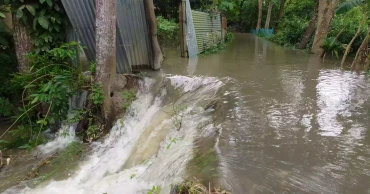
Several coastal areas of Chandpur district were flooded on Friday following a sharp rise in the water level of the Meghna River, caused by a low pressure over the Bay of Bengal.
The water level surged by nearly three feet during high tide, entering roads, homes and ponds and causing widespread panic among residents, including fears of snake bites.
Officials at the Water Development Board in Chandpur said the Meghna River was flowing 21 centimetres above the danger mark – set at 4 centimetres – during Friday afternoon’s high tide.
The situation peaked around 3:30pm, submerging around 30 low-lying char areas in Chandpur Sadar and Haimchar upazilas.
Water also rose to road level in Puratan Bazar near the town protection embankment, raising concerns about possible damage to the embankment itself.
Local residents, including day-labourer Moron Dhali and traders Rafiqul Islam and Bhulu Das from Ronagowal and Paschim Shriramdi areas of Puratan Bazar, said that while water levels were lower on Thursday, they rose rapidly on Friday due to intensified winds and strong river currents.
Flood fear looms over northern districts as Teesta swells
1 year ago

Social skills decline as youth spend hours on social media in Bangladesh
Too much digital engagement of Bangladeshi young generation is increasingly becoming a double-edged sword, fueling addiction, anxiety and a decline in real-life social, and academic performance alongside rising mental health challenges.
In today’s hyper-connected world, social media has become a powerful tool for communication, creativity, and information sharing. But, for the young generation in Bangladesh,
With over 45 million active social media users in Bangladesh, most of them under the age of 30, platforms like Facebook, TikTok, Instagram, and YouTube have deeply infiltrated youth culture.
But psychologists warn that excessive and unsupervised usage is contributing to rising mental health issues, especially depression, low self-esteem, sleep disturbances and poor academic outcomes.
Mobile operators offer free 1GB internet marking July 18 uprising anniversary
A recent study by the Bangladesh Institute of ICT in Development (BIID) revealed that teenagers and young adults spend an average of 5 to 8 hours daily on social media, far exceeding global health recommendations.
Many respondents admitted feeling anxious or restless when disconnected from their phones.
Mental Health Issues Ignored
The growing grip of social media on Bangladesh's youth has raised alarm among health experts, educators, and parents alike, as recent surveys reveal a disturbing link between excessive online engagement and rising mental health challenges among young people.
A nationwide study conducted by the Anchal Foundation, involving 1,773 students from various educational institutions, has found that nearly 86% of young respondents believe internet usage is a major contributor to mental health issues.
Among them, more than one in four (26%) attribute their psychological stress entirely to prolonged exposure to digital platforms.
The report highlights troubling patterns, including sleep disturbances, anxiety, depression and a decline in academic focus.
Over 59% of the students acknowledged that their study habits were disrupted due to constant social media use, while others reported increasing feelings of isolation and withdrawal from real-world interactions.
“The pressure to be online, maintain a perfect image, and respond instantly is pushing students toward burnout and detachment,” said Sadia Mahjabeen, a psychologist working with university students in Dhaka.
No internet shutdown in Gopalganj, says Telecom Ministry
“We are witnessing a steady rise in screen-induced stress and anxiety,” she said.
Meanwhile, a separate youth poll conducted by UNICEF Bangladesh through its U-Report platform reinforces these concerns. Among nearly 29,000 respondents, two-thirds said that misinformation and fake news are the leading causes of stress online.
Another 14% cited cyberbullying and negative comments, while a similar percentage pointed to exposure to harmful or upsetting content.
According to UNICEF, the majority of young people believe that more must be done to protect them online—52% of respondents supported the introduction of stronger rules and guidelines to prevent the spread of hate speech and online harassment.
Experts say the popularity of short-form video platforms like TikTok, Instagram Reels, and YouTube Shorts is reshaping how young people process information.
“These platforms offer instant gratification but discourage critical thinking, patience, and real-world social interaction,” said Afsana Kabir, a digital rights researcher.
Educational institutions are beginning to take notice, with some schools and colleges introducing digital literacy sessions and screen-time awareness programs.
Many, however, believe a coordinated national strategy is needed to curb the growing mental health crisis linked to digital overexposure.
“Social media is not inherently harmful—it’s the unregulated, excessive, and mindless usage that turns it into a threat,” Kabir added. “We must teach our youth to use it as a tool, not a trap.”
As Bangladesh continues to expand internet access and digital infrastructure, calls are growing for a comprehensive framework to ensure that young users are protected from the psychological harms of the online world—before the burden becomes irreversible.
From Creativity to Chaos
While social media offers platforms for young people to express themselves and showcase talents, the pressure to remain constantly “online,” curate perfect profiles, and chase likes and followers has led to toxic comparison, cyberbullying and addictive behaviors.
“Social media is becoming more of a psychological trap than a tool,” says Dr. Tanima Rahman, a Dhaka-based child psychologist.
“Young users are forming their identities based on filtered realities, not actual life experiences,” she said.
Impact on Education and Relationships
Educators across Dhaka and Chattogram have expressed concern about the decline in student attention span and rising cases of classroom distractions linked to smartphone use.
Parents complain of increasing isolation of their children and deteriorating communication within families.
Excessive exposure to short-form videos, often filled with misinformation or provocative content, is also shaping distorted worldviews and attitudes.
In some urban areas, authorities have blamed social media for influencing gang culture, online harassment and early exposure to adult content.
Need for Policy and Awareness
Experts are calling for a comprehensive digital literacy campaign in schools and colleges to educate students about safe and responsible social media use.
There is also growing demand for stricter data regulation and screen-time monitoring tools, especially for minors.
“Social media isn’t the enemy—it’s the unregulated use of it that is the problem,” said Afsana Kabir, a digital rights advocate, adding, “We need a national conversation about its long-term effects on mental health, productivity and social values.”
While social media has revolutionised communication, its unchecked influence on the youth of Bangladesh poses significant societal challenges.
Balancing digital engagement with real-life experiences, promoting healthy screen habits and ensuring psychological resilience should now be a top priority for parents, educators and policymakers alike.
1 year ago
Water shortage disrupts jute retting in Lalmonirhat, sparking price concerns
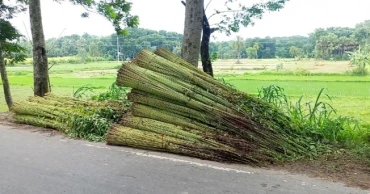
A severe water crisis in Lalmonirhat, despite the ongoing monsoon, is significantly disrupting the crucial retting process of jute, leaving farmers worried about potential financial losses due to declining fibre quality and fears of not receiving a fair market price.
The lack of sufficient rainfall has dried up canals, ponds, and other water bodies, halting the traditional process of retting, an essential step in extracting fibre from jute stalks.
Although this is usually the peak time for jute harvesting, many farmers have been unable to proceed due to the shortage of water.
Those who have already harvested are watching their jute wither under the scorching sun, unable to begin retting.
Growers across the district report that jute left in the fields is turning reddish due to intense heat exposure.
Golden fiber in trouble: Kurigram’s jute farmers struggle amid water crisis
1 year ago
Bangladesh's NCC struggles to reach consensus on key reform issues
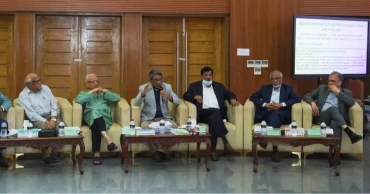
The National Consensus Commission (NCC) is facing challenges in reaching a consensus over three significant reform issues -- the appointment of the election-time caretaker government chief, the formation of the upper house and the election system for 100 reserved seats for women.
Though Bangladesh Nationalist Party (BNP) and Bangladesh Jamaat-e-Islami offered almost similar proposals about it, particularly the selection process of its chief adviser, the NCC could not reach a final decision yet over the issue due to differences from some other political parties including National Citizen Party-NCP.
The Commission is now working to build political consensus on 19 key constitutional reform issues by July 31 in a bid to prepare a national charter (reform charter), but the progress of the second-round dialogue is delayed due to differences among the political parties over the three issues.
To overcome the impasse, the Commission presented revised proposals several times particularly on the caretaker government system and the structure of the proposed upper house.
Caretaker Government
Though the political parties earlier reached a consensus over the restoration of the caretaker government to oversee the national election and its other matters including its tenure, but disagreed over the selection process of the chief adviser.
BNP earlier proposed five options to select the chief of the caretaker government, while Jamaat placed three alternative proposals in this regard.
NCC rules out dual role for PM as party chief
But the two major parties have recently placed their respective revised proposals to select the chief adviser. There is no major difference between their positions over the issue.
BNP, in its revised proposal submitted to the NCC on Monday last, suggested forming a four-member search committee composed of the Prime Minister, Leader of the Opposition, Speaker and the Deputy Speaker (from the opposition). The committee would select the Chief Adviser based on consensus from ten names –--five each nominated by both the ruling and opposition parties. If consensus is not reached, the party proposed following the relevant process outlined in the 13th amendment of the Constitution, excluding the provision where the President would head the caretaker government as the last option.
Jamaat, in its final revised proposal, recommended a five-member search committee including a representative from the third largest party in Parliament in addition to the four members proposed by BNP. They suggested the ruling and main opposition parties nominate three candidates each, the third largest party two names, and other parties or independents one name each. In case of failure to reach consensus, Jamaat also proposed the process outlined in the 13th Amendment dropping the option for the President to take the charge.
Both the parties viewed that the selection of the caretaker chief should be based on the consensus within the search committee.
About the Jamaat’s views for formation a five-member search committee, BNP Standing Committee member Salahuddin Ahmed at a press briefing on Tuesday last showed flexibility over the formation of the search committee, saying that the search committee could be comprised of five persons by including a representative from the third-largest party in Parliament.
NCC meets to bridge political divide on caretaker govt, bicameral parliament
However, several other parties, including NCP objected to reviving the appointment process outlined in the 13th Amendment, citing previous controversies. Many instead advocated for a ranked-choice voting system within the search committee to appoint the caretaker chief.
NCP proposed a ranked-choice voting system in the appointment process to ensure a neutral and acceptable caretaker government.
Jamaat Nayeb-e-Ameer Dr Syed Abdullah Muhammad Taher on Tuesday said the selection of the chief adviser of the caretaker government should be made based on consensus not the simple majority. "We don't want a process where distrust is created between political parties. Rather, we need to reach an acceptable solution through discussion," he said.
NCC’s Proposal
The NCC proposed a five-member search committee similar to Jamaat’s structure. Every political party and independent MP would be asked to nominate one eligible name. If consensus fails, each of the ruling and main opposition parties would propose three names, and the third-largest party would nominate two.
Under this formula, the ruling party would pick one name from the opposition's list and one from the third-largest party’s nominations. The opposition would do the same. The third-largest party would pick one from each of the ruling and opposition party lists. If consensus is reached on any of the selected names, that person will be appointed Chief Adviser. Otherwise, a ranked-choice voting system will be used.
BNP leader Salahuddin questions mandatory consensus on NCC proposals
Prof Riaz while briefing reporters on Tuesday last said many parties are unwilling to involve the judiciary — especially retired chief justices — and instead favour ranked-choice voting. There is also strong opposition to reviving the appointment process mentioned in the 13th amendment, he added.
“In fact, we’re somewhat stuck on how the search committee will make decisions and resolve deadlocks (to select the chief adviser). We’ve requested parties to reconsider their stances,” Prof Riaz said expressing optimism that the parties would submit their revised opinions.
Upper House Formation and Women seats:
Almost all political parties, including BNP, Jamaat, and NCP, supported establishing a bicameral parliament comprising a 100-seat Upper House and a 400-seat Lower House, along with increasing the number of reserved seats for women in the Lower House to 100 from the existing 50.
However, there are differences of opinion between BNP and Jamaat on the method of election.
Jamaat suggested electing members of both the Upper House and the reserved women’s seats in the Lower House based on proportional representation (PR) of votes, while BNP proposed using PR based on the number of MPs or Lower House members.
1 year ago
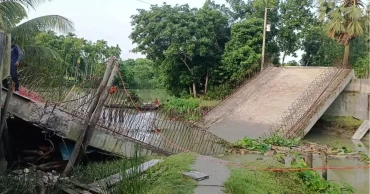
Public outcry over poor construction prompts bridge demolition in Pirojpur
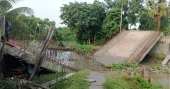
A bridge under construction in Nesarabad, Pirojpur, had to be demolished before its completion due to substandard materials and failure to follow the approved construction schedule, raising serious concerns about oversight and accountability in government construction projects, especially in rural areas.
The Local Government Engineering Department (LGED) was forced to tear down the structure located on the Madra Bazar road in the Jalabari Union after major flaws were discovered.
The project, which included the construction of two girder bridges measuring 22 and 15 meters in length, was awarded on December 29, 2021, to a contracting firm by Pirojpur LGED, with a contract value of Tk 5.73 crore.
According to the contract, the construction was scheduled to be completed by December 28, 2022.
However, the main contractor outsourced the work to a subcontractor, who failed to maintain construction standards and violated the project timeline.
An unfinished bridge in Kaunia over 'Dead Teesta' leaves Char villages stranded for years
This prompted local residents to protest and halt the work.
Later, another subcontractor proceeded to pour concrete for the bridge deck without installing the necessary girders.
Soon after, visible defects began to emerge in the concrete structure.
In response to growing concerns from the local people, LGED launched an investigation and decided to demolish the flawed portion of the bridge.
When asked about the cracks in the bridge, subcontractor Khokon Mia of Pirojpur claimed that the damage occurred after someone removed the centering (support framework) without authorisation following the concrete work.
Panic grips Shariatpur residents as erosion resumes near Padma Bridge
Upazila Engineer Md. Raysul Islam stated, "The entire slab needs to be demolished and reconstructed from scratch."
He further added that the absence of the main contractor has made it difficult to carry the project forward.
1 year ago
Tk 2,009cr project to modernise Bangladesh’s technical teacher training crafting future
The government has taken a move to introduce a programme to modernise the existing systems and establish new institutions to provide training to technical teachers on topics related to the 'industrial revolution' and modern technology.
It is set to launch a major initiative titled 'TVET Teachers for the Future (TTF) Programme', aimed at modernising the training system for technical and vocational education teachers involving Tk 2,009.32 crore.
The programme will be implemented by the Directorate of Technical Education under the Technical and Madrasah Education Division.
Of the total cost, Tk 209.32 crore will come from the national exchequer and the Asian Development Bank (ADB) will provide Tk 1,800 crore in project loans.
The project will be implemented in Dhaka North, Chattogram, Khulna, Barishal, Sylhet, Mymensingh, Rangpur City Corporations and Bogura Sadar Upazila by December, 2029.
Under the initiative, new training institutions will be set up and existing facilities will be modernised to enhance the capacity of technical teacher training in Bangladesh.
The project will focus on equipping teachers with knowledge and skills aligned with the Fourth Industrial Revolution (4IR) and emerging technologies.
Key components of the project include the construction of residential and non-residential buildings, procurement of engineering and other equipment, computer and ICT accessories, as well as both domestic and overseas training for technical educators.
There are currently 55,304 technical teachers in Bangladesh, of them 20.52 percent are women (Banbase, 2022), according to the project document.
Currently, the scope of Technical and Vocational Education and Training (TVET) is increasing, so it is necessary to bring the quality of technical education in line with international standards, it said.
It is necessary to include soft skills necessary to increase the chances of getting a job and technologies related to the Fourth Industrial Revolution in technical education programmes.
Reforms, higher incentives push Bangladesh’s remittances to record $30.32 bln
In order to ensure quality training facilities for technical teachers at all levels of government and private sector in the country and to increase the scope of training, the project titled TVET Teachers for the Future (TTF) Programme was proposed by the Directorate of Technical Education.
The Planning Commission thinks that the project will modernise the existing training system and establish new institutions to increase the opportunities for technical teacher training, including training technical teachers in subjects related to the Fourth Industrial Revolution and modern technology, which will play an important role in increasing employment.
According to the ADB, the TVET Teachers for Future (TTF) programme will support the government of Bangladesh's Integrated TVET Development Action Plan (ITDAP) to improve equitable availability of qualified TVET teachers, especially outside of Dhaka.
The programme will benefit at least 10,000 new and existing TVET teachers within its period and establish a system for continuous professional development that will substantially improve the quality and relevance of TVET in Bangladesh.
1 year ago

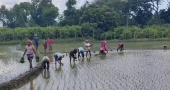
Early rains spur Aman cultivation in Chapainawabganj
Farmers across the north-western district of Chapainawabganj, also renowned for its mango production, are passing busy days with Aman paddy cultivation, as timely monsoon rains have signalled the start of the season.
From transplanting seedlings to preparing fields and repairing bunds, agricultural lands across the district are abuzz with activities.
Shah Lal Ali, a farmer from Baliyadanga village in Sadar upazila, said he is cultivating Aman paddy on 12 bighas of land and plans to plant on another six bighas soon.
“The rains arrived early this year, which has been good for farming. The initial abundance of rainwater meant there was no need for irrigation in the beginning, helping reduce costs. If the rainfall continues like this, irrigation expenses will largely reduce,” he said.
Akbar Ali, a farmer from Atahar area, echoed the sentiment. “Aman paddy must be planted during the rainy season. I’ve seen my forefathers rely solely on rainwater for this crop. In years without rain, we’ve had to depend on deep tube wells for irrigation. But this year, timely rains have allowed all the farmers to begin cultivation,” he said.
Akbar said he has already planted paddy on eight bighas of land and plans to cultivate another two bighas once the standing rainwater recedes from a low-lying field. “The market price of paddy is good right now, which has encouraged more people to grow rice this season,” Akbar added.
Golden fiber in trouble: Kurigram’s jute farmers struggle amid water crisis
Meanwhile, Jahangir Hossain, another farmer in the area, expressed concern over rising costs. “The price of ploughing and labour has gone up. On top of that, we have to feed the workers and even provide cigarettes,” he said with frustration.
Calling farming the only way to survive, Jahangir said he has planted paddy on five and a half bighas so far and has another six bighas to go.
In Nezampur of Nachol upazila, farmer Serajul is also preparing his land for cultivation. “Timely rain has helped us a lot. I plan to cultivate three bighas this year. If we continue to get periodic rainfall, it will be a good season,” he said.
According to the Department of Agricultural Extension (DAE), the target for Aman paddy cultivation in the district this year has been set at 54,415 hectares.
This includes 10,695 hectares in Sadar, 22,400 in Nachol, 15,670 in Gomastapur, 5,050 in Bholahat, and 600 hectares in Shibganj upazila.
Agricultural officials and farmers expect that 193,144 metric tonnes of paddy will be produced from the cultivated land, helping meet local demand for rice.
Kurigram char residents pay for power they never receive
Dr Yasin Ali, Deputy Director of the DAE, said farmers are planting both Ufshi (high-yielding) and hybrid varieties of Aman paddy.
“There is no shortage of fertilisers or seeds, and we are providing full technical support to the farmers,” he said, expressing optimism that the district will exceed its cultivation target this year.
1 year ago

Golden fiber in trouble: Kurigram’s jute farmers struggle amid water crisis
Once hailed as the ‘golden fiber’ of Bangladesh, jute is now fighting for survival in Fulbari upazila of Kurigram district, as a persistent water crisis stalls the crucial retting process, leaving farmers anxious and uncertain about their yields.
Despite fields brimming with ripe jute, many farmers are hesitant to begin harvesting.
Without sufficient water for retting -- the vital step in extracting fibre -- they fear their crops may rot, pushing them into heavy losses.
A recent visit to different areas of Fulbari revealed growing frustration among jute farmers.
Most local water bodies have dried up, offering little to no help for retting.
Only those residing near the Dharla, Baromasia and Neelkamal rivers have managed to begin harvesting and retting over the past week.
Others are left with no choice but to transport their jute to distant locations, some two to four kilometres away, in search of suitable water bodies. The extra labour and transport costs are adding to their woes.
“If there is no significant rainfall within the next week, we will be in serious trouble,” said a farmer, worried about their looming losses.
This is not a one-off incident. Many farmers say the problem has been recurring for years. Without proper retting facilities or assured water sources, their interest in cultivating jute is dwindling fast.
Adding to the crisis, farmers are also grappling with rising production costs and a lack of fair market prices for their jute.
“I cultivated jute on one and a half bighas of land but I can’t ret it due to a lack of rainwater,” said Badiuzzamal, a farmer from Anantapur village under Kashipur union.
Echoing the concern, Kishab Chandra Roy and Dhiren Chandra Roy from Gojerkuti area, said despite occasional rains over the past few days, it has not been enough to fill ponds or paddy fields for retting.
Farmers from various areas reported that while those near rivers have started retting, most agricultural fields remain dry, and nearby ponds are unable to serve the purpose.
Khulna falls short of jute production target for lack of incentives
Unless long-term measures are taken, they warned, interest in jute farming – once a major cash crop and pride of the region – may continue to decline.
Experts and farmers alike stressed that if the government is serious about building a polythene-free country, it must prioritise the jute sector through modern training, technical support and fair market policies.
Upazila Agriculture Officer Nilufa Yasmin said the Department of Agricultural Extension (DAE) has been providing advice and incentives to encourage jute cultivation.
“This year, farmers in six unions of the upazila have cultivated jute on 480 hectares of land. So far, around 75 hectares near river areas have been harvested and retted. With the onset of the monsoon, we hope heavy rainfall in the coming week will solve the water crisis for jute retting,” she added.
But until the rains come, Kurigram’s golden fibre remains in peril.
1 year ago
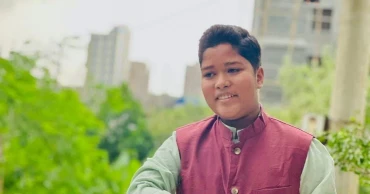
Father lost abroad, now son joins him after Uttara jet crash
Seven months after mourning the death of a father working abroad, a Shariatpur family has been shattered once again -- this time by an even more devastating tragedy.
Their youngest member, Abdullah Shamim, 14, a bright Class VI student at Milestone School and College in Dhaka, lost his life in a tragic aircraft crash on campus.
The shocking incident has plunged the grieving family into silence and disbelief, as loved ones now demand a thorough investigation and urgent action.
No reason to underreport jet crash casualty figures: CA’s Press Secretary
Abdullah Shamim was the youngest son of Abul Kalam Majhi and Julekha Begum, residents of Majhikandi in Dmkhali, under Bhedarganj upazila of Shariatpur.
The family had been living in Diabari Khalpar area of Uttara, Dhaka.
From a young age, Shamim had shown remarkable academic promise and dreamt of becoming a doctor. Initially enrolled in a madrasa, he was later admitted to Class VI at Milestone School and College in Uttara to further his education.
His father, Abul Kalam Majhi, died in December last year while working in Saudi Arabia.
Since then, Shamim had been living under the care and affection of his mother, elder brother, and sister.
On Monday, as usual, he was attending classes with his fellows when a Bangladesh Air Force fighter jet suddenly crashed into one of the school’s buildings, just 10 minutes before the scheduled tiffin break.
The deafening crash left many injured, including Shamim.
Members of the armed forces arrived promptly at the scene and rescued the injured, informing family members shortly afterwards.
Shamim was rushed to Dhaka Medical College and Hospital by ambulance and admitted to the burn unit due to the severity of his injuries. Despite all efforts, he succumbed to his injuries later that night around 11 pm.
As the tragic news of his death reached his ancestral village, a blanket of mourning descended over the entire community.
'Unbearable Tragedy’: Stars share trauma, grief after Milestone School plane crash
On Tuesday morning, Shamim’s body was brought back to his native home in Majhikandi. After the janaza prayer held at 9 am on the grounds of Char Vayra High School, he was laid to rest beside his father’s grave in the family cemetery. His relatives remain inconsolable, with his mother Julekha Begum frequently falling unconscious from grief.
Shamim shared a close bond with his cousin, Abdullah Hossain.
1 year ago
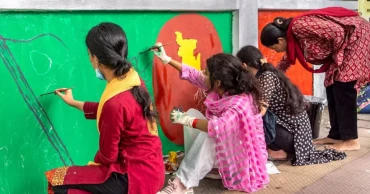
Underrepresentation of women in politics undermines democracy in Bangladesh
Despite notable progress in education, employment, and local-level political participation, women in Bangladesh remain significantly underrepresented at the national level, raising serious concerns among gender equality advocates.
While Bangladesh had been historically led by female heads of government — including a female Prime Minister and Leader of the Opposition — experts argue that such symbolic leadership masks the broader exclusion of women from meaningful political power.
Currently, 50 seats in the Jatiya Sangsad (National Parliament) are reserved for women. However, a 2024 study by Democracy Watch reveals that women secured only 8% of the general parliamentary seats through direct elections, underscoring limited access to political power through open competition. Major political parties, including the Awami League, BNP, and Jatiya Party, have been criticised for marginalising women in nominations, leadership roles, and campaign funding.
At the grassroots level, many women in local government report being undermined by male relatives or party operatives who control their decisions. Female union parishad members often lack the authority to act independently.
“Democracy without women is not democracy at all,” said a statement from Bangladesh Nari Progati Sangha (BNPS), urging political parties to establish minimum representation targets for women in leadership positions.
As the country prepares for its next general election, women’s rights activists are calling for structural reforms to ensure women’s voices are not just seen, but meaningfully heard in policymaking.
On Saturday (July 12), the Bangladesh Mahila Parishad organised a rally and public gathering at the Central Shaheed Minar, demanding direct elections to the reserved seats for women in parliament. Addressing the rally, the organization's president Dr. Fauzia Moslem said, “The struggle for women’s political empowerment has continued since 1972. We are in search of our own identity. Now is the time to ensure our participation in decision-making.”
Structural exclusion within political parties
Despite women's increasing visibility in other sectors, their participation within political party structures remains minimal. A 2024 policy review by the Election Working Group found that women hold less than 10% of decision-making roles in major political parties — including the ruling Awami League, the opposition BNP, and the Jatiya Party.
Int’l Day for Women in Diplomacy: Dialogue focuses on women's challenges in politics, diplomacy
“Women are often confined to auxiliary bodies like the Mohila League or Jubo Mohila Dal but are rarely elevated to central leadership,” noted political analyst Dr. Dilara Chowdhury. “This kind of systemic exclusion weakens the foundation of inclusive democracy.”
According to the Representation of the People Order (RPO), political parties were supposed to ensure 33% representation of women at all levels of their committees by 2020. However, most parties remain far from meeting this goal in 2025. The Election Commission is reviewing compliance and may impose stricter measures if progress remains stagnant.
Civil society organizations are urging the Commission to enforce these requirements more robustly across all parties, including religious ones, to ensure equal participation.
Islamic parties continue to exclude women
Islamic political parties in Bangladesh have shown little commitment to women's political empowerment. Despite women’s growing roles in national life, parties such as Jamaat-e-Islami, Islami Andolon Bangladesh, and Khelafat Majlish feature minimal — or no — participation of women in leadership or decision-making.
“Most of these parties maintain either segregated structures or no formal space for women at all,” said Dr. Ali Riaz, Vice Chair of the National Consensus Commission and South Asian politics expert. Jamaat-e-Islami’s women’s wing, Bangladesh Mohila Jamaat, remains largely symbolic and organizationally isolated from the central Majlis-e-Shura.
Public rallies and political programs by these parties rarely include women as speakers or participants, reflecting deeper ideological and institutional resistance. “They speak of justice but deny women basic political rights,” said rights activist Taslima Akhter.
Some Islamic leaders defend their position by claiming to assign “separate but equal” roles to women, but critics argue that these roles rarely translate into actual political power.
Forgotten legacy of women in political uprisings
Speaking at a recent public discussion, Samanta Sharmin, senior joint convener of the National Citizen Party (NCP), expressed concern over the erasure of women’s contributions during political uprisings. “We inspired people. We led. But now our role is being forgotten — and that’s why it’s easier to humiliate women on social media today,” she said.
Sharmin stressed the importance of preserving the collective memory of women’s political agency, particularly during the July 2024 uprising. “Women’s participation was not symbolic — it was real, spontaneous, and courageous.”
Prof Ali Riaz seeks women’s equal dignity in ‘reshaped Bangladesh’
She called for the archiving and recognition of women’s roles in moments of national crisis. “When the nation is in danger, it is women who rise. We must never forget that.”
Constitutional equality in state reform
On Monday (July 14), Prof. Ali Riaz, speaking during the 13th day of a second-round dialogue on political reform at the Foreign Service Academy, emphasised the need to institutionalise women’s equality as part of state reconstruction. “We must embed women’s dignity and rights constitutionally and institutionally if we truly wish to rebuild Bangladesh,” he said.
Recalling the role of women in the July 2024 uprising, Prof Riaz said the way the movement gained momentum due to the glorious participation of women can be institutionalised in the context of restructuring the state.
From 1971 to 2025: A legacy of resilience
Women have played pivotal roles throughout Bangladesh’s history — from the Liberation War to the democratic movements of the 1990s, and recent youth-led mobilizations. Figures like Shaheed Dr. Shirin Banu Mitil, Taramon Bibi, and Noorjahan Begum symbolize the historic depth of women’s political courage.
Women's Reform Commission recommends expanding parliament to 600 seats
In later years, leaders like former Prime Minister Begum Khaleda Zia and Sheikh Hasina dominated political narratives. While their rise was often aided by family lineage, their influence reshaped national politics. Others like Ivy Rahman, Matia Chowdhury, and Rasheda K. Chowdhury contributed meaningfully in policy and governance.
At the grassroots level, women have slowly begun to transform local governance by contesting union and upazila elections — often without adequate institutional support — helping build a culture of accountability and inclusivity.
In every movement — from Shahbagh to anti-rape protests — women, especially students, have remained at the frontlines, redefining political activism through both street power and digital tools.
As Bangladesh looks ahead, activists say the next chapter must not only include women but be co-written by them — equally, unapologetically, and visibly.
1 year ago