special
Beyond paddy and jute: Faridpur emerging as mango hub
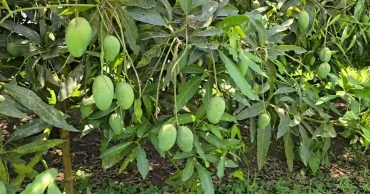
Faridpur, known for its vast paddy fields and jute production, is gradually emerging as a promising hub for commercial mango cultivation, offering farmers and entrepreneurs a lucrative alternative in the district’s agricultural landscape.Driven by modern farming techniques, technical support from the Department of Agricultural Extension (DAE) and growing market demand, mango orchards are expanding rapidly across several upazilas of the district, transforming the region into a rising fruit-producing zone.As commercial mango cultivation continues to gain momentum, many see it as a symbol of the district’s evolving agricultural economy – one that is diversifying beyond traditional crops and creating new opportunities for rural income and entrepreneurship.For local farmers, the success of mango farming is not only boosting profits but also redefining Faridpur’s agricultural identity.According to the DAE, mangoes have been cultivated on nearly 200 hectares of land in Faridpur during the current season, with a production target of around 2,000 tonnes. The projected market value of the harvest will exceed Tk 16 crore.The produce is expected to meet local demand while also being supplied to different districts across the country.Large-scale mango orchards have sprung up in parts of Madhukhali, Boalmari and Sadar upazilas. At present, the orchards present a vibrant picture, with trees laden with ripe and semi-ripe mangoes.Agriculture officials say the adoption of improved mango varieties and modern orchard management practices has significantly enhanced both production and fruit quality.For many growers, mango cultivation is proving to be a profitable venture.Kamal Hossain, a mango farmer from Jahapur area in Madhukhali upazila, said production costs for mangoes are comparatively lower than many other crops.“If weather conditions remain favourable, growers can earn a satisfactory profit. That is why new farmers and entrepreneurs are joining mango cultivation every year,” he said.The growing reputation of Faridpur mangoes is also attracting buyers from different areas.Visitors to local orchards, including Alimuzzaman and Abul Hasnat, praised the taste and quality of the fruit.Faridpur mangoes are sweet, delicious and of excellent quality. Their popularity in the market is increasing day by day, said a customer.Agriculture officials attribute the sector’s progress to coordinated support efforts.Deputy Director of Faridpur DAE Md Shahaduzzaman said farmers are receiving improved saplings, technical guidance and regular monitoring from authorities.“We are providing growers with quality planting materials and modern cultivation advice. With these initiatives, we expect mango farming in Faridpur to achieve even greater success in the coming years,” he said.Sadar Upazila Agriculture Officer Md Anwar Hussain believes the district possesses all the essential elements needed for sustainable expansion of mango production.“The combination of fertile soil, favourable weather conditions and farmers’ growing interest has created strong prospects for mango cultivation in Faridpur,” he said.With proper planning, improved storage facilities and an efficient marketing system, Faridpur could eventually become one of Bangladesh’s leading fruit-producing regions, Anwar added.
1 month ago
Govt moves to make Bangladesh missions abroad more effective, migrant-friendly
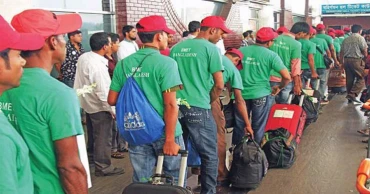
For millions of Bangladeshis living and working abroad, embassies and high commissions often serve as the first line of support during crises, workplace disputes, legal troubles or family emergencies.
Recognising the growing importance of consular services amid rising overseas migration, the government has launched a series of reforms aimed at making Bangladesh missions abroad more effective and responsive to the needs of expatriate Bangladeshis.
According to an official document of the Ministry of Foreign Affairs, a wide range of services and reforms aimed at improving consular support, legal assistance, welfare services and coordination among government agencies to better serve Bangladeshi migrants overseas.
The Foreign Ministry said it works in coordination with these ministries to ensure the protection of expatriate workers’ rights and welfare.
To improve policy coordination and service delivery further, the ministry has taken steps to establish a dedicated division on migration and expatriate Bangladeshis.
The initiative aims to enhance inter-ministerial cooperation and provide more integrated services tailored to the needs of overseas Bangladeshis.
The ministry said it would continue efforts to strengthen coordination among officials posted abroad from different ministries in line with diplomatic protocols, with the goal of improving the security, rights and welfare of Bangladeshi migrants and transforming missions into more modern, efficient and accountable institutions.
The document also identified irregular migration as a major source of insecurity and vulnerability for Bangladeshis abroad.
It said the Foreign Ministry is working with other government agencies and partner countries to curb irregular migration and reduce harassment and exploitation faced by migrants overseas.
As part of efforts to provide immediate assistance during emergencies, Bangladesh missions have introduced 24/7 emergency hotlines for expatriates.
Missions also regularly disseminate important notices, warnings and information through their websites and social media platforms while responding to queries from Bangladeshis living abroad.
The missions actively raise awareness among migrant workers about fraud, illegal brokers, false promises and the risks associated with irregular migration.
According to the document, Bangladesh embassies and high commissions work closely with the Ministry of Expatriates’ Welfare and Overseas Employment, other relevant ministries and agencies, international organisations including the United Nations, and employers to strengthen legal assistance for migrant workers.
Missions also engage in discussions and mediation with employers and local authorities to resolve disputes involving Bangladeshi workers.
Where necessary, administrative and legal measures are pursued with the support of host-country authorities.
To improve access to services, embassies organise consular outreach programmes in industrial zones, Bangladeshi-populated areas and remote cities, often on holidays.
These initiatives allow expatriates to receive passport services, certificates and other consular assistance closer to their places of residence.
Officials said such outreach activities save migrant workers considerable time and money by reducing the need to travel long distances to embassy premises.
Ambassadors and embassy officials regularly visit workplaces where Bangladeshis are employed and hold direct discussions with workers.
They also visit hospitals and migrant reception centres to assess the health, welfare and consular needs of expatriates, said the document.
In addition, public hearings are arranged periodically at missions to hear complaints and address concerns raised by migrant workers.
The document notes that awareness-building mobile consular camps are also organised in areas with large Bangladeshi communities.
Representatives from host-country health ministries, traffic police, the International Labour Organization (ILO), the International Organization for Migration (IOM) and immigration authorities often participate in these events.
Financial assistance is provided to sick and distressed expatriates to help cover medical expenses.
The process for obtaining emergency financial support and repatriation tickets from the Wage Earners’ Welfare Fund has been simplified and expedited, enabling faster assistance to those in need.
For Bangladeshis detained due to irregular migration, embassy officials regularly visit detention centres and facilitate the issuance of travel permits to ensure their prompt repatriation.
Missions also provide assistance to workers seeking to change jobs and to those wishing to return home voluntarily.
The document further states that embassies coordinate with local lawyers and relevant authorities in host countries to secure the release of Bangladeshi nationals detained or imprisoned on various charges.
In cases where a Bangladeshi worker dies abroad, missions establish contact with the deceased’s family and arrange for the swift repatriation of the body. They also facilitate financial assistance, grants and other administrative support on behalf of the government.
To strengthen accountability, complaint boxes have been installed in embassy waiting rooms to allow service seekers to submit written grievances. Authorities say complaints received through these mechanisms are addressed on a priority basis.
The ministry noted that many of these services in countries with large numbers of Bangladeshi migrant workers are delivered through labour wings staffed by officials deputed from the Ministry of Expatriates’ Welfare and Overseas Employment.
Similarly, passport and visa-related services are handled through passport and visa wings staffed by officials from the Ministry of Home Affairs.
Officials expressed hope that these measures would significantly enhance the safety, dignity and protection of Bangladeshi expatriates around the world.
1 month ago
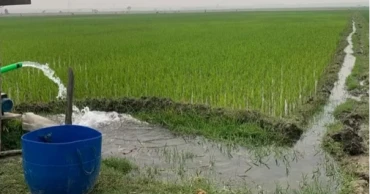
GK project redesigns pumping system to cope with falling Padma water levels
Bangladesh’s largest surface irrigation scheme, the Ganges-Kobadak (GK) Irrigation Project, has undertaken a major redesign of its pumping system to enable water withdrawal from the Padma River at lower water levels, amid concerns over dry-season flow reductions linked to upstream diversion.
Under the redesign, the project aims to reduce the minimum water level required at its intake channel from 3.9 metres to 2.5 metres, allowing pumps to remain operational even when river levels fall significantly during the lean season, Executive Engineer of the GK Project Pump House Mizanur Rahman told UNB.
The GK Project, which has a command area of 197,500 hectares and an irrigable area of about 95,500 hectares, was launched in 1962 and remains one of Bangladesh’s most important irrigation infrastructures supporting agricultural production in the southwest region.
Its coverage however over the years came down to 55,000 hectares as some pumps and canals became inoperable.
Dengue rings alarm amid measles crisis: Is Bangladesh prepared for another health emergency?
According to project officials, the pumping station faces operational disruptions whenever the water level in the Padma River falls below 4.5 metres.
The situation worsened after the commissioning of India’s Farakka Barrage in West Bengal in 1975, which significantly altered dry-season water flows in the river system.
Mizanur Rahman said the consequences became particularly evident in 2024 when irrigation activities under the project came to a complete halt because the pumping station could not lift water after the water level in the Padma River near Hardinge Bridge dropped below four metres.
“The pumps were unable to operate, leaving the project area without irrigation support,” he said.
The redesign project is scheduled for completion in 2029 at an estimated cost of Tk 1,200 crore.
The initiative is expected to enhance the project’s resilience to seasonal water shortages by enabling water extraction at lower river stages.
However, he cautioned that engineering solutions alone may not be sufficient if the flow of the river doesn't remain steady.
“Even if we succeed in lowering the minimum operating level by around 1.5 metres, the benefit could be limited if adequate water does not continue to flow from upstream,” he said.
Revenue shortfall, banking crisis to overshadow FY27 budget funding, creating big challenges: Experts
The GK Project occupies a unique place in Bangladesh’s agricultural history. Initial surveys for the scheme were conducted in 1951 and implementation began in the mid-1950s.
1 month ago
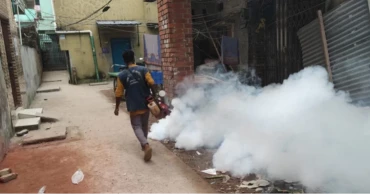
Dengue rings alarm amid measles crisis: Is Bangladesh prepared for another health emergency?
As Bangladesh struggles to contain its worst measles outbreak in years, a fresh surge in dengue infections is raising concerns among citizens and health experts over the country’s capacity to handle two major public health threats simultaneously.
The death of another dengue patient on June 1 and detection of 110 new cases across the country have sparked fears that the mosquito-borne disease is once again gathering momentum ahead of the monsoon.
The latest fatality, reported from Khulna City Corporation, brought this year’s dengue death toll to six, while the total number of infections climbed to 3,307, according to the Directorate General of Health Services (DGHS).
The death was reported at a time when the country’s healthcare system is already under immense strain from a widespread measles outbreak that has infected tens of thousands of children and claimed hundreds of lives since March.
A healthcare system under pressure
Directorate General of Health Services (DGHS) has reported 529 suspected and 91 confirmed deaths (total 620 deaths) from measles and related symptoms since March 15. It also reported 64,263 suspected measles cases and 9,686 laboratory-confirmed infections .
Hospitals across the country, particularly paediatric units, have been struggling to cope with the influx of patients requiring intensive care, isolation facilities, ventilatory support and infection-control management.
Media reports have showed the growing financial strain on families caring for measles patients, particularly children requiring hospitalisation. While treatment costs are relatively lower at government hospitals, many families face significantly higher expenses when patients must be transferred between multiple healthcare facilities. The burden is even greater for those seeking care in private hospitals.
Relatives of patients said that government hospitals often experience shortages of essential medicines, forcing families to purchase them from private pharmacies.
In addition, patients frequently require a range of diagnostic tests, adding to overall treatment costs. Transportation expenses can also rise when patients are referred from one hospital to another while food and other daily necessities further increase the financial burden.
Bangladesh continues to have one of the highest levels of out-of-pocket healthcare spending, meaning many people without adequate financial resources struggle to access necessary medical care.
Speaking at the launch of an annual report in July 2025, UNFPA Representative in Bangladesh Catherine Breen Kamkong said that government spending on health remains low, accounting for only 0.7 percent of GDP and 2 percent of the national budget. She expressed hope that these allocations would increase to 5 percent of GDP and 15 percent of the national budget, emphasiing that improving the nation's health is essential for unlocking Bangladesh's future potential.
A study conducted by Dr. Abdur Razzaque Sarker of BIDS found that out-of-pocket spending remains the dominant source of healthcare financing in Bangladesh, accounting for 79 percent of total health expenditure in 2024.
Public health specialists warn that the emergence of dengue at this critical moment could create a dual burden that may test the resilience of the healthcare system.
Lessons from the past
Bangladesh has witnessed several devastating dengue outbreaks over the past decade.
In 2025 alone, the country recorded 102,861 dengue infections and 413 deaths, making it one of the deadliest years on record.
The disease, once largely concentrated in Dhaka, has increasingly spread across districts, reflecting changing mosquito breeding patterns, rapid urbanisation, inadequate waste management and climate-related factors.
Health experts have repeatedly warned that warmer temperatures, erratic rainfall and prolonged humid conditions are creating ideal environments for the breeding of Aedes mosquitoes, the primary carrier of dengue.
Unlike measles, for which vaccines offer strong protection, dengue prevention depends heavily on vector control, public awareness and early detection.
Government steps up preparations
Recognising the potential threat, the government has begun preparations months before the expected seasonal surge.
Health and Family Welfare Minister Sardar Md Sakhawat Husain on Monday said dengue corners are being established at upazila health complexes nationwide to strengthen treatment capacity.
“We do not want to waste any time. We are making all-out preparation to combat dengue,” the minister said while chairing a meeting on dengue preparedness.
Authorities have also kept a field hospital ready on the premises of Dhaka Medical College Hospital and indicated that additional field hospitals could be established if necessary.
Training programmes for doctors and nurses are set to begin across all seven divisions and district-level facilities with support from the Bangladesh Society of Medicine, UNICEF and other development partners.
The government said it has already stocked essential supplies, including diagnostic reagents, testing kits and saline solutions, while additional procurement is being planned.
Officials also claim that efforts to eliminate mosquito breeding grounds have been underway in cooperation with city corporations for the past two months.
Besides, the government has directed private hospitals across the country to provide free treatment to dengue patients in at least 10 percent of their beds.
“Under the new directive, private hospitals will reserve 10 percent of their beds for dengue patients and waive doctors' consultation fees for those receiving treatment. Patients will only have to bear the costs of medicines and meals, , said Health and Family Welfare Minister Sardar Md. Sakhawat Husain at an event recently.
Besides, private hospitals have been asked to offer discounts of up to 80 percent on diagnostic tests for dengue patients.
A pre-monsoon survey conducted by the Dhaka South City Corporation (DSCC) has identified 63 of its 75 wards as having Aedes mosquito densities above the acceptable threshold, while 27 wards have been classified as highly vulnerable to dengue outbreaks.
The survey was conducted from May 12 to May 23 by a 36-member team from DSCC and the Communicable Disease Control (CDC) unit of the Directorate General of Health Services (DGHS).
The global dengue challenge
Bangladesh’s concerns mirror a broader global trend.
The World Health Organization has repeatedly warned that dengue is spreading faster than ever before, fuelled by climate change, rapid urban growth, population movement and inadequate vector control measures.
More than half of the world’s population now lives in areas at risk of dengue transmission. Countries across Asia and Latin America have reported record outbreaks in recent years, overwhelming health systems and increasing mortality rates.
South Asia remains particularly vulnerable due to dense populations, seasonal monsoon patterns and challenges in urban planning and sanitation.
Public health experts note that Bangladesh’s geographical and climatic conditions place it among the countries most exposed to recurring dengue outbreaks.
Are preparations enough?
While Bangladesh health authorities insist that lessons from previous outbreaks have informed this year’s preparations, questions remain over whether preventive measures can be effectively implemented at the local level.
Experts argue that dengue control cannot rely solely on hospitals and treatment facilities.
Entomologist Prof. Kabirul Bashar said, “With a widespread measles outbreak already straining the health system and dengue cases on the rise, the current measures are not enough.”
Emphasising the need to address the root causes behind the outbreaks, Bashar said it is encouraging that the authorities are working to raise public awareness alongside seasonal efforts to curb disease transmission.
“However, the government needs regular monitoring and sustained supervision to slow down the trend,” he said.
He stressed that stricter actions and stronger implementation efforts are necessary to improve the situation.“The government takes decisions, but field-level officials must remain active to ensure timely measles vaccination and early mosquito control measures, including fogging operations for dengue prevention,” he said.
Prof Bashar said many initiatives fail to achieve their intended outcomes because of irregular supervision and inadequate preparation.
Terming the government's recent dengue-control initiatives as a positive step, he said such measures may provide some immediate relief.
“These initiatives can produce short-term results. However, if such efforts become routine, year-round activities rather than seasonal responses, they will have a much greater impact in preventing the surge of dengue and other infectious diseases,” Prof Bashar added.
1 month ago

Revenue shortfall, banking crisis to overshadow FY27 budget funding, creating big challenges: Experts
Finance Minister Amir Khosru Mahmud Chowdhury is preparing to unveil the Tk 9.38 lakh crore national budget for Fiscal Year 2026-27 on June 11, while the newly formed government faces some big challenges.
Tasked with financing an ambitious economic recovery plan, policymakers are trapped between a fragile macroeconomic landscape inherited from previous administrations and structural vulnerabilities that threaten to push the nation into a debt trap.
The upcoming budget faces a near-impossible revenue challenge. A deep dive into the country's financial state reveals that the government's ability to fund its spending is being severely squeezed from five distinct pressure points.
The Revenue Shortfall:
The primary engine of budget funding—tax collection—has effectively stalled. According to data from the Centre for Policy Dialogue (CPD), the National Board of Revenue (NBR) suffered a staggering shortfall of Tk 1.04 lakh crore during the July-April period of the outgoing fiscal year FY 2025-26.
"Meeting the annual revenue target would now require an impossible growth rate of over 128 percent in the final two months," stated Dr. Fahmida Khatun, Executive Director of CPD.
Bangladesh's revenue-to-GDP ratio hovers under 8 percent, one of the lowest in Asia, leaving the state heavily reliant on bank borrowing to plug a widening budget deficit.
A Crippled Banking Sector and Toxic Loans:
The government's traditional safety net—borrowing from local commercial banks—is running thin due to deep banking sector fragility.
“Decades of poor governance, political cronyism, and unmitigated loan rescheduling have pushed the non-performing loan (NPL) ratio to a historic 30.6 percent,” said Dr. Zahid Hussain, a prominent Bangladeshi economist and the former Lead Economist at the World Bank’s Dhaka office.
With billions of taka trapped in default loans, local banks are facing severe liquidity crunches. Economists warn that the government’s excessive domestic borrowing—which reached 98.5 percent of its full-year target by March 2026—risks completely "crowding out" private sector credit, starving legitimate businesses of capital, he pointed out.
Starved Investment and Low FDI:
Investor confidence in Bangladesh has cooled significantly due to regulatory unpredictability, energy shortages, and political transitions. Foreign Direct Investment (FDI) remains critically low, while private-sector credit growth dropped by over 6 percent year-on-year, said Dr. Fahmida.
Compounding this crisis is the looming shadow of November 2026, when Bangladesh is scheduled to graduate from Least Developed Country (LDC) status.
“Graduation means losing vital preferential tariff access for the Ready-Made Garments (RMG) sector, which is already seeing negative export growth trends. Without a rapid injection of local and foreign investment, funding structural growth will be unsustainable,” she opined.
Global Shocks and Crushing Energy Prices:
External shocks, particularly regional conflicts in the Middle East, have heavily disrupted global energy supply chains. Bangladesh has been forced to buy liquefied natural gas (LNG) from the spot market at nearly two-and-a-half times its usual price, said Dr Khondaker Golam Moazzem, a prominent industrial economist in Bangladesh who also serves as the Research Director at the Centre for Policy Dialogue (CPD).
The government has earmarked an enormous US $3.5 billion purely for electricity and LNG subsidies in the upcoming budget. While retail power tariffs were recently hiked by Tk 1.52 per kWh to offset costs, these soaring energy bills are draining precious foreign exchange reserves and eating up fiscal space that should have gone toward infrastructure development, he said.
Stagnant Wages and Surging Unemployment:
On the human front, the economic slowdown has manifested as a severe employment crisis. Real GDP growth has slowed to roughly 3.9 percent, a sharp drop that has severely limited the creation of formal, well-paying jobs.
With inflation stubbornly high at over 9 percent, low-income workers are seeing their purchasing power rapidly erode, said Dr. Zahid Hussain.
The national poverty rate rose to 21.4 percent. Consequently, the government is being forced to expand costly social safety net programs, such as the Family Card cash-transfer scheme to 40.1 lakh households, adding further strain to an empty treasury, he said.
"Resilience has underpinned Bangladesh's growth story," noted Jean Pesme, World Bank Country Director. "But without decisive, bold structural reforms in revenue mobilization and the financial sector, this resilience cannot last."
As June 11 approaches, the Finance Minister faces a clear ultimatum from the country's top economic analysts: the FY2026-27 budget cannot rely on the old formula of printing money or heavy bank borrowing. To keep the economy afloat, the new government must focus on restoring governance to the banks, cutting bureaucratic waste, and radically restructuring how it collects revenue.
1 month ago

World Cup fever sweeps Bangladesh: When football passion reaches the doctor’s chamber
As the FIFA World Cup, 2026 approaches, Bangladesh is once again transforming into a vibrant arena of football passion where support for favorite teams goes far beyond watching matches.
From city streets draped in giant flags to tea-stall debates over Lionel Messi and Cristiano Ronaldo, the tournament has become a nationwide celebration that transcends sport.
In the southern district of Patuakhali, that enthusiasm has found a unique expression inside a doctor’s chamber.
Dr. Md. Habibur Rahman, a pain management specialist and assistant professor of anesthesiology at Patuakhali Medical College Hospital, has captured public attention with an unusual World Cup offer: patients who visit his chamber wearing an Argentina jersey will receive a 50 percent discount on consultation fees.
The announcement, posted on his verified Facebook account, quickly went viral, drawing reactions from football fans across the country.
1 month ago

Govt’s new education diplomacy drive seeks to expand scholarships, skills training worldwide
As competition for knowledge, innovation and skilled human resources intensifies globally, Bangladesh is seeking to position itself more prominently in the international education landscape through diplomatic effort aimed at expanding educational opportunities, research collaboration and technology partnerships across continents.
The initiative taken by the Ministry of Foreign Affairs in coordination with the Ministry of Education and other government agencies, reflects a broader policy shift that views education diplomacy as a key component of national development and human capital formation.
The ministry said the BNP-led government’s election manifesto places strong emphasis on education and research, with a vision of building a pool of teachers, researchers, writers, cultural personalities, private policy experts and young leaders through exchange programmes with countries around the world.
The initiative aims to contribute directly to Bangladesh’s long-term development by fostering knowledge-sharing and international collaboration, according to an official document of the Ministry of Foreign Affairs.
In support of this goal, the Ministry of Foreign Affairs alongside the Ministry of Education and other relevant ministries, has undertaken a range of activities to expand opportunities for international education and technological cooperation.
According to the ministry, it has been working closely with foreign governments and international organisations to increase access to scholarships, fellowships and academic exchange programmes for Bangladeshi students and researchers.
As a result, opportunities for higher education and research have expanded under several prestigious programmes including the European Union’s Erasmus+, the United Kingdom’s Chevening Scholarships, Germany’s DAAD and the Netherlands’ Orange Knowledge Programme.
Additional opportunities have also been created through India’s Indian Council for Cultural Relations (ICCR) and Indian Technical and Economic Cooperation (ITEC) programmes, as well as Pakistan’s Knowledge Corridor and Pakistan Technical Assistance Program (PTAP) initiatives, covering undergraduate, postgraduate and professional training programmes.
The ministry said discussions are underway on a proposal from a Chinese company to provide training to Bangladeshi workers under technical and vocational education programmes aimed at facilitating employment in China.
Talks are also continuing with South Korea to increase scholarship opportunities and strengthen cooperation in Technical and Vocational Education and Training (TVET) and STEM (Science, Technology, Engineering and Mathematics) education, with a focus on skills development and employment prospects for Bangladeshis.
In Japan, negotiations are progressing on an Employment for Skilled Development Programme (ESDP) agreement, which both sides hope to sign by 2026 to facilitate the deployment of skilled Bangladeshi workers.
Meanwhile, Bangladeshi workers are receiving training through Australia’s Technical and Further Education (TAFE) institutions and local technical training centres to prepare them for employment opportunities in Australia.
The ministry said 64 Bangladeshi students currently receive scholarships annually under the Australia Awards Scholarship programme, with discussions ongoing to increase the number to 100.
To strengthen bilateral and multilateral cooperation in education and research, Bangladesh has signed, renewed and expanded several memoranda of understanding (MoUs) with partner countries.
MoUs have already been signed with Turkey, Belarus and Greece, while agreements with Russia, Hungary, Lithuania, Latvia, Ukraine, Romania, Bulgaria, Moldova, North Macedonia, Uzbekistan, Kyrgyzstan, Tajikistan, Montenegro and Albania are at various stages of finalisation, renewal or expansion.
These cooperation frameworks include scholarship programmes, joint research initiatives, teacher and student exchanges, language education and technical training.
The ministry also highlighted efforts to deepen university-level cooperation with Southeast Asian countries.
Initiatives are underway to establish partnerships between Bangladeshi universities and Thailand’s Kasetsart University, Indonesia’s UIN Prof. K.H. Saifuddin Zuhri, Vietnam’s Foreign Trade University, The University of Danang and FPT University.
Bangladesh and the Philippines have already signed a MoU on nursing education, while efforts are underway to expand higher education opportunities through Indonesia’s Indonesian Aid Scholarship (TIAS) programme.
The ministry noted that Bangladeshi students currently constitute the second-largest group of international students studying in Malaysia.
In West Asia, scholarship opportunities for Bangladeshi students have been significantly expanded. The number of scholarships offered by Saudi Arabia has increased from 265 to 500, while the government of Kuwait has also responded positively to requests for additional scholarships.
At the same time, new education and research cooperation agreements with several Middle Eastern countries are under negotiation.
The ministry said cooperation with South American nations has also expanded.
Under Brazil’s PEC-G, PEC-PLE and PEC-PG programmes, Bangladeshi students are being offered tuition-free opportunities at undergraduate, postgraduate and doctoral levels, along with monthly stipends, health insurance and travel support.
Bangladesh also maintains cooperation with Brazil and Argentina in diplomatic training, while initiatives are underway to sign similar agreements with Chile, Peru, Colombia and Uruguay.
The ministry further said educational and technological cooperation with African countries has been strengthened.
Under scientific, technological, cultural and educational exchange programmes with Egypt, Bangladeshi students continue to receive scholarship opportunities annually.
Efforts are also underway to establish academic and research partnerships between Bangladeshi universities and University of Cape Town, Stellenbosch University, Durban University of Technology and University of Algiers.
The Foreign Ministry said Bangladesh missions abroad have been instructed to play a more proactive role in disseminating scholarship information, establishing links with foreign universities, assisting students with admissions and providing necessary consular services.
Bangladesh’s embassies are also facilitating research collaboration between local and internationally renowned universities.
In addition, under its diaspora diplomacy initiatives, the government is building networks with expatriate Bangladeshi academics and researchers to promote knowledge transfer, technology exchange and long-term capacity building for the country.
1 month ago
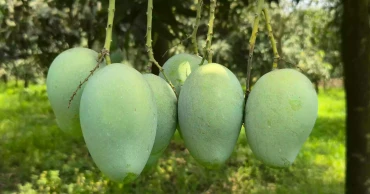
Mangoes worth Tk 300-400 crore go to waste in Naogaon every season; growers call for urgent action
Rows of mango trees laden with fruit stretch across the horizon in Naogaon, Bangladesh’s one of the largest mango-producing districts.
In orchards across Sapahar, Porsha and other upazilas, farmers are now busy with the final stages of care, hoping for a profitable harvest after overcoming weather-related challenges.
The district’s signature Amrapali mango, which accounts for the largest share of local production, is expected to hit markets by mid or late June.
But despite producing a substantial portion of the country’s mangoes, Naogaon still lacks large-scale processing industries or preservation facilities that could protect farmers from market volatility and post-harvest losses, said farmers.
Growers said rising production costs and labour wages continue to squeeze profit margins, while traders often dictate prices during peak harvest periods.
When supply surges, they allege, groups of traders work together to push down prices, leaving farmers with little bargaining power.
The absence of mango-based industries has compounded the problem.
According to local traders, mangoes worth an estimated Tk 300-400 crore spoil every season due to inadequate storage and processing facilities.
According to the Department of Agricultural Extension (DAE), mango cultivation has expanded to 30,310 hectares in Naogaon this season, with a production target of 450,000 tonnes.
Last year, mangoes were grown on 30,300 hectares, yielding around 375,000 tonnes.
“We have only 25 to 30 days to sell Amrapali mangoes after they start ripening,” said Redwanur Rahman Mun, a grower from Kuchkurilia village in Sapahar upazila.
“Farmers cannot keep the fruit on the trees beyond that period. When the market is flooded with mangoes, traders lower prices, forcing us to sell at reduced rates. A large cold storage facility or mango-based industry could save farmers from such losses,” he said.
Motour Rahman, a farmer from Amoir village in Porsha upazila, said weather conditions had been less favourable for mango cultivation this year compared to previous seasons.
“Almost all orchards have fewer fruits this season. Last year, I sold Amrapali mangoes at Tk 1,500 to Tk 4,000 per maund depending on quality. This year, if prices fall below Tk 3,000 per maund, it will be difficult even to recover production costs,” he said.
He added that a mango processing zone could help stabilise prices and ensure fair returns for growers.
Sapahar, home to what traders describe as the country’s largest mango market, attracts thousands of buyers from across Bangladesh every season.
Imam Hossain Rifat, general secretary of the Sapahar Mango Traders Association, said the seasonal market handles mango transactions worth Tk 6,000-7,000 crore annually.
“Nearly 20 percent of our mango production goes to waste every year, representing losses of around Tk 300-400 crore,” he said.
“Establishing large-scale processing industries would benefit not only farmers but also traders. It would create a sustainable market for surplus production and reduce wastage significantly.”
Agriculture officials acknowledge the need for infrastructure to support the sector.
Humayra Mondal, deputy director of DAE in Naogaon, said the issue has been raised at various coordination meetings involving government agencies.
“We have proposed the establishment of cooling houses and packing houses in Sapahar region under a project focused on producing export-quality mangoes,” she said.
“These facilities would help preserve fruit quality, reduce post-harvest losses and increase farmers’ profitability.”
For now, however, Naogaon’s mango growers continue to rely on a short marketing window and uncertain market prices.
As production continues to rise, stakeholders said investment in processing industries, cold-chain infrastructure and export-oriented facilities is no longer a luxury but a necessity.
1 month ago
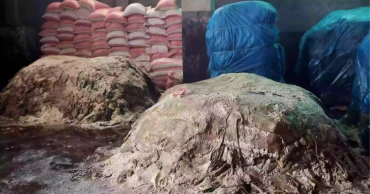
Hides of discontent: Rawhide traders count losses as tanneries duck blame
Rawhide traders and tannery owners have voiced sharp discontent over the quality and pricing of sacrificial animal hides collected during Eid-ul-Azha, with seasonal traders reporting heavy losses and tannery owners blaming poor preservation practices for widespread quality deterioration.
According to the Department of Livestock Services, approximately 1.24 crore animals were prepared for sacrifice this Eid, prompting tanneries to set a collection target of 80 lakh hides. While collection figures neared that target, the quality of hides delivered has left tannery owners deeply concerned.
The government this year raised the price of cattle hides by Tk 2 per square foot, fixing the rate at Tk 67 per sq ft for large hides and Tk 62 for smaller ones.
However, traders say they were unable to fetch anywhere near the government-set prices.
Belayat Hossain, a seasonal hide trader who has worked the annual trade for years, told UNB that a large hide measuring a minimum 31 sq ft should fetch Tk 2,077 when salted, or around Tk 1,500 unsalted.
Instead, he had to sell them for just Tk 700–800. Medium and smaller hides fetched only Tk 500–600.
“We bought hides from sellers at Tk 1,000 and sold them at Tk 700–800,” said another seasonal trader, Yunus. “I won't be doing this business again next year. It was a complete loss.”
The frustration extended to the rawhide traders at Posta in Old Dhaka, who said they lacked the capital to buy hides at competitive prices, as tannery owners had failed to clear previous outstanding payments.
Manzur Hasan, president of the Bangladesh Hide and Skin Merchant Association (BHSMA), told UNB that Posta collected 75,000 hides this year against a target of over one lakh. He attributed the shortfall primarily to unpaid dues from tannery owners.
Manzur alleged that the tannery sector has been syndicated, leaving traders at the mercy of a handful of powerful operators. “We are hostages to the tannery owners. There is no alternative market outside Savar in Dhaka. A leather industrial city was planned for Rajshahi but never materialised. As the entire industry is Savar dependent, tannery owners can act arbitrarily at will.”
He warned that unable to get fair prices, many traders discarded hides altogether, dealing a severe blow to what is a valuable national industry. Hides in Chattogram and Sylhet divisions were among the worst affected, with the majority reportedly going to waste.
Tannery owners, while acknowledging the wastage, placed the blame squarely on poor preservation rather than pricing. They cited lumpy skin disease (LSD) in cattle and the widespread use of unskilled butchers as the primary causes of quality degradation.
Shaheen Ahamed, president of the Bangladesh Tanners Association (BTA), said over 20 percent of hides this Eid were ruined before reaching tanneries. “Fifteen to twenty percent of cattle were found to have lumpy skin disease. Applying chemicals to such hides causes them to perforate. A hide with seven or eight holes cannot be placed in any grade.”
Goat hides drew the sharpest complaints from seasonal traders, many of whom said they could not sell a piece for even Tk 100, and in several cases gave goat hides away free alongside cattle hides.
Shaheen noted that goat hides suffer the most from unskilled flaying, even a single hole renders the hide nearly unsellable. He also criticised traders for repeatedly ignoring government advisories to apply salt to hides for preservation.
“Traders were bringing unsalted raw hides to the tannery at two or three in the morning, hides from animals slaughtered that same morning. Quality cannot be preserved under those conditions,” he said.
By Monday, over 6.5 lakh hides from Dhaka and surrounding areas had arrived at Savar, Shaheen added. Despite government restrictions barring hides from outside Dhaka for ten days post-Eid, hides from Faridpur, Madaripur, and Narsingdi reportedly entered tanneries in violation of the directive.
Analysts say the annual chaos in the hide trade reflects a deeper policy vacuum. While the global leather industry is valued at USD 150–200 billion, Bangladesh earns less than USD 1.5 billion annually from the sector, under three percent of total exports, despite considerable potential.
Abdul Bayes, former vice-chancellor of Jahangirnagar University and a noted economist, drew a parallel with the rice trade. “The same way marginal traders are cheated in the paddy-rice market, they are harmed in the hide trade. If the government wants to develop this industry, there is no alternative to formulating a leather policy and monitoring the market.”
Bayes said a syndicate has taken hold of the tannery business, inflicting annual damage on the sector through the same set of excuses. “Tannery businessmen are growing wealthier while marginal traders are exiting the trade. That alone proves there is no order in this market.”
Industry stakeholders have urged the government to formulate a comprehensive leather industry framework ahead of the next Eid season to prevent a repeat of this year's losses.
2 months ago
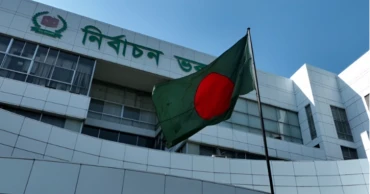
October-March ideal period to begin local body elections: EC
The Election Commission (EC) plans to complete the revision and updating of all rules and codes of conduct related to local government elections by June next, considering the period from late October to March as the most suitable time to begin elections to local government bodies.
The Commission thinks elections to union parishads and municipalities should be held first as people are being deprived of essential services due to absence of elected representatives in the grassroots bodies.
The EC plans to hold the elections to local government bodies in phases to ensure peaceful polls and avoid violence that marked many local elections in the past.
Since there are no elected representatives in almost all the local bodies, the Commission estimates that it would take 10-12 months to complete the elections to all the bodies.
As part of preparation to conduct elections to local government bodies throughout the country, the commission is now revising separate rules and election codes for city corporations, municipalities, zila parishads, upazila parishads and union parishads. The move aims to modernise the rules and also align these with amended local government laws that restored non-partisan elections to the key posts (mayor and chairman) dropping the provision for the use of political party symbols.
The interim government amended the Local Government (Union Parishad) Act 2009, Local Government (Municipality) Act 2009, Upazila Parishad Act 1998, Zila Parishad Act 2000 and Local Government (City Corporation) Act 2009. The amendments were later ratified by Parliament.
“We want to complete updating and reform of the rules and codes of conduct related to all types of local government elections by June next,” said Election Commissioner Abdur Rahmanel Masud.
Though separate rules and codes will remain for different local government bodies, the codes of conduct will be largely similar across all categories, he told UNB on Sunday.
The code of conduct for local government will also largely be similar to the code used for the February-12 parliamentary election, he added.
About the possible changes, the Election Commissioner said the use of posters will be banned, while stricter provisions will be incorporated to check misinformation and disinformation and misuse of AI particularly on social media.
The requirement for collecting signatures of a specific number of voters will be removed, while the amount of security deposit for candidates, except women contesting in reserved seats will be raised to rational level, he said.
The EC will publish draft rules on its website for at least 15 days to seek public opinions and suggestions from stakeholders, he said, adding that the Commission may also hold consultations with stakeholders on the proposed rules, although no final decision has yet been made.
About the possible timeframe for the elections, Rahmanel Masud said the period from late October to March next would be most suitable for the arrangement of elections.
Asked about the EC’s priority Rahmanel Masud, “We will suggest holding elections based on needs. In that case, elections to union parishads and municipalities should come first and elections to city corporations should be held at the last stage.”
When attention was drawn to local body elections marred by violence in the past, he said the current election commission, headed by AMM Nasir Uddin, would be very careful to make the upcoming elections free from violence like the 13th parliamentary election that was most peaceful.
“We’ll be very careful so that there are no casualties in local body elections. We’ll arrange the staggered elections to deploy a larger number of law enforcers in the election areas,” he said, stressing the need for cooperation from all stakeholders in maintaining a peaceful election environment.
The Election Commissioner said the EC would initially rely on regular law enforcement agencies, including police, RAB, BGB and Ansar, to maintain law and order during the elections. If necessary, the armed forces may be deployed later, he added.
According to EC estimates, elections to 12 city corporations (excluding newly formed Bogura city corporation), over 450 upazila parishads, more than 300 municipalities and 61 zila parishads are already overdue and can be held immediately without legal complications.
Besides, the legal timeframe for holding elections to around 600 union parishads began in April, making polls mandatory by October next. The 180-day countdown for elections in more than 2,800 additional union parishads will begin by July.
As the local body elections are arranged at the request from the local government division, the EC will announce election schedules after receiving a green signal from the government.
2 months ago