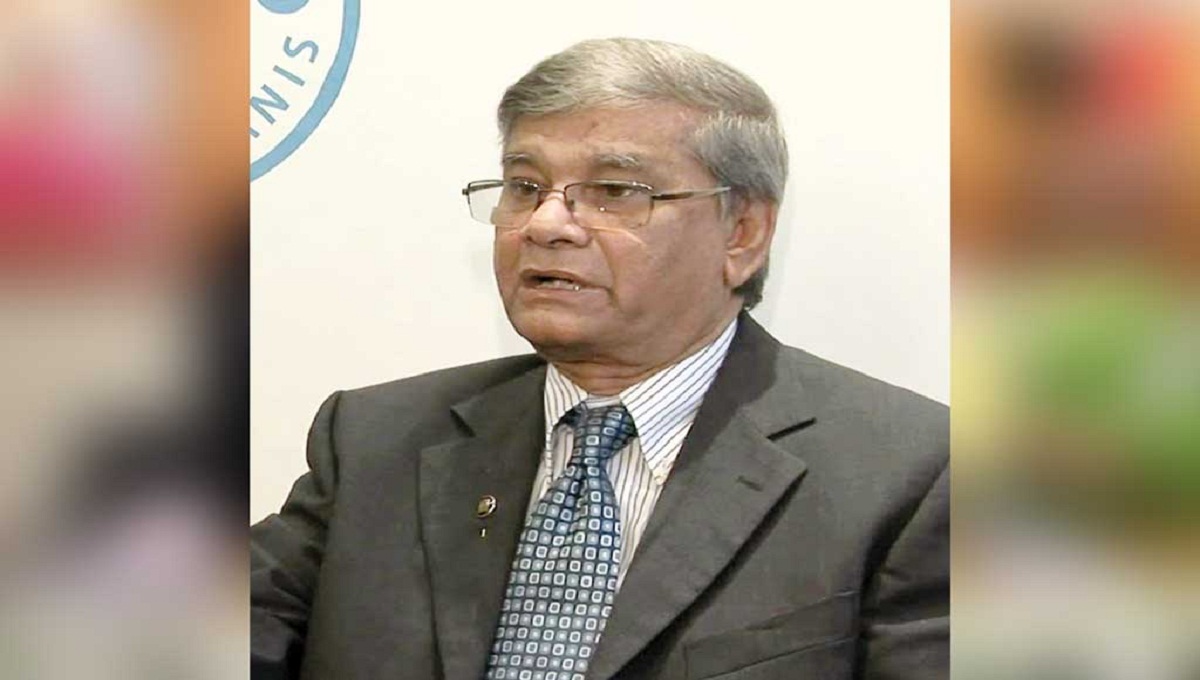
“It’s not possible for Bangladesh alone to resolve the complex problem. It’s also not possible to end the problem only through providing compensation,” he said while speaking at a seminar titled ‘Rohingya Crisis-Global Challenge’ at the Institution of Diploma Engineers, Bangladesh (IDEB).
The minister continued: “The Rohingya problem is now our national problem. The number of Rohingyas living here has reached almost 12 lakh. They intruded into Bangladesh leaving their homesteads behind in Myanmar. They were tortured inhumanly, their houses were burnt and women were raped. How is it possible to heal the wounds only through compensation?”
He said Bangladeshis can realise their pain as they took shelter in India during the 1971 Liberation War due to the torture by Pakistan occupation forces. “Now, Myanmar Army is torturing Rohingays. However, the Prime Minister is going ahead to resolve it peacefully through the diplomatic process. We hope the world community will come forward to resolve the crisis.”
Palli Karma-Sahayak Foundation (PKSF) Chairman Dr Qazi Kholiquzzaman Ahmad said the Rohingya crisis is now a global issue. “If the problem is not resolved immediately, there might be rise to terrorists who can spread around the world. When people don’t get right to live a minimum life, they get involved in wrongdoings.”
Giorgi (George) Gigauri, Chief of Mission of International Organization for Migration in Bangladesh, spoke at the programme while Prof Christine Jubb, Associate Director of the Faculty of Business and Law of Swinburne University of Technology, Australia and Dr Mohshin Habib, senior lecturer of the university, presented the keynote papers.
Gigauri reiterated that he would never get tired of recognising extremeness of generosity they have witnessed not only from the government of Bangladesh but also its people in sheltering unprecedented number of Rohingyas.
He laid emphasis on doing more for the benefits of the host community ensuring a careful balance in taking care of both Rohingyas and the host community
Gigauri suggested keeping focusing on repatriation of Rohingyas, describing it as the only durable solution.
Assistant Inspector General (AIG) of police Taptun Nasrin said the trend of crime has seen a rise in Cox’s Bazar following the influx of Rohingya.
Presiding over the function, IDEB President AKMA Hamid said the international community must put pressure on Myanmar so that it gives US$6 billion as compensation for Rohingys. “Our neighbouring countries, especially India and China, must play a role to resolve the problem.”
Myanmar should pay US$6 billion as compensation to the Rohingyas and the government of Bangladesh as the host country, a new study suggested.
The compensation, according to the study, should be paid in two categories - economic loss and psychological loss.
The study titled "Rohingya Mass Exodus: Who Should Pay Compensation and How Much?" was shared in a seminar on “Rohingya Crisis-Global Challenges" at the Institutions of Diploma Engineers, Bangladesh (IDEB) in the city on Tuesday.
research, conducted by Swinburne University of Technology, Australia, interviewed 16,000 people and collected data on 3,300 households. The sample size for the study was 800,000 Rohingya refugees.
Dr Mohsin Habib, director and senior lecturer of the International Business Program of the university, presented the research findings.