Education
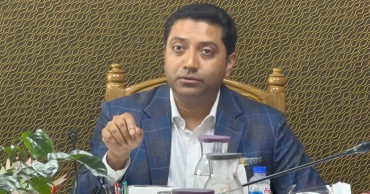
Major overhaul of primary curriculum on the cards: Bobby Hajjaj
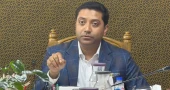
State Minister for Primary and Mass Education Bobby Hajjaj on Wednesday said the government will introduce major reforms to the primary education curriculum with an emphasis on practical skills alongside academic learning.
“The new curriculum will be designed in a way so that children can learn through stories and creativity and enjoyment,” he said, while addressing the national-level Holode Pakhi Neel Komol Award-2026 programme, organised by the Bangladesh Girl Guides Association in the capital.
Bangladesh, UK eye stronger partnership in education, skills development
Bobby Hajjaj said the government aims to build students of future Bangladesh not only through textbook-based education but also through leadership, civic responsibility, morality and social awareness.
“With the new curriculum, the children will be taught not only academic education, but also practical skills,” he said.
The State Minister said the new curriculum will help students learn how to become good citizens, keep their schools, homes and surroundings clean, and behave responsibly towards society and the country.
Noting that childhood is a time for joyful learning, he said, “This is not the age to burden children with excessive pressure or oversized books.”
Bobby Hajjaj said the government has undertaken extensive reforms in the education sector under the leadership of Prime Minister Tarique Rahman to develop a skilled, confident and responsible generation.
He said the government is implementing a nutritious mid-day meal programme for students at over 65,000 government primary schools across the country.
Congratulating the recipients of the Neel Komol Award, the State Minister said such achievements will continue to inspire students across the country.
A total of 57 Holode Pakhi members from across the country received the Neel Komol Award at the event chaired by National Commissioner of the Bangladesh Girl Guides Association Kazi Zebunnesa Begum.
2 months ago
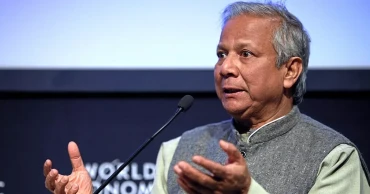
Writ petition seeks probe into role of Prof Yunus, ex-advisers in measles vaccination campaign
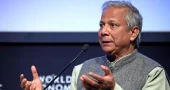
A writ petition was filed with the High Court on Sunday seeking its directives to investigate the role of former Chief Adviser of interim government Prof Yunus and 23 former advisers in measles vaccination progrmame.
It also sought travel ban on Prof Yunus and the former advisers.
Barrister M Ashraful Islam, a lawyer of the Supreme Court, filed the petition with the HC bench concerned.
Allegations have been brought against them as were involved in shifting measles vaccination from the government management to the private sector.
Health, Home , Cabinet Division, Public Administration secretaries and Director General of Directorate General of Health Services (DGHS) were made respondent to the petition.
Barrister Ashraful Islam, said a sudden and severe outbreak of the once-eradicated measles disease has spread across the country.
Over 100 children have already died while many others infected with measles are undergoing treatment in hospitals, said the writ petition.
A legal notice has been served to the government demanding the formation of an investigation committee over allegations of involvement in the ‘unethical and criminal attempt’ to shift the measles vaccination from state management to the private sector.
2 months ago
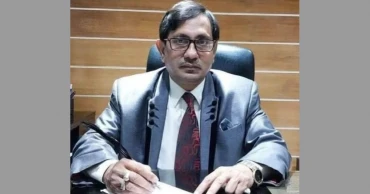
Prof Shahidul Islam joins MBSTU as Vice-Chancellor
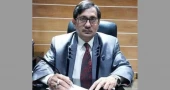
Prof. ABM Shahidul Islam, a senior professor of Marketing Department at Dhaka University, formally joined as the new Vice-Chancellor of Mawlana Bhashani Science and Technology University (MBSTU) on Saturday.
He began his tenure by placing a wreath at the mazar of Mawlana Bhashani. After offering prayers, he signed the visitors' book, sharing his reflections on the late national leader.
Later, at the Vice-Chancellor’s office, the outgoing Vice-Chancellor Prof. Md. Anwarul Azim Akhand welcomed the new VC and formally handed over the responsibilities. Following the handover, Prof. Islam held an introductory meeting with the university’s deans, registrar, departmental chairmen, provosts, and heads of offices.
The President and Chancellor of the university appointed Prof. Islam for a four-year term on May 14, 2026.
A native of Tangail, Prof. Islam’s appointment has been met with local enthusiasm. He previously secured the 4th position in the Dhaka Board during his HSC at Government Maulana Mohammad Ali College in Tangail.
With a teaching and administrative career spanning 40 years, Prof. Islam is a Commonwealth Scholar who earned his M.Phil from the University of Strathclyde, UK, and his PhD from Dhaka University.
This marks his second tenure as a Vice-Chancellor, having previously served at Leading University in Sylhet from 2006 to 2009. He has also held several high-profile positions, including Director of the Bureau of Business Research (BBR) at Dhaka University and Chairman of the Center for Development and Policy Research.
In his initial reaction after joining, the new Vice-Chancellor sought the cooperation of teachers, students, and staff to ensure the overall development of the university. He emphasized his commitment to enhancing research quality and maintaining a modern, "session-jam-free" academic environment, according to a press release.
2 months ago
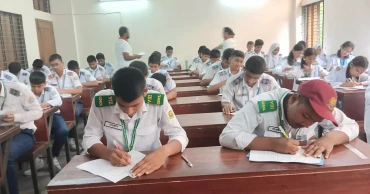
Programming competition held at Begum Rokeya University
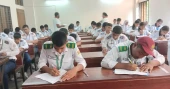
The regional phase of the Bangladesh Cyber Security Olympiad and National High School Programming Competition-2026 was held at Begum Rokeya University (BRUR) in Rangpur.
The competition took place at the university's Computer Science and Engineering (CSE) Department from 10 am to 1 pm on Saturday.
Begum Rokeya University Vice-Chancellor Professor Dr. Md. Shawkat Ali attended as the chief guest.
The competition was divided into different segments for smooth conduct, ICT Quiz- 6th-8th Junior, 9th-10th Senior and Cyber Security Quiz- 6th-8th Junior, 9th-10th Secondary and 11th-12th Higher Secondary.
And in the Programming Contest, 6th-8th Junior, 9th-10th Secondary and 11th-12th Higher Secondary categories were included.
According to the organizing source, this Olympiad is being organized with the aim of increasing awareness, skill development and technology-based knowledge among the youth of the country on cyber security. Students from various schools of Rangpur division participated in it. And the students participated in programming, cyber security and quiz competitions.
The organizer of the competition and the Head of the Department of BRUR’s CSE Department, Professor Dr. Md. Elias Pramanik, said, "I have noticed the interest of many students, parents and teachers. I think if such competitions are organized every time in our country, the creative ideas among our students will be awakened."
BRUR Vice-Chancellor Professor Dr. Md. Shawkat Ali said it is not possible for everyone to win the competition; however, success will definitely come one day, whether today or tomorrow.
"Congratulations to those who won today and for those who didn't, I believe failure is the path to success."
The event was organized in collaboration with the Information and Communication Technology Division (ICT Division), the National Cyber Security Agency and the Ministry of Posts, Telecommunications and Information Technology.
2 months ago
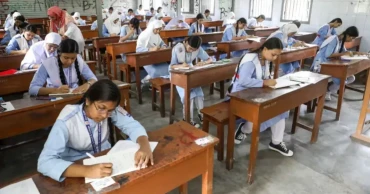
SSC exams to begin on Jan 7, HSC on June 6 next year: Education Minister
Secondary School Certificate (SSC) and equivalent examinations will begin on January 7 while Higher Secondary Certificate (HSC) and its equivalent examinations will start on June 6 from next year.
Education Minister ANM Ehsanul Hoque Milon disclosed the schedule of the public examinations at a press conference on Thursday.
SSC and its equivalent examinations will be concluded on February 6 while HSC and its equivalent examinations will end on July 13, next year, he said.
“The SSC and HSC examinations are extremely important. Approximately 20 lakh students appear in SSC and equivalent examinations and 20 lakh in HSC and equivalent examinations. The education and future of these 40 lakh students are extremely important,” he said.
“We are trying to synchronise the system in a way that gradually closes the gap where students lose nearly a year waiting for the SSC examinations and another year waiting for the HSC examinations. We are considering December as the end of the academic year and the examination month and we have been moving forward accordingly,” said the minister.
This year, the HSC examinations will begin from July 2, he said.
Asked when the results would be published, the minister said, “In 2001, I fixed the timeframe at two months. No one would be allowed to delay the results by even a single day beyond that. That practice is still being followed.”
However, as the system has now become more advanced, the timeframe will be shortened further, not extended, he said.
“I have made it clear in my remarks that we do not want to keep any gap between the publication of results and the admission process. We want students to get admitted immediately after the results are published,” he said.
2 months ago
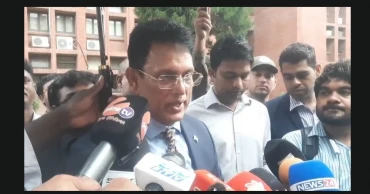
Milon stresses improved technical education system
Education Minister Dr ANM Ehsanul Hoque Milon on Wednesday said the country must move towards ensuring quality technical education to meet future workforce demands.
“We have higher technical education. We just need to improve the quality of that education,” he said while speaking at the “IUT Excellence Award 2026” ceremony held at the Islamic University of Technology (IUT) in Gazipur, an institution run under the Organisation of Islamic Cooperation (OIC).
The minister said the government is committed to improving the quality of higher education, adding that IUT is playing an important role in producing skilled graduates.
The programme was organised to recognise IUB’s outstanding contributions to education, research, and institutional development.
Awards and honours were presented to teachers, students, and officials for academic excellence, research achievements, and contributions to the university’s development.
IUT Vice Chancellor Prof Dr Mohammad Rafiqul Islam presided over the event.
2 months ago
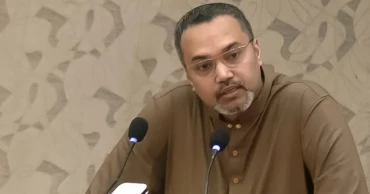
Skilled, capable youth key to building future Bangladesh: Mahdi Amin
Prime Minister’s Education Adviser Mahdi Amin on Tuesday said Bangladesh must develop a more skilled, capable and responsible young generation to build the prosperous and democratic nation people aspire to, stressing the need for a modern and inclusive education system.
“To build the Bangladesh people aspire to, we must make our young generation more skilled, capable and responsible citizens,” he said at a national workshop titled “Transforming Higher Education in Bangladesh: Roadmap to Sustainable Excellence” at the Nabab Nawab Ali Chowdhury Senate Bhaban of University of Dhaka.
He described education as the backbone of the nation and said Bangladesh’s large youth population represents a major demographic opportunity.
Addressing academics, policymakers and dignitaries, Mahdi Amin said, “If we want to move the country forward, we must utilise your wisdom, intellect, creativity and guidance to strengthen democratic Bangladesh and ensure people’s empowerment,” he said.
Referring to the historical role of Dhaka University, he said the institution had played a vital role in every major political transformation in Bangladesh including the July uprising.
Mahdi Amin said the government formed through a ‘free, fair and acceptable election’ three months ago, is working relentlessly to fulfil its electoral pledges under the leadership of Prime Minister Tarique Rahman.
He emphasised the need to modernise the education system and integrate civic values, technological skills and professional competence into schools, colleges and universities.
The adviser also highlighted the role of researchers, teachers and education experts in implementing the government’s development plans through research, policy advice and methodological innovation.
Outlining the government’s future vision, Mahdi Amin spoke of a technology-driven welfare system aimed at improving the lives of ordinary citizens.
He said farmers would receive subsidies and agricultural support directly through digital farmer cards while modern technology and weather forecasting tools would help improve agricultural productivity.
He also said the government plans to introduce E-health cards to ensure access to treatment through public-private partnerships, allowing patients in remote areas to receive healthcare services free of cost under government schemes.
Mahdi said the government aims to improve the status and skills of teachers through initiatives such as the “One Teacher, One Tab” programme which would provide digital devices and international-standard training to educators.
He said the government wants to ensure that the country’s future generations are equipped to compete globally through a modernised and digitised curriculum.
Prime Minister Tarique Rahman opened the workshp around 11am and deliverd a speech.
Arranged by the University Grants Commission of Bangladesh, the inaugural session was presided over by its Chairman Prof Dr Mamun Ahmed.
Prof Dr Mamun Ahmed presented a crest to Prime Minister Tarique Rahman on behalf of the UGC.
2 months ago
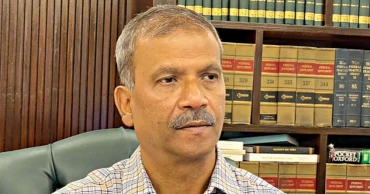
DU Medical Centre overwhelmed with patients, no physiotherapist available: Asif Nazrul
Dhaka University Medical Centre is facing a shortage of physiotherapy services amid a growing number of patients, law professor and former adviser to the interim government Dr Asif Nazrul has said.
In a post on his verified Facebook account on Sunday, he said he had been receiving physiotherapy at the medical centre due to muscle pain above his knees caused by prolonged sitting or sleeping.
He noted that his condition had improved after three consecutive days of treatment, but the pain returned as the medical centre remained closed on Friday and Saturday.
“I rushed to the medical centre after class today and found no one available to provide physiotherapy. Many others were also waiting,” he wrote.
“It was learned that a new official has been appointed to a very high position at DU. They went to give him flowers greetings.”
“The veranda of the Medical Centre is filled with patients and their relatives. There is no fragrance of flowers, only the smell of sweat and suffering,” he added.
2 months ago
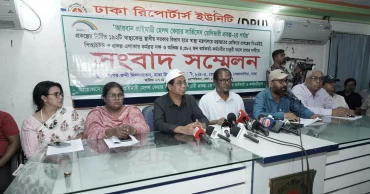
4,382 Urban Primary Healthcare workers demand job retention
Officials and employees working under the ‘Urban Primary Health Care Services Delivery Project (2nd Phase)’ on Thursday demanded retention of jobs for 4,382 skilled workers and uninterrupted operation of 192 health centres during the ongoing transfer process from the Local Government Division of the Ministry of Health.
The demand was raised at a press conference held at the Sagar-Runi Auditorium of the Dhaka Reporters Unity (DRU) in the capital.
Speakers at the event said the project, implemented under the Local Government Division with financial support from the government and development partners including the Asian Development Bank (ADB), provided primary healthcare services in selected urban areas until June 30, 2025.
Under the project, a total of 192 facilities — including 45 urban maternity centres and 147 urban health centres — were established across 11 city corporations and 18 municipalities.
Since July 1, 2025, the centres have been directly operated by city corporations and municipalities.
At present, healthcare services are being managed through 18 non-governmental organisations (NGOs), three municipalities and one city corporation’s own health department.
According to the organisers, the project has been delivering 16 types of essential healthcare services in 45 partnership areas, primarily targeting low-income urban populations.
The services include antenatal, delivery and postnatal care, newborn and child healthcare, EPI services, family planning, control of communicable and non-communicable diseases, and support services for women facing violence.
Under existing policy guidelines, at least 30 percent of services at these centres are provided either free of cost or at subsidised rates for poor patients.
The speakers said the project has provided healthcare services to around 17 million people since March 1, 2018, including 3.46 million antenatal care services and ensuring the safe delivery of nearly 190,000 children.
They expressed concern that the ongoing transfer of the programme to the Health Ministry has created uncertainty over the future of the 4,382 experienced workforce engaged in the project.
The employees urged the authorities concerned to retain all existing staff and ensure uninterrupted primary healthcare services for urban residents during the transition period.
They also sought the Prime Minister’s intervention in this regard.
2 months ago
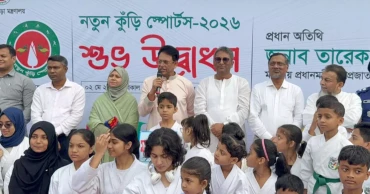
Sports will shape children’s talent and intelligence: Education Minister
Education Minister ANM Ehsanul Hoque Milon has said that the government wants children to remain engaged in both sports and studies throughout the year.
“This will help develop their talent and intelligence,” he said, while inaugurating Notun Kuri Sports-2026, organised by the district administration at Chandpur Stadium on Saturday afternoon.
He also expressed hope that the future generation will help place Bangladesh on the global map as a new nation. He added that Chandpur's children will do well in sports in the coming days.
The minister said Shaheed President Ziaur Rahman launched the Notun Kuri programme across the country, through which many talented individuals emerged.
He added that BNP Chairman Tarique Rahman is now continuing efforts to find talented people across the country through ‘Notun Kuri Sports’.
He said Bangladesh has not yet received its fair share in global sports.
The programme has been introduced to help children prepare for the future and participate in international-level sports.
He also said the younger generation had become socially affected in the past and many had fallen into drug addiction.
He alleged that the previous government did not take effective steps in this regard. He said the government now wants “education through joy” and has started initiatives like Notun Kuri to improve children’s lives through sports.
The minister mentioned that the Ministry of Education has already introduced sports activities at primary, secondary, college and university levels, and this trend will continue.
Chandpur-3 MP Sheikh Farid Ahmed Manik, Chandpur-4 MP MA Hannan and Chandpur-5 MP Engineer Mominul Haque spoke as special guests at the programme.
END/UNB/Corr/SIS/ssk
3 months ago