education
Two-day international education expo in city from August 7
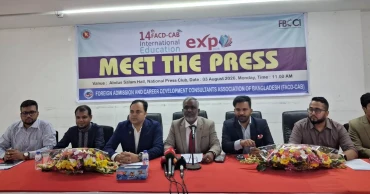
The 14th International Education Expo 2026, organised by the Foreign Admission and Career Development Consultants Association of Bangladesh (FACD-CAB), is set to begin in the city on August 7.
The two-day fair, a flagship international education event, will be held at Pan Pacific Sonargaon Hotel to bring together education consultants, international university representatives, students, and stakeholders under one platform.
The education exposition will feature digital innovations, including online stall booking systems, integrated digital payment solutions, and ICT-enabled support services to ensure smooth operations and enhanced participant experience.
Students attending the fair will have the opportunity to interact directly with representatives of universities from different countries and receive guidance on scholarships, financial aid, tuition fees, visa processing and career planning, according to the organisers.
14 hours ago
Application for DU undergraduate admission begins from Nov 11
The online application activities of Dhaka University’s undergraduate program for 2026-27 session will begin from 11 November,2026 on 12pm, said the university’s public relation office today. Applicants will be able to apply until 11:59pm of 25 November.
The decisions have been taken in a meeting of the admission committee, held today at the Nabab Nawab Ali Chowdhury Senate Bhaban, presided by the vice chancellor prof. dr. ABM Obaidul Islam.
The undergraduate program admission test for 2026-27 will be held under 5 units, just like the previous years, including Arts, Law and Social Science unit, Science unit, Business Studies unit, Fine Arts unit and IBA unit.
The exam for Arts, Law and Social Science unit will take place on 19 December, while Science unit exam on 12 December, Business Studies unit exam on 26 December, Fine Arts unit exam (GK and Drawing) on 22 December and IBA unit exam to be held on 5 December, 2026.
All units’ exams will commence from 11am to 12:30pm except IBA unit. The IBA unit exam will begin from 10am to 12pm.
Except for Fine Arts and IBA units, the exams will be held in 8 divisions across the country. The divisional centers include Rajshahi University, Chittagong University, Barisal University, Khulna University, Shahjalal University of Science and Technology, Bangladesh Agriculture University and Begum Rokeya University.
60 marks MCQ and 40 marks written test will be conducted for all the units except IBA and Fine Arts units. The Fine Arts unit’s exam will be held based on 40 marks MCQ and 60 marks drawing, while 70 marks MCQ and 30 marks written for the IBA unit.
All the exams will be held on 100 marks and 20 marks will be added based on the results of HSC and SSC.
Prospective applicants must pass the SSC or equivalent from 2021 to 2024 and the HSC or equivalent just in 2026.
It was decided in the meeting that, in the Science unit, the question paper for the students of English medium will be formulated according to their curriculum.
The class activities for 2026-27 academic session will begin from 28 March, 2027, the meeting decided.
1 day ago
Primary assistant teachers to join on Oct 1 under revised schedule
The Ministry of Primary and Mass Education has brought forward the joining date for candidates selected in the 2025 recruitment of assistant teachers for government primary schools, setting October 1 as the new date.
According to a notice issued by the ministry on Sunday morning, the successful candidates will report to their respective District Primary Education Offices on October 1.
The notice said appointment letters will be issued in due course against vacant posts. After joining, the teachers will be posted to schools and subsequently undergo professional training.
The revised schedule replaces an earlier decision taken at an emergency virtual meeting on Saturday, which fixed October 29 as the joining date.
Following that meeting, Primary and Mass Education Secretary Md Shakhawat Hossain said the recruitment process had been delayed due to investigations and other procedural issues, but the government aimed to complete appointments by October 29.
Under the revised plan, a total of 14,384 newly recruited assistant teachers will join their respective district offices before being posted to schools and undergoing professional training.
Meanwhile, the selected candidates started an indefinite sit-in in front of the National Museum at Shahbagh on Sunday morning, demanding their immediate appointment.
1 day ago
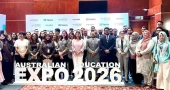
Australian Education Expo connects Dhaka students with top universities
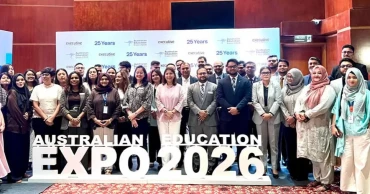
The Australian Education Expo 2026 was held in Dhaka on Saturday, bringing together leading Australian universities and prospective students under one roof.
The event provided aspiring students with valuable insights into higher education opportunities in Australia, including academic programmes, scholarships, admission pathways, and career prospects, while offering expert guidance on pursuing international education, according to a press release.
The day-long event was organised by Executive Study Abroad, an education consultancy, at The Westin Dhaka.
The event featured information on 30 renowned Australian universities and educational institutions, including Monash University, Macquarie University and Adelaide University.
Students had the opportunity to interact directly with university representatives, explore scholarship opportunities, receive on-the-spot admission assessments, and learn about academic programmes, tuition fees, student visa requirements, and part-time employment opportunities available while studying in Australia.
Participants also received expert advice on university-specific admission requirements, English language proficiency, application procedures, required documentation, visa processing, scholarships, and student life in Australia.
1 day ago
Primary school recruitment logjam to break as 14,384 teachers set to join from October
The Ministry of Primary and Mass Education has said the joining process for 14,384 recommended assistant teachers for government primary schools will begin within October, ending months of uncertainty over their appointments.
The announcement came after an emergency virtual meeting on teacher recruitment held at the ministry on Saturday, according to a message issued by the ministry the same day.
Primary and Mass Education Secretary Shakhawat Hossain said the government is prioritising the joining of the 14,384 recommended assistant teachers for primary schools, adding that the process had been delayed due to investigation and procedural complexities.
"The joining process will begin by the upcoming October 30," he said.
More than 175 days have passed since the publication of the final results, yet the 14,384 selected candidates are yet to receive their appointment letters. The candidates had earlier demanded that the joining notification be issued by July 29.
With that deadline passing without any notification, the job aspirants had announced a fresh round of continuous sit-in demonstrations at Shahbagh from Sunday.
2 days ago

Martial arts being made compulsory at primary schools: Bobby Hajjaj
State Minister for Primary and Mass Education Bobby Hajjaj has said martial arts are being included as compulsory sports education for fourth and fifth grade students at primary schools in a bid to promote children's physical and mental development.
“Martial arts along with sports education are very important for children's physical and mental development, confidence, discipline and self-control. So, the government is strengthening sports activities in primary education and is giving importance to martial arts as part of compulsory sports education in grades-IV and V,” he said.
The state minister came up with the disclosure while addressing the Black Belt Award Ceremony 2026, organised by the Bangladesh Kyokushin Karate Association (BKKA) at Rangs Bhaban in the capital's Bijoy Sarani are on Friday night, said a PID handout on Saturday.
Bobby Hajjaj said, "Martial arts is not just a self-defense technique, it helps a person gain discipline, confidence, patience and a positive mindset. When a student gains confidence in him, he learns to avoid violence and conflict and can play a positive role in society."
He stressed that spreading sports and martial arts is essential to raising a healthy, confident and patriotic young generation in Bangladesh.
The state minister called upon karate organisations to formulate a practical plan to expand training programmes in primary schools across the country, assuring that the government would extend the necessary support to implement such initiatives.
Bobby Hajjaj presented black belts to the successful karate practitioners.
2 days ago
UGC to set up language centres at 25 universities to boost multilingual skills, employability
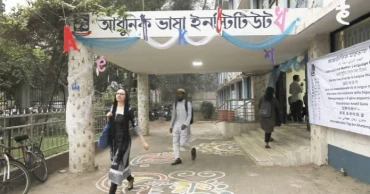
The University Grants Commission (UGC) has taken an initiative to establish modern language centres at 25 public and private universities across the country to enhance the competitive capacity of Bangladeshi students in the global job market, internationalise higher education, and create an attractive academic environment for foreign students.
"These language centres at the 25 universities will teach a total of eight international languages, including Japanese, Korean, Chinese, Arabic, French and German," UGC Chairman Professor Mamun Ahmed said while addressing an exchange meeting with foreign students studying at Bangladesh Agricultural University (BAU) on Thursday.
The meeting was organised to encourage the enrolment of international students at universities in the country, review their academic experiences, and identify existing problems along with ways to address them. Foreign students studying at BAU took part in the programme.
The UGC chairman said the current government has adopted a plan to include a third language in the curriculum with a view to enhancing international communication skills within the education system.
This, he said, would create massive demand for skilled foreign language teachers from the primary to higher education levels. "The university-based language centres would meet that demand while equipping students with proficiency in internationally sought-after languages, thereby creating new employment opportunities both at home and abroad."
He further said that in the era of the fourth industrial revolution, artificial intelligence, global trade and international cooperation, multilingual proficiency is no longer an added qualification but an essential capability.
Language education, he added, would further smooth the path for Bangladeshi youth to pursue international higher education, research, technology, diplomacy, entrepreneurship, and entry into the global job market.
Mamun said the UGC is formulating a five-year strategic plan aimed at transforming the country's higher education system and improving its international standards. "One of the key objectives of the plan is to establish Bangladesh as a regional education hub in South Asia, making it a preferred destination for foreign students, researchers and teachers."
He said an "International Desk" would be formed with coordination among the Ministry of Foreign Affairs, the Ministry of Home Affairs, the Ministry of Education and the UGC to simplify admission, visa, accommodation, healthcare and other administrative services for foreign students. "Simultaneously, five public and five private universities in the country would be developed as model education hubs, with expanded infrastructure and services to ensure international-standard accommodation, medical centres, student support services, counselling, career support, and a multicultural learning environment."
He added that the proposed language centres would not be limited to language education alone; they would also serve as effective platforms for cultural exchange, international cooperation, joint research, academic exchange, and the practice of global citizenship among local and foreign students.
These initiatives, the UGC chairman said, would open up new possibilities for Bangladeshi universities in international rankings, research collaboration, and attracting foreign students.
4 days ago
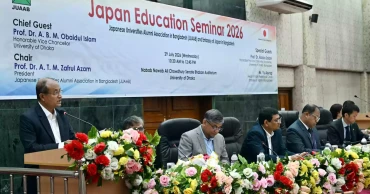
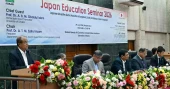
Bangladesh-Japan education cooperation takes focus at DU seminar
Dhaka University (DU) Vice-Chancellor Prof ABM Obaidul Islam on Wednesday called on students to take advantage of higher education and research opportunities in Japan, stressing the need to further strengthen Bangladesh-Japan cooperation in higher education, research and human resource development.
He made the remarks while addressing the Japan Education Seminar 2026 as the chief guest at the Nawab Nawab Ali Chowdhury Senate Bhaban auditorium of the university.
The seminar was jointly organised by the Japanese Universities Alumni Association in Bangladesh (JUAAB) and the Embassy of Japan in Bangladesh.
JUAAB President Prof ATM Jafrul Azam chaired the programme. DU Pro-Vice Chancellor (Education) Prof Abdus Salam and Head of Public Relations and Culture at the Embassy of Japan, Yu Aoyagi, attended as special guests.
The vice-chancellor said Japanese universities enjoy global recognition for excellence in education, research and technological innovation, adding that studying in Japan offers Bangladeshi students far more than an academic degree.
"It provides a unique opportunity to develop research skills, technological expertise, professional competence, intercultural communication and leadership qualities," he said.
Prof Obaidul Islam encouraged students to learn in detail about scholarship programmes offered by the Japanese government and the education and research opportunities available at Japanese universities, and to make the best use of them.
He acknowledged that language and financial constraints remain challenges for many students but said these could be overcome through proper preparation, perseverance and appropriate guidance.
Highlighting Bangladesh's rapid economic and technological progress, he said the country needs skilled professionals in engineering, agriculture, information technology, medical science, environmental science, business education and other key sectors to sustain its development.
Students who study in Japan can make significant contributions to national development by applying the knowledge, technology, innovative ideas and international experience they acquire abroad after returning home, he added.
The vice-chancellor also urged students to use their skills to develop innovative solutions to the country's existing challenges and create new employment opportunities.
Describing Bangladesh-Japan ties as being built on mutual respect, trust and friendship, Prof Obaidul Islam said Japan has long been one of Bangladesh's most dependable development partners in infrastructure, education, human resource development and economic growth.
He said greater collaboration in higher education and research would create new partnerships among universities, researchers, industries and young people in both countries.
The DU vice-chancellor also reaffirmed the university's commitment to expanding joint research, faculty and student exchange programmes, scholarships and institutional cooperation with Japanese universities and research organisations, saying such initiatives would enhance the quality of education and research through greater internationalisation.
The seminar featured discussions on higher education and research opportunities at Japanese universities, admission procedures, scholarship programmes, student life and various aspects of Bangladesh-Japan academic cooperation.
Teachers, students, researchers, prospective applicants for higher studies in Japan and Bangladeshi alumni of Japanese universities attended the event.
5 days ago
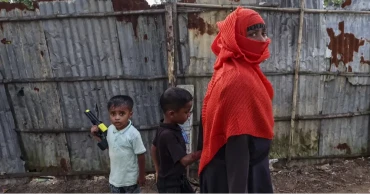
Administrative activities resume at KU after three days
Administrative activities at Khulna University (KU) resumed on Sunday morning after remaining suspended for three days following student protests over an incident in which a canteen worker was accused of secretly recording female students inside a washroom at Bijoy '24 Hall.
The university's academic and administrative activities came to a halt on July 23 after students locked the main gate and all academic and administrative buildings, demanding justice over the alleged invasion of privacy and stronger measures to ensure campus safety.
Female students of Bijoy '24 Hall allegedly caught a canteen worker secretly recording videos inside a washroom using a mobile phone on the night of July 22.
The incident sparked outrage among students, who raised serious concerns over security and demanded immediate action.
Following the incident, the university administration handed over the canteen worker to law enforcement on July 23. A case was also filed in this regard.
The university formed a three-member committee to investigate whether there was any negligence on the part of the dormitory authorities. The hall administration also constituted a separate five-member committee to examine the incident.
In response to the students' three-point demand, the university administration initiated a series of measures.
As part of the process, heads of all disciplines held meetings with their respective students on Saturday. During the discussions, teachers expressed solidarity with the students' demand for ensuring justice for those responsible for the alleged sexual offence.
Later that evening, an emergency meeting chaired by KU Vice Chancellor Prof Dr Md Rezaul Karim was held.
The meeting reviewed the outcomes of the discussions between teachers and students and reaffirmed support for the students' demands.
The meeting was also attended by the pro-vice-chancellor, treasurer, deans, heads of disciplines, director of student affairs, provosts and other university officials, all of whom expressed solidarity with the students.
Following the meeting, representatives of the university administration informed representatives of the 2022 batch students of the decisions taken and the administration's commitment to addressing their demands.
The university administration also urged students to return to classes and expressed its commitment to implementing the previously announced measures within the promised timeframe to restore the normal academic environment.
Subsequently, the students unlocked the university's main gate and all buildings to facilitate a fair investigation and allow official activities to resume from this morning.
8 days ago
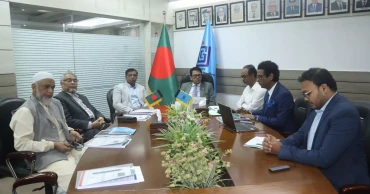
UGC finalising five-year roadmap to transform higher education
The University Grants Commission (UGC) is finalising a five-year national action plan to transform Bangladesh's higher education sector through reforms focused on employability, digitalisation, research, artificial intelligence and internationalisation.
The proposed "National Action Plan for Higher Education Transformation: Achieving Sustainable Excellence (2026–2030)" aims to raise the country's universities to international standards and better align higher education with global technological changes and labour market demands.
A discussion meeting on the draft action plan was held on Thursday at the UGC, chaired by Education Minister Dr ANM Ehsanul Hoque Milon, where senior officials of the Ministry of Education and the UGC exchanged views.
Speaking at the meeting, Milon said the roadmap for transforming the country's higher education sector should originate from the UGC itself, since the commission plays a vital role as the central regulator and coordinator of the higher education system.
He said the UGC's leadership needs to be made more effective and dynamic to raise higher education to the desired standard.
The minister said successful higher education reform initiatives and experiences from different countries should be reviewed and the aspects suited to Bangladesh's context should be implemented, suggesting that experiences from China, the United Kingdom, Malaysia and Pakistan be put to use in this regard.
He said the government's goal is not merely to produce meritorious students but to ensure the excellence of their talent.
Universities need to take effective steps to attract foreign students and turn Bangladesh into a regional higher education destination, Milon said, calling for a coordinated national policy on foreign student admission, academic cooperation and internationalisation.
He added that the country's large population is a potential asset that can be transformed into an effective force for national development through planned higher education, skill development, research and investment in innovation.
UGC Chairman Prof Dr Mamun Ahmed said the long-term reform plan has been undertaken to align the country's higher education with changing global realities, technological advancement and labour market demand.
He said the draft five-year action plan was prepared based on the recommendations of a recent national workshop on higher education transformation held at Dhaka University in the presence of Prime Minister Tarique Rahman, along with government priorities and the UGC's strategic plan.
Mamun said the action plan sets out five strategic priorities: enhancing graduate employability and ensuring demand-based education while strengthening university-industry collaboration and global competitiveness; digital transformation and the use of artificial intelligence; teacher development and professional skill enhancement; research excellence, innovation and internationalisation; and governance, quality assurance and institutional reform.
He said targets have been set for all universities in the country to introduce outcome-based education (OBE), career development centres, internship and employment-tracking systems, a learning management system (LMS), digital administration and AI-based education systems by 2030.
“The plan also includes doubling the number of research publications and patents, expanding international research and academic partnerships, building an integrated national higher education database, and establishing Bangladesh as one of the regional hubs for higher education and research,” the UGC chairman said.
He said a series of consultation meetings with vice chancellors of public and private universities, academics, industry representatives, development partners and civil society representatives will be held as part of finalising the draft. “The plan will be finalised based on the opinions and recommendations of the stakeholders concerned and then placed before the Ministry of Education for implementation.”
Mamun sought the ministry's overall cooperation for the plan's swift implementation.
11 days ago