Local-Business
NBFIs depositors demand full payout with profit by Dec 2026, reject absolute principal-only offers
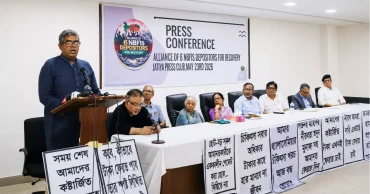
The Alliance of 6 NBFIs Depositors for Recovery Committee on Saturday demanded that the government issue a legally binding notification guaranteeing the full return of their principal amounts along with accrued profits by December 31, 2026.
The alliance, which represents 12,000 individual depositors across six ailing Non-Bank Financial Institutions (NBFIs), explicitly rejected informal or conditional government assurances reported in the media.
The affected institutions include FAS Finance & Investment Limited, Premier Leasing, Fareast Finance, Aviva Finance, People's Leasing and Financial Services, and International Leasing and Financial Services. Together, these 12,000 individual depositors have an aggregate of approximately Tk 3,525 crore trapped in these institutions. Among them, the depositors of People's Leasing have had their funds frozen since July 2019.
In a press release issued today, the alliance expressed frustration over the lack of direct communication from Bangladesh Bank or the Ministry of Finance, despite a silent protest and the formal submission of a memorandum on May 6.
"We are only hearing rumors through the media. No ordinance has been issued, and no official order has reached us," said Jafar Ullah Khan, Convenor of the committee. "Many of our members have been waiting since July 2019. We will not accept any 'under process' rhetoric as a substitute for a legal commitment. Issue the notification, set the deadline, and give it to us in writing."
The demand includes- Legally Binding Notification & Fixed Timeline: The group demands an official, published, and legally enforceable notification detailing a complete payout by December 31, 2026. They stated that conditional media reports suggesting funds might be released in July or that liquidation processes are being drawn up are not acceptable substitutes for a legal mandate.
Payment of Fully Accrued Profits: The depositors strongly rejected media hints suggesting that only the principal amount might be returned without any profits. The alliance argued that based on contractual agreement rates and current inflation data from the Bangladesh Bureau of Statistics (BBS), a depositor who saved Tk 10 lakh in 2019 has suffered a combined loss of Tk 12.38 lakh to Tk 13.78 lakh. Maintaining the purchasing power of Tk 10 lakh from 2019 requires roughly Tk 16.78 lakh today.
Absolute Accountability for Plunderers: The committee insists that even if the government pays back the depositors, the personal liabilities of the directors, executives, and default borrowers who looted these institutions through shell companies, fake loans, and fraudulent transactions must not be minimized. They demanded criminal prosecution without delay, asset recovery under the full extent of the law, and the publication of a registry naming all liable individuals.
Kawsar Hossain Chowdhury (KC), co-founder and coordinator of the alliance, noted that members deposited their life savings relying on the regulatory approval and validation stamp of the central bank. "The collapse of these NBFIs is not personal bad luck; it is a regulatory failure," the alliance stated, adding that Bangladesh Bank must bearthe responsibility for returning the full amount with profits.
The alliance, which has already organized six peaceful silent protests, declared that its legal and transparent movement will continue until a written order is issued and every depositor receives their money in full.
2 months ago
EU delegation visits Apex factory, praises sustainability efforts
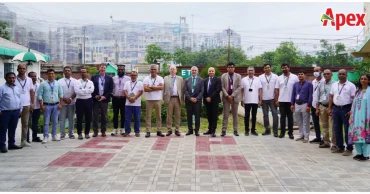
A high-level delegation from the European Union recently visited the factory of Apex Footwear Limited in Gazipur to observe how global best practices are being maintained in Bangladesh’s footwear and leather industry.
The delegation, led by EU Ambassador Michael Miller, witnessed the facility as part of a broader EU initiative to promote industry-wide sustainability.
German Ambassador Rüdiger Lotz and Italian Ambassador Antonio Alessandro were also part of the delegation, according to a media statement issued on Saturday.
Ambassador Miller called the visit a reflection of the strong ties between Europe and Bangladesh's industrial sector.
2 months ago
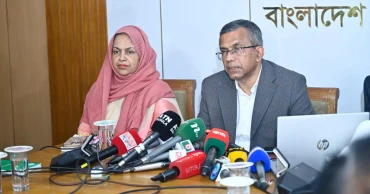
Bangladesh Bank unveils Tk 60,000cr stimulus package to revive economy, create 2.5m jobs
Bangladesh Bank (BB) on Saturday announced a massive Tk 60,000 crore stimulus package for 2026, aiming to revitalise a slowing national economy, spur private sector development and generate over 2.5 million jobs.
Bangladesh Bank Governor Md. Mostaqur Rahman made the announcement at a press briefing at the central bank headquarters.
Detailing the interest rate structure, the governor said commercial banks will disburse loans under the package at a market interest rate of 10 to 11 pc.
To ease the burden on businesses, the central bank will provide an interest subsidy of 6 to 7 percent, effectively allowing receiving entrepreneurs to secure funds at a subsidised interest rate of just 4 percent.
"Over the past three years, our national economy has faced consecutive growth slowdowns," Governor Rahman said, highlighting the urgency of the intervention.
"Our Gross Domestic Product (GDP) growth which previously stood at 5.8 percent, subsequently dropped to 4.2 pc. Under the current economic climate, it is projected to further decelerate to 3.7 percent."
The governor noted that alongside the macroeconomic slowdown, key industrial pillars—including ready-made garments (RMG), textiles, steel, ceramics, information technology, and manufacturing—have sustained major blows.
"Furthermore, our banking sector is under mounting pressure. We are witnessing a sharp rise in non-performing loans (NPLs), instances of money laundering, and a visible decline in depositor confidence," he added.
He emphasised that prevailing high interest rates have also discouraged Small and Medium Enterprises (SMEs) from expanding their businesses. "To confront these critical challenges and breathe new life into the financial ecosystem, the central bank has launched this special scheme to revitalise and stabilise our economy."
Fund Structure and Breakdown:
The Tk 60,000 crore fund is split into two primary funding mechanisms:
Refinancing Fund (Tk 41,000 Crore): Sourced from commercial banks holding excess liquidity through long-term deposits of three years or more, at a 10 percent interest rate.
BB’s Own Resources (Tk 19,000 Crore): Drawn directly from the central bank’s own funds, backed by a government guarantee.
Strategic Allocations and Employment Targets:
The stimulus package strongly prioritises restoring industrial production capacity and boosting rural development.
A lion's share of Tk 20,000 crore has been earmarked for the Closed Industry & Service Sector, which is expected to create 200,000 jobs by helping shuttered factories reopen and fulfill pending export orders.
Other key allocations under the refinancing scheme include:
Agriculture & Rural Activities: Tk 10,000 crore, targeting the creation of 900,000 jobs.
CMSME Sector: Tk 5,000 crore, aimed at generating 500,000 jobs.
North Bengal Agricultural Hub: Tk 3,000 crore specialised fund for production, preservation, and export processing.
Export Diversification: Tk 3,000 crore to expand the basket of goods and services shipped overseas.
Targeted Sectoral Support: Under its own funding component, Bangladesh Bank has designated resources for various specialised and vulnerable sectors:
Cottage & Micro Entrepreneurs: Tk 5,000 crore.
Pre-Shipment Credit for Export Sector: Tk 5,000 crore.
Traditional Export Sectors: A combined Tk 4,000 crore allocated for leather, footwear, frozen shrimp, and fish exports.
Youth & Overseas Employment: Tk 1,000 crore each to facilitate skilled placements and create jobs for the unemployed.
Creative Economy & Startups: Tk 500 crore each to foster technological and cultural innovation.
Deputy Governors Nurun Nahar, Habibur Rahman and Dr. Md Kabir Ahmed, among other senior officials, were present.
2 months ago
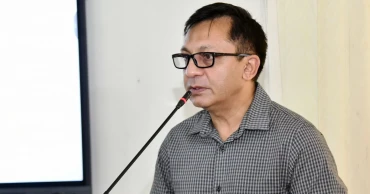
No plans for new state-owned mills, private sector to lead industrial growth: Muktadir
Commerce Minister Khandakar Abdul Muktadir on Saturday said the government has no plans to establish or operate any new state-owned mills or factories, reaffirming that the private sector will drive industrial growth while the government plays a facilitative role.
“The government will not do business. Business will be done by the private sector, and the government will provide support,” Muktadir said at a seminar titled “Sustainable Transition to Employment: Preparedness and Pathways for Textile Students,” held at the Jute Diversification Promotion Centre in Farmgate.
Industries will be expanded further to reduce unemployment: Minister Muktadir
The minister, who also oversees the textiles and jute portfolio, said the government's role would be limited to policy support and creating an enabling environment for industry.
Stressing the need to modernise the textile sector before its workforce challenges could be addressed, Muktadir said, “If the industry is in crisis, employment for students will not be sustainable either.”
He called for timely revision of curricula at textile institutes and engineering colleges to keep pace with technological advancement, proposing that the Bangladesh Textile Mills Association (BTMA) and capable private mills be formally linked with educational institutions.
The initiative, he said, would ease faculty shortages, accelerate technological upgradation and give students direct exposure to real industry settings.
The minister also identified energy supply uncertainty, high production costs, elevated cost of funds, and technological constraints as the sector's key challenges, adding that the government is working to address them.
He said the textile sector would be made more competitive through promotion of man-made fibres, new product development, and value chain upgradation.
Textiles and Jute Secretary Abdun Naser Khan inaugurated the event. The keynote paper was presented by Dr. Abbasuddin Shayak, Associate Professor at Bangladesh University of Textiles.
Senior officials from textile and jute ministry departments, industry leaders, entrepreneurs, and former and current textile students attended the event.
2 months ago

Telecom tax burden hindering digital inclusion, economic growth in Bangladesh: Report
Exorbitant tax structures levied on the country's mobile telecom sector are functioning as a critical barrier to internet connectivity, digital inclusion, and overall economic performance, according to a new comprehensive report.
The research document titled “Bangladesh Can Increase Economic Growth by Lowering Barriers to Digital Connectivity”, prepared by global advisory firm Frontier Economics Limited for digital operator VEON, outlines how rationalising these heavy fiscal constraints could act as a massive catalyst for macroeconomic acceleration and ultimate expansion of the government's tax base.
According to the report, Bangladesh maintains an exceptionally low general tax-to-GDP ratio of 7.6 percent, far below the Asia-Pacific regional average of 20 percent.
Yet, the government relies disproportionately on the mobile telecom ecosystem to generate revenues, subjecting it to penalising tax brackets compared to regional neighbours.
Citing estimates from global telecom body GSMA, Frontier Economics highlighted that total combined taxes, statutory duties, and regulatory fees swallow up a staggering 55 percent of the mobile sector’s entire revenue stream in Bangladesh.
This effectively channels US$ 0.55 of every single dollar earned by mobile operators straight to the national exchequer.
The analysis points out that total sales, usage, and turnover taxes on consumers and operators sum up to a punishing 39 percent (compared to the standard national VAT rate of 15 percent), which balloons to 47 percent of the Average Revenue Per User (ARPU) when factored alongside mandatory revenue sharing mechanisms (5.5 percent), the Social Obligation Fund (1 percent), and minimum turnover thresholds.
Furthermore, corporate profits for non-publicly traded mobile entities are taxed at 45 percent (and 40 percent for publicly traded operators), towering vastly above the baseline corporate tax rate of 22.5 percent to 27.5 percent enforced across other commercial sectors.
The report also takes sharp aim at the fixed Tk 300 tax applied to every new SIM connection. It labels this consumer levy as severely regressive in a "mobile-first" economy where lower-income communities face acute affordability challenges to access basic smartphone data.
The resulting operational squeeze has severely hampered local telecommunication advancement. Despite domestic mobile networks successfully building out a 99 percent population footprint for 4G coverage, operator ARPU has been choked down to a meager $ 1.2 per month.
"Low ARPU and weak smartphone penetration inevitably impact the ability of operators to profitably invest further in their networks—for example, to expand capacity or deploy 5G," the report stated.
Driven by these restricted capital investments, Bangladesh currently logs a modest average mobile download speed of 40 mbps, ranking a lowly 91st out of 105 surveyed nations globally. Currently, only 38 percent of the adult population in Bangladesh own smartphones, leaving millions locked out of the modern digital fold.
Econometric modelling mapped out in the study demonstrates that bringing mobile sector taxes into alignment with general economic benchmarks would deliver compounding fiscal and development returns.
Frontier Economics modelled a scenario where the 20 percent Supplementary Duty is lowered to 5 percent, regulatory revenue sharing drops to 1 percent, and the SIM tax is entirely abolished.
The projections indicate that such reforms will trigger a 4 percent surge in data usage per subscriber and a 5 percent increase in mobile penetration. Most notably, the model shows this digital surge will accelerate Bangladesh’s annual real GDP per capita growth rate from its baseline projection of roughly 6.6 percent up to 7.2 percent.
Addressing the government’s immediate revenue anxieties, the report acknowledges that a localised tax rollback will induce an initial, short-term deficit in sector-specific collections – calculated at approximately $ 761 million in the first year.
However, the firm notes that the structural transformation will be fully self-funding within a brief window. The massive productivity spike in the wider economy will broaden the overarching national tax base, yielding a complete, positive fiscal break-even by the year 2030.
To achieve the long-term socioeconomic benchmarks laid down in the state’s ICT Master Plan and the Smart Bangladesh Vision 2041, the study urges policymaking organs to implement immediate corrective frameworks.
It explicitly recommends rebalancing national tax policy away from sector-specific consumption penalties that artificially inflate consumer data prices, eradicating entry barriers like access charges that keep marginal citizens offline, and explicitly communicating fiscal adjustments as an investment to formalise broader economic activity.
"Reducing these barriers promotes inclusion and expands the user base that later contributes to the wider tax base," the study concluded, emphasising that the temporary fiscal dip remains entirely manageable against the permanent economic dividend.
2 months ago
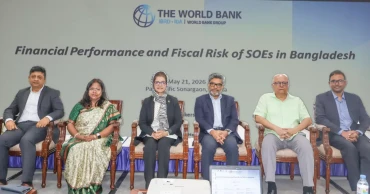
Bangladesh SOEs cost treasury Tk 882 billon in a year: WB study
Bangladesh’s state-owned enterprises (SOEs) have drained nearly Tk 882 billion from the national exchequer in a single year, emerging as one of the country’s biggest fiscal risks, according to a World Bank study.
The study highlighted that the deteriorating financial condition of public enterprises has become “unsustainable” at a time when Bangladesh is already facing falling revenue collection, slower economic growth and mounting pressure on public finances.
It said the growing losses of SOEs are consuming resources that could otherwise be invested in healthcare, education and social protection.
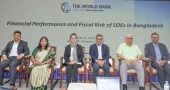
The findings were presented at a dissemination workshop on the report titled “Financial Performance and Fiscal Risk of SOEs in Bangladesh” held at a city hotel on Thursday.
The study was conducted under the “Strengthening Public Financial Management for Better Service” programme, with support from the Policy Research Institute of Bangladesh (PRI).
According to the study, non-financial SOEs incurred a combined adjusted loss of Tk 441 billion in fiscal year 2023-24, while total net fiscal transfers from the government, including subsidies and development funding, climbed to around Tk 882 billion, equivalent to 1.7 percent of GDP.
The study found that the energy and power sector accounted for the overwhelming majority of the losses.
The Bangladesh Power Development Board alone recorded losses exceeding Tk 444 billion in FY24 due to high power generation costs, costly capacity payments to private power producers and electricity tariffs that are kept below production costs.
The report said politically influenced investment decisions, controversial contracts with independent power producers and weak corporate governance have severely undermined the sector’s financial sustainability.
Other major loss-making entities include the Bangladesh Oil, Gas and Mineral Corporation, Bangladesh Rural Electrification Board, Trading Corporation of Bangladesh and several manufacturing corporations in the fertiliser, sugar and jute sectors.
The report observed that many manufacturing SOEs continue to incur persistent losses despite operating in competitive markets where private firms remain profitable.
The report also highlighted deep corporate governance weaknesses within Bangladesh’s SOE structure.
It identified fragmented laws, bureaucratic control, weak oversight and lack of financial transparency as key reasons behind poor performance.
The report compared Bangladesh unfavourably with regional peers. While Bangladesh’s SOEs posted a negative return on assets of 5.2 percent in FY24, India’s SOEs generated a positive return of 9.7 percent and Vietnam’s recorded around 11.9 percent in recent years.
According to the study, Bangladesh could potentially mobilise more than Tk 1.2 trillion in additional fiscal resources if SOEs achieve a 10 percent return on assets and reduce their dependence on subsidies.
To address the crisis, the report recommended wide-ranging reforms, including restructuring commercially viable SOEs, introducing independent and professionally managed boards, strengthening financial disclosure requirements, reducing political interference and gradually opening monopoly sectors to competition.
It also suggested eventual privatisation or closure of chronically loss-making enterprises that no longer serve strategic national purposes.
Tanvir Ghani, Special Assistant to the Prime Minister on Investment and Capital Market Affairs, attended the workshop as a special guest.
WB Lead Governance Specialist Suraiya Zannath explained the context and objectives of the study and how the analysis will help framing policy and institutional reform.
Additional Secretary of the Finance Division Hasan Khaled Foisal made a presentation on the overview of SOEs, debt management and the macro-fiscal scenario, while Additional Secretary Rahima Begum made the opening presentation highlighting the Public Financial Management Reform Strategy 2025-2030 relating to SOEs.
WB Lead Public Sector Specialist Henri Fortin discussed international experiences of SOE reform and its Senior Governance Specialist Immanuel Frank Steinhilper presented global trends relating to SOEs.
PRI Executive Director Dr Khurshid Alam made the keynote presentation on the financial performance and fiscal risks of Bangladesh’s SOEs.
2 months ago

Yeijer Shoe Parts to invest $5 million in Cumilla EPZ
Yeijer Shoe Parts (BD) Ltd, a company based in Samoa-China (Taiwan), has signed a land lease agreement with the Bangladesh Export Processing Zones Authority (BEPZA) to set up a footwear and footwear accessories manufacturing facility at Cumilla Export Processing Zone (EPZ).
The company will invest US$ 5.03 million for the production of insoles, outsoles, midsoles, and polyurethane (PU) shoes.
The agreement was signed on May 20 at the BEPZA Complex in Dhaka.
Md Tanvir Hossain, Executive Director (Investment Promotion) of BEPZA, signed the agreement on behalf of BEPZA, while Xia Ruihong, Managing Director of Yeijer Shoe Parts, signed on behalf of the investing company.
BEPZA Executive Chairman Major General Mohammad Moazzem Hossain witnessed the signing ceremony.
As per the agreement, the company will produce 3 million pairs of insoles, 1.2 million pairs of outsoles, and 3.2 million pairs of midsoles and 1 million pairs of PU shoes annually.
The company is expected to create employment opportunities for 500 Bangladeshi nationals.
BEPZA Executive Chairman welcomed Yeijer Shoe Parts and assured full support from BEPZA to facilitate smooth and successful business operations within the zone.
He also emphasised that BEPZA continues to extend comprehensive support to attract diversified investment beyond the RMG sector.
2 months ago
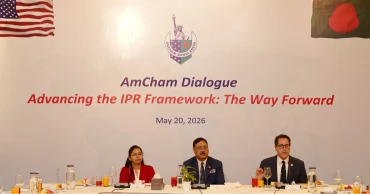
Robust IPR framework vital for FDI, global supply chain integration: AmCham
Business leaders and trade experts have emphasised that a secure and robust Intellectual Property Rights (IPR) framework is a strategic necessity for Bangladesh to attract Foreign Direct Investment (FDI) and maintain its position in the global supply chain after graduating from Least Developed Country (LDC) status.
The observation was made at a breakfast meeting titled "Advancing the IPR Framework: The Way Forward" hosted by the American Chamber of Commerce in Bangladesh (AmCham) at a city hotel on Wednesday.
The event brought together key stakeholders from public and private sectors, along with senior media professionals, to discuss the critical role of intellectual property protection in transforming the country's business ecosystem.
Opening the discussion, AmCham President Syed Ershad Ahmed underscored the urgency of strict IPR enforcement for the nation's future economic stability.
"A secure IPR framework is vital to attracting increased FDI, while giving global importers and brand promoters the absolute confidence to source high-quality products from Bangladesh," he asserted.
Attending the event as a key speaker, Shilpi Jha, Senior Commercial Specialist and IP Policy Adviser (South Asia) at the US Embassy in New Delhi, highlighted that the new government in Bangladesh has a golden opportunity to modernise its intellectual property architecture to foster innovation.
She specifically stressed that a strengthened IP framework would serve as a major catalyst for supporting domestic Micro, Small, and Medium Enterprises (MSMEs).
Shilpi Jha pointed out significant gaps in current enforcement capacities and recommended mandatory, specialised training modules for customs and law enforcement officials.
This training, she noted, is crucial to help officials accurately distinguish between patents, trademarks, copyrights, and geographical indications (GI) during field operations.
During an open floor session, participants raised deep concerns regarding ongoing operational hurdles in IP protection. The interactive dialogue highlighted that combating counterfeiting and piracy effectively requires seamless, coordinated action across various state agencies, particularly in managing port-of-entry imports and updating archaic policy frameworks.
The meeting concluded with a strong consensus that establishing an uncompromised, world-class IPR regime must be prioritised immediately if Bangladesh wishes to smoothly navigate its post-LDC transition and shield its export sectors from international legal challenges.
AmCham Executive Committee members, including Treasurer Al-Mamun M Rashel and Mirza Sajib Raihan, alongside Paul Frost, Commercial Counselor at the US Embassy in Dhaka, other high-level embassy officials, prominent industry stakeholders, and Chowdhury Kaiser Mohammad Riyadh, Executive Director of AmCham also took part in the discussion.
2 months ago

Gold prices fall again
Bangladesh Jewellers Association (BAJUS) on Wednesday reduced the price of gold in the domestic market by Tk 2,158 per bhori, setting the new rate for 22-carat gold at Tk 2,35,963 per bhori, effective from 10 am.
In a morning circular, BAJUS said the revised prices reflect a decline in the cost of tejabi (pure) gold in the local market.
Under the new pricing, 21-carat gold will be sold at Tk 2,25,232 per bhori, 18-carat at Tk 1,93,039, and traditional-method gold at Tk 1,57,231 per bhori.
The previous adjustment was made on May 16, when BAJUS cut prices by Tk 4,374 per bhori, bringing 22-carat gold down to Tk 2,38,121.
Gold prices have been adjusted 66 times in the domestic market so far in 2026, raised on 35 occasions and reduced on 31.
Meanwhile, silver prices remained unchanged. The 22-carat silver is currently priced at Tk 5,657 per bhori, while 21-carat stands at Tk 5,365, 18-carat at Tk 4,607, and traditional-method silver at Tk 3,441 per bhori.
Silver prices have seen 39 adjustments this year, up 21 times and down 18 times.
2 months ago
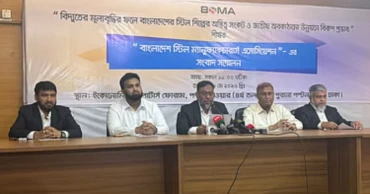
Steel millers oppose further power tariff hike amid ‘rising costs’
Claiming that Bangladesh's steel sector is now in the intensive care unit (ICU)), industry leaders on Tuesday strongly demanded that the government refrain from raising electricity tariffs further to prevent the widespread shutdown of manufacturing plants.
They warned that if power prices are raised under the current circumstances, factories will have no choice but to slash production, with several facing imminent partial or complete closures.
The demand was raised at a press conference organised by the Bangladesh Steel Manufacturers Association (BSMA) at the Economic Reporters’ Forum (ERF) auditorium in the capital.
Responsible business conduct key to maintaining trade competitiveness, attracting investment: Commerce Minister
Reading out a written statement, BSMA President Mohammad Jahangir Alam asserted that there will be no need to hike electricity prices if the government effectively curbs massive capacity charges paid to idle power plants and checks rampant system losses.
"The domestic industry and investment landscape are passing through an exceptionally challenging phase due to the lingering economic shocks of the COVID-19 pandemic, abnormal price hikes of fuel and raw materials caused by the Russia-Ukraine war, a persistent dollar crunch, severe exchange rate volatility, and ongoing geopolitical tensions in the Middle East," he said.
Compounding these woes, Jahangir said, the pace of construction work in both public and private sectors has slowed down significantly, causing a sharp decline in domestic steel demand.
Furthermore, high bank interest rates, credit limitations, gas shortages, soaring import costs, and a severe crunch in working capital have created an unsustainable environment for manufacturers, he said.
The association pointed out that over the last few years, electricity tariffs for the industrial sector have escalated by nearly 30 percent, while gas prices have skyrocketed by up to 300 percent in certain categories. Any further hike in power tariffs will multiply production costs exponentially, stripping Bangladeshi industries of their global competitiveness.
The BSMA leaders highlighted that most large-scale steel mills procure electricity directly from the national high-voltage grid, which eliminates any transmission, distribution, or system losses on their end.
"Despite this, our factories are burdened with various unjustified fees, including hefty demand charges, excessive VAT, and strict power-factor penalties. In reality, these have become indirect methods to drive up the effective cost of electricity," the BSMA President said.
To keep the vital construction-material industry afloat, the association urged the government to refrain from increasing power tariffs, reduce irrational demand charges, and lower the excessive VAT structure.
They also called for a comprehensive review of the power-factor penalty policy and demanded an uninterrupted, quality power supply for industrial units.
BSMA founding President Sheikh Masadul Alam Masud, Secretary General Sumon Chowdhury, and Vice President Md Rezaul Karim, among others, were present at the press conference.
2 months ago