Local-Business

Bangladesh Bank buys $85 million in a single day to maintain exchange rate stability
In a bid to maintain stability in the foreign exchange market, Bangladesh Bank (BB) on Tuesday purchased $85 million from six commercial banks.
The central bank fixed the cut-off rate for the transaction at Tk 122.75 per US dollar, according to relevant sources at Bangladesh Bank.
With this latest transaction, the central bank’s total dollar purchase in the current month of May has reached $395 million. Meanwhile, the aggregate dollar purchase since the beginning of the 2025-26 fiscal year has risen to $6.06 billion.
Financial analysts noted that a recent surge in remittance inflows and export earnings has positively shifted the foreign exchange supply, resulting in surplus dollar liquidity across commercial banks. The central bank is now regularly buying dollars from the market to prevent a sharp decline in the greenback's value and to rebuild the country's foreign exchange reserves.
According to economists, the national economy—which had been under immense pressure for the past few years due to a severe dollar crunch, skyrocketing import bills, and depleting reserves—is now gradually moving toward stability.
They attributed this relief to the increased flow of remittances through formal channels, growth in export earnings, and controlled import expenditures, all of which have significantly boosted dollar availability in the interbank market.
Bangladesh Bank officials explained that the central bank steps in to purchase dollars when there is an excess supply in the market and, conversely, injects dollars into the market during a shortage. This mechanism is utilized to keep the exchange rate relatively stable.
Echoing similar views, commercial bankers stated that the foreign exchange market is no longer facing the intense pressure it did previously. Many banks now possess surplus dollars beyond their immediate requirements, allowing the central bank to mop up excess liquidity. This strategy is simultaneously fortifying national reserves while mitigating the risk of a sudden crash in the dollar rate.
2 months ago
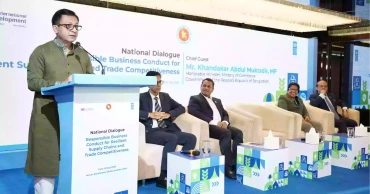
Responsible business conduct key to maintaining trade competitiveness, attracting investment: Commerce Minister
Commerce Minister Khandakar Abdul Muktadir on Tuesday said responsible business conduct is no longer optional but has become a critical prerequisite for maintaining trade competitiveness, attracting investment, and securing market access in the global economy.
“Bangladesh is entering a new phase amid rapidly shifting global trade and investment dynamics,” the minister said while speaking as the chief guest at a national dialogue titled “Responsible Business Conduct for Resilient Supply Chains and Trade Competitiveness,” jointly organised by the Ministry of Commerce and United Nations Development Programme at a hotel in Dhaka.
He said the country has made notable economic strides through strong export growth, industrialisation, entrepreneurship development, and resilience.
He said the readymade garment sector has played a pivotal role in employment generation, poverty reduction, women's empowerment, and overall economic growth.
With Bangladesh preparing to graduate from the Least Developed Country status, Muktadir stressed that the country's future competitiveness would no longer rest on production costs alone. "It will depend on sustainability, transparency, labour standards, environmental accountability, and responsible business practices," he said.
The minister observed that international buyers, investors, regulators, and consumers are increasingly demanding adherence to environmental, social, and governance standards as well as due diligence across every tier of the supply chain. He said growing regulatory requirements in key international markets are directly shaping global supply arrangements.
He noted that buyers now expect businesses to ensure workplace safety, efficient resource use, good governance, and public reporting on climate and sustainability commitments.
Muktadir said strengthening responsible business practices across industries would build confidence among international buyers and investors while positioning Bangladesh as a credible and competitive sourcing destination. “This will improve access to high-value and emerging markets, attract quality investment, and enhance supply chain resilience.”
The minister said the Ministry of Commerce recognises the importance of policy coordination and institutional strengthening on responsible business conduct.
He said the government is committed to ensuring sustainable, inclusive, and responsible economic growth and that an institutional framework for responsible business conduct under the Ministry of Commerce reflects this commitment.
The platform, he said, will strengthen coordination among ministries, regulators, the private sector, and development partners, while supporting policy guidance, awareness, and capacity building.
Calling for a collective effort, Muktadir said the transition toward responsible and sustainable business practices cannot be achieved by any single institution. “We need to build an enabling environment where businesses of all sizes can progressively adopt responsible practices while remaining competitive in global markets.”
The minister thanked UNDP and all partners for organising the event and for their continued support to sustainable and inclusive economic development in Bangladesh.
2 months ago

Govt to cut bank borrowing in FY27 to spur private credit, curb inflation
The government is set to implement a strategic shift in the national budget for fiscal year 2026-27 by significantly reducing its reliance on internal debt, particularly from the banking sector, according to an official working on budget preparation.
This move aims to maintain macroeconomic stability, control persistent inflation, and ensure an uninterrupted flow of credit to the private sector, the official said, wishing anonymity.
According to sources at the Ministry of Finance and Bangladesh Bank, the proposed budget for FY27 is estimated at Tk 9.38 lakh crore. While the projected budget deficit stands at approximately Tk 2.43 lakh crore, the government plans to borrow only Tk 1.19 lakh crore from internal sources.
This represents a Tk 18,000 crore reduction from the current fiscal year's revised internal borrowing target of Tk 1.37 lakh crore.
Shift Towards Foreign Financing
To bridge the deficit while easing pressure on local banks, the government is pivoting towards long-term and more affordable international loans.
The target for foreign borrowing is projected to reach Tk 1.16 lakh crore in the next fiscal year, nearly doubling the current year's revised target of Tk 63,000 crore.
Officials believe that reduced government borrowing will leave banks with surplus funds to invest in industrialisation and business expansion.
Furthermore, this strategy is expected to mitigate the inflationary pressures previously caused by excessive bank borrowing and the printing of money by the central bank.
Aggressive Revenue Targets and Reforms
To compensate for the reduction in internal debt, the National Board of Revenue (NBR) is undertaking massive reforms to achieve a revenue collection target of Tk 6.95 lakh crore.
Key measures include expanding the tax net and withdrawing various VAT exemptions, increasing tax rates on online gaming and luxury goods, and enhancing transparency and liquidity within the banking sector.
Economists have welcomed the move on paper but cautioned that its success depends heavily on the pace of foreign aid disbursement and the government's ability to meet its ambitious revenue targets.
Former NBR Chairman Dr Muhammad Abdul Majid warned that if the NBR fails to collect the desired revenue, the government might be forced to return to heavy bank borrowing by the end of the year, risking further financial instability.
While talking to UNB, he emphasised the need for strict monitoring and financial discipline from the beginning of the fiscal year.
2 months ago
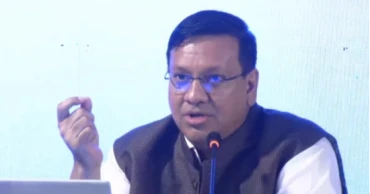
42% revenue growth target ‘historically impossible’: Citizen’s Platform
Bangladesh’s proposed FY2026-27 budget faces a ‘near-impossible revenue challenge’ that could force the government to choose between paying civil servants more and protecting the poor, the Citizen’s Platform warned Monday.
The government has set a revenue target of Tk 6.95 lakh crore for FY27, implying a growth rate of at least 42 percent over the revised FY26 target ,CPD Additional Research Director Towfiqul Islam Khan said presenting a keynote at a pre-budget dialogue at a hotel in Gulshan, organised by the Citizen’s Platform for SDGs, Bangladesh.
“No historical benchmark supports this,” he cautioned, noting that even the most optimistic compound annual growth rate from FY01 to FY19 stood at just 15.6 percent, and would still result in a shortfall of Tk 1.3 lakh crore.
The National Board of Revenue (NBR) collected only Tk 2.89 lakh crore in the first nine months of FY26 against a revised target of Tk 5.03 lakh crore, meaning revenue must grow 96 percent in the final quarter alone to meet the annual goal, a scenario CPD described as virtually impossible.
Towfiq said the proposed Ninth Pay Commission recommendations, which would raise minimum government salaries from Tk 8,250 to Tk 20,000 and maximum salaries from Tk 78,000 to Tk 1,60,000, would require an additional Tk 1.06 lakh crore beyond the government's current annual salary, allowance and pension bill of Tk 1.31 lakh crore.
While the government is reportedly considering implementing only 50 percent of the recommended basic salary increase in FY27, at a cost of Tk 30,000 to 35,000 crore, Towfiq cautioned that once rolled out, the pay scale cannot be reversed, and will squeeze allocations for subsidies, development projects and electoral commitments.
A central theme of the presentation was what Citizen’s Platform called “the tax expenditure paradox.” Bangladesh's NBR tax-to-GDP ratio has fallen to 6.6 percent in FY25, among the lowest in the world, while the country simultaneously forgoes roughly 6.9 percent of GDP through tax exemptions, based on FY22 data.
“Bangladesh forgoes nearly as much as it collects,” Towfiq said, noting that direct tax expenditure alone was 148 percent of direct tax collection in FY21.
The IMF, in its April 2025 review, suggested Bangladesh to begin phasing out tax exemptions from FY27.
CPD recommended a calibrated approach, retaining exemptions on remittance income and standard salary deductions while phasing out concessions to power and energy firms, microcredit institutions, large garments conglomerates and autonomous bodies.
Citizen’s Platform also flagged concerns over news reports suggesting the government may reintroduce tax amnesty for undisclosed income in FY27, calling it a move that would “directly contradict” the rationalisation agenda and breach a political consensus reached by all parliamentary parties.
On the debt front, the IMF has downgraded Bangladesh to “moderate risk” of both external and overall debt distress. Debt service liability, interest plus principal repayments, accounted for 26 percent of total expenditure in FY24, exceeding the entire Annual Development Programme outlay by 15 percent.
Bangladesh's debt service-to-revenue ratio stood at 33.4 percent in FY24, nearly double the 18 percent threshold set by the IMF for countries with medium debt-carrying capacity.
Platform’s field assessment, conducted across 18 districts between May 2 and 11, found that flagship welfare programmes, the Family Card, Farmers Card, mid-day meals and free school uniforms, were showing early implementation cracks.
Beneficiary selection remained unclear, grievance mechanisms were barely functional, and food quality complaints were surfacing in the school meals programme.
The Family Card scheme, which aims to reach 50 lakh beneficiaries at Tk 2,500 per month, is estimated to cost Tk 14,500 crore. The Farmers Card targeting 42.5 lakh beneficiaries at Tk 2,500 annually would cost approximately Tk 1,062 crore.
Summing up the budget outlook, Towfiq framed the FY27 challenge as a collision between economic compulsion and political necessity. Revenue must grow 42 percent, debt servicing is approaching a peak, and IMF conditionalities demand reform, while the government simultaneously faces pressure to raise salaries, expand subsidies and deliver on 51 manifesto commitments.
“Budget FY2026-27 faces dual pressures, balancing economic stability and reforms while meeting political demands to deliver quickly, all within the tightest fiscal space in recent memory,” he said.
Towfiq also urged the government to make the Ninth Pay Commission report public, publish FY25 tax expenditure estimates, and bring transparency to ADP project documents, including feasibility studies and impact assessments. “History may ultimately remember this administration for its concluding budget, rather than its beginning.”
Citizen's Platform for SDGs, Bangladesh, a network of civil society organisations, is working to advance the Sustainable Development Goals at the national level.
The event brought together policymakers, economists, development practitioners and civil society representatives ahead of the national budget expected to be placed before parliament next month.
2 months ago
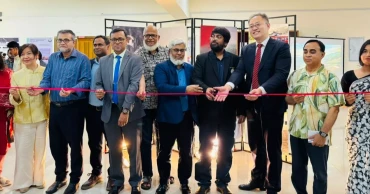
Tea plays vital role in strengthening Bangladesh-China ties: Chinese Counselor
Li Shaopeng, Cultural Counselor of the Chinese Embassy in Dhaka, said on Saturday that tea is playing a significant role in enhancing friendly relations between Bangladesh and China.
He made the remarks while speaking in a seminar as the guest of honour. The seminar was on ‘Tea and the World: Aesthetic Meeting,’ organized by the Chinese Corner of the Political Studies Department at Shahjalal University of Science and Technology (SUST).
"Tea is not just a beverage; it is a symbol of friendship, mutual respect, and people-to-people connection between Bangladesh and China," Li said. "In Chinese civilization, tea represents harmony, patience, wisdom, and human connection."
SUST Vice-Chancellor Prof. Dr. AM Sarwar Uddin Chowdhury attended the event as the chief guest, while Pro-Vice Chancellor Prof. Dr. Sajedul Karim and other senior faculty members were present as special guests.
During the technical session, Dr. Yang Hui, Director of the Confucius Institute at Dhaka University, presented a keynote on the history and traditions of Chinese tea culture.
The seminar also featured a cultural segment including dance and musical performances by students. A highlight of the event was a day-long art exhibition featuring 20 paintings by various artists, depicting their travel experiences in China and various aspects of Chinese culture.
The event was presided over by Prof. Dr. Md. Nazrul Islam, Head of the Political Studies Department, and moderated by Prof. Dr. Md. Shahabul Haq, Coordinator of the Chinese Corner.
Organizers noted that the exhibition remained open to students and visitors throughout the day to promote cultural understanding through art and tradition, according to a press release.
2 months ago

26 RMG owners allege Premier Bank fraud, demand high-level probe
Twenty-six export-oriented garment factory owners on Saturday demanded a high-level independent investigation into what they alleged to be large-scale financial irregularities at Premier Bank PLC’s Narayanganj branch, including LC fraud and the creation of fictitious loans.
Speaking at a press conference at the Economic Reporters' Forum (ERF) office in the capital, the business owners accused bank officials of siphoning off funds, illegal foreign currency transactions, and "collusion" between the branch and head office.
In a written speech, Arifur Rahman, managing director of Doyes Land Apparels Ltd, claimed that funds were siphoned using his company’s name without his knowledge. "Bank officials, in collusion with the head office and the then chairman, carried out these irregularities without our consent," he alleged.
The businesses claimed that the irregularities date back to 2017, involving forged sales contracts and back-to-back letters of credit (LCs) created without actual raw material imports. They further alleged that they were forced to purchase US dollars at rates Tk 12–15 higher than the market rate, creating massive financial liabilities.
The garment owners expressed frustration with Bangladesh Bank, stating they had submitted 22 letters seeking intervention but received no remedy. "Bangladesh Bank conducts annual inspections. Then how did these issues go unnoticed?" questioned Dil Mohammad Imran, managing director of Knit Reflex Ltd.
The press conference took a sombre turn as owners linked the "financial and psychological pressure" from the bank to the deaths of two managing directors. They claimed Md Hasibuddin Mia of Total Fashion died in December 2024 after being pressured to sign documents, while the MD of West Apparel suffered a fatal heart attack in September 2025 following "false allegations" filed with the Anti-Corruption Commission.
The affected entrepreneurs warned that the suspension of banking operations for 23 of the companies now threatens the livelihoods of nearly 25,000 workers.
The group demanded a neutral investigation involving the Ministry of Finance and Bangladesh Bank, alongside a full audit by a reputable firm. They noted that a formal application was submitted to the Bangladesh Bank governor on April 6 seeking immediate intervention to save their businesses and protect export earnings.
2 months ago

Gold prices drop Tk 6,589 per bhori in two back-to-back cuts in Bangladesh market
Gold prices in Bangladesh fell by Tk 6,589 per bhori across two consecutive reductions within a single day, with the Bangladesh Jewellers Association (BAJUS) setting the new price of 22-carat gold at Tk 2,38,121 per bhori on Saturday.
In a statement issued Saturday morning, BAJUS announced a reduction of Tk 4,374 per bhori for 22-carat gold.
The day before, on Friday morning, the association had already cut prices by Tk 2,215 per bhori, resulting in two successive reductions in under 24 hours.
Under the new rates, the price of the finest 22-carat gold is Tk 2,38,121 per bhori after a cut of Tk 4,374. The 21-carat rate was reduced by Tk 4,141 to Tk 2,27,331 per bhori, while 18-carat gold was lowered by Tk 3,558 to Tk 1,94,847 per bhori.
The traditional-method gold price was reduced by Tk 2,916, now set at Tk 1,58,689 per bhori.
Gold prices in Bangladesh have been adjusted 65 times so far this year, with rates raised on 35 occasions and reduced on 30 others.
Along with gold, silver prices were also revised downward. The price of 22-carat silver was cut by Tk 117 to Tk 5,657 per bhori.
The 21-carat silver rate was reduced by Tk 175 to Tk 5,365, while 18-carat silver dropped by Tk 117 to Tk 4,607 per bhori. Traditional-method silver was also lowered by Tk 117 to Tk 3,441 per bhori.
Silver prices have undergone 39 adjustments this year, with 21 increases and 18 reductions.
The domestic price cuts reflect mounting pressure from the global market. According to the World Gold Council, spot gold prices fell nearly 3 percent on Saturday, while silver declined by more than 10 percent.
Gold has now lost 2.26 percent of its value over the past 30 days, pointing to a sustained downward trend in international markets.
2 months ago
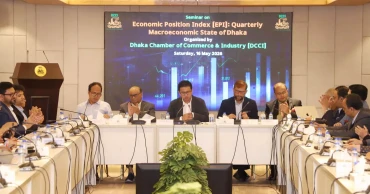
Expand EPI nationwide to boost policy impact, experts urge at DCCI seminar
Economists, trade experts and government officials on Saturday called for expanding the Dhaka Chamber of Commerce and Industry's newly launched Economic Position Index (EPI) beyond Dhaka to make it a nationally effective policy tool, while stressing the urgency of addressing high inflation, sluggish investment and LDC graduation risks facing Bangladesh's economy.
Speaking as discussants at a seminar titled “Economic Position Index (EPI): Quarterly Macroeconomic State of Dhaka” held at the DCCI Auditorium in the capital chamber President Taskeen Ahmed said Bangladesh's economy is currently navigating a challenging period marked by high inflation, pressure on foreign exchange reserves, sluggish investment, energy uncertainty, rising manufacturing costs and declining employment opportunities.
He noted that conventional macroeconomic indicators are failing to capture real-time conditions and short-term changes, limiting effective policy response.
Policy Research Institute of Bangladesh (PRI) Chairman Dr Zaidi Sattar said while the research was conducted focusing on Dhaka, its acceptability and effectiveness would increase significantly if expanded nationwide.
Such an index would help entrepreneurs assess the prevailing business climate and take appropriate decisions accordingly, he added.
Nesar Ahmed, International Trade Expert (Former Additional Secretary), Support to Sustainable Graduation Project (SSGP), warned that Bangladesh exports its highest volume of goods to European markets under duty-free facilities but risks losing these preferential arrangements following its graduation from the least developed country category.
He said the CMSME sector faces particular exposure and stressed there is no alternative to reducing the cost of doing business and ensuring supportive business policies to overcome the challenge.
Additional Secretary Shibir Bicitro Barua of the Ministry of Commerce's IIT Wing identified high inflation, negative investment trends and fragility in the banking and financial sectors as the country's major economic challenges at present.
He informed the seminar that the Ministry of Commerce has initiated necessary reforms to the Import Policy Order, expected to be finalised within the next few months.
Dhaka University Professor Dr Mizanur Rahman observed that expenditures in both the public and private sectors have in recent years outpaced income levels, while sluggish investment growth has slowed overall economic activity.
He emphasised the necessity of institutional reforms, particularly strengthening the capacity of financial sector institutions.
Ministry of Foreign Affairs Director General for International Trade, Investment and Technology Dr Syed Muntasir Mamun said Bangladesh should rely more on its capital market for long-term financing rather than depending heavily on the banking sector.
He said the capital market remains weak and that there is also an absence of the necessary mindset to increase reliance on it.
Bangladesh Investment Development Authority (BIDA) former Director General Md Ariful Hoque said sector-specific information plays an effective role in policymaking, institutional reform and the provision of incentives.
Bangladesh Bank Chief Economist Professor Dr Akhand Mohammad Akhtar Hossain said there is no alternative to foreign direct investment for accelerating economic growth, an area where Bangladesh continues to lag behind.
Senior Private Sector Specialist at the International Finance Corporation (IFC) of the World Bank Group, Miah Rahmat Ali, urged the government to step forward with necessary policy and financial support for entrepreneurs to tackle global economic instability caused by wars and climate change.
Former DCCI Senior Vice President Alhaj Abdus Salam and former Director M Bashirullah Bhuiyan also spoke during the open floor discussion. DCCI Senior Vice President Razeev H Chowdhury, Vice President Md Salem Sulaiman, members of the Board of Directors and representatives from the public and private sectors were present on the occasion.
2 months ago
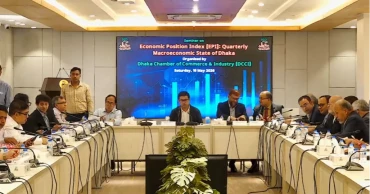
DCCI index reveals ‘deeply imbalanced’ economy despite moderate growth
Dhaka Chamber of Commerce and Industry (DCCI) on Saturday unveiled its Economic Position Index (EPI) for the second quarter of FY2026 (October–December 2025), revealing that Dhaka's economy recorded a moderate overall score of 0.50, reflecting visible advancement but persistent structural weakness particularly in the manufacturing sector.
The index was presented by DCCI Acting Secretary General Dr AKM Asaduzzaman Patwary at the DCCI auditorium in the capital.
The EPI, calculated as the geometric mean of three sectoral scores, showed a sharp divergence across sectors.
Agriculture topped the index with a high score of 0.80, driven by significant growth in crop and fish production, though livestock output recorded a marginal 4.8 percent decline due to seasonal factors.
The services sector scored 0.47, reflecting moderate improvement, while manufacturing registered a low score of 0.33, indicating severely weak industrial activity.
“Moderate improvement indicates a visible advancement in economic activities in Dhaka with no sign of heavy stagnation,” the report stated. “The economy heads towards a positive trend in the last quarter of 2025.”
However, DCCI's strategic assessment struck a cautionary note, describing the economy as “consumption-led rather than production-led” and “stable on the surface but deeply imbalanced underneath.”
The index, developed by DCCI as a quarterly economic monitoring tool, draws on a survey of 762 respondents, 330 from manufacturing and 432 from the services sector, across selected industries in Dhaka district, which contributes 46 percent to Bangladesh's GDP. The survey was conducted between January 11 and February 4, 2026, and covered Q1 (July–September FY2026) and Q2 (October–December FY2026) data.
Sectors assessed include agriculture (crops, fisheries and livestock), manufacturing (RMG, textiles, food, pharmaceuticals, leather and others) and services (wholesale trade, real estate, land transport, health and banking). Sub-sector weights were assigned based on gross output and gross value added shares aligned with FY2025 GDP contribution.
The report catalogued a range of recurring sectoral bottlenecks. Manufacturing faces energy shortages and unpredictable tariffs, a severe letter of credit liquidity crisis, a 15 percent VAT described as regressive, port-level lead-time delays and widespread demands for unofficial payments.
Agriculture grapples with post-harvest losses from inadequate cold-chain infrastructure and a lack of irrigation access in northern districts. The services sector is burdened by record inflation dampening consumer demand, rising operational costs and systemic exclusion of small businesses from formal credit.
DCCI called for a suite of targeted interventions. For manufacturing, it recommended an immediate launch of MSME loan facilities at nine percent or below, uninterrupted gas and power supply to industrial zones, a temporary reduction of VAT to between five and ten percent to boost export competitiveness, and customs fast-track measures at ports.
For agriculture, it urged the development of a cold-chain network, irrigation scale-up in northern districts and real-time digitisation of field-level reporting under the Department of Livestock Services and Department of Fisheries.
For services, it proposed a one-stop digital licensing hub to eliminate unofficial fees, anti-syndicate market monitoring and low-interest, collateral-free credit for small businesses.
The index is also intended to inform Bangladesh Bank's monetary policy stance, quarterly fiscal adjustments and periodic revision of industrial policy, according to DCCI.
DCCI positioned the EPI as a significant addition to Bangladesh's macroeconomic toolkit, noting that existing instruments such as GDP and the Quantum Index of Industrial Production fail to provide real-time private-sector sentiment or capture short-term fluctuations and seasonality.
The chamber said the index would be published every quarter to track evolving economic momentum, particularly in the context of Bangladesh's LDC graduation preparations.
2 months ago

BDDL Properties marks 24 years with focus on skills dev, human capital
BDDL Properties Ltd celebrated its 24th founding anniversary through a daylong programme titled “Jug Jugantore,” reaffirming its commitment to national skills development, human resource advancement and sustainable social progress.
The event, held on May 13 at Siam Agro and Training Institute at Keraniganj on the outskirts of the capital, brought together distinguished guests from different sectors, including academics, government officials, development professionals, business leaders, students and employees of the organisation.
The programme began with recitation from the Holy Quran, followed by presentations highlighting the activities of BDDL’s affiliated organisations, including Skills Academy BD, bk IT Institute, Shukrishi Partner Program, BK Foundation and Dayal Nagar Baharunnessa Public Library.
As part of the event, certificates were distributed among over 100 students who completed various courses under the Bangladesh National Qualifications Framework, while several new market-oriented training courses were also inaugurated.
Managing Director of BDDL Properties MA Baten Khan said the company’s mission extends beyond constructing buildings to building people’s dreams, trust and a secure future.
2 months ago