Local-Business
Bangladesh enters new era with 1st private container port; contract signed
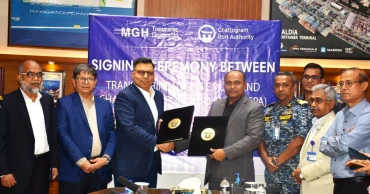
Bangladesh on Monday entered a new era of maritime logistics with the signing of a contract to open the MGH Terminal, the country’s first private container port, in what is being described as a ‘historic occasion’ for the maritime industry.
Chairman of the Chittagong Port Authority (CPA) Rear Admiral Moniruzzaman lauded the initiative and said the contract signing of the MGH Terminal is a ‘historic occasion’ for the country’s maritime industry.
“By integrating private sector agility with green technology, this terminal provides vital strategic value to the Chittagong Port. I am confident MGH Terminal will set a new benchmark for vessel turnaround times and environmental responsibility that will make our exports more competitive on the global stage,” he said.
The contract signing of the facility was also attended by Group CEO of MGH Anis Ahmed, and key industry stakeholders at the CPA board room.
The MGH Terminal stands as a testament to Bangladesh's growing stature in international trade, promising a faster, cleaner, and more cost-effective gateway for the nation's burgeoning import-export volumes, said the company.
To be built on seven acres of land with a 250-metre jetty, officials said, the MGH Terminal represents a paradigm shift in the country's supply chain infrastructure.
With a static capacity of 3,500 TEUs and a monthly handling capability of 40,000 TEUs, the terminal is set to expand CPA’s monthly landing capacity by 102 vessels.
Officials said the MGH Terminal is distinguished as Bangladesh’s first ‘Green Port,’ integrating cutting-edge sustainable technologies to minimize its environmental footprint.
The facility will feature zero-emission operations, renewable energy, carbon reduction and innovative design.
The terminal will offer a radical improvement in vessel turnaround times.
Located strategically, vessels can berth at the MGH Terminal in approximately 30 minutes from the river mouth, compared to the standard 2-hour window at the main Chittagong Port, officials said.
This efficiency results in significant fuel savings of 0.6 to 1.3 tons per vessel call, drastically reducing costs for international shipping lines.
Group CEO of MGH Anis Ahmed emphasised the group's commitment to national development and said the MGH Group is investing Tk 550 crore of their own resources to build this state-of-the-art terminal.
“Our focus is on absolute efficiency; while other projects like the APM Terminal at Laldia are still in development and unreasonably escalate cost of investment within Chittagong Port, MGH Terminal is designed to be leaner, faster, and more technologically advanced. We are not just moving containers; we are moving the Bangladesh economy forward,” he said.
As one of Bangladesh's largest multinationals with operations in 26 countries including five European nations, MGH Group is leveraging its global expertise to woo Foreign Direct Investment (FDI) from top-tier global companies.
The terminal is expected to create tens of thousands of new jobs aligning with the economic vision of Prime Minister Tareque Rahman to build a highly efficient, modern economy, officials said.
3 months ago

AmCham holds 29th AGM in Dhaka
Dhaka, April 19 (UNB) – The American Chamber of Commerce in Bangladesh (AmCham) held its 29th Annual General Meeting (AGM) on Sunday to review its activities and engage with its members.
The meeting, held at a hotel in Dhaka, was chaired by AmCham President Syed Ershad Ahmed.
Several members of the AmCham Executive Committee were in attendance, including Treasurer Al-Mamun M. Rashel, as well as Rashed Mujib Noman, Rubaba Dowla, and Mirza Shajib Raihan.
Paul Frost, Commercial Counselor at the US Embassy in Dhaka and Adviser to AmCham Bangladesh, also attended the session, along with other distinguished members of the chamber.
Chowdhury Kaiser Mohammad Riyadh, Executive Director of AmCham, was present to facilitate the proceedings.
The event served as a platform for the chamber’s leadership to discuss organizational progress and future initiatives within the bilateral trade community.
3 months ago

5 private banks brought on board BIDA's One-Stop Service platform
Bangladesh Investment Development Authority (BIDA) on Sunday signed memoranda of understanding with five private commercial banks to integrate them into its One Stop Service (OSS) platform, expanding the digital investment facilitation ecosystem.
The signing ceremony, held at BIDA's conference room, brought NCC Bank PLC, One Bank PLC, United Commercial Bank (UCB) PLC, Shimanto Bank PLC and Al-Arafah Islami Bank PLC into the fold.
BIDA Executive Member Air Commodore Md. Shaharul Huda, who chaired the event, said the authority was steadily strengthening its OSS platform to deliver faster, simpler and more modern services to investors. "By integrating these five leading banks, investors can now access essential banking services from a single window."
Under the agreements, investors will be able to open bank accounts online through the OSS portal including provisional accounts for foreign investors without approaching banks separately.
The OSS platform currently offers 142 services through 47 stakeholder agencies including BIDA, and has processed over 215,000 applications to date. Sunday's MoUs bring BIDA's total such agreements with various organisations to 68.
Looking ahead, BIDA has set a target of delivering more than 150 services from 60 institutions through the OSS. The services will also be accessible through BanglaBiz, a unified platform being developed to integrate all Investment Promotion Agencies (IPAs) under one roof.
BIDA Director (OSS and Data Analytics) Sunil Kumar Adhikary delivered the welcome address, while Director General Jiban Krishna Saha Roy presented an overview of the OSS system.
Senior officials from all five banks attended the ceremony, along with representatives from Bangladesh Bank and the Financial Institutions Division.
3 months ago

MCCI chief seeks supportive, growth-oriented budget
Metropolitan Chamber of Commerce and Industry (MCCI) President Kamran T Rahman on Sunday called for a "supportive and growth-oriented" national budget for fiscal year 2026-27, warning that businesses, particularly small and medium enterprises, are under severe strain from high inflation, sluggish investment, elevated interest rates and foreign exchange pressure.
Speaking at a joint seminar of MCCI and the Economic Reporters' Forum (ERF) on budget priorities, he said the upcoming budget must be balanced and realistic, arguing that a sensible tax policy can simultaneously boost revenue, encourage investment and generate employment rather than punish businesses further.
Private sector-led growth vital to revive Bangladesh’s economy: MCCI report
Kamran proposed full integration of the National Identity (NID) and Tax Identification Number (TIN) databases to expand the tax net, noting that though over one crore taxpayers hold TINs, fewer than half file returns.
He also recommended introducing a symbolic minimum tax to bring new taxpayers into the fold and simplifying return filing through mobile applications.
The MCCI chief urged the government to reconsider conditions tied to corporate tax benefits, especially restrictions on cash transactions, saying many businesses are unable to avail themselves of reduced rates due to practical limitations.
He further suggested cutting tax rates for both listed and non-listed companies by an additional 2.5% to stimulate investment.
Kamran proposed a unified taxpayer profile covering income tax, VAT and customs to reduce administrative complexity and harassment, along with online hearings and digital notices to cut time and cost for businesses.
On VAT and customs, he recommended simplifying procedures, ensuring valuation based on transaction value, strengthening automation and allowing disclosure of quantity instead of value in certain VAT forms to protect business confidentiality.
The MCCI President called for special policy support for SMEs, including separate tax treatment, input tax credit facilities and reduced duty and VAT on raw materials.
Comprehensive reform roadmap presented
The policy recommendations were formally presented by Md Shahadat Hossain, former President of Institute of Chartered Accountants of Bangladesh (ICAB) through a paper titled “National Budget 2026-2027: Private Sector Priorities & Perspectives”, which laid out a wide-ranging roadmap covering corporate tax, VAT, customs and capital market reform.
Shahadat said the national budget should be seen not merely as a revenue-and-expenditure statement but as a comprehensive policy framework encompassing economic growth, investment, employment and inflation management.
He flagged Bangladesh's tax-to-GDP ratio hovering between 6.5% and 7.3% in FY2024-25 as among the lowest globally, well below the 15% threshold considered necessary for sustainable development.
Shahadat noted that around 66% of total tax revenue comes from indirect taxes, disproportionately burdening lower-income groups and widening inequality.
On corporate tax, the paper recommended rates of 20% for publicly traded companies with a minimum 10% IPO, 22.5% for those with less than 10% IPO, 25% for non-publicly traded firms, 20% for one-person companies, and 25% for trusts, associations of persons and firms.
For individuals, it proposed a tax-free threshold of Tk 5 lakh, with graded rates from 5% to 30% on higher income slabs.
The paper also called for rationalising withholding taxes, including a 0.3% tax on gross receipts, TDS on supply between 1% and 3%, and import-stage tax reduced from 5% to 3% to ease compliance and prevent double taxation.
On administration, the recommendations included limiting reopening of tax files to within six years, prohibiting estimated profit assessments, mandating written reasons for disallowances, and digitising hearings and notices.
On capital markets, the paper stressed reducing overdependence on bank financing and proposed tax exemptions on zero-coupon bond investments, tax-free capital gains on treasury instruments in secondary markets and removal of the super tax on stock dividends.
Shahadat concluded that Bangladesh stands at a critical juncture, and that a budget reflecting private sector priorities will broaden the tax base, reduce compliance burden, attract investment and strengthen investor confidence.
3 months ago

DCCI signs MoCs with three Chinese chambers to boost Bangladesh-China business ties
Dhaka Chamber of Commerce & Industry (DCCI) has signed Memoranda of Cooperation (MoCs) with three leading Chinese business chambers to strengthen bilateral relations and expand trade and investment cooperation.
The agreements were signed on Saturday in Guangdong, China, with the Guangdong Chamber of Commerce of Importers & Exporters (GDCCIE), the China Chamber of Commerce for Import and Export of Machinery and Electronics Products (CCCME), and the Guangzhou Chamber of Commerce for Outbound Business, according to a DCCI press release.
DCCI Senior Vice President and delegation leader Razeev H Chowdhury signed the MoCs on behalf of the chamber, while representatives of the respective Chinese organisations signed for their sides.
As part of the visit, DCCI delegation members also joined the “Trade Bridge–Bangladesh Matchmaking Event” held at the China Foreign Trade Centre during the 139th Canton Fair, where they participated in B2B meetings with around 270 Chinese companies.
Speaking at a business session, Razeev said China remains a driving force in global trade and a major source of Bangladesh’s imports, which stood at around $18 billion in the last fiscal year.
He noted that China is the fifth-largest foreign investor in Bangladesh, with investments of about $1.7 billion across multiple sectors.
Razeev highlighted significant opportunities for bilateral collaboration in agro-processing, infrastructure, renewable energy, shipbuilding, automotive, light engineering, semiconductors and other high-tech industries.
Director of CCPIT Qiu said Nansha holds strategic geographic importance and recorded a regional GDP exceeding RMB 240 billion in 2025, offering strong prospects for joint ventures in industrial clusters including automobiles, shipbuilding and biomedicine.
Guangdong Chamber President Wu Shaowei said Bangladesh could serve as a gateway for Guangdong-made products to South Asian markets and stressed the need to deepen business linkages.
CCCME Vice President Shi Yonghong described the 139th Canton Fair as a major platform for global business engagement, noting that it would help strengthen connections between Bangladeshi entrepreneurs and Chinese manufacturers.
3 months ago

DBA signs MoU with JSDA to boost capital market cooperation
The DSE Brokers Association of Bangladesh (DBA) has signed a memorandum of understanding (MoU) with the Japan Securities Dealers Association (JSDA) aimed at fostering sustainable development, improving efficiency and strengthening international cooperation in Bangladesh’s capital market.
The agreement was signed on April 9 by Takashi Hibino, chairman and CEO of JSDA, and Saiful Islam, president of DBA, on behalf of their respective organisations, according to a press release issued on Saturday.
The MoU marks DBA’s first formal agreement with an international self-regulatory organisation (SRO), representing a significant milestone for the association and its efforts to strengthen Bangladesh’s capital market through global collaboration.
Under the agreement, both organisations will work together in several key areas to support the development of the securities market. These include exchange of laws and regulations related to financial investment business and capital markets, development of governance frameworks, policy-making processes and operational practices of SROs, and strengthening supervision and compliance mechanisms.
The cooperation will also focus on enhancing efficient and effective financial transaction systems, promoting innovation in new investment instruments and services, and expanding investor education programmes. Both sides also agreed to extend cooperation and consultation on other areas of mutual interest as required.
Commenting on the agreement, DBA President Saiful Islam said the MoU represents a significant advancement for Bangladesh’s capital market.
“Partnering with a well-established and experienced self-regulatory organisation like JSDA will play a crucial role in strengthening our market structure, governance and institutional capacity,” he said.
The press release also noted that the Asia Securities Forum (ASF), established and operated by JSDA, is a prominent international platform for the securities industry in the Asia-Pacific region.
Since becoming a member in 2023, DBA has been actively participating in various international meetings, seminars and initiatives organised by the forum, contributing to the development of Bangladesh’s capital market.
3 months ago
'Significant work remains' in reforming financial, fiscal, and exchange rate sectors: IMF
The International Monetary Fund (IMF) has emphasized that Bangladesh requires extensive reforms across three critical sectors, including financial, fiscal, and foreign exchange.
According to the global lender, significant work remains to be done in each of these areas to ensure economic stability.
Krishna Srinivasan, Director of the IMF's Asia and Pacific Department, made these remarks on Thursday while responding to questions from Bangladeshi journalists at a press conference in Washington, D.C. The briefing was attended by media representatives from India, Nepal, Sri Lanka, and South Korea, among other nations.
The briefing took place on the sidelines of the World Bank-IMF Spring Meetings, which commenced on April 13 and are scheduled to conclude on April 18. A 14-member Bangladeshi delegation, led by Finance and Planning Minister Amir Khosru Mahmud Chowdhury and Bangladesh Bank Governor Md. Mostaqur Rahman, is currently attending the meetings.
Reflecting on his visit to Bangladesh on March 24, where he met with Prime Minister Tarique Rahman and the Finance Minister, Srinivasan shared his impressions of the new government's capacity for reform.
"I visited Bangladesh and held meetings with the Prime Minister and other high-level officials. We discussed the challenges ahead," Srinivasan stated.
"I noted that a government with a strong majority has the opportunity to undertake ambitious reform agendas. They have listened to our suggestions; now we must wait and see how they respond," he opined.
The IMF Director expressed concern over Bangladesh's revenue collection performance. "In terms of revenue mobilization, Bangladesh has not performed well. It remains at a low level and has seen further deterioration over the last three years," he noted.
Regarding the release of the next loan tranche, he mentioned that discussions are ongoing, and updates would be provided in due course.
Highlighting the situation in Sri Lanka, Srinivasan pointed out that under its IMF-supported program, the country has made significant strides in increasing its tax-to-GDP ratio over the last three years, gradually building financial buffers. He noted that Sri Lanka is now in a relatively better position to support citizens affected by energy price shocks.
Srinivasan warned that because Bangladesh has a small revenue base, the government faces greater pressure when trying to provide social safety nets. "The people of Bangladesh are suffering. Therefore, it is crucial that whatever resources Bangladesh possesses are utilized with maximum target-based efficiency," he urged.
He advised Bangladesh to focus on increasing revenue collection while addressing other barriers in the financial sector to boost both short-term and long-term growth. Like other Asian nations, Bangladesh has been impacted by global energy shocks, and Srinivasan concluded that policy support and program discussions are active, with the outcome depending on how effectively these dialogues progress.
3 months ago

‘Safecon 2026’ opens in Dhaka to boost renewable energy, infrastructure ties
A three-day international exhibition titled “11th Safecon 2026” has begun in Dhaka to enhance international cooperation in the renewable energy and infrastructure sectors.
The exhibition was inaugurated at the International Convention City Bashundhara (ICCB) the capital’s Kuril on Thursday.
Organized by Savor International Limited, the exhibition will remain open to all visitors from 16 April to 18 April every day from 10 am to 7 pm, said a media statement.
Postmaster Communication is serving as the Event Partner of the exhibition.
The event was inaugurated by the Special Guest Mostafa Al Mahmud, President, Bangladesh Sustainable and Renewable Energy Association (BSREA).
Bilal Belyurt, Commercial Counsellor, The Embassy of Türkiye in Dhaka, Arefeen Raafi Ahmed, 2026 National President, JCI Bangladesh, Sunghoon Lee, Deputy Director, Korea Trade-Investment Promotion Agency (KOTRA), Wang Hongbo, Vice President, Chinese Enterprises Association In Bangladesh (CEAB), A.Z.M. Azizur Rahman, Senior Vice President, Bangladesh China Chamber of Commerce & Industry (BCCCI), and Md. Faizul Alam, Managing Director of Savor International Limited, were also present at the programme.
The objective of the “11th SAFECON 2026” exhibition is to enhance facilities and opportunities in the infrastructure construction materials, water management, timber, engineered wood and technology, power industry sectors.
“SAFECON 2026” serves as a business platform where companies from both local and international markets have the opportunity to showcase their products, technologies, and solutions, which will contribute to the development of the country’s infrastructure.
The exhibition aims to strengthen B2B collaboration and the exchange of experience, and to inspire policymakers, engineers, entrepreneurs, and foreign investors involved in national development to explore new avenues for a progressive and sustainable future.
The event will play a significant role in expanding business networking, facilitating technology exchange, and creating new investment opportunities. It will also strengthen collaboration among policymakers, engineers, entrepreneurs, and foreign investors.
A total of 400 stalls from more than 10 countries including Bangladesh, China, Korea, Turkey, India, Malaysia, and Singapore are taking part in the expo.
The domestic and international companies related to infrastructure construction, power generation, renewable energy, water management, infrastructure equipment and machinery, timber, engineered wood, and technology are participating in the exhibition.
3 months ago

DSE, CSE end week in broad-based losses despite marginal index gains
Bangladesh's capital market closed the week on a cautious note on Thursday, with both Dhaka Stock Exchange (DSE) and Chittagong Stock Exchange (CSE) recording marginal index gains while the majority of listed companies saw their share prices decline.
At the DSE, the benchmark DSEX index edged up by just one point, the blue-chip DS30 rose six points, while the Shariah-based DSES remained flat. This offered little comfort to investors as decliners significantly outnumbered gainers.
Of the total companies traded on the DSE, 201 saw price falls against 131 gains, while 62 remained unchanged.
Turnover also slipped with total transactions falling Tk 30 crore from the previous session to stand at Tk 806 crore, compared to Tk 836 crore the day before.
In the block market, shares worth Tk 26 crore changed hands across 38 companies, with Al-Arafah Islami Bank PLC topping the block board at Tk 3.80 crore.
Legacy Footwear Limited led the gainers' chart with a 6.25% price increase, while Premier Leasing and Finance Limited bore the steepest loss, shedding over 7% of its value.
The CSE mirrored a similar trend, the CASPI gained nearly five points yet failed to reflect broader market health.
Of the companies traded, 88 recorded price declines against 86 that advanced, while 34 remained unchanged.
Daffodil Computers PLC surged nearly 10% to top the gainers' list, whereas Apex Tannery Limited shed close to 10% to finish at the bottom.
Market analysts note that the divergence between index movements and broader price declines suggests selective buying in heavyweight stocks, with overall investor sentiment remaining subdued.
3 months ago
BEPZA’s 45 years: The $125bn export powerhouse transforming Bangladesh’s economy
The Bangladesh Export Processing Zones Authority (BEPZA), a pioneer investment promotion agency, stepped into its 46th year of operations on Wednesday, marking four and a half decades of transformative impact on industrialisation, exports, and employment.
Operating under the Prime Minister's Office (PMO), BEPZA’s journey began following the BEPZA Act 1980, an initiative aimed at attracting Foreign Direct Investment (FDI) during the post-independence economic reconstruction.
The entity officially commenced its journey via a gazette notification on April 15, 1981, eventually ushering in a new era of export-led growth with the launch of Chattogram EPZ in 1983.
Chinese firm to invest $15.34m in garment factory at BEPZA Economic Zone
Economic Giant on Minimal Land
BEPZA has set a global benchmark for achieving high economic returns from limited land resources. Occupying only 3,550 acres – less than 0.001% of the country’s total land mass – the EPZs contribute nearly 15%-20% of Bangladesh’s total national exports. In the fiscal year FY2024-25, BEPZA’s contribution to national exports stood at 17.03%.
Over the last 45 years, the authority has attracted cumulative investments worth US$7.29 billion and facilitated the export of goods valued at more than $125 billion.
Current Footprint and Expansion
Currently, BEPZA manages eight EPZs: Chattogram, Dhaka, Mongla, Cumilla, Uttara, Ishwardi, Adamjee and Karnaphuli, alongside the BEPZA Economic Zone in Mirsharai, Chattogram. Work on establishing new EPZs in Jashore and Patuakhali is also progressing rapidly.
The agency famously revitalised the national industrial landscape by converting non-profitable state enterprises, such as the Adamjee Jute Mills and Chattogram Steel Mills, into high-performing EPZs.
Employment and Women Empowerment
The zones currently employ approximately 5.5 lakh Bangladeshi citizens. A significant majority of this workforce consists of women, playing a pivotal role in the country’s social development and female empowerment.
Beyond employment, BEPZA ensures worker welfare through dedicated hospitals, day-care centres, and educational institutions within the zones.
Diversification and Green Industrialisation
While the ready-made garment (RMG) sector remains a core component, BEPZA has successfully diversified the "Made in Bangladesh" portfolio. High-value products manufactured in the zones now include automobile parts and electronic components, camera lenses and eyeglasses frames, bicycles, and high-end footwear.
Furthermore, BEPZA is leading the way in sustainable manufacturing with 27 LEED-certified green factories (including eight Platinum-rated). As of March 2026, the zones produce 32 MW of solar power, with a target to meet 25% of their total electricity demand from solar energy by 2030.
The ‘Brand’ of Trust
With its long-standing "One Window Service" model, BEPZA has become a symbol of reliability for both local and foreign investors. By ensuring strict compliance, a safe working environment, and efficient management, the authority continues to serve as a successful model for global industrialisation.
As it enters its 46th year, BEPZA remains committed to driving sustainable and inclusive economic growth for Bangladesh.
3 months ago