Local-Business

Gold rebounds after recent cut in Bangladesh
Bangladesh Jewellers Association (BAJUS) on Wednesday raised the price of gold by Tk 2,216 per bhori, setting the new rate for 22-carat gold at Tk 2,50,193 per bhori, effective immediately.
In a morning statement, BAJUS said the price revision was made in light of the overall market situation following a rise in the price of pure (tejabi) gold in the local market.
Under the revised rates, 21-carat gold will be sold at Tk 2,38,820 per bhori, 18-carat at Tk 2,04,703, and traditional-method gold at Tk 1,66,737 per bhori (1 bhori = 11.664 grams).
The last adjustment was made on the morning of April 9, when BAJUS had cut the price by Tk 4,432 per bhori, setting the 22-carat rate at Tk 2,47,977.
So far in 2026, gold prices in the domestic market have been revised 55 times; raised on 32 occasions and reduced on 23.
Silver prices also revised upward
Alongside gold, BAJUS also raised silver prices on Wednesday, increasing the rate by Tk 350 per bhori. The new price of 22-carat silver has been fixed at Tk 6,065 per bhori.
Other revised silver rates include: 21-carat at Tk 5,774 per bhori, 18-carat at Tk 4,957 per bhori, and traditional-method silver at Tk 3,732 per bhori.
Silver prices have been adjusted 34 times so far this year; increased on 19 occasions and reduced on the remaining 15.
3 months ago

DCCI team heads to China Wednesday to boost bilateral trade
A 22-member delegation of the Dhaka Chamber of Commerce and Industry (DCCI) will leave here for Guangzhou, China on Wednesday on a five-day visit aimed at strengthening Bangladesh-China economic engagement and expand bilateral trade and investment cooperation.
The delegation, led by DCCI Senior Vice President Razeev H Chowdhury, comprises exporters and importers involved in food manufacturing, ceramics, information technology, automotive, industrial oil and grease, shipping and logistics services, electrical and electronics, pharmaceuticals, renewable energy, defence equipment and ready-made garment sectors, according to a press release issued on Tuesday.
During the visit, the DCCI team will participate in a series of business forums and B2B networking sessions with leading Chinese trade promotion organisations and chambers, including CCPIT Guangzhou, CCPIT Guangzhou Nansha, Guangzhou Nansha Association of Trade in Services, Guangdong Chamber of Commerce of Importers & Exporters, China Chamber of Commerce for Import and Export of Machinery and Electronics Products and Guangzhou Overseas Enterprises Chamber of Commerce.
The programme will also feature participation in China’s premier international trade exhibition, the Canton Fair, where the delegation will engage in structured buyer-seller matchmaking sessions and on-site business exploration. The team is also scheduled to attend the Guangzhou Sourcing Fair.
Through the visit, DCCI aims to promote international trade, strengthen private sector collaboration and support Bangladeshi enterprises in integrating more effectively into global supply chains, the release added.
3 months ago

RCEP accession offers Bangladesh modest export gains, but major structural shift Study
Bangladesh’s potential accession to the Regional Comprehensive Economic Partnership (RCEP) could deliver positive trade and welfare gains, but also pose significant fiscal and structural challenges, according to a new study.
The analysis, conducted by the Research and Policy Integration for Development (RAPID) and published recently, suggests that while joining the world’s largest trade bloc may not immediately transform Bangladesh’s export performance, it could act as a long-term catalyst for economic diversification, regional integration and investment inflows.
RCEP, the world’s largest free trade agreement, was signed in November 2020 and came into force on January 1, 2022. The bloc brings together 15 Asia-Pacific economies, comprising the 10 ASEAN member states along with Australia, China, Japan, New Zealand and South Korea, and accounts for nearly 30% of global GDP and population. The agreement aims to lower tariffs, harmonise trade rules and facilitate more efficient regional supply chains.
Bangladesh has expressed interest in joining RCEP and has sought New Zealand’s support to secure membership in the world’s largest trade pact. The request was made in March during a bilateral meeting between Commerce Minister Khandakar Abdul Muktadir and New Zealand Trade and Investment Minister Todd McClay in Yaoundé, Cameroon, on the sidelines of a World Trade Organization conference.
The study finds that Bangladesh’s exports to RCEP markets could rise modestly, reflecting the country’s existing preferential access as a Least Developed Country (LDC) in several member economies.
Simulation results show exports could increase by about $415 million, with an additional $80 million diverted from non-RCEP markets, amounting to less than 1 percent of total exports.
“This relatively small gain should not be misinterpreted as a lack of potential,” the report notes, highlighting that Bangladesh already enjoys duty-free access in key markets such as China, Japan and Australia.
However, the broader significance lies in positioning Bangladesh within the fast-growing production networks of East and Southeast Asia, where trade is increasingly driven by integrated value chains rather than standalone exports.
Currently, Bangladesh’s trade with RCEP is heavily import-dependent, with nearly 70% of total imports sourced from the bloc, while exports remain limited and concentrated in ready-made garments.
One of the most immediate risks identified is a sharp decline in tariff revenue following liberalisation.
The study estimates that Bangladesh could lose around $4.2 billion in tariff revenue under full liberalisation, equivalent to roughly 1.7% of GDP and nearly 75% of current tariff income.
The largest losses are expected from imports originating in China, followed by India and Japan, as tariff elimination and trade diversion shift sourcing patterns.
Key affected sectors include electrical machinery, industrial inputs, metals and motor vehicles – products that currently generate a substantial portion of government revenue.
Despite these losses, the study notes that consumer welfare will improve due to lower import prices, generating a net welfare gain of over $950 million.
The modelling results indicate that Bangladesh will experience a net positive trade effect, driven primarily by increased imports from more efficient RCEP suppliers.
Trade creation is expected to exceed trade diversion, although the margin remains relatively narrow.
China is projected to capture the largest share of increased trade flows, followed by countries such as Indonesia, Vietnam and Thailand, reflecting their strong industrial base and competitiveness within the bloc.
At the same time, non-RCEP partners such as India, the European Union and the United States could face reduced market share in Bangladesh due to shifting import patterns.
The report emphasises that Bangladesh's real opportunity lies beyond immediate trade gains, particularly in integrating into regional value chains.
Lower-cost imported inputs and improved trade facilitation could enhance competitiveness across multiple sectors, including textiles, leather goods, footwear, pharmaceuticals, plastics and light engineering.
Footwear and selected non-RMG products show particularly strong growth potential, with some items projected to see export increases exceeding 100% under tariff liberalisation scenarios.
Such diversification is critical as Bangladesh prepares for LDC graduation, which will gradually erode its existing preferential market access.
The study also highlights opportunities in digital trade and services, supported by RCEP provisions on e-commerce, paperless trade and data flows.
RCEP accession could also serve as a signal to global investors that Bangladesh is ready to operate within a rules-based trade framework.
The agreement’s investment provisions covering transparency, investor protection and capital flows could help attract foreign direct investment, particularly in export-oriented manufacturing sectors.
However, realising these benefits will depend heavily on domestic reforms, including improvements in infrastructure, logistics, regulatory consistency and energy supply.
“RCEP can act as a strategic catalyst, but only if complemented by strong domestic policy adjustments,” the report suggests.
Beyond tariffs, Bangladesh will need to align with a wide range of non-tariff measures under RCEP, including standards on customs procedures, sanitary and phytosanitary rules, and technical regulations.
While these changes could reduce trade costs and improve market access, they would require significant institutional upgrades and regulatory capacity.
The compliance burden is expected to be substantial, particularly given existing constraints in administrative and technical capabilities.
The study recommends a phased approach to tariff liberalisation, allowing Bangladesh to manage revenue losses while strengthening domestic tax systems.
High-revenue sectors such as fuels, machinery and chemicals may require longer transition periods to avoid abrupt fiscal shocks.
At the same time, broader tax reforms, including improvements in VAT administration, will be necessary to offset declining border taxes.
Overall, the report concludes that RCEP accession presents a mixed but potentially transformative opportunity for Bangladesh.
While short-term export gains may be limited and fiscal risks significant, the long-term benefits – ranging from industrial upgrading to deeper regional integration – could be substantial.
As Bangladesh navigates its post-LDC transition, joining RCEP could help secure more stable market access, attract investment and integrate into global production networks.
However, the success of such a move will depend on careful policy design, institutional preparedness and the ability to manage the economic adjustments that come with deeper trade liberalisation.
3 months ago
Nilphamari textile mill likely to reopen within 3 months: State Minister
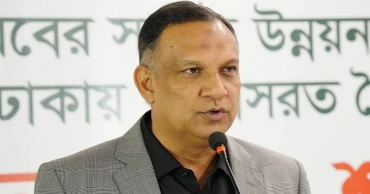
State Minister for Textiles and Jute Md Shariful Alam has expressed optimism that the long-shut Darwani Textile Mill in Nilphamari will be reopened within the next two to three months, creating employment opportunities for local people.
“An international tender has already been floated for the Darwani Textile Mill in Nilphamari, and potential investors are showing interest. We expect that the mill will be reopened within two to three months, which will generate employment for local residents,” he added.
The state minister said this while talking to reporters after visiting textile mills in Dinajpur and Nilphamari on Sunday, said a PID handout here on Monday.
BGMEA claims RMG production dips 25-30%, seeks govt action
He said initiatives have been taken in line with the Prime Minister’s election manifesto to reopen closed jute and textile mills across the country.
Citing that reopening closed industrial units is one of the government’s election pledges, he said the Textiles and Jute Ministry has been working to revive long-idle textile and jute mills.
Shariful Alam also said the textile mill in Dinajpur will be reopened soon.
Referring to the rich heritage of jute, popularly known as the “golden fibre,” he said efforts are underway to revive its past glory. “We must work to bring back the golden days of jute,” he said, adding that steps are being taken to ensure fair prices for farmers.
The government has taken initiative to raise public awareness to use jute products as an alternative to plastic items.
During the visit, Nilphamari-2 lawmaker Al Faruq Abdul Latif, Textiles and Jute Secretary Bilquis Jahan Rimi, among others, were present.
Later, the state minister visited a handicraft and cottage industry unit ‘Classical Handmade Products BD Limited’ at Hajiganj in Gorgram union of Nilphamari Sadar Upazila.
3 months ago
BGMEA claims RMG production dips 25-30%, seeks govt action
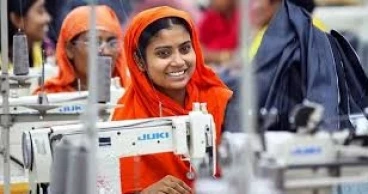
The Bangladesh Garment Manufacturers and Exporters Association (BGMEA) has voiced concern over a significant “drop” in production capacity, reporting a 25-30% decline in garment manufacturing due to the ongoing scarcity of gas and electricity.
BGMEA President Mahmud Hasan Khan highlighted these figures during a meeting with Power, Energy and Mineral Resources Minister Iqbal Hassan Mahmood and State Minister Aninda Islam Amit at the ministry on Monday.
The BGMEA delegation sought urgent government intervention to ensure an uninterrupted energy supply to the ready-made garment (RMG) sector to sustain global competitiveness.
Production hit by severe shortages
Mahmud Hasan Khan noted that while buyer confidence had improved following the national election, the industry is now grappling with fresh vulnerabilities linked to the Middle East conflict.
He emphasised that neighbouring countries are maintaining superior energy security, leaving Bangladesh’s primary export sector at a disadvantage.
The impact is particularly severe in industrial hubs such as Gazipur and Ashulia, where heavy load-shedding and a shortage of diesel for generators are stalling production lines and delaying international shipments, the BGMEA chief said.
This energy crisis, coupled with rising raw material and transport costs, has significantly increased the overall cost of production, he said.
Strategic proposals for relief
To mitigate the crisis, the BGMEA delegation presented several key proposals to the ministry.
Emergency Diesel Access: Implementing special arrangements for the rapid delivery of diesel from filling stations to RMG factories.
Equitable Gas Distribution: Providing emergency gas connections for small and medium enterprises (SMEs) with boiler capacities of 300-500 kg and ensuring fair distribution across industrial zones near the capital.
Infrastructure and Automation: Accelerating the installation of two additional Floating Storage Regasification Units (FSRUs) and simplifying the rollout of Electronic Volume Corrector (EVC) metres.
Tax Exemptions: Removing all taxes and VAT on imported fuel at both import and consumer levels to lower production costs and reduce the government's subsidy burden.
Transition to Renewable Energy:
The association also called for a major policy shift towards green energy. They proposed slashing import duties on essential solar PV components – currently ranging from 28.73% to 61.80% -- to a nominal 1%. This will include solar panels, inverters, DC cables, and Battery Energy Storage Systems (BESS).
Government response
The minister and state minister acknowledged the RMG sector's critical role in the national economy and assured the delegation that steps are being taken to address the energy shortfall. As an immediate relief measure, the government approved a BGMEA-designed format to facilitate the emergency supply of diesel from nearby filling stations to factories.
The meeting was also attended by Energy Secretary Mohammad Saiful Islam, BGMEA First Vice President Selim Rahman, and Vice President (Finance) Mizanur Rahman.
3 months ago
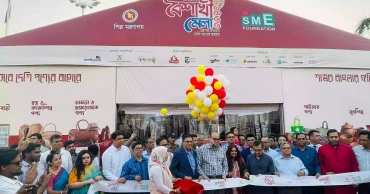
Tk 3bn credit wholesaling scheme launched to boost SME sector, says Minister Muktadir
Commerce and Industry Minister Khandakar Abdul Muktadir on Sunday said the government has taken a Tk 300 crore (Tk 3 billion) credit wholesaling programme to support the SME sector, which is being channelled to entrepreneurs through around 15 banks and four financial institutions.
“SMEs and MSMEs are the lifeblood of the country’s economy. A large part of Bangladesh’s economy remains informal, where the SME sector plays a crucial role,” he said while inaugurating the seven-day SME Baishakhi Fair 1433 at the Bangladesh-China Friendship Conference Centre in Agargaon.
The minister said the allocation under the credit wholesaling programme will be gradually increased to Tk 2,000 crore in the future.
He noted that strengthening the SME sector would help generate employment, diversify production and bring more people into economic activities, adding that the government will continue to play a supportive role for entrepreneurs.
Muktadir also thanked the SME Foundation and other stakeholders for organising the fair and extended greetings on the occasion of the Bangla New Year.
The SME Foundation has organised the fair on the premises of the Bangladesh-China Friendship Conference Centre, featuring more than 150 stalls showcasing products from entrepreneurs across the country.
Chairperson of the SME Foundation and Industries Secretary Md Obaidur Rahman presided over the inaugural programme, while Board Member Shamim Ahmed attended as special guest. Managing Director Anwar Hossain Chowdhury delivered the welcome address.
Organisers said the fair aims to celebrate Bangla heritage and culture while offering a vibrant and safe environment for people to enjoy the New Year festivities with family and friends.
Entrepreneurs are displaying and selling a wide range of products, including handicrafts, jute goods, apparel and fashion items, agro-processed products, heritage items, homemade foods and street foods, artificial jewellery, leather goods, and lifestyle products.
The fair will remain open to visitors every day from morning till night until April 18.
3 months ago

Brokers seek 3 more months for compliance with margin rules
The DSE Brokers Association of Bangladesh (DBA) has requested the Bangladesh Securities and Exchange Commission (BSEC) to extend the compliance timeline for the Margin Rules 2025 by an additional three months, citing operational, technical and market-related challenges.
In a letter sent to BSEC Chairman Khondoker Rashed Maqsood on April 7 and disclosed on Sunday, DBA President Saiful Islam said the rules, which came into effect on November 1, 2025, introduced several critical requirements aimed at strengthening risk management, investor protection and overall market stability.
However, the existing six-month compliance deadline ending on April 30, 2026 appears insufficient for brokerage houses to fully implement key provisions, the association said.
According to the letter, brokerage firms need additional time for formulation and implementation of board-approved conservative margin loan policies, which require internal consultations, risk assessments, board approvals and integration into operational systems. Many brokerage houses are still finalising policies due to limited skilled resources, technical support and client feedback.
The DBA also noted that full compliance with risk-based capital adequacy (RBCA-2019) requires significant system upgrades, staff training, internal audits and technological enhancements, warning that rushed implementation may lead to operational errors or temporary disruptions in margin services.
Another concern highlighted in the letter relates to adjustments of non-marginable securities held by existing margin loan clients.
The association said thousands of loan accounts currently hold non-marginable securities of significant value and enforcing the deadline could trigger distressed sales, increase market volatility, create avoidable losses for retail investors and strain liquidity.
The DBA further mentioned that the capital market is already under pressure due to recent global developments, including war-related uncertainties and fuel price shocks, making immediate enforcement more difficult.
Seeking a smooth transition, it proposed extending the compliance period by three months up to July 31, 2026 allowing brokers to complete system and policy upgrades without disrupting services to existing margin loan clients.
The association requested the regulator’s consideration and approval for the extension to ensure orderly implementation of the Margin Rules 2025 and protect investor interests.
3 months ago
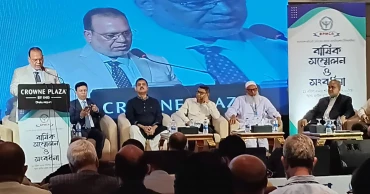
BPMCA holds annual conference with reception for health minister
The Bangladesh Private Medical College Association (BPMCA) held its annual conference and a reception program on Saturday honoring the Ministry of Health and Family Welfare.
The event, held at the Crown Plaza Hotel in the capital, featured a warm reception for Health and Family Welfare Minister Sardar Md. Sakhawat Hossain and State Minister Dr. MA Muhit, MP.
Presided over by BPMCA President Dr. Sheikh Mohiuddin, the conference was attended by Minister Sardar Md. Sakhawat Hossain as the chief guest, while State Minister Dr. MA Muhit attended as the Guest of Honor.
Prominent figures present as special guests included Mainul Islam, Chairman of Munnu Group of Industries; Professor Dr. Nazmul Hossain, Director General of the Directorate General of Medical Education (DGME); Professor Dr. Mohammad Saiful Islam, President of the Bangladesh Medical and Dental Council (BMDC); and Prof. Dr. Md. Humayun Kabir Talukdar, Registrar of the Bangladesh Medical Education Accreditation Council.
During the program, BPMCA General Secretary Prof. Dr. Md. Moazzem Hossain, Vice President Mohammad Sahab Uddin, and Vice President Dr. Mostafizur Rahman, among others, spoke at the event.
The evening concluded with a cultural program featuring performances by leading national artists.
Earlier in the afternoon, the association successfully conducted its 17th Annual General Meeting (AGM) prior to the formal reception and conference.
3 months ago

BTMA inks MoU to co-host DTG 2026 with international partners
Bangladesh Textile Mills Association (BTMA) on Saturday signed a Memorandum of Understanding (MoU) with several international partners to jointly organise the Dhaka International Textile and Garment Machinery Exhibition (DTG).
The agreement was signed between BTMA, Shanghai Textile Association, Link Well Exhibition Co. Ltd., and ECO Expo, Bangladesh at the BTMA office in the capital.
Abdullah Al Mamun, Former Vice President of BTMA and Convener of the DTG Committee, signed the MoU on behalf of the association, marking a significant step toward strengthening international cooperation in the country's vital textile and garments sector.
Under the agreement, the parties will collaborate on the planning, promotion, and overall management of the annual exhibition. The DTG aims to serve as a premier global platform showcasing the latest advancements in textile machinery, technology, and sustainable solutions.
"Through this strategic partnership, we intend to position DTG as a leading global event that fosters innovation and facilitates trade opportunities," the participating organizations stated in a joint release.
The DTG 2026 is scheduled to take place from December 16 to 19, 2026, at the International Convention City Bashundhara (ICCB) in Dhaka.
3 months ago
ADB approves $115.8m loan to upgrade urban services in Narayanganj city
The Asian Development Bank (ADB) has approved a $115.8 million loan to enhance environmentally sustainable and resilient urban services in Narayanganj City Corporation (NCC) in Bangladesh.
The Narayanganj Green and Resilient Urban Development Project will upgrade drinking water supply, modernise drainage systems, and expand green public spaces, according to a release from the Bank.
It will also strengthen institutional capacity in NCC and among local communities.
The project is expected to benefit at least 400,000 residents, support the government’s efforts to ease congestion in Dhaka, and reinforce governance and service delivery in one of Bangladesh’s major urban growth centers.
The ADB release said that it project will significantly improve water supply efficiency and reliability by reducing nonrevenue water to below 20% through the replacement and expansion of 230 kilometers of pipeline network, installation of metered household connections, and adoption of district metered area systems.
The project will also introduce digital technologies, including supervisory control and data acquisition and strengthen online billing and revenue collection systems.
NCC’s water supply capacity is expected to increase from 113 million liters per day to 162 million liters per day through the installation of new tube wells, rehabilitation of the existing water treatment plant, and upgrades to existing wells.
To improve resilience to extreme weather events, reduce flooding, and enhance groundwater recharge, the project will raise the share of surface water across NCC to 51% and develop 22 kilometers of drainage infrastructure using nature-based solutions.
The project will also construct inclusive green parks and rehabilitate a playground to improve livability and reduce urban heat. NCC will be responsible for the long-term operation and maintenance of these facilities.
ADB Country Director for Bangladesh Hoe Yun Jeong said that Narayanganj is central to Bangladesh’s urban transformation. As urbanisation accelerates and environmental risks intensify, strengthening urban services is both a development and economic imperative.
“Investments in reliable water supply, resilient drainage, and inclusive green spaces—combined with stronger institutions—will enhance productivity, support economic growth, advance environmental sustainability, and contribute to long-term human capital development,” he said.
3 months ago