Local-Business
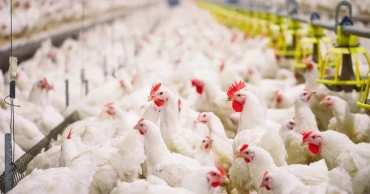
Tk 50,000cr poultry industry on brink of collapse under tax burden
Bangladesh’s growing poultry industry, worth approximately Tk 50,000 crore, is facing an existential crisis due to skyrocketing production costs and heavy taxation.
The recent price hike of chicken and poultry products affected the market. The sector experts and analysts warn that without immediate government intervention to reduce production costs in the upcoming budget, the sector could collapse, leading to a severe protein deficiency for the next generation.
Over the last five years, production costs in the poultry sector have nearly doubled, with the most significant hike occurring this year. According to data from the Bangladesh Bureau of Statistics and industry organizations, using 2021 as a base of 100 percent, production costs rose to 115 percent in 2022, 145 percent in 2023, and 170 percent in 2024, and are projected to reach 190 percent in 2025. Consequently, the industry’s growth rate has declined from 5.2 percent in 2022 to an estimated 3.2 percent in 2025.
Industry leaders cited the recent hike in corporate tax—from 15 percent to 27.5 percent—along with increased import duties and Advance Income Tax (AIT) as primary drivers of the crisis.
AIT was raised from 1 percent to 5 percent. Turnover tax increased from 0.6 percent to 1 percent.
Currently, feed accounts for 75 percent to 80 percent of a farmer's total expenditure, yet a 5 percent advance tax remains on the import of feed ingredients.
Dr. Ripon Kumar Mondal, Professor of the Department of Agricultural Economics at Sher-e-Bangla Agricultural University, said, "If you want to save the poultry industry, you must first reduce the price of food. Because 75 to 80 percent of the total cost of farming is spent on buying food. To provide food to farmers at a low price, you must reduce the cost of food production.”
Since food production materials are dependent on imports, policymakers must look to reduce income tax and customs duties. In the current situation, it is important to reduce it to the lowest level, he said.
In addition, Prof. Mondol suggested creating entrepreneurs in domestic food production and providing various benefits, including duty exemptions on the import of their equipment. "This is the only way out of the current situation. If this is not resolved, this source of easily available animal protein may face a deep crisis," he said.
Bangladesh currently imposes the highest corporate tax on the poultry sector among its neighbours.
In Pakistan, small and medium feed mills pay only 7.5 percent to 15 percent tax based on turnover. In Thailand, feed industries receive 100 percent tax exemption for five to eight years.
Meanwhile in Malaysia, sales tax on raw materials has been withdrawn, with new industries receiving 100 percent tax exemption for up to 10 years. In India, there is no advance income tax on general imports, and TCS on agricultural machinery was fully removed in 2026.
Impact on Marginal Farmers
Farmers report that while it costs Tk 10.50 to Tk 11 to produce a single egg, they are often forced to sell at wholesale prices of Tk 7.50 to Tk 8.50. Similarly, the production cost of broiler chicken stands at Tk 150–160 per kg, while wholesale prices hover around Tk 155–165, leaving almost no profit margin.
Mosharaf Hossain Chowdhury, President of the Bangladesh Poultry Industries Association (BPIA), warned that if marginal farmers are wiped out, the industry will fall under the absolute control of large corporate companies.
"Consumers will then be forced to buy eggs and meat at prices dictated by those corporations," he stated.
As a suggestion, Dr. Md. Elias Hossain, Professor of the Department of Poultry Science at Bangladesh Agricultural University, said that all types of taxes and duties have been increased in the poultry sector in the current fiscal year, the impact of which is already being seen.
He has urged the government to reduce corporate tax to 10 percent and turnover tax to 0.2 percent, lower AIT to 1 percent, simplify the refund process, and provide electricity subsidies for farms and prioritize farmers for the government's 'Krishak Card'.
Eliminate tax and VAT on the sale of poultry products, he also said.
“With 60 to 70 lakh people directly or indirectly employed in the sector—many of them young entrepreneurs—the collapse of this industry would lead to massive unemployment and a significant blow to the rural economy,” said Professor Elias Hossain.
3 months ago
AmCham urges long-term energy strategy, domestic exploration to fuel growth
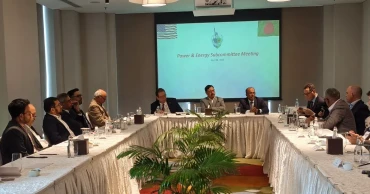
The American Chamber of Commerce in Bangladesh (AmCham) has called for a coordinated national energy strategy, emphasizing the urgent need for renewed domestic exploration and a diversified energy mix to meet the country's soaring future energy demand.
The call came during a ‘Focused Group Discussion’ organized by the AmCham Energy & Power Subcommittee at a hotel in the capital's Banani area on Wednesday. The event brought together industry leaders, policymakers, and energy experts to address challenges in the evolving energy landscape.
AmCham President Syed Ershad Ahmed stressed the importance of a consultative approach in policy formulation. He announced that AmCham would soon submit a comprehensive set of short, medium-, and long-term recommendations to relevant ministries based on stakeholder feedback.
Eric Walker, Vice President of AmCham and President of Chevron Bangladesh, warned that national energy demand could potentially double or triple within the next 15 to 20 years.
"Bangladesh must prepare for this surge through renewed drilling and government support for exploration," Walker said. He advocated for a multi-pronged strategy including expanded onshore and offshore exploration, additional LNG terminals, and increased investment in solar power.
Echoing the need for domestic self-reliance, Professor M. Tamim, Vice Chancellor of IUB and former Special Assistant to the Chief Advisor, noted that while gas field development takes time, the "BAPEX-only" approach has limitations. He recommended engaging international reservoir management firms to optimize output and urged a clear policy decision on domestic coal.
Prof. Tamim highlighted renewable energy as the fastest solution, suggesting Bangladesh could add 5,000 MW of solar capacity—including 2,000 MW from rooftop systems—by 2030 to reduce reliance on costly oil-based plants.
Dr. Sebastian Groh, Managing Director of SOL share, pointed out policy inconsistencies hindering green growth.
He noted that specialized energy service companies face duties exceeding 30 percent on solar equipment, while garment factories pay only 1%, creating an "uneven playing field."
He also recommended formalizing electric three-wheelers through licensing to unlock their potential as distributed energy storage.
On the demand side, experts suggested innovative measures such as staggered zonal school timings, seasonal office hours, and incentives for energy-efficient domestic appliances to manage the grid more effectively.
Habib Bhuyian, Country Manager at Excelerate Energy, warned that prolonged reliance on high-priced spot-market LNG could have severe economic consequences, urging a consolidated industry voice to guide policymakers.
The discussion was attended by representatives from leading firms, including Chevron, Energypac, Excelerate Energy, GE Vernova, and Omera Petroleum, as well as officials from the U.S. Embassy in Dhaka.
3 months ago
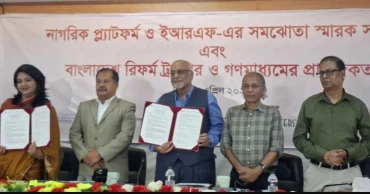
Reform an ongoing process, essential for economic dynamism: Debapriya
Dr Debapriya Bhattacharya, Distinguished Fellow at the Centre for Policy Dialogue (CPD), on Thursday described reform as a continuous process, emphasising its necessity for maintaining economic momentum.
"Reform is not a static concept, it is an ongoing process. Just as blood circulation is vital for the human body, reforms are indispensable to keep an economy moving," he said.
Debapriya was addressing a discussion titled "Bangladesh Reform Tracker and Relevance of Media," organised by the Citizen's Platform for SDG, Bangladesh, and the Economic Reporters' Forum (ERF) at the ERF auditorium in the capital.
Speaking at the event, Information and Broadcasting Minister Zahir Uddin Swapan disclosed that the National Equipment Identity Register (NEIR) policy is set to undergo revisions.
Responding to queries from journalists, he said, "I discussed the matter with the adviser concerned four days ago when he informed me that an initiative has already been taken to revise the policy."
The NEIR system is utilised by the government to enhance mobile handset security and curb the use of illegally imported or counterfeit devices by syncing International Mobile Equipment Identity (IMEI) numbers with the owner's National ID and SIM cards.
Reflecting on the spirit of the student-led mass uprising, Debapriya noted that the movement has intensified the public’s aspiration for structural changes.
He urged politicians to prioritise the concept of reform, noting that current electoral manifestos have attempted to reflect both the necessity and expectations of such changes.
The eminent economist also touched upon the historical context of reforms in Bangladesh, recalling the post-independence reconstruction efforts, led by then Finance Minister Tajuddin Ahmad, through state-owned enterprises.
He further highlighted the contributions of former Finance Minister Saifur Rahman, stating, "His role in implementing two major reforms – the introduction of Value Added Tax (VAT) and the flexible exchange rate – will remain historic."
The discussion was also attended by New Age Editor Nurul Kabir, Prothom Alo Online Editor Shawkat Hossain Masum, ERF President Daulat Akter Mala, and General Secretary Abul Kashem, among others.
3 months ago

Gold price drops by Tk 4,432 per bhori
The price of gold in Bangladesh has been reduced by Tk 4,432 per bhori within 24 hours of the latest hike, as the Bangladesh Jeweller’s Association (BAJUS) announced a fresh adjustment on Thursday.
According to a press release, BAJUS cut the price by Tk 4,432, setting the rate of 22-carat gold at Tk 247,977 per bhori with immediate effect.
The decision was taken after a decline in the price of pure gold (tejabi gold) in the local market, the association said.
Under the new rates, the price of 21-carat gold has been reduced by Tk 4,199 to Tk 236,721 per bhori. The price of 18-carat gold has been lowered by Tk 3,616 to Tk 202,895 per bhori.
The price of traditional-method gold has also been cut by Tk 2,916, bringing it down to Tk 165,289 per bhori.
On Wednesday, BAJUS increased the price of 22-carat gold by Tk 6,590, setting it at Tk 252,409 per bhori.
So far in 2026, the gold price has been adjusted 54 times in the local market, with 31 hikes and 23 reductions.
Alongside gold, BAJUS also reduced silver prices. The price of 22-carat silver has been cut by Tk 175 to Tk 5,715 per bhori.
The new prices for silver are Tk 5,424 per bhori for 21-carat, Tk 4,666 for 18-carat, and Tk 3,499 for traditional-method silver.
In 2026, the silver price has been revised 33 times so far, including 18 increases and 15 decreases.
3 months ago
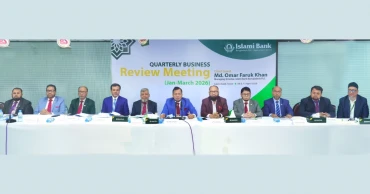
Islami Bank holds quarterly business review meeting
Islami Bank Bangladesh PLC held its quarterly business development conference for nine zones and four corporate branches on Wednesday.
The conference, held at the bank's head office, focused on reviewing the institution's overall performance during the first quarter (January–March) of 2026.
Md. Omar Faruk Khan, Managing Director (MD) of the bank, presided over the session.
In his address, Faruk Khan emphasized that the bank's core pillars—operating based on Islamic Shari’ah and serving as a pioneer of welfare-oriented banking—remain the primary drivers of its continued growth.
Khan issued several directives to senior leadership, focusing on the expansion of trade business, particularly import and export operations.
He stressed the importance of leveraging technology to bring remittance services directly to people’s doorsteps, ultimately aiming to strengthen the country's economic development.
Additional Managing Directors Md. Altaf Hossain, Mohammad Jamal Uddin Mazumder, and Dr. M Kamal Uddin Jasim, along with Deputy Managing Directors, senior head office executives, and heads of the relevant zones and corporate branches, were also present.
They expressed their commitment to maintaining the bank's trajectory as a leader in the Islamic banking sector while adapting to modern technological demands.
3 months ago

Bangladesh PMI dips to 53.5 in March amid manufacturing, construction slowdown
Bangladesh’s private sector growth slowed in March, with the Purchasing Managers’ Index (PMI) dropping 2.2 points from February to 53.5.
The slowdown was driven by contractions in manufacturing and construction, even as services and agriculture continued to expand.
The latest PMI, released jointly by the Metropolitan Chamber of Commerce and Industry (MCCI), Dhaka and Policy Exchange Bangladesh, still indicates expansion but at a slower pace, mainly due to weaker growth in agriculture and downturns in manufacturing and construction.
PMI improves in February, indicating spike in economic confidence
Agriculture extended its expansion streak to seven months, though at a slower pace.
Business activity and input costs grew modestly while order backlogs strengthened. However, new business and employment both declined during the month.
The manufacturing sector recorded its first contraction after 18 consecutive months of expansion, driven by declines in new orders, exports, finished goods, imports and employment.
Factory output, input purchases, input prices and supplier deliveries, however, continued to expand, and order backlogs returned to growth.
Construction posted its second straight month of contraction amid weaker new business and activity. Employment and order backlogs rebounded, while input costs rose at a faster pace.
In contrast, the services sector marked its 18th consecutive month of expansion, with slightly faster growth across new business, activity, employment, input costs and order backlogs.
The future business index signalled continued expansion across agriculture, manufacturing, construction and services, reflecting sustained business optimism despite cost pressures and uncertainty. Seasonal demand ahead of Ramadan and Eid-ul-Fitr supported some firms, though rising costs for raw materials, labour and transport continued to squeeze margins.
M Masrur Reaz, chairman and CEO of Policy Exchange Bangladesh, said the March reading indicates moderating economic growth, largely due to a manufacturing slowdown linked to extended holidays and global demand uncertainty stemming from the Middle East crisis.
Masrur said the inflationary pressures and potential supply disruptions could further weaken economic momentum if the situation persists.
3 months ago

Gold price soars Tk 6,590 per bhori in Bangladesh market
Gold price soars Tk 6,590 per bhori in Bangladesh marketGold prices in Bangladesh surged sharply on Wednesday, with 22-carat gold rising by Tk 6,590 per bhori.
Bangladesh Jewellers Association (Bajus) raised the price of gold in the domestic market, effective from 10:00am Wednesday.
Bajus attributed the hike to a rise in the price of pure (tejabi) gold in the local market. With the latest revision, the price of 22-carat gold now stands at Tk 2,52,409 per bhori.
Under the revised rates, 21-carat gold has gone up by Tk 6,299 to Tk 2,40,920 per bhori, while 18-carat gold has increased by Tk 5,365 to Tk 2,06,511 per bhori. The price of traditionally-processed (sanatan) gold has been adjusted upward by Tk 4,374 to Tk 1,68,195 per bhori.
The adjustment comes just two days after Bajus cut the price of premium gold by Tk 2,158 on April 6, which itself followed four consecutive rounds of increases totalling Tk 13,122 per bhori.
So far in 2026, gold prices in the domestic market have been revised 53 times raised on 31 occasions and reduced on 22.
Silver prices have also been revised upward alongside gold. The price of 22-carat silver has been increased by Tk 350 to Tk 5,890 per bhori.
Rates for 21-carat, 18-carat, and traditionally-processed silver have been set at Tk 5,599, Tk 4,782, and Tk 3,616 per bhori, respectively.
Silver prices have now been adjusted 32 times this year, with 18 increases and 14 reductions.
3 months ago
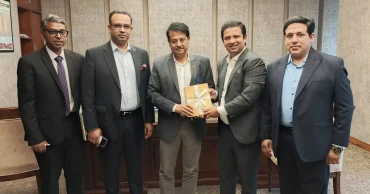
DCCI urges stronger public-private coordination to tackle energy crisis, support CMSMEs
The office-bearers of the Dhaka Chamber of Commerce and Industry (DCCI), led by its President Taskeen Ahmed, paid a courtesy call on Principal Secretary to the Prime Minister ABM Abdus Sattar at the Bangladesh Secretariat on Monday.
During the meeting, Taskeen Ahmed said the government has already taken several timely and effective measures to mitigate the impact of the ongoing energy crisis stemming from the Middle East war.
However, he stressed that sustaining people’s livelihoods, employment, industrial production and overall economic activities should remain a top priority.
DCCI urges govt to adopt proactive policy measures to safeguard economy amid Middle East tension
Taskeen underscored the need for effective initiatives and their proper implementation through stronger coordination with the private sector.
The DCCI president also welcomed the government’s consideration to defer Bangladesh’s graduation from the least developed country (LDC) status, noting that continued engagement with relevant international institutions is essential.
He urged the authorities to take more proactive measures to address post-LDC graduation challenges by incorporating private sector participation and implementing their recommendations.
Highlighting the impact of multiple global shocks since the Covid-19 pandemic, Taskeen said the country’s CMSME sector has been the worst affected, despite contributing around 30 percent to national GDP and generating nearly 80 percent of industrial sector employment.
To address challenges faced by SME entrepreneurs, he called for low-interest loan facilities, easier access to credit, simplified loan procedures, incentives and tax exemptions.
Principal Secretary Abdus Sattar said the government remains committed to fulfilling people’s aspirations and will continue engaging with the private sector through dialogue to address emerging challenges, accelerate industrial activities and achieve future economic goals.
DCCI Senior Vice President Razeev H Chowdhury, Vice President Md. Salem Sulaiman and Acting Secretary General Dr A K M Asaduzzaman Patwary were also present at the meeting.
3 months ago
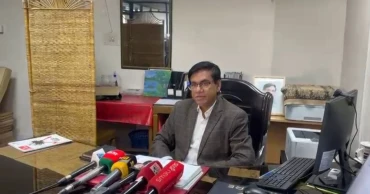
Merged bank depositors to be repaid in phases: Bangladesh Bank
Bangladesh Bank (BB) on Tuesday said depositors of the five banks merged into Sammilito Islamic Bank will receive their funds in phases under a structured repayment plan.
The clarification came at a press briefing at the central bank’s Sena Kalyan Bhaban office, following a protest by depositors of the merged banks in front of the central bank headquarters.
“A specific scheme has been developed to return depositors’ money and the process is already underway in stages,” central bank’s Assistant Spokesperson Shahriar Siddique at the briefing.
Under the scheme, depositors can immediately withdraw up to Tk 2 lakh and after that they will be allowed to withdraw Tk 1 lakh every three months, he said.
The central bank said this arrangement will enable depositors to recover their full balances within a maximum of 21 months.
For Fixed Deposit Receipts (FDR) and Deposit Pension Schemes (DPS), depositors will be able to withdraw Tk 1 lakh upon maturity.
The remaining balance will be renewed under a revised schedule, allowing customers to withdraw profits at each renewal while the principal remains temporarily locked, the Assistant Spokesperson said.
Bangladesh Bank has introduced special measures on humanitarian grounds
It said depositors suffering from severe or life-threatening conditions such as kidney disease, will be allowed to withdraw any required amount upon submission of valid medical documents.
Besides, the bank’s administrator may approve withdrawals of up to Tk 10 lakh and requests exceeding this limit will require approval from Bangladesh Bank.
The central bank said efforts are ongoing to establish a permanent management structure for the new bank.
Recruitment for the Managing Director is in progress, and a chairman will be appointed with government approval.
The merger of five Islamic banks is currently focused on technical and operational integration, he said.
Overlapping branches will be merged to reduce costs, rented head offices are being closed to centralise operations and specialists are working to unify five separate core banking systems into a single platform, he added
“The government and Bangladesh Bank are committed to protecting depositors’ interests and turning the merged bank into a stable and profitable institution,” Siddique said urging customers to remain patient during the transition.
3 months ago
NASSA Mainland Garments to resume operations on April 8: Labour Minister
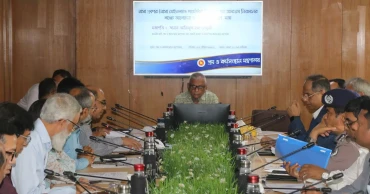
NASSA Mainland Garments will resume normal operations from Wednesday, April 8, Labour and Employment Minister Ariful Haque Choudhury said on Monday.
The minister made the announcement after an important meeting with officials of NASSA Group at the ministry, convened following workers’ road blockade on April 5 demanding unpaid wages.
The factory had remained shut since after Eid-ul-Fitr, with the authorities citing financial constraints. On Sunday, workers blocked the Tejgaon Link Road at Mohakhali and Nabisco areas, prompting government intervention to resolve the crisis.
The labour minister said the government prioritised keeping factories operational in the interest of employment and assured all-out support from the ministry in line with legal provisions.
He also urged workers to cooperate with the management, including working an extra hour daily if needed, to help restore production momentum.
The minister advised the factory authorities not to harass any workers or employees under any circumstances.
Prime Minister’s Adviser Mahdi Amin said a running factory cannot be shut down citing the absence of any individual or legal complications, stressing the need for timely measures to protect workers’ interests.
Earlier, workers’ representatives sought government intervention to keep the factory operational and pledged to maximise production.
NASSA Group Vice Chairman Ranjan Chowdhury highlighted financial and banking-related complications faced by the company and sought the ministry’s assistance in resolving the issues.
State Minister for Expatriates’ Welfare and Overseas Employment Md Nurul Haque, Attorney General Md Ruhul Quddus, Labour Secretary Md Abdur Rahman Tarafder, and representatives from the ministries of home, law and finance, as well as BGMEA, were present at the meeting.
3 months ago