Local-Business
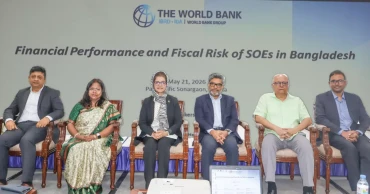
Bangladesh SOEs cost treasury Tk 882 billon in a year: WB study
Bangladesh’s state-owned enterprises (SOEs) have drained nearly Tk 882 billion from the national exchequer in a single year, emerging as one of the country’s biggest fiscal risks, according to a World Bank study.
The study highlighted that the deteriorating financial condition of public enterprises has become “unsustainable” at a time when Bangladesh is already facing falling revenue collection, slower economic growth and mounting pressure on public finances.
It said the growing losses of SOEs are consuming resources that could otherwise be invested in healthcare, education and social protection.
The findings were presented at a dissemination workshop on the report titled “Financial Performance and Fiscal Risk of SOEs in Bangladesh” held at a city hotel on Thursday.
The study was conducted under the “Strengthening Public Financial Management for Better Service” programme, with support from the Policy Research Institute of Bangladesh (PRI).
According to the study, non-financial SOEs incurred a combined adjusted loss of Tk 441 billion in fiscal year 2023-24, while total net fiscal transfers from the government, including subsidies and development funding, climbed to around Tk 882 billion, equivalent to 1.7 percent of GDP.
The study found that the energy and power sector accounted for the overwhelming majority of the losses.
The Bangladesh Power Development Board alone recorded losses exceeding Tk 444 billion in FY24 due to high power generation costs, costly capacity payments to private power producers and electricity tariffs that are kept below production costs.
The report said politically influenced investment decisions, controversial contracts with independent power producers and weak corporate governance have severely undermined the sector’s financial sustainability.
Other major loss-making entities include the Bangladesh Oil, Gas and Mineral Corporation, Bangladesh Rural Electrification Board, Trading Corporation of Bangladesh and several manufacturing corporations in the fertiliser, sugar and jute sectors.
The report observed that many manufacturing SOEs continue to incur persistent losses despite operating in competitive markets where private firms remain profitable.
The report also highlighted deep corporate governance weaknesses within Bangladesh’s SOE structure.
It identified fragmented laws, bureaucratic control, weak oversight and lack of financial transparency as key reasons behind poor performance.
The report compared Bangladesh unfavourably with regional peers. While Bangladesh’s SOEs posted a negative return on assets of 5.2 percent in FY24, India’s SOEs generated a positive return of 9.7 percent and Vietnam’s recorded around 11.9 percent in recent years.
According to the study, Bangladesh could potentially mobilise more than Tk 1.2 trillion in additional fiscal resources if SOEs achieve a 10 percent return on assets and reduce their dependence on subsidies.
To address the crisis, the report recommended wide-ranging reforms, including restructuring commercially viable SOEs, introducing independent and professionally managed boards, strengthening financial disclosure requirements, reducing political interference and gradually opening monopoly sectors to competition.
It also suggested eventual privatisation or closure of chronically loss-making enterprises that no longer serve strategic national purposes.
Tanvir Ghani, Special Assistant to the Prime Minister on Investment and Capital Market Affairs, attended the workshop as a special guest.
WB Lead Governance Specialist Suraiya Zannath explained the context and objectives of the study and how the analysis will help framing policy and institutional reform.
Additional Secretary of the Finance Division Hasan Khaled Foisal made a presentation on the overview of SOEs, debt management and the macro-fiscal scenario, while Additional Secretary Rahima Begum made the opening presentation highlighting the Public Financial Management Reform Strategy 2025-2030 relating to SOEs.
WB Lead Public Sector Specialist Henri Fortin discussed international experiences of SOE reform and its Senior Governance Specialist Immanuel Frank Steinhilper presented global trends relating to SOEs.
PRI Executive Director Dr Khurshid Alam made the keynote presentation on the financial performance and fiscal risks of Bangladesh’s SOEs.
5 months ago

Yeijer Shoe Parts to invest $5 million in Cumilla EPZ
Yeijer Shoe Parts (BD) Ltd, a company based in Samoa-China (Taiwan), has signed a land lease agreement with the Bangladesh Export Processing Zones Authority (BEPZA) to set up a footwear and footwear accessories manufacturing facility at Cumilla Export Processing Zone (EPZ).
The company will invest US$ 5.03 million for the production of insoles, outsoles, midsoles, and polyurethane (PU) shoes.
The agreement was signed on May 20 at the BEPZA Complex in Dhaka.
Md Tanvir Hossain, Executive Director (Investment Promotion) of BEPZA, signed the agreement on behalf of BEPZA, while Xia Ruihong, Managing Director of Yeijer Shoe Parts, signed on behalf of the investing company.
BEPZA Executive Chairman Major General Mohammad Moazzem Hossain witnessed the signing ceremony.
As per the agreement, the company will produce 3 million pairs of insoles, 1.2 million pairs of outsoles, and 3.2 million pairs of midsoles and 1 million pairs of PU shoes annually.
The company is expected to create employment opportunities for 500 Bangladeshi nationals.
BEPZA Executive Chairman welcomed Yeijer Shoe Parts and assured full support from BEPZA to facilitate smooth and successful business operations within the zone.
He also emphasised that BEPZA continues to extend comprehensive support to attract diversified investment beyond the RMG sector.
5 months ago

Robust IPR framework vital for FDI, global supply chain integration: AmCham
Business leaders and trade experts have emphasised that a secure and robust Intellectual Property Rights (IPR) framework is a strategic necessity for Bangladesh to attract Foreign Direct Investment (FDI) and maintain its position in the global supply chain after graduating from Least Developed Country (LDC) status.
The observation was made at a breakfast meeting titled "Advancing the IPR Framework: The Way Forward" hosted by the American Chamber of Commerce in Bangladesh (AmCham) at a city hotel on Wednesday.
The event brought together key stakeholders from public and private sectors, along with senior media professionals, to discuss the critical role of intellectual property protection in transforming the country's business ecosystem.
Opening the discussion, AmCham President Syed Ershad Ahmed underscored the urgency of strict IPR enforcement for the nation's future economic stability.
"A secure IPR framework is vital to attracting increased FDI, while giving global importers and brand promoters the absolute confidence to source high-quality products from Bangladesh," he asserted.
Attending the event as a key speaker, Shilpi Jha, Senior Commercial Specialist and IP Policy Adviser (South Asia) at the US Embassy in New Delhi, highlighted that the new government in Bangladesh has a golden opportunity to modernise its intellectual property architecture to foster innovation.
She specifically stressed that a strengthened IP framework would serve as a major catalyst for supporting domestic Micro, Small, and Medium Enterprises (MSMEs).
Shilpi Jha pointed out significant gaps in current enforcement capacities and recommended mandatory, specialised training modules for customs and law enforcement officials.
This training, she noted, is crucial to help officials accurately distinguish between patents, trademarks, copyrights, and geographical indications (GI) during field operations.
During an open floor session, participants raised deep concerns regarding ongoing operational hurdles in IP protection. The interactive dialogue highlighted that combating counterfeiting and piracy effectively requires seamless, coordinated action across various state agencies, particularly in managing port-of-entry imports and updating archaic policy frameworks.
The meeting concluded with a strong consensus that establishing an uncompromised, world-class IPR regime must be prioritised immediately if Bangladesh wishes to smoothly navigate its post-LDC transition and shield its export sectors from international legal challenges.
AmCham Executive Committee members, including Treasurer Al-Mamun M Rashel and Mirza Sajib Raihan, alongside Paul Frost, Commercial Counselor at the US Embassy in Dhaka, other high-level embassy officials, prominent industry stakeholders, and Chowdhury Kaiser Mohammad Riyadh, Executive Director of AmCham also took part in the discussion.
5 months ago

Gold prices fall again
Bangladesh Jewellers Association (BAJUS) on Wednesday reduced the price of gold in the domestic market by Tk 2,158 per bhori, setting the new rate for 22-carat gold at Tk 2,35,963 per bhori, effective from 10 am.
In a morning circular, BAJUS said the revised prices reflect a decline in the cost of tejabi (pure) gold in the local market.
Under the new pricing, 21-carat gold will be sold at Tk 2,25,232 per bhori, 18-carat at Tk 1,93,039, and traditional-method gold at Tk 1,57,231 per bhori.
The previous adjustment was made on May 16, when BAJUS cut prices by Tk 4,374 per bhori, bringing 22-carat gold down to Tk 2,38,121.
Gold prices have been adjusted 66 times in the domestic market so far in 2026, raised on 35 occasions and reduced on 31.
Meanwhile, silver prices remained unchanged. The 22-carat silver is currently priced at Tk 5,657 per bhori, while 21-carat stands at Tk 5,365, 18-carat at Tk 4,607, and traditional-method silver at Tk 3,441 per bhori.
Silver prices have seen 39 adjustments this year, up 21 times and down 18 times.
5 months ago

Steel millers oppose further power tariff hike amid ‘rising costs’
Claiming that Bangladesh's steel sector is now in the intensive care unit (ICU)), industry leaders on Tuesday strongly demanded that the government refrain from raising electricity tariffs further to prevent the widespread shutdown of manufacturing plants.
They warned that if power prices are raised under the current circumstances, factories will have no choice but to slash production, with several facing imminent partial or complete closures.
The demand was raised at a press conference organised by the Bangladesh Steel Manufacturers Association (BSMA) at the Economic Reporters’ Forum (ERF) auditorium in the capital.
Responsible business conduct key to maintaining trade competitiveness, attracting investment: Commerce Minister
Reading out a written statement, BSMA President Mohammad Jahangir Alam asserted that there will be no need to hike electricity prices if the government effectively curbs massive capacity charges paid to idle power plants and checks rampant system losses.
"The domestic industry and investment landscape are passing through an exceptionally challenging phase due to the lingering economic shocks of the COVID-19 pandemic, abnormal price hikes of fuel and raw materials caused by the Russia-Ukraine war, a persistent dollar crunch, severe exchange rate volatility, and ongoing geopolitical tensions in the Middle East," he said.
Compounding these woes, Jahangir said, the pace of construction work in both public and private sectors has slowed down significantly, causing a sharp decline in domestic steel demand.
Furthermore, high bank interest rates, credit limitations, gas shortages, soaring import costs, and a severe crunch in working capital have created an unsustainable environment for manufacturers, he said.
The association pointed out that over the last few years, electricity tariffs for the industrial sector have escalated by nearly 30 percent, while gas prices have skyrocketed by up to 300 percent in certain categories. Any further hike in power tariffs will multiply production costs exponentially, stripping Bangladeshi industries of their global competitiveness.
The BSMA leaders highlighted that most large-scale steel mills procure electricity directly from the national high-voltage grid, which eliminates any transmission, distribution, or system losses on their end.
"Despite this, our factories are burdened with various unjustified fees, including hefty demand charges, excessive VAT, and strict power-factor penalties. In reality, these have become indirect methods to drive up the effective cost of electricity," the BSMA President said.
To keep the vital construction-material industry afloat, the association urged the government to refrain from increasing power tariffs, reduce irrational demand charges, and lower the excessive VAT structure.
They also called for a comprehensive review of the power-factor penalty policy and demanded an uninterrupted, quality power supply for industrial units.
BSMA founding President Sheikh Masadul Alam Masud, Secretary General Sumon Chowdhury, and Vice President Md Rezaul Karim, among others, were present at the press conference.
5 months ago

Bangladesh Bank buys $85 million in a single day to maintain exchange rate stability
In a bid to maintain stability in the foreign exchange market, Bangladesh Bank (BB) on Tuesday purchased $85 million from six commercial banks.
The central bank fixed the cut-off rate for the transaction at Tk 122.75 per US dollar, according to relevant sources at Bangladesh Bank.
With this latest transaction, the central bank’s total dollar purchase in the current month of May has reached $395 million. Meanwhile, the aggregate dollar purchase since the beginning of the 2025-26 fiscal year has risen to $6.06 billion.
Financial analysts noted that a recent surge in remittance inflows and export earnings has positively shifted the foreign exchange supply, resulting in surplus dollar liquidity across commercial banks. The central bank is now regularly buying dollars from the market to prevent a sharp decline in the greenback's value and to rebuild the country's foreign exchange reserves.
According to economists, the national economy—which had been under immense pressure for the past few years due to a severe dollar crunch, skyrocketing import bills, and depleting reserves—is now gradually moving toward stability.
They attributed this relief to the increased flow of remittances through formal channels, growth in export earnings, and controlled import expenditures, all of which have significantly boosted dollar availability in the interbank market.
Bangladesh Bank officials explained that the central bank steps in to purchase dollars when there is an excess supply in the market and, conversely, injects dollars into the market during a shortage. This mechanism is utilized to keep the exchange rate relatively stable.
Echoing similar views, commercial bankers stated that the foreign exchange market is no longer facing the intense pressure it did previously. Many banks now possess surplus dollars beyond their immediate requirements, allowing the central bank to mop up excess liquidity. This strategy is simultaneously fortifying national reserves while mitigating the risk of a sudden crash in the dollar rate.
5 months ago
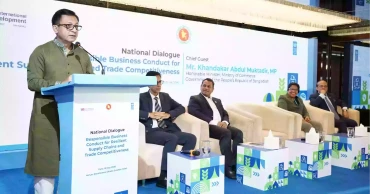
Responsible business conduct key to maintaining trade competitiveness, attracting investment: Commerce Minister
Commerce Minister Khandakar Abdul Muktadir on Tuesday said responsible business conduct is no longer optional but has become a critical prerequisite for maintaining trade competitiveness, attracting investment, and securing market access in the global economy.
“Bangladesh is entering a new phase amid rapidly shifting global trade and investment dynamics,” the minister said while speaking as the chief guest at a national dialogue titled “Responsible Business Conduct for Resilient Supply Chains and Trade Competitiveness,” jointly organised by the Ministry of Commerce and United Nations Development Programme at a hotel in Dhaka.
He said the country has made notable economic strides through strong export growth, industrialisation, entrepreneurship development, and resilience.
He said the readymade garment sector has played a pivotal role in employment generation, poverty reduction, women's empowerment, and overall economic growth.
With Bangladesh preparing to graduate from the Least Developed Country status, Muktadir stressed that the country's future competitiveness would no longer rest on production costs alone. "It will depend on sustainability, transparency, labour standards, environmental accountability, and responsible business practices," he said.
The minister observed that international buyers, investors, regulators, and consumers are increasingly demanding adherence to environmental, social, and governance standards as well as due diligence across every tier of the supply chain. He said growing regulatory requirements in key international markets are directly shaping global supply arrangements.
He noted that buyers now expect businesses to ensure workplace safety, efficient resource use, good governance, and public reporting on climate and sustainability commitments.
Muktadir said strengthening responsible business practices across industries would build confidence among international buyers and investors while positioning Bangladesh as a credible and competitive sourcing destination. “This will improve access to high-value and emerging markets, attract quality investment, and enhance supply chain resilience.”
The minister said the Ministry of Commerce recognises the importance of policy coordination and institutional strengthening on responsible business conduct.
He said the government is committed to ensuring sustainable, inclusive, and responsible economic growth and that an institutional framework for responsible business conduct under the Ministry of Commerce reflects this commitment.
The platform, he said, will strengthen coordination among ministries, regulators, the private sector, and development partners, while supporting policy guidance, awareness, and capacity building.
Calling for a collective effort, Muktadir said the transition toward responsible and sustainable business practices cannot be achieved by any single institution. “We need to build an enabling environment where businesses of all sizes can progressively adopt responsible practices while remaining competitive in global markets.”
The minister thanked UNDP and all partners for organising the event and for their continued support to sustainable and inclusive economic development in Bangladesh.
5 months ago

Govt to cut bank borrowing in FY27 to spur private credit, curb inflation
The government is set to implement a strategic shift in the national budget for fiscal year 2026-27 by significantly reducing its reliance on internal debt, particularly from the banking sector, according to an official working on budget preparation.
This move aims to maintain macroeconomic stability, control persistent inflation, and ensure an uninterrupted flow of credit to the private sector, the official said, wishing anonymity.
According to sources at the Ministry of Finance and Bangladesh Bank, the proposed budget for FY27 is estimated at Tk 9.38 lakh crore. While the projected budget deficit stands at approximately Tk 2.43 lakh crore, the government plans to borrow only Tk 1.19 lakh crore from internal sources.
This represents a Tk 18,000 crore reduction from the current fiscal year's revised internal borrowing target of Tk 1.37 lakh crore.
Shift Towards Foreign Financing
To bridge the deficit while easing pressure on local banks, the government is pivoting towards long-term and more affordable international loans.
The target for foreign borrowing is projected to reach Tk 1.16 lakh crore in the next fiscal year, nearly doubling the current year's revised target of Tk 63,000 crore.
Officials believe that reduced government borrowing will leave banks with surplus funds to invest in industrialisation and business expansion.
Furthermore, this strategy is expected to mitigate the inflationary pressures previously caused by excessive bank borrowing and the printing of money by the central bank.
Aggressive Revenue Targets and Reforms
To compensate for the reduction in internal debt, the National Board of Revenue (NBR) is undertaking massive reforms to achieve a revenue collection target of Tk 6.95 lakh crore.
Key measures include expanding the tax net and withdrawing various VAT exemptions, increasing tax rates on online gaming and luxury goods, and enhancing transparency and liquidity within the banking sector.
Economists have welcomed the move on paper but cautioned that its success depends heavily on the pace of foreign aid disbursement and the government's ability to meet its ambitious revenue targets.
Former NBR Chairman Dr Muhammad Abdul Majid warned that if the NBR fails to collect the desired revenue, the government might be forced to return to heavy bank borrowing by the end of the year, risking further financial instability.
While talking to UNB, he emphasised the need for strict monitoring and financial discipline from the beginning of the fiscal year.
5 months ago
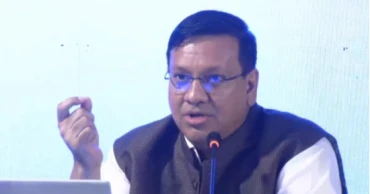
42% revenue growth target ‘historically impossible’: Citizen’s Platform
Bangladesh’s proposed FY2026-27 budget faces a ‘near-impossible revenue challenge’ that could force the government to choose between paying civil servants more and protecting the poor, the Citizen’s Platform warned Monday.
The government has set a revenue target of Tk 6.95 lakh crore for FY27, implying a growth rate of at least 42 percent over the revised FY26 target ,CPD Additional Research Director Towfiqul Islam Khan said presenting a keynote at a pre-budget dialogue at a hotel in Gulshan, organised by the Citizen’s Platform for SDGs, Bangladesh.
“No historical benchmark supports this,” he cautioned, noting that even the most optimistic compound annual growth rate from FY01 to FY19 stood at just 15.6 percent, and would still result in a shortfall of Tk 1.3 lakh crore.
The National Board of Revenue (NBR) collected only Tk 2.89 lakh crore in the first nine months of FY26 against a revised target of Tk 5.03 lakh crore, meaning revenue must grow 96 percent in the final quarter alone to meet the annual goal, a scenario CPD described as virtually impossible.
Towfiq said the proposed Ninth Pay Commission recommendations, which would raise minimum government salaries from Tk 8,250 to Tk 20,000 and maximum salaries from Tk 78,000 to Tk 1,60,000, would require an additional Tk 1.06 lakh crore beyond the government's current annual salary, allowance and pension bill of Tk 1.31 lakh crore.
While the government is reportedly considering implementing only 50 percent of the recommended basic salary increase in FY27, at a cost of Tk 30,000 to 35,000 crore, Towfiq cautioned that once rolled out, the pay scale cannot be reversed, and will squeeze allocations for subsidies, development projects and electoral commitments.
A central theme of the presentation was what Citizen’s Platform called “the tax expenditure paradox.” Bangladesh's NBR tax-to-GDP ratio has fallen to 6.6 percent in FY25, among the lowest in the world, while the country simultaneously forgoes roughly 6.9 percent of GDP through tax exemptions, based on FY22 data.
“Bangladesh forgoes nearly as much as it collects,” Towfiq said, noting that direct tax expenditure alone was 148 percent of direct tax collection in FY21.
The IMF, in its April 2025 review, suggested Bangladesh to begin phasing out tax exemptions from FY27.
CPD recommended a calibrated approach, retaining exemptions on remittance income and standard salary deductions while phasing out concessions to power and energy firms, microcredit institutions, large garments conglomerates and autonomous bodies.
Citizen’s Platform also flagged concerns over news reports suggesting the government may reintroduce tax amnesty for undisclosed income in FY27, calling it a move that would “directly contradict” the rationalisation agenda and breach a political consensus reached by all parliamentary parties.
On the debt front, the IMF has downgraded Bangladesh to “moderate risk” of both external and overall debt distress. Debt service liability, interest plus principal repayments, accounted for 26 percent of total expenditure in FY24, exceeding the entire Annual Development Programme outlay by 15 percent.
Bangladesh's debt service-to-revenue ratio stood at 33.4 percent in FY24, nearly double the 18 percent threshold set by the IMF for countries with medium debt-carrying capacity.
Platform’s field assessment, conducted across 18 districts between May 2 and 11, found that flagship welfare programmes, the Family Card, Farmers Card, mid-day meals and free school uniforms, were showing early implementation cracks.
Beneficiary selection remained unclear, grievance mechanisms were barely functional, and food quality complaints were surfacing in the school meals programme.
The Family Card scheme, which aims to reach 50 lakh beneficiaries at Tk 2,500 per month, is estimated to cost Tk 14,500 crore. The Farmers Card targeting 42.5 lakh beneficiaries at Tk 2,500 annually would cost approximately Tk 1,062 crore.
Summing up the budget outlook, Towfiq framed the FY27 challenge as a collision between economic compulsion and political necessity. Revenue must grow 42 percent, debt servicing is approaching a peak, and IMF conditionalities demand reform, while the government simultaneously faces pressure to raise salaries, expand subsidies and deliver on 51 manifesto commitments.
“Budget FY2026-27 faces dual pressures, balancing economic stability and reforms while meeting political demands to deliver quickly, all within the tightest fiscal space in recent memory,” he said.
Towfiq also urged the government to make the Ninth Pay Commission report public, publish FY25 tax expenditure estimates, and bring transparency to ADP project documents, including feasibility studies and impact assessments. “History may ultimately remember this administration for its concluding budget, rather than its beginning.”
Citizen's Platform for SDGs, Bangladesh, a network of civil society organisations, is working to advance the Sustainable Development Goals at the national level.
The event brought together policymakers, economists, development practitioners and civil society representatives ahead of the national budget expected to be placed before parliament next month.
5 months ago
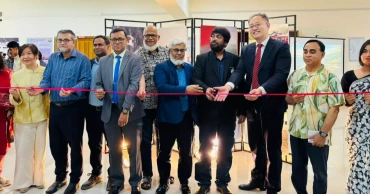
Tea plays vital role in strengthening Bangladesh-China ties: Chinese Counselor
Li Shaopeng, Cultural Counselor of the Chinese Embassy in Dhaka, said on Saturday that tea is playing a significant role in enhancing friendly relations between Bangladesh and China.
He made the remarks while speaking in a seminar as the guest of honour. The seminar was on ‘Tea and the World: Aesthetic Meeting,’ organized by the Chinese Corner of the Political Studies Department at Shahjalal University of Science and Technology (SUST).
"Tea is not just a beverage; it is a symbol of friendship, mutual respect, and people-to-people connection between Bangladesh and China," Li said. "In Chinese civilization, tea represents harmony, patience, wisdom, and human connection."
SUST Vice-Chancellor Prof. Dr. AM Sarwar Uddin Chowdhury attended the event as the chief guest, while Pro-Vice Chancellor Prof. Dr. Sajedul Karim and other senior faculty members were present as special guests.
During the technical session, Dr. Yang Hui, Director of the Confucius Institute at Dhaka University, presented a keynote on the history and traditions of Chinese tea culture.
The seminar also featured a cultural segment including dance and musical performances by students. A highlight of the event was a day-long art exhibition featuring 20 paintings by various artists, depicting their travel experiences in China and various aspects of Chinese culture.
The event was presided over by Prof. Dr. Md. Nazrul Islam, Head of the Political Studies Department, and moderated by Prof. Dr. Md. Shahabul Haq, Coordinator of the Chinese Corner.
Organizers noted that the exhibition remained open to students and visitors throughout the day to promote cultural understanding through art and tradition, according to a press release.
5 months ago