Local-Business

BB bans LC opening for supplement imports without DGDA approval
Bangladesh Bank (BB) on Wednesday instructed all banks to stop opening Letters of Credit (LC) or processing Telegraphic Transfers (TT) for the import of dietary and nutritional supplements without mandatory prior approval from the Directorate General of Drug Administration (DGDA).
The directive, issued by the Foreign Exchange Policy Department (FEPD), follows a request from the Ministry of Health and Family Welfare to ensure the strict application of the "Drugs and Cosmetics Act, 2023".
According to the central bank circular, products including dietary supplements, herbal supplements, nutritional supplements, and medical or therapeutic nutrition items require mandatory registration or prior clearance from the DGDA for production, import, export, sale, and distribution. The circular emphasized that importing or marketing such products in violation of the law is a punishable offense.
The move comes after several importers brought in supplement-related products without the necessary registration. Following customs' refusal to release these unauthorized goods, legal disputes reached the Supreme Court's Appellate Division, which ultimately directed that those goods must be cleared only "in accordance with law".
To safeguard public health and ensure legal compliance, the Ministry of Health urged the central bank to instruct authorized dealer banks not to facilitate the import of such products unless the importers provide a valid registration certificate or prior approval from the DGDA.
5 months ago
Gold prices drop again as BAJUS revises rates
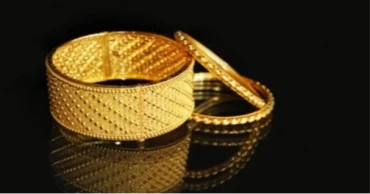
Gold prices in Bangladesh have dropped by Tk 4,432 per bhori over two consecutive days after the Bangladesh Jewellers Association (BAJUS) announced a fresh downward revision on Wednesday, setting the price of 22-carat gold at Tk 2,42,495 per bhori.
In a statement issued on Wednesday morning, BAJUS said the price adjustment reflects a decline in local market rates of refined gold.
The latest cut of Tk 2,216 per bhori follows an identical reduction on Tuesday, bringing the cumulative two-day drop to Tk 4,432.
Under the revised rates, 21-carat gold has been priced at Tk 2,31,472 per bhori, down Tk 2,100 while 18-carat gold now stands at Tk 1,98,405, a reduction of Tk 1,808. Traditional-method gold has been set at Tk 1,61,605 per bhori, lower by Tk 1,458.
The previous adjustment was made on April 28, when Bajus reduced the price of 22-carat gold by Tk 2,216 to Tk 2,44,711 per bhori.
In 2026, Bajus has revised gold prices 58 times so far, raising them on 32 occasions and cutting them on 26.
Silver prices, however, remained unchanged. A bhori of 22-carat silver is currently trading at Tk 5,482, while 21-carat stands at Tk 5,190, 18-carat at Tk 4,491, and traditional-method silver at Tk 3,383 per bhori.
Silver rates have been revised 36 times this year, with 19 upward and 17 downward adjustments.
5 months ago

Gold prices fall in Bangladesh as Bajus adjusts rates
Bangladesh Jewellers Association (Bajus) on Tuesday slashed gold prices by Tk 2,216 per bhori, citing a decline in the value of pure gold in the local market, with the new rates taking effect from the morning.
Under the revised pricing, 22-carat gold price now stands at Tk 2,44,711 per bhori (11.664 grams), down from Tk 2,46,927 set on April 23, when Bajus had last adjusted rates, trimming Tk 3,266 per bhori.
Prices across other carats were also revised downward.
Twenty-one-carat gold dropped by Tk 2,099 to Tk 2,33,572 per bhori, while 18-carat gold fell by Tk 1,807 to Tk 2,00,213. Traditional-method (sanaton) gold was reduced by Tk 1,458 to Tk 1,63,063 per bhori.
In a circular, Bajus said the adjustments reflect the prevailing market conditions following a softening of pure gold prices domestically.
Tuesday's revision marks the 57th price adjustment for gold in Bangladesh so far in 2026, with rates having been raised 32 times and reduced 25 times.
Silver also sees a cut
In tandem with the gold price reduction, Bajus also lowered silver prices across all categories.
Twenty-two-carat silver was set at Tk 5,482 per bhori, down Tk 233, while 21-carat silver fell by Tk 234 to Tk 5,190.
Eighteen-carat silver was reduced by Tk 175 to Tk 4,491, and sanaton-method silver dropped Tk 116 to Tk 3,383 per bhori.
Silver prices have been adjusted 36 times in 2026 to date up 19 times and down 17 times.
6 months ago
Businesses demand investor-friendly budget, lower real estate registration costs
Business leaders and industry stakeholders on Sunday called for a pragmatic, investment-friendly national budget for fiscal year 2026–27, stressing the need for entrepreneur-oriented tax policies, reduced registration costs in the housing sector and stronger energy security.
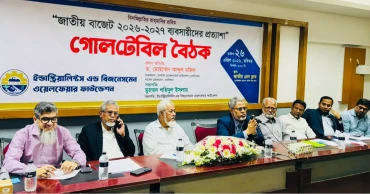
The calls came at a roundtable titled “National Budget 2026–2027: Expectations of the Business Community,” organised by the Industrialists and Businessmen Welfare Foundation (IBWF) at the Jatiya Press Club in the city.
Muhammad Abdul Mazid, former chairman of the National Board of Revenue (NBR) and current chairman of the Social Development Foundation (SDF), attended as chief guest, stressed the urgency of formulating a realistic, timely and business-friendly budget to drive economic growth, attract investment and generate employment.
He called for modernisation of the tax system, enhanced revenue mobilisation and the adoption of entrepreneur-friendly policy frameworks.
REHAB Senior Vice President Abdur Razzaque demanded a reduction in property registration costs, warning that land scarcity made vertical development unavoidable. “We must protect agricultural land. That makes planned high-rise construction not a choice, but a necessity.”
He also emphasised that tax policy must be investment-friendly, grounded in market realities and oriented toward long-term national economic interests.
REHAB Vice President Md Harun-or-Rashid urged rationalisation of taxes on secondary flat sales and called for a reduction in Tax Deducted at Source (TDS), noting that businesses were operating under severe financial pressure.
Chairing the event, IBWF President Mohammad Shahidul Islam called for a budget that genuinely reflects the challenges, potential and expectations of entrepreneurs, particularly small and medium enterprises and urged the government to provide tax relief, easier access to credit and measures to reduce production costs.
BGMEA Director Mozammal Hoque Bhuiyan demanded that bank lending rates be brought down to single digits, while BKMEA Director Moniruzzaman Monir pressed for expedited measures to ensure energy security.
Participants also called for increased allocations in health, education, agriculture and infrastructure, alongside incentives for new investors, expansion of industrial zones, export sector development and policies to attract foreign direct investment.
Leaders from FBCCI, BGMEA, BKMEA and representatives of the pharmaceutical and other industries also addressed the roundtable. IBWF Secretary General Dr Anwarul Azim and leaders of the organisation's Dhaka Metropolitan North and South units were among those present.
The session concluded with participants expressing hope that a people-oriented, business-friendly budget would inject fresh momentum into the national economy and contribute meaningfully to sustainable development.
6 months ago
FICCI calls for stable, predictable fiscal policies to boost investment climate
The Foreign Investors’ Chamber of Commerce and Industry (FICCI) has urged the government to implement stable and predictable fiscal policies to strengthen Bangladesh’s investment climate and foster sustainable economic growth.
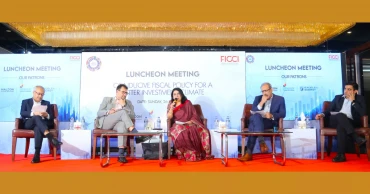
The call was made during a high-level luncheon meeting titled “Conducive Fiscal Policy for a Better Investment Climate,” held at a city hotel on Sunday. The event brought together policymakers, economists, business leaders, and members of the diplomatic community.
In his keynote address, Dr. M. Masrur Reaz, Founder and Chairman of Policy Exchange Bangladesh, identified tax policy and administration as primary concerns for investors.
He noted that high corporate tax rates, lengthy compliance processes, policy unpredictability, and frequent mid-year changes continue to create significant uncertainty in the business environment.
A panel discussion, moderated by PwC Country Managing Partner Shams Zaman, featured experts from the World Bank, Asian Development Bank (ADB), Centre for Policy Dialogue (CPD), and Business Initiative Leading Development (BUILD).
The panelists emphasized that while Bangladesh offers immense potential, addressing administrative fragmentation and simplifying dispute resolution are essential to remaining competitive globally.
They stressed that a transparent and automated tax system would not only increase government revenue but also reduce the cost of doing business.
FICCI Executive Director TIM Nurul Kabir reiterated the chamber's commitment to working with the government to create an investment-friendly environment.
He noted that FICCI’s 210 member companies currently contribute around 30 percent of the government's internal revenue and represent more than 90 percent of the inward Foreign Direct Investment (FDI) in Bangladesh.
The chamber concluded by highlighting that a predictable fiscal outlook is the most critical factor in attracting long-term foreign capital and ensuring the country's economic stability.
6 months ago

US-Iran war inflicts commodity shock on economy 'trapped in triple constraint': DAIRA
A new policy brief released this week by the Dacca Institute of Research and Analytics (DAIRA) has warned that the US-Iran conflict has delivered a severe commodity shock to Bangladesh's already-fragile economy, calling for urgent fiscal and monetary course correction ahead of the FY2026-27 budget.
The brief titled ‘Macroeconomic Impact of the US-Iran Conflict on Bangladesh: Monetary Assessment and FY2026-27 Budget Recommendations’ lays out a sobering picture: Brent crude surged 45.8 percent to $103.69 per barrel following the March 2026 conflict outbreak, urea fertilizer prices spiked 74.7 percent to $725.63 per metric tonne, and foreign exchange reserves bled $993 million in a single month.
Bangladesh entered the shock from a position of weakness. Quarterly GDP growth had already slipped to a decade-low of 3.03 percent, consumer price inflation stood at 8.71 percent, and Bangladesh Bank's repo rate was held at 10.00 percent, leaving a real interest rate of barely 1.29 percent.
Triple Constraint
The brief describes Bangladesh as trapped in a “triple constraint”, simultaneously defending reserves, containing inflation, and protecting the vulnerable with little fiscal room to manoeuvre.
Bangladesh Bank, the report argues, faces a structural dilemma. If oil prices remain above $100 per barrel, inflation could spiral to between 12 and 18 percent through fuel cost pass-through via the Bangladesh Petroleum Corporation, elevated liquefied natural gas costs raising power tariffs, and a fertilizer-to-food price feedback loop. “Yet raising interest rates further would choke private credit growth already hovering at 0.2–0.3 percent month-on-month, deepening the GDP slowdown.”
FX reserves, which had recovered from $24.8 billion in July 2024 to $35.1 billion by February 2026, are now under renewed pressure. At the March burn rate of $993 million per month, the brief warns reserves could reach $28–30 billion within six to nine months, approaching the IMF's critical three-month import cover threshold of $26 billion.
The report estimates that the conflict shock will impose additional fiscal pressure of BDT 83,000 to 130,000 crore on the FY2026-27 budget, roughly 3.7 percent of the FY2025-26 budget driven by BPC petroleum subsidy top-ups, Bangladesh Power Development Board power sector losses, swollen fertilizer subsidies and expanded food safety net requirements.
This comes as the FY2025-26 budget had already trimmed the subsidy, PPE and liabilities line by 18.4 percent to BDT 82,420 crore, a reduction the brief describes as “critically optimistic given the commodity shock.”
In the near term, Daira recommends holding the repo rate at 10 percent with a pre-announced trigger of 10.50 percent should CPI breach 12 percent, defending a $30 billion FX floor through targeted intervention, fast-tracking IMF Extended Credit Facility tranche drawdowns, and capping the Annual Development Programme at 90 percent while ring-fencing energy, agriculture and social safety net allocations.
The brief further urges that fertilizer and fuel support be delivered exclusively through the Farmer's Card Direct Benefit Transfer registry, restricting subsidised urea to smallholders farming under 2.5 acres.
Over the longer term, the report calls for allocating BDT 8,000–12,000 crore annually to grid-scale solar and wind power purchase agreements, building a 45-day strategic petroleum and LNG reserve funded by a BDT 0.50 per litre surcharge, and restructuring the energy subsidy architecture entirely toward direct transfers.
Three critical risk signals were flagged for policymakers: FX reserves falling below $30 billion, CPI exceeding 12 percent year-on-year, and the exchange rate against the dollar breaching Tk 125, each demanding immediate policy escalation.
“The FY2026-27 budget must prioritise fiscal discipline over development ambition,” the report concludes. “Monetary policy must hold its credibility even at a growth cost, and energy subsidy architecture must transition from universal to targeted before the next external shock arrives.”
6 months ago
BGMEA seeks policy support in budget to face challenges
The Bangladesh Garment Manufacturers and Exporters Association (BGMEA) has submitted a comprehensive set of proposals for the upcoming 2026-27 national budget, warning that the country’s top export-earning sector is facing an "unprecedented challenge" due to global and domestic factors.
A BGMEA delegation, led by its President Mahmud Hasan Khan, submitted the proposals during a meeting with the National Board of Revenue (NBR) held at NBR Building in Agargaon on Sunday.
NBR Chairman Abdur Rahman Khan chaired the event. NBR members Azizur Rahman, Mobinul Kabir and Barrister Mutasim Billah Faruki were present at the meeting. BGMEA Vice President Md Shehab Udduza Chowdhury was also present.
According to the BGMEA, total apparel export earnings declined by 3.73 percent during the July-February period of the current fiscal year FY2025-26 compared to the same period last year.
The association highlighted that nearly 400 garment factories have shut down over the last three years, with many others remaining financially vulnerable.
Rising Costs and Declining Investment
The industry is grappling with a sharp rise in the cost of doing business. The BGMEA said bank loan interest rates have reached 12-15 percent, gas prices surged by 286 percent between 2017 and 2023, while electricity prices rose by 33 percent over the last five years.
It said minimum wages increased by 56 percent in 2024, and the annual increment was raised from 5 percent to 9 percent in December 2024. Chattogram Port tariffs were increased by 41 percent on October 15, 2025.
These factors, combined with a 60 percent reduction in export incentives since July 2023, have caused investment in the sector to stagnate, the trade body said.
It said capital machinery imports for the textile and garment sectors fell by 37.87 percent and 12.44 percent, respectively, during the first seven months of the current fiscal year.
Key Budgetary Demands
To sustain competitiveness, the BGMEA has proposed several tax and customs reforms for the 2026-27 fiscal year, including lowering the source tax on garment exports from 1.0 percent to 0.65 percent and maintaining it for the next five years, exempting the 10 percent income tax on cash assistance provided against exports, implementing a 1 percent concessional duty on the import of solar PV system equipment, such as solar panels, inverters, and lithium-ion batteries, to encourage renewable energy use, and resolving HS Code complexities by allowing the import of raw materials listed in the Utilisation Declaration (UD) without repetitive code-specific amendments to bond licenses.
The BGMEA emphasised that the RMG sector contributes approximately 83 percent of the nation's total export earnings and is the largest provider of employment.
It urged the government to implement these policy supports to ensure the industry's survival and achieve national export targets.
6 months ago


GAC’s EV brand AION launched in Bangladesh
DHS Motors Limited, the official distributor of GAC Motor vehicles in Bangladesh, has officially launched the electric vehicle (EV) brand AION at the 19th Dhaka Motor Show.
The AION brand is ranked among the top three in sales in the highly competitive EV markets of Thailand and China. It has also been ranked number one in China’s vehicle quality ratings for three consecutive years.
The showcase featured two new EV models — AION Y and AION V. The models are known for their advanced features, premium comfort, spacious interiors and strong driving range. The AION Y offers a range of 430km per charge, while the AION V provides up to 485km per charge, drawing strong interest from visitors at the exhibition.
A special introductory offer was announced during the motor show. The AION Y is priced at Tk 50 lakh, while the AION V is available at Tk 62 lakh.
DHS said the introduction of AION reflects its commitment to advancing the electrification of Bangladesh’s automobile industry and supporting environmental sustainability.
Alongside AION, other GAC models — EMKOO, EMZOOM and E9 — were also displayed at the event. The ultra-luxury MPV GAC E9, launched at last year’s motor show, has attracted significant attention for its comfort and premium features.
The EMKOO and EMZOOM crossover SUVs have also gained popularity among younger customers due to their design, features and performance.
Special offer prices were also announced for these models, with EMZOOM priced at Tk 40 lakh, EMKOO at Tk 45 lakh, and E9 at Tk 1.16 crore.
6 months ago

Bangladesh’s first “Made in Bangladesh” EV unveiled by BAIL
The country’s first “Made in Bangladesh” electric vehicle (EV) has been unveiled by Bangladesh Auto Industries Limited (BAIL), at an auto show in Dhaka.
At the exhibition, BAIL introduced three indigenous EV brands: MEV (four-wheel passenger and cargo vehicles), Glyder (motorbikes) and Otomax (three-wheelers). Multiple prototype models of each brand were displayed.
The company said it aims to offer affordable, environment-friendly, internationally standard locally manufactured EVs with a five-year warranty.
It also claimed that fuel and maintenance costs for consumers could be reduced by up to 80 percent through its EVs.
BAIL further stated that it will provide dedicated after-sales service and spare parts support to ensure a strong user experience. Product delivery is expected within three months, with pre-booking to start soon.
The company also expressed expectations that the upcoming national budget for 2026–27 would have a positive impact on locally manufactured vehicle pricing.
BAIL Managing Director Mir Masud Kabir said customer support and reliability are central to the company’s strategy.
“For us, the most important thing is providing customer support, and we will do our utmost to ensure the highest level of service and reliability,” he said.
“We are trying to offer customers good-quality products at a very affordable price. We are preparing to play a significant role in developing the EV ecosystem nationwide,” he added.
The exhibition, organised by CEMS-Global USA, opened on Thursday and concluded at 7pm on Saturday at the International Convention City Bashundhara, featuring more than 70 companies from over 10 countries and around 200 booths.
6 months ago