Local-Business

BERC slashes furnace oil price by Tk 15.90 per litre
The Bangladesh Energy Regulatory Commission (BERC) on Sunday reduced the retail price of furnace oil supplied by the Bangladesh Petroleum Corporation (BPC) by Tk 15.90 per litre, effective from midnight.
Under the new rate, furnace oil will be sold at Tk 70.10 per litre, down from the previous price of Tk 86 per litre, according to a BERC media release.
The commission said the price was re-fixed in line with Sections 34(4) and 34(6) of the Bangladesh Energy Regulatory Commission Act, 2003.
BERC noted that BPC had submitted a proposal on January 20, 2024 seeking a revision of furnace oil prices. Subsequently, state-run oil marketing companies also proposed increases in their marketing and composite transportation charges.
Among them, Meghna Petroleum Limited submitted its proposal on May 26, 2025, Standard Asiatic Oil Company Limited on June 3, Jamuna Oil Company Limited on June 26, and Padma Oil Company Limited on July 11.
A public hearing on the proposals was held on January 29 this year. Stakeholders and interested parties were allowed to submit written opinions until February 3 following the hearing.
After reviewing and analysing all proposals and opinions in detail, the commission exercised its authority under the law to re-determine the price, the release said.
As per the new decision, the marketing charge for furnace oil has been set at Tk 0.72 per litre for Padma Oil Company, Meghna Petroleum, Jamuna Oil Company and Standard Asiatic Oil Company. The composite transportation charge has been fixed at Tk 1.20 per litre.
BERC said the revised retail price of furnace oil will come into effect nationwide from 12:00am Sunday night.
Furnace oil is a high-viscosity, cost-effective, and energy-dense residual fuel derived from petroleum refining, primarily used in industrial and heavy-duty applications.
Its key uses include powering industrial furnaces, boilers, and kilns for heating, steam generation, manufacturing, and as a fuel in marine vessels and power generation plants
5 months ago

Tk 1,000 discount & cashback on bKash payment at superstores this Ramadan
Like previous years, customers can enjoy up to Tk 1,000 in discounts and cashbacks this Ramadan on shopping with bKash payment at top superstores across the country. This offer has been introduced to make grocery and daily essential shopping more affordable, hassle‑free, and safe during the holy month of Ramadan and Eid. Additionally, exciting discounts and cashbacks of various amounts are also available on bKash payment at renowned fashion brands, bakeries, iftar markets, home appliances, restaurants, hotels, e‑ticketing, and many other products and services.
Tk 500 Discount at Superstores
Customers can get discount by applying ‘D2’ coupon code in bKash app and making minimum bKash payment of Tk 1,500 at selected superstores. During Ramadan, customers can avail Tk 100 once per day, and up to Tk 500 in 5 transactions during the campaign period.
This offer is available at different outlets of Agora, Unimart, Meena Bazar, Prince Bazar, Amana Big Bazar, Apon Family Mart, Big Bazar, Lavender, Mostafa Mart, Wholesale Club, Halishahar Mart, Khulshi Mart, Utsab Super Market, Bengal Meat, and several other superstores.
Tk 300 Discount at Shwapno & Daily Shopping
Meanwhile, customers can enjoy up to Tk 300 discount at ‘Shwapno’ and ‘Daily Shopping’ located nationwide by applying the ‘D3’ coupon code. The offer is applicable for minimum bKash payment of Tk 800. Customers can get Tk 100 discount once per day and up to Tk 300 in 3 transactions during the campaign.
Tk 200 Cashback on Online Groceries
For any order from online grocery platforms Chaldal, Daily Shopping, Meena Bazar, and Paragon, customers can get up to Tk 200 cashback by making a minimum bKash payment of Tk 1,200. Customers can receive 5% cashback up to Tk 100 once per day, and up to Tk 200 in 2 transactions during the campaign period.
It is to be noted that the bKash payment offers on grocery shopping will remain valid till March 21, 2026.
5 months ago

CAB demands action over obstruction of drive, unjustified price hike
Consumers Association of Bangladesh urged authorities to take strict legal measures against parties blocking a government-led market initiative and imposing unjustified price increases on essential goods, highlighting growing concerns over consumer protection and market regulation.
In a statement issued on Thursday, the consumer rights body strongly protested the incident that took place during a monitoring drive at Moulvibazar in the capital.
Date prices jump on first day of Ramadan despite ample supply, tariff cuts
According to the statement, a team led by Abdul Jabbar Mondal, Assistant Director of the National Consumer Rights Protection Department’s Dhaka Divisional Office, conducted the drive on Wednesday.
During the drive, inspectors found that the price of lentils had been increased by Tk 5 per kg within just 10 days at a trading establishment.
When asked to explain the price hike, the traders claimed higher procurement costs but failed to produce any valid cash memos in support of their claim.
They reportedly admitted that goods were purchased on credit and cash memos were collected only after payment was made following sales — a practice that violates existing laws and undermines market transparency.
In this connection, the authorities fined the establishment Tk 5,000 under Section 45 of the Consumer Rights Protection Act, 2009.
CAB alleged that Mohammad Ali Bhuiyan, president of the Moulvibazar Traders’ Association, publicly refused to pay the fine and mobilised traders, announcing a shutdown of shops.
He was also accused of inciting others and creating obstruction to the government operation.
CAB said unjustified price hikes of essentials, failure to maintain proper cash memo documentation and resistance to official monitoring drives reflect disorder in market management and anti-consumer practices.
The organisation called for exemplary punishment for those involved in price manipulation and obstruction of official duties, strict enforcement of mandatory cash memo issuance and stronger, regular market monitoring to ensure transparency and accountability.
It also urged the authorities concerned to take swift and effective steps to safeguard consumers’ rights and uphold good governance in the market system.
5 months ago
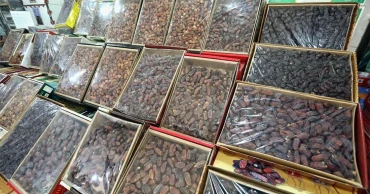
Date prices jump on first day of Ramadan despite ample supply, tariff cuts
The prices of dates surged by as much as Tk 50 per kilogram in Dhaka on the first day of Ramadan, even as traders and officials say supplies remain adequate and import duties were recently reduced to stabilise the market.
Zahidi dates, a popular choice among middle, and lower-income consumers, were selling for Tk 350 per kg on Thursday, up from Tk 280-300 earlier this week.
Compared with the first day of Ramadan last year, the variety is nearly Tk 100 per kg more expensive.
Lower-priced loose or ‘bosta’ dates were trading at Tk 250–280 per kg, up from Tk 220–250 two days ago, according to visits to several retail markets in the capital.
Premium varieties saw even steeper price points. ‘Ajwa’ dates were selling for up to Tk 1,000 per kg, while Medjool reached Tk 1,650-1,800 per kg. Mid-range varieties such as Mabroom and Kalmi Maryam were priced between Tk 850 and Tk 950 per kg.
The increase comes despite a recent decision by the National Board of Revenue to cut import duties on dates to 15 percent from 25 percent ahead of Ramadan, a move aimed at keeping prices in check during peak demand.
According to official data, Bangladesh’s annual demand for dates ranges between 90,000 and 100,000 tonnes, with Ramadan accounting for 60,000 to 80,000 tonnes. Current reserves are about 25 percent higher than total demand, suggesting no immediate supply shortfall.
Some traders attributed the spike to market speculation.
A rumour about 150 containers of dates sinking near Thailand has circulated in recent days, prompting concerns among retailers. However, wholesalers in Dhaka said prices at the wholesale level have not risen.
“There has been no increase in wholesale prices,” said Abdur Rahim, a fruit trader with 27 years of experience at Badamtoli, one of the capital’s main wholesale markets, in a phone interview.
Consumers expressed frustration over the sudden increase. Mohammad Azizul, a buyer in the Motijheel area, said he paid Tk 350 per kg for Zahidi dates on Thursday after purchasing the same variety for Tk 280 last week.
10 lakh families to get affordable protein-rich food during Ramadan
“If prices change this quickly, many of us will have to reconsider buying dates,” he said, urging authorities to monitor the market.
Retailers, meanwhile, maintained that supply remains sufficient across markets in Dhaka, even as prices climbed at the consumer level on the first day of the fasting month.
5 months ago
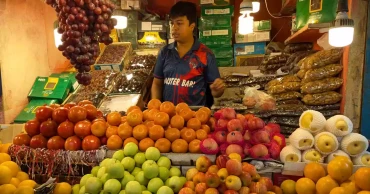
Chicken, chickpeas, fruit prices jump in Dhaka before Ramadan
The prices of chicken, chickpeas and fruits have surged in Dhaka’s kitchen markets ahead of Ramadan, driven by rising demand and tighter supplies, adding fresh strain on household budgets.
A visit to several markets in the capital on Wednesday found that the prices of chickpeas, lentils, poultry and fruits have increased sharply over the past week, with traders blaming a sudden spike in demand while consumers alleged syndication.
At Karwan Bazar wholesale market, good quality chickpeas were selling at Tk 90-100 per kg. The same item was retailing at Tk 110-115 per kg in Shantinagar, Rampura and Badda, up from Tk 80-85 a week ago.
The prices of lentils also climbed. Anchor daal, which was selling at Tk 50 per kg earlier, is now priced at Tk 80. Coarse lentils used for preparing popular Ramadan snacks like onion fritters (piyaju) rose to Tk 120 per kg from Tk 90-100.
Chickpea traders said supply remains adequate but prices increased due to higher demand ahead of Ramadan.
Poultry prices witnessed a steep rise within days. Broiler chicken was selling at Tk 200-220 per kg, up from Tk 190-200 two days ago and Tk 160-170 a week earlier. Sonali chicken was retailing at Tk 340-360 per kg, compared to Tk 320-340 two days ago and Tk 280-300 last week.
“Wholesale prices of chicken increased from Tuesday evening, forcing us to adjust retail rates,” said Latif, a poultry trader in North Badda.
Local (deshi) chicken prices also rose by Tk 50-60 per kg to Tk 700-720 from Tk 650.
Beef prices increased to Tk 800 per kg in markets where it was previously sold at Tk 750. Mutton was selling at Tk 1,000-1,200 per kg depending on the market.
Consumers expressed frustration over the price spiral.
“Like every Ramadan, prices of almost all items have been raised before the fasting month begins. We have to spend an extra Tk 2,000-3,000 for monthly groceries,” said Afsana Akter at Rampura market.
Another buyer, Ehsanur Rahman, alleged manipulation. “If there were supply shortages, prices would have increased weeks ago. The sudden hike just before Ramadan indicates syndication.”
In the fruit market, prices of most fruits increased except dates, which dropped by Tk 50-100 per kg depending on variety.
Malta rose to Tk 300-350 per kg from Tk 250-260. Apples climbed to Tk 350-380 from Tk 280-320. Jujube increased to Tk 200-250 from Tk 120-180, while pomegranate prices jumped to Tk 520-580 per kg from Tk 450-480. Pineapple prices rose to Tk 80-100 per piece from Tk 60.
Fruit trader Suman in Motijheel alleged that a syndicate at the Badamtoli wholesale market influences prices every Ramadan.
Sirajul Islam, president of the Badamtoli Fruit Importers’ Association, said limited import permits given to a few traders create scope for syndication. Expanding import opportunities could help stabilise the fruit market.
Vegetable prices remained largely stable for beans, bottle gourd, turnip, radish and bitter gourd. However, cucumber, carrot and tomato prices increased to Tk 80-100 per kg from Tk 50-60 last week.
Lemon prices also climbed, with retail rates reaching Tk 120 per four pieces, while wholesale prices ranged between Tk 90-100 per four depending on variety.
Market insiders said monitoring has been relatively weak due to administrative focus on the 13th parliamentary elections, giving room to certain trader groups to raise prices of Ramadan essentials.
Vice-President of the Consumers Association of Bangladesh SM Nazer Hossain said stabilising the market during Ramadan is the first expectation from the new government. “The government must rein in prices at any cost.”
Meanwhile, Commerce Minister Khandaker Abdul Muktadir assured that the market would return to normal soon. “There is adequate stock of essential commodities for Ramadan and beyond. Supplies are normal and there is no reason to panic.”
Muktadir attributed the initial price hike to a one-off surge in demand, as many consumers purchase groceries for the entire month at once, creating temporary pressure on the retail market.
Describing Ramadan market management as a major test for the government, the minister said there is no alternative to ensuring stability in essential commodity prices during the holy month.
5 months ago

Bangladesh gold price drops Tk 3,266 per bhori; 22-carat set at Tk 255,558
Gold prices in Bangladesh have declined again, with the rate of 22-carat gold reduced by Tk 3,266 per bhori to Tk 255,558, the Bangladesh Jewellers Association (Bajus) announced on Wednesday.
In a morning statement, Bajus said the price of pure gold (tejabi gold) fell in the local market, prompting a fresh adjustment that takes immediate effect.
Under the revised rates, 21-carat gold will be sold at Tk 243,953 per bhori (11.664 grams), 18-carat at Tk 209,077, and traditional-method gold at Tk 171,111 per bhori.
The selling price of gold will include a mandatory 5 percent government VAT and a minimum 6 percent making charge set by Bajus. However, making charges may vary depending on design and quality.
On Tuesday morning, Bajus had cut the price of 22-carat gold by Tk 2,216 to Tk 258,824 per bhori. With the latest adjustment, gold prices have declined by a total of Tk 5,482 per bhori in two consecutive revisions.
So far in 2026, gold prices have been adjusted 30 times in the domestic market — raised on 18 occasions and reduced 12 times.
Gold price drops by Tk 2,216 per bhori in Bangladesh
Meanwhile, silver prices remain unchanged. A bhori of 22-carat silver is currently selling at Tk 6,357, 21-carat at Tk 6,065, 18-carat at Tk 5,190, and traditional silver at Tk 3,907.
Silver prices have been adjusted 17 times this year, including 10 hikes and seven cuts.
5 months ago

Gold price drops by Tk 2,216 per bhori in Bangladesh
The price of gold in Bangladesh has been reduced by Tk 2,216 per bhori, with the new rate for 22-carat gold set at Tk 258,824 per bhori (11.664 grams), Bangladesh Jewellers Association (BAJUS) announced on Tuesday.
In a morning notification, BAJUS said the price of pure gold (tejabi gold) declined in the local market, prompting the adjustment.
The revised rates have come into effect immediately.
Under the new pricing structure, 21-carat gold has been fixed at Tk 247,044 per bhori, while 18-carat gold will cost Tk 211,760 per bhori.
The price of gold produced under the traditional method has been set at Tk 173,327 per bhori.
The selling price of gold must include a mandatory 5 percent government VAT and a minimum 6 percent making charge set by BAJUS. However, the making charge may vary depending on the design and quality of the jewellery.
On February 9, BAJUS had increased the price of 22-carat gold by Tk 2,216 per bhori to Tk 261,040.
Gold Price Shock: Tk16,330 surge hits Bangladesh overnight
So far in 2026, gold prices have been adjusted 29 times in the local market—raised on 18 occasions and reduced 11 times.
Despite the fall in gold prices, silver rates remain unchanged. Currently, 22-carat silver is being sold at Tk 6,357 per bhori.
The price of 21-carat silver stands at Tk 6,065 per bhori, 18-carat silver at Tk 5,190 per bhori, and traditional silver at Tk 3,907 per bhori.
5 months ago

BCIA expects capital market turnaround under new govt
Bangladesh Capital Market Investor Association (BCIA) on Sunday expressed optimism that Bangladesh’s capital market will rebound within the next six months if the newly elected BNP government takes prudent and timely measures.
In a statement congratulating the Bangladesh Nationalist Party (BNP) for its landslide victory and absolute majority in the 13th parliamentary election, the investors’ body said the government’s first six months in office would be crucial for rebuilding the economy.
BCIA said it firmly expects that the ruling party and a strong opposition will work in coordination to restore the fragile banking system, the battered capital market and the overall struggling trade, commerce and financial management framework within this initial period.
The organisation also voiced hope that government initiatives would revive public confidence, encouraging people to invest spontaneously across different sectors of the economy.
Advising the new administration, BCIA stressed the need to appoint a financially integrated and dignified Finance Minister, a State Minister for Finance with practical knowledge of the capital market, as well as competent heads of key institutions including Bangladesh Bank, Bangladesh Securities and Exchange Commission (BSEC), Investment Corporation of Bangladesh (ICB) and the National Board of Revenue (NBR).
Highlighting the stagnation in new listings, BCIA noted that while India saw 370 new IPOs over the past two years (2025–2026), not a single company was listed in Bangladesh during the same period.
Stocks surge as DSE turnover crosses Tk 500 crore in first half
It urged the government to ensure effective coordination among relevant institutions from day one and expedite the listing of at least two to three multinational and profitable state-owned companies to inject fresh momentum into the market and restore investor confidence.
The association also pledged that over the next five years, it would work in partnership with the government to contribute positively to the country’s financial sector and support the administration in achieving its highest level of success.
5 months ago

DSE, IIX sign MoU to introduce Orange bonds, Sukuk
Dhaka Stock Exchange PLC (DSE) and Impact Investment Exchange (IIX) on Sunday signed a memorandum of understanding (MoU) to collaborate on introducing and promoting Orange capital instruments, including Orange Bonds and Sukuk, in Bangladesh’s capital market.
The MoU was signed at the DSE boardroom by DSE Managing Director Nuzhat Anwar and IIX Founder and CEO Prof Durreen Shahnaz.
Under the agreement, DSE will explore facilitating the listing of Orange Bonds and Sukuk under a dedicated thematic or sustainable finance category, subject to regulatory approvals.
The initiative aims to position Orange instruments as credible thematic debt securities within Bangladesh’s capital market.
Symbolising the colour of United Nations Sustainable Development Goal 5 (SDG 5) on gender equality, the Orange Movement seeks to mobilise $10 billion globally at the intersection of gender equality and climate action.
“Capital markets play a vital role in channeling long-term finance toward national development priorities,” said Nuzhat Anwar, adding that the collaboration reflects DSE’s commitment to deepening the market and supporting sustainable financial instruments that deliver measurable social and environmental outcomes alongside financial returns.
Prof Durreen Shahnaz said Bangladesh stands at a critical juncture in realigning its financial markets with inclusive economic growth priorities. “We look forward to collaborating with DSE to jointly advance the Orange capital market, championing gender equality and climate action while strengthening trust, transparency and credibility in Bangladesh’s financial system.”
The partnership will combine IIX’s global experience in impact investing and gender-lens finance with DSE’s central role in developing the country’s capital market ecosystem.
The MoU also outlines plans for joint advocacy, market promotion and capacity-building initiatives, including workshops, investor engagement programmes and policy dialogues with regulators, financial institutions and development partners.
All activities will be carried out in line with Bangladesh’s regulatory framework and subject to approval by the relevant authorities.
Founded in 2009, IIX operates in 60 countries and has mobilised nearly $500 million in private capital, impacting more than 185 million lives and avoiding over 1.9 million metric tons of carbon emissions through its impact-driven financing initiatives.
Officials from both organisations and representatives from market intermediaries were present at the signing ceremony.
5 months ago
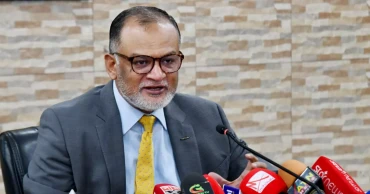
Govt wants to cap falls in potato, egg prices to protect farmers: Sk Bashir
Commerce Adviser Sk Bashir Uddin on Tuesday said that the government is trying to resist further declines in potato and egg prices to avoid hurting farmers, underscoring a policy push to balance producer viability with consumer affordability.
Speaking at a press conference at the Ministry of Commerce in the afternoon, he said prices of potatoes and eggs in the local market are currently at a ‘normal’ level and the overall market situation remains stable ahead of Ramadan.
“The market is now more stable compared to other times. Compared to last Ramadan, prices of essential commodities are expected to be lower in the upcoming Ramadan,” he said.
Expedite trade facilitation roadmap implementation for LDC graduation: Sk Bashir
Claiming there is no shortage or disorder in the market, the adviser said discipline has returned to the market as a result of various initiatives taken by the Ministry of Commerce. “We have been saying repeatedly, and we are saying it again, that the upcoming Ramadan will be better than the previous one.”
Referring specifically to potato and egg prices, Bashir said he does not want prices to decline further. “Eggs are selling at Tk 120 per dozen and potatoes at Tk 30 per kg. If prices fall below this level, farmers will be affected.”
To protect small-scale poultry farmers, he stressed the need to fix egg prices in line with feed costs. “Prices must be determined after considering all relevant factors.”
Replying to a question on alleged syndicates in the meat market, the adviser said the government deliberately refrained from importing beef to reduce prices, as such a move would have harmed local cattle farmers.
“We could have imported meat from Brazil at half the current price if we wanted to. But the government chose not to do so, keeping farmers’ interests in mind,” he said, adding that while some corporate dominance exists in the egg market, no such control is evident in the meat sector.
He also noted that there has never been a supply shortage in the egg market. “When egg prices rose to Tk 180 per dozen, the Ministry of Commerce approved the import of 290 million eggs. However, only 1.1 million eggs were actually imported—an amount that can meet national demand for just 10 to 15 minutes, given a daily demand of around 50 million eggs.”
On his last working day, Bashir acknowledged that there were shortcomings but said there was no lack of effort in controlling the market.
“There is no visible crisis in the market. Overall, the prices of eggs, potatoes, rice, pulses, sugar and edible oil are at a tolerable level,” he said, adding that monitoring and investigations into edible oil prices are continuing regularly.
Second round of tariff talks with US ‘encouraging’: Sk Bashir
5 months ago