Local-Business

Grameenphone declares 105% interim cash dividend for H1 2026
Grameenphone Limited has declared an interim cash dividend of 105 percent for the year 2026, equivalent to Tk 10.50 per share of Tk 10 each, alongside its audited financial statements for the six months ended June 30, 2026.
The dividend represents 100 percent of the company's profit after tax for the January-June period, according to a disclosure sent to the Dhaka Stock Exchange (DSE) on Wednesday.
The record date for entitlement to the interim cash dividend has been set for August 12, 2026.
Based on the audited accounts, Grameenphone's earnings per share (EPS) stood at Tk 5.62 for the April-June quarter of 2026, down from Tk 6.51 in the same quarter last year. For the January-June period, EPS was Tk 10.52, compared with Tk 11.21 during the corresponding period of 2025.
The company's net operating cash flow per share (NOCFPS) came down to Tk 22.27 for the first half of 2026, against Tk 26.94 in the same period last year, marking a 17.3 percent decline. Grameenphone attributed the drop mainly to higher payments made to suppliers during the current period.
Net asset value (NAV) per share was recorded at Tk 41.51 as of June 30, 2026, slightly lower than Tk 42.15 a year earlier.
Following the corporate declaration, there will be no price limit on the trading of Grameenphone shares on the DSE on Wednesday.
19 days ago

Gold price slashed again within 24 hours
The Bangladesh Jewellers Association (BAJUS) on Tuesday cut the price of gold for the second time in 24 hours, slashing the rate of 22-karat gold by Tk 2,158 per bhori to set the new price at Tk 219,808, inclusive of VAT.
In a notice issued in the morning, BAJUS said the fresh price cut reflects a decline in the price of pure gold in the local market. The revised rates came into effect from 10 am on Tuesday.
According to the new pricing, each bhori (11.664 grams) of 21-karat gold will now cost Tk 209,894, while 18-karat gold has been priced at Tk 180,267 per bhori. Traditional gold will sell at Tk 147,316 per bhori.
BAJUS said the new prices will remain in effect until further notice, though making charges will continue to apply depending on jewellery design. Since VAT is already included in the sale price of gold and silver ornaments, jewellers cannot charge VAT separately from customers.
The association's existing rules for ornament exchange and purchase excluding specified VAT, making charges and stone costs will remain unchanged.
The previous price adjustment came on the morning of July 13, when BAJUS cut the rate by Tk 2,216 per bhori, setting 22-karat gold at Tk 221,966 including VAT.
With Tuesday's revision, the price of gold has been adjusted 91 times in the local market so far in 2026 - increased on 44 occasions, decreased on 46, and adjusted once for VAT.
Silver prices, meanwhile, remained unchanged. Each bhori of 22-karat silver is currently selling at Tk 4,607, while 21-karat, 18-karat and traditional silver are priced at Tk 4,374, Tk 3,791 and Tk 2,858 per bhori, respectively.
Silver prices have been adjusted 56 times so far this year, with 28 increases and 28 decreases.
20 days ago
City Bank-bKash digital loan disbursement crosses Tk 10,000 crore
The total disbursement of the joint digital loan service by City Bank and bKash has crossed the milestone of Tk 10,000 crore, marking a significant breakthrough in the digital financial inclusion.
Since its commercial launch in December 2021, around 35 lakh bKash app users have availed of this digital loan facility across a total of 3.19 crore loan accounts.
According to City Bank’s data, each customer has taken this short-term loan an average of nine or more times, reflecting strong reuse of the service and a growing public demand for hassle-free, small-scale credit. Currently, the loan facility is accessible to more than 1.20 crore eligible bKash users.
The service has successfully reached segments of the population who previously had little to no access to formal banking infrastructure or institutional credit. Under this facility, bKash users can secure loans in less than a minute through the app without visiting any physical bank branch or submitting physical paperwork.
On average, nearly 1.0 lakh customers avail of this City Bank loan daily via the bKash app. The average loan size stands at approximately Tk 3,000, while the monthly loan disbursement volume has reached Tk 900 crore. These instant loans are primarily used to meet immediate short-term needs, including business operating capital, emergency medical expenses, family costs, and education.
The most remarkable aspect of this digital credit model is its exceptional repayment rate. Out of the Tk 10,000 crore disbursed so far, the combined amount of defaulted and written-off loans stands at only Tk 53 crore, or a mere 0.5 percent. This means 99.5 percent of the disbursed loans have been regularly repaid.
Highlighting the success, City Bank Managing Director and CEO Mashrur Arefin noted that at a time when default loans remain a massive concern for the country's traditional banking sector, the exemplary recovery rate of these small-scale digital loans offers valuable lessons and inspiration for the entire financial industry.
21 days ago
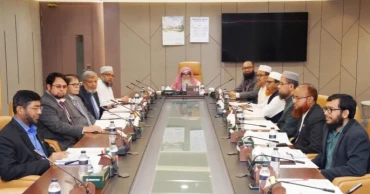
Islami Bank Shariah Supervisory Committee holds meeting
The Shariah Supervisory Committee of Islami Bank Bangladesh PLC held a meeting at the bank's head office, Islami Bank Tower, in the capital on Monday.
The meeting was chaired by Mufti Shamsuddin Zia, chairman of the committee, according to a press release.
Committee members Prof Dr Md Shamsul Alam, Prof Dr Zubair Mohammad Ehsanul Hoque and Dr Md Nurullah attended the meeting.
Acting Managing Director of the bank Md Altaf Hossain was also present at the meeting.
21 days ago
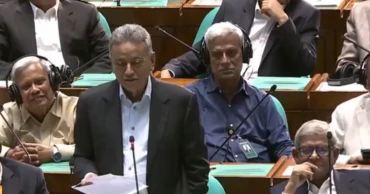
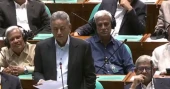
New BSEC appointments made transparently: Finance Minister
Finance Minister Amir Khosru Mahmud Chowdhury on Sunday told Parliament that investigations are underway against the former leadership of the Bangladesh Securities and Exchange Commission (BSEC) while the newly reconstituted commission has been formed through a transparent and professional selection process.
The Minister made the remarks while responding to a supplementary question from Jamaat-e-Islami MP Md Quamrul Hassan, elected from Mymensingh-6.
The MP alleged that during the Awami League government's tenure, politically biased and dishonest people were appointed to the BSEC and said there was allegation that some commission members had colluded in irregularities and manipulation in the stock market.
He wanted to know whether the government would ensure that only competent and non-partisan individuals are appointed to the commission in the future and whether action would be taken against officials who served during the previous AL government.
In reply, Amir Khosru said legal proceedings and investigations against the former BSEC chairman and others are already in progress.
He told the House that the commission has been reconstituted with a chairman and three members, while the process of appointing another member is continuing."None of them has been appointed on political considerations."
He added that the recruitment process was so transparent that even as Finance Minister he did not personally know the appointees beforehand.
"They are all professionals with exposure to the stock market and international capital markets. We have no reason to question their integrity," he said.
The Minister said the stock market has shown a sustained upward trend since the appointment of the new commission, gaining significant points over the past two months.
He claimed the market had recorded stronger gains during this period than it had over the previous five years, attributing the improvement to restored transparency and renewed investor confidence.
Amir Khosru also said the government has introduced, and will continue to introduce, major reforms in the capital market to strengthen its governance and credibility.
He said fund managers from major financial centres including Hong Kong, New York and London have already begun visiting Bangladesh and expressing interest in participating in the country's capital market.
The Minister expressed optimism that Bangladesh's capital market would develop into a globally recognised, transparent and trustworthy market, saying recent investor confidence and the upward movement in share prices indicate that the reform process is already producing results.
22 days ago
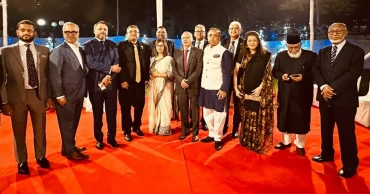
Masud Jamil Khan elected Treasurer of Consular Corps in Bangladesh
Masud Jamil Khan, Honorary Consul of Ireland in Bangladesh, has been elected Treasurer of the Consular Corps in Bangladesh (CCB) for the 2026–2027 term at the organisation’s Annual General Meeting (AGM) in Dhaka.
The AGM took place recently at the Lamda Hall of Gulshan Club where members elected a new Executive Committee to lead the organisation over the next year, according to a media release.
The government of Ireland appointed Masud, Cosmos Group deputy managing director, as its honorary consul with jurisdiction for the People's Republic of Bangladesh in December, 2023.
Masud is also a director of United News of Bangladesh (UNB), the country's largest private news agency, and Dhaka Courier, an independent news magazine.
24 days ago

Revenue target for FY27 achievable: Khosru
Finance Minister Amir Khosru Mahmud Chowdhury on Thursday expressed confidence that the National Board of Revenue (NBR) will be able to achieve its revenue collection target of Tk 6,04,000 crore set for the 2026-27 fiscal year.
"All the work of NBR is progressing well. Everyone here is working with enthusiasm. We hope there will be no difficulty in meeting the revenue collection target," he said while talking to reporters after separate meetings with the leaders of the Bangladesh Textile Mills Association (BTMA) and the Saudi Arabia-Bangladesh Chamber at the NBR office in Agargaon.
Responding to a query from journalists, the minister said it will be up to the people of the country to judge how the new fiscal year's budget has turned out, adding that the way NBR is functioning, revenue collection this time will not be difficult.
Referring to discussions with businesspeople on industrial development, he said the government will continue holding regular discussions with entrepreneurs to strengthen the country's industrial sector. "The economy cannot be strong unless industries perform well. That is why industry-related problems are being identified and resolved in phases."
On the meeting with BTMA, Khosru said the association raised various problems and demands, some of which were resolved during the discussion itself, while the rest will be considered by the government.
Regarding the Saudi-Bangladesh Chamber meeting, he said efforts will begin, through the chamber, to train unskilled Bangladeshi workers in Saudi Arabia, adding that discussions were also held on what financial support the Bangladesh government could extend to Bangladeshi businesses operating there.
On the country's future economic outlook, the minister said future growth and employment will largely depend on the industrial sector, stressing the need for continued dialogue with businesspeople to address their concerns and work toward solutions.
25 days ago
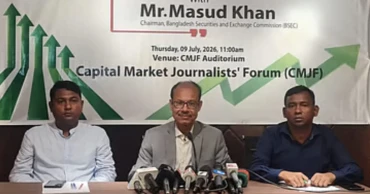
BSEC to permanently halt trading of closed companies: BSEC Chairman
The Bangladesh Securities and Exchange Commission (BSEC) will take steps to permanently halt the trading of shares belonging to companies whose production or business operations have been shut down for a long time, BSEC Chairman Masud Khan announced today (Thursday).
"In no mature stock market around the world do shares of closed companies trade abnormally like they do in our country. Therefore, necessary measures will be taken to stop the trading of such companies' shares in the interest of investors," Masud Khan said.
The BSEC chief made these remarks while speaking as the chief guest at the "CMJF Talk," an event organized by the Capital Market Journalists' Forum (CMJF) at its office in the capital's Bijoynagar on Thursday. CMJF President Monir Hossain and General Secretary Ahsan Habib Russell, among others, were present at the event.
Highlighting regulatory updates, the BSEC Chairman noted that the Dhaka Stock Exchange (DSE) serves as the primary regulator for market monitoring.
However, previously, even if there was an abnormal fluctuation in share prices, the DSE had to wait for BSEC approval before taking any action, allowing irregularities to continue in the interim.
To change this dynamic, the DSE has now been granted the authority to take immediate, real-time action against market anomalies. Furthermore, the power to determine and adjust circuit breakers has also been handed over to the stock exchanges. "Such regulations are critically important for the market's greater interest," the Chairman added.
Masud Khan was appointed as the new chairman of the capital market regulator on June 4. He has stated his objective is to modernise the capital market, vowing to reduce bureaucratic hurdles and swiftly address market manipulation.
Reflecting on his appointment, Masud Khan admitted his initial hesitation to take up the mantle at the regulatory body. This is an institution where almost everyone who has joined has faced criticism in one way or another, he acknowledged.
“That is why I was initially reluctant to take up the responsibility. However, when I saw the government’s sincerity regarding stock market reforms and was assured of full independence, I decided to accept the role after consulting my family," he said.
Drawing from his extensive experience in multinational corporations, Khan emphasized a plan-driven management approach. "We spend 80 percent of our time planning and 20 percent on implementation. Before joining BSEC, I spent three months studying and planning for the country's stock market," he disclosed.
Identifying key growth areas, the BSEC Chairman stressed that the mutual fund sector will be prioritized to deepen the market. He noted that market depth cannot increase unless the mutual fund segment expands.
Acknowledging that the majority of general investors lack the technical capacity to analyze and select fundamentally strong companies, Masud Khan announced that BSEC is taking steps to introduce a "Financial Advisor" certification program in Bangladesh, in alignment with international best practices.
25 days ago
BRAC Enterprises opens Greenpak factory for eco-friendly packaging solutions
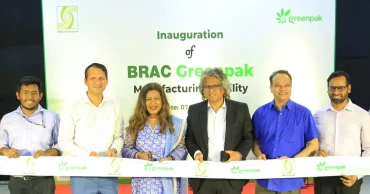
BRAC Enterprises has opened its Greenpak factory in the Tongi Industrial Area of Gazipur, marking a significant step towards advancing environment-friendly and sustainable packaging solutions in Bangladesh.
The facility, which was inaugurated on Tuesday, has the capacity to produce 300–350 tonnes of eco-friendly, biodegradable packaging annually. Unlike conventional plastic, the biodegradable products manufactured at the factory naturally decompose within six months.
BRAC Bank celebrates silver jubilee with exclusive offers for customers
The Greenpak factory was formally inaugurated by Tamara Hasan Abed, managing director of BRAC Enterprises.
At the event, it was shared that the Greenpak factory is currently producing between 12 and 15 tonnes of eco-friendly packaging each month. Once operating at full capacity, the facility will be able to produce 300-350 tonnes annually.
This production capacity will replace an equivalent volume of conventional plastic packaging each year, significantly reducing the amount of plastic waste entering the environment.
The event also highlighted the growing global challenge of plastic pollution. More than 400 million tonnes of plastic are produced worldwide each year, around 40 per cent of which is used for packaging.
While conventional plastic can take between 200 and 500 years to decompose, Greenpak's biodegradable products naturally break down within just six months, making them an effective and sustainable alternative to conventional plastic packaging.
26 days ago
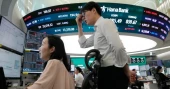
Asian markets fall as South Korean stocks tumble despite Wall Street's AI-driven rally
Asian stock markets closed lower on Tuesday, led by a sharp fall in South Korean shares, even as AI-related stocks helped lift major US indexes overnight.
Oil prices edged higher, while US stock futures showed mixed performance.
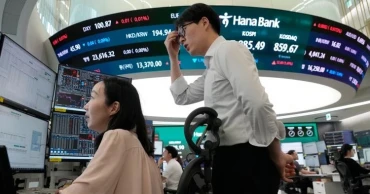
South Korea's Kospi briefly plunged as much as 8% before recovering some ground to end the day down 4.9% at 7,656.31.
Shares of Samsung Electronics dropped 7.7%, despite the company reporting a 19-fold jump in quarterly operating profit to 89.4 trillion won (about $58.7 billion) and more than doubling its revenue. Chipmaker SK Hynix also fell 6.7%.
Kim Seok-hwan, an analyst at Mirae Asset Securities, said Samsung's decline was mainly due to foreign investors taking profits after recent gains and adjusting their investment portfolios.
Technology stocks linked to artificial intelligence have seen sharp swings in recent weeks as investors question whether the massive spending on AI chips and data centres will generate enough profits to justify the investments.
Stephen Innes of SPI Asset Management said the market reaction to Samsung's strong earnings suggested investors were becoming more cautious about AI-related stocks.
Investor sentiment will face another test this week as SK Hynix plans to raise $28 billion through a Nasdaq share offering in the United States. If successful, it would rank among the largest US stock offerings, following SpaceX's $75 billion IPO last month.
Despite recent losses, SK Hynix shares have more than tripled this year on strong optimism over AI demand.
Elsewhere in Asia, Japan's Nikkei 225 fell 2.1% to 68,256.96. Tokyo Electron lost 3.9%, while Kioxia Holdings dropped 11.3%.
Hong Kong's Hang Seng Index slipped 0.7% to 23,444.20, while China's Shanghai Composite Index declined 1.3% to 3,990.25. Taiwan's Taiex lost 2.3%.
Australia's S&P/ASX 200 edged down 0.3%, while India's Sensex gained 0.5%.
On Wall Street, the S&P 500 rose 0.7% on Monday to 7,537.54, moving within 1% of its record high despite most of its listed stocks ending lower.
The Nasdaq Composite climbed 1.1% to 26,121.16, driven by gains in AI-related technology companies, while the Dow Jones Industrial Average added 0.3% to close at a record 53,055.91.
Broadcom was among the biggest contributors to the S&P 500's gains after rising 3.7% on news of long-term agreements to supply silicon products to Apple.
SpaceX fell 1% in its final trading session before joining the Nasdaq-100 index, a move expected to trigger buying by funds that track the benchmark.
AI infrastructure company TeraWulf gained 4.9% after announcing a 20-year agreement with Anthropic to use its Kentucky data centre. The company expects the deal to generate about $19 billion in revenue as it shifts its business from bitcoin mining to high-performance computing.
In energy markets, Brent crude, the international benchmark, rose 84 cents to $72.83 a barrel, while US benchmark crude increased 73 cents to $69.28.
Oil supply concerns resurfaced after the British military reported that a liquefied natural gas tanker caught fire off the coast of Oman in the Strait of Hormuz after being struck by a projectile early Tuesday.
The latest attack highlighted continuing security risks in the strategic waterway, through which about one-fifth of the world's oil and natural gas trade once passed during peacetime. Iranian state television reported that the tanker was attacked after ignoring warnings but stopped short of claiming responsibility.
In currency trading, the US dollar slipped to 162.01 Japanese yen from 162.09 yen, while the euro eased to $1.1431 from $1.1442.
27 days ago