local-business
Gold gets cheaper as Bajus slashes prices for 2nd time this month
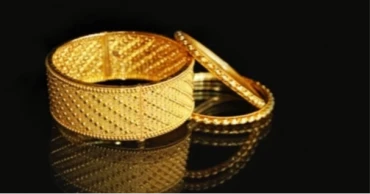
Bangladesh Jewellers Association (Bajus) has reduced gold prices in the domestic market for the second time this month, cutting the price of 22-carat gold by Tk 6,591 per bhori to Tk 222,782.
The new rates came into effect from 10am on Wednesday, according to a Bajus statement.
Bajus said the decision was taken following a decline in the price of pure gold (tejabi gold) in the local market. Under the revised rates, a bhori (11.664 grams) of 22-carat gold will now cost Tk 222,782.
The price of 21-carat gold has been set at Tk 212,635 per bhori, while 18-carat gold will be sold at Tk 182,250 per bhori.
Gold produced under the traditional method will cost Tk 148,424 per bhori.
The latest adjustment comes just four days after Bajus last revised gold prices on June 6, when it reduced the price of 22-carat gold by Tk 5,482 per bhori to Tk 229,373.
At that time, the prices of 21-carat, 18-carat and traditional-method gold were fixed at Tk 218,933, Tk 187,674 and Tk 152,857 per bhori respectively.
With the latest revision, gold prices have been adjusted 72 times in Bangladesh so far this year. Of these, prices were increased on 37 occasions and reduced 35 times.
Alongside gold, Bajus also lowered silver prices in the local market. The price of 22-carat silver has been cut by Tk 350 per bhori to Tk 4,899.
Under the new rates, 21-carat silver will cost Tk 4,666 per bhori, 18-carat silver Tk 4,024 per bhori, and traditional-method silver Tk 3,033 per bhori.
Silver prices have been adjusted 43 times so far in 2026, with 22 increases and 21 reductions.
1 month ago
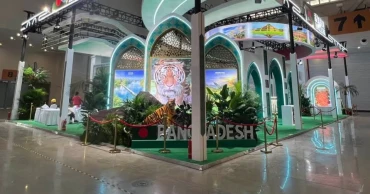
Bangladesh takes centre stage as ‘Theme Country’ at China's major trade expo
Bangladesh is participating as the Theme Country in the "10th China-South Asia Expo and the 30th China Kunming Import and Export Fair-2026," one of southwestern China's largest trade exhibitions, which kicked off on Tuesday in Kunming, the capital of Yunnan Province.
Organised under the management of the Export Promotion Bureau (EPB) and in cooperation with the Consulate General in Kunming, a record 175 representatives from 101 Bangladeshi companies are taking part in this year's edition, the highest participation figure in the country's history at the fair, which will conclude on June 16.
The six-day expo is being held at the Dianchi International Convention and Exhibition Centre, drawing around 2,300 exhibitors from 68 countries worldwide.
As the Theme Country, Bangladesh had its pavilion inaugurated on the opening day alongside the formal launch of the main expo.
The second day has been designated "Bangladesh Day." Commerce Minister Khandakar Abdul Muktadir will attend the event as the chief guest, joined by the Governor of Yunnan Province and other senior dignitaries from participating nations.
EPB Vice Chairman and Chief Executive Mohammad Hasan Arif will deliver the keynote address on Bangladesh Day.
The Bangladesh Pavilion is showcasing products from textiles, ready-made garments, pharmaceuticals, ceramics, handicrafts, jute goods, and leather goods sectors. Participating firms are engaging in B2B networking with buyers, marketers, and wholesale and retail trade representatives from around the globe.
Delegates from the participating companies expressed strong optimism that the expo would further consolidate Bangladesh's position in the Chinese market and open new avenues for export growth.
1 month ago

Islami Bank depositors continue protests to press for 7-point demand
Depositors of Islami Bank Bangladesh PLC staged demonstrations for the seventh consecutive workday on Tuesday to press for their seven-point demand, including the immediate removal of bank’s newly appointed Chairman Md Khurshid Alam.
Under the banner of the "Islami Bank Sachetan Grahak Forum” (Islami Bank Conscious Depositors’ Forum), the depositors gathered in front of the bank’s central office in the Dilkusha area of Motijheel around 10:00am.
They held a sit-in there to press home their demands.
The other demands are reinstatement of Omar Faruk Khan to the post of managing director of the bank, exclusion of anyone linked to past financial plundering from the bank’s Board of Directors, repeal of Section 18(A) of the Bank Resolution Act, recovery of looted funds by liquidating the seized domestic assets and ownership stakes held by the controversial S Alam Group, implementing legal barriers to ensure S Alam Group can never regain control of Islami Bank or any other financial institution, and bringing all individuals involved in looting Islami Bank and the wider banking sector to justice with exemplary punishment.
Speaking at the rally, demonstrators alleged that the bank was unlawfully taken over by the previous regime in 2017 after which S Alam Group systematically emptied the institution.
They stated that while the bank was liberated following the mass uprising on August 5, 2024, a fresh conspiracy is now targeting the financial institution.
Following the political transition, former Bangladesh Bank Deputy Governor Khurshid Alam went into hiding, yet the bank is now being handed back to him, the protesters said, adding that they will never accept a corrupt individual like Khurshid Alam as chairman.
The depositors launched the protests on June 1 after the Eid-ul-Azha holiday ended.
On the day, a similar demonstration against Khurshid Alam's appointment was met with a police crackdown, where law enforcers lobbed batons, sound grenades, and water cannons against the agitators.
1 month ago
DBA thanks BSEC for lifting floor price on Islami Bank, Beximco shares
DSE Brokers Association of Bangladesh (DBA) on Tuesday welcomed the decision to withdraw the long-standing floor price on shares of Islami Bank Bangladesh PLC and Beximco Ltd, expressing gratitude to newly appointed Bangladesh Securities and Exchange Commission (BSEC) Chairman Masud Khan and other commissioners.
In a statement, the association said the move would help restore normal trading activities, improve price discovery and boost investor confidence in the country's capital market.
The DBA noted that it had formally written to the BSEC on May 4, 2026, seeking the removal of the floor price imposed on the shares of Islami Bank Bangladesh PLC and Beximco Ltd to address prolonged market distortions and facilitate the resumption of normal trading.
In the letter signed by DBA President Saiful Islam, the association argued that the continued floor price had restricted normal trading activities by preventing shareholders from selling their holdings, while also hampering the market's natural price discovery mechanism.
The association further stated that the floor price system had increased the risk of negative equity for margin loan investors and created a negative perception of Bangladesh's capital market among foreign investors.
Considering the DBA's proposal and the overall market situation, the newly constituted BSEC Commission decided to withdraw the floor price imposed on the shares of Islami Bank Bangladesh PLC and Beximco Ltd.
Welcoming the decision, Saiful Islam thanked BSEC Chairman Masud Khan and the commissioners for taking what he described as a timely and market-oriented step.
According to the DBA, the removal of the floor price is expected to ease long-standing market stagnation, restore normal trading activities and strengthen investor confidence.
The association also believes the decision will make the market-based pricing mechanism more effective, transparent and dynamic.
Expressing optimism about the new leadership, the DBA said it expects the commission under Masud Khan to undertake necessary reforms to remove regulations and barriers that have long been viewed as inconsistent with a business- and investment-friendly capital market environment.
Saiful Islam welcomed the newly appointed chairman and commissioners and reaffirmed the DBA's commitment to working closely with the regulator in promoting market development, protecting investor interests and ensuring stability in the capital market.
1 month ago
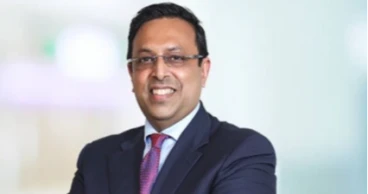
Naser Ezaz Bijoy steps down as Standard Chartered Bangladesh CEO
Naser Ezaz Bijoy, the chief executive officer (CEO) of Standard Chartered Bangladesh, has announced his resignation from the top post.
He has already informed Bangladesh Bank that he does not wish to continue in his role.
Bitopi Das Chowdhury, head of corporate affairs, brand and marketing at Standard Chartered Bangladesh, confirmed the development to reporters on Monday.
"Naser Ezaz Bijoy has stepped down. An interim CEO will now be appointed subject to approval from Bangladesh Bank," Bitopi Das said.
Commenting on his decision, Naser Ezaz Bijoy said, "I am stepping down from the post of CEO, but I will continue working as an employee of the bank."
Explaining the reasons behind his resignation, he noted that the bank's business growth has slowed down in tandem with the broader macroeconomic slowdown in the country. "Under these circumstances, the bank requires a fresh business strategy," he said.
Naser Ezaz Bijoy had been serving as the CEO of the bank since November 2017.
1 month ago
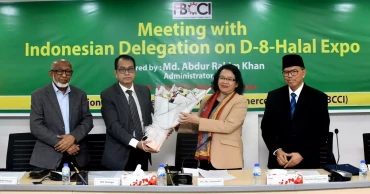
Beyond traditional trade, Bangladesh, Indonesia see major opportunities in halal economy
Bangladesh and Indonesia have significant untapped opportunities in the halal economy beyond their traditional trade relations, particularly in sectors such as processed food, fashion, pharmaceuticals, healthcare, medical equipment and digital technology, Indonesian Ambassador to Bangladesh Ms. Listyowati said on Monday.
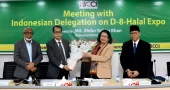
Indonesian Ambassador made the remarks during a meeting between the Federation of Bangladesh Chambers of Commerce and Industry (FBCCI) and a high-level Indonesian business delegation at Motijheel office in the city.
Highlighting the growing scope of halal trade, the ambassador said halal products extend far beyond halal meat and food, encompassing apparel, cosmetics, medicines, healthcare services, medical devices, Islamic finance and tourism. “Bangladesh and Indonesia can explore extensive business opportunities in these sectors and further strengthen bilateral trade ties.”
The ambassador also invited Bangladeshi businesses to participate in the D-8 Halal Expo 2026, scheduled to be held in Jakarta from July 8 to 12, expressing hope that a high-level Bangladeshi trade delegation would attend the event with their products.
“The Indonesian Embassy in Dhaka will provide all possible support in this regard,” she added.
Describing the upcoming expo as more than a conventional trade fair, Listyowati said it would serve as a unique platform for strengthening the halal ecosystem among D-8 member countries, expanding trade and investment, and fostering new partnerships across sectors.
A report on the D-8 Halal Expo 2026 was presented at the meeting by Putu Rahwidhiyasa, Director General of Indonesia’s National Committee for Islamic Economy and Finance (KNEKS).
He said Indonesia is not only focusing on halal product exports but is also actively developing a comprehensive halal value chain. “Bangladesh and Indonesia can further expand bilateral trade by leveraging this halal value chain and enhancing collaboration in the halal economy.”
Citing the report, Rahwidhiyasa noted that Indonesia ranked among the top 10 exporters in intra-OIC trade in 2022, trailing only Türkiye and the United Arab Emirates among the leading exporters.
According to the report, Indonesia currently ranks sixth globally in the Halal Economy Trade and Investment Index. The country holds the fourth position in the halal food sector and ranks sixth in the modest fashion and apparel segment, reflecting the strength and diversity of its halal market.
The report also highlighted the rapid growth of the global halal economy. Among all halal sectors, halal food remains the largest contributor, with spending across OIC member countries reaching approximately $1.24 trillion in 2023, supported by a projected annual growth rate of 6.2 percent.
The halal fashion sector ranked second, with Muslim consumer spending estimated at $277.9 billion and an annual growth rate of 6.8 percent.
Speaking at the event, Mohammad Riyad Ali, President of the Indonesia-Bangladesh Chamber of Commerce and Industry (IBCCI) and former FBCCI director, said the D-8 Halal Expo offers a valuable opportunity to observe how member countries integrate halal practices into daily life and commerce.
“It will also provide Bangladesh with an opportunity to learn from their experiences in developing and strengthening halal certification systems,” he said.
Earlier, FBCCI Secretary General Md Alamgir delivered the welcome address, describing Bangladesh and Indonesia as long-standing trade partners with strong economic ties.
While acknowledging Bangladesh’s relatively limited share in bilateral trade, he said participation in major international platforms such as the D-8 Halal Expo could diversify trade cooperation and open new avenues in the rapidly expanding halal market.
He also assured the Indonesian delegation that FBCCI would work sincerely to facilitate the participation of a Bangladeshi business delegation in the D-8 Halal Expo 2026.
1 month ago
REHAB seeks bond-based housing finance, single-digit mortgage rates
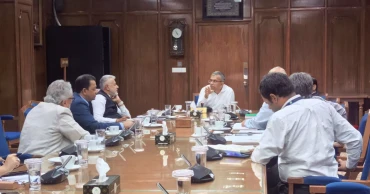
Bangladesh Bank is exploring a bond-based financing mechanism to ensure long-term funding for housing loans, the central bank governor said Sunday, as the country's leading real estate body pressed for a dedicated housing fund and single-digit interest rates on home loans.
The assurance came during a courtesy call by a delegation of the Real Estate and Housing Association of Bangladesh (REHAB) on Bangladesh Bank Governor Md. Mostakur Rahman at the central bank's headquarters.
Led by REHAB President Dr. Ali Afzal, the meeting covered the current state, challenges and prospects of the housing sector, with REHAB leaders urging the establishment of a special housing fund and long-term mortgage facilities at single-digit interest rates.
Governor said housing loans are among the most secure assets in the banking sector, which is why mortgage rates are already comparatively lower, running up to two percentage points below rates on many other loan categories.
He added that the central bank is working on a bond-based financing framework to ensure sustainable long-term funding for the housing sector, expressing confidence that the initiative, once implemented, would broaden mortgage access for ordinary citizens.
Afzal said affordable home loans under easy terms for first-time flat buyers would turn the homeownership dream of middle and lower-middle income people into reality. “At the same time, it will give the broader economy a further boost through housing sector activity.”
REHAB Senior Vice President Abdur Razzaque stressed the need to expand low-interest housing loan facilities to the district and upazila levels to support planned housing development and effectively decentralise Dhaka. “People will be more willing to settle outside the capital if affordable housing finance is available there.”
The delegation also included Vice Presidents Mohammad Akhter Biswas, Abu Khalid Md. Barkatullah and AFM Obaidullah, VP (Finance) Dr. Md. Harun-or-Rashid, and Director Tasnova Mahbub Salam, each of whom raised specific concerns and demands related to the sector.
Both sides expressed commitment to working jointly toward sustainable development of the housing sector, increased investment and broader homeownership access for the general public.
1 month ago
Grahak Forum gives Islami Bank chairman 24 hours to step down
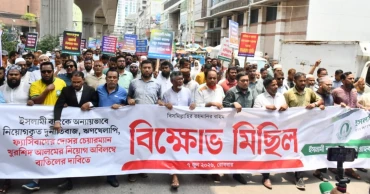
The Islami Bank Sachetan Grahak Forum (Islami Bank Conscious Customers' Forum) on Sunday issued a 24-hour ultimatum demanding the resignation of bank’s newly appointed Chairman Khurshid Alam, labelling him an associate of the ousted fascist" Awami League regime and controversial S Alam Group.
The forum also called upon all officials and employees of Islami Bank Bangladesh PLC to observe a two-hour pen-down strike on Monday – from 10:00am to 12:00pm – in solidarity with its demand.
Prof Nur Nabi Manik, president of the forum, made the announcement while presiding over a rally held in front of the Islami Bank Tower in the capital’s Motijheel area, following a protest march.
"Khurshid Alam, an associate of the fascist Awami League and a successor to bank looter S Alam Group, must resign from the post of Islami Bank chairman within the next 24 hours," he said.
Urging the government to protect the country's financial system, Manik stated, "Islami Bank is the largest bank in the country. Do not destroy the national economy by handing over its control to a collaborator of the fallen autocratic regime."
Terming Khurshid Alam a "corrupt bank looter," he questioned the rationale behind his appointment.
The forum chief said Khurshid Alam was forced to step down from his position as deputy governor of Bangladesh Bank, and went into hiding, following the fall of the Awami League government on August 5, 2024
"Why should a fugitive like Khurshid Alam be appointed as chairman of Islami Bank? He was chosen because he excels in plundering resources. Previously, he looted funds to benefit the fallen Awami League and S Alam Group; now he will do the same for others," Manik alleged.
He said Islami Bank Sachetan Grahak Forum will stage sit-ins and form human chains in front of the bank's head office as well as all branches and sub-branches nationwide for two hours on Monday, urging all bank executives, officers, and staff members to join the programme and fully suspend banking operations for the period.
1 month ago
Businesses get until June 30 to upload paper VAT returns to e-VAT system
The National Board of Revenue (NBR) has extended the deadline for businesses to enter previously submitted paper-based VAT returns into the electronic VAT (e-VAT) system until June 30, 2026, ahead of the planned introduction of mandatory online VAT return filing from July.
According to an NBR press release issued on Sunday, a new sub-module titled “Hard Copy Return Entry” has been incorporated into the e-VAT system to facilitate the digital entry and preservation of all monthly VAT returns that had earlier been submitted in hard copy form.
The revenue authority said it had issued a circular on January 5, 2026 outlining the procedures for using the sub-module and had initially set March 31, 2026 as the deadline for entering all paper returns into the online system.
However, data from the e-VAT platform indicate that a significant number of hard-copy returns have yet to be entered electronically.
As part of its preparations to make online VAT return submission compulsory from July 2026, the NBR has decided to grant businesses additional time until June 30 to complete the process.
The NBR warned that businesses failing to enter their paper returns into the e-VAT system within the revised deadline would face restrictions.
In such cases, their closing balances as of May 2026 would be frozen, meaning no adjustments could be made against those balances in the future.
The revenue authority also noted that all VAT returns must be available in the online system for refund applications to be processed. As a result, businesses that do not enter all their previous VAT returns into the e-VAT platform will not be eligible to submit refund claims.
The NBR urged taxpayers to cooperate fully with its ongoing efforts to digitise all revenue-related activities, saying the initiative is aimed at enhancing transparency and accountability in the country’s tax administration system.
1 month ago
Gold prices see sharp drop in Bangladesh; rate falls to Tk 229,373 per bhori
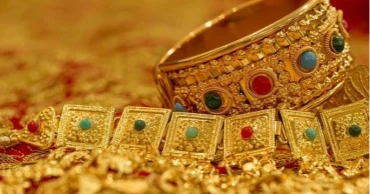
The price of gold in Bangladesh has been reduced by Tk 5,482 per bhori, with the rate of 22-carat gold now set at Tk 229,373 per bhori, according to the Bangladesh Jewellers Association (Bajus).
In a statement issued on Saturday morning, Bajus said the latest adjustment was made in view of the decline in the price of pure gold (tejabi gold) in the local market. The new rates came into effect from 10am.
Under the revised pricing structure, the price of 21-carat gold has been cut by Tk 5,249 per bhori to Tk 218,933.
The price of 18-carat gold has been reduced by Tk 4,490 per bhori to Tk 187,674, while gold produced under the traditional method now costs Tk 152,857 per bhori after a reduction of Tk 3,616.
Bajus last adjusted gold prices on June 2, when it reduced the price of 22-carat gold by Tk 3,266 per bhori, setting the rate at Tk 234,855.
So far in 2026, gold prices in the country have been revised 71 times. Of those, prices were increased on 37 occasions and reduced 34 times.
Alongside gold, Bajus also lowered silver prices. The price of 22-carat silver has been cut by Tk 408 per bhori to Tk 5,249.
Similarly, the price of 21-carat silver has been reduced by Tk 408 to Tk 4,957 per bhori, while 18-carat silver now costs Tk 4,257 per bhori after a Tk 350 reduction.
The price of traditional-method silver has been lowered by Tk 233 per bhori to Tk 3,441.
Silver prices have been adjusted 42 times so far this year, with increases recorded on 22 occasions and reductions on the remaining 20.
1 month ago