local-business

Customers can get BDT 200 instant cashback receiving remittance via Ria during Eid-ul-Adha
By receiving remittances directly to bKash account through ‘Ria’, an international money transfer operator (MTO), customers can enjoy BDT 200 instant cashback during the Eid-ul-Adha. Receivers will get the cashback once they receive a minimum of BDT 20,000 directly into their bKash accounts, excluding the government’s 2.5% incentive. The cashback can be availed once during the campaign period till May 25, 2026.
The joint campaign by Ria and bKash aims to encourage expatriates to send money through formal banking channels. Through Ria Money Transfer and its app, expatriates can send remittance from around the world including the UAE, Malaysia, Italy, France, Switzerland, Portugal, Germany, South Africa, Australia, Netherlands, Belgium, Ireland, and Austria directly to bKash accounts of their near and dear ones. According to Bangladesh Bank regulations, expatriates can send up to BDT 250,000 per transaction to a bKash account.
FAO signs deal with bKash to enable faster cash assistance, incentive distribution
Besides, relatives of the expatriates will instantly get Tk 25 per thousand as government incentives over the remittance they receive in bKash accounts through Ria. Expatriates can also enjoy the best exchange rates at Ria while sending remittances. Due to such benefits, sending remittances directly to bKash accounts through Ria has quickly gained trust and confidence of expatriates and their relatives.
Meanwhile, expatriates’ relatives can cash out remittances from nearly 2,500 ATM booths of 19 top commercial banks across the country for a charge of only Tk 7 per thousand, using the bKash app or dialling *247#. Apart from cash out, dear ones of the expatriates can make various types of payment, pay utility bills, send money, recharge mobile, pay educational or government fees, donate, open savings etc with their bKash account from the comfort of home.
2 months ago
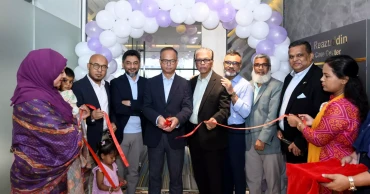
BGMEA launches ‘Day-Care Center’ at Uttara complex for employees' children
The Bangladesh Garment Manufacturers and Exporters Association (BGMEA) on Monday (May 4) formally inaugurated a new day-care center for the children of its employees at the BGMEA Complex in Uttara, Dhaka.
The 'BGMEA Md. Reazuddin Day-Care Center,’ named after one of the pioneers of the RMG industry who also served as the first vice-president of BGMEA, was inaugurated by current BGMEA President Mahmud Hasan Khan.
BGMEA seeks policy support in budget to face challenges
Several prominent BGMEA leaders attended the ceremony, including Senior Vice President Enamul Haque Khan, Vice President Md. Rezwan Selim, Vice President (Finance) Mizanur Rahman, Vice President Md. Shihab Uddoja Chowdhury, Director Shah Rayed Chowdhury, Director Mohammad Sohel, and Acting Secretary Major Md. Saiful Islam.
Speaking at the inauguration, BGMEA President emphasized the importance of the organization's staff. "The officers and employees of BGMEA are the main driving force of the organization," he said.
"This modern day-care center has been launched to ensure the security and proper development of the children of our working parents. As a result, employees will be able to perform their duties with greater peace of mind, leaving their children in a safe environment," he added.
According to BGMEA sources, the center is equipped with modern amenities. It offers an environment suitable for children’s play and primary education, along with experienced supervisors. The facility maintains high standards of cleanliness to support the physical and mental development of the children.
Following the inauguration, the BGMEA president and other leaders toured the center’s rooms and inspected the facilities designated for the children.
Employees welcomed the initiative, stating that having such a facility within the office premises would reduce worries during their professional lives.
BGMEA noted that it regularly implements various welfare activities to create a worker-friendly environment.
2 months ago

Banking sector's exposure to 6 major business groups poses significant risk: Bangladesh Bank report
An internal Bangladesh Bank (BB) document has revealed significant exposure of the country’s banking sector to high-risk of defaulted loans linked to six major business conglomerates.
The confidential analysis highlights widespread vulnerabilities across multiple banks, raising concerns over asset quality and risk management in the financial sector.
The document, titled “Selected Lead Banks, Impacted by Six Groups”, categorises affected financial institutions based on their exposure to non-performing loans associated with six business groups. The groups or individuals identified are: Saifuzzaman Chowdhury, S Alam, Beximco, Sikdar, Nassa and Orion.
According to the data, Islami Bank Bangladesh PLC appears in five of the six exposure categories, indicating extensive involvement across multiple high-risk loan portfolios. Newly consolidated Sammilito Islami Bank PLC is listed under all six groups, suggesting that its balance sheet carries significant inherited non-performing assets from merged weak banks.
Other banks appearing frequently across the exposure lists include First Security Islami Bank, Social Islami Bank, Union Bank, Janata Bank, Rupali Bank, IFIC Bank, United Commercial Bank, AB Bank and Al-Arafah Islami Bank.
State-owned banks such as Sonali Bank and Agrani Bank are also shown to have notable exposure to defaulted loans linked to the identified groups.
In response to the rising systemic risk, Bangladesh Bank has initiated steps to assign selected institutions as “lead banks” to coordinate recovery efforts in collaboration with international firms.
The criteria for selecting lead banks reportedly prioritise institutions with prior experience in handling international non-disclosure agreements (NDAs), enabling them to manage complex negotiations and recovery processes.
The designated lead banks for each group are as follows:
Saifuzzaman Chowdhury group: United Commercial Bank PLC (lead), Islami Bank Bangladesh PLC, Al-Arafah Islami Bank PLC
S Alam group: Islami Bank Bangladesh PLC (lead), Janata Bank PLC, Sammilito Islami Bank PLC.
Beximco group: National Bank PLC (lead), Janata Bank PLC
Sikdar group: IFIC Bank PLC (lead), Sammilito Islami Bank PLC, Agrani Bank PLC.
Nassa group: National Bank PLC (lead), IFIC Bank PLC, Al-Arafah Islami Bank PLC.
Orion group: United Commercial Bank PLC (lead), Agrani Bank PLC.
The document also states that banks undergoing or scheduled for merger will not be eligible to act as lead banks, reflecting ongoing policy considerations within Bangladesh Bank.
Officials said the move indicates a shift towards a more coordinated and externally supported recovery strategy aimed at addressing long-standing default loan problems in the banking sector.
2 months ago
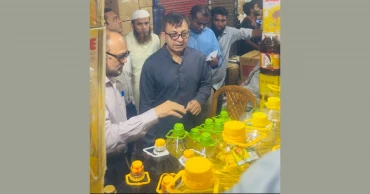
Edible oil supply gradually normalising, says Commerce Minister after Kawran Bazar visit
Commerce Minister Khondakar Abdul Muktadir said edible oil supply in the capital is gradually returning to normal levels and being sold at fair prices, after conducting an unannounced inspection of Karwan Bazar on Sunday.
The minister visited several retail and wholesale shops in the afternoon, holding direct conversations with dealers, wholesalers and retailers to assess the ground-level supply and pricing situation.
Retailers told the minister that edible oil availability had improved compared to previous weeks, with dealers also confirming increased supply flows. They noted a sharp rise in demand for 5-litre bottled oil, saying buyers are increasingly shifting from loose oil to packaged products.
According to the Ministry of Commerce, on-the-spot checks found 5-litre bottled soybean oil selling at Tk 970–975, while previously distributed 1-litre and 2-litre bottles were available at Tk 195 and Tk 390 respectively.
Consumers the minister spoke with confirmed oil was available in the market and that the supply situation had noticeably improved.
“The government is working closely to keep edible oil supply stable. Supply has largely normalised already. We have held multiple meetings with dealers and companies. Some price adjustment was necessary due to global market conditions but when international prices fall, domestic prices will be adjusted downward accordingly,” the minister said after the visit.
He added that such unannounced inspections would continue as part of the government's commitment to ensuring transparency and accountability in market management.
Commerce Ministry Secretary (routine charge) Md. Abdur Rahim Khan, Department of National Consumer Rights Protection Director General Farooq Ahmed, and other senior officials accompanied the minister during the visit.
3 months ago

Remittance continues to surge: $3.12bn received in April
The robust growth in remittance inflows has continued through April, with expatriate Bangladeshis sending US$3.12 billion in April of the current fiscal year FY2025-26, according to the latest Bangladesh Bank (BB) data.
The figures reflect a significant surge compared to the corresponding period last year, when inflows stood at $ 2.75 billion. This represents a year-on-year increase of $375 million, or 13.6 percent, for the month of April.
The upward trajectory is even more pronounced in the cumulative data for the current fiscal year FY2025-26. Total remittance receipts from July to April reached $29.33 billion, up from $24.53 billion during the same period in FY2024-25—marking a substantial 19.5 percent growth.
Central bank officials noted that this momentum follows a historic performance in March 2026, which recorded the highest single-month remittance inflow in the country’s history at a staggering $3.75 billion.
Other recent milestones include $3.29 billion in March 2025, $3.22 billion in December 2025, and $3.17 billion in January 2026.
Financial analysts attribute this surge, in part, to ongoing instability in the Middle East, which has disrupted global foreign exchange markets. The heightened international demand for the US Dollar has pushed its exchange rate higher against the local currency. Consequently, expatriates are finding it more lucrative to send money home as they receive a higher value in Taka for their earnings.
However, while the influx provides a vital cushion for the economy, economists cautioned that a prolonged Middle East crisis could pose systemic risks to Bangladesh, mirroring broader global economic threats. Experts have urged the government to prioritize the maintenance of robust foreign exchange reserves to mitigate potential future shocks.
3 months ago

BB bans LC opening for supplement imports without DGDA approval
Bangladesh Bank (BB) on Wednesday instructed all banks to stop opening Letters of Credit (LC) or processing Telegraphic Transfers (TT) for the import of dietary and nutritional supplements without mandatory prior approval from the Directorate General of Drug Administration (DGDA).
The directive, issued by the Foreign Exchange Policy Department (FEPD), follows a request from the Ministry of Health and Family Welfare to ensure the strict application of the "Drugs and Cosmetics Act, 2023".
According to the central bank circular, products including dietary supplements, herbal supplements, nutritional supplements, and medical or therapeutic nutrition items require mandatory registration or prior clearance from the DGDA for production, import, export, sale, and distribution. The circular emphasized that importing or marketing such products in violation of the law is a punishable offense.
The move comes after several importers brought in supplement-related products without the necessary registration. Following customs' refusal to release these unauthorized goods, legal disputes reached the Supreme Court's Appellate Division, which ultimately directed that those goods must be cleared only "in accordance with law".
To safeguard public health and ensure legal compliance, the Ministry of Health urged the central bank to instruct authorized dealer banks not to facilitate the import of such products unless the importers provide a valid registration certificate or prior approval from the DGDA.
3 months ago

Gold prices drop again as BAJUS revises rates
Gold prices in Bangladesh have dropped by Tk 4,432 per bhori over two consecutive days after the Bangladesh Jewellers Association (BAJUS) announced a fresh downward revision on Wednesday, setting the price of 22-carat gold at Tk 2,42,495 per bhori.
In a statement issued on Wednesday morning, BAJUS said the price adjustment reflects a decline in local market rates of refined gold.
The latest cut of Tk 2,216 per bhori follows an identical reduction on Tuesday, bringing the cumulative two-day drop to Tk 4,432.
Under the revised rates, 21-carat gold has been priced at Tk 2,31,472 per bhori, down Tk 2,100 while 18-carat gold now stands at Tk 1,98,405, a reduction of Tk 1,808. Traditional-method gold has been set at Tk 1,61,605 per bhori, lower by Tk 1,458.
The previous adjustment was made on April 28, when Bajus reduced the price of 22-carat gold by Tk 2,216 to Tk 2,44,711 per bhori.
In 2026, Bajus has revised gold prices 58 times so far, raising them on 32 occasions and cutting them on 26.
Silver prices, however, remained unchanged. A bhori of 22-carat silver is currently trading at Tk 5,482, while 21-carat stands at Tk 5,190, 18-carat at Tk 4,491, and traditional-method silver at Tk 3,383 per bhori.
Silver rates have been revised 36 times this year, with 19 upward and 17 downward adjustments.
3 months ago

Gold prices fall in Bangladesh as Bajus adjusts rates
Bangladesh Jewellers Association (Bajus) on Tuesday slashed gold prices by Tk 2,216 per bhori, citing a decline in the value of pure gold in the local market, with the new rates taking effect from the morning.
Under the revised pricing, 22-carat gold price now stands at Tk 2,44,711 per bhori (11.664 grams), down from Tk 2,46,927 set on April 23, when Bajus had last adjusted rates, trimming Tk 3,266 per bhori.
Prices across other carats were also revised downward.
Twenty-one-carat gold dropped by Tk 2,099 to Tk 2,33,572 per bhori, while 18-carat gold fell by Tk 1,807 to Tk 2,00,213. Traditional-method (sanaton) gold was reduced by Tk 1,458 to Tk 1,63,063 per bhori.
In a circular, Bajus said the adjustments reflect the prevailing market conditions following a softening of pure gold prices domestically.
Tuesday's revision marks the 57th price adjustment for gold in Bangladesh so far in 2026, with rates having been raised 32 times and reduced 25 times.
Silver also sees a cut
In tandem with the gold price reduction, Bajus also lowered silver prices across all categories.
Twenty-two-carat silver was set at Tk 5,482 per bhori, down Tk 233, while 21-carat silver fell by Tk 234 to Tk 5,190.
Eighteen-carat silver was reduced by Tk 175 to Tk 4,491, and sanaton-method silver dropped Tk 116 to Tk 3,383 per bhori.
Silver prices have been adjusted 36 times in 2026 to date up 19 times and down 17 times.
3 months ago
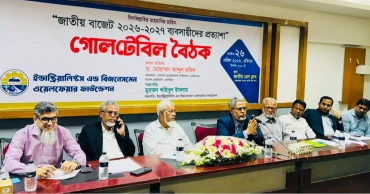
Businesses demand investor-friendly budget, lower real estate registration costs
Business leaders and industry stakeholders on Sunday called for a pragmatic, investment-friendly national budget for fiscal year 2026–27, stressing the need for entrepreneur-oriented tax policies, reduced registration costs in the housing sector and stronger energy security.
The calls came at a roundtable titled “National Budget 2026–2027: Expectations of the Business Community,” organised by the Industrialists and Businessmen Welfare Foundation (IBWF) at the Jatiya Press Club in the city.
Muhammad Abdul Mazid, former chairman of the National Board of Revenue (NBR) and current chairman of the Social Development Foundation (SDF), attended as chief guest, stressed the urgency of formulating a realistic, timely and business-friendly budget to drive economic growth, attract investment and generate employment.
He called for modernisation of the tax system, enhanced revenue mobilisation and the adoption of entrepreneur-friendly policy frameworks.
REHAB Senior Vice President Abdur Razzaque demanded a reduction in property registration costs, warning that land scarcity made vertical development unavoidable. “We must protect agricultural land. That makes planned high-rise construction not a choice, but a necessity.”
He also emphasised that tax policy must be investment-friendly, grounded in market realities and oriented toward long-term national economic interests.
REHAB Vice President Md Harun-or-Rashid urged rationalisation of taxes on secondary flat sales and called for a reduction in Tax Deducted at Source (TDS), noting that businesses were operating under severe financial pressure.
Chairing the event, IBWF President Mohammad Shahidul Islam called for a budget that genuinely reflects the challenges, potential and expectations of entrepreneurs, particularly small and medium enterprises and urged the government to provide tax relief, easier access to credit and measures to reduce production costs.
BGMEA Director Mozammal Hoque Bhuiyan demanded that bank lending rates be brought down to single digits, while BKMEA Director Moniruzzaman Monir pressed for expedited measures to ensure energy security.
Participants also called for increased allocations in health, education, agriculture and infrastructure, alongside incentives for new investors, expansion of industrial zones, export sector development and policies to attract foreign direct investment.
Leaders from FBCCI, BGMEA, BKMEA and representatives of the pharmaceutical and other industries also addressed the roundtable. IBWF Secretary General Dr Anwarul Azim and leaders of the organisation's Dhaka Metropolitan North and South units were among those present.
The session concluded with participants expressing hope that a people-oriented, business-friendly budget would inject fresh momentum into the national economy and contribute meaningfully to sustainable development.
3 months ago
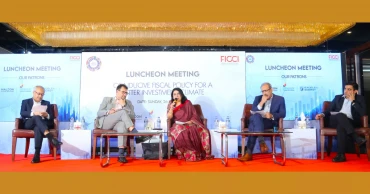
FICCI calls for stable, predictable fiscal policies to boost investment climate
The Foreign Investors’ Chamber of Commerce and Industry (FICCI) has urged the government to implement stable and predictable fiscal policies to strengthen Bangladesh’s investment climate and foster sustainable economic growth.
The call was made during a high-level luncheon meeting titled “Conducive Fiscal Policy for a Better Investment Climate,” held at a city hotel on Sunday. The event brought together policymakers, economists, business leaders, and members of the diplomatic community.
In his keynote address, Dr. M. Masrur Reaz, Founder and Chairman of Policy Exchange Bangladesh, identified tax policy and administration as primary concerns for investors.
He noted that high corporate tax rates, lengthy compliance processes, policy unpredictability, and frequent mid-year changes continue to create significant uncertainty in the business environment.
A panel discussion, moderated by PwC Country Managing Partner Shams Zaman, featured experts from the World Bank, Asian Development Bank (ADB), Centre for Policy Dialogue (CPD), and Business Initiative Leading Development (BUILD).
The panelists emphasized that while Bangladesh offers immense potential, addressing administrative fragmentation and simplifying dispute resolution are essential to remaining competitive globally.
They stressed that a transparent and automated tax system would not only increase government revenue but also reduce the cost of doing business.
FICCI Executive Director TIM Nurul Kabir reiterated the chamber's commitment to working with the government to create an investment-friendly environment.
He noted that FICCI’s 210 member companies currently contribute around 30 percent of the government's internal revenue and represent more than 90 percent of the inward Foreign Direct Investment (FDI) in Bangladesh.
The chamber concluded by highlighting that a predictable fiscal outlook is the most critical factor in attracting long-term foreign capital and ensuring the country's economic stability.
3 months ago