local-business

Gold prices in Bangladesh: BAJUS lowers rates after recent surge
The price of gold in Bangladesh has been reduced by Tk 2,158 per bhori, with the new rate for 22-carat gold set at Tk 245,819, the Bangladesh Jewellers Association (BAJUS) announced on Monday.
The revised price took immediate effect, BAJUS said in the morning.
The association attributed the adjustment to a decline in the price of tejabi gold (pure gold) in the local market and the overall market situation.
Under the new rates, 21-carat gold has been fixed at Tk 234,621 per bhori (11.664 grams), while 18-carat gold will cost Tk 201,146 per bhori. Gold of traditional method has been set at Tk 163,821 per bhori.
BAJUS last adjusted gold prices on April 1, when it raised the price by Tk 3,266 to set 22-carat gold at Tk 247,977 per bhori.
So far in 2026, gold prices have been revised 52 times, including 30 hikes and 22 reductions.
The association also reduced silver prices alongside gold. The price of 22-carat silver has been cut by Tk 175 to Tk 5,540 per bhori.
According to the new rates, 21-carat silver has been set at Tk 5,307 per bhori, 18-carat silver at Tk 4,549 per bhori, and traditional method silver at Tk 3,383 per bhori.
Silver prices have been adjusted 31 times so far this year, including 17 increases and 14 decreases, BAJUS added.
3 months ago

BKMEA urges PM to amend "Complex" provisions of labour ordinance 2025, to stabilize industry
The Bangladesh Knitwear Manufacturers and Exporters Association (BKMEA) has called upon the Prime Minister and Members of Parliament to reconsider and amend several provisions of the Bangladesh Labor (Amendment) Ordinance, 2025.
In a press conference, BKMEA President Mohammad Hatem expressed deep concern that some of the amendments proposed by the previous interim government were "ambiguous" and appeared to be part of a "planned effort" to destabilize the industrial sector.
He alleged that "over-enthusiastic individuals" within the former administration may have designed these rules to undermine the export-oriented industry.
The press conference was held at BKMEA office in Bangla Motor in the capital on Sunday.
The trade body warned that certain sections of the new ordinance create administrative complexity, increase production costs, and threaten the global competitiveness of the country's readymade garment (RMG) sector.
The BKMEA highlighted several specific areas where the 2025 Ordinance deviates from the industry's practical needs and the recommendations of the Tripartite Consultative Council (TCC).
Redefining ‘Worker’: BKMEA argued that the amended definition of a "worker" is too broad and creates confusion between general employees and management/administrative officers. They are seeking a clearer distinction to prevent administrative overlap.
Compensation for Resignation: Under the new ordinance, a worker is entitled to 7 days of wages as compensation (for every service year) due to resignation after only three years of service. BKMEA recommends that this benefit should only kick in after a minimum of three to five years of continuous service, with a graded scale for longer tenures (e.g., 15 days for 5–10 years and 30 days for over 10 years).
Collective Bargaining Agent (CBA): BKMEA proposed that even if a facility has only one trade union, it must secure a majority (50% + 1) in an election to be recognized as the CBA.
Mandatory Provident Fund: The amended ordinance makes a Provident Fund (PF) mandatory for any factory with 100 permanent workers. BKMEA has recommended increasing this threshold to 500 workers to reduce the financial and administrative burden on smaller and medium-sized units.
Trade Union Registration: The ordinance allows for up to five trade union registrations in a single establishment or group of establishments. BKMEA expressed concern over the potential for industrial unrest and recommended strict oversight on these registrations.
Harassment Grievance Committees: While the ordinance mandates a 5-member committee to handle complaints of discrimination and violence, BKMEA is seeking further clarity on the operational guidelines of these committees to ensure they function fairly.
Impact on Sustainable Development
The association emphasized that while they support the welfare of workers, the law must be "investment-friendly" to ensure the industry's sustainability. They noted that the current version of the ordinance creates "intentional hurdles" that could lead to the destruction of factories and a decline in national exports.
"We believe some provisions were drafted with the intent to destroy our industrial infrastructure," said Mohammad Hatem.
"To ensure the continuous growth of the knitwear sector, it is essential to align the law with the realistic recommendations provided by the owners and the TCC," he
BKMEA concluded by urging the government to engage in further dialogue to ensure the Labor Act fosters a stable environment for both workers and employers, maintaining Bangladesh's position as a leading global apparel exporter.
Fazlee Shamim Ehsan, Executive President of BKMEA, Senior Vice President Amal Podder, CIP, and Vice President Mohammad Rashed, among others, were present in the press conference.
3 months ago
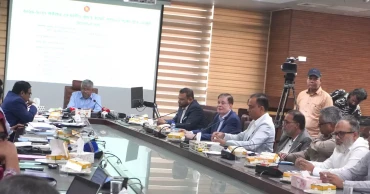
BCCCI presents proposals to NBR ahead of budget
The National Board of Revenue (NBR) held a pre-budget consultation meeting with the Bangladesh China Chamber of Commerce & Industry (BCCCI) at its office in Dhaka’s Agargaon ahead of the national budget for FY 2026–2027.
The meeting was chaired by NBR Chairman Md. Abdur Rahman Khan, FCMA, and attended by senior officials of the revenue authority, according to a media statement on Sunday.
The BCCCI delegation, led by its President Mohd. Khorshed Alam, included Director Amanur Rahman, a representative from Xiaomi Technologies Bangladesh Private Limited, and Executive Director Md. Abu Taher.
During the meeting, BCCCI placed several proposals focusing on the textile sector, chemical industry, and a reduction of VAT at the trading stage of mobile phones, aiming to facilitate trade, attract investment, and support business growth.
The NBR Chairman appreciated the proposals and assured that the recommendations would be reviewed and could be considered in the formulation of the national budget for FY 2026–2027.
3 months ago

Bangladesh inflation eases to 8.71% in March: BBS
Bangladesh’s point-to-point general inflation eased slightly to 8.71 per cent in March 2026, down from 9.13 per cent in February, according to the latest data from the Bangladesh Bureau of Statistics (BBS).
The BBS data showed that food inflation fell to 8.24 per cent in March from 9.30 per cent in the previous month while non-food inflation rose slightly to 9.09 per cent from 9.01 per cent.
Both rural and urban areas experienced a modest decline in overall inflation.
In rural areas, the general point-to-point inflation stood at 8.72 per cent in March down from 9.21per cent in February 2026 though it was higher at 9.41 per cent in March 2025.
Rural food inflation declined to 8.02 per cent from 9.07 per cent while non-food inflation increased to 9.38 per cent from 9.34 per cent.
In March, 2025, rural food and non-food inflation were 8.81 per cent and 9.97 per cent respectively.
In urban areas, general inflation declined to 8.68 per cent in March from 9.07 per cent in February.
Urban food inflation decreased to 8.78 per cent from 9.87 per cent whereas non-food inflation increased to 8.62 per cent from 8.57 per cent.
In January 2025, urban food and non-food inflation were 9.18 per cent and 9.95 per cent respectively.
3 months ago

Chicken, Hilsa get pricier ahead of Pahela Baishakh
Prices of Sonali chicken and Hilsa have gone up in Dhaka’s kitchen markets, with traders citing supply shortages and rising demand ahead of Pahela Baishakh, the first day of Bangla New Year.
A visit to several markets in Shantinagar, Motijheel, Malibagh, Rampura, Badda and Kuril on Friday showed while broiler chicken prices dropped to Tk 200 per kg from Tk 240, Sonali chicken prices increased further to Tk 380-400 per kg, up from Tk 350 just a week ago.
At the beginning of Ramadan, Sonali chicken was selling at Tk 280-300 per kg, which rose to Tk 340-360 in the last week of Ramadan. Consumers had expected prices to ease after Eid, but the trend has reversed.
“I waited thinking prices would fall after Eid, but now it has gone up to Tk 400 per kg,” said Tipu Sarker, a consumer at AGB Colony Kitchen Market in Motijheel.
Traders attributed the price hike to supply shortages.
“Earlier, we could bring two pickup loads of chicken from Gazipur within a day. Now we have to wait two days even after placing orders,” said Selim Ali, a trader at Uttar Badda, adding that transport costs have risen and advance payments are now required.
Vendors also reported a decline in sales due to higher prices. “People who used to buy four chickens now buy two. Some even reduce to one instead of a pair,” said Sabuj, a trader at Rampura market.
Alongside Sonali chicken, prices of indigenous chicken have also surged, reaching Tk 780-800 per kg, compared to Tk 550-600 before Ramadan. Prices rose to Tk 650-700 in early Ramadan and further to Tk 720-750 during Eid.
Buyers termed the price hike unreasonable, though traders again blamed supply constraints.
Meanwhile, beef prices remained largely stable, selling at around Tk 800 per kg in most shops, with priced between Tk 820-850 in some areas.
Hilsa prices have also increased ahead of Pahela Baishakh. Hilsa weighing below 500 grams, previously sold at Tk 800-1,000, is now priced at Tk 1,400-1,500. Hilsa weighing 700-800 grams is selling for Tk 2,200-2,300, while larger fish of one kg or more is priced at Tk 2,600-2,800 per kg.
Traders said Hilsa supply has declined in recent days, although it may improve toward the end of April. Besides, increased demand ahead of the Bangla New Year has pushed prices up for now.
Egg prices have also risen by Tk 10 per dozen over the past week, now selling at Tk 120-130 compared to Tk 100-110.
Loose soybean oil prices have increased by Tk 10 per litre, reaching Tk 200 from Tk 190 in Badda retail market, while bottled soybean oil remains in short supply in many shops.
Vegetable prices remained mostly stable, with no significant change observed in potato and onion prices. But, traders warned that continued supply disruptions could lead to further price hikes in the coming weeks.
4 months ago
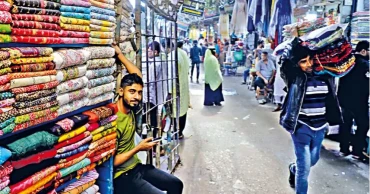
Confusion over 8pm shop closure as traders give conflicting statements
A section of shop owners have announced that all shops, retail outlets and shopping malls across the country will close by 8pm daily to help ease pressure from the ongoing global energy crisis, while another major organisation says no such decision has been taken.
The shop closure decision was disclosed in a statement on Thursday following a joint meeting of the standing committees of the Bangladesh Shop Business Owner’s Association and the Dhaka Metropolitan Shop Business Owner’s Association.
The move is aimed at conserving electricity and fuel amid instability in international energy markets triggered by the Middle East situation.
According to the decision, all shops and malls will shut by 8pm, while essential services such as hotels, pharmacies and kitchen markets will remain open beyond the deadline.
Association President Md Nazmul Hasan Mahmud and General Secretary Md Arifur Rahman Tipu urged traders to comply with the directive.
However, the Bangladesh Shop Owners’ Association has rejected the announcement, saying no final decision has been taken to enforce an 8pm closure.
In a video message, its President Helal Uddin said the Power, Energy and Mineral Resources Ministry has convened a meeting on Saturday to discuss the issue.
The meeting will be attended by the home minister and commerce minister, along with district-level leaders of the association, where energy-saving measures and a possible collective decision will be discussed, he added.
4 months ago
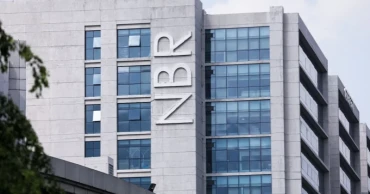
600 firms picked for VAT audit under automated system
The National Board of Revenue (NBR) has selected 600 firms for VAT audit through a fully automated system, aiming to ensure transparency and reduce human intervention in the process.
In a press release issued on Thursday, the revenue authority said it has successfully implemented an Automated Risk Management Module in the e-VAT system to streamline audit selection.
Under the new system, entities are being selected automatically based on 20 risk criteria – each assigned a specific weightage to assess risk levels without any manual involvement.
The NBR said the introduction of this module fulfils a long-standing demand from taxpayers and civil society for a transparent and unbiased audit selection process.
Initially, 600 firms were selected, and the list was published on the NBR website.
Of these, 405 are manufacturing entities, 98 service providers, 65 wholesale and retail businesses, and 32 are importers or exporters.
The revenue board noted that the risk criteria and their assigned weightage may be revised in the future, depending on the effectiveness of audit outcomes.
According to the NBR, the automated system is expected to enhance transparency, neutrality and efficiency in VAT management, while also helping prevent revenue evasion and making the system more taxpayer-friendly.
4 months ago

All banks must launch ‘Bangla QR’ apps by June: Bangladesh Bank Governor
Bangladesh Bank (BB) Governor Mostaqur Rahman has directed all commercial banks in the country to launch ‘Bangla QR’ apps by June this year to expand digital transactions and boost revenue.
The Governor issued this directive on Wednesday during an interactive session with business editors of electronic media held at the central bank headquarters.
Governor Rahman emphasized that political influence has historically been a major obstacle to ensuring good governance in the banking sector. He warned that no political interference will be tolerated in banking operations moving forward.
Speaking on the issue of non-performing loans (NPLs), the Governor instructed banks to implement rigorous scrutiny before approving projects. He also urged banks to exercise greater caution when disbursing high-risk loans to reduce the burden of defaults.
According to Bangladesh Bank, ‘Bangla QR’ is the nationally standardized, central bank-approved QR-based payment system. The technology allows customers to make secure, contactless digital payments via smartphone by scanning a code through their respective bank apps, eliminating the need for physical cash or cards.
The central bank noted that this system is designed for a wide range of users—from low- to high-income groups—and is accessible to retailers of all sizes, including small, medium, and large entrepreneurs, restaurants, and grocery stores.
Customers using Visa cards from banks that have already integrated ‘Bangla QR’ into their mobile apps and received Visa certification can currently make payments using this system.
One of the primary advantages for merchants is that no additional hardware or machines are required. Once a payment is completed, the shopkeeper receives an instant SMS confirmation.
Additionally, a dedicated merchant app will allow business owners to track daily transactions and access features like a digital ledger (Halkhata), service sales tracking, and wholesaler payment management.
4 months ago

Gold price rises by Tk 3,266 per bhori on first day of April
The Bangladesh Jewellers Association (BAJUS) has once again increased gold prices in the local market, raising the rate by Tk 3,266 per bhori on Wednesday, the first day of April.
According to a statement issued in the morning, the price of 22-carat gold has been set at Tk 247,977 per bhori (11.664 grams).
BAJUS said the latest adjustment was made due to a rise in the price of pure gold (tejabi gold) in the local market, prompting a revision of overall gold rates.
Under the new pricing structure, 21-carat gold will cost Tk 236,721 per bhori, while 18-carat gold has been fixed at Tk 202,895 per bhori. Gold of traditional method has been set at Tk 165,279 per bhori.
The association last revised gold prices on March 31, when it increased the rate by Tk 3,266 per bhori, setting the price of 22-carat gold at Tk 244,711.
So far in 2026, gold prices have been adjusted 51 times in the domestic market, with rates increased on 30 occasions and reduced 21 times.
Despite the hike in gold prices, silver rates remain unchanged.
Currently, 22-carat silver is being sold at Tk 5,715 per bhori, while 21-carat silver costs Tk 5,424 per bhori, 18-carat Tk 4,666, and traditional silver Tk 3,499 per bhori.
In 2026, silver prices have been adjusted 30 times so far, with 17 increases and 13 decreases.
4 months ago

Stocks open lower on both DSE, CSE as indices fall
Trading on Bangladesh’s two bourses opened on a negative note on Tuesday, with all major indices declining in early hours.
During the first hour of trading, the benchmark DSEX index of the Dhaka Stock Exchange (DSE) dropped by 45 points.
The Shariah-based DSES index fell by 6 points, while the blue-chip DS30 index lost 18 points.
Most listed companies saw price declines, as share prices of 263 companies fell against 79 gainers, while 44 remained unchanged.
Turnover on the DSE exceeded Tk 270 crore within the first hour of trading.
A similar downward trend was observed on the Chittagong Stock Exchange (CSE), where the overall CASPI index fell by more than 130 points.
Out of the traded issues, 71 companies recorded price declines, while 24 advanced and 21 remained unchanged.
The CSE recorded a turnover of over Tk 5 crore in the first hour.
4 months ago