local-business
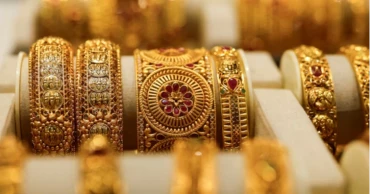
Gold price drops by Tk 3,266 per bhori in Bangladesh
The price of gold in Bangladesh has fallen by Tk 3,266 per bhori, with the rate of 22-carat gold now set at Tk 264,948, according to the Bangladesh Jewellers Association (Bajus).
In a notification issued Monday, Bajus said the new rate was fixed in line with the overall market situation following a decline in the price of pure gold, locally known as tejabi gold.
The revised prices came into effect immediately.
Gold prices fall sharply in Bangladesh as 22-carat gold drops Tk 9,214
Under the new rates, 22-carat gold will be sold at Tk 264,948 per bhori (11.664 grams).
The price of 21-carat gold has been set at Tk 252,876 per bhori, while 18-carat gold will cost Tk 216,775 per bhori.
Gold produced using the traditional method will be priced at Tk 176,943 per bhori.
Earlier, on March 4, Bajus reduced gold prices by Tk 9,214 per bhori, setting the rate of 22-carat gold at Tk 268,214.
So far this year, gold prices in the country have been revised 38 times, including 24 increases and 14 decreases.
Silver prices have also been reduced. Bajus cut the price of 22-carat silver by Tk 175 per bhori to Tk 6,357.
The price of 21-carat silver has been set at Tk 6,065 per bhori, while 18-carat silver will cost Tk 5,190 per bhori.
Silver produced using the traditional method will be sold at Tk 3,907 per bhori.
So far in 2026, silver prices have been revised 23 times in the local market, including 14 increases and nine decreases.
4 months ago
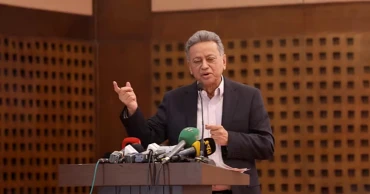
Private sector key to growth, govt prioritising investment: Finance Minister
Finance and Planning Minister Amir Khosru Mahmud Chowdhury on Sunday said the private sector remains the main engine of the country’s economic growth and the government is giving top priority to trade, commerce and investment.
Amir Khosru made the remarks during a meeting with Dhaka Chamber of Commerce & Industry (DCCI) President Taskeen Ahmed at his office at the Secretariat.
The minister said the government is working to make the capital market more vibrant and the central bank more private sector-oriented through different initiatives.
Finance Minister Amir Khosru returns home after hospital treatment
Khosru also noted that easing lending conditions for the private sector and increasing credit flow remain among the government’s priorities to boost investment in the country.
During the meeting, Taskeen urged the government to strengthen the financial sector to support economic growth and restore investor confidence.
Taskeen proposed a gradual reduction in the policy rate to ease lending rates and stimulate private sector investment.
He also suggested reconsidering the loan rescheduling facility for genuine or unintentional defaulters by extending the loan classification period.
A coordinated approach involving monetary, fiscal and structural reforms could help restore investor confidence, strengthen financial stability and accelerate inclusive development, Taskeen added, assuring full support from the business community.
DCCI Senior Vice President Razeev H Chowdhury and Vice President Md. Salem Sulaiman were also present at the meeting.
4 months ago

Chinese firm to invest $15.34m in garment factory at BEPZA Economic Zone
Flourish Garments Bangladesh Co., Ltd., a China (Hong Kong)-based company, is set to invest US$15.34 million to establish a high-end garments manufacturing facility at the BEPZA Economic Zone in Mirsharai of Chattogram.
An agreement to this effect was signed on Sunday at the BEPZA Complex in Dhaka between the Bangladesh Export Processing Zones Authority (BEPZA) and Flourish Garments Bangladesh Co., Ltd.
Md Tanvir Hossain, Executive Director (Investment Promotion) of BEPZA, and Han Junxiao, Managing Director of Flourish Garments Bangladesh Co., Ltd., signed the agreement on behalf of their respective sides.
BEPZA Executive Chairman Major General Mohammad Moazzem Hossain witnessed the signing ceremony, said a press release.
Under the project, the company will produce around 4 million pieces of garments annually, including fleece jackets, soft-shell jackets, down jackets, cotton coats, leather jackets, T-shirts, polo shirts, shorts, parkas, long pants, ski suits, windproof jackets, fishing and hiking suits, yoga and running suits, jeans, knitted shorts, faux leather clothing, deer skin velvet clothing, golf clothing and casual skirts.
The project is expected to create employment opportunities for about 1,988 Bangladeshi nationals, it added.
4 months ago

Bangladesh inflation rises to 9.13% in February
Bangladesh’s point-to-point inflation rose to 9.13 percent in February, up from 8.58 percent in January due to a sharp increase in food prices, according to the latest data released by the Bangladesh Bureau of Statistics (BBS).
Food inflation climbed to 9.30 percent in February, compared with 8.29 percent a month earlier.
Non-food inflation also rose slightly to 9.01 percent, up from 8.81 percent in January.
Inflation remained higher in rural areas than in urban centres, reflecting continued pressure on food prices outside major cities.
In rural areas, overall inflation increased to 9.21 percent in February, from 8.63 percent in January, though it was lower than 9.51 percent recorded in February last year.
Rural food inflation rose to 9.07 percent, up from 8.18 percent in January, while rural non-food inflation increased to 9.34 percent, compared with 9.04 percent a month earlier.
In urban areas, overall inflation rose to 9.07 percent in February, up from 8.57 percent in January.
Urban food prices saw a sharper increase, with food inflation jumping to 9.87 percent, significantly higher than 8.61 percent in the previous month, indicating stronger price pressure in city markets.
However, non-food inflation in urban areas remained relatively stable at 8.57 percent, slightly higher than 8.54 percent in January.
Despite the month-on-month increase, the annual average inflation rate has eased significantly.
The 12-month moving average inflation from March 2025 to February 2026 stood at 8.65 percent, down from 10.31 percent during the same period a year earlier, suggesting that overall price pressures have moderated compared with last year.
Meanwhile, wage growth continued to lag behind inflation, raising concerns about declining purchasing power for workers.
The national wage rate index increased by 8.06 percent in February on a point-to-point basis, slightly lower than 8.08 percent in January and 8.12 percent in February 2025.
Sector-wise wage growth in February was 8.10 percent in agriculture, 7.99 percent in industry, and 8.20 percent in services.
According to BBS, the Consumer Price Index (CPI) for February was calculated based on data collected from 154 markets across all 64 districts of the country.
Overall, the data indicate that inflationary pressure persists despite a gradual improvement in the annual average, with rising food prices continuing to drive the cost of living for consumers.
4 months ago
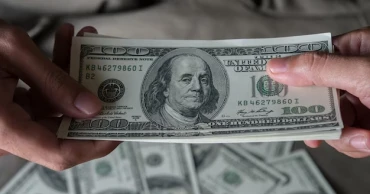
Preserve reserves, source alternative fuel: Top economists advise governor on Middle East crisis
Leading economists have urged the Bangladesh Bank (BB) to prioritize the preservation of foreign exchange reserves and seek alternative energy sources to shield the national economy from the looming fallout of the Middle East conflict.
The advice was given during a high-level meeting on Saturday (March 7) between Governor Mostaqur Rahman and eight of the country’s top economists, held at the central bank headquarters in Motijheel. The session was convened to discuss policy strategies amidst rising global uncertainty caused by military tensions between the US and Iran.
Key Recommendations from Economists:
The economists emphasized that while the full extent of the crisis remains unclear, the pressure on the US dollar and national reserves is inevitable. Their primary recommendations include:
Preserve Reserves: Avoid spending dollars from the reserves to fund imports; instead, use existing foreign currency inflows strictly for essential stability.
Fuel Diversification: To reduce dependency on the volatile Middle East, the government should immediately explore fuel imports from alternative sources such as Brunei and Singapore.
No Immediate Hikes: Despite rising global prices, the experts advised against passing costs onto domestic consumers immediately to prevent a further spike in inflation.
Monetary Caution: They argued against lowering the policy interest rate (Repo rate) at this moment. While lower rates could boost investment, the priority must remain inflation control until the war-induced pressure subsides.
Governor Pledges Independence:
Governor Mostaqur Rahman, who took office on February 26, addressed concerns regarding political influence during the meeting.
“I will perform my duties with absolute honesty and will not make any decisions under political pressure," the Governor assured the economists.
He also instructed commercial banks to remain steadfast against external political interference in their decision-making processes.
Strengthening Financial Inflow:
The meeting also highlighted the potential risks to remittance inflows if worker movement in the Middle East is hindered. To counter this, economists suggested:
Smoothing the legal channels for expatriates to send money home.
Expediting the release of committed foreign loans from the ‘World Bank’ and other global lenders.
Seeking additional credit lines from the Islamic Development Bank (IDB) specifically for oil imports.
The distinguished economist panel included Dr. Mustafizur Rahman, distinguished fellow of CPD, Dr. Fahmida Khatun, Executive Director of CPD,
Dr. Mustafa K. Mujeri, former chief economist of BB, Dr. Mohammad Abdur Razzaque of RAPID, Dr. Selim Raihan of SANEM, Dr. Masrur Reaz of Policy Exchange, Dr. A.K. Enamul Haque, Director General of BIDS,
Nazmus Sadat Khan of the World Bank.
The meeting concluded with a proposal to form a standing committee of experts to provide regular updates and policy recommendations to the central bank to prevent public panic and ensure institutional stability.
4 months ago

Classified loans in Bangladesh drop by Tk 87,298 crore in Q4 2025
The volume of classified loans in Bangladesh’s banking sector witnessed a significant decrease of Tk 87,298.33 crore during the final quarter of 2025.
As of December 31, 2025, total classified loans stood at Tk 5,57,216.92 crore, down from Tk 6,44,515.25 crore in September 2025.
According to a report by the Banking Regulation and Policy Department of Bangladesh Bank, the gross classified loan rate fell to 30.60 percent in December, compared to 35.73 percent at the end of September 2025.
However, on a year-on-year basis, the gross ratio remains significantly higher than the 20.20 percent recorded in December 2024.
Net Classified and Defaulted Loans:
The net classified loan rate, after adjusting for maintained provisions and suspense interest, dropped sharply to 13.93 percent in December from 26.40 percent in September. Meanwhile, specific defaulted loans totaled Tk 5,44,831.88 crore (29.92 percent of total loans), marking a decrease of Tk 68,039.57 crore over the three-month period of quarter-2.
Category-wise Performance The reduction in classified loans was observed across all bank categories:
State-owned Commercial Banks: The rate dropped to 44.44% from 49.65%.
Private Commercial Banks: Saw a decline to 28.25% from 33.75%.
Specialized Banks: Decreased to 39.74% from 41.95%.
Foreign Banks: Maintained the lowest rate at 4.51%.
Provision Shortfall and Credit Growth Despite the drop in bad debt, the banking sector continues to face a massive provision shortfall of Tk 1,91,441.35 crore.
Bangladesh Bank buys $25 million from banks to stabilize market
Total outstanding loans and advances in the 61 scheduled banks reached Tk 18,20,915.44 crore by the end of December 2025, reflecting an annual credit growth of 6.40 percent. Private commercial banks led this growth with a 7.56 percent increase in disbursements over the year.
5 months ago

Bangladesh Bank buys $25 million from banks to stabilize market
Bangladesh Bank (BB) on Monday purchased US$25 million from two banks as a continuous effort to maintain stability in the foreign exchange market.
The central bank bought the dollar at a cutoff rate of Tk 122.30 per dollar, according to a central bank official.
Arif Hossain Khan, Executive Director and Spokesperson of Bangladesh Bank, confirmed the transaction. "We purchased $25 million from two commercial banks today at the 122.30 cutoff rate," he said.
With Monday's procurement, the central bank's total dollar purchase for the current fiscal year, FY2025–26, has reached a substantial $5.49 billion, the spokesperson added.
The central bank has been consistently mopping up dollars from the banking channel throughout February to manage liquidity and exchange rate volatility.
Earlier on February 24, the BB bought $87 million from eight banks, following a purchase of $123 million from eight commercial banks on February 22. In the first half of February, the bank made several large-scale interventions, including $171 million on Feb 10, $209 million on Feb 9, and $196.5 million on Feb 5.
Record data shows that on February 2, the bank made its highest single-day purchase of the month, collecting $218.50 million from 16 commercial banks.
All recent transactions have been consistently settled at the exchange rate of Tk 122.30, reflecting the central bank's current peg or target rate for these official interventions.
5 months ago
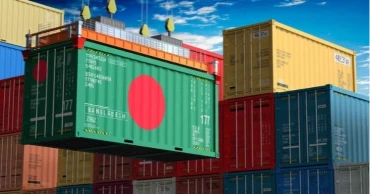
Bangladesh goods exports hit $31.91b in July-Feb, a decline of 3.97 percent
Bangladesh’s merchandise export earnings reached US$31.91 billion during the first eight months of the 2025-26 fiscal year (July–February), signaling sector stability despite a cooling global trade climate.
In February 2026, Bangladesh's exports declined by 12.03 percent to $3.97 billion compared with February 2025. In January 2026, Bangladesh exported goods worth $4.41 billion.
According to the latest data from the Export Promotion Bureau (EPB), in eight months, the country recorded a marginal 3.15 percent decline, down from $32.92 billion in the same period in the previous fiscal year FY2024-25.
Industry insiders attributed the slight contraction to temporary factors, including domestic port disruptions, the recently held national election, and subdued global demand in key traditional markets.
The Ready-made Garments (RMG) sector, the backbone of the nation's export economy, fetched $25.79 billion during the July-February period, reflecting a 3.73 percent decrease year-on-year. Within the apparel sector, knitwear continued to outpace woven garments, maintaining its lead as the primary driver of earnings.
While the overall figure saw a slight dip, several non-traditional sectors registered positive growth, indicating a steady diversification of the national export basket. Key sectors that saw year-on-year increases include leather and leather goods, Jute and jute goods, Home textiles, light engineering and frozen fish.
In terms of destinations, the United States remained the largest market for Bangladeshi products, totaling $5.87 billion with a modest growth of 0.74 percent.
Notably, China recorded the highest growth among major destinations, with a significant year-on-year increase of 19.12 percent.
Despite the marginal overall decline, trade experts suggest that the performance reflects a resilient environment capable of navigating both domestic and international complexities as the fiscal year enters its final quarter.
5 months ago
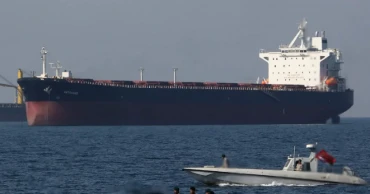
Experts flag possible energy pressure for Bangladesh amid US-Iran tensions
Bangladesh could face mounting energy and financial pressures amid rising tensions between the United States and Iran, with concerns growing over possible disruptions in the Strait of Hormuz, a key route for the country’s energy imports.
With 65-70 percent of the nation's energy demand met through imports—primarily Liquefied Natural Gas (LNG), crude oil, and Liquefied Petroleum Gas (LPG)—sector experts warn that a prolonged regional war could paralyze the economy.
The Strait of Hormuz is the world’s most vital oil transit point. Reports indicate that Iran’s Revolutionary Guard has begun transmitting radio warnings that vessels may be barred from the passage. If the Strait is officially closed, international research agencies forecast that crude oil prices could surge to between USD $95 and $110 per barrel.
For Bangladesh, this is a direct threat. The country relies on this specific maritime route for:
LNG: 55 percent of total imports (mainly from Qatar and Oman).
Crude Oil: 20 percent of annual demand (sourced from Saudi Arabia and UAE).
LPG: Almost 100 percent of supply is Middle East-centric.
How Bangladesh Will Be Affected
The disruption of this supply chain is expected to trigger a domino effect across several sectors.
Severe Power Shortages: As Qatar is a primary source of gas for power plants, any disruption in LNG shipments will lead to widespread load-shedding during the upcoming peak summer season.
Gas Crisis: Professor M. Tamim, an energy expert and Pro-VC of Independent University, warned that "a continued war will spike oil prices and disrupt Qatar's LNG supply, creating a grave gas crisis."
LPG Scarcity: The domestic market, which requires 1.2 lakh tonnes of LPG monthly, is already facing a shortage. A supply chain break would cause prices to skyrocket and supplies to vanish.
Economic Strain: Rising global oil prices will put immense pressure on Bangladesh's foreign exchange reserves and increase the cost of living.
Dr. Ijaz Hossain, Professor and Dean of Engineering, Specialization Energy and Environment of BUET told UNB that energy supply from the Middle East will be severely disrupted if the war prolonged.
“Impact of this both energy supply and electricity generation in Bangladesh would be affected vastly as there is no immediate alternative. The national storage capacity is small for our country,” he added.
Despite the looming threat, the Bangladesh Petroleum Corporation (BPC) maintains that refined oil supplies are "safe" until June, as they are sourced from Malaysia, China, and Singapore, bypassing the Strait of Hormuz. However, the BPC Chairman, Md. Rezanur Rahman, admitted they are "closely monitoring" the crude oil situation.
Petrobangla Director (Operations) Engr. Md. Rafiqul Islam echoed these concerns, stating that while they are monitoring the situation 24/7, a closure of the Qatari shipping route remains a major cause for anxiety.
Energy Minister Iqbal Hassan Mahmood, has called an emergency meeting to discuss the crisis. "We are monitoring the situation and planning to explore alternative import sources to ensure Bangladesh does not fall into an energy vacuum," the Minister told reporters.
Industry leaders, including East Coast Group Chairman Azam J. Chowdhury, have urged the government to establish advanced communications with alternative suppliers like Indonesia and Malaysia to mitigate the risk.
5 months ago

Gold posts massive Tk 7,640 single-day hike in Bangladesh
Gold prices in Bangladesh surged by Tk 7,640 per bhori in a single day as the Bangladesh Jewellers Association (BAJUS) revised rates twice on Saturday, setting the price of 22-carat gold at Tk 268,680 per bhori (11.664 grams).
BAJUS first announced a Tk 4,374 hike in the morning and later raised the price by another Tk 3,266 at night, resulting in a cumulative increase of Tk 7,640 in a day.
In a late-night statement, BAJUS said the new rates were fixed considering the rise in the price of pure gold (tejabi gold) in the local market and the overall market situation.
Under the revised rates, 21-carat gold will cost Tk 256,433 per bhori, while 18-carat gold has been set at Tk 219,808 per bhori. The price of gold produced under the traditional method has been fixed at Tk 179,859 per bhori.
The association said a mandatory 5 percent government VAT and a minimum 6 percent making charge set by BAJUS must be added to the selling price. However, the making charge may vary depending on design and quality of jewellery.
So far in 2026, gold prices have been adjusted 34 times in the domestic market, including 22 hikes and 12 reductions.
Bangladesh gold price drops Tk 3,266 per bhori; 22-carat set at Tk 255,558
Silver prices were also raised alongside gold. BAJUS increased the price of 22-carat silver by Tk 116 per bhori to Tk 6,998.
The new rates set 21-carat silver at Tk 6,707 per bhori, 18-carat silver at Tk 5,715 per bhori, and traditional-method silver at Tk 4,316 per bhori.
In 2026, silver prices have been adjusted 20 times so far, with 13 increases and seven decreases.
5 months ago