local-business

General investors, institutions to access private bonds, funds through DSE's new PI category
The newly introduced Private Investor (PI) category will now allow general investors, registered institutions and funds to invest in privately offered bonds, open-end mutual funds, exchange-traded funds (ETF) and equities approved by the fund's regulatory authority, officials said at a workshop on Monday.
The Dhaka Stock Exchange (DSE) organised the awareness workshop on the addition of the PI category to its Electronic Subscription System (ESS) through the Zoom platform, where representatives from merchant banks, asset management companies (AMC), TREC holders and other related institutions took part.
Speakers at the workshop said the ESS platform has so far allowed only Eligible Investor (EI) and Qualified Investor (QI) category investors to participate in primary investment opportunities.
Any individual, registered institution or fund will now be able to register under the PI category, according to the DSE.
For individual investors, only a National Identity (NID) card and a bank account will be mandatory, while institutions or funds will need a registration certificate and a bank account. No registration fee will be applicable for PI registration, the DSE said.
The workshop covered the registration and subscription process of the ESS, the required information and documentation, and various aspects of using the digital platform.
Speakers said the initiative will expand alternative investment opportunities for general investors beyond equities and will play a significant role in building a digital and transparent investment environment.
They added that the move will also create scope for introducing diverse financial products in the capital market.
7 days ago

Bajus raises gold price by Tk 2,216 per bhori
The Bangladesh Jewellers' Association (Bajus) on Monday raised the price of gold by Tk 2,216 per bhori, setting the new price of 22-karat gold at Tk 223,074 per bhori, including VAT.
In a notice issued Monday morning, Bajus said the upward revision was made in view of a rise in the price of pure gold in the local market. The new rates took effect from 10 am the same day.
Under the revised rates, a bhori (11.664 grams) of 22-karat gold ornaments will now cost Tk 223,074, including VAT.
The price of 21-karat gold was raised by Tk 2,100 to Tk 213,043 per bhori, while 18-karat gold went up by Tk 1,750 to Tk 182,950. The price of traditional gold ornaments was increased by Tk 1,458 to Tk 149,474 per bhori.
Bajus said the new prices will remain effective at all jewellery outlets until further notice, though making charges will continue to vary according to design.
Since VAT is included in the sale price of gold and silver ornaments, it cannot be charged separately from customers.
The organisation's existing rules on ornament exchange and purchase, excluding specified VAT, making charges and stone value, will remain unchanged.
Bajus had last adjusted gold prices on the morning of July 24, when it cut the rate by Tk 3,324 per bhori, bringing the price of 22-karat gold, including VAT, down to Tk 220,858.
According to Bajus, gold prices have been revised 95 times in the country so far in 2026; increased on 46 occasions, decreased 48 times, and adjusted once over VAT.
Silver prices were also revised upward alongside gold. The price of 22-karat silver ornaments was raised by Tk 59 to Tk 4,666 per bhori, including VAT.
The price of 21-karat silver went up by Tk 175 to Tk 4,549, 18-karat silver rose by Tk 116 to Tk 3,907, and traditional silver ornaments increased by Tk 116 to Tk 2,974 per bhori.
7 days ago
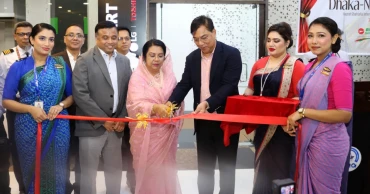
Biman resumes Dhaka-Narita Tokyo flights after year-long suspension
National flag carrier Biman Bangladesh Airlines has resumed regular flights on the Dhaka–Narita–Dhaka route after a suspension of more than one year.
The inaugural flight departed Hazrat Shahjalal International Airport for Narita at 2:25 am with 143 passengers on board, said a media statement on Monday.
Narita International Airport serves as the main international gateway to Tokyo, Japan's capital.
The resumption of the route is expected to strengthen air connectivity between Bangladesh and Japan while contributing to the expansion of trade, investment, tourism, education, cultural exchange and people-to-people ties between the two countries.
Civil Aviation and Tourism Minister Afroza Khanam attended a greeting and view-exchange programme with passengers of the first flight. State Minister for Civil Aviation and Tourism M. Rashiduzzaman Millat attended the event as the special guest.
7 days ago
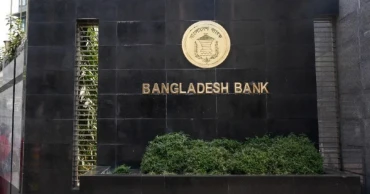
Bangladesh Bank directs banks to settle disciplinary cases against officials within two months
Bangladesh Bank (BB) has directed all scheduled banks to settle disciplinary cases and departmental proceedings against bank officers and employees within a maximum of two months.
The Banking Regulation and Policy Department (BRPD) of the central bank issued a circular in this regard on Sunday, instructing managing directors and chief executive officers of all scheduled banks to execute the directive immediately.
According to the central bank, the instruction was issued to align the timeframe for resolving internal disciplinary proceedings with the 'Bangladesh Labour Rules, 2015'. To facilitate this, Bangladesh Bank amended clause 2(b) of BRPD Circular Letter No. 06, issued on May 4, 2005, which governs human resource management and inter-bank recruitment.
Under the revised directive, if any disciplinary case or departmental proceeding is pending against an officer or employee, it must be disposed of within two months in accordance with the bank’s service rules.
Central bank officials noted that prolonged delays in resolving such proceedings previously created career uncertainty and prevented affected employees from switching jobs or joining other financial institutions.
Bangladesh Bank emphasized that all other provisions of the 2005 circular will remain unchanged, with the new amendment applying specifically to the settlement timeframe.
Banking sector analysts believe the decision will establish greater transparency, accountability, and good governance in human resource management, while eliminating unnecessary harassment and preventing eligible bankers' career progression from being stalled.
8 days ago
Number of 'crorepatis' jumped by 21% during interim govt's tenure: Bangladesh Bank data
The number of individual bank accounts holding Tk 1.0 crore or more in Bangladesh increased by over 7,000 during the one-and-a-half-year tenure of the Dr. Muhammad Yunus-led interim government, according to the latest figures from Bangladesh Bank.
It means that the number of rich people have increased in the country during the period of the interim government in the country.
Central bank data from its latest 'Banking Sector Update' shows that individual crore-taka accounts rose from 33,629 in September 2024 to 40,645 by the end of March 2026. This represents an addition of 7,016 new accounts—a growth of nearly 21 percent.
Total deposits held in these high-value individual accounts increased from Tk 87,200 crore in September 2024 to Tk 91,400 crore in March 2026.
Economists and banking sector analysts noted that a 21 percent surge in crore-taka accounts within such a short span—amid high inflation, economic stagnation, historically low private sector credit growth, and persistent poverty pressures—does not fully align with typical economic trends, calling for an in-depth investigation into the underlying drivers.
A senior Bangladesh Bank official, speaking on condition of anonymity, suggested that following the political changeover, new influential groups emerged across various sectors. A portion of funds generated through illegal activities, such as extortion and land grabbing, may have entered the banking system, contributing to the rise.
However, former Finance Adviser and former central bank Governor Dr. Salehuddin Ahmed noted that multiple factors could be involved.
He explained that following the reconstitution of the board of directors at several weak banks, many depositors withdrew their fixed deposit receipts (FDRs) and transferred them to relatively stronger banks. He added that the emergence of a new business class and a preference for keeping liquid cash in banks might have also played a role.
Addressing whether individuals connected to new power centers rapidly accumulated wealth, Dr. Salehuddin remarked that when control over business and economic activities shifts to new groups following political changes, it naturally impacts bank account figures.
Meanwhile, central bank data does not strongly support the notion that the surge was driven merely by people depositing cash previously held at home. Cash held outside the banking system by the public actually grew from Tk 283,553 crore in September 2024 to Tk 303,018 crore by March 2026.
Dr. Toufic Ahmad Choudhury, former Director General of the Bangladesh Institute of Bank Management (BIBM), stated that alongside deposit transfers from weak banks and the rise of new business elites, sluggish private sector investment prompted wealthy individuals to keep large funds parked in bank fixed deposits.
During the interim government’s tenure, the boards of 16 private banks were reconstituted alongside major leadership changes in several others. During the same period, private sector credit growth dropped to historical lows, leading commercial banks to invest heavily in government Treasury bills and bonds.
Commenting on the matter, Bangladesh Bank Executive Director and Spokesperson Arif Hossain Khan said the central bank has tightened oversight to enforce good governance in the banking sector. He stated that while prevailing economic conditions could explain part of the growth, necessary action would be taken if any involvement of illicit or undisclosed money is uncovered.
8 days ago

BMPCA demands probe into illegal VoIP racket in Bangladesh
The Bangladesh Mobile Phone Consumers Association (BMPCA) on Sunday expressed deep concern over the detection of thousands of SIMs used in illegal VoIP activities, which led the Bangladesh Telecommunication Regulatory Commission (BTRC) to impose around Tk 8.68 crore in administrative fines on four mobile operators.
In a statement, the association said 8,682 SIMs were found to have been used for illegal international call termination, citing reports published in various media outlets.
Association president Mohiuddin Ahmed said if such a large number of SIMs had been used in illegal VoIP activities over an extended period, the matter goes beyond a mere violation of licence conditions, posing a serious warning for state revenue, national security and governance in the telecom sector. “Administrative fines alone cannot settle accountability for irregularities of this scale.”
The recovery of thousands of SIMs in a joint operation proves this was not an isolated incident, he said, adding that questions must be answered before the nation about who ran the illegal operation, who benefited financially, and where regulatory oversight failed.
The statement said allegations of massive revenue losses and possible money laundering through illegal VoIP activities have surfaced at various times, underscoring the need for an independent, impartial and high-level investigation.
It said anyone found involved in the racket, whether individuals, institutions or vested interest groups, must face criminal action under existing law.
The association urged the government to identify and bring to justice the individuals, syndicates and beneficiaries involved in illegal VoIP operations, and to assess the actual extent of state revenue losses with a view to recovering the funds.
It also called for an independent investigation coordinated among the BTRC, the National Telecommunication Monitoring Centre (NTMC), law enforcement agencies and the Anti-Corruption Commission (ACC), along with stronger operator accountability, technical surveillance and regulatory oversight to prevent such crimes in future.
“Establishing the rule of law in the telecom sector requires not just fines but bringing those behind the crime to justice. Otherwise, the same offence will recur, the state will keep losing revenue, and ordinary customers will ultimately bear the brunt,” the association president said.
Mobile VoIP refers to a form of internet-based calling in which users make calls through an app on their smartphones, commonly known as a Mobile Dialer App, allowing low-cost international calls. The BTRC recently detected illegal SIMs and imposed fines after finding several telecom companies involved in illegal VoIP operations.
8 days ago
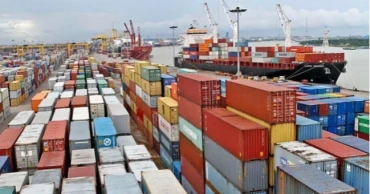
Bangladesh sets $63.4b export target for FY27, eyes 15pc growth
The government has set an export target of $63.4 billion for the 2026-27 fiscal year, aiming for 15 percent growth in both goods and services exports, Commerce Minister Khondakar Abdul Muktadir announced on Sunday.
“Of the total target, goods are expected to fetch $55.2 billion while services are targeted to bring in $8.2 billion, with both segments carrying the same 15 percent growth ambition,” the minister said, while addressing a press briefing at the conference room of the commerce ministry.
Muktadir said Bangladesh's export sector has a real chance of a turnaround despite global economic uncertainty, ongoing geopolitical tensions and challenges in international markets, crediting a business-friendly environment, simplified investment procedures and streamlined government services for the renewed momentum.
He said free trade agreement (FTA) negotiations with South Korea and the United Arab Emirates are in their final stages, with the government also aiming to conclude FTAs with several other countries within the current year. “Formal talks on an FTA with the European Union are expected to begin soon.”
Stressing the need for export diversification, the minister noted that ready-made garments currently account for nearly 85 percent of the country's total exports.
To reduce this dependence, he said the government is giving special priority to leather and leather goods, footwear, shipbuilding, ship recycling, light engineering and information technology, with specific action plans for these sectors to be rolled out soon.
On US tariff policy, Muktadir said there has been no substantive change in the effective tariff structure applicable to Bangladesh, with the earlier 10 percent tariff continuing under the new legal framework.
As such, he said, no fresh negative impact on the country's exports is anticipated.
Referring to the energy crisis, the minister said gas supply constraints continue to prevent industries from fully utilising their production capacity, adding that the government is working to improve the situation by installing additional Floating Storage and Regasification Units (FSRUs) for LNG.
He expressed confidence that the export target for the coming fiscal year is achievable, citing the elected government's policy stability, business-friendly reforms, new free trade agreements and growing buyer confidence in Bangladesh in international markets.
“A new window of opportunity has opened up for Bangladesh,” the minister said, adding that a combined push on ease of doing business, market access and export diversification is aimed at ushering in a new phase of growth for the country's export sector.
Commerce Secretary Md Ataur Rahman Khan and Export Promotion Bureau (EPB) Vice Chairman Mohammad Hasan Arif were present at the briefing.
8 days ago

BCIA submits 11-point recommendations to BSEC for market stability
A delegation of Bangladesh Capital Market Investors Association (BCIA) met Bangladesh Securities and Exchange Commission (BSEC) Chairman Masud Khan at the commission's office on Sunday and placed an 11-point recommendation aimed at stabilising the capital market and restoring the confidence of local and foreign investors.
Handing over a letter to the BSEC Chairman, BCIA President Kazi Mohammad Nazrul said the country's capital market has been passing through an acute crisis due to what he said 15 years of plunder and mismanagement under the previous Awami League government along the incompetence of the Khondoker Rashed Maqsood-led commission formed during the interim government's tenure.
He expressed confidence that under Masud Khan's leadership, the newly constituted commission would be able to steer the market towards stability and open a new chapter for the economy.
On the draft margin rules recently published by the commission, the BCIA said the proposed framework creates disparity in the distribution of loans against different shares, and demanded that the margin loan amount be made uniform across all listed securities.
The association also called for listing state-owned enterprises and multinational companies on the bourses within the next three months, with 80 percent of IPO shares reserved for general investors, application amounts capped at Tk 5,000, and the lottery-based allotment system reinstated.
Referring to Dhaka Stock Exchange's recent move placing 62 companies under its "red zone" and issuing cautionary notices to investors, the BCIA said that before any of these companies are delisted, they should first be given two years to restructure.
It further recommended that directors of such companies be required to buy back all shares held by general investors at either the market price or the issue price, whichever is higher, before delisting proceeds.
The association pointed out that unlike most global bourses which are institution-driven, Bangladesh's market is dominated by retail investors, who account for roughly 80 percent of participation.
It therefore urged that investor representatives be given a greater say in market governance, with coordination meetings between the commission and general investors' representatives held four times a year.
Among other demands, the BCIA sought the introduction of a real-time monitoring system to instantly detect abnormal transactions and manipulative trading, along with punitive action against offenders.
It also proposed a special Tk 10,000 crore fund at 3 percent interest to boost market liquidity, to be channelled through ICB and various brokerage houses so that general investors can access loans at 5 percent interest for investment.
The association further demanded that mutual funds, described as the "lifeblood" of the market, be made to remain active, with each fund required to invest at least 80 percent of its assets in the market. Rather than extending the tenure of closed-end funds, it recommended converting them into open-end funds.
On corporate governance, the BCIA said listed companies frequently resort to irregularities and malpractice in their financial reporting, and called for implementation of the Financial Reporting Act, 2015 to ensure a transparent and accountable market.
It also pressed for the long-pending buy-back law to finally be enforced, noting that successive governments and commissions had promised but failed to implement it.
The association additionally proposed scrapping the existing categorisation of listed companies into A, B, N and Z categories, arguing that the classification creates unfair distinctions among shares.
Instead, it suggested introducing a rating-based system, such as A1, A2, A3 and A4, to help investors gauge the relative strength of companies.
BCIA said most investors in Bangladesh's capital market lack adequate knowledge about the market and often fall victim to misinformation and rumours, resulting in financial losses.
It called for arrangements to introduce internationally recognised certification for financial advisers to guide general investors.
“We hope the chairman will look favourably on implementing our 11-point recommendations to build a developed and prosperous capital market,” the BCIA president said.
8 days ago

Chinese Ambassador calls on BB Governor; talks focus on trade, investment, and digital payment
Ambassador of China to Bangladesh Yao Wen paid a courtesy call on the Governor of Bangladesh Bank at his office in central bank's headquarters in Motijheel on Thursday (July 23).
During the meeting, both sides exchanged views on further strengthening bilateral economic and trade relations between Bangladesh and China.
To improve the trade balance between the two countries, the central bank Governor urged China to increase its imports of Bangladeshi products.
The Governor also sought China's technical assistance and experience from its 'Single QR' system to support the implementation of 'Bangla QR' in Bangladesh.
When the Chinese Ambassador emphasized the importance of further easing foreign investment, the Governor highlighted that Bangladesh Bank has already introduced several investment-friendly policy initiatives. Consequently, foreign investors can smoothly repatriate their invested capital and earn profits back to their home countries.
Furthermore, the Governor called for expanded Chinese investment in Bangladesh's technology-driven and industrial sectors.
Counsellor Song Yang and Attaché Wen Jinhua accompanied the Chinese Ambassador during the meeting. Bangladesh Bank Deputy Governors Dr. Habibur Rahman and Md. Sarwar Hossain was also present on behalf of the central bank.
11 days ago
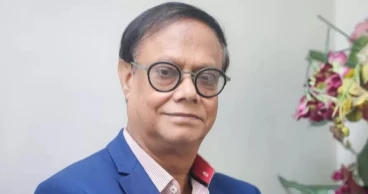
Cash management costs BB Tk 20,000cr a year, digital push a must: Mansur
Former Bangladesh Bank Governor and Distinguished Fellow of the Policy Research Institute of Bangladesh (PRI) Ahsan H Mansur on Thursday underscored the need to accelerate Bangladesh's transition to a cashless economy through an Inclusive Instant Payment System (IIPS), saying the central bank spends around Tk 20,000 crore annually on cash management.
Speaking at the inception workshop on "Analysis of the Inclusive Instant Payment System (IIPS) in Bangladesh and Cross-Border Remittance as a Use Case" at PRI in Banani, he said financial inclusion, digital payments and the IIPS should be pursued as a single, integrated national strategy to reduce payment costs.
Mansur said reducing the cost of digital transactions is essential to boosting adoption, adding that temporary incentives or subsidies for digital payments could yield greater long-term benefits than continuing large-scale subsidies in other sectors.
He also called for making smartphones and internet services more affordable to bridge the digital divide and promote nationwide financial inclusion.
The former BB chief further observed that restoring public confidence in the banking system is critical to reducing cash dependency and encouraging wider use of formal financial channels.
Highlighting the untapped investment potential of the Bangladeshi diaspora, he said establishing dedicated mechanisms for Non-Resident Bangladeshis (NRBs) could help repatriate an estimated $2-3 billion in investments through formal channels.
Director General of the Bangladesh Institute of Bank Management (BIBM) Ezazul Islam said the IIPS has the potential to significantly cut digital payment costs, strengthen financial inclusion, and enhance the efficiency and competitiveness of Bangladesh's payment ecosystem.
He said wider adoption of digital payments and IIPS could encourage greater use of formal financial channels, improve transaction traceability, and contribute to higher tax compliance and a more transparent economy.
Ezazul stressed that the long-term success of IIPS hinges on a robust governance framework, appropriate commercial incentives, sustainable pricing, effective dispute resolution mechanisms, sound settlement risk management, and a comprehensive cost-benefit assessment.
Chairing the session and delivering the opening remarks, PRI Chairman Zaidi Sattar underscored the macroeconomic significance of remittances, which currently account for around 6 percent of Bangladesh's GDP, and called for policy measures to redirect these flows from consumption toward productive investment.
He also pointed to the digital divide within the country's financial sector, noting that many of the roughly 7 lakh Bangladeshi migrants in Oman, cited as an illustrative example, continue to prefer informal hundi channels over formal banking systems to send money home.
A panel discussion featured Mohammad Jahid Iqbal, additional director of the Payment Systems Department at Bangladesh Bank, and Sayed Shaikh Ibna Jilany, vice president (Remittance, Financial Services, Commercial) at bKash Limited.
Iqbal said Bangladesh Bank is developing the IIPS on the open-source Mojaloop platform to cut costs, enable local customisation, and connect banks, payment providers and eventually microfinance institutions through a more integrated digital infrastructure.
Launched in November 2025, he said, the system will support feature-phone access, simpler account opening, fewer failed transactions, and stronger fraud protection through the Tazama toolkit.
Jilany shared perspectives from Bangladesh's leading mobile financial services provider on the opportunities and challenges of integrating private-sector platforms into an interoperable instant payment ecosystem, touching on consumer protection, affordability and user trust.
Participants at the workshop, organised with support from the Gates Foundation, discussed broader opportunities and challenges in developing an inclusive instant payment ecosystem, including interoperability, regulatory readiness, consumer protection, affordability, and the potential to make remittance transfers faster and more accessible to underserved populations.
11 days ago