local-business

GAPEXPO ends with calls for policies to transform packaging sector into export earner
Industry leaders and experts have called for the immediate implementation of business-friendly policies and the support of an elected government to unlock the potential of the sustainable packaging sector.
Speakers at a high-profile industry event stated that with the right policy framework, this sector—already the country's second-largest export earner—could eventually surpass the Readymade Garments (RMG) industry.
These observations were made on Saturday during the closing ceremony of Garments Accessories & Packaging Expo (GAPEXPO) 2026 and Garment Technology Bangladesh (GTB) Expo2026. The four-day mega-exhibition, organized by ASK Trade & Exhibitions Pvt. Ltd. and the Bangladesh Garments Accessories & Packaging Manufacturers & Exporters Association (BGAPMEA), concluded at the International Convention City Bashundhara (ICCB).
Chief Guest Altaf Hossain Chowdhury, former commerce and home minister, expressed high optimism regarding the sector's trajectory. "In the last fiscal year, the packaging and accessories sector generated $7.45 billion in exports. This sector's energy and capacity are remarkable," he said.
He further noted that if the BNP forms the government in the future, it would stand by the business community to resolve all systemic issues hindering the sector.
Fazle Shamim Ehsan, President of the Bangladesh Employers Federation (BEF), highlighted that while the sector is often "underrated," its ability to import raw materials and re-export them as finished goods proves its immense capability.
He stressed the need for a stable, democratic government to restore foreign investor confidence and accelerate economic growth.
Industry leaders also voiced concerns regarding current trade regulations. Shaukat Aziz Russell, President of the Bangladesh Textile Mills Association (BTMA), warned that certain policies are pushing the industry toward a crisis.
Russell argued that if the ‘Free of Cost’ (FOC) import facility is allowed at 100 percent, domestic factories will fail as all products will be sourced from abroad.
He called for a reduction in extra taxes and port levies to enhance the competitiveness of local manufacturers.
Additionally, Md. Shahriar, President of BGAPMEA, emphasized the integrity of real entrepreneurs, noting that while corrupt individuals have laundered money under the guise of business, true industrialists are committed to the nation's wealth.
The Export Promotion Bureau (EPB) reported that this year’s expo was 80 percent more successful than the previous year. Abu Mokhles Alamgir Hossain, Director of EPB, highlighted the $700 billion global packaging market as a major opportunity.
"As the 'Product of the Year,' we will organize seminars to address this sector's challenges and engage with the National Board of Revenue (NBR) to ensure bond facilities and other necessary support," he stated.
The 15th GAPEXPO-2026, held from January 14–17, featured 1,500 stalls and 350 domestic and international companies from countries including India, China, Pakistan, Taiwan, Australia, Germany, and the UAE.
The organizers reported over 100,000 visitors, facilitating vital connections between global buyers and local sellers. The event concluded with the presentation of "Best Stall" awards to eight exceptional participating companies.
6 months ago
Depositors of five Islami banks face 2-year profit wipeout after merger
The depositors of five crisis-hit Shariah-based banks in Bangladesh will have to forgo profits on their savings for two years as the central bank moves to stabilise the lenders ahead of a planned merger.
Bangladesh Bank has ordered a ‘haircut’ on profits accrued during 2024 and 2025, meaning depositors will not receive any returns for that period and will see their account balances reduced.
The directive follows what the regulator described as international resolution practices for distressed banks.
Institutional deposits to be converted into shares as Bangladesh Bank finalises 'Sammilito Islami Bank' merger
The decision was conveyed on Wednesday through letters sent to administrators of First Security Islami Bank, Global Islami Bank, Union Bank, Exim Bank and Social Islami Bank.
The five banks have been merged into a single entity, ‘Sammilito Islamic Bank PLC’.
Under the instruction, all deposit accounts must be recalculated based on their status as of December 28, 2025.
Any profit credited between January 1, 2024 and December 28, 2025 must be removed, with the final balance determined after applying the prescribed haircut.
“To ensure the balanced implementation of the Resolution Scheme, all deposit accounts must be recalculated,” the central bank said in its letter, adding that the process should be completed swiftly.
Bank Merger: 'Sammilita Islami Bank' receives final approval
Bangladesh Bank officials said the lenders incurred heavy losses over the two-year period, leaving them unable to distribute profits to depositors. Prior to the directive, the banks had offered profit rates ranging from 7 percent to 9 percent on deposits.
According to central bank data, the five banks collectively serve about 7.5 million depositors and hold roughly Tk142,000 crore in deposits.
Their total outstanding loans stand at around Tk193,000 crore, a large portion of which is classified as defaulted.
The move means depositors will lose not only two years of expected earnings but will also experience a direct reduction in their account balances — an unusually severe step in Bangladesh’s banking sector. It follows an earlier decision in which the share value of the five banks was declared zero, wiping out investments held by sponsors and shareholders.
Exim Bank was previously controlled by Nazrul Islam Mazumder, former chairman of the Bangladesh Association of Banks.
The remaining four lenders were controlled by Saiful Alam, head of the S. Alam Group.
Now a writ on the 5 banks' merger filed with HC
Both were widely known as close associates of ousted Prime Minister Sheikh Hasina and allegedly held significant shareholdings while securing large loan facilities through various entities.
The merger marks one of the most sweeping banking restructurings undertaken by Bangladesh Bank as it seeks to contain systemic risk and restore confidence in the Islamic banking segment.
6 months ago

Gold price hits record Tk 234,680 per bhori in Bangladesh
Gold prices in Bangladesh have climbed to an all-time high, with the Bangladesh Jewellers Association (BAJUS) fixing the price of 22-carat gold (11.664 grams) at Tk 234,680 per bhori after raising it by Tk 2,625.
In a statement issued on Wednesday night (January 14, 2026), BAJUS said the new prices will come into effect from Thursday (January 15, 2026).
Under the revised rates, 21-carat gold will sell at Tk 224,007 per bhori, 18-carat gold at Tk 191,989 per bhori, while gold under the traditional method has been priced at Tk 157,231 per bhori.
BAJUS said the price adjustment was made considering the rise in the local market price of pure gold (tejaabi shona) and the overall market situation.
Read more: What Does Gold Carat Mean? Decoding Gold Purity Levels
In addition to the announced selling price, buyers will have to pay a mandatory 5 percent value-added tax (VAT) set by the government and a minimum 6 percent making charge fixed by BAJUS. The making charge, however, may vary depending on the design and quality of jewellery.
The last price revision was made on January 12, when BAJUS raised the price of 22-carat gold by Tk 4,199 per bhori to Tk 232,055.
With the latest adjustment, gold prices have been revised seven times so far in 2026 increased five times and reduced twice.
In 2025, BAJUS revised gold prices a total of 93 times, increasing prices on 64 occasions and cutting them 29 times.
Despite the rise in gold prices, silver prices have remained unchanged in the domestic market.
The price of 22-carat silver is Tk 5,949 per bhori.
Read more: Gold hits record high in Bangladesh as prices jump by Tk4,199 per bhori
Meanwhile, 21-carat silver is selling at Tk 5,715 per bhori, 18-carat at Tk 4,899 per bhori and silver under the traditional method at Tk 3,674 per bhori.
So far this year, silver prices have been revised four times — increased twice and reduced twice. In 2025, silver prices were adjusted 13 times, with increases on 10 occasions and decreases on three.
6 months ago

NBR Chairman signals possible VAT, turnover tax reforms for jewellery businesses
National Board of Revenue (NBR) Chairman Md Abdur Rahman Khan on Wednesday indicated that the government may reconsider the current VAT and turnover tax system for the country’s jewellery businesses, stressing the need for fair taxation and better sectoral discipline.
“If VAT is properly applied on value addition with full input tax credit, the effective burden should not be excessive,” he said at a Meet the Business programme with Bangladesh Jewellery Samity (BAJUS) organised by the NBR.
The NBR chairman also said that arbitrary rates discourage compliance and are difficult to enforce.
He invited the sector to propose a rational formula for VAT based on value addition assuring that the NBR is willing to amend laws accordingly possibly in the next finance act.
Similar flexibility, he said, could be considered for the existing 1% minimum turnover tax if a transparent and reliable recording mechanism is introduced.
Read More: NBR chairman directs Dhaka Customs House to quickly dispose of goods
He agreed in principle with traders that imposing VAT on the full sales value of high-value products like gold ornaments is unreasonable, as the real value addition lies mainly in labour or making charges.
The NBR Chairman said restoring discipline in the country’s jewellery sector is crucial for ensuring better revenue collection, strengthening rule of law and safeguarding the long-term sustainability of the industry.
“We believe businesses should do business and our responsibility is to make their path easier, provide cooperation and ensure transparency,” the NBR chief said.
He said that the jewellery sector though one of the oldest trades in the country has long remained outside a disciplined and formal framework.
He said gold is not just a commodity but is deeply linked to people’s emotions, social security and financial safety. “Yet, despite various policy initiatives over the years, the sector has failed to move fully into the formal economy.”
Read More: NBR Chairman optimistic over resolving issues with IMF for loan tranches
Recalling past reforms, the NBR Chairman said Bangladesh had gradually moved from an era of complete restrictions on gold imports to a formal import policy including reduced taxes and fixed duties for passenger-carried and commercial imports.
Official records still show negligible formal gold imports despite the market being well supplied, he said.
“This gap between records and reality is a major obstacle to establishing financial discipline, the rule of law and overall governance,” he said.
Smuggling and informal practices harm not only revenue collection but also expose traders to serious financial and legal risks.
Rejecting the argument that Bangladesh needs more time to establish discipline because it is a young country, he pointed to examples like Singapore, which prioritised the rule of law and discipline from the very beginning.
Khan said NBR wants to move towards full, real-time transaction recording to eliminate suspicion on both sides.
“We are ready to develop simple, sector-specific digital software for jewellery traders, especially small shops, so that real transactions are recorded and the real picture emerges,” he said.
Once accounts are transparent and verifiable, the need for presumptive or turnover-based taxes will gradually disappear, allowing income tax to be assessed strictly on actual profits or losses.
On import facilitation, the NBR chairman said greater openness and competition would help restore discipline.
He assured that issues related to import licensing, LC opening and banking procedures could be taken up with Bangladesh Bank and the Ministry of Commerce, urging traders to submit formal proposals.
He also reaffirmed the fundamental principle of duty drawback for exporters, stating that exporters are entitled to refunds of duties paid on imported raw materials used for exports. Any practical bottlenecks in audit or verification, he said, would be reviewed to ensure legitimate exporters are not deprived.
Calling for collective responsibility, the NBR chief said discipline in the jewellery sector is essential not only for revenue but also to protect lives, livelihoods and future generations from the dangers associated with illegal trade.
6 months ago
NBR introduces new licensing rules for C&F agents
The National Board of Revenue (NBR) has issued the Customs Clearing and Forwarding (C&F) Agent Licensing Regulations, 2026, aiming to improve service quality for importers and exporters by fostering a more competitive and transparent customs brokerage environment.
The new regulations were promulgated through a gazette notification on January 8, 2026 (SRO No. 04-Ain/2026/Customs), repealing the Customs Agent Licensing Regulations, 2020, in line with the Customs Act, 2023.
Until now, there was no standalone set of rules specifically governing the licensing of C&F agents. Licences had been issued under the broader Customs Agent Licensing Regulations, 2020.
According to the NBR, the introduction of a separate and updated regulatory framework is intended to modernise operations, simplify procedures, and better reflect the evolving needs of customs clearance and forwarding activities.
Officials said the new regulations are expected to enhance efficiency at customs stations, reduce administrative bottlenecks, and ensure improved compliance, ultimately benefiting businesses engaged in international trade.
Mobile phone prices set to fall as NBR slashes import duty
One of the most significant changes is the removal of the requirement for prior approval from the NBR to determine the number of C&F agent licences for a specific customs station.Under the new system, all candidates who pass the prescribed examination and are deemed eligible will be able to obtain a C&F agent licence, a move aimed at encouraging competition and expanding professional participation in the sector.
The regulations also introduce a more structured and predictable licensing process.
The NBR will conduct examinations on a regular basis, and the entire licensing process will be completed within a fixed timeframe each year.
This is expected to reduce uncertainty for applicants and ensure timely availability of licensed agents in the market.
Another notable provision addresses the issue of licence validity when a land customs station is declared closed.
NBR sees growing use of e-returns by expatriate Bangladeshis
Previously, licences issued for such stations would be cancelled. Under the new rules, C&F agent licences linked to a closed land customs station will no longer be automatically revoked.
Instead, licence holders will be allowed to operate at any other functional customs station through an adjustment of jurisdiction, enabling continuity of business and protecting livelihoods.
The NBR said these reforms reflect its commitment to facilitating trade, aligning customs procedures with modern practices, and supporting the government’s broader agenda of improving the ease of doing business in Bangladesh.
NBR links ASYCUDA World with BGMEA e-UD system to modernise bond management
Stakeholders in the import-export community have long demanded a clearer, more flexible licensing framework for C&F agents.
The NBR, in a press release, believes the 2026 regulations will help professionalise the sector, ensure better service delivery, and contribute to smoother customs clearance operations across the country.
6 months ago

Sonali Bank posts record Tk 8,017 crore operating profit in 2025
State-owned Sonali Bank PLC posted a record Tk 8,017.36 crore in operating profit in 2025, underscoring a sharp turnaround in financial performance driven by higher income, improved governance and lower loan defaults.
The operating profit rose by Tk 2,322.80 crore from Tk 5,694.55 crore a year earlier, Managing Director and Chief Executive Officer Md Shawkat Ali Khan disclosed the figures during a meeting with journalists at the bank’s Motijheel head office on Tuesday.
After provisioning, Sonali Bank expects net profit to exceed Tk 1,500 crore, Khan said, describing the jump in earnings within a single year as a ‘major achievement’ for the country’s largest state-owned lender.
For the first time in years, the bank no longer faces a capital shortfall. Its Capital to Risk-Weighted Assets Ratio (CRAR) has crossed the regulatory minimum of 10 percent, marking what Khan termed a ‘massive victory’ in restoring financial stability.
The bank has also made progress in curbing non-performing loans (NPLs). As of December 25, 2025, the default loan ratio stood at 15.4 percent. Sonali Bank aims to bring NPLs down to 11–12 percent in 2026 and into single digits by 2027.
Read More: Sonali Bank reports Tk5,634 crore operational profit in 2024
Recoveries are already gaining momentum, with Tk 745 crore collected from the bank’s top 20 defaulters, the MD said.
Despite the improved performance, Sonali Bank is still awaiting substantial receivables from government-linked projects. The bank is owed Tk 5,500 crore in letter of credit (LC) commissions related to the Rooppur Nuclear Power Plant project.
Management is also working to reduce loan concentration risks. At present, 37 percent of total loans are concentrated in five branches. Large loan exposures are being redistributed across other branches to minimise institutional risk.
Khan said tighter credit screening and stronger governance have helped prevent major irregularities in recent years, in contrast to past scandals such as the Hallmark loan fraud.
“Public confidence remains high, which is reflected in the steady inflow of deposits,” he said.
Sonali Bank plans to announce new business targets for 2026 soon, with a focus on further boosting income and sustaining performance gains.
6 months ago
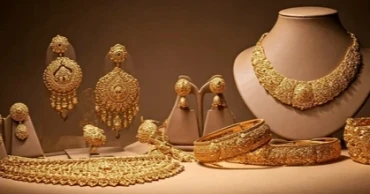
Gold hits record high in Bangladesh as prices jump by Tk4,199 per bhori
Gold prices in Bangladesh soared to an all-time high as the Bangladesh Jewellers Association (BAJUS) raised the price of gold by Tk4,199 per bhori, effective from Tuesday morning.
Under the new rate, the price of 22-carat gold has been set at Tk232,055 per bhori (11.664 grams), the highest level ever recorded in the local market.
BAJUS announced the price hike late Monday night, citing an increase in the price of pure gold (tejabi gold) in the local market. Considering the overall market situation, the association said it has revised gold prices accordingly.
Gold prices in Bangladesh jump nearly Tk 3,000 per bhori in 24 hours
According to the new price structure, 21-carat gold will cost Tk221,499 per bhori, while 18-carat gold has been fixed at Tk189,890 per bhori. The price of gold under the traditional method has been set at Tk156,881 per bhori.
In addition to the announced prices, buyers will have to pay the government-mandated 5 percent VAT and a minimum 6 percent making charge set by BAJUS. However, the making charge may vary depending on the design and quality of jewellery.
BAJUS last revised gold prices on January 10, when it increased the price of 22-carat gold by Tk1,050 per bhori to Tk227,856.
With the latest revision, gold prices have been adjusted six times so far this year, raised on four occasions and reduced twice. In 2025, gold prices were revised a total of 93 times, with hikes on 64 occasions and cuts on 29.
Silver prices have also been increased alongside gold. The price of 22-carat silver has been raised by Tk408 per bhori to Tk5,949.
Man held with 1.3 kg gold at Shahjalal Airport
Under the revised rates, 21-carat silver will sell at Tk5,715 per bhori, 18-carat silver at Tk4,899, and traditional method silver at Tk3,674 per bhori.
This marks the fourth adjustment of silver prices in the local market this year, with prices increased twice and reduced twice. In 2025, silver prices were revised 13 times—upward on 10 occasions and downward three times.
6 months ago

Bangladesh Bank doubles license renewal fee for money changers
Bangladesh Bank has raised the annual license renewal fee for money changers operating nationwide by 100 percent.
Under the new directive from the Foreign Exchange Policy Department-2, the non-refundable fee will increase to Tk 10,000 from the previous Tk 5,000, the central bank said in a circular issued Monday.
The fee hike will take effect on January 15, 2026.
Bangladesh Bank said all other procedures for license renewal remain unchanged.
The circular instructs authorised dealers and licensed money changers to notify their constituents of the change immediately.
6 months ago
Net FDI in Bangladesh jumps over 200 percent in Q3 of 2025: BIDA
Bangladesh recorded a robust surge in net Foreign Direct Investment (FDI) during the July-September quarter of 2025, signaling a significant boost in investor confidence despite global economic uncertainties, said Bangladesh Investment Development Authority (BIDA).
According to the latest data from Bangladesh Bank, net FDI inflows for Q3 (July–September) reached US$315.09 million. This represents a staggering 202 percent year-on-year increase compared to the $104.33 million recorded during the same period in 2024.
The cumulative figures for the year also show a strong upward trend. Total net FDI inflows from January to September 2025 reached $1.41 billion, an 80 percent rise from the $780 million recorded during the first nine months of the previous year.
All major categories of FDI saw marked improvements in the third quarter of 2025-
Equity Investment: Rose by 31.69 percent to $101.12 million (up from $76.79 million).
Reinvested Earnings: Soared by 190.07 percent to $211.47 million (up from $72.90 million).
Intra-Company Loans: Rebounded to a positive $2.49 million, reversing from a negative -$45.36 million in the previous year.
Building on First-Half Momentum
This growth follows a solid performance in the first half of the year. Net FDI in H1 2025 (January–June) increased by more than 61 percent compared to H1 2024. Specifically, the April–June period saw a 11.4 percent year-on-year gain, reaching $303.27 million.
Chowdhury Ashik Mahmud Bin Harun, Executive Chairman of BIDA, noted that these gains reflect a credible pipeline of investment converting into realized inflows.
"These back-to-back quarterly gains highlight that investors are placing their trust in Bangladesh. We expect some moderation in Q4 2025 due to the upcoming elections, but anticipate a rebound post-election, supported by a strong investment pipeline," Shayan said.
Beyond these realized figures, BIDA reported that its dedicated investment pipeline for 2025 has already surpassed $1.5 billion, in addition to traditional registered proposals.
6 months ago
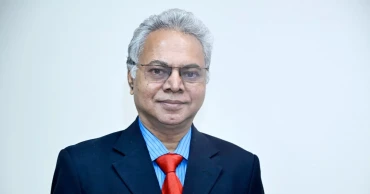
BIBM gets new director general in Dr. Ezazul Islam
Dr Md Ezazul Islam has been appointed Director General of the Bangladesh Institute of Bank Management (BIBM).
The announcement was made on Sunday, marking a significant transition for the country’s premier banking training and research institute.
Dr Islam joins BIBM following an extensive career at Bangladesh Bank spanning over 33 years. Most recently, he served as Executive Director (Grade-1) in charge of the Monetary Policy Department.
During his tenure at the central bank, he was a key member of several high-level committees, including the Monetary Policy Committee, Foreign Exchange Auction Committee and Money Market Operation Committee.
Throughout his three decades of service, Dr Islam has been a central figure in shaping Bangladesh’s financial landscape, said a handout.
He is credited with leading the modernization of the nation’s monetary policy framework and was instrumental in the adoption of the interest rate corridor. His efforts also extended to streamlining money market operations and improving liquidity management.
Dr Islam holds a PhD in Monetary Economics. He has authored more than 35 articles published in peer-reviewed journals both locally and internationally, covering a wide range of topics including debt, exchange rates and macroeconomic issues.
In 2013, his contributions to the financial sector were recognized when he received the Bangladesh Bank Gold Medal Employees’ Recognition Award for outstanding performance.
6 months ago