local-business
‘Depositors are true owners of Islami Bank’
Mohammad Zahir Hussain, executive director of Bangladesh Bank and the sole representative of the Board of Directors of Islami Bank Bangladesh PLC, on Wednesday emphasised that depositors are the true owners of the institution, assuring them that the bank will be run professionally to serve the general public.
"As long as Bangladesh exists, Insha'Allah, Islami Bank will also survive with glory," he said while speaking as the chief guest at a clients' get-together organised by the bank at its Islami Bank Tower Corporate Branch.
"It will not be a bank for any single individual, group, or community; it will be a bank for the general people", Zahir added.
Highlighting the financial structure of the institution, he noted that customer deposits stand at nearly Tk 1.75 lakh crore, whereas the share capital is Tk 6,500 crore, making the share ratio a negligible fraction of the total deposit volume.
The sole representative of the board assured customers that full trust and authority have been placed in the bank's management team, composed of professionals with 30 to 35 years of experience.
Emphasising that the board's role is strictly limited to policy-making while professionals manage operations, he urged depositors to support the bank and help increase its deposits, expressing firm confidence that the bank will regain its lost glory and achieve new heights in a short period.
The event was presided over by Executive Vice President and Head of the Corporate Branch Mohammad Kutub Uddin, while Senior Vice President Abdul Latif delivered the welcome address.
Acting Managing Director Md Altaf Hossain and Executive Vice President Mahmud Hossain Khan addressed the event as special guests.
Several representatives spoke on behalf of the clients, according to a press release.
12 days ago

Gold prices rise again in Bangladesh within 24 hours
Bangladesh Jewellers Association (Bajus) has raised the prices of gold for the second consecutive day, pushing the rate of 22-carat gold up by Tk 2,741 per bhori to Tk 2,24,182, inclusive of VAT.
In a notice issued Wednesday morning, Bajus said the revision followed a rise in the price of pure gold in the local market, prompting the fresh adjustment. The new rate came into effect from 10am the same day.
Under the revised pricing, each bhori (11.664 grams) of 21-carat gold will now cost Tk 2,14,093, while 18-carat gold has been set at Tk 1,83,883 per bhori. Traditional gold will sell at Tk 1,50,232 per bhori, the notice said.
Bajus said the new prices will remain effective at all jewellery outlets until further notice, though making charges will continue to apply depending on ornament design.
Since VAT is already included in the selling price of gold and silver ornaments, jewellers cannot charge it separately from customers.
The association added that its existing rules on exchange and repurchase of ornaments, excluding specified VAT, making charges and stone costs, will remain unchanged.
The previous adjustment came on the morning of July 21, when Bajus raised the price of 22-carat gold by Tk 1,633 per bhori to Tk 2,21,441, inclusive of VAT.
So far in 2026, the price of gold has been revised 93 times in the domestic market, increased on 45 occasions, decreased on 47, and adjusted once for VAT.
Alongside gold, the price of silver was also raised.
The rate of 22-carat silver went up by Tk 175 per bhori to Tk 4,782. Similarly, 21-carat silver is now selling at Tk 4,549 per bhori, 18-carat at Tk 3,907, and traditional silver at Tk 2,974 per bhori.
Silver prices have been adjusted 57 times so far this year, with 29 increases and 28 decreases.
12 days ago
NBR opens online income tax return filing, offers 5% early rebate
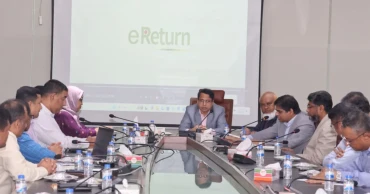
The National Board of Revenue (NBR) on Wednesday launched its online income tax return filing service for individual taxpayers for the 2026-27 tax year, urging taxpayers to submit returns early to avail incentives and avoid additional tax.
It also announced that individual taxpayers who submit their returns between July and September for the 2026-27 tax year will receive a 5 per cent rebate on their net payable tax, subject to a maximum benefit of Tk 25,000.
Returns submitted after September will not qualify for the incentive, while returns filed after December will attract additional tax, the NBR said, urging taxpayers to file their returns within the stipulated timeframe.
The revenue authority said the e-Return service has been introduced as part of its efforts to make tax services easier, faster and more transparent.
According to the NBR, the online return filing system has gained widespread popularity since its introduction in 2021. During the 2025-26 tax year, a record nearly 4.7 million individual taxpayers successfully submitted their income tax returns through the e-Return platform.
The NBR has also made online filing mandatory for all regular individual taxpayers through a special order.
However, paper returns will still be accepted from taxpayers aged 65 years or above, physically challenged or persons with disabilities upon submission of supporting documents, Bangladeshi taxpayers residing abroad, representatives filing returns on behalf of deceased taxpayers and foreign nationals working in Bangladesh.
In addition, individual taxpayers who are unable to register on the e-Return system due to technical or registration-related problems may submit paper returns with approval from the Additional or Joint Commissioner of Taxes concerened.
Through the NBR’s e-Tax platform, taxpayers can pay taxes online using bank transfers, debit or credit cards, bKash, Rocket, Nagad and other mobile financial services. They will also be able to obtain instant acknowledgement receipts and income tax certificates after successfully filing their returns.
The NBR said its officials will provide assistance through the call centre (09643717171) and other electronic channels during office hours on working days to resolve any issues related to online return filing.
12 days ago

Central bank revises Basel-III NSFR reporting framework for banks
Bangladesh Bank (BB) has revised the reporting framework for Net Stable Funding Ratio (NSFR) under the Basel III liquidity regime to align regulatory disclosures with the updated accounting treatment of central bank liquidity operations.
The Supervisory Data Management and Analytics Department (SDAD) of the central bank issued a circular letter on Tuesday to managing directors and chief executive officers of banks, outlining the amendments.
According to the circular signed by SDAD Director Md. Abdul Mannan, the revised reporting template comes into effect with the reporting period ending June 30, 2026.
Key Revisions to the NSFR Framework
The central bank explained that the review was necessitated by the revised Open Market Operations (OMO) guidelines issued on February 26, 2026 (DMD Circular No. 02). Under the updated OMO framework, liquidity management operations—including Central Bank Repo, Standing Lending Facility (SLF), and Islamic Banks Liquidity Facility (IBLF)—are now recognized as collateralized borrowings rather than outright sale transactions.
To ensure consistency and enhance the risk sensitivity of NSFR reporting, Bangladesh Bank has amended the guidance note as follows:
Collateralized Borrowing from Central Bank: A new component titled "Collateralized Borrowing/Financing from Central Bank" has been added under Serial No. 7 to explicitly capture Central Bank Repo, SLF, IBLF, Assured Repo, and similar borrowings.
Interbank Repo: Interbank Repo transactions are now formally included under Serial No. 6 ("Amount owed to financial institutions").
Government and Central Bank Securities: Previous debt securities categories (Serial Nos. 12 and 13) have been replaced by "Unencumbered Marketable Government and Central Bank Securities" (Serial No. 13) and "Encumbered Marketable Government and Central Bank Securities" (Serial No. 14). These will be reported at amortized cost value for Held to Maturity (HTM) securities and market value for Held for Trading (HFT) securities.
Exposures to Finance Companies and Foreign FIs: Reporting classifications for loans and deposits in other financial institutions have been updated to "Loans/Investments to, and deposits in, other Finance Companies in Bangladesh" (Serial No. 22) and "Loans/Investments to, and deposits in, Banks and other Financial Institutions outside Bangladesh" (Serial No. 23).
Implementation Instructions
Bangladesh Bank instructed all scheduled banks to prepare and submit their NSFR returns using the newly enclosed reporting template (Annexure-I) starting from the period ended June 30, 2026.
The central bank clarified that all other provisions, reporting components, and instructions under the original NSFR guidelines issued via DOS Circular No. 01 dated January 01, 2015, remain unchanged and will continue to remain in force.
13 days ago

BAJUS raises gold price by Tk 1,633 per bhori
The Bangladesh Jewellers Association (BAJUS) on Tuesday raised the price of gold in the domestic market, after two consecutive cuts, fixing the price of 22-carat gold at Tk 2,21,441 per bhori, including VAT.
In a notice issued in the morning, BAJUS said the decision was taken in view of a rise in the price of pure gold in the local market, and the new rate came into effect from 10 am the same day.
According to the revised rate, 21-carat gold will now cost Tk 2,11,468 per bhori, 18-carat gold Tk 1,81,608 per bhori, and traditional gold Tk 1,48,366 per bhori, all inclusive of VAT.
BAJUS said the new prices will remain effective at all jewellery outlets until further notice, though making charges will continue to apply depending on the design of ornaments. Since VAT is already included in the sale price of gold and silver ornaments, jewellers cannot charge it separately from customers.
The association also said its existing rules on ornament exchange and repurchase, excluding specified VAT, making charges and the value of stones, will remain unchanged.
BAJUS had last adjusted gold prices on the morning of July 14, when the rate of 22-carat gold, including VAT, was cut by Tk 2,158 to Tk 2,19,808 per bhori.
So far in 2026, gold prices have been revised 92 times in the domestic market, increased on 44 occasions, decreased on 47 occasions, and adjusted once for VAT.
Despite the rise in gold prices, silver prices remained unchanged. Currently, 22-carat silver is being sold at Tk 4,607 per bhori, 21-carat at Tk 4,374, 18-carat at Tk 3,791, and traditional silver at Tk 2,858 per bhori.
13 days ago
ADB warns against fake loan scams using its name
Asian Development Bank (ADB) has warned people about fraudulent loan schemes being circulated through fake websites, counterfeit Facebook pages, and forged identity documents using the name and credentials of the organization and its officials.
It does not provide direct loans, grants, funds, or any other form of financial assistance to individuals, ADB said in a press release issued on Monday.
It also clarified that it never asks individuals to share personal financial information in exchange for support or requests money transfers through mobile banking or any other payment channel.
ADB said fraudsters have recently been creating fake websites, unauthorised social media pages, and forged documents to impersonate the bank and its officials in order to deceive people and extort money.
It has no association with or involvement in such activities, it said.
Reaffirming its role as a long-standing development partner of Bangladesh, ADB said it works only with the Government of Bangladesh and private sector organizations through transparent and accountable procedures to implement development projects.
ADB advised people to consider any offer of direct loans or financial assistance from individuals claiming to represent ADB as fraudulent and to remain cautious of such scams.
14 days ago
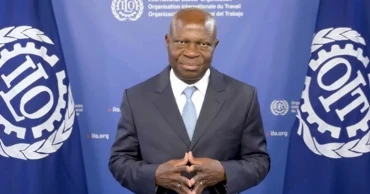
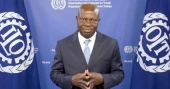
ILO chief arrives in Dhaka on two-day visit
International Labour Organization (ILO) Director-General Gilbert F Houngbo arrived in Dhaka on Sunday morning on a two-day visit to Bangladesh.
Houngbo is scheduled to hold a courtesy meeting with Labour and Employment Minister Ariful Haque Choudhury today, and meet Prime Minister Tarique Rahman on Monday, according to a press release issued by the Ministry of Labour and Employment.
Discussions during the visit are likely to cover the improvement of labour standards, workplace conditions, workers' rights, social protection, skills development and labour market issues in Bangladesh, sources concerned said.
Talks are expected to particularly focus on the ready-made garment sector, the informal labour market and the implementation of international labour standards.
Houngbo, a national of Togo in West Africa, took office as the 11th director-general of the ILO in October 2022. He is the first African to lead the organisation in its century-long history.
15 days ago
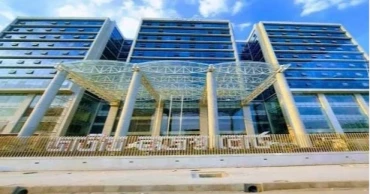
NBR launches special nationwide drive to verify tax deduction compliance
The National Board of Revenue (NBR) has intensified nationwide monitoring and verification of tax compliance, asking tax zones across the country to deploy special teams to ensure proper deduction and deposit of taxes at source under the Income Tax Act, 2023.
The revenue authority said the special drives are being conducted as per Section 147 of the Income Tax Act, 2023, which empowers tax officials to inspect businesses and verify whether taxes deducted at source have been correctly deposited into the government treasury.
The NBR urged all businesses, organisations and taxpayers to remain aware of the legal authority vested in tax officials under the law and to cooperate fully during inspection and verification activities.
According to the revenue authority, Section 147 authorises tax officials to enter any commercial or economic establishment, business premises or office without obstruction for on-site inspections.
During such visits, officials are empowered to examine and requisition account books, vouchers, bank statements, receipts and any other documents related to financial transactions or business activities.
The law also permits tax officials to inspect information stored in computer systems, cloud servers, digital records or electronic devices. Where necessary, they may gain access to password-protected or encrypted systems to verify tax-related information.
In addition, officials are authorised to temporarily seize and retain account books, documents, electronic records or digital devices if required to verify the accuracy of taxes deducted at source.
They may also collect copies of documents, images or account records and place identification marks or official seals on them for verification purposes.
The NBR said these powers are aimed at ensuring transparency in withholding tax administration and preventing revenue leakage through inaccurate or incomplete tax deductions.
The revenue authority also reminded taxpayers that Section 147(2) of the Income Tax Act provides for penalties against any individual or organisation that obstructs, resists or fails to cooperate with tax officials in carrying out their statutory duties.
The NBR urged all withholding tax deductors to deposit taxes deducted at source into the government treasury through the electronic challan (e-Challan) system, ensuring that the correct legal provision and the appropriate economic code are mentioned while making payments.
To address concerns over the implementation of Section 147, the NBR advised taxpayers facing any ambiguity, operational difficulty, alleged harassment or grievance to contact the member secretary of the NBR’s Section 147 Committee directly via email at [email protected].
The latest move comes as the tax authority seeks to strengthen compliance, improve monitoring of withholding tax collections and enhance revenue mobilisation through stricter enforcement of existing tax laws.
It has been assigned an ambitious revenue collection target of Tk 6.04 lakh crore for the 2026-27 fiscal year.
This historic target accounts for the majority of the overall Tk 6.95 lakh crore total government revenue collection goal for the period.
15 days ago
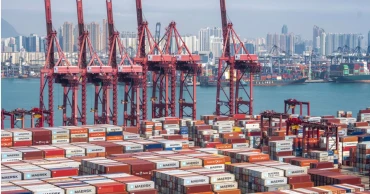
China signals US could restore preferential trade privileges for Hong Kong
China signaled on Friday that the United States could restore Hong Kong 's preferential privileges, saying Washington confirmed it will not renew an executive order that revoked the city's special trading status.
The Commerce Ministry said that the U.S. made commitments on Hong Kong issues and other matters during the U.S.-China trade talks in Madrid last year. The U.S. recently confirmed to China that the President’s Executive Order on Hong Kong Normalization would end, the ministry said in a statement responding to media questions.
“The U.S. side’s actions represent an important step in fulfilling the consensus reached during the bilateral economic and trade talks. China appreciates it,” it said.
It is not immediately clear what all the implications of the decision are. The White House referred questions about the executive order lapsing to the Treasury Department.
The U.S. Office of Foreign Assets Control said in a statement Friday that the national emergency declared in the executive order had expired and that it delisted people who were sanctioned under the order. But it said people who remain sanctioned under another act related to Hong Kong have been added to a different sanction list.
The statement showed Hong Kong leader John Lee and his predecessor, Carrie Lam, were removed from the first list but added to the second one.
The U.S. decision came two months after President Donald Trump met with his counterpart Xi Jinping in Beijing. It could warm ties between them ahead of Xi's expected visit to the U.S. later this year. Earlier this month, a pastor of a prominent underground church who was detained in China in October was released after Trump brought up his case with Xi.
Trump signed the now-expired executive order in July 2020, during his first term in response to Beijing imposing a national security law that year. Trump's order was last renewed for a year in July 2025.
Under the order, Trump said Hong Kong was no longer sufficiently autonomous to justify differential treatment in relation to mainland China under certain laws. It eliminated the preferential treatment for Hong Kong to the extent permitted by law and in the national security, foreign policy, and economic interest of the United States.
China considers the national security law for Hong Kong necessary to restore stability in the city after massive anti-government protests in 2019. The pro-democracy movement back then posed one of the biggest challenges to the Communist Party in Beijing and the Hong Kong government since the former British colony returned to Chinese rule in 1997.
Six years after the law's introduction, many leading activists, including pro-democracy former media tycoon Jimmy Lai, were imprisoned under it. Critics say the Western-style civil liberties that Beijing promised to maintain for 50 years after the handover have declined.
Hong Kong government said in a statement that it noted the “positive shift in the U.S. policy” toward the city.
“Safeguarding Hong Kong’s prosperity and stability serves the common interests of China and the US, and also aligns with the general expectation of the international community,” it said.
It said it hopes the U.S. will respect China's sovereignty and the rule of law in Hong Kong and resume normal economic and trade exchanges with the city.
17 days ago

BFIU seizes Tk 76,000 crore in assets in FY24-25, says it head
Bangladesh Financial Intelligence Unit (BFIU) seized assets worth around Tk 76,000 crore including Tk 57,000 crore in Bangladesh and Tk 19,000 crore abroad as per court orders during the 2024-25 fiscal year.
"The money has been seized by court order and the assets will remain frozen until the legal process is completed," BFIU Head Iqtiaruddin Md. Mamun said at a press briefing at the Bangladesh Bank headquarters on Tuesday while unveiling the BFIU Annual Report 2024-25.
He said the BFIU remains committed to protecting the assets of the people of Bangladesh and is conducting investigations into suspicious financial transactions impartially, regardless of political affiliation or personal identity.
Responding to a question, Mamun said the BFIU has strengthened its anti-money laundering efforts by increasing the use of technology including Artificial Intelligence (AI) to detect suspicious transactions more effectively.
The annual report also showed that the BFIU recorded a 74 percent increase in suspicious financial reports in FY2024-25 compared to the previous fiscal year.
According to the report, the financial intelligence agency received 30,199 suspicious reports during FY2024-25 including 20,524 Suspicious Transaction Reports (STRs) and 9,675 Suspicious Activity Reports (SARs).
The figure was significantly higher than the 17,345 reports received in FY2023-24 and nearly six times the 5,280 reports submitted in FY2020-21.
The BFIU attributed the sharp rise to stronger regulatory enforcement and compliance requirements for reporting entities, improved technological capabilities for transaction monitoring and pattern detection, increased awareness among financial institutions about money laundering and terrorist financing risks, and a rise in suspicious financial activities, including online gambling and betting, foreign exchange (FX) and cryptocurrency trading, and digital hundi.
The report said the banking sector continued to dominate Bangladesh's financial intelligence reporting system, accounting for 95 percent of all submissions in FY2024-25, up from 92 percent a year earlier.
Banks alone submitted 28,755 STRs and SARs during the fiscal year, marking an 80 percent increase from 15,991 reports in FY2023-24.
Although financial institutions and money remitters also recorded increases in the number of suspicious reports over the past three years, their overall contributions remained limited, accounting for about one percent and four percent of total reports respectively in FY2024-25.
The report also noted increased cooperation between the BFIU and law enforcement agencies.
Requests for financial intelligence from law enforcement and intelligence agencies rose by about 15 percent to 1,329 in FY2024-25 from 1,157 in the previous fiscal year.
The Criminal Investigation Department (CID) of Bangladesh Police and the Anti-Corruption Commission (ACC) were the leading agencies seeking financial intelligence from the BFIU.
Meanwhile, the BFIU observed a year-on-year decline in Cash Transaction Reports (CTRs), which are mandatory for cash deposits or withdrawals of Tk 10 lakh or more in a single day.
Banks and financial institutions reported 31.25 million cash transactions involving Tk 19,452 billion, while financial companies reported 1,484 such transactions worth Tk 2.17 billion.
According to the report, the decline in CTRs reflects Bangladesh Bank's continued efforts to promote a cashless and digitally enabled financial ecosystem.
19 days ago