local-business

Anis Ur Rahman appointed Deputy Governor of Bangladesh Bank
Md. Anis Ur Rahman, Executive Director of Bangladesh Bank, has been appointed as the Deputy Governor of the central bank for a three-year term.
The Financial Institutions Division of the Ministry of Finance issued an official gazette notification to this effect today, Monday (July 6).
According to the office order, the appointment has been made by order of the President in accordance with Article 10(4) of the Bangladesh Bank Order, 1972.
The notification, signed by Md. Shafi Ullah, Senior Assistant Secretary of the Financial Institutions Division, states that Md. Anisur Rahman has been appointed on a contractual basis for a period of three (3) years from the date of his joining.
The appointment is subject to the condition of his voluntary retirement from his current post as Executive Director and the suspension of his Post Separation Leave (PRL).
Other terms and conditions of this appointment will be determined by a contract agreement. The order, issued in the public interest, will take effect immediately, the notification added.
28 days ago
Gold prices drop as Bajus revises rates
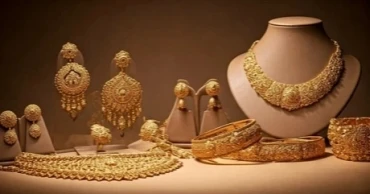
The Bangladesh Jewellers Association on Monday reduced the price of 22-carat gold by Tk 3,266 per bhori (11.664 grams), following a decline in the local market price of pure gold.
In a statement issued on Monday, BAJUS said the new prices, inclusive of VAT, took effect from 12:15pm after reviewing the overall market situation and the fall in the price of tejabi gold (pure gold) in the domestic market.
Under the revised rates, the price of 22-carat gold has been fixed at Tk 225,290 per bhori, including VAT.
The price of 21-carat gold has been set at Tk 215,142 per bhori, while 18-carat gold will cost Tk 184,758 per bhori. Gold produced under the traditional method has been priced at Tk 150,932 per bhori.
BAJUS said the new rates will remain effective at all jewellery outlets across the country until further notice. However, making charges will vary depending on the design of the jewellery.
The association also said customers cannot be charged VAT separately, as VAT is already included in the retail price of gold and silver ornaments.
Existing BAJUS rules regarding jewellery exchange and buyback, excluding specified VAT, making charges and the value of gemstones, will remain unchanged.
The latest revision comes just three days after BAJUS raised gold prices on July 3, increasing the price of 22-carat gold by Tk 4,374 per bhori to Tk 228,556, including VAT.
With the latest adjustment, gold prices have been revised 87 times in Bangladesh so far in 2026. Of those, prices were increased on 43 occasions, reduced 43 times, while one adjustment was made to reflect changes in VAT.
Despite the reduction in gold prices, silver prices remain unchanged.
Currently, 22-carat silver is selling at Tk 4,899 per bhori, while 21-carat silver is priced at Tk 4,666 per bhori. The price of 18-carat silver stands at Tk 4,024 per bhori, and traditionally manufactured silver is selling at Tk 3,033 per bhori.
28 days ago
Gold price raised for 2nd straight day; each bhori now costs Tk 228,556
The Bangladesh Jeweller’s Association (BAJUS) raised the price of gold for the second consecutive day on Friday, pushing up the rate of 22-carat gold by 4,374 per bhori.
The organisation announced the new price through a notice in the morning.
According to the new rate, each bhori (11.664 grams) of 22-carat gold will now cost Tk 228,556 in the domestic market, including VAT.
BAJUS also fixed the price of 21-carat gold at Tk 218,292 per bhori, 18-carat gold at Tk 187,440 per bhori, and traditional gold at Tk 153,148 per bhori.
The association last revised the gold price on July 2, raising it by Tk 2,216 per bhori to set the price of 22-carat gold at Tk 224,182, including VAT.
It said the new price will remain effective at all jewellery outlets across the country until further notice, though making charges will apply depending on the design of the ornaments.
Since VAT is included in the sale price of gold and silver ornaments, jewellers cannot charge VAT separately from customers. The association's existing rules will continue to be applicable to exchange and purchase of ornaments, excluding specified VAT, making charges and the cost of stones.
So far, the price of gold has been adjusted 86 times in the domestic market this year, with 43 hikes, 42 cuts, and one VAT adjustment.
Alongside gold, the price of silver has also been increased. The price of 22-carat silver has been set at Tk 4,899 per bhori, up by Tk 117.
The price of 21-carat silver has been fixed at Tk 4,666 per bhori, 18-carat at Tk 4,024 per bhori, and traditional silver at Tk 3,033 per bhori.
The price of silver has been adjusted 53 times so far this year, with 27 hikes and 26 cuts.
1 month ago

World shares rise as Dow hits fresh record and AI stocks recover
Stock markets across Europe and Asia moved higher on Friday after the Dow Jones Industrial Average closed at another record high, helped by gains in several major artificial intelligence (AI)-related companies, although some chipmakers continued to face selling pressure.
Futures for the S&P 500 rose 0.4%, while Dow futures gained 0.2%. US financial markets remained closed on Friday for the Independence Day holiday.
In early European trading, Germany's DAX climbed 0.7% to 52,643.30, France's CAC 40 added 0.3% to 8,497.30, and Britain's FTSE 100 advanced 0.4% to 10,689.77.
Asian markets also posted solid gains. South Korea's Kospi rebounded 5.8% to 8,088.34 after falling nearly 8% a day earlier. Samsung Electronics rose 8.2%, while chipmaker SK Hynix jumped 10.9%.
Japan's Nikkei 225 gained 1.5% to 69,744.07. Chip equipment maker Tokyo Electron edged up 0.4%, while memory chip producer Kioxia surged 9.2%.
Hong Kong's Hang Seng index rose 1.3% to 23,345.28, while China's Shanghai Composite added 0.4% to 4,043.64. Taiwan's Taiex increased 0.1%, India's Sensex gained 0.7%, and Australia's S&P/ASX 200 advanced 1.4% to 8,844.40.
Stephen Innes of SPI Asset Management said Asian markets regained some stability after two difficult sessions led by losses in technology stocks, with South Korea staging a strong rebound.
On Thursday, the Dow Jones Industrial Average rose 1.1% to a record close of 52,900.07.
The broader S&P 500 ended almost unchanged, adding less than 0.1% to close at 7,483.24, even though about 70% of its listed companies gained. The tech-heavy Nasdaq Composite fell 0.8% to 25,382.67, weighed down by losses in major chipmakers.
Investor sentiment was supported by a US jobs report showing employers added 57,000 jobs in June, below economists' forecast of 100,000 and slower than May's hiring pace.
The weaker-than-expected jobs data eased concerns that inflation could remain high. Oil prices, which had surged during the Iran conflict, have now fallen below pre-war levels, raising hopes that inflation may cool in the coming months.
If inflation continues to slow, the US Federal Reserve may face less pressure to raise interest rates repeatedly this year. Lower interest rates generally support economic growth by reducing borrowing costs for households and businesses and often boost stock prices.
Cryptocurrency-related shares also advanced as bitcoin recovered after recent losses. Robinhood Markets gained 3.8% and Coinbase Global rose 3.9%. Bitcoin was up 0.5% early Friday after climbing about 2% the previous day.
Despite the broader market gains, several leading AI-related chip companies remained under pressure as investors questioned whether their rapid share price increases and heavy spending on AI infrastructure would generate the expected profits.
Micron Technology reversed early gains to end down 5.5%, following a 10.6% drop the previous day. Nvidia fell 1.4%, while Lam Research slid 10.2%, making them among the biggest drags on the S&P 500. Nvidia remains the largest company in the index with a market value of nearly $4.7 trillion.
In commodity trading, Brent crude oil rose 0.6% to $72.26 per barrel, while US benchmark crude gained 0.5% to $69.05 per barrel.
In currency markets, the US dollar slipped to 160.97 Japanese yen from 161.11 yen, while the euro strengthened to $1.1450 from $1.1431.
1 month ago
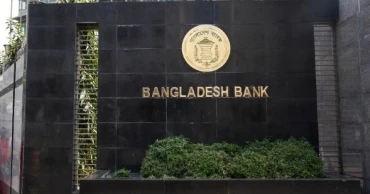
BB approves FRAs to shield importers from interest rate volatility
Bangladesh Bank (BB) has approved the introduction of Forward Rate Agreements (FRAs) in import trade to protect local importers from international interest rate fluctuations, particularly involving the Secured Overnight Financing Rate (SOFR).
The central bank issued a circular on Thursday allowing Authorised Dealer (AD) banks to sign these agreements with local buyers and borrowers tapping into supplier and buyer credits for usance imports.
A Forward Rate Agreement is a financial contract that allows parties to lock in an interest rate for a specific future period, offering an effective shield against future interest rate uncertainty. Usance imports allow businesses to defer their payments for a specified timeframe after receiving the imported goods.
Central bank regulations specify that these contracts can only be used for risk-mitigation purposes directly linked to actual import transactions. The guidelines explicitly prohibit any form of speculation or maintaining unprotected financial positions through these derivative contracts. Settlements will be executed based on the difference between the pre-agreed contract rate and the prevailing benchmark rate.
To ensure systemic stability and prevent individual banks from carrying excessive market risk, the central bank has imposed strict risk-management guidelines. AD banks must fully offset any contract-related risks through parallel, same-day matching transactions, ensuring they do not hold volatile market risks on their own books.
Furthermore, the central bank capped the banks' maximum pricing margin at 10 basis points. The total volume of FRAs executed by an individual bank cannot exceed 25 percent of its average monthly foreign exchange inflows recorded over the past 12 months.
The circular emphasises compliance with international contract frameworks, daily mark-to-market valuations, and robust internal risk assessments. In the event of early termination, contracts must be settled based on existing market rates, with meticulous document preservation made mandatory.
1 month ago

June exports surge by 25.91%, FY26 earnings hold steady at $48 billion: EPB
Bangladesh's merchandise exports posted a robust 25.91 percent year-on-year growth in June 2026, closing out fiscal year 2025-26 with renewed momentum despite persistent global economic and geopolitical headwinds, according to provisional data released by the Export Promotion Bureau (EPB) on Thursday.
The country earned US$ 4,202.69 million from merchandise exports in June 2026, up from $ 3,337.92 million in the same month last year, with broad-based growth recorded across ready-made garments (RMG), leather and leather products, jute and jute goods, home textiles, engineering products, and agricultural products.
Total export earnings for the entire fiscal year 2025-26 (July-June) stood at $ 48,001.91 million, remaining largely stable compared to $ 48,283.93 million in the previous fiscal year.
The EPB noted that maintaining earnings near the previous year's level, amid geopolitical tensions, global inflationary pressures, supply chain disruptions, energy market volatility, and subdued consumer demand in key markets, reflects the underlying strength and adaptability of the export sector.
The RMG sector, the mainstay of Bangladesh's export economy, registered 21.52 percent year-on-year growth in June, earning $ 3,387.71 million against $ 2,787.78 million a year earlier. Knitwear exports grew by 19.49 percent while woven garments rose 24.02 percent during the month. The sector contributed $ 38,701.15 million to overall export earnings in FY26.
Several other sectors also posted strong gains. Leather and leather products exports rose 47.68 percent in June and 7.09 percent for the fiscal year, reaching $ 1.23 billion. Jute and jute goods recorded a 76.60 percent jump in June and 7.75 percent growth for the year, totalling $ 883.69 million.
Home textiles grew 59.95 percent in June and 6.52 percent for FY26, while engineering products posted 44.74 percent growth in June and 21.77 percent for the fiscal year. Agricultural products exports rose 46.77 percent in June, reflecting sustained international demand for Bangladeshi agro-based goods.
On the destination front, the United States remained Bangladesh's largest single-country export market, with earnings of $ 9,048.05 million in FY26, up 4.09 percent year on year, and strong growth recorded in June as well.
Germany and the United Kingdom retained their positions as the second and third largest export destinations, respectively, both showing continued positive momentum.
The EPB data further showed that all of Bangladesh's top 20 export destinations recorded positive year-on-year growth in June 2026, pointing to a broad-based recovery in external demand and strengthening market diversification.
The EPB expressed optimism that the positive momentum seen in June, along with continued product and market diversification, will provide a strong foundation for export growth in FY 2026-27 and support the country's sustainable economic development.
1 month ago

BSEC holds financial literacy training for capital market investors, students
The Bangladesh Securities and Exchange Commission (BSEC) on Wednesday organised a day-long training programme on “Primary Investment Education (Financial Literacy)” for investors and potential investors in the capital market.
The programme was held at the multipurpose hall of the BSEC Building in the capital's Agargaon area, with around 100 teachers and students from the Department of Finance and Banking of Dhaka Commerce College taking part, according to a press release.
BSEC Executive Director Mir Mosharraf Hossain Chowdhury inaugurated the event.
BSEC Director Sheikh Mahbub Ur Rahman spoke on “Fundamentals of Financial Literacy”, while Additional Director Sk. Md Lutful Kabir discussed “Investment Risk and Investor's Protection.” BSEC Commissioner Nafeez Al Tarik delivered a detailed presentation on “Financial Planning.”
The training covered basic concepts of capital market investment, investment accounts and risk management, investor rights and protection, personal financial planning, long-term investment strategies, and informed investment decision-making, both from theoretical and practical perspectives.
Participants took part actively in the question-and-answer session and exchanged views on various real-life issues related to investment.
At the closing session, Commissioner Nafeez Al Tarik delivered concluding remarks. Certificates were distributed among the participating teachers and students at the end of the programme.
BSEC said it will continue organising such investment education programmes for educational institutions, investors, and potential investors across the country in the future.
1 month ago
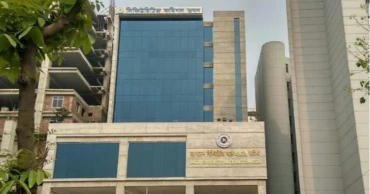
BSEC hands stock exchanges power to set circuit breaker limits, eases mutual fund reinvestment rules
The Bangladesh Securities and Exchange Commission (BSEC) has decided to allow the Dhaka Stock Exchange (DSE) and the Chittagong Stock Exchange (CSE) to independently determine and implement market control parametres, including circuit breaker limits, in line with relevant regulations, policies and operational requirements.
The decision was taken at the commission's 1018th meeting held on Wednesday, chaired by BSEC Chairman Masud Khan.
As the stock exchanges have the regulatory authority to fix and enforce such market control parametres under their respective regulations, the commission decided to direct DSE and CSE to independently set and implement these standards.
In line with the decision, the commission repealed its earlier order, issued on June 17, 2021 on the matter.
In another decision, the commission said asset management companies may, upon proposal, be allowed to reinvest the income earned by close-ended mutual funds at the end of a fiscal year without distributing it as dividends, if such a move serves the interest of investors and the capital market.
The decisions were taken considering the operational efficiency of the stock exchanges and the interests of investors and the capital market, according to a press release said.
1 month ago
Bangladesh Bank keeps policy rate at 10pc, reaffirms flexible exchange rate
Bangladesh Bank on Tuesday unveiled its monetary policy for the July-December period, retaining the policy rate at 10 percent while seeking to curb inflation.
Governor Mostaqur Rahman announced the monetary policy for the first half of the new fiscal year at a press conference held at the central bank.
Bangladesh Bank (BB) will firmly stick to its flexible, market-determined exchange rate regime to protect the country's external sector from international shocks, expand exports, and optimize remittance inflows, official sources said.
Unveiling the new Monetary Policy Statement (MPS) for the July–December period of the fiscal year FY2026-27, Mostaqur Rahman reiterated that the market-driven exchange mechanism remains a vital strategic pillar for the country's macroeconomic stability.
1 month ago
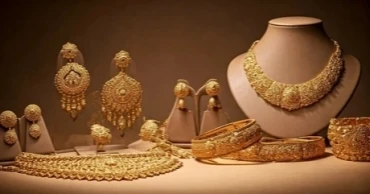
Bajus cuts gold price for second straight day
The Bangladesh Jewellers Association (Bajus) has again cut the price of gold in the local market, reducing the rate of 22-carat gold by Tk 3,324 per bhori within 24 hours.
In a notice issued on Tuesday morning, Bajus said the new price, inclusive of VAT, has been set considering the overall situation following a fall in the price of pure gold in the local market.
According to the new price, 22-carat gold will now cost Tk 2,21,966 per bhori (11.664 grams) including VAT.
The price of 21-carat gold has been fixed at Tk 2,11,993 per bhori, 18-carat gold at Tk 1,82,075 per bhori, and traditional gold atTk 1,48,774 per bhori.
Bajus said the new rate will remain effective at all jewellery shops across the country until further notice, though making charges will apply depending on the design of ornaments.
Since VAT is already included in the sale price of gold ornaments, customers cannot be charged VAT separately, the association said.
It added that its existing rules on exchange and purchase of ornaments, excluding specified VAT, making charges and stone prices will remain unchanged. A decision on VAT for silver ornaments will be announced soon, Bajus said.
Bajus last adjusted gold prices on the morning of June 29, when the price of 22-carat gold was cut by Taka 3,266 per bhori to Tk 2,25,290, inclusive of VAT.
So far in 2026, gold prices have been revised 84 times in the local market, with 41 upward adjustments, 42 downward adjustments, and one VAT adjustment.
Along with gold, the price of silver has also been reduced. The price of 22-carat silver has been cut by Taka 175 per bhori to Tk 4,491.
The price of 21-carat silver has been set atTk 4,257 per bhori, 18-carat silver at Tk 3,674 per bhori, and traditional silver at Tk 2,741 per bhori.
Silver prices have been adjusted 51 times so far in 2026, with 25 upward revisions and 26 downward revisions.
1 month ago