local-business
Gold price drops by Tk 3,266 per bhori as BAJUS revises rates
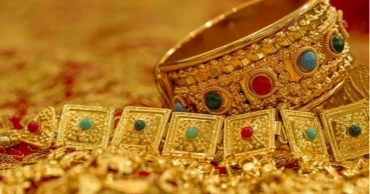
The Bangladesh Jewellers Association (BAJUS) has reduced gold prices by Tk 3,266 per bhori, setting the new price of 22-carat gold at Tk 225,290 per bhori, including VAT, effective from 10am on Monday.
In a statement issued in the morning, BAJUS said the price adjustment was made following a decline in the price of pure gold (tejabi gold) in the local market.=
Under the revised rates, a bhori (11.664 grams) of 22-carat gold will now cost Tk 225,290, including VAT.
The price of 21-carat gold has been fixed at Tk 215,142 per bhori, while 18-carat gold will be sold at Tk 184,758 per bhori. Gold of the traditional method has been priced at Tk 150,932 per bhori.
BAJUS said the new rates will remain in effect at all jewellery stores until further notice. However, making charges will vary depending on the design of the jewellery.
As VAT is already included in the retail price of gold ornaments, jewellers will not be allowed to charge VAT separately from customers, the association said.
It also said the existing rules for exchanging and purchasing gold ornaments, excluding specific VAT, making charges and the value of stones, will remain unchanged. A decision regarding VAT on silver ornaments will be announced soon.
The latest revision comes just two days after BAJUS raised gold prices on June 27 by Tk 5,482 per bhori, taking the price of 22-carat gold to Tk 228,556 per bhori, including VAT.
So far in 2026, BAJUS has adjusted gold prices 83 times. Of those, prices were increased on 41 occasions, reduced 41 times, while one adjustment involved VAT.
Despite the latest cut in gold prices, silver rates remain unchanged.
A bhori of 22-carat silver is currently selling for Tk 4,666, while 21-carat silver is priced at Tk 4,432 per bhori, 18-carat silver at Tk 3,791 per bhori, and traditional-method silver at Tk 2,858 per bhori.
1 month ago
CAB calls for small-packet edible oil to tackle Vitamin A deficiency among low-income people
Consumer rights experts and advocates on Sunday called for introducing small-packet edible oil in the market to address Vitamin A deficiency among low-income people.
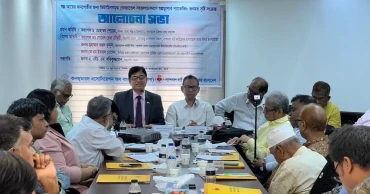
The call came at a joint seminar organised by the Consumers Association of Bangladesh (CAB) and the National Heart Foundation at the CAB office in Segunbagicha.
It also urged the government to enforce the existing laws banning the sale of open loose oil.
Experts at the event said a large portion of the population still uses open loose oil which diminishes the efficacy of Vitamin A and exposes the oil to dust and other contaminants.
They said introducing pouches, mini-packs or sachets with a capacity of 100 to 500 millilitres would allow low-income consumers to buy safe, vitamin-enriched oil at affordable prices. Smaller packaging would also ensure quicker use, reducing the risk of nutritional degradation.
However, experts acknowledged challenges including plastic waste management, packet leakage and low consumer awareness.
They recommended high-quality packaging, introduction of return-and-sell or cash-back systems, and public awareness campaigns to address these concerns.
Speakers said a coordinated effort involving policymakers, edible oil producers, the packaging industry, consumer rights organisations and the media could help introduce affordable safe packaging while simultaneously improving public health and reducing Vitamin A deficiency.
Presenting the keynote paper, Mushtak Ahmed Mohammad Iftikhar, founder chairman of Bangladesh Safe Food Authority and adviser to the National Heart Foundation, outlined the nutritional and public health risks associated with open oil consumption.
Professor Dr Sohel Reza Choudhury, head of the epidemiology department at National Heart Foundation Hospital and Research Institute, speaking as special guest, said open oil must be avoided for a healthy body and that overall oil consumption should also be reduced, as even healthy oil in excessive quantities can cause fat-related ailments.
Professor Dr Mohammad Shoyeb, a member of Bangladesh Safe Food Authority, speaking as chief guest, said CAB has long been working to ensure food safety for consumers and that collaborative efforts to protect consumer rights would continue.
CAB President AHM Shafiquzzaman, presiding over the event, said bottled healthy oil must replace open oil on public health grounds, noting that while the government has clear directives on the matter, enforcement remains absent. He said the initiative with the National Heart Foundation would be expanded across the country to compel effective action.
CAB Vice President Nazer Hossain said the interim government had suppressed an existing law banning the sale of open oil, and demanded its proper enforcement.
Also present were Director of the National Consumer Rights Protection Directorate Masum Arefin, BSTI Assistant Director Engineer Shashikanta Das, Jessore University of Science and Technology Assistant Professor Dr Rashida Parvin, and representatives from various NGOs and government and non-government institutions.
1 month ago
Janata Bank officials allege discrimination as promotion freeze continues
The State-Owned Bank Officials Unity Council (SOBOUC), Bangladesh, on Saturday demanded the immediate approval of the proposed 2025 organizational structure (organogram) for Janata Bank PLC, warning that prolonged delays have stalled regular promotions and left thousands of officials deprived.
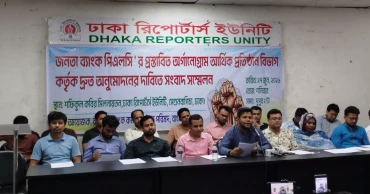
The council raised the demand during a press conference held at the Dhaka Reporters Unit (DRU) in the capital, where its convener, Motahar Hossain, presented a written statement.
According to the written statement, the promotion process has been severely disrupted by successive circulars from the Financial Institutions Division (FID). Following a July 7, 2025 directive instructing state-owned banks to restructure and amend their organograms, the FID on October 14 ordered a halt to all regular promotions until previously granted "supernumerary" (ex-cadre) promotions were fully adjusted.
The council noted that in 2019, Janata Bank promoted 1,926 officials to the post of Senior Officer on a supernumerary basis. Despite a subsequent freeze on such advancements issued on November 21, 2022, state-owned banks continued the practice, elevating an additional 7,218 officials across the sector until August 2024—including 579 officials of various grades at Janata Bank.
While Janata Bank submitted its proposed organogram to the FID on December 11, 2025, to resolve the deadlock, it has yet to receive government approval.
In contrast, other major state-owned lenders—including Sonali, Agrani, and Rupali banks—have already secured approvals for their updated organograms and processed regular promotions using December 31, 2024, as the cut-off date. This discrepancy has left Janata Bank officials facing severe discrimination and professional stagnation, speakers alleged at the press conference.
The council highlighted a rapidly worsening administrative crisis, stating that the number of officials eligible for promotion stood at 5,802 at the end of 2024, but surged to 7,268 by the end of 2025. Without the creation of new posts under a revised organogram, this backlog will continue to swell.
Under the proposed 2025 organogram, Janata Bank’s total sanctioned manpower would increase from 18,373 to 21,817. The council argued that this expansion is essential to restore balance to human resource management, clear the promotion backlog, and inject dynamism into critical operations such as customer service, digital banking, SME and CMSME activities, risk management, and default loan recovery.
The organizational body estimated that implementing the new organogram would incur an additional expenditure of approximately Tk 13.82 crore over a three-year period—an amount they described as minimal compared to the bank's overall financial capacity.
The SOBOUC urged the government to intervene immediately to approve the pending structure and resolve the long-standing promotion impasse to protect the interests of the bank's workforce.
1 month ago

DBA intervention saves BEXIMCO Pharma GDR from London delisting
Trading in the Global Depository Receipts (GDRs) of BEXIMCO Pharmaceuticals PLC on the London Stock Exchange (LSE) has resumed from June 26, after the bourse lifted its trading suspension following coordinated intervention by the DSE Brokers Association of Bangladesh (DBA).
BEXIMCO Pharmaceuticals PLC is the only Bangladeshi company listed on the LSE, having secured its listing in 2004. The company's GDR trading was suspended from January 2, 2026, after it failed to publish its audited financial statements for the year ended June 30, 2025, and subsequent financial disclosures within the required timeframe.
Under LSE listing rules, any security suspended continuously for six months without resolution of the suspension ground is liable to delisting, a deadline that fell on July 2, 2026.
Against this backdrop, foreign institutional and individual investors wrote to the Bangladesh Securities and Exchange Commission (BSEC) Chairman requesting necessary measures to prevent the GDR from being delisted and sought the cooperation of the DSE Brokers Association of Bangladesh (DBA) in the matter.
Recognising the urgency, DBA President Saiful Islam led swift coordination between BSEC and BEXIMCO Pharmaceuticals' management to urge the necessary steps in the wider interests of investors.
Acting on DBA's initiative, BSEC granted the company permission to hold a special board meeting, enabling approval and publication of the third-quarter financial statements for fiscal year 2024-25, the audited annual financial report, and the first, second and third-quarter reports for fiscal year 2025-26.
This resolved the company's reporting backlog, prompting LSE to lift the trading suspension and approve the resumption of GDR trading with effect from June 26, 2026.
DBA believes the development will reinforce Bangladesh's international capital market image and credibility, strengthen foreign investor confidence, and consolidate the country's position in global markets.
DBA President Saiful Islam expressed sincere gratitude to Finance and Planning Minister Amir Khosru Mahmud Chowdhury, Prime Minister's Special Assistant for Investment and Capital Markets Tanvir Sani, BSEC Chairman Masud Khan, BSEC commissioners and officials, the board and management of BEXIMCO Pharmaceuticals PLC, and the print and electronic media for their cooperation and effective support.
DBA hopes the government will continue to prioritise attracting greater foreign investment into Bangladesh's capital market and will sustain investor-friendly policies, effective reforms, and timely measures to build international investor confidence.
1 month ago

Gold prices rise after two consecutive cuts
Bangladesh Jewellers Association (Bajus) on Saturday raised the price of gold in the domestic market by Tk 5,482 per bhori, ending a brief two-round decline and fixed the new retail price of 22-carat gold at Tk 2,28,556 per bhori.
The new price came into effect from 10:00am.
In a morning circular, Bajus said the revision was made in light of rising prices of pure (tejabi) gold in the local market.
Under the new rates, 21-carat gold has been priced at Tk 2,18,292 per bhori, an increase of Tk 5,249 while 18-carat gold has gone up by Tk 4,490 to Tk 1,87,440 per bhori. Traditional-method (sanatan) gold has been set at Tk 1,53,148 per bhori, up by Tk 3,674.
The new prices will remain in effect at all jewellery establishments across the country until further notice, Bajus said, adding that making charges will apply separately depending on design. As VAT is already included in the selling price, jewellers will not be permitted to collect it additionally from customers.
Bajus also said its earlier rules on jewellery exchange and purchase, excluding specific VAT, making charges and stones will remain unchanged, and a decision on VAT applicable to silver ornaments will be announced shortly.
The last adjustment had come on June 25, when Bajus cut 22-carat gold prices by Tk 2,216 per bhori to Tk 2,23,074.
Saturday's hike marks the 82nd price adjustment this year in the domestic gold market, comprising 41 upward revisions, 40 downward revisions, and one VAT adjustment.
Silver prices were also raised on Saturday, with 22-carat silver going up by Tk 175 to Tk 4,666 per bhori.
Prices of 21-carat, 18-carat and sanatan-method silver have been fixed at Tk 4,432, Tk 3,791 and Tk 2,858 per bhori, respectively.
Silver has seen 50 price adjustments so far in 2026, 25 upward and 25 downward.
1 month ago

EVs could cut running costs by 75% but Bangladesh faces structural barriers: DCCI
Electric vehicles (EVs) could slash transport running costs by as much as 75 per cent compared to fossil fuel vehicles but deep structural barriers, from crippling energy shortages to near-absent charging infrastructure are slowing Bangladesh's transition, according to a paper presented by the Dhaka Chamber of Commerce and Industry (DCCI) on Saturday.
DCCI President Taskeen Ahmed presented the paper at a seminar titled “The Electric Vehicle (EV): Challenges and Prospects in Bangladesh”, organised by the chamber in collaboration with the Bangladesh Sustainable and Renewable Energy Association (BSREA) at DCCI Auditorium in Motijheel, Dhaka.
Against Bangladesh's total registered vehicle fleet of 67.24 lakh, only 669 registered EVs (excluding electric three-wheelers) are on the road, the paper noted, a striking contrast with an estimated six million locally manufactured, largely unregulated electric three-wheelers already in circulation.
The government has set a target of 30 per cent EV adoption in the public and autonomous sectors by 2030.
The presentation highlighted that EVs offer a running cost of approximately Tk 2.8 to 3.8 per kilometre compared to Tk 11 to 14 per kilometre for petrol and diesel vehicles, along with 30 to 50 per cent lower maintenance expenditure.
Yet the high initial purchase price remains a significant deterrent for consumers, it said.
Six structural challenges were identified as the primary barriers to EV growth: limited charging infrastructure with uneven urban-rural coverage, high upfront vehicle costs, a severe depot shortage with fewer than 30 state-run depots nationwide despite over 53,000 buses operating across the country, underdeveloped battery safety and recycling ecosystems, uncertain payback periods, and most critically, the ongoing energy crisis.
With national electricity demand standing at around 17,000 MW, persistent power shortfalls are forcing industries to operate at roughly half their capacity, making large-scale EV grid charging a daunting challenge.
Bangladesh has introduced a series of policy incentives in recent budgets, including reducing EV charger import duties from 39.75 per cent to 1 per cent, cutting EV registration AIT from Tk 2,00,000 to between Tk 25,000 and Tk 1,00,000 depending on motor capacity, raising auto loan limits for electric and hybrid vehicles from Tk 60 lakh to Tk 80 lakh, and extending VAT exemptions on local EV assembly until June 2031.
Drawing on cross-country comparisons, the paper cited Norway, where EVs account for 97.4 per cent of new car sales, as a model built on sustained tax exemptions, toll waivers and near-total renewable electricity generation.
China and India were cited for demonstrating scalable approaches centred on two- and three-wheeler electrification before expanding to larger vehicles.
The DCCI recommended that Bangladesh adopt a phased EV roadmap prioritising two- and three-wheeler local manufacturing, launch pilot EV bus deployments of 300 to 500 units in Dhaka and Chattogram, mandate standardised charging equipment, integrate EV-ready provisions into building codes, and develop a centralised national charging rollout plan aligned with urban planning.
A National Energy Storage Roadmap is being formulated to support clean energy and EV battery systems, the paper noted.
1 month ago

Gold prices drop as BAJUS cuts rates
The prices of gold jewellery fell sharply in Bangladesh on Wednesday as the Bangladesh Jewellers Association (BAJUS) reduced rates across all categories, citing a decline in local bullion prices.
The price of the finest 22-carat gold jewellery, including VAT, was cut by Tk 5,482 per bhori (11.664 grammes) to Tk 2,25,290, effective from 10:00am.
BAJUS said the adjustment was made in line with a fall in the price of tejabi (pure) gold in the local market.
The reduction came just two days after BAJUS raised the price of 22-carat gold jewellery by Tk 4,432 per bhori on June 22, reflecting continued volatility in the domestic bullion market.
Besides 22-carat, the price of 21-carat gold jewellery was reduced by Tk 5,249 per bhori to Tk 2,15,142, while 18-carat gold jewellery fell by Tk 4,490 to Tk 1,84,758 per bhori.
The price of traditional sanatan method gold jewellery was also cut by Tk 3,674 to Tk 1,50,932 per bhori.
Silver prices also saw downward revisions across all categories.
The price of 22-carat silver was reduced by Tk 408 per bhori to Tk 4,841, while 21-carat silver dropped by Tk 409 to Tk 4,607 per bhori.
The price of 18-carat silver fell by Tk 291 to Tk 3,966 and traditional sanatan method silver by Tk 234 to Tk 2,974 per bhori.
1 month ago
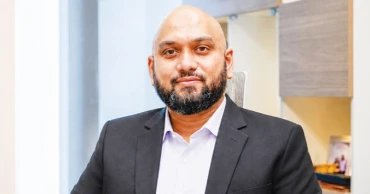
BAT Bangladesh appoints Raiyan Ahmed as Head of Talent, Culture & Inclusion
BAT Bangladesh PLC. has appointed Raiyan Ahmed as its new Head of Talent, Culture & Inclusion, to drive the company’s strategic agenda.
In his new leadership role, Raiyan will oversee the company's organizational talent acquisition, workplace culture, and diversity initiatives, while supporting leadership development and fostering an inclusive corporate environment, according to a press release.
Raiyan brings 13 years of extensive human resource management experience within the BAT Group. Appointment of his in new position effective from this month.Throughout his tenure, he has served in diverse leadership and operational management positions across BAT Bangladesh and the Asia Pacific and Middle East Regional Headquarters in Hong Kong.
Most recently, he held the position of Head of Operations HR for BAT Bangladesh, where he played a pivotal role in guiding the company through a significant period of structural transition and workforce capability development.
An alumnus of St. Joseph Higher Secondary School and Notre Dame College in Dhaka, Raiyan completed his graduation with a Bachelor of Business Administration (BBA) degree from East West University.
Commenting on his new role, Raiyan said he is honored to take on the responsibility and aims to build on the existing corporate culture while strengthening organizational capability to help teams grow and succeed.
1 month ago
No politics to be allowed over Islami Bank: Bangladesh Bank
Bangladesh Bank on Monday declared that no political activities or vested interest-driven motives will be tolerated surrounding Islami Bank Bangladesh.
The central bank also assured that a fresh, acceptable board of directors consisting of honest, qualified, and highly competent individuals will be formed very soon to manage the institution.
Bangladesh Bank Executive Director and Spokesperson Arif Hossain Khan disclosed the central bank’s stance to journalists on Monday afternoon.
"Islami Bank is a critical institution within the country’s financial ecosystem. If this bank faces damage, it will trigger a severe negative spillover across the entire banking sector. Therefore, no one will be allowed to play politics over Islami Bank. An acceptable board of directors will be constituted shortly," Khan said.
The statement came hours after members of the Islami Bank Shacheton Grahok Forum (Conscious Customers Forum) staged an intensive demonstration and sit-in program in front of the main entrance of Bangladesh Bank on Monday morning.
The protesters issued an ultimatum demanding the complete reorganisation of the bank’s board of directors within 24 hours, warning of tougher programs if the deadline is missed.
The forum leaders demanded that any individuals linked to the controversial S Alam Group must be strictly barred from entering the upcoming board.
They also demanded the immediate reinstatement of original sponsors and shareholders who held ownership in the bank prior to 2017.
Earlier on June 16, the forum submitted a memorandum to the Governor of Bangladesh Bank pressing similar demands.
Bangladesh Bank dissolved the entire board of directors of Islami Bank on June 13 and appointed its Executive Director, Mohammad Zahir Hossain, to oversee the overall corporate operations.
1 month ago

Gold price rises by Tk 4,432 per bhori after two consecutive cuts
Bangladesh Jeweller’s Association (BAJUS) on Monday raised the gold price in the domestic market by Tk 4,432 per bhori, ending a two-round decline, with 22-carat gold now priced at Tk 2,30,772 per bhori.
In a notice issued in the morning, BAJUS cited a rise in the price of pure gold (tejabi gold) in the local market as the reason behind the upward revision.
According to the new rates, 21-carat gold will be sold at Tk 2,20,391 per bhori, 18-carat at Tk 1,89,248, and traditional-method gold at Tk 1,54,606 per bhori.
BAJUS said the revised price will remain in effect at all jewellery shops across the country until further notice, though applicable making charges will vary by design.
It also clarified that since VAT is already included in the selling price, jewellers cannot charge VAT separately from customers.
Existing BAJUS rules on jewellery exchange and purchase, excluding specific VAT, making charges and gemstones, will remain unchanged. A separate announcement on VAT applicable to silver jewellery will be made shortly.
The latest revision comes just two days after BAJUS cut the price of 22-carat gold by Tk 2,216 to Tk 2,26,340 per bhori on June 20.
This is the 79th price adjustment for gold in the domestic market so far this year, with prices raised 40 times, reduced 38 times and VAT-adjusted once.
Meanwhile, silver prices remain unchanged. A bhori of 22-carat silver is currently being sold at Tk 5,249, while 21-carat stands at Tk 5,016, 18-carat at Tk 4,257, and traditional-method silver at Tk 3,208 per bhori.
1 month ago