local-business
BB provides Tk 2,500cr liquidity support for Islami Bank
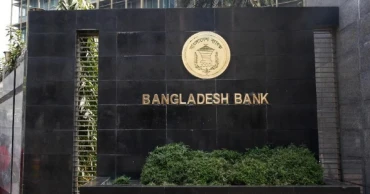
Bangladesh Bank (BB) has provided an emergency liquidity support of Tk 2,500 crore for Islami Bank Bangladesh PLC to help the Shariah-based lender mitigate its severe cash crunch and resume suspended clearing operations.
The central bank approved the liquidity support on Sunday, allocating the special fund directly into Islami Bank’s current account maintained with the BB, according to sources in both institutions.
Following the financial injection, the bank's halted cheque clearing system has resumed.
According to a top executive at Islami Bank, the bank has been facing an exceptional spike in cash demand. "Deposits are almost non-existent at the moment, while everyone is rushing to withdraw their funds," the official said on condition of anonymity.
The liquidity strain escalated further following recent leadership shifts and administrative disputes.
Before Eid-ul-Azha holidays on May 24, bank's then-chairman M Zubaidur Rahman resigned. Later that evening, former Bangladesh Bank Deputy Governor Md Khurshid Alam was appointed as an independent director and new chairman of the bank.
Currently, five independent directors on Islami Bank's board, including the chairman, are central bank appointees.
Following these changes, protests broke out under the banner of the "Islami Bank Sachetan Grahak Forum", pressing a seven-point demand that includes the removal of the new chairman.
The unfolding situation at Islami Bank also triggered heated debates between treasury and opposition benches in Parliament.
Amid growing public discourse, panic withdrawals intensified among clients, prompting Islami Bank to formally seek Tk 10,000 crore in emergency financial assistance from the central bank.
Sunday's Tk 2,500 crore fund injection marks the first major deployment to stabilise the institution.
1 month ago
MCCI flags revenue target risk, calls for structural tax reforms budget reaction
The Metropolitan Chamber of Commerce and Industry, Dhaka (MCCI) has welcomed Bangladesh's largest-ever national budget for FY 2026–27 as a bold initiative to rebuild the economy, while flagging serious concerns over the achievability of an ambitious revenue collection target and the risk of taxpayer harassment without meaningful structural reforms.
In a press statement issued on Saturday, MCCI President Kamran T. Rahman congratulated Finance and Planning Minister Amir Khosru Mahmud Chowdhury for presenting the 55th national budget, the first of the newly elected government, amounting to Tk 938,000 crore, equivalent to 13.73 percent of GDP.
The chamber described the Tk 695,000 crore revenue collection target,18.20 percent higher than the revised target of the outgoing fiscal year as ambitious and expressed doubt over its feasibility.
Of the total, Tk 604,000 crore has been assigned to the National Board of Revenue (NBR), representing a 20.08 percent increase over the revised target.
MCCI noted that the NBR collected only Tk 326,928 crore, about 65 percent of its revised target through April of the current fiscal year, while ADP implementation stood at just 41.41 percent during the July–April period.
“Without structural reforms, efforts to meet this target may lead to increased pressure and harassment of taxpayers,” the chamber warned, adding that additional taxation could raise prices of essential commodities and burden ordinary citizens.
MCCI expressed concern over a sharp decline in total investment, which fell to 27.93 percent of GDP in FY 2025–26, the lowest in a decade. Private investment accounted for only 21.53 percent, with public investment at 6.40 percent.
The chamber said the investment slump was eroding employment opportunities and heightening poverty risks.
The chamber welcomed a Tk 144,338 crore allocation for social safety net programmes, up Tk 17,607 crore or 13.89 percent from the previous fiscal year, including dedicated funds for the Family Card Programme (Tk 14,500 crore), Farmer Card Programme (Tk 1,062.50 crore), and religious allowances (Tk 1,081 crore).
MCCI also praised plans to raise education spending from 1.39 percent to 2.0 percent of GDP and health expenditure from 0.58 percent to 1.01 percent, calling them reflective of long-term commitment to human capital development.
Among the welcome measures, MCCI commended proposed reforms to Tax Deducted at Source (TDS), reduced mandatory deposit requirements for tax appeals at tribunal and high court levels, quarterly VAT return filing, paperless VAT administration, and inclusion of labour within the VAT input definition.
However, the chamber raised concerns over the abolition of the 5 percent minimum income tax slab in favour of a 10 percent rate, reduction of individual investment tax rebates from 15 percent to 10 percent, and the proposed increase in the highest tax rate from 30 percent to 35 percent from tax year 2028–29.
It also flagged the absence of any proposal to rationalise or reduce the Minimum Turnover Tax on companies.
MCCI warned that a proposed data connectivity and information-sharing framework could pose serious threats to data privacy without adequate legal and technological safeguards.
Welcoming the Tk 60,000 crore “Stimulus Package 2026,” the BanglaBiz one-stop digital service platform, and expanded FTA, PTA and EPA trade agreements, MCCI said these would play an important role in attracting foreign investment and generating employment.
The chamber called for quarterly reviews of budget implementation given prevailing global economic uncertainties, and reaffirmed its commitment to partnering with the government to foster a business-friendly environment.
“The success of this mega budget will depend on institutional good governance, a harassment-free tax administration, and maintenance of macroeconomic stability,” the statement concluded.
1 month ago

FBCCI welcomes budget, flags revenue target, implementation as key challenges
Federation of Bangladesh Chambers of Commerce and Industry (FBCCI) on Saturday welcomed the proposed national budget for fiscal year 2026-27, describing it as pragmatic and implementable, while flagging revenue mobilisation and efficient execution as the two most critical challenges ahead.
In a written reaction to the Tk 9,38,000 crore budget, the country's largest ever and 18.7 per cent higher than the outgoing fiscal year, the apex trade body extended its congratulations to the Prime Minister and Finance Minister, noting that the budget gives priority to economic stability, investment, employment, production and social justice.
“The size of the budget is large but implementation is not impossible, what is needed is foresight, efficiency and transparency,” FBCCI said in its statement on Saturday.
FBCCI expressed optimism over the government's adoption of the "3R" framework: Recovery and Stabilisation, Restoration and Reconstruction, as the guiding economic strategy, saying it would help restore macroeconomic stability, boost investment and foster inclusive and sustainable growth.
The body also supported GDP growth and inflation targets set at 6.5 per cent and 7.5 per cent respectively, expressing hope that disciplined fiscal management would help ordinary citizens regain purchasing power.
FBCCI acknowledged that the total revenue target of Tk 6,95,000 crore, equivalent to 10.2 per cent of GDP, with the National Board of Revenue (NBR) assigned Tk 6,04,000 crore, represents a formidable challenge given current domestic and global economic conditions.
The federation urged structural reforms at NBR and a revenue management system conducive to growth, trade and investment to meet the target.
On the budget deficit of Tk 2,43,000 crore, 3.6 per cent of GDP, FBCCI cautioned the government to exercise restraint in borrowing from the banking sector, as it crowds out private sector credit and adversely affects investment and employment. It recommended greater reliance on concessional external financing at reasonable interest rates.
The total interest payment burden, Tk 1,05,000 crore in domestic interest and Tk 22,500 crore in foreign debt servicing was described as a significant fiscal pressure.
In a wide-ranging set of recommendations, FBCCI called on the government to focus on: Activation of investment-friendly economic zones; export diversification and new market exploration; human resource development in IT and electronics; reduction of administrative red tape and cost of doing business.
Besides, strengthening of the capital market and expansion of the bond market; improved accountability in ADP implementation; interest rate reduction and banking sector reform; uninterrupted power and energy supply; logistics and supply chain efficiency; and development of legal frameworks for free trade zones were among the recommendations.
FBCCI welcomed several budget provisions it said reflected its own prior proposals, including: mandatory online VAT return filing, quarterly VAT submission, online income tax return and refund systems, online single-window services, and an expanded plug-and-play industrial facility.
The body also praised the raising of the tax-free income ceiling from Tk 3,50,000 to Tk 3,75,000 with provisions for gradual future increases, though it urged the government to maintain the 5 per cent tax slab and reduce the top tax rate from 35 per cent to 25 per cent.
Welcoming the five-year lock-in on corporate tax rates, FBCCI also sought a 2.5 per cent reduction for listed companies to enhance competitiveness, and proposed lowering the minimum turnover tax on sales from 1 per cent to 0.5 per cent given the current slowdown.
Among specific measures appreciated, FBCCI highlighted: the reduction of advance income tax on industrial raw material imports from 5 per cent to 4 per cent; reduction of source taxes on basic agricultural commodities including rice, wheat, potato, onion, garlic, ginger, salt, sugar and edible oil to 0.5 per cent; complete withdrawal of the 5 per cent regulatory duty on import of dates and all cooking spices; and reduced withholding tax on foreign loan interest for industrial investment from 20 per cent to 10 per cent.
The federation also welcomed the full import duty waiver, along with VAT and supplementary duty on laptops, desktop computers, servers, printers and monitors, calling it a major push for IT sector development.
On social protection, FBCCI commended free train travel for senior citizens above 65 years of age, a 25 per cent metro rail discount, and expansion in the number and coverage of social safety net beneficiaries.
FBCCI welcomed the government's Tk 60,000 crore “Stimulus Package 2026” for easing credit flow to the private sector, along with a Tk 2,000 crore allocation for SME development through IDCOL, BIFFL and the SME Foundation. An additional Tk 500 crore allocation for women and youth entrepreneurship was termed a positive step.
Tax and VAT exemptions for startup companies — including zero turnover tax, and full VAT exemption on local purchases and premises rental for startups were also praised.
The proposed 20 per cent renewable energy target by 2030 and zero-import-duty on solar energy equipment until 2035 received FBCCI's support as part of a push for a sustainable energy framework.
On the gold and jewellery sector, FBCCI praised the reduction of source tax on gold imports from 5 per cent to 0.5 per cent under the new bonded warehouse regulations, and supported the proposed replacement of 5 per cent VAT on jewellery services with a fixed charge of Tk 2,500 per unit.
FBCCI said it is currently reviewing the Finance Bill and related income tax, VAT and customs notifications in consultation with its member organisations, and will submit a comprehensive set of post-budget recommendations to the government after the review is complete.
1 month ago

Gold prices in Bangladesh rise after four consecutive cuts
Gold prices in Bangladesh rebounded on Saturday after four consecutive reductions, with the Bangladesh Jewellers Association (BAJUS) raising the price of 22-carat gold by Tk 6,590 per bhori.
Under the revised rates, the price of 22-carat gold has been set at Tk 224,940 per bhori (11.664 grams), effective from 10am on Saturday, according to a BAJUS statement.
The association said the new prices were fixed in view of the increase in the price of pure gold (tejabi gold) in the local market and the overall market situation.
The price of 21-carat gold has been set at Tk 214,734 per bhori, while 18-carat gold will cost Tk 184,058 per bhori. Gold produced under the traditional method has been priced at Tk 149,882 per bhori.
BAJUS last adjusted gold prices on June 11, when it reduced the price of 22-carat gold by Tk 4,432 per bhori, setting it at Tk 218,350.
So far in 2026, gold prices have been revised 74 times in the domestic market. Of these, prices were increased on 38 occasions and reduced 36 times.
Alongside gold, BAJUS also increased silver prices. The price of 22-carat silver has been raised by Tk 291 per bhori to Tk 5,132, while 21-carat silver has been priced at Tk 4,899 per bhori.
The price of 18-carat silver has been fixed at Tk 4,199 per bhori, and silver produced under the traditional method at Tk 3,149 per bhori.
Silver prices have been adjusted 45 times so far this year, with increases recorded on 23 occasions and decreases on 22 occasions.
1 month ago
Tk 40,000cr bank rescue fund set aside in proposed budget
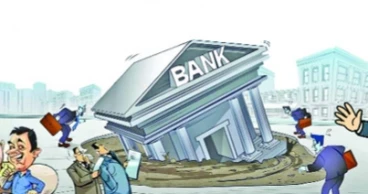
In a major financial intervention, the government has earmarked Tk 40,000 crore in the proposed national budget for FY 2026-27 to bail out and stabilize the struggling banking sector.
The massive financial package comes as a desperate measure to salvage several weak and distressed commercial banks and Non-Bank financial Institutions (NBFIs) currently grappling with severe liquidity crunches, rising non-performing loans (NPLs), and eroded capital adequacy.
According to Ministry of Finance sources, the allocation will be utilized to inject fresh capital, stabilize liquidity frameworks, and restore public confidence in the financial system. Economists and sector experts view this as one of the largest state-backed banking rescue operations in the country’s history.
The decision arrives at a critical juncture for Bangladesh’s economy. Recent central bank evaluations have flagged multiple commercial banks—particularly state-owned entities and several state-connected private sector Islami banks—as heavily "vulnerable."
According to financial reports, gross non-performing loans (NPLs) across the banking sector have spiked significantly over the past couple of years, bringing the system-wide Capital Adequacy Ratio down to precariously low levels. This capital erosion has effectively crippled the lending capacity of weaker banks, forcing the government to step in with taxpayer-funded fiscal support.
While the exact operational modalities are still being finalized, the broad framework outlines a phased recapitalization plan. The funds are expected to be routed through Bangladesh Bank to provide targeted capital injections and emergency liquidity lines to commercial institutions categorized under the "weak bank" list.
"The fundamental goal is to protect the interests of ordinary depositors and prevent a systemic collapse of the financial sector," said in the budget speech.
"However, this cash injection will be tied to strict conditionalities, including institutional restructuring and aggressive loan recovery targets,” according to the budget document.
1 month ago

Shopping malls, markets to stay open until 9pm
The government has decided to allow shopping malls, markets and retail shops across the country to remain open until 9pm from June 12, easing restrictions imposed earlier as part of power-saving measures.
The Power Division issued a notification on Thursday saying that the revised operating hours would be from 11am to 9pm.
Earlier, under a government decision that took effect on June 1, shopping malls, markets and shops were required to close by 7pm instead of 10pm to help manage electricity consumption.
According to the latest directive, the new schedule will also apply to fairs, trade fairs and cultural events currently being held or scheduled across the country.
However, restaurants, hospitals, pharmacies and other essential services will remain outside the purview of the restriction.
The Power Division also instructed the relevant authorities to ensure that all billboards switch off their lights by 9pm.
In addition, organisers of fairs, trade fairs and cultural programmes have been directed to conclude their activities by 9pm.
The government had introduced earlier restrictions amid efforts to ensure efficient electricity use and maintain a stable power supply during periods of high demand.
The latest decision comes as authorities adjust the measures in light of the prevailing power situation.
1 month ago

Gold prices drop to Tk 2.18 lakh per bhori after fresh cut
Prices of gold in Bangladesh have been reduced for the fourth consecutive time, with the Bangladesh Jeweller’s Association (BAJUS) cutting the rate of 22-carat gold by Tk 4,432 per bhori (11.664 grams) to Tk 218,350.
In a notice issued on Thursday morning, the trade body said the new prices took effect from 10:00am.
It attributed the latest adjustment to a decline in the price of pure gold in the local market, prompting it to revise gold rates after considering the overall market situation.
Under the new pricing structure, 21-carat gold will cost Tk 208,436 per bhori, while the price of 18-carat gold has been set at Tk 178,692 per bhori. The price of gold produced under the traditional method has been fixed at Tk 145,508 per bhori.
The latest reduction comes just a day after BAJUS lowered gold prices by Tk 6,591 per bhori on Wednesday, setting the price of 22-carat gold at Tk 222,782 per bhori.
Gold prices have declined in eight of the last 10 adjustments made by BAJUS. During the latest streak of four consecutive cuts, the price of 22-carat gold has fallen by a cumulative Tk 19,771 per bhori.
So far in 2026, BAJUS has revised gold prices 73 times. Of those adjustments, prices were increased on 37 occasions and reduced 36 times.
Alongside gold, it also announced a fresh reduction in silver prices.
The price of 22-carat silver has been cut by Tk 58 per bhori to Tk 4,841.
The rate for 21-carat silver has been set at Tk 4,607 per bhori, while 18-carat silver will sell at Tk 3,966 per bhori. Silver produced under the traditional method will cost Tk 2,974 per bhori.
Silver prices have been adjusted 44 times so far this year, with 22 increases and 22 decreases recorded during the period.
1 month ago

Depositors’ forum issues 24-hour ultimatum over Islami Bank board chief removal
The "Islami Bank Conscious Depositors Forum" on Wednesday submitted a memorandum to the Finance Minister demanding the immediate removal of the bank’s current board Chairman, Md. Khurshid Alam and issued a 24-hour ultimatum to meet their demands.
The forum warned that if their demands are not met within the deadline, they will convene an emergency central committee meeting on Thursday to announce more intensive countrywide programme.
Speaking to journalists near the Jatiya Press Club, the convener of the forum, Professor Nur Un-Nabi, stated that a delegation submitted the memorandum to the Ministry of Finance.
"Our core demands submitted to the ministry include the immediate removal of the illegal chairman of Islami Bank and the recovery of laundered funds from those who systematically looted the institution," Prof. Nabi said.
He further added, "If our demands are ignored by today, we will unite the bank's three crore clients to launch a massive mass movement that will compel both the government and the Bangladesh Bank Governor to ensure the chairman’s removal."
Earlier in the day, as part of their ongoing agitation which has crossed over a week, protesters marched through the streets before blocking the main thoroughfare connecting Purana Paltan to Gulistan.
The brief blockade caused traffic disruptions in the commercial hub before the leaders instructed the crowds to clear the road following the submission of the memorandum.
The depositors’s forum have been demonstrating continuously against the central bank's decision to appoint former Deputy Governor Khurshid Alam to the top post, alleging that the appointment safeguards the interests of corporate looters rather than general depositors.
1 month ago
Chinese proposal on alternative to SWIFT to ease dependence on dollar welcomed
Bangladesh Bank (BB) has taken a positive stance regarding a proposal from the state-owned Export-Import (Exim) Bank of China to utilize alternative financial infrastructures—specifically the Cross-Border Interbank Payment System (CIPS) and so-called 'Panda bonds' —to reduce over-reliance on the US dollar in international trade.
The issue was discussed in detail during a high-level meeting between the central bank and a Chinese delegation on Tuesday (June 9). Following the talks, central bank officials on Wednesday stated that Bangladesh Bank has no policy objections if any domestic commercial bank wishes to integrate with the CIPS network.
The possibility of raising funds through issuing Panda bonds—yuan-denominated bonds sold in China's domestic market by foreign issuers—was also discussed during the meeting.
According to a senior official of Bangladesh Bank, CIPS functions as an international transaction infrastructure, much like the SWIFT network.
"Having more transaction channels in international trade yields greater opportunities for business. Commercial banks are free to join this platform on their own initiative," the official said, adding that no regulatory barriers have been identified so far.
Experts view this development as a significant strategic opportunity for Bangladesh amid changing geopolitical dynamics in the global financial architecture and a growing worldwide push for "de-dollarization" following Western sanctions on several countries.
Financially, China remains Bangladesh’s largest source of imports, with annual bilateral trade accounting for an import volume of approximately US$20 billion to $25 billion from China. Settling a portion of these transactions in Chinese currency (Yuan/Renminbi) via CIPS could significantly ease the pressure on Bangladesh’s greenback reserves.
Economists, however, note that CIPS or Panda bonds are not standalone magical solutions. Their long-term strategic efficacy for Bangladesh will fundamentally rely on the depth of future Bangladesh-China trade, direct investment, and reciprocal financial cooperation.
1 month ago

REHAB urges growth-friendly housing policy ahead of FY27 budget
With the national budget for fiscal year 2026-27 set for announcement, the Real Estate and Housing Association of Bangladesh (REHAB) has called on the government to treat the housing sector as a growth engine rather than a revenue extraction target.
It said high taxes, steep registration costs and double-digit mortgage rates are pricing out middle-income families and slowing a sector linked to some 269 downstream industries.
In a press release on Wednesday, REHAB President Ali Afzal outlined a package of demands the association wants reflected in the upcoming budget, centring on single-digit interest rates on home loans, reduced flat registration and stamp duty charges, a dedicated housing credit fund for middle-income borrowers, and rationalised taxes on construction materials.
“We are not asking for special privileges. We want a policy environment that makes housing accessible to ordinary people while keeping an economically vital sector functioning,” Afzal said.
The REHAB President pushed back against the perception that the housing sector primarily serves developers' interests, arguing that a single apartment transaction sets off a chain reaction across steel, cement, glass, ceramics, electrical equipment, transport, banking, insurance and architectural services.
“When housing moves, industry moves, employment grows, revenue rises and the broader economy gains momentum,” he said, describing the sector's cascading economic impact as a “multiplier effect.”
“If registration costs are brought to a rational level, the volume of transactions will increase. The government will collect more revenue from a larger number of deals even at a lower rate,” he said. “Revenue will not fall, it will rise.”
Afzal described housing as a basic need, not a luxury, and said current double-digit lending rates have pushed home ownership beyond the reach of many middle-income families whose loan instalments already strain household budgets.
He called for a dedicated housing credit fund offering long-term loans on easy terms specifically for middle-income borrowers, a measure he framed as both social policy and economic stimulus.
On taxes affecting construction inputs, Afzal noted that rising prices for steel, cement, glass and ceramics ultimately land on the buyer, eroding affordability.
Rationalising the tax structure on these materials, he argued, would bring down construction costs and widen access to housing.
Asked about the longstanding proposal to allow undisclosed funds into the housing sector, Afzal acknowledged it as a short-term measure to bring idle capital into productive use, but said the durable solution lies in a fair tax regime where rates are reasonable, compliance is simple and people are motivated to declare income voluntarily.
“When the tax burden is excessive, people seek ways to evade. But when rates are rational, both revenue and compliance improve,” he said.
With the budget due imminently, Afzal said REHAB remains hopeful, noting that the budgetary process allows for stakeholder input and amendments even after the initial parliamentary presentation.
“Budget day is not the end of the conversation,” he said. “We remain positive until the final passage.”
1 month ago