World-Business

Amazon confirms 16,000 job cuts after internal email sent in error
US tech giant Amazon has confirmed it will lay off about 16,000 employees, hours after an internal email detailing the cuts was mistakenly sent to staff.
The email, seen by the BBC, was circulated late Tuesday and referred to job losses affecting employees in the United States, Canada and Costa Rica as part of efforts to streamline operations and strengthen the company. The message was quickly withdrawn, suggesting it had been shared accidentally.
Amazon formally announced the job reductions early Wednesday, saying the move is aimed at cutting bureaucracy and improving efficiency.
Beth Galetti, Amazon’s senior vice president of people experience and technology, said the company was not planning frequent, large-scale layoffs, referring to the 14,000 corporate job cuts announced in October. She noted that while many teams completed restructuring last year, others finalized their changes only recently.
Amazon employs about 1.5 million people worldwide, including roughly 350,000 in corporate roles. The company has not specified which divisions or countries will be most affected by the latest layoffs, reports BBC.
The accidental email, reportedly linked to an internal project codenamed “Project Dawn,” outlined Amazon’s ongoing effort to reduce management layers, increase accountability and move faster to meet customer needs. It acknowledged the difficulty of the decisions while positioning the changes as necessary for future growth.
Current and former employees said the layoffs had been anticipated for weeks, with expectations that total job cuts could reach around 30,000 through multiple rounds extending into the coming months. Affected workers were encouraged to apply for other openings within Amazon, though opportunities were limited, while severance packages were offered based on tenure.
Since founder Jeff Bezos stepped down as chief executive four years ago, his successor Andy Jassy has overseen several rounds of cost-cutting and introduced a stricter workplace culture, including a mandatory five-day office workweek. Amazon has also intensified efforts to curb expenses across its operations.
Earlier this week, the company announced plans to shut its remaining Amazon Fresh and Amazon Go grocery stores while expanding its Whole Foods Market business.
6 months ago
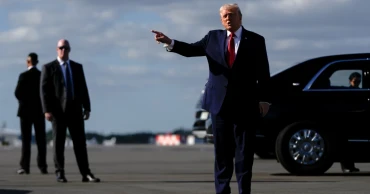
Trump threatens 10% tariff on 8 European countries over Greenland stance
President Donald Trump said Saturday that he would charge a 10% import tax starting in February on goods from eight European nations because of their opposition to American control of Greenland, setting up a potentially dangerous test of U.S. partnerships in Europe.
Denmark, Norway, Sweden, France, Germany, the United Kingdom, the Netherlands and Finland would face the tariff, Trump said in a social media post while at his golf club in West Palm Beach, Florida. The rate would climb to 25% on June 1 if no deal was in place for “the Complete and Total purchase of Greenland” by the United States, he said.
The Republican president appeared to indicate that he was using the tariffs as leverage to force talks with Denmark and other European countries over the status of Greenland, a semiautonomous territory of NATO ally Denmark that he regards as critical to U.S. national security.
“The United States of America is immediately open to negotiation with Denmark and/or any of these Countries that have put so much at risk, despite all that we have done for them,” Trump said on Truth Social.
The tariff threat could mark a problematic rupture between Trump and America's longtime NATO partners, further straining an alliance that dates to 1949 and provides a collective degree of security to Europe and North America. Trump has repeatedly tried to use trade penalties to bend allies and rivals alike to his will, generating investment commitments from some nations and pushback from others, notably China.
Trump is scheduled to travel on Tuesday to the World Economic Forum in Davos, Switzerland, where he likely will run into the European leaders he just threatened with tariffs that would start in little more than two weeks.
French President Emmanuel Macron pushed back against Trump in a social media post that seemed to equate the threat to Russian leader Vladimir Putin's war in Ukraine.
“No intimidation or threats will influence us, whether in Ukraine, Greenland or anywhere else in the world when we are faced with such situations,” Macron said in a translated post on X. “Tariff threats are unacceptable and have no place in this context. Europeans will respond in a united and coordinated manner.”
There are immediate questions about how the White House could try to implement the tariffs because the EU is a single economic zone in terms of trading, according to a European diplomat who was not authorized to comment publicly and spoke on the condition of anonymity. It was unclear, too, how Trump could act under U.S. law, though he could cite emergency economic powers that are currently subject to a U.S. Supreme Court challenge.
Trump has long said he thinks the U.S. should own the strategically located and mineral-rich island, which has a population of about 57,000 and whose defense is provided by Denmark. He intensified his calls a day after the military operation to oust Venezuela’s Nicolás Maduro earlier this month.
The president indicated the tariffs were retaliation for what appeared to be the deployment of s ymbolic levels of troops from the European countries to Greenland, which he has said was essential for the “Golden Dome” missile defense system for the U.S., He also has argued that Russia and China might try to take over the island.
The U.S. already has access to Greenland under a 1951 defense agreement. Since 1945, the American military presence in Greenland has decreased from thousands of soldiers over 17 bases and installations to 200 at the remote Pituffik Space Base in the northwest of the island, the Danish foreign minister has said. That base supports missile warning, missile defense and space surveillance operations for the U.S. and NATO.
Resistance has steadily built in Europe to Trump's ambitions even as several countries on the continent agreed to his 15% tariffs last year in order to preserve an economic and security relationship with Washington.
‘Important for the whole world’
Earlier Saturday, hundreds of people in Greenland's capital, Nuuk, braved near-freezing temperatures, rain and icy streets to march in a rally in support of their own self-governance.
Thousands of people also marched through Copenhagen, many of them carrying Greenland’s flag. Some held signs with slogans such as “Make America Smart Again” and “Hands Off.”
“This is important for the whole world,” Danish protester Elise Riechie told The Associated Press as she held Danish and Greenlandic flags. “There are many small countries. None of them are for sale.”
The rallies occurred hours after a bipartisan delegation of U.S. lawmakers, while visiting Copenhagen, sought to reassure Denmark and Greenland of their support.
NATO training exercises
Danish Maj. Gen. Søren Andersen, leader of the Joint Arctic Command, told the AP that Denmark does not expect the U.S. military to attack Greenland, or any other NATO ally, and that European troops were recently deployed to Nuuk for Arctic defense training.
He said the goal is not to send a message to the Trump administration, even though the White House has not ruled out taking the territory by force.
“I will not go into the political part, but I will say that I would never expect a NATO country to attack another NATO country,” he said from aboard a Danish military vessel docked in Nuuk. “For us, for me, it’s not about signaling. It is actually about training military units, working together with allies.”
The Danish military organized a planning meeting Friday in Greenland with NATO allies, including the U.S., to discuss Arctic security on the alliance’s northern flank in the face of a potential Russian threat. The Americans were also invited to participate in Operation Arctic Endurance in Greenland in the coming days, Andersen said.
In his 2½ years as a commander in Greenland, Andersen said that he hasn't seen any Chinese or Russian combat vessels or warships, despite Trump saying that they were off the island's coast.
But in the unlikely event of American troops using force on Danish soil, Andersen confirmed that Danish soldiers have an obligation to fight back.
‘Almost no better' ally to US than Denmark
Trump has contended that China and Russia have their own designs on Greenland and its vast untapped reserves of critical minerals. He said recently that anything less than the Arctic island being in U.S. hands would be “unacceptable.”
The president has seen tariffs as a tool to get what he wants without having to resort to military actions. At the White House on Friday, he recounted how he had threatened European allies with tariffs on pharmaceuticals and he teased the possibility of doing so again.
“I may do that for Greenland, too,” Trump said.
After Trump followed through, Rep. Don Bacon, R-Neb., said "Congress must reclaim tariff authorities” so that they are not used solely at a president's discretion.
European leaders have said it is only for Denmark and Greenland to decide on matters concerning the territory, and Denmark said this week that it was increasing its military presence in Greenland in cooperation with allies.
“There is almost no better ally to the United States than Denmark,” said Sen. Chris Coons, D-Del., while visiting Copenhagen with other members of Congress. “If we do things that cause Danes to question whether we can be counted on as a NATO ally, why would any other country seek to be our ally or believe in our representations?”
6 months ago
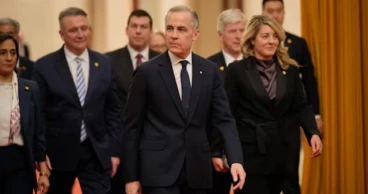
Canada to cut tariff on Chinese EVs in exchange for lower duties on farm exports
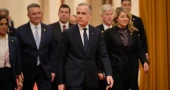
Canada has agreed to reduce its 100% tariff on Chinese electric vehicles in return for sharp cuts to Chinese duties on key Canadian farm products, Prime Minister Mark Carney said Friday.
Speaking after two days of talks with Chinese leaders, Carney said the deal will initially allow up to 49,000 Chinese-made EVs to enter the Canadian market. In exchange, China will lower its tariff on Canadian canola seeds from about 84 percent to around 15 percent.
The announcement came as Canada and China signaled a broader effort to reset relations after years of tension.
Carney said his visit, the first by a Canadian prime minister in eight years, marked “a historic and productive” step toward rebuilding ties and adapting cooperation to new global realities. He called for closer collaboration in agriculture, energy and finance.
Chinese President Xi Jinping said talks since an initial meeting last October had helped open a new chapter in bilateral relations and that Beijing was willing to continue working to improve ties.
Venezuela’s new leader signals oil sector reforms and warmer US ties
Relations between the two countries deteriorated in recent years after Canada followed the United States in imposing steep tariffs on Chinese electric vehicles, steel and aluminum under former prime minister Justin Trudeau. China retaliated with heavy duties on Canadian canola oil, meal and seeds, as well as pork and seafood, effectively shutting Canadian canola out of the Chinese market.
The renewed engagement comes as both countries face economic pressure from US President Donald Trump’s America-first trade policies, which have disrupted global commerce and hit both the Canadian and Chinese economies.
Carney said his government is seeking to build an economy less dependent on the United States and to diversify trade partnerships during a period of global trade disruption.
After leaving China on Saturday, Carney will visit Qatar before heading to Switzerland for the World Economic Forum, where he is expected to meet business leaders and investors to promote trade and investment.
6 months ago

Asian shares mixed as US futures rise after Wall Street stabilises
Asian shares were mixed Friday after Wall Street broke a two-day losing streak and edged back toward record levels, helped by advances for Big Tech companies like Nvidia.
U.S. futures advanced and oil prices slipped.
Tech shares regained momentum after Taiwan Semiconductor Manufacturing Co., a major supplier to the industry, reported strong profits and investment plans. TSMC gained 2.7% early Friday and Taiwan's benchmark Taiex was up 2%.
The frenzy around AI has sent Nvidia and other superstar stocks to dizzying heights, stirring criticism that their prices had shot too high. Nvidia rose 2.1% after TSMC’s Chief Financial Officer Wendell Huang said it’s seeing “continued strong demand” in an encouraging signal for the entire AI industry.
TSMC’s stock that trades in the United States rose 4.4% on Thursday.
The gains also followed the signing of a U.S.-Taiwan trade deal involving $250 billion in new investments by Taiwan’s semiconductor and tech companies in the U.S. In exchange, the Trump administration will cut tariffs on Taiwanese goods. The deal aims to establish a strategic economic partnership and upgrade U.S. industrial infrastructure.
In Tokyo, the Nikkei 225 edged 0.1% lower to 54,062.28, while Hong Kong's Hang Seng gave up 0.3% to 26,851.69. The Shanghai Composite index lost 0.2% to 4,103.45.
China is due to report its economic growth data for 2025 on Monday.
Elsewhere in Asia, South Korea's Kospi rose 0.4% to 4,814.21. The benchmark has been trading at record highs for weeks, helped by a recovery in confidence in AI-related shares.
In Australia, the S&P/ASX 200 was up 0.4% at 8,895.00. India's Sensex also rose 0.4%.
Wall Street steadied on Thursday as stocks in the artificial-intelligence industry bounced back.
The S&P 500 rose 0.3% to 6,944.47. The Dow Jones Industrial Average added 0.6% to 49.442.44, and the Nasdaq composite rose 0.2% to 23,530.02.
Easing oil prices also helped to calm investors' jitters.
Early Friday, a barrel of benchmark U.S. crude cost $58.96, down 12 cents from a day earlier. It sank 4.6% on Thursday after Trump said he had heard “on good authority” that plans for executions in Iran had stopped amid widespread protests against the country’s leadership.
Brent crude, the international standard, fell 16 cents to $63.60 per barrel. It dropped 4.1% on Thursday.
Financial markets took Trump's comments as a signal that tensions flaring above some of the world’s largest oil deposits could ease, which in turn could lower the possibility of disruptions to oil supplies.
Earnings reporting season for big U.S. companies continued to pick up pace, meanwhile, with several more big financial companies delivering their results for the last three months of 2025.
BlackRock, the giant that’s now overseeing more than $14 trillion in investments, rose 5.9% after reporting stronger profit and revenue than analysts expected.
Encouraging reports on the U.S. economy contributed to the upbeat mood.
One said fewer workers applied for unemployment benefits last week in an indication layoffs may be slowing. Other reports said manufacturing was significantly stronger in the mid-Atlantic region and in New York state than economists had forecast.
The stronger-than-expected data on the U.S. economy helped stocks of smaller companies to lead the market. Their profits can be tied more closely to the strength of the U.S. economy than their bigger, multinational rivals, and the Russell 2000 index rose 0.9%.
In other dealings early Friday, the U.S. dollar fell to 158.27 Japanese yen from 158.63 yen.
The euro rose to $1.1610 from $1.1609.
6 months ago
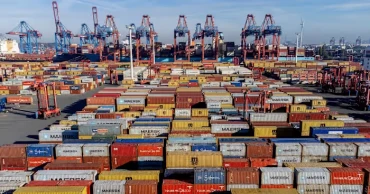
Germany's troubled economy shows modest growth after two years of shrinkage
Germany’s economy returned to modest growth last year after two consecutive years of contraction, official data showed Thursday, raising expectations that government investment in infrastructure and defense could help break years of stagnation.
The country’s gross domestic product (GDP) grew by 0.2% in 2025, driven by stronger consumer and government spending, while exports remained subdued due to tougher U.S. trade policies under President Donald Trump, the German Federal Statistical Office reported. This followed GDP contractions of 0.5% in 2024 and 0.9% in 2023.
“Germany’s export sector faced significant headwinds from higher U.S. tariffs, a stronger euro, and growing competition from China,” said Ruth Brand, head of the statistics office, in a statement.
Looking ahead, analysts expect slightly stronger growth this year as Chancellor Friedrich Merz’s government ramps up infrastructure spending to address years of underinvestment. Defense expenditure is also rising amid heightened security concerns following Russia’s invasion of Ukraine.
Read more: Germany to increase its funding contribution to Saidabad WTP Phase III project
Germany has faced extended economic stagnation since the COVID-19 pandemic. Rising energy costs from the Ukraine war, growing competition from China in key sectors such as automobiles and industrial machinery, higher tariffs on EU goods imposed by the U.S., and a stronger euro have all weighed on the export-driven economy. Structural challenges, including bureaucratic hurdles and a shortage of skilled labor, have also constrained growth.
Preliminary data indicate that the German economy expanded by 0.2% in the final quarter of 2025. A group of leading economists has projected 0.9% growth for 2026, though they caution that slower-than-expected government spending could limit the recovery.
6 months ago
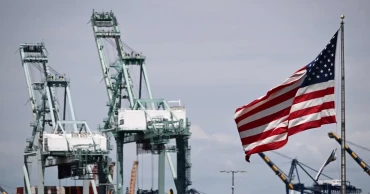
U.S. monthly trade deficit hits lowest level since 2009
U.S. trade deficit in goods and services in October 2025 saw a month-on-month decrease for the third consecutive month in a row and reached the lowest monthly trade gap since June 2009, according to data issued by the U.S. Department of Commerce on Thursday.
Driven by higher exports and lower imports in goods, the United States posted a 29.4 billion U.S.-dollar trade deficit in October 2025, down 39 percent from the previous month.
In particular, U.S. exports of goods and services grew 2.6 percent month on month to 302 billion dollars, while the imports of goods and services shrank 3.2 percent to 331.4 billion dollars.
U.S. exports of non-monetary gold and other precious metals increased by 6.8 billion dollars and 3.6 billion dollars, respectively, according to official data.
Meanwhile, U.S. imports of consumer goods dropped 14 billion dollars month on month due to a significant fall in imports of pharmaceutical preparations. The imports of industrial supplies and materials dipped by 2.7 billion dollars in the month, while the imports of capital goods increased by 6.8 billion dollars.
Moreover, the U.S. trade deficit in the first ten months of 2025 added 56 billion dollars or 7.7 percent from the same period of 2024.
6 months ago

Crypto bettor earns $436,000 ahead of Maduro capture
An anonymous cryptocurrency trader made more than $436,000 by betting on the capture of Venezuelan President Nicolás Maduro shortly before U.S. authorities officially announced the operation, raising concerns over possible use of inside information.
Data from Polymarket, a crypto-based prediction platform, showed a sharp rise in bets that Maduro would be removed from power just hours before U.S. President Donald Trump confirmed on Saturday that the Venezuelan leader was in U.S. custody. One account, created last month, placed four Venezuela-related bets worth about $32,500 and earned nearly half a million dollars.
The odds of Maduro’s exit stood at just 6.5% on Friday afternoon but climbed rapidly overnight before Trump’s announcement on Truth Social. Polymarket has not commented on the unusual trading activity.
Financial reform advocates said the trade showed signs of insider knowledge. Following the incident, a U.S. lawmaker introduced a bill to bar government employees from trading on prediction markets using nonpublic information.
Prediction markets have grown rapidly in the United States but face limited regulation compared to traditional stock markets.
With inputs from BBC
6 months ago
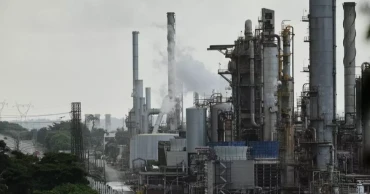
Oil edges up, gold jumps after Maduro arrest
Oil prices ticked higher in early Asian trading on Monday, while precious metals surged as investors reacted cautiously to the US capture of Venezuelan President Nicolás Maduro in a weekend operation.
Equity markets opened mostly higher across the region, with benchmark indices in Japan and South Korea extending record-setting runs. US futures were mixed after modest gains on Wall Street late last week.
In early trading, US benchmark crude added 12 cents to $57.44 a barrel, while Brent crude rose 14 cents to $60.89 a barrel.
Venezuela’s oil industry, weakened by years of sanctions and underinvestment, remains in poor shape. Analysts say it could take years and substantial capital to significantly lift output, though some believe production could eventually double or even triple from its current level of around 1.1 million barrels a day.
The US action sent ripples through global markets, boosting demand for safe-haven assets. Gold climbed 2 percent, while silver and platinum each surged about 6 percent.
Asian share markets posted strong gains. Japan’s Nikkei 225 jumped 2.9 percent to 51,777.99 in its first session after the year-end break. South Korea’s Kospi rose 2.3 percent to 4,406.55, adding to a record close on Friday. Australia’s S&P/ASX 200 edged up 0.1 percent to 8,735.60, while Taiwan’s benchmark index advanced 2.1 percent.
In currency trading, the US dollar strengthened 0.2 percent to 157.15 yen, while the euro slipped 0.2 percent to $1.1702.
On Friday, US stocks closed slightly higher in subdued trading. The S&P 500 rose 0.2 percent to 6,858.47, building on gains of more than 16 percent in 2025. The Dow Jones Industrial Average added 0.7 percent to 48,382.39, while the Nasdaq composite dipped marginally to 23,235.63, weighed down by losses in major technology stocks including Microsoft and Tesla.
Furniture retailers gained after President Donald Trump delayed higher tariffs on upholstered furniture, with shares of RH and Wayfair rising sharply.
The first full trading week of the new year will bring several key US economic reports, including updates on the services sector, consumer sentiment and the labour market. Investors are watching closely for clues on how the US economy ended 2025 and what lies ahead in 2026.
6 months ago
US sanctions 4 Venezuelan oil firms, 4 tankers in Maduro pressure campaign
The United States on Wednesday imposed sanctions on four Venezuelan oil companies and added four more oil tankers to its list of blocked property, accusing them of supporting President Nicolás Maduro’s government through a shadow fleet.
The move is part of the Trump administration’s sustained campaign to pressure Maduro. U.S. authorities have also seized two tankers off Venezuela’s coast, pursued another vessel, and carried out a series of strikes targeting suspected drug-smuggling boats in the Caribbean and eastern Pacific.
The attacks announced Wednesday raised the reported death toll to at least 110 since early September. Last week, the CIA reportedly conducted a drone strike at a Venezuelan docking area used by drug cartels, marking the first known operation directly on Venezuelan soil.
The Treasury Department’s Office of Foreign Assets Control designated the ships Nord Star, Lunar Tide, Rosalind, and Della, along with their ownership companies. State Department spokesman Tommy Pigott said the sanctions are intended to “disrupt the network supporting Maduro and his illegitimate regime.”
Treasury Secretary Scott Bessent emphasized that the U.S. will prevent Maduro’s government from profiting from oil exports while allegedly trafficking drugs into the country. President Trump has called for a blockade of sanctioned Venezuelan tankers and demanded the return of assets previously seized from U.S. oil firms.
Source: AP
7 months ago
Asian shares trade mixed with some exchanges closed ahead of the New Year
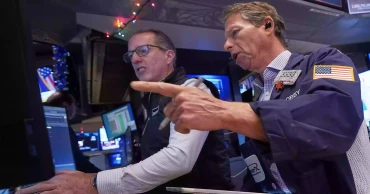
Asian stock markets showed a mixed performance on Wednesday, with several major exchanges closed for year-end and New Year holidays.
Markets in Tokyo and Seoul were shut, while trading continued elsewhere in the region. In China, Hong Kong’s Hang Seng Index fell 0.9% to 25,630.54, whereas the Shanghai Composite edged up 0.1% to 3,969.75. Taiwan’s Taiex advanced 0.9% to 28,963.60. Australia’s benchmark S&P/ASX 200 in Sydney slipped marginally, falling less than 0.1% to 8,714.30.
Tokyo markets are scheduled to remain closed through Friday for New Year holidays and will reopen on Monday, while South Korean markets will also be closed on Thursday.
On Wall Street, trading continued Wednesday ahead of a holiday closure on Thursday, though activity remained subdued. The S&P 500 slipped 0.1% to 6,894.24, though it remains on course for an annual gain exceeding 17%. The Dow Jones Industrial Average lost 0.2% to 48,367.06, and the Nasdaq composite declined 0.2% to 23,419.08.
Technology stocks continued to carry significant influence. Nvidia and Apple posted modest declines, while Meta Platforms gained 1.1% following news of its acquisition of artificial intelligence startup Manus.
Commodities saw stronger moves, with gold rising 1.4% and silver surging nearly 11%. Copper climbed 4.4% and is up more than 40% for the year on strong demand tied to global energy needs and AI-related infrastructure.
In energy markets, oil prices edged slightly lower, while U.S. Treasury yields were mixed amid expectations that the Federal Reserve will keep interest rates unchanged at its January meeting.
Source: AP
7 months ago