World-Business
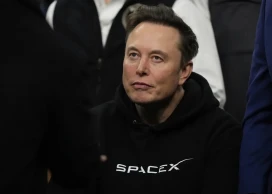
Musk’s turbulent year: From plunging profits and boycotts to a trillion-dollar payday
For most business leaders, a year marked by plunging profits, lawsuits, boycotts, and federal investigations would spell disaster. But Elon Musk is not most business leaders.
Despite a string of setbacks, the world’s richest man has become even wealthier this year — and shareholders at Tesla could soon make him richer still. The electric carmaker is set to vote next month on a proposed trillion-dollar pay package for Musk, betting that his bold vision for a “robot army” and other futuristic technologies will pay off, even as some of his earlier promises remain unmet.
“The genius of Elon Musk is keeping investors focused on what the company might look like in five or ten years — while ignoring very near-term challenges,” said Garrett Nelson of CFRA Research. Zacks Investment’s Brian Mulberry put it more bluntly: “Your average CEO would likely not survive this.”
Musk began the year with a controversial government role as head of President Donald Trump’s Department of Government Efficiency (DOGE), pledging to slash $2 trillion in spending — a goal he later halved. DOGE ultimately claimed $240 billion in savings, though experts question whether those cuts were sustainable, with many essential roles now being refilled.
“He cuts without a plan, without regard to function,” said Elaine Kamarck, a senior fellow at the Brookings Institution, noting that 17,000 government positions are now being reinstated.
Musk’s cost-cutting tactics have also resurfaced in his management of X, formerly Twitter. In recent months, he quietly settled lawsuits brought by about 2,000 former employees and executives who alleged wrongful termination or unpaid severance. The settlements’ total cost remains undisclosed but could amount to hundreds of millions of dollars for a company still struggling with a collapse in advertising revenue.
Adding to his woes, Tesla reported a 37% plunge in third-quarter earnings on Wednesday. While vehicle sales rose 6% as customers rushed to take advantage of an expiring tax credit, overall demand is expected to drop sharply, as consumers turned off by Musk’s polarizing political views continue to boycott the brand.
A year ago, Musk had projected sales growth of up to 30%.
Despite the decline, Tesla shares have rebounded in recent months, doubling since May after Musk’s much-publicized exit from DOGE. The stock is now up nearly 9% for the year, boosting his personal fortune by $62 billion to $483 billion, according to Forbes.
Investors appear willing to overlook short-term turbulence, focusing instead on Musk’s next ventures — from driverless robotaxis to home and factory robots. Yet many of these projects remain in early stages. Tesla’s robotaxi service, operating in Austin and San Francisco, still requires human “safety monitors,” and regulators are scrutinizing its self-driving technology. U.S. authorities have opened four investigations this year, including one into Tesla’s failure to promptly report accidents involving its software.
Musk has a history of overpromising and missing deadlines, only to rebound later. Investors who endured Tesla’s production struggles in 2018 eventually saw the stock soar as the Model 3 found success.
“He frequently teeters on the edge of disaster,” said Nancy Tengler, a longtime Tesla investor. “And then he pulls back just in the nick of time.”
Even so, analysts warn that expectations are sky-high. While the average S&P 500 company trades at 24 times next year’s projected earnings, Tesla’s valuation stands at a staggering 250 times — reflecting both boundless faith in Musk’s vision and the enormous risks if he falters.
For Elon Musk, a year that would have broken most CEOs is shaping up to be another paradoxical triumph — a turbulent yet spectacular ride that only he could pull off.
Source: AP
9 months ago

Oil prices surge as Trump sanctions Russian giants; Wall Street opens mixed
Wall Street opened Thursday with modest, mixed trading, while oil prices spiked more than 5% after U.S. President Donald Trump announced sweeping sanctions on Russia’s top energy companies.
Futures for the S&P 500 and Nasdaq inched up less than 0.1%, while the Dow Jones industrials slipped about 0.1%. The sanctions on Rosneft and Lukoil aim to pressure Russian President Vladimir Putin into peace talks and help end Moscow’s war on Ukraine.
In Europe, leaders meeting in Brussels were preparing to approve additional sanctions on Russia and move forward with plans to use Moscow’s frozen assets to fund Ukraine’s war effort and stabilize its economy for the next two years.
U.S. benchmark crude jumped $3.13 to $61.63 per barrel, and Brent crude rose the same amount to $65.72.
Corporate earnings weighed on markets. Tesla shares fell 3.2% after reporting a 37% year-over-year drop in quarterly profit — its fourth straight decline. CEO Elon Musk downplayed car sales, instead promoting the company’s robotaxi service, AI products, and humanoid robot line.
IBM tumbled 6.8% after showing slower cloud revenue growth, despite beating forecasts. Molina Healthcare plunged more than 20% after missing earnings expectations and cutting its annual profit outlook amid high costs.
Across Europe, Germany’s DAX slipped 0.3%, while London’s FTSE 100 gained 0.6% and France’s CAC 40 rose 0.4%.
In Asia, markets were mixed as China wrapped up a key Communist Party meeting outlining its five-year economic strategy. Hong Kong’s Hang Seng gained 0.7% to 25,967.98, and the Shanghai Composite added 0.2% to 3,922.41, amid reports of tighter U.S. export controls on China.
Japan’s Nikkei 225 fell 1.4% to 48,641.61 after reports that Prime Minister Sanae Takaichi is planning a stimulus package exceeding 14 trillion yen ($92 billion). SoftBank shares dropped over 4% after announcing bond plans to fund AI investments.
The yen weakened as Takaichi signaled support for low interest rates, with the dollar rising to 152.75 yen from 151.94.
South Korea’s Kospi fell 1% to 3,845.56 amid slow progress in U.S. trade talks, while Australia’s S&P/ASX 200 edged up 0.1%. Taiwan’s Taiex slipped 0.4%, and India’s Sensex rose 0.6%.
Gold prices rebounded 1.6% to $4,131.80 after two days of declines from record highs.
9 months ago

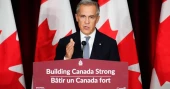
Carney vows to double Canada’s non-U.S. exports, says country ‘can’t rely on one partner’
Prime Minister Mark Carney has set a goal to double Canada’s non-U.S. exports within the next decade, saying that rising American tariffs are undermining investment and threatening Canadian jobs.
Speaking ahead of his government’s budget release on November 4, Carney said Wednesday that Canada’s long-standing economic dependence on the United States has turned from a strength into a vulnerability.
“The jobs of workers in our industries most affected by U.S. tariffs — autos, steel, lumber — are under threat. Our businesses are holding back investments, restrained by the pall of uncertainty that is hanging over all of us,” Carney said.
U.S. President Donald Trump has imposed tariffs on several Canadian sectors and recently claimed Canada could become “the 51st state,” remarks that have further strained relations between the two neighbors.
In a televised address, Carney said the decades-long process of deepening economic ties between Ottawa and Washington has effectively ended.
“The U.S. has fundamentally changed its approach to trade, raising its tariffs to levels last seen during the Great Depression,” he said. “We have to take care of ourselves because we can’t rely on one foreign partner.”
Japan's exports and imports grow in September despite Trump's tariffs
While tensions have eased slightly as Carney pursues a new trade deal with Washington, tariffs continue to hit key industries such as steel, aluminum, autos, and lumber. More than 75% of Canada’s exports currently go to the United States.
Carney said Canada is “re-engaging with the global giants India and China” in an effort to diversify its trade.
Canada remains a vital supplier of energy and resources to the U.S., providing 60% of its crude oil imports, 85% of its electricity imports, and large shares of steel, aluminum, and uranium. The country also holds 34 critical minerals and metals sought by the Pentagon for national security.
“Canada is an energy superpower,” Carney said, noting the country’s third-largest oil reserves and fourth-largest natural gas reserves globally.
The 2026 review of the Canada-U.S. free trade agreement is expected to further test the economic relationship between the two allies.
China’s economic growth slows to 4.8% in Jul–Sep amid tariffs, weak demands
“I will always be straight about the challenges we have to face and the choices we must make,” Carney said. “To be clear, we won’t transform our economy easily or in a few months — it will take some sacrifices and some time.”
Source: AP
9 months ago

Japan's exports and imports grow in September despite Trump's tariffs
Japan’s exports and imports both rose in September, driven by stronger trade with Asian markets even as U.S.-bound shipments declined under President Donald Trump’s tariff regime, government data showed Wednesday.
According to Japan’s Ministry of Finance, exports increased 4.2% year-on-year last month, supported by a 9.2% jump in shipments to Asia. Exports to China, Japan’s largest trading partner, climbed 5.8%, while exports to the U.S. plunged 13.3% — marking the sixth consecutive month of decline.
Auto exports to the U.S. were hit particularly hard, tumbling 24.2% in September. Japan’s automotive sector, led by manufacturers such as Toyota Motor Corp., remains a cornerstone of the national economy.
Imports also edged up 3.3% overall, including a 6% rise in imports from Asia and a 9.8% increase in goods coming from China.
The trade figures were released a day after Sanae Takaichi became Japan’s first female prime minister following a parliamentary vote. Known for her conservative stance and advocacy for higher public spending, Takaichi has pledged to boost wages and maintain an accommodative monetary policy to support economic growth.
Japan’s Nikkei surges 4.5% after ruling party picks ultra-conservative leader Sanae Takaichi
A weaker yen under such policies would benefit Japan’s major exporters by inflating overseas earnings when converted into domestic currency.
However, Takaichi faces political challenges, as her ruling Liberal Democratic Party and its coalition partners lack a majority in both houses of parliament.
President Donald Trump, who is scheduled to visit Japan later this month for talks with Takaichi, announced a new trade framework in July imposing a 15% tariff on Japanese goods — down from a previously proposed 25%. In return, Japan agreed to invest $550 billion in the U.S. and open its markets further to American cars and rice.
Source: AP
9 months ago

China’s economic growth slows to 4.8% in Jul–Sep amid tariffs, weak demands
China’s economy grew 4.8% year-on-year in the July–September quarter, marking its slowest pace in a year as trade tensions with the United States and subdued domestic demand weighed on activity.
The latest figures, released Monday, represent a decline from the 5.2% growth recorded in the previous quarter and the weakest performance since the third quarter of 2024. Over the first nine months of 2025, the world’s second-largest economy expanded at an average annual rate of 5.2%.
Despite higher U.S. tariffs imposed by President Donald Trump, Chinese exports remained resilient, buoyed by increased sales to other global markets. Exports to the U.S., however, plunged 27% in September compared to a year earlier, even as overall exports rose 8.3% — the strongest growth in six months.
Exports of electric vehicles doubled year-on-year in September, while domestic passenger car sales climbed 11.2%, slower than August’s 15% rise.
China’s slowdown has also been driven by government efforts to rein in price wars in industries such as autos, alongside a prolonged property market slump that continues to drag on consumer spending and investment. Residential property sales by value fell 7.6% in the January–September period, while industrial output rose 6.5% in September — the fastest pace since June. Retail sales growth, however, eased to 3%.
Taiwan’s TSMC reports nearly 40% jump in net profit on AI boom
S&P forecasts that new home sales will drop 8% in 2025 and another 6–7% in 2026. The World Bank expects China’s economy to grow 4.8% this year, slightly below the government’s target of “around 5%.”
China’s stock markets rose Monday, with Hong Kong’s Hang Seng Index gaining 2.3% and the Shanghai Composite up 0.5%.
Economists said Beijing may introduce more policy support to boost consumption and stabilize the property sector, with some anticipating an interest rate cut by year-end.
Source: AP
9 months ago

China’s Communist Party convenes key meeting to set five-year goals
China’s ruling Communist Party begins one of its most significant political meetings on Monday, as President Xi Jinping and top party leaders gather in Beijing to chart the nation’s development goals for the next five years.
The closed-door session, known as the fourth plenum, will run for four days to finalize China’s five-year blueprint for 2026–2030. The discussions come amid rising trade tensions with Washington and ahead of a possible meeting between Xi and U.S. President Donald Trump at a regional summit later this month.
About 370 members of the party’s central committee are expected to attend the meeting, which may also involve key personnel reshuffles. Details of the discussions will likely emerge only after the session ends.
Taiwan’s TSMC reports nearly 40% jump in net profit on AI boom
Economists say the new plan is expected to maintain continuity with previous ones, focusing on technological self-reliance, domestic consumption, and sustainable growth, as China grapples with property sector woes, slowing growth, and an aging population.
Xi is also likely to emphasize innovation and national stability as central to China’s long-term strategy.
Source: AP
9 months ago

Taiwan’s TSMC reports nearly 40% jump in net profit on AI boom
Taiwan Semiconductor Manufacturing Company (TSMC), the world’s largest computer chip maker, on Thursday reported a nearly 40% rise in net profit for the July-September quarter, driven by soaring demand for artificial intelligence applications.
TSMC posted a record net profit of 452.3 billion New Taiwan dollars ($15 billion), surpassing analysts’ expectations, while revenue rose 30% year-on-year. The company supplies major tech firms, including Apple and Nvidia.
To mitigate risks from China-U.S. trade tensions, TSMC is expanding its chip fabrication capacity in the United States and Japan. The company has pledged $100 billion in U.S. investments, including new factories in Arizona, in addition to a prior commitment of $65 billion.
US seizes $14 billion in bitcoin, charges Cambodian executive in massive crypto scam
“Demand for TSMC’s products remains robust,” analysts at Morningstar said. “Given the company’s market dominance, it is unlikely to be significantly affected by potential tariffs on shipments to U.S. customers. AI demand is expected to remain strong.”
Last month, U.S. Commerce Secretary Howard Lutnick suggested splitting global chip production equally between Taiwan and the United States — a proposal Taiwan rejected, as the island continues to host the bulk of global semiconductor manufacturing.
Source: AP
9 months ago

US seizes $14 billion in bitcoin, charges Cambodian executive in massive crypto scam
The United States has seized more than $14 billion worth of bitcoin and charged Cambodian businessman Chen Zhi, chairman of Prince Holding Group, in one of the world’s largest cryptocurrency fraud cases.
Prosecutors accused Chen and his associates of operating a massive “pig butchering” scam that exploited forced labor, defrauded investors, and laundered billions of dollars through luxury purchases — including yachts, private jets, and even a Picasso painting.
According to an indictment unsealed Tuesday in a Brooklyn federal court, Chen, 38, faces charges of wire fraud and money laundering conspiracy. The U.S. Treasury Department declared Prince Holding Group a transnational criminal organization, while U.S. and U.K. authorities imposed sanctions on the conglomerate, which has interests in real estate and finance.
Officials said Chen oversaw a vast cyberfraud empire, authorizing bribes, violence, and forced labor to sustain the operation. He allegedly boasted that his scam network generated up to $30 million daily.
U.S. Attorney Joseph Nocella described the case as “one of the largest investment fraud operations in history.” If convicted, Chen faces up to 40 years in prison. He remains at large.
Authorities said the U.S. could use the seized 127,271 bitcoins — currently worth about $113,000 each — to compensate victims.
Investigators revealed that Prince Holding Group built at least 10 compounds in Cambodia where trafficked workers were forced to run online scams targeting victims worldwide. The compounds, some linked to casinos and hotels, were heavily guarded and equipped with call centers controlling thousands of fake social media accounts.
Bitcoin surges past $118,000 for first time as Crypto momentum grows
Prosecutors said workers were beaten, held captive, and forced to lure victims into fake investment schemes. Some victims lost hundreds of thousands of dollars in cryptocurrency. Photos included in the indictment showed severely injured workers.
The U.S. Treasury Department said Chen personally approved at least one beating but warned that the victim should not be “beaten to death.” Witnesses said escapees from one compound were “beaten until they are barely alive.”
Chen, also known as “Vincent,” is a Chinese-born tycoon who holds the Cambodian royal honorific title “neak oknha” and has served as an adviser to Prime Minister Hun Manet and former leader Hun Sen.
Experts said the case exposes deep links between Cambodia’s ruling elite and global scam networks. “These actions won’t end the scam economy overnight,” said Jacob Daniel Sims, a transnational crime expert at Harvard University, “but they send a clear signal that elite crime as a governing strategy carries growing international risks.”
In 2023, the UN estimated that about 100,000 people were being forced to work in online scam operations in Cambodia, alongside tens of thousands more across Myanmar, Thailand, Laos and the Philippines.
Source: AP
9 months ago

China sanctions 5 US units of Hanwha Ocean over shipbuilding probe
China has imposed sanctions on five U.S.-based subsidiaries of South Korean shipbuilder Hanwha Ocean, escalating tensions over Washington’s investigation into Beijing’s growing dominance in global shipbuilding.
The Chinese Ministry of Commerce announced on Tuesday that all Chinese companies are now barred from conducting business with the sanctioned entities — Hanwha Shipping LLC, Hanwha Philly Shipyard Inc., Hanwha Ocean USA International LLC, Hanwha Shipping Holdings LLC, and HS USA Holdings Corp.
The ministry also said it has launched its own investigation into the U.S. probe, calling it a threat to China’s national security and maritime industry. It accused Washington of using trade measures to undermine China’s position in the global shipbuilding sector.
The U.S. Trade Representative initiated the Section 301 trade investigation in April 2024, concluding that China’s dominance in the industry was putting American shipbuilders at a disadvantage.
Maritime trade has become a fresh battleground in U.S.-China relations, with both sides introducing new port fees on each other’s vessels effective Tuesday.
Hanwha Ocean, one of South Korea’s leading shipbuilders, has been expanding its footprint in the U.S. market. The company acquired Philly Shipyard in Pennsylvania late last year for $100 million and announced a $5 billion investment plan in August to build new docks and quays in support of U.S. efforts to revive domestic shipbuilding.
In its announcement, Beijing said the new Chinese port fees will apply to ships owned or operated by U.S. companies or individuals, those with a 25% or higher U.S. ownership stake, vessels flying the U.S. flag, and those built in the United States.
Source: AP
9 months ago

China’s exports to US plunge 27% in September as global shipments reach 6-month high
China’s exports to the United States slumped 27% in September compared with a year earlier, even as its overall global shipments recorded the strongest growth in six months, official data showed Monday.
According to customs figures, China’s worldwide exports rose 8.3% year-on-year to $328.5 billion, beating economists’ expectations and improving sharply from August’s 4.4% growth. Imports also rose 7.4%, recovering from a modest 1.3% increase the previous month, though weak domestic demand and a deepening real estate downturn continue to cloud the outlook.
Exports to the United States have now declined for six consecutive months, following a 33% drop in August, as trade tensions between Beijing and Washington intensify.
The renewed strain comes amid an escalating tariff dispute between the two economic powers. U.S. President Donald Trump has threatened to impose an additional 100% tariff on Chinese goods and introduce new export controls on “critical” software. Beijing retaliated by announcing new port fees on American ships and expanding export restrictions on lithium-ion batteries, rare earths, and related technologies.
The growing friction has cast doubt on a potential meeting between Trump and Chinese President Xi Jinping later this month, underscoring the limited progress toward a comprehensive trade deal.
China vows to stand firm against Trump's 100% tariff threat
Despite the U.S. slump, China’s exports to other regions surged — shipments to Southeast Asia rose 15.6%, while exports to Latin America and Africa jumped 15% and 56%, respectively.
“China’s exports continue to show resilience given the low costs and limited alternatives globally, despite higher tariffs,” said Gary Ng, senior economist at Natixis.
Analysts say China’s strategy to diversify export markets is helping offset losses from the U.S., but ongoing policy headwinds and geopolitical tensions remain major risks for trade growth.
Source: AP
9 months ago