World-Business

Trump’s moves to consolidate power, target foes draw comparisons to countries
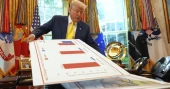
Since returning to office in January, former President Donald Trump’s efforts to reshape the federal government in line with his personal will have drawn comparisons to elected strongmen in other countries who consolidated power, punished opponents, and curtailed dissent. Analysts note, however, that Trump is acting faster and more overtly than many of his global counterparts.
Eight months into his second term, Trump suggested revoking licenses of U.S. television stations he perceives as overly critical—recalling Venezuela’s Hugo Chávez, who eight years after taking office revoked the license of the country’s oldest private TV station.
Targeting political opponents
While the United States remains far from Venezuela or other authoritarian regimes, Trump has quickly consolidated authority, directed federal law enforcement toward perceived political adversaries, and removed officials considered disloyal. He has also pardoned more than 1,500 people convicted for involvement in the January 6, 2021, Capitol attack and threatened judges, law firms, and institutions he sees as opposing him.
Trump has publicly claimed he is seeking accountability for Democrats, saying his administration is focused on restoring integrity to the justice system and addressing “radical left-wing violence.” In recent weeks, the Department of Justice indicted former FBI Director James Comey, whom Trump blames for the Russian collusion investigation, and Trump directed a crackdown on groups he alleges fund political violence, targeting organizations linked to Democratic causes.
In front of drowning nations, Trump dismisses climate change as ‘con job’
Experts warn of rapid erosion of norms
Comparisons have been drawn to leaders like Hungary’s Viktor Orbán, Turkey’s Recep Erdoğan, and Venezuela’s Chávez, all of whom used government levers to entrench power. Analysts note that, unlike these leaders, Trump is acting with unusual speed and visibility.
“The only difference is the speed with which it is happening,” said David Smilde, a Tulane University professor who lived in Venezuela during Chávez’s rise. Harvard political scientist Steven Levitsky noted that the U.S. is “not a society prepared for authoritarianism,” unlike countries whose citizens have learned to recognize early threats to democracy.
Former Turkish official Alper Coskun said Trump is following Erdoğan’s playbook more quickly than expected, while Kim Scheppele, a Princeton sociologist, observed that Orbán initially moved cautiously to avoid resistance—a tactic Trump has largely bypassed.
Trump meets Pakistan PM amid signs of improving ties
Still, experts note key differences. U.S. institutions, courts, and state governments have historically checked presidential overreach, as seen when Trump’s attempts to overturn the 2020 election were blocked. Yet the rapid consolidation of power, focus on punishing political foes, and threats to media outlets mark a concerning departure from past norms.
“Here, nobody has really seen this in a president before,” Smilde said.
Source: Agency
10 months ago
Asian markets fall after Trump announces new tariffs on drugs and goods
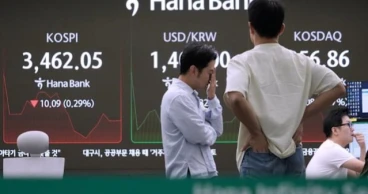
Asian shares slid on Friday after U.S. President Donald Trump unveiled plans to impose new tariffs, including 100% import taxes on pharmaceutical drugs starting October 1.
Trump said on his social media platform Thursday that foreign manufacturers of furniture and cabinetry were “flooding” the U.S. market, warranting tariffs for “national security and other reasons.” He also targeted heavy trucks and parts, though most are produced domestically or in North America.
China gives up developing-country privileges at WTO amid tariff tensions
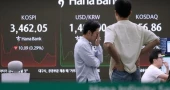
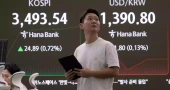
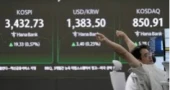
The announcement rattled markets. Japan’s Nikkei 225 slipped 0.3% to 45,629.79, with Sumitomo Pharma down 5.2% and Chugai Pharmaceutical off 3.9%. South Korea’s Kospi tumbled 2.5% to 3,384.58, its third straight loss amid tariff worries. Hong Kong’s Hang Seng shed 0.7% and Shanghai’s Composite eased 0.1%. India’s Sensex fell 0.7% and Taiwan’s Taiex dropped 1.5%. Australia’s S&P/ASX 200, however, rose 0.2%.
Wall Street also retreated Thursday, marking a third consecutive loss. Analysts warned that stronger U.S. economic data could limit prospects for multiple Federal Reserve rate cuts, a key driver of this year’s global stock rally.
Oil prices edged higher, while the dollar slipped slightly against the yen.
Source: Agency
10 months ago
China gives up developing-country privileges at WTO amid tariff tensions
China announced Wednesday that it will no longer seek the preferential treatment afforded to developing countries under World Trade Organization (WTO) rules — a long-standing demand of the United States.
Officials from China’s Commerce Ministry said the step was intended to strengthen the global trading system at a time when it faces pressure from tariff wars and protectionist import restrictions by individual countries. The change will apply to ongoing and future negotiations, not existing trade agreements.
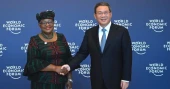
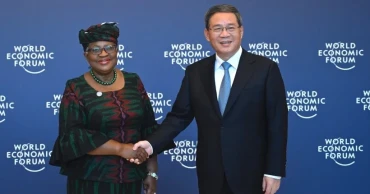
WTO Director-General Ngozi Okonjo-Iweala welcomed the decision, saying it removes a major source of contention and could help pave the way for reform. “It takes away one of the criticisms in the organization that relatively well-off countries were still enjoying these privileges,” she said at a summit in New York, noting that Washington’s response was “positive — but also ‘about time.’”
The announcement was first made Tuesday in New York by Chinese Premier Li Qiang, during a China-organized development forum on the sidelines of the UN General Assembly. Beijing emphasized that the move was voluntary and not meant as guidance for other developing nations. “It’s China’s own decision,” said Li Yihong, China’s top envoy to the WTO, speaking in Geneva.
The WTO, with 166 member states, provides a forum for trade talks and enforces global agreements, but its effectiveness has waned in recent years, prompting urgent calls for reform. Special and differential treatment provisions give developing countries more time to implement trade rules, technical assistance, and exemptions from some obligations binding on richer economies.
While Chinese officials underscored that the country remains a middle-income nation and part of the developing world, they acknowledged the distinction between “developing member” status and the WTO’s special treatment rules. “China will always be a developing country,” Li said.
The U.S. has long argued that China’s position as the world’s second-largest economy is inconsistent with its claim to developing-country benefits. Increasingly, Beijing has also become a global lender, financing infrastructure projects abroad through its state-owned companies.
Chinese officials did not directly mention U.S. President Donald Trump, who has imposed tariffs on multiple countries this year, including China.
10 months ago
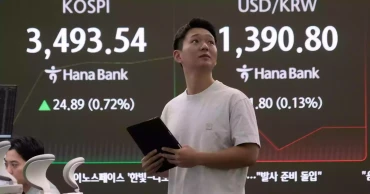
Asian markets ease as Wall Street rally cools
Asian stocks mostly slipped on Wednesday after Wall Street’s record-breaking run took a breather, with U.S. Federal Reserve Chair Jerome Powell cautioning that stock prices are “fairly highly valued.”
Japan’s Nikkei 225 fell 0.4% to 45,300.30 in morning trade, while Australia’s S&P/ASX 200 dropped 1.0% to 8,756.30 and South Korea’s Kospi slid 1.1% to 3,448.44. In contrast, Hong Kong’s Hang Seng gained 0.6% to 26,305.02, and the Shanghai Composite edged up 0.2% to 3,829.91.
On Wall Street, the S&P 500 lost 0.6%, the Dow Jones Industrial Average shed 88 points, or 0.2%, and the Nasdaq composite sank 0.9%. The decline ended a three-day streak of record highs for all three indexes.
Markets have surged since April, but some analysts warn stocks may have climbed too quickly and become overpriced. Powell noted that the Fed faces a tricky situation, with job market concerns rising even as inflation remains above the 2% target. His remarks were the first since the central bank cut its benchmark interest rate last week.
“Essentially the Fed Chairman confirmed what we already knew — that the central bank remains between a rock and a hard place in managing inflation risks and a weakening job market,” said Tim Waterer, chief market analyst at KCM Trade.
The Fed has signaled more rate cuts later this year and into next, but policymakers remain cautious as lower rates could fuel inflation further. Investors are now waiting for Friday’s U.S. inflation report, expected to show a slight pickup in consumer prices.
Wall Street futures dip after record-high streak, eyes on Fed
Technology stocks weighed heavily on Wall Street. Nvidia dropped 2.8% after pulling back from gains made on news of a partnership with OpenAI. Amazon slid 3%, while Microsoft lost 1%.
The S&P 500 closed at 6,656.92, down 36.83 points. The Dow Jones fell 88.76 points to 46,292.78, and the Nasdaq tumbled 215.50 points to 22,573.47.
In the bond market, the yield on the 10-year U.S. Treasury slipped to 4.11% from 4.15% a day earlier.
Oil prices edged higher, with U.S. benchmark crude rising 14 cents to $63.55 a barrel and Brent crude up 13 cents at $67.76. In currency trading, the dollar strengthened to 147.77 Japanese yen from 147.56 yen, while the euro fell to $1.1801 from $1.1818.
Source: Agency
10 months ago

Chinese vice premier urges stable and sustainable China-U.S. trade relations
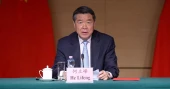
Chinese Vice Premier He Lifeng on Monday expressed the hope that the U.S. side will work with China to promote the stable, sound and sustainable development of bilateral economic and trade ties.
When meeting with a U.S. congressional delegation led by Representative Adam Smith in Beijing, He said phone talks between the Chinese and U.S. heads of state last week had provided strategic guidance for the stable development of bilateral ties in the next stage.
As the two countries have broad space for cooperation and extensive common interests, it is hoped that the U.S. side will engage in candid communication with China, and jointly build up mutual trust and dispel misgivings by following the principles of mutual respect, peaceful coexistence and win-win cooperation, He said.
He called on members of the U.S. Congress to play a positive role in facilitating the shared development of both countries through opening up communication channels and helping enhance dialogues.
10 months ago
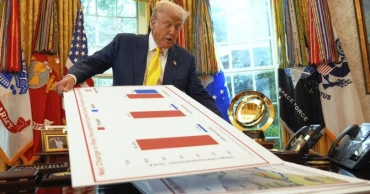
Trump’s economic promises to Black voters fall short amid growing financial strain
Despite campaigning in 2024 on promises to protect Black jobs and strengthen the economy, President Donald Trump’s policies have so far failed to deliver tangible gains for Black Americans. During one of his final rallies before last year’s election, Trump warned that Black workers were losing jobs at unprecedented rates and pledged that returning to the White House would reverse the trend.
However, with Trump in office since January, key economic indicators show worsening conditions for Black communities. Black unemployment has risen to 7.5% in 2025, the highest since October 2021, while homeownership has dropped to its lowest level since 2021, according to Redfin. Census Bureau data also show the median Black household income fell 3.3% last year to $56,020—roughly $36,000 below the median white household income.
The widening economic disparity has political implications. Black Americans, historically early indicators of broader labor trends, are facing disproportionate federal layoffs, with many government positions held by Black workers affected. Critics argue Trump’s focus on tariffs, spending cuts, and immigration enforcement has prioritized wealthy interests over the middle class.
White House clarifies $100K H-1B visa fee won’t affect current holders as Trump plan sparks concern
Some Black voters who supported Trump in 2024, motivated by concerns about inflation and affordability, now feel alienated. Surveys show economic stress remains high in Black households, and political analysts warn that continued neglect could jeopardize Republican prospects in key races.
Meanwhile, concerns over discriminatory policies, including proposed National Guard deployments to cities led by Black mayors and redistricting efforts, have heightened tensions. Many voters say Trump’s administration appears more focused on immigration enforcement and consolidating power than addressing the financial struggles of Black Americans.
Source: Agency
10 months ago

Japan’s central bank keeps key rate unchanged at 0.5%
The Bank of Japan on Friday kept its benchmark interest rate steady at 0.5%, a widely expected move as inflation remains above the bank’s target but overall economic growth shows only moderate momentum.
The decision came after a two-day policy board meeting. In a statement, the central bank said: “Japan’s economy has recovered moderately, although some weakness has been seen in part. Overseas economies have grown moderately on the whole.”
The move follows a decision by the U.S. Federal Reserve earlier this week to cut its policy rate by 0.25 percentage points, bringing its short-term rate down to about 4.1%, its first rate cut since December.
Japan has long battled deflationary pressures, but consumer prices have now been rising consistently. Government data show inflation holding between 2.5% and 3%, slightly above the Bank of Japan’s 2% target.
Honda Prize 2025 Awarded to Dr. Kenichi Iga of Japan
The central bank cautioned that exports could slow due to higher tariffs linked to U.S. President Donald Trump’s trade policies. While shipments surged earlier this year ahead of the new tariffs, that momentum is now fading, the statement noted.
Domestic political uncertainty was also flagged as a risk factor, as Prime Minister Shigeru Ishiba steps down and the ruling Liberal Democratic Party prepares for an election to select his successor. Five candidates are expected to contest, with the party vote set for early next month.
Meanwhile, Japan’s stock market has been rallying. The Nikkei 225 hit another record high on Thursday, boosted by the Fed’s rate cut, though shares slipped slightly in Friday’s morning trade.
Source: Agency
10 months ago
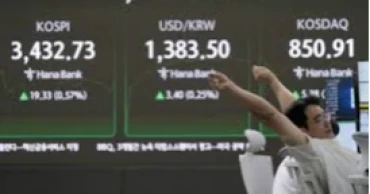
Asian shares mostly rise as US stocks stay near record highs after Fed rate cut
Asian markets were mostly higher Thursday, driven by technology stocks, following a mixed session on Wall Street that left indexes close to record levels after the Federal Reserve cut its main interest rate.
Japan’s Nikkei 225 climbed 1.3% to 45,365.98, boosted by tech firms such as Disco, Tokyo Electron, and SoftBank. Meanwhile, the Bank of Japan began its two-day policy meeting, with no changes in interest rates expected. South Korea’s Kospi rose nearly 1.3% to 3,455.98, supported by gains in chipmakers SK Hynix and Samsung Electronics.
China’s markets showed mixed performance: Hong Kong’s Hang Seng fell 0.2% to 26,856.02, while the Shanghai Composite gained 0.5% to 3,893.95 amid optimism over U.S.-China trade talks and a potential TikTok deal. Australia’s S&P/ASX 200 dropped 0.5% to 8,778.60 after data showed August unemployment steady at 4.2%, with overall employment declining. India’s BSE Sensex rose 0.4%, and Taiwan’s Taiex added 1.1%.
Asian shares mixed as Wall Street slips from record highs, focus shifts to Fed rate cut
On Wall Street Wednesday, the S&P 500 slipped 0.1%, the Dow Jones rose 0.6%, and the Nasdaq fell 0.3%. The Fed’s first rate cut of the year met expectations, but its updated projections suggesting two more cuts this year and one in 2026 drew investor attention. Fed Chair Jerome Powell cautioned that projections are not guarantees, highlighting challenges from a slowing job market and persistent inflation.
In commodities, U.S. crude fell 10 cents to $63.95 per barrel, Brent lost 10 cents to $67.85. The dollar rose to 147.07 yen, while the euro slipped to $1.1813.
Source: Agency
10 months ago

Asian shares mixed as Wall Street slips from record highs, focus shifts to Fed rate cut
Asian markets traded mixed Wednesday after U.S. stocks pulled back slightly from record highs, with investor attention fixed on the Federal Reserve’s expected first interest rate cut of the year.
Japan’s Nikkei 225 rose 0.2% to 44,995.79 in morning trading. The Finance Ministry reported exports to the U.S. fell 13.8% in August from a year earlier, marking a fifth consecutive monthly decline as auto shipments slumped under President Donald Trump’s tariffs. Although Washington lowered tariffs on Japanese vehicles and parts this week to 15% from 27.5%, they remain well above the previous 2.5%. Japan’s overall exports were nearly flat in August, slipping 0.1%, as growth to Europe and the Middle East offset U.S. weakness.
Elsewhere in Asia, Australia’s S&P/ASX 200 fell 0.7% to 8,812.80, South Korea’s Kospi slid nearly 1.0% to 3,415.71, and Shanghai’s Composite dipped less than 0.1% to 3,858.74. Hong Kong’s Hang Seng gained nearly 0.9% to 26,662.13.
On Wall Street, the S&P 500 slipped 0.1% from its latest record, the Dow Jones Industrial Average fell 125 points, or 0.3%, and the Nasdaq lost 0.1% after hitting a record high the day before.
Stocks have rallied on expectations that the Fed will begin cutting rates Wednesday to support a slowing job market, which officials now see as a greater threat than inflation pressures from tariffs. While inflation remains above the Fed’s 2% target, investors anticipate further rate cuts through year-end and into 2026.
10th Belt & Road Summit marks decade of cooperation, investment and trade success
In corporate news, New York Times Co. fell 1.6% after Trump filed a $15 billion defamation lawsuit against the paper and four journalists. Oracle gained 1.5% amid speculation it could play a role in a deal to keep TikTok operating in the U.S.
The S&P 500 closed down 8.52 points at 6,606.76. The Dow dropped 125.55 to 45,757.90, and the Nasdaq slipped 14.79 to 22,333.96.
In bond trading, the 10-year Treasury yield eased to 4.03% from 4.05%. U.S. crude lost 8 cents to $64.44 a barrel, while Brent fell 9 cents to $68.38. The dollar rose to 146.69 yen from 146.40 yen, while the euro slipped to $1.1852 from $1.1867.
Source: Agency
10 months ago
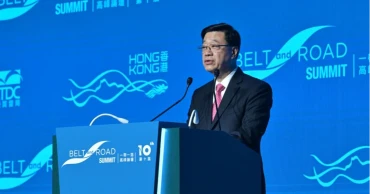
10th Belt & Road Summit marks decade of cooperation, investment and trade success
The 10th Belt and Road Summit in Hong Kong (Sept 10-11) drew around 6,200 participants from governments, global organisations, businesses and media to celebrate 10 years of progress under the Belt and Road Initiative (B&RI).
Jointly hosted by the Hong Kong Special Administrative Region (HKSAR) Government and the Hong Kong Trade Development Council (HKTDC), the flagship event carried the theme “Collaborate for Change – Shape a Shared Future.”
In his opening remarks, HKSAR Chief Executive John Lee noted, “Over the past 10 years, more than 45,000 people from over 120 countries and regions have participated in the Summit. Together, they have presented over 2,800 projects along the Belt and Road, shaping a shared vision through collaboration and connectivity, which are the fundamental values of the Belt and Road Initiative.”
This year’s summit produced a record 45 memoranda of understanding (MOUs) and commercial agreements between governments and enterprises. Including deals concluded ahead of the summit, their combined value is close to US$1 billion.
Highlighting Hong Kong’s role as a key platform for the B&RI, Lee said, “Hong Kong is the ideal Belt and Road hub. As the only world city that converges both the China advantage and the global advantage, Hong Kong stands as the premier gateway for co-operation, bridging people, trade, business, education, culture and values across the region, connecting Asia and the world.”
Lee also outlined Hong Kong’s strengths in finance, legal services, competitiveness, connectivity, sustainability, and talent. He noted that under the Belt and Road Scholarship and related schemes, more than 4,000 students from Belt and Road countries pursue higher education in Hong Kong each year.
FAA proposes $3.1 million fines for Boeing over safety violations
The summit featured thematic sessions on legal services, trade, insurance, architecture, green finance and logistics, aimed at building a greener and more interconnected future. Alongside, Hong Kong is hosting major Belt and Road-linked events such as the Future Investment Initiative PRIORITY Summit, the Saudi Super Cup, and next year’s first global edition of LEAP East, a major Middle Eastern tech expo.
Over 20 other activities — spanning business, arts, music, sports and academia — are also taking place, including the “Wonders of Imperial Carpets” exhibition at the Hong Kong Palace Museum and a Belt and Road concert by the Hong Kong Philharmonic Orchestra on Sept 27.
Source: Agency
10 months ago