World-Business
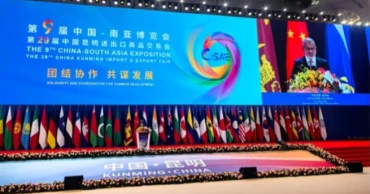
China-South Asia Expo kicks off focused on trade and regional connectivity
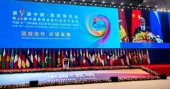
The 9th China-South Asia Expo kicked off on Thursday in Kunming, the capital of southwest China's Yunnan Province, with a focus on strengthening trade ties, fostering innovation, and deepening regional cooperation.
Under the theme "Solidarity and Coordination for Common Development," the five-day event has attracted participants from more than 70 countries and international organisations, including Bangladesh.
All South and Southeast Asian nations participated in the event, reports CGTN.
Across the expansive expo pavilions, exhibitors from the region are engaging in business matchmaking, showcasing their products, and exploring new partnerships.
"China is a close friend of Bangladesh. For a very long time, China has had a lot of investments in our country. And the new interim government has also provided many opportunities for foreign investors," said Mohammad Foyshol Azad, Chairman of the Trading Corporation of Bangladesh (TCB).
He said investors have the opportunity to invest in the agriculture and other industrial sectors, such as the ready-made garment (RMG) sector.
"We hope that in the future, the collaboration between China and Bangladesh will be even stronger and more friendly," said Azad.
Alimuzzaman, an exhibitor from Bangladesh, attending the event for the first time.
1 year ago
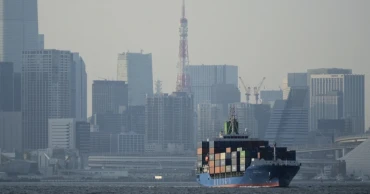
Japan records trade deficit as exports suffer from Trump's tariffs
Japan experienced a drop in exports in May, largely driven by a nearly 25% year-on-year fall in automobile shipments to the United States due to increased tariffs imposed by President Donald Trump. According to a report from the Finance Ministry on Wednesday, overall exports declined by 1.7%—a smaller drop than analysts had predicted. However, imports fell more sharply by 7.7%, indicating weakening domestic demand, and exceeding April’s 2% decline.
As a result, Japan recorded a trade deficit of 637.6 billion yen (approximately $4.4 billion) for the month.
No resolution has been reached between Japan and the U.S. regarding the tariff issue. Prime Minister Shigeru Ishiba, following his meeting with President Trump at the recent G7 summit in Canada, stated that both countries failed to come to an agreement on key matters.
President Trump has imposed an additional 25% tariff on Japanese vehicles and a 24% tariff on various other products, warning that the auto tariff could be raised further. In response, Ishiba has reiterated Japan’s strategic importance as a U.S. ally and highlighted efforts to safeguard national interests.
China starts evacuation of its citizens amid Iran-Israel tensions
The auto sector remains a cornerstone of Japan’s economy, with over a million vehicles exported to the U.S. each year. Japanese officials continue to point out that major car manufacturers like Toyota and Honda have extensive production operations in North America, contributing to job creation and the U.S. economy.
1 year ago

US erconomy remains stable, but Federal Reserve faces uncertainty
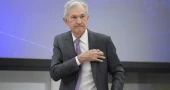
The U.S. economy is largely healthy, with low unemployment and easing inflation, but Federal Reserve Chair Jerome Powell faces a challenging outlook amid trade tensions and tariff-related risks.
As the Fed meets this week, it is widely expected to keep interest rates steady near 4.4%. Inflation projections indicate a possible rise later this year, while unemployment may increase slightly. Economists suggest the Fed might cut rates twice in 2024, but officials are cautious, awaiting clearer economic signals.
President Donald Trump has criticized Powell for not lowering rates and urged faster cuts to boost growth and reduce government borrowing costs. However, many economists warn that rate cuts aimed at easing federal debt could undermine the Fed’s dual mandate of price stability and maximum employment.
US economy expands 2.4% in Q4 after growth revision
Tariffs imposed by the Trump administration may increase inflation but could also slow growth, complicating policy decisions. Some economists believe inflation could temporarily rise to 3.6% by year-end but expect a weak economy to moderate price pressures.
The Fed plans to carefully assess the impact of tariffs before making further moves.
Source: With inputs from agencey
1 year ago

G7 summit opens in Canada amid Israel-Iran conflict, global trade tensions
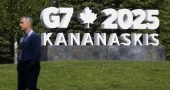
Leaders from the Group of Seven (G7) nations convened Sunday in the Canadian Rockies for a high-stakes summit dominated by growing concerns over the Israel-Iran conflict and ongoing global trade disputes.
The summit opened under the shadow of a dangerous escalation between Israel and Iran, with reports confirming that Israel launched major strikes on Iranian targets, prompting retaliatory attacks from Tehran. The crisis appeared to catch many world leaders off guard.
A U.S. official disclosed that President Donald Trump had recently vetoed an Israeli plan to assassinate Iran’s Supreme Leader Ayatollah Ali Khamenei, highlighting the intensity of Israel’s military intent.
British Prime Minister Keir Starmer, who had discussed the crisis with both Trump and Israeli Prime Minister Benjamin Netanyahu ahead of the summit, said he expected “intense discussions” to continue throughout the gathering.
Trump's unpredictability shapes summit tone
Canadian Prime Minister Mark Carney, hosting the summit, has opted against issuing a joint communique, a long-standing G7 tradition, citing diverging views—particularly those of U.S. President Trump, who has unsettled allies with threats of tariffs and provocative statements.
French President Emmanuel Macron made a symbolic stop in Greenland before arriving in Canada, issuing a firm statement rejecting Trump’s comments suggesting the U.S. might try to “buy” or claim Greenland. “Greenland is not for sale, and certainly not to be taken,” Macron said, winning applause from locals.
As Trump goes to G7 summit, other world leaders aim to show they're not intimidated
Trump arrived in Alberta late Sunday and is scheduled to hold bilateral talks with Carney on Monday before formal sessions begin.
Wider participation, same tensions
Leaders from India, Ukraine, Brazil, South Africa, South Korea, Australia, Mexico and the UAE have also been invited to the summit. Trade remains a central issue, especially amid Trump’s aggressive tariff threats.
Before departing Washington, Trump hinted that new trade agreements could be announced during the summit. “We just send a letter: ‘This is what you’ll pay,’” he remarked, referring to his administration’s trade tactics.
However, bilateral meetings with Trump have been difficult for some leaders. He has previously been accused of attempting to pressure counterparts from Ukraine and South Africa during private talks.
Former Canadian Prime Minister Jean Chrétien advised leaders to remain composed in the face of potential provocations. “If Trump tries to create a scene for attention, let him. Stay calm and carry on,” Chrétien told a recent panel.
While the U.K. and U.S. reached a preliminary trade deal last month—reducing tariffs on vehicles, steel, and aluminum—it has yet to be implemented. U.K. officials remain confident it will proceed.
Starmer, however, faces criticism, particularly from Canadians, for not addressing Trump’s controversial remarks suggesting Canada should become the 51st U.S. state. Asked about it, Starmer stated, “Canada is an independent, sovereign country and a much-valued Commonwealth partner.”
Zelenskyy and Trump set to meet again
Ukrainian President Volodymyr Zelenskyy is also expected to meet Trump during the summit, marking their first encounter since a tense Oval Office meeting earlier this year.
Starmer met with Carney in Ottawa before the summit to discuss trade and security. It was the first visit by a U.K. prime minister to Canada in eight years.
Oil prices surge, Wall Street and global markets retreat after Israel's strike on Iran
German officials downplayed speculation that the summit would turn into a “G6 versus Trump” scenario, noting internal differences exist among all member states.
Still, Chrétien warned that Trump’s unpredictability remained a challenge. “The only thing you can’t predict is what the U.S. president might do based on his mood or desire to dominate headlines,” he said.
1 year ago

ICC joins ‘business call to action’: Land, sea vital connection for thriving economy
More than 80 businesses and supporting organisations from 25 countries, including 55 businesses representing over €600 billion in turnover and 2 million employees, have urged both private and public decision-makers to strengthen global cooperation and accelerate action to conserve and sustainably use the ocean.
The ‘Business Call to Action’ is convened by global and leading business networks, including International Chamber of Commerce (ICC), United Nations Global Compact (UNGC), World Economic Forum (WEF), We Mean Business Coalition (WMB), Business for Nature (BfN), Mouvement des Entreprises de France (MEDEF), UN Global Compact Network France and Association française des Entreprises pour l’ Environnement (EpE).
The call is convened by an unprecedented coalition of business networks, supported by signatories, including 80 businesses, according to a statement shared by the International Chamber of Commerce, Bangladesh (ICC,B) on Sunday.
The call builds on the experience of leading businesses and organisations already advancing a sustainable blue economy.
It emphasises the intrinsic connection between land and sea, highlighting the contribution and interdependencies between coastal and marine environment and the United Nations Sustainable Development Goals.
As Trump goes to G7 summit, other world leaders aim to show they're not intimidated
This call is directed at all economic actors, whether directly or indirectly connected to the ocean, and includes a call to action for businesses to expedite maintaining ocean health through business actions, such as contributions to ocean science, monitoring and reducing environmental impacts, incorporating ocean considerations into their climate and nature roadmaps and investing in blue solutions; a call to action for policy makers to pursue ambitious science-driven policies and measures that stimulate sustainable business action and to jointly address land and ocean for enhanced global resilience.
With this Business Call to Action, companies and business networks urge policymakers to agree to adopt and implement international agreements, champion strong, sustainable outcomes for existing and upcoming ocean-related agreements; invest in ocean science and support strong science-policy interfaces; acknowledge and embed into policies the links between ocean, nature and climate; help all actors to collectively adapt to sea-level rise; develop robust and innovative finance mechanisms and raise awareness to encourage all actors to care for the ocean, even those based on land.
1 year ago

As Trump goes to G7 summit, other world leaders aim to show they're not intimidated
President Donald Trump has long bet that he can scare allies into submission — a gamble that is increasingly being tested ahead of the Group of Seven summit beginning Monday in Canada.
He's threatened stiff tariffs in the belief that other nations would crumple. He's mused about taking over Canada and Greenland. He's suggested he will not honor NATO's obligations to defend partners under attack. And he's used Oval Office meetings to try to intimidate the leaders of Ukraine and South Africa.
But many world leaders see fewer reasons to be cowed by Trump, even as they recognize the risks if he followed through on his threats. They believe he will ultimately back down — since many of his plans could inflict harm on the U.S. — or that he can simply be charmed and flattered into cooperating.
“Many leaders still seem intimidated by Trump, but increasingly they are catching on to his pattern of bullying,” said Jeremy Shapiro, research director at the European Council on Foreign Relations. “In places as diverse as Canada, Iran, China and the EU, we are seeing increasing signs that leaders now recognize that Trump is afraid of anything resembling a fair fight. And so they are increasingly willing to stand up to him.”
In the 22 instances in which Trump has publicly threatened military action since his first term, the U.S. only used force twice, according to a May analysis by Shapiro.
World leaders feel comfortable standing up to Trump
Ahead of the G7 summit, there are already signs of subtle pushback against Trump from fellow leaders in the group. French President Emmanuel Macron planned to visit Greenland over the weekend in a show of European solidarity. Canadian Prime Minister Mark Carney has said the U.S. is no longer the “predominant” force in the world after Trump's tariffs created fissures in a decades-long partnership between the U.S. and its northern neighbor.
“We stood shoulder to shoulder with the Americans throughout the Cold War and in the decades that followed, as the United States played a predominant role on the world stage," Carney said this past week in French. "Today, that predominance is a thing of the past.”
The new prime minister added that with the fall of the Berlin Wall in 1989, the U.S. became the global hegemon, a position of authority undermined by Trump's transactional nature that puts little emphasis on defending democratic values or the rule of law.
Oil prices surge, Wall Street and global markets retreat after Israel's strike on Iran
“Now the United States is beginning to monetize its hegemony: charging for access to its markets and reducing its relative contributions to our collective security,” Carney said.
Israel’s attack on Iran has added a new wrinkle to the global picture as the summit leaders gather to tackle some of the world’s thorniest problems
A senior Canadian official said it was decided early on that the G7 won’t be issuing a joint communiqué as it has at past summits — an indication of how hard it can be to get Trump on the same page with other world leaders. The White House said individual leader statements will be issued on the issues being discussed.
Speaking last month at a conference in Singapore, Macron called France a “friend and an ally of the United States” but pushed back against Trump's desire to dominate what other countries do. Macron said efforts to force other nations to choose between the U.S. and China would lead to the breakdown of the global order put in place after World War II.
“We want to cooperate, but we do not want to be instructed on a daily basis what is allowed, what is not allowed, and how our life will change because of the decision of a single person,” Macron said.
Japanese Prime Minister Shigeru Ishiba pushed back against Trump's agenda of levying higher tariffs on imported goods, arguing it would hurt economic growth. The Japanese leader specifically called Trump ahead of the summit to confirm their plans to talk on the sidelines, which is a greater focus for Japan than the summit itself.
“I called him as I also wanted to congratulate his birthday, though one day earlier,” Ishiba said.
Trump cares about being tough, but G7 is a chance to reset relations
Sen. Jeanne Shaheen, D-N.H., the ranking member of the Foreign Relations Committee, said the summit was an opportunity for Trump to “mend” relationships with other countries so China would be unable to exploit differences among the G7.
She said other foreign leaders are “not intimidated” by Trump's actions, which could be driving them away from tighter commitments with the U.S.
“The conversations that I’ve had with those leaders suggest that they think that the partnership with the United States has been really important, but they also understand that there are other opportunities,” Shaheen said.
The White House did not respond to emailed questions for this story.
Many leaders feel more confident that they can sidestep Trump's threats
Having originally made his reputation in real estate and hospitality, Trump has taken kindly to certain foreign visitors, such as U.K. Prime Minister Keir Starmer, German Chancellor Friedrich Merz and Italian Prime Minister Giorgia Meloni.
Starmer has sought to keep Trump in line with Europe in supporting Ukraine and NATO instead of brokering any truces that would favor Russia. He has echoed the president’s language about NATO members spending more on defense. But in his Oval Office visit, Starmer also pleased Trump by delivering an invite for a state visit from King Charles III.
Asian shares slide while oil prices surge after Israel's strike on Iran
The German government said it, too, wanted to send a public signal of unity, saying that while Trump's recent meeting with Merz at the White House went harmoniously, the next test is how the relationship plays out in a team setting.
There will also be other world leaders outside of the G7 nations attending the summit in mountainous Kananaskis, including Ukrainian President Volodymyr Zelenskyy, whom Trump dressed down in the Oval Office.
Italy's Meloni has positioned herself as a “bridge” between the Trump administration and the rest of Europe. But Italy’s strong support of Ukraine and Trump’s threatened tariffs on European goods have put Meloni, the only European leader to attend Trump’s inauguration, in a difficult position.
Mark Sobel, U.S. chair of the Official Monetary and Financial Institutions Forum, an independent think tank, said Trump's “trade policies, backing for right wing European movements, seeming preference for dealing with authoritarians and many of his other actions are alienating our G7 allies,” even if the U.S. president is correct that Europe needs to do more on defense.
But even as other G7 leaders defuse any public disputes with Trump, the U.S. president's vision for the world remains largely incompatible with they want.
“In short, behind the curtains, and notwithstanding whatever theater, the Kananaskis summit will highlight a more fragmented G7 and an adrift global economy," Sobel said.
1 year ago
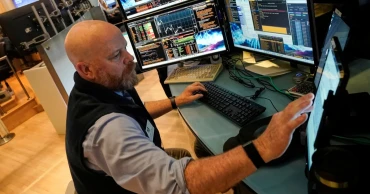
Oil prices surge, Wall Street and global markets retreat after Israel's strike on Iran
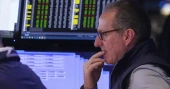
Oil surged, stocks fell and investors sought safety in the US dollar and government bonds Friday after Israel struck Iranian nuclear and military targets in an attack that raised the risk of war between the two countries and broader instability in the Middle East.
Futures for the S&P 500 fell 0.9% before the opening bell, while futures for the Dow Jones Industrial Average were down 1%. Nasdaq futures slid 1.1%.
US benchmark crude oil rose by $4.73, or 6.9%, to $72.77 per barrel, its biggest gain since the early days of Russia's attack on Ukraine more than three years ago. Brent crude, the international standard, climbed $4.58 to $73.94 per barrel, also the largest single-day jump since the Russian invasion, reports AP.
Oil prices are likely to rise in the short term but the key question is whether exports are affected, said Richard Joswick, head of near-term oil at S&P Global Commodity Insights.
Asian shares slide while oil prices surge after Israel's strike on Iran
“When Iran and Israel exchanged attacks previously, prices spiked initially but fell once it became clear that the situation was not escalating and there was no impact on oil supply,” he wrote in an emailed analysis.
“Oil price risk premiums could rise sharply if Iran conducts broader retaliatory attacks, especially if on targets other than in Israel,” Joswick said.
China is the only customer for Iranian oil but could seek alternative supplies from Middle Eastern exporters and Russia, he said.
Trump urges Iran to make nuclear deal as conflict with Israel escalates
Iran's oil trade is restricted by Western sanctions and import bans, and Israel exports only small amounts of oil and oil products.
Boeing shares are down 1% after falling nearly 5% Thursday when one of the aerospace giant's planes crashed in India, killing all but one of the 242 people on board as well as several on the ground. The plane operated by Air India was the first fatal crash of a Boeing 787 Dreamliner since it went into service in 2009.
GE Aerospace, which makes engines for Boeing, is down close to 2% after it announced it was postponing next week's investor day in light of the tragic crash.
In Europe at midday, Germany’s DAX dropped 1.3% and the CAC 40 in Paris gave up 0.9%. Britain’s FTSE 100 slipped 0.2%.
The yield on the 10-year Treasury fell to 4.35% from 4.41% late Wednesday and from roughly 4.80% early this year.
In currency trading early Friday, the US dollar rose to 144.12 yen, while the euro eased to $1.1511. The yield on US 10-year Treasurys fell to 4.35%. Bond yields and prices move in opposite directions.
Treasurys and the dollar often rise when investors feel less inclined to take risks.
1 year ago

Asian shares slide while oil prices surge after Israel's strike on Iran
Markets in Asia opened lower early Friday while oil prices surged after Israel attacked Iran's capital amid the ramping up tensions over Tehran’s rapidly advancing nuclear program.
U.S. benchmark crude oil rose by $5.6, or 8.2%, to $73.61 per barrel. Brent crude, the international standard, increased by $5.52 to $74.88 per barrel.
In share trading, Tokyo's Nikkei 225 fell 1.2% to 37,721.63 while the Kospi in Seoul edged 0.7% lower to 2,900.14.
Hong Kong's Hang Seng retreated 0.4% to 23,929.62 and the Shanghai Composite Index lost 0.2% to 3,394.52.
Australia's S&P/ASX 200 drifted 0.3% lower to 8,540.80.
“An Israeli attack on Iran poses a top ten of our global risk, but Asian markets are expected to recover quickly as they have relatively limited exposure to the conflict and growing ties to unaffected Saudi Arabia and the UAE,” said Xu Tiachen of The Economist Intelligence.
On Thursday, U.S. stock indexes ticked higher following another encouraging update on inflation across the country.
The S&P 500 rose 0.4% to 6,045.26. The Dow Jones Industrial Average added 0.2% to 42,967.62, and the Nasdaq composite gained 0.2% to 19,662.48.
China's foreign trade demonstrates resilience despite challenging global environment
Oracle pushed upward on the market after jumping 13.3%. The tech giant delivered stronger profit and revenue for the latest quarter than analysts expected, and CEO Safra Catz said it expects revenue growth “will be dramatically higher” in its upcoming fiscal year.
That helped offset a 4.8% loss for Boeing after Air India said a London-bound flight crashed shortly after taking off from Ahmedabad airport Thursday with 242 passengers and crew onboard. The Boeing 787 Dreamliner crashed into a residential area near the airport five minutes after taking off. The cause of the crash wasn’t immediately known.
Stocks broadly got some help from easing Treasury yields in the bond market following the latest update on inflation. Thursday’s update said inflation at the wholesale level wasn’t as bad last month as economists expected, and it followed a report on Wednesday saying something similar about the inflation that U.S. consumers are feeling.
Wall Street took it as a signal that the Federal Reserve will have more leeway to cut interest rates later this year in order to give the economy a boost.
The Federal Reserve has been hesitant to lower interest rates, and it’s been on hold this year after cutting at the end of last year, because it’s waiting to see how much President Donald Trump’s tariffs will hurt the economy and raise inflation. While lower rates can goose the economy by encouraging businesses and households to borrow, they can also accelerate inflation.
The yield on the 10-year Treasury fell to 4.35% from 4.41% late Wednesday and from roughly 4.80% early this year.
Besides the inflation data, a separate report on jobless claims also helped to weigh on Treasury yields. It said slightly more U.S. workers applied for unemployment benefits last week than economists expected, and the total number remained at the highest level in eight months. That could be an indication of a rise in layoffs across the country.
“We believe that were it not for the uncertainty caused by the tariffs, the combined information coming from the inflation and labor-market data would have compelled the Fed to have resumed cutting its policy rate by now,” according to Thierry Wizman, a strategist at Macquarie.
The Fed’s next meeting on interest rates is scheduled for next week, but the nearly unanimous expectation on Wall Street is that it will stand pat again. Traders are betting it’s likely to begin cutting in September, according to data from CME Group.
Trump’s on-and-off tariffs have raised worries about higher inflation and a possible recession, which had sent the S&P 500 roughly 20% below its record a couple months ago. But stocks have since rallied nearly all the way back on hopes that Trump will lower his tariffs after reaching trade deals with other countries.
US and China agree to resolve their trade disputes
Many of Trump’s tariffs are on hold at the moment to give time for negotiations, but Trump added to the uncertainty late Wednesday when he suggested the United States could send letters to other countries at some point “saying this is the deal. You can take it or you can leave it.”
On Wall Street, Chime Financial jumped 37.4% in its first day of trading on the Nasdaq. The technology company is trying to be the main financial hub for customers, connecting them with its bank partners.
GameStop dropped 22.5% after saying it plans to raise $1.75 billion by borrowing at zero interest rates, though the lenders could choose to be repaid in the video-game retailer’s stock instead of cash.
In currency trading early Friday, the U.S. dollar fell to 143.10 Japanese yen from 143.46 yen. The euro edged lower, to $1.1552 from $1.1590.
1 year ago

China's foreign trade demonstrates resilience despite challenging global environment
China's foreign trade has demonstrated resilience and vitality this year despite a complex external environment, with growth in both the scale and quality of trade in goods, the Chinese Ministry of Commerce said on Thursday.
According to Ministry spokesperson He Yadong, in the first five months of this year, China's imports and exports with Belt and Road partner countries increased by 4.2 percent, ASEAN member states by 9.1 percent, and African nations by 12.4 percent.
He said at a regular press briefing that these figures demonstrate China's trade network is becoming increasingly diverse, with emerging markets contributing to incremental growth.
The country's high-tech and high-value-added products have become more competitive, with exports of electromechanical products rising 9.3 percent in the first five months of the year, accounting for 60 percent of China's total exports.
During the same period, imports and exports by private enterprises grew 7 percent, accounting for 57.1 percent of China's total foreign trade.
In the face of a complex and volatile external environment, China will steadfastly expand its high-standard opening-up and address the uncertainty of drastic changes in the external environment with the certainty of its own high-quality development, the spokesperson said.
China looks forward to working with more trade partners to address risks and challenges, and to promote mutually beneficial cooperation, he added.
1 year ago
China’s resource edge reshapes global trade dynamics
China’s dominance over critical minerals in global supply chains was a powerful bargaining chip in trade talks between Beijing and Washington that concluded with both sides saying they have a framework to pursue a deal.
China has spent decades building the world's main industrial chain for mining and processing such materials, which are used in many industries such as electronics, advanced manufacturing, defense and health care.
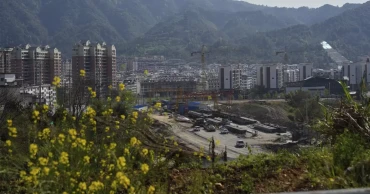
Mines and factories in and around Ganzhou, a key production hub for rare earths, underpin China's control over the minerals. Many residents grew up collecting rocks containing the valuable minerals from the forested hills surrounding the southern city and today make a living from mining, trading or processing them.
Critical minerals as a trade issue
Responding to ever higher tariffs and other controls on advanced technology, China told exporters of certain key rare earths and other critical minerals to obtain licenses for every shipment abroad. Approvals can take weeks, leading to supply chain disruptions in the U.S. and other countries.
President Donald Trump said Wednesday that China would make it easier for American industry to obtain much-needed needed magnets and rare earth minerals, clearing the way for talks to continue between the world’s two biggest economies. In return, Trump said, the U.S. will stop efforts to revoke the visas of Chinese nationals on U.S. college campuses.
But details remain scarce. Beijing has not confirmed what the negotiators agreed to, and Chinese President Xi Jinping and Trump himself have yet to sign off on it.
The Chinese Commerce Ministry said Saturday it had approved a “certain number” of export licenses for rare earth products, apparently acknowledging Trump’s personal request to Xi during a phone call last week. And on Wednesday, the Ganzhou-based rare-earth conglomerate JL MAG Rare-Earth Co. confirmed it had obtained some export licenses for shipments to destinations including the U.S., Europe and Southeast Asia.
Experts say, however, Beijing is unlikely to do away with the permit system enabling it to control access to those valuable resources.
The only scenario in which China might deregulate its critical minerals export is if the U.S. first fully removes tariffs imposed on Chinese goods as part of the trade war, said Wang Yiwei, a professor of international affairs at Renmin University, echoing the Chinese government’s earlier stance.
“Without that,” he said, “it will be difficult to blame China for continuing to strengthen its export controls.”
US and China agree to resolve their trade disputes
An industry built over decades with government support
In 1992, Deng Xiaoping, the leader who launched China's ascent as the world's biggest manufacturing power, famously said “the Middle East has oil, China has rare earths,” signaling a desire to leverage access to the key minerals.
Several generations later, Beijing has made its rich reserves of rare earths, a group of 17 minerals that are abundant in the earth’s crust but hard, expensive and environmentally polluting to process, a key element of China's economic security. In 2019, during a visit to a rare earth processing plant in Ganzhou, Xi described rare earths as a “vital strategic resource.”
China today has an essential monopoly over “heavy rare earths,” used for making powerful, heat-resistance magnets used in industries such as defense and electric vehicles.
The country also produces around 80% of the world’s tungsten, gallium and antimony, and 60% of the world’s germanium -– all minerals used in the making of semiconductors, among other advanced technologies.
The risks of dependency on Chinese suppliers first came into focus in 2010, when Beijing suspended rare earths exports to Japan due to a territorial dispute. The ban was lifted after about two months, but as a precaution, Japan invested in rare earths processing plants in other countries and began stockpiling the materials.
Beijing's across-the-board requirement for export licenses for some critical minerals has put pressure on world electronics manufacturers and automakers.
Some auto parts makers in Europe have shut down production lines due to delays in supply deliveries, according to the European Association of Automotive Suppliers. In the U.S., Tesla CEO Elon Musk said a shortage of rare earths is affecting his company’s work on humanoid robots.
China's critical minerals resources are dwindling
In the drab industrial hub of Ganzhou, cradled by the scenic Dayu Mountains, the U.S.-China trade war is still a distant stressor. Miners and small mineral traders interviewed by The Associated Press said they are more concerned about depleting the mountains' once-abundant resources.
US and China in trade talks in London after Trump's phone call
Zhong, a tungsten factory manager in Ganzhou who would only give his last name, worked his way up to manager from a miner, but he's unsure there is a future for him and others in the industry.
“I find growing difficulties to source tungsten these days,” he said, adding that smaller mines and trading companies are slowly disappearing as the resources are dwindling. Tungsten is an ultra-hard metal used in armor-piercing ammunition, nuclear reactors and semiconductors.
At least five tungsten mines have closed in the area in recent years, according to state media. Remaining reserves are deeper and harder to extract and process after decades of exploitation, said Li Shangkui, chairman of the Ganzhou-based Jiangxi Yuean Advanced Materials Co., Ltd.
Processing factories in Ganzhou now routinely source materials from other provinces or other countries. Zhong’s plant imports some raw materials from places like Africa and Cambodia.
Major state-owned and private companies in Ganzhou are also ramping up investments abroad. Tungsten producer Ganzhou Haisheng, for instance, announced last year a $25 million investment in a new tungsten plant in Thailand.
Whatever the challenges in procuring raw materials, China likely will seek to maintain its dominance in critical minerals, said Fabian Villalobos, an engineer and critical minerals expert at the RAND think tank.
The U.S. lags far behind China on critical minerals
Between 2020 and 2023, the U.S. imported at least 70% of the rare earth compounds it used from China, according to the U.S. Geological Survey. It has diversified its sources in recent years, but still mainly relies on China.
Since beginning his second term in office, Trump has made improving access to critical minerals a matter of national security. But the U.S. has an incredibly long way to go to catch up with China, experts say.
The sole operational U.S. rare earths mine, in Mountain Pass, California, is unable to separate heavy rare earths. It sends its ore to China for processing. The U.S. Defense Department has provided funding to the mine's owner, MP Materials, to build new separation facilities. It will take months to build and still only produce a fraction of what is needed.
Friction over the issue has opened the way for government-backed financing that was unavailable before, said Mark Smith, who ran the Mountain Pass mine in the early 2010s and now leads NioCorp. It's seeking about $780 million in financing through the U.S. Export-Import Bank to build a processing facility in Nebraska for critical minerals including rare earths.
The Defense Department has committed $439 million to building domestic rare earth supply chains, but building a complete mining and processing industrial chain like China's could take decades.
“There are going to be some real issues here unless we can figure out how to get along with China for a period of time while we're developing our own resources and our mainstream processing,” Smith said.
China’s trade surges 2.5% in first five months of 2025
The spotlight on critical minerals also provides opportunities for smaller miners to invest in extracting and processing some critical minerals, such as tungsten, considered “niche” because they are needed in relatively small amounts in key industries, said Milo McBride, an expert on sustainability and geopolitics at the Carnegie Endowment for International Peace.
“For many of these companies, the business strategy hedges on a scenario where the U.S. and China become more confrontational and where trade relations become more uncomfortable,” McBride said. “And all of a sudden, what was once an uneconomic project somewhere outside of China starts to make more sense.”
1 year ago