World-Business
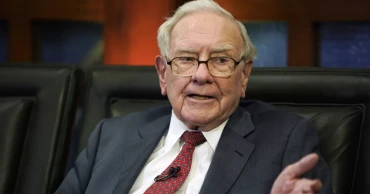
Warren Buffett will remain chairman at Berkshire Hathaway when Greg Abel takes over as CEO in 2026
Billionaire Warren Buffett will remain chairman of the board at Berkshire Hathaway when vice chairman Greg Abel takes over for Buffett as CEO at the start of 2026.
The board of directors at the cash-rich conglomerate voted Sunday to keep the legendary 94-year-old investor as head of the board, a decision likely to relieve investors worried about maintaining Berkshire’s remarkable winning streak as U.S. and global economies are beset by tariff shocks, financial turmoil and a growing risk of recession.
The board in the same meeting also approved Buffett’s chosen successor as CEO, veteran Berkshire executive Greg Abel, 62. In a surprise announcement Saturday, Buffett said he would step down from that top spot at the end of the year.
Berkshire Class B shares fell more than 5% Monday after hitting an all-time high Friday.
Macrae Sykes, portfolio manager at Gabelli Funds, praised the company's transparency after Buffett announced the succession and does not believe Buffett is going anywhere.
“I think it gives Warren a little more bandwidth instead of running this conglomerate," Sykes said in an interview with The Associated Press. "It gives Greg more transparency on the opps with also Warren still being his mentor as chairman,”
Unmatched track record of success
In six decades at the helm, Buffett turned a Massachusetts textile company into a sprawling but nimble conglomerate that owns everything from Daily Queen and See’s Candies to BNSF Railway and massive insurance companies. As the company grew, Warren's reputation grew with it as shares of Berkshire Hathaway climbed steadily, exceeding major indexes by wide margins and returning an average 19.9% each year to investors versus 10.4% for the Standard & Poor’s 500.
The decision to continue with the Oracle of Omaha, as Buffett is known, as head of the board differs from the succession plans laid out in the event of Buffett's death. The billionaire has long said that Howard Buffett, the second-born of the investor’s three children, should become chairman when he is gone to protect Berkshire's culture.
Warren Buffett shocks shareholders by announcing his intention to retire at the end of the year
Abel will take over with big questions hover overing the company, including trade wars launched by the U.S., but he has managed all of Berkshire's non-insurance businesses since 2018. Buffett says President Donald Trump’s tariffs were a big mistake. There are also worries that Berkshire might not able to avoid the fate of most conglomerates—forced to break up to recapture focus.
So much money, so few places to put it
Then there is Berkshire’s $348 billion in cash.
Buffett says he doesn’t see many bargains to invest that money in now, not even Berkshire’s own stock, but he assured some of the estimated 40,000 attendees of the company’s annual meeting in Omaha, Nebraska, over the weekend that one day the company would be “bombarded with opportunities.”
Abel, a low-key Canadian with a love a hockey, has already shown he is a more hands-on manager than Buffett, asking managers tough questions and encouraging them to collaborate with other subsidiaries when it makes sense. He will now take on oversight of the insurance businesses and responsibility for investing the company’s cash. Vice Chairman Ajit Jain, 73, will stay on for now to help manage the insurance businesses that include Geico and massive reinsurers like General Re.
Abel said Saturday that he wouldn't change the Berkshire's approach to investing, which he learned from Buffett. Maintaining Berkshire's fortress-like balance sheet will always be a priority, he said.
Eventually, Berkshire might have to consider paying a dividend, which Buffett always resisted because he believed he could deliver better returns by reinvesting the cash. For now, Buffett and Abel want to keep building cash, so they are prepared when opportunities arise.
High praise for Abel
Buffett endorsed Abel by saying he would keep all of his shares that give him control of 30% of Berkshire Hathaway and praised Abel during the shareholder meeting..
“It’s way better with Greg than with me because I didn’t want to work as hard as he works and I can get away with it because we’ve got a basically good business -- a very good business -- and I wasn’t in danger of you firing me by virtue of the ownership and the fact that we could do pretty well,” Buffett said. “But the fact that you can do pretty well doesn’t mean you couldn’t do better, and Greg can do better at many things.”
Warren Buffett offers lessons on investing in his annual Berkshire Hathaway letter
The CEOs of Berkshire subsidiaries who report to Abel have praised his management style which holds them accountable while allowing them autonomy. See's Candy CEO Pat Egan worked with Abel at Berkshire's utility unit for years before he took over six years ago and said Abel makes sure he's considered every contingency.
“He’s allowed me to make a lot of decisions that he may or may not have agreed with, but he’ll support us at the end of the day, no matter what as long as we’re operating with integrity and principles and the long game," Egan said.
Buffett's philanthropy continues
Buffett has always delegated the decisions about how to distribute his fortune, worth nearly $170 billion today, to others by giving shares annually to the Gates Foundation and four family foundations run by his children.
The Gates Foundation has received the biggest donations worth more than $40 billion since he started giving away his fortune in 2006.
He said last summer that his three children will decide how to distribute his remaining fortune after his death but that the Gates Foundation won’t get any more donations at that point.
Howard, 70, has his own foundation through which he has donated billions to humanitarian and food security causes, including helping coffee farms in El Salvador and war-torn Ukraine. Howard Buffett's foundation expects to top $1 billion in gifts to Ukraine — more than most countries — later this year.
Buffett's lasting impact on business
Tributes to Buffett came tumbling in over the weekend praising his investment savvy and folksy management style.
“There’s never been someone like Warren, and countless people, myself included, have been inspired by his wisdom,” Apple CEO Tim Cook posted on X. “It’s been one of the great privileges of my life to know him.”
JP Morgan’s CEO Jamie Dimon said Buffett represented “everything that is good about American capitalism and America itself,” and praised his “integrity, optimism and common sense.”
1 year ago
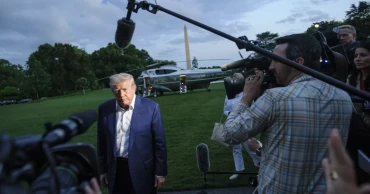
Trump threatens a 100% tariff on foreign-made films, saying the movie industry in the US is dying
President Donald Trump is opening a new salvo in his tariff war, targeting films made outside the U.S.
In a post Sunday night on his Truth Social platform, Trump said he has authorized the Department of Commerce and the Office of the U.S. Trade Representative to slap a 100% tariff “on any and all Movies coming into our Country that are produced in Foreign Lands.”
“The Movie Industry in America is DYING a very fast death," he wrote, complaining that other countries “are offering all sorts of incentives to draw" filmmakers and studios away from the U.S. "This is a concerted effort by other Nations and, therefore, a National Security threat. It is, in addition to everything else, messaging and propaganda!”
The White House said Monday that it was figuring out how to comply with the president's wishes.
“Although no final decisions on foreign film tariffs have been made, the Administration is exploring all options to deliver on President Trump’s directive to safeguard our country’s national and economic security while Making Hollywood Great Again,” said spokesperson Kush Desai.
It’s common for both large and small films to include production in the U.S. and in other countries. Big-budget movies like the upcoming “Mission: Impossible — The Final Reckoning," for instance, are shot around the world.
Incentive programs for years have influenced where movies are shot, increasingly driving film production out of California and to other states and countries with favorable tax incentives, like Canada and the United Kingdom.
Tariffs, oil prices and other uncertainties weighing down Mideast economies, IMF says
Yet Trump's tariffs are designed to lead consumers toward American products. And in movie theaters, American-produced movies overwhelmingly dominate the domestic marketplace.
China has ramped up its domestic movie production, culminating in the animated blockbuster “Ne Zha 2” grossing more than $2 billion this year. But even then, its sales came almost entirely from mainland China. In North America, it earned just $20.9 million.
In New Zealand, where successive governments have offered rebates and incentives in recent years to draw Hollywood films to the country, the film industry has generated billions of dollars in tourism revenue driven by the “Lord of the Rings” and “Hobbit” films, which featured the country’s pristine and scenic vistas. More recently, the blockbuster “Minecraft” movie was filmed entirely in New Zealand, and U.S. productions in 2023 delivered $1.3 billion New Zealand dollars ($777 million) to the country in return for NZ$200 million in subsidies, according to government figures.
New Zealand Prime Minister Christopher Luxon said he was awaiting more details of Trump’s measures before commenting on them but would continue to pitch to filmmakers abroad, including in India’s Bollywood. “We’ve got an absolutely world class industry,” he said. “This is the best place to make movies, period, in the world.”
The Motion Picture Association, which represents major U.S. film studios and streaming services, didn’t immediately respond to messages Sunday evening.
The MPA’s data shows how much Hollywood exports have dominated cinemas. According to the MPA, the American movies produced $22.6 billion in exports and $15.3 billion in trade surplus in 2023.
Trump, a Republican, has made good on the “tariff man" label he gave himself years ago, slapping new taxes on goods made in countries around the globe. That includes a 145% tariff on Chinese goods and a 10% baseline tariff on goods from other countries, with even higher levies threatened.
By unilaterally imposing tariffs, Trump has exerted extraordinary influence over the flow of commerce, creating political risks and pulling the market in different directions. There are tariffs on autos, steel and aluminum, with more imports, including pharmaceutical drugs, set to be subject to new tariffs in the weeks ahead.
Trump has long voiced concern about movie production moving overseas.
Shortly before he took office, he announced that he had tapped actors Mel Gibson, Jon Voight and Sylvester Stallone to serve as “special ambassadors" to Hollywood to bring it "BACK — BIGGER, BETTER, AND STRONGER THAN EVER BEFORE!”
U.S. film and television production has been hampered in recent years, with setbacks from the COVID-19 pandemic, the Hollywood guild strikes of 2023 and the recent wildfires in the Los Angeles area. Overall production in the U.S. was down 26% last year compared with 2021, according to data from ProdPro, which tracks production.
Caterpillar warns tariffs may raise Q2 costs by $350m as sales decline
The group's annual survey of executives, which asked about preferred filming locations, found no location in the U.S. made the top five, according to the Hollywood Reporter. Toronto, the U.K., Vancouver, Central Europe and Australia came out on top, with California placing sixth, Georgia seventh, New Jersey eighth and New York ninth.
The problem is especially acute in California. In the greater Los Angeles area, production last year was down 5.6% from 2023 according to FilmLA, second only to 2020, during the peak of the coronavirus pandemic. Last, October, Gov. Gavin Newsom, a Democrat, proposed expanding California’s Film & Television Tax Credit program to $750 million annually, up from $330 million.
Other U.S. cities like Atlanta, New York, Chicago and San Francisco have also used aggressive tax incentives to lure film and TV productions. Those programs can take the form of cash grants, as in Texas, or tax credits, which Georgia and New Mexico offer.
“Other nations have been stealing the movie-making capabilities from the United States,” Trump told reporters at the White House on Sunday night after returning from a weekend in Florida. “If they’re not willing to make a movie inside the United States we should have a tariff on movies that come in."
1 year ago
Trump threatens 100% tariff on foreign-made films
In a post on his Truth Social platform Sunday night, Trump announced that he had directed the Department of Commerce and the U.S. Trade Representative to impose a 100% tariff on all movies produced outside the United States.
“The American film industry is dying rapidly,” Trump claimed, accusing other countries of luring filmmakers with generous incentives. He argued that this international competition poses a national security threat, calling it “messaging and propaganda” backed by foreign governments.
However, how such a tariff would be implemented remains unclear. Many film productions, including major blockbusters like the upcoming Mission: Impossible – The Final Reckoning, are typically shot across multiple countries, including the U.S.
Incentive programs for years have influenced where movies are shot, increasingly driving film production out of California and to other states and countries with favorable tax incentives, like Canada and the United Kingdom.
Yet tariffs are designed to lead consumers toward American products. And in movie theaters, American-produced movies overwhelming dominate the domestic marketplace.
China has ramped up its domestic movie production, culminating in the animated blockbuster “Ne Zha 2” grossing more than $2 billion this year. But even then, its sales came almost entirely from mainland China. In North America, in earned just $20.9 million.
The Motion Picture Association didn’t immediately respond to messages Sunday evening.
The MPA’s data shows how much Hollywood exports have dominated cinemas. According to the MPA, the American movies produced $22.6 billion in exports and $15.3 billion in trade surplus in 2023.
Businesses, experts call for business-friendly policies in upcoming budget
Trump has made good on the “tariff man” label he gave himself years ago, slapping new taxes on goods made in countries around the globe. That includes a 145% tariff on Chinese goods and a 10% baseline tariff on goods from other countries, with even higher levies threatened.
By unilaterally imposing tariffs, Trump has exerted extraordinary influence over the flow of commerce, creating political risks and pulling the market in different directions. There are tariffs on autos, steel and aluminum, with more imports, including pharmaceutical drugs, set to be subject to new tariffs in the weeks ahead.
Trump has long voiced concern about movie production moving overseas.
Shortly before he took office, he announced that he had tapped actors Mel Gibson, Jon Voight and Sylvester Stallone to serve as “special ambassadors” to Hollywood to bring it “BACK—BIGGER, BETTER, AND STRONGER THAN EVER BEFORE!”
U.S. film and television production has been hampered in recent years, with setbacks from the COVID-19 pandemic, the Hollywood guild strikes of 2023 and the recent wildfires in the Los Angeles area. Overall production in the U.S. was down 26% last year compared with 2021, according to data from ProdPro, which tracks production.
The group’s annual survey of executives, which asked about preferred filming locations, found no location in the U.S. made the top five, according to the Hollywood Reporter. Toronto, the U.K., Vancouver, Central Europe and Australia came out on top, with California placing sixth, Georgia seventh, New Jersey eighth and New York ninth.
The problem is especially acute in California. In the greater Los Angeles area, production last year was down 5.6% from 2023 according to FilmLA, second only to 2020, during the peak of the pandemic. Last, October, Gov. Gavin Newsom proposed expanding California’s Film & Television Tax Credit program to $750 million annually, up from $330 million.
1 year ago
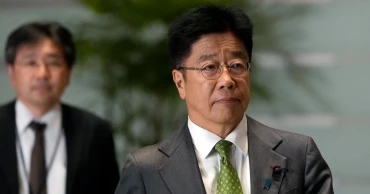
Japan may use US treasury holdings as leverage in tariff talks: Japan’s FM
Japan’s Finance Minister Katsunobu Kato has hinted that the country’s substantial holdings of US Treasury could serve as leverage in ongoing tariff negotiations with the Trump administration.
“It does exist as a card, but I think whether we choose to use it or not would be a separate decision,” Kato stated during a televised interview on national broadcaster TV Tokyo on Friday, AP reports.
While Kato refrained from providing further details or suggesting Japan intends to sell its holdings, the remark signals a potential shift in Japan’s strategy as tensions over tariffs grow.
Previously, Kato and other Japanese officials had dismissed the possibility of using Treasury holdings as a negotiation tool.
Japan is currently the largest foreign holder of US government debt, owning approximately $1.13 trillion as of late February. China, which is also engaged in a trade standoff with the United States, ranks second.
The $10 billion India-Pakistan trade hidden from official records
Kato emphasised that various elements would be considered in negotiations with President Donald Trump, hinting that Japan’s continued investment in US bonds could be used to gain favourable terms.
The Trump administration has disrupted long-standing US trade policies, including with allies such as Japan, by imposing steep tariffs on a broad range of imported goods.
A new round of US tariffs — 25% on vehicles and auto parts, and a 10% baseline tariff — is expected to take effect soon, posing a threat to Japan’s slowing economy.
A delegation of Japanese officials visited Washington this week for discussions aimed at averting the new tariffs.
1 year ago

The $10 billion India-Pakistan trade hidden from official records
In the aftermath of a deadly attack in Pahalgam, a scenic area of India-administered Kashmir that left at least 26 people dead, tensions between India and Pakistan escalated, prompting both nations to take retaliatory diplomatic steps, including halting cross-border trade and suspending visa services.
India blamed Pakistan for the April 22 assault, withdrew from a crucial water-sharing pact over the Indus River, and reduced its diplomatic presence in Islamabad. Pakistan rejected the allegations, demanded a neutral inquiry, and imposed a blanket suspension on trade with India — even via third countries. Trade ties between the two neighbours have been virtually frozen since 2019, and the Wagah-Attari land crossing, the primary official trade route, has also been sealed.
Despite the breakdown in formal trade, experts say the actual level of commerce between the two countries is significantly higher, driven by indirect routes that bypass official scrutiny.
Did India and Pakistan ever have robust trade relations?Yes. Trade commenced soon after the 1947 partition of British India. In 1996, India granted Pakistan “Most Favoured Nation” (MFN) status under World Trade Organization rules, mandating equal treatment among trading partners. Still, political friction, particularly over Kashmir, prevented trade from reaching its full potential.
In the fiscal year 2017–18, official bilateral trade reached $2.41 billion, with India exporting $1.92 billion worth of goods and importing $488.5 million. However, after a deadly 2019 suicide bombing in Pulwama, India revoked Pakistan’s MFN status. By 2024, total trade had fallen to just $1.2 billion. Pakistan’s exports to India plunged from $547.5 million in 2019 to merely $480,000 by 2024.
What’s the current state of official trade?Between April 2024 and January 2025, India’s exports to Pakistan stood at $447.7 million, while Pakistan’s exports totaled just $420,000, according to India’s Ministry of Commerce.
India primarily exports pharmaceuticals, petroleum products, rubber, plastics, organic chemicals, spices, dairy, and cereals. Pakistan’s main exports to India include copper, glassware, fruits, oilseeds, and sulphur.
Rubio calls India and Pakistan in effort to defuse crisis over Kashmir attack
Trade lawyer Shantanu Singh noted that Pakistan’s pharmaceutical sector, which depends heavily on Indian imports, is likely to be hit hardest. He also pointed out that closing the Wagah-Attari Integrated Check Post (ICP) — the sole operational land trade route — will increase logistical costs and affect regional trade, particularly with Afghanistan.
Is actual trade higher than reported?Yes. While official data puts Indian exports to Pakistan at $447.7 million, estimates from the Global Trade Research Initiative (GTRI) suggest the real volume could be as high as $10 billion annually. This occurs through indirect channels, using countries like the UAE, Sri Lanka, and Singapore as intermediaries.
How does this backchannel trade operate?According to GTRI founder Ajay Srivastava, Indian goods are first shipped to hubs like Dubai, Singapore, and Colombo. These goods are stored in bonded warehouses, where documents and origin labels are altered before being re-exported to Pakistan under a new country of origin.
Srivastava explained that while this "grey-zone" trade may not always be illegal, it enables commerce to continue discreetly and profitably despite official restrictions.
Is such trade common globally?Yes. Similar tactics are used worldwide to sidestep trade restrictions. Economist Jayati Ghosh cited India as a key transshipment point for Russian oil heading to Europe since the Ukraine war. In 2023, India imported 1.75 million barrels per day of Russian crude — up 140% from 2022 — making up 40% of its total crude imports in 2024.
Likewise, economist Biswajit Dhar said China has long routed its exports to India via ASEAN countries to benefit from preferential trade terms, avoiding high tariffs that apply to direct Chinese imports.
Dozens of tourist resorts in Indian-controlled Kashmir are closed after deadly attack
Can informal India-Pakistan trade continue?Efforts are underway in both countries to monitor and potentially curb this unofficial trade. Pakistan’s new ban includes third-country trade routes, and Indian authorities are collecting data on indirect exports.
However, enforcing these restrictions is challenging since private businesses — not governments — handle most of the rerouting and relabelling. Customs officials in Pakistan must determine whether imported goods truly originate from a listed third country or are merely Indian products disguised to bypass trade bans.
Singh noted that proving the origin requires importers to provide documentation under Pakistani law. He stressed that increased scrutiny of imports may be necessary.
Still, demand in Pakistan for Indian goods — especially given shared cultural preferences — ensures this trade is likely to persist. Higher margins and market demand incentivize traders to maintain indirect routes.
As Singh put it, “This trade will continue because the demand exists. Traders won’t willingly give up a profitable business.” Dhar added that unless traders cooperate fully — which is unlikely — enforcing trade bans may prove futile.
Have there been previous trade disruptions?Yes. The 1965 war halted trade, but the Tashkent Agreement in 1966 gradually restored ties. The 1971 war — leading to Bangladesh’s independence — again strained relations. Although the 1972 Simla Agreement aimed to normalise ties, trade has remained volatile.
Tensions persist along India-Pakistan Kashmir border amid cross-border skirmishes
In 2019, after the Pulwama bombing, India imposed 200% import duties on Pakistani goods. Months later, it revoked Jammu and Kashmir’s special status, prompting Pakistan to downgrade diplomatic relations and suspend trade. Since then, no formal trade negotiations have resumed.
Source: With input from agency
1 year ago

General Motors trims 2025 guidance, anticipating $5b tariff impact
General Motors is lowering its profit expectations for the year as the carmaker braces for the potential impact from auto tariffs being rolled out by the US.
GM announced early this week that it was reassessing its expectations for 2025 due to tariffs. The company said at the time that its initial full-year financial outlook didn’t contemplate their potential impact, reports AP.
On Thursday the automaker said that it now foresees full-year adjusted earnings before interest and taxes in a range of $10 billion to $12.5 billion. The guidance includes a current tariff exposure of $4 billion to $5 billion.
GM previously predicted 2025 adjusted EBIT between $13.7 billion and $15.7 billion.
The revised forecast comes after President Donald Trump signed executive orders Tuesday to relax some of his 25% tariffs on automobiles and auto parts, a significant reversal as the import taxes threatened to hurt domestic manufacturers.
Tariffs, oil prices and other uncertainties weighing down Mideast economies, IMF says
Automakers and independent analyses have indicated that the tariffs could raise prices, reduce sales and make US production less competitive worldwide. Trump portrayed the changes as a bridge toward automakers moving more production into the United States.
Still, it remains unclear what impact Trump’s broader tariffs will have on the US economy and auto sales. Most economists say the tariffs — which could ultimately hit most imports — would raise prices and slow economic growth, possibly hurting auto sales despite the relief that the administration intends to offer on its previous policies.
In a letter to shareholders on Thursday, General Motors CEO Mary Barra said that the automaker looks forward to maintaining its strong dialogue with the Trump administration on trade and other evolving policies.
“As you know, there are ongoing discussions with key trade partners that may also have an impact,” she said. “We will continue to be nimble and disciplined and update you as we know more.”
Shares of GM climbed more than 2% before the opening bell.
1 year ago
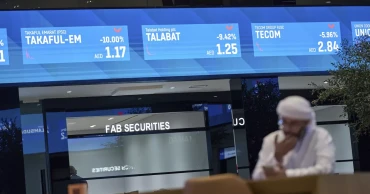
Tariffs, oil prices and other uncertainties weighing down Mideast economies, IMF says
Countries across the Middle East and North Africa face significant challenges to economic growth as the region faces economic uncertainty due to tariff measures, lower-than-recent oil prices and cuts to financial aid, the International Monetary Fund said Wednesday.
The IMF's regional outlook report for the MENA region said Brent crude oil prices — which are down from highs above $120 a barrel in 2022 — are likely to be $65 to $69 per barrel in 2025 and 2026, making energy-exporting economies vulnerable to market fluctuations.
Tariff plans by the U.S. and other countries and geopolitical tensions also have created mounting economic uncertainty globally that is weighing down on the region's economies, which could negatively impact their growth by anywhere from 2% to 4.5%, said Jihad Azour, director for Middle East and Central Asia at the IMF.
"Therefore countries need to react and need to devise policies in order to protect their economies,” Azour said in an interview in Dubai.
Caterpillar warns tariffs may raise Q2 costs by $350m as sales decline
Reductions in foreign aid coming into the region also will play a role, Azour said, as U.S. President Donald Trump has pulled his country back from its position as the world’s single largest aid donor.
“The drop in international assistance, especially for countries in fragility, is something that is creating new risks for the region,” Azour said.
Growth in the MENA region is expected to be 2.6% this year, as compared to 1.8% last year, Azour said, but he added that global uncertainty could impact the outlook.
Economies in the Persian Gulf continue to attract substantial foreign direct investment, rising by nearly 2% of GDP since the pandemic, while other MENA nations struggle with slower inflows.
The IMF says it is willing to work with some of the struggling nations and the new government in Syria. He also said that IMF staff and Lebanese officials were in discussions in Lebanon.
“The Syria recovery will be a long process that would require mobilization of regional and international support and also a comprehensive program of building institutions, reforming their economy, and also addressing a certain number of key issues like infrastructure, refugees and rebuilding a new social contact,” Azour said.
Samsung sees revenue boost from smartphone sales despite chip slump
Despite the global economic uncertainty, MENA nations can drive growth through structural reforms and diversifying economic ties, the report said.
1 year ago

Caterpillar warns tariffs may raise Q2 costs by $350m as sales decline
Caterpillar Inc on Wednesday said it expects tariffs could push its second-quarter costs up by as much as $350 million, as the company reported a drop in first-quarter sales amid weakening demand for its machinery.
Despite recent developments in the US trade policy — including President Donald Trump’s order on Tuesday easing tariffs on imported cars and parts — uncertainty remains over the broader impact of the ongoing trade war on the American economy, reports AP.
The construction and mining equipment maker reported revenue of $14.25 billion for the first quarter, down from $15.8 billion a year ago. The figure also fell short of the $14.54 billion forecast by analysts surveyed by Zacks Investment Research.
Sales volume fell by $1.1 billion, while dealer inventories increased by $100 million — a notable decrease compared to the $1.4 billion inventory build in the same period last year.
Samsung sees revenue boost from smartphone sales despite chip slump
Net income dropped to $2 billion, or $4.20 per share, compared with $2.86 billion, or $5.75 per share, a year earlier. Excluding restructuring costs, adjusted earnings were $4.25 per share, slightly below Wall Street’s expectation of $4.30 per share.
Earlier in April, Caterpillar announced that CEO D. James Umpleby III will transition to executive chairman on 1 May, with Chief Operating Officer Joseph Creed set to take over as CEO and join the board. Umpleby has held the top role for eight years.
Caterpillar expects second-quarter sales to remain similar year-over-year and forecasts a slight decline in full-year sales, consistent with previous guidance.
Shares rose over 3% in premarket trading.
1 year ago

Samsung sees revenue boost from smartphone sales despite chip slump
Samsung Electronics reported a record-high consolidated revenue of 79.14 trillion won ($56 billion) for the January–March quarter, driven by strong sales of its flagship Galaxy S25 and other premium smartphones.
The tech giant’s operating profit rose slightly to 6.7 trillion won ($4.7 billion), up from 6.61 trillion won ($4.6 billion) in the same period last year, reports AP.
Weak grid investment slows Asia-Pacific energy transition: ADB
However, the company’s semiconductor business saw a sharp decline in profitability. Operating profit for the division fell to 1.1 trillion won ($774 million), down from 1.91 trillion won ($1.3 billion) a year ago.
Samsung attributed the decline to falling average selling prices and reduced demand for high-bandwidth memory, as customers await next-generation chip releases.
While the mobile business continues to drive growth, the chip unit—historically a key profit engine for Samsung—faces pressure from market uncertainties and cautious customer spending. The company expects the launch of new memory products to revive demand in the coming quarters.
1 year ago

Amazon is not planning to break out tariff costs online as White House attacks potential move
Amazon says it's not planning to display added tariff costs next to product prices on its site — despite a report that sparked speculation the e-commerce giant would soon show the new import charges, and the White House's fiery comments denouncing the purported change.
The Trump administration’s reaction appeared to be based on a misinterpretation of internal plans being considered by Amazon, rather than a final decision made by the company.
And even those talks were limited. Only Amazon's Haul service — its recently launched, low-cost storefront — “considered the idea” of listing import charges on certain products, company spokesperson Tim Doyle said in a statement sent to The Associated Press. But this "was never approved and is not going to happen.”
Earlier Tuesday, Punchbowl News had reported that Amazon planned to start showing how much of each product's cost derived from tariffs “right next to” its total listed price, citing an anonymous source familiar with the matter.
The Trump administration was quick to criticize news of the potential move. At a briefing with reporters earlier in the day, White House press secretary Karoline Leavitt accused Amazon of taking a “hostile and political act” — and further attacked the company by suggesting it had “partnered with a Chinese propaganda arm.”
A source familiar with the matter, who spoke of the condition of anonymity, told The Associated Press that the president also called Amazon founder Jeff Bezos to complain about the reported plans Tuesday morning.
FTC withdraws request to delay Amazon trial, says it has sufficient resources
The administration seemed to change its tune following Amazon's clarifying statement.
“Jeff Bezos was very nice. He was terrific," President Donald Trump told reporters before leaving the White House for Michigan on Tuesday afternoon. "He solved a problem very quickly and he did the right thing. He’s a good guy.”
Bezos was one of a handful of powerful, ultra-wealthy tech titans who attended Trump's inauguration in January — filling some of the most exclusive seats right behind the president. But Trump's relationship with much of the corporate world has been tested since, as the tariff wars he's launched with nearly all of America's trading partners continue to plunge companies into uncertainty.
Trump’s tariffs — and responding retaliation from targeted countries, notably China — threaten to increase prices for both consumers and businesses. Economists warn these import taxes will hike prices for a range of goods consumers buy each day and lead to worse inflationary pressure.
There's a reason why the Trump administration responded the way it did to Tuesday's Amazon speculation, explains Rob Lalka, a professor of business at Tulane University’s Freeman School — noting that such quick and harsh words from the White House signals concern about companies "redirecting customer frustration.”
At the same time, volatile tariffs put a lot on the line for businesses like Amazon — and those companies may have to play ball, too, while trying to be transparent with customers. Many CEOs across industries have recently shared weaker outlooks due to the new — and at times on-again, off again — import taxes. And some big names have already raised prices while specifically pointing to the costs of tariffs, including Amazon rivals Temu and Shein.
Earlier this month, Temu and Shein said in separate but nearly identical notices that their operating expenses had gone up “due to recent changes in global trade rules and tariffs" — both announcing price hikes to take effect last Friday (April 25).
Temu, owned by the Chinese e-commerce company PDD Holdings, now lists added "import charges" — which have reportedly doubled many items' prices, although those available in local warehouses currently appear to be exempt. Meanwhile, Shein, now based in Singapore, has a checkout banner that reads, “Tariffs are included in the price you pay. You’ll never have to pay extra at delivery.”
Amazon workers in North Carolina vote against joining union
Tariffs may now be in the spotlight like they never were before — but companies have long itemized added costs to the things we purchase, Lalka notes, from city occupancy taxes on a hotel bill to rideshare apps like Uber breaking out local fees. And Amazon itself “already turned to this playbook” when it began collecting state sales taxes, he adds, although another line in your online shopping cart may be less apparent than potentially seeing total import taxes next to each product you scroll by.
It's a message regardless, he explains.
“Companies are always communicating something with us when whenever they are putting things in their receipt,” Lalka said — adding that, while Amazon later confirmed it wasn't actually breaking out tariff prices, the idea didn't come from nowhere. “The reality is that politics are always being played."
1 year ago