World-Business
Japan, South Korea stocks hit records as oil rises on Iran ceasefire doubts
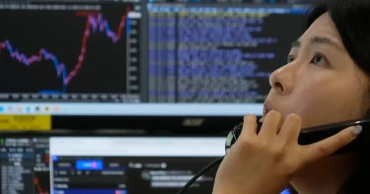
Stock markets in Japan and South Korea climbed to record highs on Monday, driven by strong gains in technology shares and optimism over the global artificial intelligence boom, while uncertainty over the Iran war ceasefire kept oil prices elevated.
Oil prices rose more than 2% as investors closely watched ongoing U.S.-Iran talks, including discussions on reopening the Strait of Hormuz, a key route for global oil and gas shipments.
Asian markets broadly advanced, with Japan’s and South Korea’s benchmark indexes hitting new intraday records. The rally was led by technology stocks, as investors continued to bet on strong demand for AI-related industries.
Japan’s Nikkei 225 rose more than 1.3% and crossed the 67,000 level for the first time, reaching 67,231.28. Shares of SoftBank Group surged more than 9%, adding to recent record gains.
In South Korea, the Kospi index jumped nearly 5% to an all-time high of 8,874.16. Shares of Samsung Electronics rose more than 9%. Official data also showed South Korea’s exports surged 53% in May, supported by strong global demand for semiconductors.
Over the past month, Japan’s Nikkei has gained more than 12%, while South Korea’s Kospi has surged over 27%, reflecting strong momentum in regional equities.
Elsewhere in Asia, Hong Kong’s Hang Seng index rose 0.9%, while China’s Shanghai Composite slipped slightly after weaker-than-expected factory activity data signaled slowing export demand. Australia’s S&P/ASX 200 also edged lower, while Taiwan’s Taiex and India’s Sensex posted gains.
Market sentiment remains influenced by uncertainty over the future of the Iran conflict. Investors are watching whether a proposed ceasefire extension will hold, even as optimism around artificial intelligence and corporate earnings continues to support global equities, including on Wall Street.
Brent crude oil rose 2.4% to $93.33 per barrel in early trading, up sharply from about $70 in late February before the conflict began. U.S. crude also climbed 2.8% to $89.76 per barrel.
On Friday, Wall Street indexes closed at record levels, supported by strong gains in major technology stocks. The S&P 500, Dow Jones Industrial Average and Nasdaq Composite all posted fresh highs, led by companies tied to AI-driven demand.
In currency markets, the U.S. dollar strengthened against the Japanese yen, while the euro weakened slightly.
2 months ago
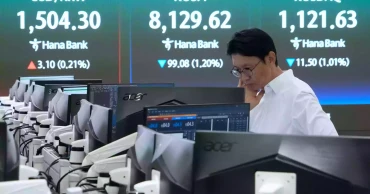
Asian markets fall, oil prices rise after fresh US strikes on Iran
Asian stock markets fell on Thursday as tensions rose following fresh US military strikes on Iran, which Washington described as defensive actions.
At the same time, oil prices climbed by more than $2 per barrel after dropping sharply in the previous session, while US futures also edged lower.
US officials said Central Command forces shot down four Iranian attack drones near the Strait of Hormuz. They also struck a drone control facility in Bandar Abbas that was preparing to launch another drone. These strikes came after earlier military actions earlier in the week.
US President Donald Trump said Iran is “negotiating on fumes” and insisted that upcoming US elections would not influence his approach to ending the ongoing conflict, now in its third month.
Asian markets under pressure
In early trading, Japan’s Nikkei 225 fell 0.4%, while South Korea’s Kospi also dropped 0.4%.
Hong Kong’s Hang Seng Index declined 1.4%, and China’s Shanghai Composite edged up slightly by 0.1%.
Australia’s S&P/ASX 200 slipped 1.4%, while Taiwan’s main index also recorded losses.
Analysts said uncertainty around US–Iran negotiations and the fragile ceasefire continued to weigh on investor confidence.
“Markets remain cautious as it is still unclear whether a lasting deal can be reached,” said Tan Boon Heng of Mizuho Bank.
He added that while both sides appear to avoid escalating tensions publicly, major disagreements remain unresolved.
Oil prices rebound
Oil prices, which had dropped sharply earlier in the week, rose again on renewed concerns over supply risks in the Middle East.
Brent crude gained more than $2 to around $94 per barrel in early trading, while US crude also moved higher.
Earlier, oil had fallen after hopes that a ceasefire between the US and Iran might hold, easing fears over disruptions in the Strait of Hormuz — a key global oil shipping route.
Wall Street at record highs
On Wednesday, US stock markets had closed slightly higher, with all three major indexes — the S&P 500, Dow Jones Industrial Average, and Nasdaq — reaching record levels.
Shares of airlines and cruise companies rose as falling oil prices earlier in the week boosted expectations of lower fuel costs.
Despite ongoing geopolitical uncertainty and inflation concerns, strong corporate earnings have helped support market gains.
Currency movements
In currency trading, the US dollar held steady against the Japanese yen, while the euro slipped slightly.
2 months ago
EU apparel imports slump 11.27 percent in Jan-Feb; Bangladesh exports face sharp decline
The European Union's apparel imports experienced an 11.27 percent negative growth during the January-February period of 2026, totaling €13.83 billion, according to the latest data from Eurostat.
The contraction in the EU fashion retail market was driven by a 6.23 percent decline in import volume and a 5.38 percent decrease in average unit prices compared to the same period last year.
Bangladesh, one of the primary apparel suppliers to the EU, took a significant hit as its garment exports to the bloc fell to €2.89 billion during the first two months of 2026, dropping sharply from €3.57 billion recorded in the corresponding period of 2025.
EU delegation visits Apex factory, praises sustainability efforts
The country registered a substantial 19.26 percent negative growth in export value to the EU, compounded by an 11.14 percent decrease in shipment volume and a 9.13 percent drop in unit prices.
A month-on-month comparison reveals that in February 2026 alone, Bangladesh's apparel exports to the EU declined by 12.39 percent in value, 3.30 percent in volume, and 9.39 percent in unit prices compared to February 2025.
"Exporters are grappling with severe margin compression, losing revenue on both ends due to fewer work orders and lowered per-unit prices amid global demand softness," said Mohiuddin Rubel, Former Director of the Bangladesh Garment Manufacturers and Exporters Association (BGMEA) and Additional Managing Director of Denim Expert Ltd.
A broad-based downward trend was visible across almost all major manufacturing hubs supplying the European market.
China, the largest apparel exporter to the EU, managed to increase its export volume by 1.34 percent, but still registered a 4.01 percent decline in total value, reaching €4.20 billion, due to a 5.27 percent drop in its unit prices.
Among other major competitors, Turkey faced a massive 22.91 percent decline in its apparel exports to the EU, falling to €1.20 billion. Vietnam also remained in negative territory with a 2.06 percent decline in export value, totaling €711.73 million, despite recording a 6.56 percent increase in its unit prices.
Other key supplying nations, including India, Pakistan, and Cambodia, similarly mirrored the negative growth trend, reflecting persistent cost-of-living pressures and cautious consumer spending across the Eurozone.
2 months ago

Asian shares rise following Wall Street gains as oil prices stay high
Asian stock markets moved higher on Friday after modest gains on Wall Street, while oil prices continued to rise as uncertainty surrounding the Iran war persisted and diplomatic efforts showed little progress.
Oil prices had dropped slightly in US trading on Thursday, helping ease pressure on global bond markets as Treasury yields fell. Earlier this week, rising yields had raised concerns about slower global economic growth and weaker demand for stocks, bitcoin and other investments.
Japan’s Nikkei 225 jumped 2.7% to 63,352.44 after data showed inflation slowed to a four-year low of 1.4% in April, despite higher fuel costs linked to the war.
South Korea’s Kospi index gained 0.6% to 7,860.59.
In Hong Kong, the Hang Seng Index rose 1.2% to 25,685.65, while China’s Shanghai Composite Index added 0.5% to 4,096.24.
Australia’s S&P/ASX 200 advanced 0.5% to 8,664.00. Taiwan’s Taiex climbed 1.5%, while India’s Sensex edged up 0.2%.
Oil prices remained high due to concerns over disruptions around the Strait of Hormuz, a key route for global oil and gas shipments. Shipping activity in the area remains far below levels seen before the Iran war began in late February. Ongoing talks between the United States and Iran have also failed to provide clarity.
Meanwhile, Republicans in Congress faced difficulties on Thursday in gathering enough support to block legislation that would force President Donald Trump to pull the US out of the conflict. Votes on the issue have now been pushed back to June.
Brent crude, the global benchmark, rose 1.5% to $104.08 per barrel. Before the war started in February, it was trading around $70 per barrel. US benchmark crude gained 0.9% to $97.25 per barrel.
“Markets are still looking for signs of progress in possible US-Iran negotiations,” ING commodities strategists Warren Patterson and Ewa Manthey said in a note Friday. “There are some hopeful signs, but uncertainty still dominates.”
On Wall Street, the S&P 500 rose 0.2% to 7,445.72 on Thursday. The Dow Jones Industrial Average gained 0.6% to 50,285.66, while the Nasdaq composite added 0.1% to 26,293.10.
Shares of Nvidia fell 1.8% despite reporting stronger-than-expected quarterly earnings driven by demand for artificial intelligence technology. Some analysts said the company’s stock may still be undervalued.
Southwest Airlines rose 2.7% and American Airlines gained 4.9% after oil prices briefly eased before climbing again. Shares of Ralph Lauren surged 13.9% following better-than-expected quarterly results.
In currency trading early Friday, the yield on the US 10-year Treasury note stood at 4.56%, down from above 4.67% earlier this week when inflation concerns linked to the war pushed yields sharply higher.
The US dollar rose slightly to 159.02 Japanese yen from 158.98 yen. The euro slipped to $1.1613 from $1.1619.
2 months ago

Global shares mixed as oil swings on Iran war uncertainty; South Korea’s Kospi drops 3%
Global stock markets traded mixed on Tuesday as uncertainty over the Iran war and its impact on oil supply continued to unsettle investors.
European markets opened higher, with France’s CAC 40 rising 0.6% to 8,034.62, Germany’s DAX gaining 1.1% to 24,574.98 and Britain’s FTSE 100 up 0.6% at 10,384.15.
In contrast, US futures pointed slightly lower, with the S&P 500 futures down 0.2% and Dow Jones futures slipping less than 0.1%.
In Asia, Japan’s Nikkei 225 fell 0.4% to close at 60,550.59, erasing earlier gains despite government data showing the economy expanded for a second straight quarter in January–March, driven mainly by stronger-than-expected consumer spending.
South Korea’s Kospi dropped sharply, ending 3.3% lower at 7,271.66 after falling more than 4% earlier in the session. Major stocks were hit hard, with Hyundai Motor falling 8.9%, LG Electronics down 11.7%, Samsung Electronics losing 2% and SK Hynix declining 5.2%, tracking losses in US tech shares.
Elsewhere in the region, Australia’s S&P/ASX 200 rose 1.2% to 8,604.70, while Hong Kong’s Hang Seng gained 0.5% to 25,797.85 and Shanghai Composite added 0.9% to 4,169.54.
In energy markets, US crude oil fell 63 cents to $108.03 per barrel, while Brent crude dropped $1.59 to $110.51 per barrel. Prices have been volatile amid concerns that the Iran war could disrupt shipping through the Strait of Hormuz, a key route for global oil transport.
Brent crude had been trading near $70 before the conflict escalated. Prices briefly eased after US President Donald Trump signalled a pause on a planned military strike on Iran, saying “serious negotiations” were underway.
On Wall Street overnight, the S&P 500 slipped 0.1%, the Dow gained 0.3% and the Nasdaq fell 0.5%.
Investors are now awaiting earnings from major US companies, including Nvidia, Target, Home Depot and Walmart, due later this week.
In currency trading, the US dollar rose to 159.08 yen from 158.84 yen, while the euro slipped to $1.1632 from $1.1657.
2 months ago

BGMEA, Mount Elizabeth Hospital launches a special 'Privilege Card' for apparel exporters
To facilitate hassle-free, world-class medical services for apparel exporters, a special "Privilege Card" from Singapore's renowned Mount Elizabeth Hospital was officially launched for the members of the Bangladesh Garment Manufacturers and Exporters Association (BGMEA) and their families.
The card was unveiled at a joint ceremony organized by BGMEA and Mount Elizabeth Hospital at a city hotel on Sunday, according to a press release issued on Monday.
BGMEA, BKMEA leaders meet PM
The launch follows a Memorandum of Understanding (MoU) signed on December 10, 2025, between BGMEA and Parkway Hospitals Singapore (now IHH Healthcare Singapore), under the leadership and initiative of BGMEA Directors Shah Rayeed Chowdhury and Nafis-Ud-Doula.
Speaking at the event, BGMEA Director Shah Rayeed Chowdhury said, "We are delighted that the CEO of Mount Elizabeth Hospital, Singapore, has joined us in person, demonstrating their utmost commitment to BGMEA members.
Through this card, BGMEA general members and their families will receive direct VIP status, special corporate discounts, and top priority within Singapore's world-class medical network, completely by passing any middleman or bureaucratic delays, said Shah Rayeed Chowdhury.
He added that this initiative is part of the current board's ongoing and relentless efforts to ensure the overall welfare of its members.
Yong Yih Ming, Chief Executive Officer of Mount Elizabeth Hospital, expressed his pride in partnering with a leading trade organization like BGMEA. "Through this Privilege Card, BGMEA members and their families can access advanced and specialized healthcare services in Singapore with premium convenience, comfort, and top priority," he said.
Zahid Hasan Khan, Director of Mount Elizabeth Hospital Singapore (Bangladesh Office), detailed the scope of benefits under the new card.
Under the privilege facility, BGMEA members and their dependents will enjoy special corporate discounts on various fixed medical packages, including Executive Health Screenings.
Other exclusive benefits include- 24-hour dedicated emergency hotline access, highest priority in medical visa processing and specialist appointments, complimentary airport pickup from Singapore’s Changi Airport to the hospital, free medical care planning, consultations, and institutional support.
The launching ceremony was also attended by IHH Healthcare Country Manager (Bangladesh, China, and Myanmar) Jack Tan; BGMEA Director Joarder Mohammed Hosne Quamar Alam, among others were present in the event.
2 months ago
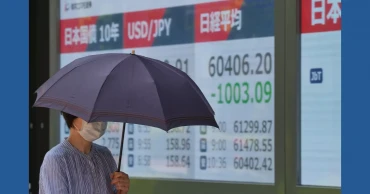
Stocks slip, oil prices jump as Trump warns Iran over stalled talks
Asian stock markets mostly fell on Monday while oil prices surged after US President Donald Trump warned that “the clock is ticking” for Iran as efforts to reach a lasting agreement to end the conflict remain stalled.
US stock futures also moved lower, with major indexes losing more than 0.6 percent.
Japan and South Korea pulled back further after recent record highs.
Japan’s Nikkei 225 dropped 0.9 percent to 60,843.09, led by losses in technology shares. The index had touched a record intraday high above 63,000 last week.
The yield on Japan’s 10-year government bond rose to 2.8 percent, its highest level since the late 1990s, as the Bank of Japan gradually raises interest rates and higher energy prices fuel inflation concerns.
In South Korea, the Kospi gained 0.9 percent to 7,558.50 after recovering from earlier losses. The index had crossed 8,000 on Friday, driven by strong demand for technology stocks linked to the artificial intelligence boom, before easing on profit-taking.
Hong Kong’s Hang Seng Index fell 1.6 percent to 25,543.32, while China’s Shanghai Composite slipped 0.1 percent to 4,132.24 after weaker-than-expected retail sales data for April.
Australia’s S&P/ASX 200 lost 1.4 percent to 8,508.40. Taiwan’s Taiex declined 1.1 percent, and India’s Sensex was down 0.6 percent.
Oil prices climbed sharply after Trump said in a social media post that Iran should act quickly or “there won’t be anything left of them,” following a phone call with Israeli Prime Minister Benjamin Netanyahu.
Investors remain cautious because of uncertainty over the Strait of Hormuz, a key route for global oil and gas shipments. The waterway remains largely closed, while the US has maintained a maritime blockade on Iranian ports since last month.
Tensions increased further after a weekend drone attack on a nuclear power plant in the United Arab Emirates.
Brent crude, the international benchmark, rose 1.9 percent to $111.31 per barrel. US benchmark crude gained 2.3 percent to $107.83 per barrel. Oil had been trading near $70 a barrel in late February before the conflict began.
Analysts at ING Group said the risk of renewed escalation is increasing, despite some improvement in shipping activity around the Strait of Hormuz.
The oil market is also reacting to the lack of progress following last week’s summit in Beijing between Trump and Chinese President Xi Jinping.
The White House said both countries agreed that the Strait of Hormuz must remain open. Washington had hoped Beijing could use its close economic ties with Tehran to help broker a peace deal.
In the bond market, the yield on the US 10-year Treasury note rose to about 4.63 percent, up from 4.47 percent last Thursday and nearly 4 percent before the conflict began.
On Friday, the benchmark S&P 500 fell 1.2 percent from the record high it set a day earlier. The Dow Jones Industrial Average dropped 1.1 percent, while the Nasdaq Composite lost 1.5 percent.
In currency trading, the US dollar rose to 159.02 Japanese yen from 158.62 yen. The euro edged up to $1.1626 from $1.1622.
2 months ago

Minister calls for stronger Bangladesh-China partnership in green textile industry
Commerce, Industries, and Textiles and Jute Minister Khandakar Abdul Muktadir on Thursday called for stronger Bangladesh-China cooperation to promote sustainable, environment-friendly and technology-driven growth in the country’s textile and apparel sector.
Speaking as the chief guest at the opening ceremony of the three-day 2nd Bangladesh-China Green Textile Expo 2026 being held at the International Convention City Bashundhara in the capital, he said Chinese investment, technology and innovation are crucial to making Bangladesh’s textile and garment industries more competitive and sustainable.
BFTI to be made hub for self-reliant trade knowledge: Minister
2 months ago
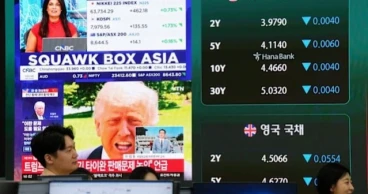
Asian markets mixed as investors assess Trump-Xi summit
Asian stock markets closed mixed on Thursday, with Chinese shares falling as investors closely watched the outcome of U.S. President Donald Trump’s summit with Chinese President Xi Jinping in Beijing.
Trump and Xi met at the Great Hall of the People to discuss bilateral relations and Taiwan, but analysts said they did not expect any major breakthroughs.
Japan’s benchmark Nikkei 225 fell 1% to 62,654.05 after briefly hitting a new intraday record above 63,700, supported by strong corporate earnings.
South Korea’s Kospi rose 1.8% to a record close of 7,981.41, driven by strong gains in technology stocks amid continued enthusiasm over artificial intelligence.
In China, the Shanghai Composite Index dropped 1.5% to 4,177.92, while Hong Kong’s Hang Seng Index edged up 0.1% to 26,426.06.
Australia’s S&P/ASX 200 gained 0.1% to 8,640.70. Taiwan’s Taiex rose 0.9%, and India’s Sensex advanced 1%.
Oil prices moved higher as the conflict in Iran entered its third month with no clear end in sight, raising concerns over global energy supplies.
Some investors hoped the Trump-Xi meeting could help ease tensions, after U.S. officials said Beijing may use its economic ties with Tehran to encourage Iran to reopen the Strait of Hormuz, a vital shipping route for global oil exports.
Brent crude, the international benchmark, rose 0.3% to $105.95 per barrel. Before the Iran conflict began in late February, Brent was trading at around $70 per barrel.
U.S. benchmark crude gained 0.4% to $101.44 per barrel.
The International Energy Agency said on Wednesday that supply disruptions through the Strait of Hormuz were reducing global oil inventories at a record pace.
Investors were also monitoring developments involving Nvidia, as its CEO Jensen Huang joined Trump’s delegation to China along with Elon Musk of Tesla and Tim Cook of Apple.
On Wall Street, technology shares led gains overnight.
The S&P 500 rose 0.6% to a record 7,444.25. The Nasdaq Composite jumped 1.2% to an all-time high of 26,402.34, while the Dow Jones Industrial Average slipped 0.1% to 49,693.20.
In the bond market, the yield on the 10-year U.S. Treasury note eased to 4.46% from 4.47%, but remained well above the level seen before the Iran conflict began.
A report released Wednesday showed U.S. wholesale prices increased sharply in April, largely due to higher energy costs.
The U.S. Senate also confirmed Kevin Warsh as the next chair of the Federal Reserve, replacing Jerome Powell, who had faced criticism from Trump for not cutting interest rates more aggressively.
In currency trading, the U.S. dollar rose slightly to 157.92 Japanese yen from 157.86 yen. The euro was unchanged at $1.1711.
2 months ago

Asian markets mixed as AI rally cools and Middle East tensions keep investors cautious
Asian stock markets were mixed on Wednesday as excitement over artificial intelligence-related shares eased and concerns over the ongoing conflict involving Iran continued to weigh on investor sentiment.
Nikkei 225 in Japan rose 0.8 percent in afternoon trading, while Kospi in South Korea jumped 2.7 percent, recovering from earlier losses linked to uncertainty over possible government measures involving AI company profits.
In Australia, the S&P/ASX 200 fell 0.5 percent. Hang Seng Index in Hong Kong was little changed, while Shanghai Composite Index in China gained 0.6 percent.
Market analysts said strong corporate earnings and continued interest in AI stocks are still supporting markets, but rising oil prices and geopolitical tensions are making investors more cautious.
Oil prices slipped in early trading but remained far higher than before the conflict in the Middle East intensified. Analysts said the disruption to shipping through the Strait of Hormuz has added to concerns about global energy supplies.
On Wall Street overnight, the S&P 500 fell 0.2 percent from its record high. The Dow Jones Industrial Average edged up 0.1 percent, while the Nasdaq Composite dropped 0.7 percent.
Technology and chip stocks led the decline. Intel fell 6.8 percent, while Micron Technology lost 3.6 percent.
In the bond market, U.S. Treasury yields rose, reflecting expectations that the Federal Reserve will keep interest rates unchanged to control inflation.
In currency trading, the U.S. dollar strengthened slightly against the Japanese yen, while the euro edged lower against the dollar.
Investors are now watching developments in the Middle East and signals from central banks for clues about the direction of global markets.
2 months ago