World-Business

China (Hong Kong) firm to invest $19.59m in RMG factory at Uttara EPZ
Tianford Bangladesh Textile Co., Ltd., a China (Hong Kong)-based company, has signed a land lease agreement with the Bangladesh Export Processing Zones Authority (BEPZA) to establish a garment manufacturing facility at Uttara Export Processing Zone (EPZ), with an investment of US$19.59 million.
The project is expected to create employment opportunities for 3,254 Bangladeshi nationals, said a press release.
The agreement was signed on Sunday at the BEPZA Complex in Dhaka. Md Tanvir Hossain, Executive Director (Investment Promotion) of BEPZA, signed on behalf of the authority, while Ge Zhenyu, Nominee Director of Tianford Bangladesh Textile Co., Ltd., signed on behalf of the investing company.
Production at violence-hit Uttara EPZ to resume Thursday
BEPZA Executive Chairman Major General Mohammad Moazzem Hossain witnessed the signing ceremony.
According to BEPZA officials, the company will establish the factory on 24,000 square metres of land at Uttara EPZ.
The facility will manufacture a wide range of woven and knit garments, including bottoms, tops, shirts, jeans, jackets, T-shirts, polo shirts, sportswear, sweaters, hoodies and various types of jersey products.
The factory is expected to have an annual production capacity of approximately seven million pieces.
Chinese company to invest $28 million in Uttara EPZ
Its products will be exported to major international markets including the United States, Canada, Japan, China, Australia, Brazil, the United Kingdom and European countries.
Welcoming the investment, BEPZA Executive Chairman Major General Mohammad Moazzem Hossain reaffirmed the authority’s commitment to ensuring seamless services and maintaining a business-friendly environment to support successful implementation of the project.
Ge Zhenyu expressed satisfaction with BEPZA’s investor-friendly initiatives and voiced confidence in Bangladesh as an increasingly attractive destination for foreign investors.
He said construction of the factory is scheduled to begin in April this year, with exports expected to commence next year.
5 months ago

2,100 tonnes of rice imported through Benapole Port
A total of 2,100 metric tonnes of non-basmati coarse rice have been imported through Benapole port, over six working days.
The rice consignments, brought in through 15 separate shipments, entered the port’s 31 No. transshipment yard, said Benapole Port Director Shamim Hossain on Tuesday.
According to port sources, the imports were made between Jan 27 and Feb 17.
Earlier, 6,128 metric tonnes of rice were imported through the port during the four months from August to November last year.
Benapole Port on high alert after import of 125 tonnes of MGMCL
On January 18, the government allowed 232 importing firms to bring in 2,00,000 metric tonnes of rice, setting March 3 as the deadline for completing the imports and marketing the rice in Bangladesh.
The importing firm, Haji Musa Karim & Sons, brought the rice from India, while C&F agent M/s Bhuiya Enterprise is handling the clearance process.
Abdus Samad, proprietor of Haji Musa Karim & Sons, said they imported 2,100 metric tonnes of coarse rice from India in 58 trucks over six days.
5 months ago

BGMEA welcomes landmark Bangladesh–USA tariff agreement
The Bangladesh Garment Manufacturers and Exporters Association (BGMEA) has welcomed a significant new trade agreement between Bangladesh and the United States, signed today (Tuesday) following nine months of intensive bilateral discussions.
The agreement introduces a strategic reduction in reciprocal tariffs and provides a major boost for garments made from USA raw materials. In its initial response, BGMEA expressed sincere gratitude to the USA Government and the Office of the United States Trade Representative (USTR), as well as to Chief Adviser Dr. Muhammad Yunus and the interim government’s leadership for their roles in achieving this milestone.
BGMEA secures special healthcare benefits for members
Reciprocal Tariff Reduction: The standard tariff on Bangladeshi products in the U.S. market will be reduced from 20 percent to 19 percent.
Zero-Tariff Provision: Notably, garments manufactured in Bangladesh using cotton and man-made fibers imported from the United States will be exempt from reciprocal tariffs.
Market Expansion: BGMEA believes these provisions will significantly enhance Bangladesh’s competitive edge and access to the USA market.
To maximize these benefits, BGMEA emphasized the need for local spinners to ensure competitive yarn pricing, particularly since USA cotton is of superior quality but comes at a higher cost. The association also noted that ensuring the traceability and proper valuation of USA origin raw materials will be critical for exporters.
BGMEA Instructs Factories Not to Respond to RSC Letters on Non-OSH Complaints
5 months ago
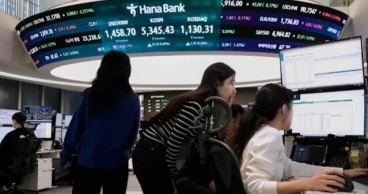
Asian stocks mostly higher as Japan’s post-election rally lifts markets
Asian stock markets mostly advanced on Tuesday, led by strong gains in Japan as investor confidence improved following a landmark election victory.
Japan’s benchmark Nikkei 225 jumped 2.6 percent to 57,821.58, setting a new record. The index extended its rally from Monday, when it surged after the ruling party’s landslide win in parliamentary elections cleared the way for Sanae Takaichi to become the country’s first female prime minister. Investors are betting that the new leadership will push ahead with economic reforms that could support growth and corporate earnings.
Elsewhere in the region, Australia’s S&P/ASX 200 rose 0.3 percent to 8,893.60, while South Korea’s Kospi gained 0.6 percent to 5,327.80. Hong Kong’s Hang Seng climbed 1.0 percent to 27,300.00, and China’s Shanghai Composite added 0.2 percent to 4,130.20.
On Wall Street, US stocks closed higher, coming off their strongest session since May, although concerns remain that equity valuations have become stretched after the recent rally. The S&P 500 rose 0.5 percent to 6,964.82, edging closer to its all-time high. The Nasdaq composite gained 0.9 percent, while the Dow Jones Industrial Average was little changed.
Investors continue to watch whether massive spending on artificial-intelligence technology by major companies will deliver sufficient returns. Still, optimism around the sector lifted chipmakers, with shares of Nvidia and Broadcom posting solid gains.
January export earnings dip slightly amid mixed global trends
In the bond market, US Treasury yields were largely steady ahead of key economic data later this week, including reports on employment and inflation. The data could shape expectations for future interest-rate moves by the US Federal Reserve.
Gold prices rose 2 percent to $5,079.40 per ounce amid continued volatility, while silver posted a sharp jump. Bitcoin hovered just below $71,000 after recent swings.
Oil prices were little changed in early Asian trading, and the US dollar edged slightly lower against the Japanese yen, while the euro also weakened modestly against the dollar.
5 months ago

Logistics key to supply chain resilience, economic stability: AmCham President
Calling logistics a foundational pillar of modern economies, Syed Ershad Ahmed, President of AmCham Bangladesh, said efficient logistics systems are essential for sustaining supply chains, supporting economic growth, and ensuring the continuity of everyday life.
The global logistics landscape is being rapidly reshaped by forces such as AI and automation, decarbonization and fuel transitions, geopolitics, regionalization, and supply chain resilience, and stressed the need to bridge existing knowledge and capacity gaps to better support the country’s growing trade and investment needs, he said.
The AmCham President made the remarks at a focus group discussion titled “Framing the Logistics Sector Landscape: Challenges, Opportunities, and the Way Forward,” held at a city hotel on Tuesday.
Read More: AmCham honours Khaleda Zia as legacy of an exemplary leader
Drawing on over three decades of professional experience, he noted that while Bangladesh’s logistics sector has evolved, it continues to lag behind regional competitors and remains poorly understood domestically.
M. Masrur Reaz, Chairman, Policy Exchange Bangladesh, highlighted key challenges and opportunities in Bangladesh’s logistics sector, affirming its critical role in trade competitiveness through cost reduction, faster delivery, and efficiency gains.
Referring to the Chattogram port labor strike, he illustrated how logistics disruptions can severely impact the national economy, noting that logistics infrastructure and port capacity expansion will be crucial to supporting the projected GDP of USD 760 billion by 2030, while a 1% reduction in logistics costs could increase exports by around 7%, particularly as Bangladesh approaches LDC graduation.
He also identified major implementation gaps in the National Logistics Policy, including government monopolies in rail and air cargo, weak inter-ministerial coordination, and the absence of central logistics authority.
Read More: AmCham dialogue stresses urgent reforms to boost investment competitiveness
Seasoned entrepreneur Mahbubul Anam, Managing Director of CF Global, outlined key challenges in air logistics and express courier operations, emphasizing the need for stronger public–private coordination, supportive policy frameworks, stakeholder-informed infrastructure planning, and adequate equipment.
He stressed the importance of cost rationalization, capacity expansion, efficient courier services, and robust contingency arrangements to support time-sensitive shipments, particularly as e-commerce-driven demand for express logistics continues to grow.
He noted that logistics costs at Dhaka airport are 20–25% higher than those of road transport and underscored that stronger public–private cooperation is essential to address these constraints.
Nusrat Nahid Babi, Senior Transport Specialist, South Asia, The World Bank, said that Bangladesh’s logistics reform momentum since 2022 must be reaffirmed by the new government through clear priorities and high-level consensus.
She outlined a phased reform agenda structured around five thematic pillars: policy and procedural simplification; multimodal logistics infrastructure and connectivity; skills and institutional capacity development; supply-chain digitalization; and investment in logistics.
Other speakers and the overall discussion emphasized the need to move decisively from policy intent to implementation, including ratification of the National Logistics Policy 2025, supported by a clear execution roadmap.
Md. Moinul Huq, Citi Country Officer, Bangladesh Citibank, N.A., highlighted the urgent need for customs authorities to operationalise provisions of the Customs Act 2023 by clearly defining electronic document submission and payment modalities.
Participants expressed concern about the heavy dependence on RMG exports, slow progress in new infrastructure development, and poor implementation of electronic documentation despite the presence of enabling policies.
Read More: AmCham hosts session on Economic and Investment Outlook in Dhaka
5 months ago
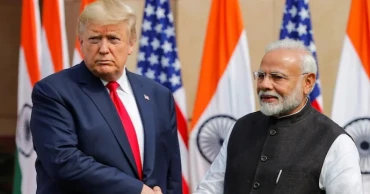
US and India reach trade deal, Trump announces after call with Modi
US President Donald Trump announced on Monday that he has agreed to a trade deal with Indian Prime Minister Narendra Modi. Under the agreement, the US will reduce tariffs on Indian goods from 25% to 18%.
In a post on Truth Social, Trump said India has agreed to eliminate trade barriers entirely and will stop buying Russian oil. The 25% tariff penalty previously imposed over India’s purchase of Russian oil will also be removed.
The announcement comes less than a week after India and the European Union finalized a landmark trade agreement following nearly two decades of negotiations.
Modi expressed his delight over the deal in a post on X, saying he was pleased that an agreement had been reached.
Trump added that the morning phone call with Modi covered both trade and the Russia-Ukraine conflict. He said Modi agreed to increase oil purchases from the US and possibly Venezuela, and at Modi’s request, he immediately consented to the trade deal. This agreement will see India reduce tariffs and non-tariff barriers to zero.
Trump threatens 10% tariff on 8 European countries over Greenland stance
Trump further stated that Modi committed to purchasing more than $500 billion worth of American goods, including energy, technology, agriculture, and coal products.
The trade relationship between the US and India had been strained since August, when the US imposed a 50% tariff on Indian goods, the highest on any Asian country, including a 25% penalty tied to Indian oil imports from Russia.
A White House official confirmed that the Russian oil-linked tariffs will be removed and other tariffs reduced to 18% under the new deal.
Modi thanked Trump for the announcement, saying the cooperation between the two largest democracies will benefit their people and open up significant opportunities for mutually beneficial trade.
Indian exports to the US had fallen sharply after the previous tariffs were applied. The recent India-EU trade deal will also reduce tariffs on a wide range of goods and services and includes a joint security partnership.
#With inputs from BBC
6 months ago

January export earnings dip slightly amid mixed global trends
Bangladesh's export earnings saw a marginal decline of 0.5 percent in January 2026, totaling US $4.41 billion compared to $4.43 billion during the same month last year.
According to the latest data from the Export Promotion Bureau (EPB) released on Monday, the cumulative export earnings for the first seven months (July–January) of the 2025–26 fiscal year fell by 1.93 percent to $28.41 billion.
Despite the slight year-on-year dip, January demonstrated a significant recovery in trade momentum. Compared to December 2025, which saw a sharp 14.25 percent decline in earnings, January posted a double-digit month-on-month growth of 11.22 percent. This upward shift suggests a stabilization of the export sector following several months of consistent contraction.
Read More: Bangladesh's garment exports to Europe exceed €18 billion, growing over 7.5%
The Ready-Made Garments (RMG) sector remains the backbone of the nation's economy, accounting for $22.98 billion of the total July–January earnings. The sector registered a robust 11.77 percent growth over the previous year, reflecting sustained global demand and enhanced competitiveness despite broader economic headwinds.
Performance in other major sectors was mixed.
Growth Leaders: Leather and leather goods, jute and jute products, home textiles, plastic goods, and light engineering products all registered growth on both a year-on-year and month-on-month basis.
Other Sectors: Agro-processed products and frozen fish showed varied trends, struggling to match the steady growth of the apparel sector.
Key Export Destinations:
he United States maintained its status as the top destination for Bangladeshi products, with exports reaching $ 5.21 billion during the July–January period, marking a 1.64 increase.
Read More: Bangladesh exports rise in Dec on monthly momentum, still down from year earlier
United States: Recorded a 3.59 percent year-on-year growth and 2.24 percent month-on-month growth.
Europe: Germany and the United Kingdom followed as the second and third largest markets, earning $ 2.85 billion and $ 2.77 billion, respectively.
Other Markets: Spain and the Netherlands also recorded positive turnarounds, reaffirming strong trade ties with the European Union.
While the overall recovery remains modest due to global trade conditions, the double-digit growth between December and January provides a sense of optimism for exporters.
Analysts suggest that if the current momentum in the RMG and leather sectors continues, the fiscal year may conclude with a stronger performance than the initial months indicated.
6 months ago

Gold prices plunge over 9%: what triggered the fall and where prices may head next
Gold’s sharp slide—down more than 9 percent in a single session—has rattled global markets and raised a pressing question among investors: will prices sink below the $4,403 mark or stage a recovery?
Spot gold fell to around $4,403 an ounce, marking its steepest one-day decline in decades. The selloff came amid broad weakness across commodities, equities and metals, following the nomination of Kevin Warsh as the next chair of the US Federal Reserve. The move sparked a surge in the US dollar and triggered heavy profit-taking after gold’s recent record highs.
Gold prices drop by Tk6,590 per bhori in Bangladesh
A stronger dollar typically weighs on gold, making the metal more expensive for investors holding other currencies. At the same time, easing geopolitical tensions and tighter trading conditions combined to intensify the downturn.
What drove gold’s steep fall?
Markets reacted swiftly after US President Donald Trump named Warsh, who is widely seen as hawkish on inflation, to lead the Federal Reserve. Expectations of a tougher stance on interest rates lifted the dollar and dampened demand for non-yielding assets like gold.
Spot gold slid more than 9 percent to $4,403.29 per ounce, its sharpest daily fall since 1983. Silver fared even worse, dropping over 13 percent on Monday after plunging 27 percent on Friday. Both metals had hit record highs just days earlier.
Selling pressure accelerated after CME Group raised margin requirements for metal futures, increasing trading costs and forcing many investors to pare back leveraged positions. Analysts said the move led to a rapid unwinding of speculative bets built up during the recent rally, reports The Economic Times.
Gold and silver were sold alongside equities, pointing to a broader market shift as investors reassessed risk. The dollar’s continued strength after Warsh’s nomination added further pressure on precious metals.
Beyond gold: a wider commodities selloff
The downturn spread well beyond bullion markets. Oil prices fell nearly 5.5 percent as signs of easing US-Iran tensions reduced supply concerns. Trump said Iran was in talks with Washington, while Tehran signalled it would not conduct live-fire drills in the Strait of Hormuz.
Gold sees sharpest one-day fall, down Tk15,746 per bhori
Industrial metals also came under heavy pressure. Copper prices slid sharply as demand softened ahead of China’s Lunar New Year holiday, with the most-active contract on the Shanghai Futures Exchange falling 9 percent. Aluminium, nickel and tin also hit limit-down levels.
On the London Metal Exchange, copper dropped nearly 5 percent, while aluminium, zinc, lead, nickel and tin posted steep losses, weighed down by high inventories and subdued buying interest.
Will gold fall further or rebound?
The immediate focus is whether gold will break below the $4,403 level or find support. Analysts say the selloff appears driven more by position unwinding and profit-taking than by a deterioration in fundamentals, suggesting the move could be a correction after an unusually rapid rally.
Outlooks remain divided. Some analysts believe gold could regain strength later in the year if economic risks resurface or expectations around US interest rates shift. For now, however, volatility is likely to persist as markets digest signals on US monetary policy and global growth.
What should investors watch?
Market watchers advise caution in the near term. Movements in the US dollar and signals from the Federal Reserve will be key drivers for gold prices. While some see the recent fall as a healthy correction, others warn that price swings could remain sharp.
7.8 million ounces of new gold resources discovered in Saudi Arabia
Long-term investors may prefer to wait for clearer signs of stability before increasing exposure, while short-term traders are urged to limit leverage amid higher margins and heightened volatility. Diversification, analysts say, remains crucial as markets navigate an uncertain phase.
6 months ago

Gold price drops by Tk 14,638 per bhori in Bangladesh a day after record high
A day after hitting a record high, the prices of gold in Bangladesh fell sharply on Friday, with the Bangladesh Jewellers Association (BAJUS) cutting the rate by Tk 14,638 per bhori.
In a notification, BAJUS said it has fixed the price of 22-carat gold at Tk 271,363 per bhori (11.664 grams), effective immediately.
The jewellers’ body explained that the latest reduction comes following a fall in the price of pure gold (tejabi sona) in the local market.
According to the revised rates, the price of 21-carat gold has been set at Tk 258,999 per bhori, 18-carat gold at Tk 222,024 per bhori, while the price of traditional gold stands at Tk 182,833 per bhori.
Gold price skyrockets to Tk262,440 per bhori overnight in Bangladesh
In addition to the selling price, buyers will have to pay a mandatory 5 percent VAT set by the government and a minimum 6 percent making charge fixed by BAJUS. However, the making charge may vary depending on the design and quality of jewellery.
On January 29, BAJUS had raised the price of gold by Tk 16,213 per bhori, setting the rate at Tk 286,000 — the highest ever in the country’s gold market.
So far in 2026, gold prices have been adjusted 17 times, with increases on 13 occasions and decreases on four.
Alongside gold, BAJUS has also reduced silver prices. The price of 22-carat silver has been cut by Tk 816 to Tk 7,757 per bhori, marking the first reduction after four consecutive hikes.
Under the new rates, 21-carat silver will sell at Tk 7,407 per bhori, 18-carat at Tk 6,357 per bhori, while traditional silver has been fixed at Tk 4,782 per bhori.
Gold hits record high in Bangladesh as prices jump Tk 7,348 per bhori
Meanwhile, gold prices have also shown a downward trend in the global market.
In the spot market, gold was trading at around USD 5,600 per ounce on Thursday, which fell to about USD 5,100 on Friday — a decline of more than 4 percent within a day.
6 months ago

Amazon confirms 16,000 job cuts after internal email sent in error
US tech giant Amazon has confirmed it will lay off about 16,000 employees, hours after an internal email detailing the cuts was mistakenly sent to staff.
The email, seen by the BBC, was circulated late Tuesday and referred to job losses affecting employees in the United States, Canada and Costa Rica as part of efforts to streamline operations and strengthen the company. The message was quickly withdrawn, suggesting it had been shared accidentally.
Amazon formally announced the job reductions early Wednesday, saying the move is aimed at cutting bureaucracy and improving efficiency.
Beth Galetti, Amazon’s senior vice president of people experience and technology, said the company was not planning frequent, large-scale layoffs, referring to the 14,000 corporate job cuts announced in October. She noted that while many teams completed restructuring last year, others finalized their changes only recently.
Amazon employs about 1.5 million people worldwide, including roughly 350,000 in corporate roles. The company has not specified which divisions or countries will be most affected by the latest layoffs, reports BBC.
The accidental email, reportedly linked to an internal project codenamed “Project Dawn,” outlined Amazon’s ongoing effort to reduce management layers, increase accountability and move faster to meet customer needs. It acknowledged the difficulty of the decisions while positioning the changes as necessary for future growth.
Current and former employees said the layoffs had been anticipated for weeks, with expectations that total job cuts could reach around 30,000 through multiple rounds extending into the coming months. Affected workers were encouraged to apply for other openings within Amazon, though opportunities were limited, while severance packages were offered based on tenure.
Since founder Jeff Bezos stepped down as chief executive four years ago, his successor Andy Jassy has overseen several rounds of cost-cutting and introduced a stricter workplace culture, including a mandatory five-day office workweek. Amazon has also intensified efforts to curb expenses across its operations.
Earlier this week, the company announced plans to shut its remaining Amazon Fresh and Amazon Go grocery stores while expanding its Whole Foods Market business.
6 months ago