world-business
Oil prices ease as Asian shares rise, following Wall Street gains
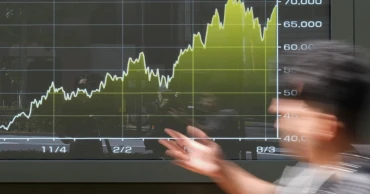
Oil prices edged lower on Thursday after rising sharply earlier in the week amid renewed fighting between the United States and Iran, while Asian stock markets mostly gained, tracking an upbeat performance on Wall Street.
Brent crude, the international benchmark, fell 0.4% to $95.26 a barrel. U.S. crude slipped 0.1% to $90.84 per barrel.
U.S. futures also moved slightly higher.
Oil prices had surged earlier this week as renewed conflict between the U.S. and Iran raised concerns over possible disruptions to energy supplies. President Donald Trump said Wednesday that he did not expect the U.S. bombing campaign to continue for “much longer.”
In Asian trading, Japan’s Nikkei 225 rose 0.2% to 64,455.83. SoftBank Group gained 2.9%, while Kioxia Holdings added 0.6% and Tokyo Electron rose 0.8%.
South Korea’s Kospi jumped 1.4% to 6,656.81, with Samsung Electronics gaining 1.3% and SK Hynix rising 1.4%.
Hong Kong’s Hang Seng index edged up 0.1%, while the Shanghai Composite gained 0.4%. Australia’s S&P/ASX 200 rose 0.5%, Taiwan’s Taiex gained 0.6%, and India’s Sensex added 0.3%.
The gains followed a positive session on Wall Street, where the S&P 500 rose 0.5% on Wednesday. The Dow Jones Industrial Average gained 0.6%, while the Nasdaq composite added 0.5%.
Investors were encouraged by positive signs of continued demand for artificial intelligence, which has been a major force behind this year’s stock market rally.
Dell Technologies surged 15.8% after reporting strong quarterly earnings. Nvidia gained 3.2%, Meta Platforms rose 2.5%, and Micron Technology added 2.4%.
In the bond market, the yield on the 10-year U.S. Treasury fell to 4.77% from above 4.81% early Wednesday. Global bond markets had come under pressure amid concerns over inflation, rising energy prices linked to the Iran conflict and growing U.S. government debt.
Investors are now awaiting the U.S. employment report for August, due Friday.
In currency trading, the Japanese yen strengthened against the U.S. dollar. The dollar fell to 157.78 yen from 158.71 yen late Wednesday after climbing above 160 yen earlier in the week, fueling expectations that Japanese authorities could intervene to support the currency.
The euro rose slightly to $1.1598 from $1.1588.
9 hours ago
Asian stocks fall as global bond sell-off deepens
Asian stock markets fell sharply on Wednesday, following losses on Wall Street and a growing global sell-off in government bonds. U.S. futures also moved lower.
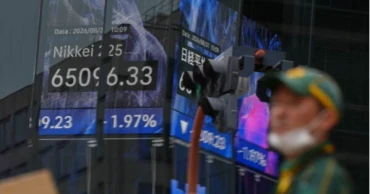
Japan's Nikkei 225 dropped 3% to 64,278.95, while shares of SoftBank Group fell 6.3%.
South Korea's Kospi lost 3.6%, with Samsung Electronics down 3.3% and memory chipmaker SK Hynix falling 3.5%.
Hong Kong's Hang Seng Index slipped 0.8%, while China's Shanghai Composite fell 0.9%. Australia's S&P/ASX 200 dropped 1.1%, and Taiwan's Taiex lost 1.5%.
The decline followed a weak session on Wall Street on Tuesday. The S&P 500 fell 0.7%, the Dow Jones Industrial Average dropped 0.8%, and the Nasdaq composite lost 1%.
Major technology companies were among the biggest losers, with Nvidia falling 1.5%, Amazon down 1.9% and Advanced Micro Devices, or AMD, dropping 2.4%.
Meanwhile, oil prices continued to rise after the United States launched another round of military strikes on Iran, which responded by firing missiles and drones across the region.
The conflict between the two countries has now entered its sixth month, increasing concerns over global energy supplies. The Strait of Hormuz, a key route for global oil shipments, remains largely closed.
Brent crude, the international benchmark, rose 1% to $95.56 a barrel. U.S. benchmark crude gained 0.7% to $90.88 a barrel.
The global bond sell-off also intensified as concerns grew over persistent inflation and rising government debt, particularly in the United States.
Bond yields rise when bond prices fall. Investors are demanding higher returns as they become more concerned about inflation, government borrowing and other risks.
The yield on the benchmark 10-year U.S. Treasury rose to around 4.80%, up from 4.75% on Monday. It had been as low as 4.20% in January.
The yield on the two-year Treasury, which is more closely linked to expectations for U.S. interest rates, climbed to about 4.40% from 4.34%.
In Japan, the yield on the 10-year government bond rose to around 3.02%, its highest level since 1996.
In currency trading, the U.S. dollar edged up to 160.27 Japanese yen from 160.17 yen. The euro slipped to $1.1578 from $1.1593.
1 day ago
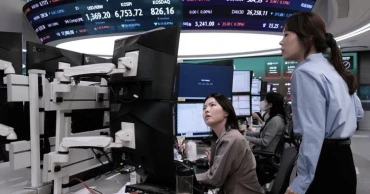
Oil prices rise, Asian stocks mixed amid renewed Middle East violence
Oil prices rose further and Asian stock markets moved in different directions Tuesday as renewed violence in the Middle East increased uncertainty over the future of the conflict.
The latest escalation came after more than a month without major fighting in the Iran war, raising concerns about possible disruptions to oil supplies and global markets.
Shares of online fast-fashion company Shein fell sharply after beginning trading in Hong Kong on Tuesday. The stock dropped as much as 10% before recovering slightly to trade about 5% lower by midday.
Brent crude, the international oil benchmark, rose 0.8% to $91.23 a barrel. It had gained 2.7% on Monday after the United States struck rocket launchers on an Iranian island, saying they were preparing to place mines in the Strait of Hormuz.
Iran responded by firing missiles at US positions in Jordan, all of which were intercepted, according to US officials.
The conflict has already reduced shipping through the Strait of Hormuz, a key global oil route that previously carried about one-fifth of the world’s oil shipments.
The disruption has kept oil prices elevated and increased costs for consumers, from fuel to goods transported by sea.
US benchmark crude rose 1% to $86.62 a barrel.
Asian markets were mixed. Hong Kong’s Hang Seng index fell 0.9% to 25,332.10, while Shanghai’s Composite index was almost unchanged at 3,985.93.
Tokyo’s Nikkei 225 gained 0.2% to 66,420.26, while South Korea’s Kospi rose more than 0.2% to 6,835.51.
Australia’s S&P/ASX 200 slipped 0.1% to 9,066.40. Taiwan’s Taiex added 0.2%, while India’s Sensex gained 0.3%.
US stock futures were up 0.1%.
Wall Street ends August lowerUS stocks finished August on a weaker note Monday, with the S&P 500 falling 0.3%. The Dow Jones Industrial Average dropped 0.7%, while the Nasdaq composite declined 0.1%.
Most sectors of the S&P 500 ended lower.
Edison International fell 23.1% and PG&E dropped 20.1%, the two biggest declines in the index. The losses followed reports about proposed California wildfire legislation that could allow insurers to seek compensation from utility companies over wildfire-related claims.
Energy companies, however, benefited from higher oil prices. Exxon Mobil gained 2.7%, while Chevron rose 2.1%.
Higher energy costs are also adding to inflation, which remains above the Federal Reserve’s 2% target.
Persistent inflation has put pressure on household budgets and consumer confidence while making the central bank’s decisions on interest rates more difficult.
The yield on the two-year US Treasury note remained at 4.34% Monday. It has risen considerably from around 3.50% at the start of 2026.
The yield on the 10-year Treasury note increased to 4.75% from 4.73% late Friday.
Investors are also watching the US jobs market closely. The government is expected to release August employment figures later this week.
The US job market unexpectedly weakened in July, with employers cutting 23,000 jobs. Government revisions also showed 103,000 fewer jobs were added in May and June than previously reported.
The Federal Reserve faces a difficult balance: raising interest rates could help control inflation, but higher borrowing costs could also weaken the job market.
In early Tuesday trading, the US dollar rose to 159.94 Japanese yen from 159.74 yen. The euro fell slightly to $1.1604 from $1.1619.
2 days ago
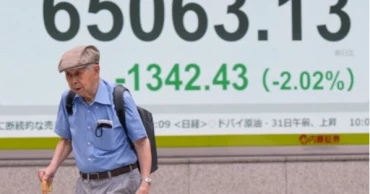
World shares mixed as oil prices jump after US strike on Iranian launchers
Global markets were mixed Monday, while oil prices surged after US forces struck Iranian rocket launchers near the Strait of Hormuz, reviving concerns over renewed conflict in the Middle East.
In early European trading, Germany's DAX fell 0.9% to 26,339.04, while France's CAC 40 slipped 0.1% to 8,390.43. British markets were closed for a bank holiday. US futures for the S&P 500 and Dow Jones Industrial Average each fell 0.2%.
Brent crude jumped 3.8% to $91.40 a barrel, while US benchmark crude gained 3.8% to $86.58.
Asian markets were mixed after Federal Reserve Chairman Kevin Warsh's comments reinforced expectations that the central bank could raise interest rates to control inflation. Tokyo's Nikkei 225 slipped 0.1%, while South Korea's Kospi gained 0.5%. Hong Kong's Hang Seng fell 0.1%, while Shanghai's Composite Index rose 0.9%.
An official survey showed China's factory activity remained in contraction for a second straight month in August, despite slight improvements in production and new export orders.
Australia's S&P/ASX 200 fell 0.2%, while Taiwan's Taiex and India's Sensex each declined 0.4%.
On Friday, Wall Street ended lower, with the S&P 500 down 0.2%, the Dow slightly lower and the Nasdaq falling 0.5%.
The two-year US Treasury yield rose to 4.35% from 4.22% before Warsh's Jackson Hole speech. The dollar fell against the yen, while the euro gained against the US currency.
3 days ago

Asian Shares Mixed as US Steps Up Pressure on Iran
Asian stock markets were mixed Tuesday, while oil prices remained largely steady as investors watched for major economic developments later this week.
Regional markets moved within a narrow range, while US stock futures were little changed.
Oil prices were also broadly stable after US Treasury Secretary Scott Bessent announced new sanctions against Iran and warned that countries continuing to do business with Tehran could face penalties.
Japan's Nikkei 225 rose 0.4% to 65,811.19, while South Korea's Kospi fell 0.4% to 6,675.88.
Hong Kong's Hang Seng dropped 0.3% to 25,453.19 and the Shanghai Composite edged down 0.1% to 3,878.38. Australia's S&P/ASX 200 gained 0.6% to 9,158.70.
Taiwan's Taiex slipped less than 0.1%, while India's Sensex declined 0.3%.
Wall Street mixed
US stocks ended mixed Monday as some pressure in the bond market eased.
The S&P 500 fell 0.3%, moving further away from the record high it reached earlier this month. The Dow Jones Industrial Average gained 0.3%, while the Nasdaq composite lost 0.8%.
Technology stocks led the decline as investors remained concerned that the sharp rise in AI-related shares may have pushed valuations too high. There are also concerns that demand for AI chips could weaken if the technology fails to generate enough profits.
Nvidia, one of the biggest winners of the AI boom, will release its quarterly earnings report Wednesday. The results could influence the next major move in AI-related stocks.
Nvidia shares fell 2.9% Monday, making the chipmaker the biggest drag on the S&P 500. Micron Technology dropped 5.8% and Broadcom declined 2.6%.
Bond market in focus
The yield on the 10-year US Treasury note fell to 4.71% from 4.74% late Friday.
The decline came after the US Treasury Department announced plans to increase the size of its Treasury buybacks, a move that helped ease some pressure on longer-term borrowing costs.
However, analysts said the buybacks are relatively small and are unlikely to solve broader concerns over high US government debt and elevated oil prices.
Higher Treasury yields can increase borrowing costs across the economy, including mortgage rates, putting additional pressure on the housing market.
“The latest discussion about using Treasury General Account cash to help finance purchases of longer-dated bonds gave the market something to chew on Monday,” said Stephen Innes of SPI Asset Management.
“But there is a difference between forcing the bond market to blink for an afternoon and solving the underlying problem,” he said.
Fed chief's speech awaited
Federal Reserve Chairman Kevin Warsh is scheduled to speak Friday at the annual economic symposium in Jackson Hole, Wyoming.
Investors will closely watch his comments for clues about inflation and the Federal Reserve's approach to monetary policy.
Oil prices remain a major concern for markets because higher energy costs can push inflation higher.
Brent crude, the international benchmark, has remained above the $72-a-barrel level recorded before the war with Iran began in late February.
Early Tuesday, Brent crude was almost unchanged at $90.51 a barrel, while US benchmark crude rose less than 0.1% to $85.10 a barrel.
Brent prices moved between $72 and $102 a barrel last month as hopes of a US-Iran deal rose and fell. Such an agreement could allow oil tankers to move freely out of the Persian Gulf.
The latest US sanctions announced Monday also pushed Iran's currency, the rial, to a record low against the US dollar.
9 days ago
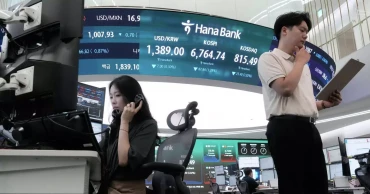
Asian shares mostly fall as bond market pressure intensifies
Asian shares mostly declined and oil prices slipped Monday as investors remained cautious ahead of a key gathering of top US economic officials at Jackson Hole later this week.
US stock futures also edged lower.
Japan’s Nikkei 225 fell 0.5% to 65,678.45, while South Korea’s Kospi dropped 3.5% to 6,664.36. Hong Kong’s Hang Seng Index declined 2.1% to 25,465.23 and the Shanghai Composite lost 0.7% to 3,877.30.
Australia’s S&P/ASX 200 bucked the regional trend, rising 0.5% to 9,107.40. Taiwan’s Taiex fell 0.5%.
Markets are awaiting the US inflation report for July, due Wednesday. The personal consumption expenditures (PCE) price index is the Federal Reserve’s preferred inflation gauge and, like the consumer price index, has indicated that inflation remains above 3%.
The Fed has struggled to bring inflation back to its 2% target. Inflation had moved closer to the goal in early 2025 before rising again following the introduction of broad US tariffs. It increased further in early 2026 after the Iran war disrupted oil shipments through the Strait of Hormuz.
Bond markets have also remained under pressure. Last week, rising Treasury yields prompted an unusual intervention by the US Treasury Department and raised concerns that higher borrowing costs could weaken consumer spending.
Treasury Secretary Scott Bessent announced that the government would double its purchases of longer-term bonds in an effort to reduce yields and mortgage costs. However, the 10-year Treasury yield climbed back to 4.73% Friday, its highest level in more than a year, and stood at 4.71% early Monday.
The 30-year Treasury yield also rose and remained close to its highest level since 2007.
Higher bond yields can weigh on economic activity and reduce the value of various investments.
Investors will closely watch Federal Reserve Gov. Kevin Warsh’s speech at the annual Jackson Hole gathering later this week for clues about interest rates and other policies.
On Friday, the S&P 500 gained 0.4%, marking only its second rise in six sessions after reaching a record high last week. The Dow Jones Industrial Average advanced 1%, while the Nasdaq composite rose 0.4%.
Strong corporate earnings have helped support US stocks, with most companies reporting better-than-expected spring profits.
Uncertainty over when oil tankers will again be able to move freely out of the Persian Gulf has also unsettled markets, pushing oil prices higher and raising inflation concerns.
The situation remained uncertain Monday after Iran’s new top security official warned that Tehran would regard support for fresh US economic measures against Iran as an “act of war.” Iran’s president, meanwhile, defended a memorandum of understanding with the United States as the best way to resolve the stalled conflict.
Brent crude fell 1.4% to $93.10 a barrel early Monday, while US benchmark crude dropped 1.6% to $85.63.
Bitcoin, which often benefits from lower interest rates and increased liquidity, was trading near $77,000 early Monday, according to CoinDesk.
In currency trading, the US dollar bought 158.89 Japanese yen, down from 158.94 yen late Friday. The euro was unchanged at $1.1678.
10 days ago
Asian stocks mixed as treasury move fails to calm markets
Asian shares were mixed Friday after Wall Street suffered losses, as a US Treasury Department plan to increase purchases of government debt offered only limited relief to financial markets.
US stock futures edged higher in early trading.
Japan’s Nikkei 225 fell 0.2% to 66,080.25, while South Korea’s Kospi rose 0.9% to 6,914.09. Hong Kong’s Hang Seng gained 0.7% to 25,888.36, while the Shanghai Composite was little changed at 3,903.81.
Australia’s S&P/ASX 200 dropped 0.3% to 9,053.90. Taiwan’s Taiex gained 0.4%, while India’s Sensex slipped 0.1%.
The Treasury Department said Wednesday it would at least double planned purchases of longer-term government bonds. Treasury Secretary Scott Bessent said Thursday that the buyback programme could be expanded further.
The announcement briefly pushed bond yields lower. Yields had risen amid concerns over high inflation, partly linked to the war in Iran, and growing US government debt. Higher yields can increase borrowing costs and put pressure on economic growth and stock prices.
However, analysts said the impact was likely to be short-lived. The yield on the 10-year US Treasury note stood at around 4.71% early Friday, up from nearly 4.64% Thursday and back near its level before the Treasury announcement.
The 30-year Treasury yield also rose to about 5.26%, from 5.18% Thursday.
Bond yields in Asia also moved higher. Japan’s 10-year government bond yield rose to 2.88% from around 2.83% Thursday, after recently reaching levels not seen in about 30 years.
Rising bond yields have put pressure on stocks. On Thursday, the S&P 500 fell 0.9%, the Dow Jones Industrial Average dropped 1.3% and the tech-heavy Nasdaq Composite lost 1%.
Oil prices edged lower early Friday despite increased US economic pressure on Iran and limited progress in reducing tensions between Washington and Tehran.
Brent crude, the international benchmark, fell 0.2% to $93.64 a barrel. It was trading at around $72 before the war began. US benchmark crude fell 0.3% to $86.59 a barrel.
The US dollar slipped to 159.01 Japanese yen from 159.05 yen. The euro rose to $1.1694 from $1.1678.
13 days ago
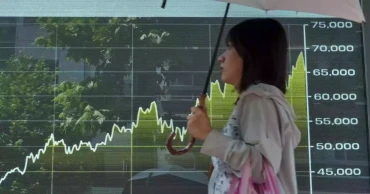
Asian shares rise, South Korea’s Kospi jumps 6% after US expands debt buybacks
Asian shares rose Thursday, following gains on Wall Street, while South Korea’s benchmark Kospi jumped more than 6% after the US Treasury announced plans to significantly increase its purchases of longer-term government debt.
US stock futures also edged higher after the Treasury said it would at least double the size of its planned buybacks of longer-term government bonds.
The move could reduce pressure on stock markets from rising bond yields. Increased government bond purchases can push bond prices higher and, in turn, lower yields.
South Korea’s Kospi surged 6.1% to 6,858.91 after falling 5.8% on Wednesday as investors sold shares linked to artificial intelligence.
Samsung Electronics rose 9.7%, while SK Hynix, a major memory chipmaker, gained 14.1% after announcing a large share buyback programme.
Japan’s Nikkei 225 climbed 1.3% to 66,178.26, recovering from losses earlier in the week. Japan reported a trade deficit for the third consecutive month in July, with both imports and exports reaching record levels.
SoftBank Group, which has invested in OpenAI, gained 3.8%.
Hong Kong’s Hang Seng Index rose 1.1% to 25,786.32, while the Shanghai Composite gained 0.3% to 3,905.23.
Australia’s S&P/ASX 200 increased 0.3% to 9,066.40. Taiwan’s Taiex was little changed, while India’s Sensex gained 0.7%.
US government bond yields fell after the Treasury announced its expanded buyback plans. Bond prices and yields generally move in opposite directions.
The announcement appeared to ease investor concerns about rising borrowing costs. On Wednesday, the S&P 500 rose 0.2%, ending a three-day losing streak. The Dow Jones Industrial Average and Nasdaq composite each also gained 0.2%.
US bond yields have climbed in recent months amid concerns about inflation linked to the prolonged war in Iran, rising government debt and other economic pressures.
The yield on the 10-year US Treasury note fell to about 4.64%, down from 4.71% on Tuesday. However, it remains significantly higher than before the war in Iran began. The 30-year Treasury yield also declined to 5.18% from 5.28%.
Bond yields in Asia also eased following the US Treasury announcement. Japan’s 10-year government bond yield dropped to about 2.83% from above 2.89% on Wednesday. It had recently reached its highest level in about 30 years.
Oil prices edged higher Thursday as negotiations between the US and Iran showed little progress.
Brent crude, the international benchmark, rose 0.3% to $91.90 a barrel. It was trading at around $72 before the war began.
US benchmark crude gained 0.2% to $84.57 a barrel.
The US dollar rose to 158.60 Japanese yen from 158.16 yen. The euro was trading at $1.1676, slightly.
14 days ago

Asian shares fall as AI stocks slide, oil prices rise
Asian shares fell Wednesday as technology stocks came under pressure and rising oil prices added to concerns about inflation and interest rates.
South Korea’s Kospi led the regional decline, dropping 5.7% to 6,487.34. Samsung Electronics fell 7.5%, while SK Hynix, a major memory chipmaker, lost 8.8%.
In Japan, the Nikkei 225 dropped 3.2% to 65,332.04 as investors sold technology shares and worried about rising bond yields.
The yield on Japan’s 10-year government bonds has remained near a three-decade high of more than 2.9%. Investors expect the Bank of Japan to raise interest rates as it tries to control inflation.
China’s Shanghai Composite fell 2.2% to 3,903.61. Shares of humanoid robot maker Unitree initially surged nearly 630% in its debut on the Shanghai Stock Exchange’s STAR Market. The company raised about $900 million through its initial public offering.
However, shares of UBTech, another major Chinese humanoid robot maker listed in Hong Kong, fell 10.6%.
Hong Kong’s Hang Seng index edged down less than 0.1% to 25,460.46. Taiwan’s Taiex lost 1.7%, while Australia’s S&P/ASX 200 declined 0.2% to 9,053.
Oil prices also weighed on investor sentiment amid uncertainty over whether the United States and Iran can reach an agreement that would allow oil tankers to move freely out of the Persian Gulf.
Brent crude, the international benchmark, rose 0.6% to $91.57 a barrel, while U.S. benchmark crude gained 0.7% to $84.66.
Wall Street also ended lower Tuesday, with the S&P 500 falling 0.7% for its third consecutive loss. The Dow Jones Industrial Average slipped 0.2%, while the Nasdaq composite dropped 1.3%.
Technology companies that benefited strongly from the artificial intelligence boom led the decline. Investors have become concerned that some AI-related stocks may be overpriced and that demand for chips, memory and other equipment used in data centers could weaken if AI businesses fail to deliver the expected profits.
Micron Technology fell 7%, while Nvidia declined 2.3% and Broadcom dropped 3.2%. Despite recent losses, these companies remain among the biggest winners of the AI boom. Micron’s shares, for example, have more than tripled this year.
Rising bond yields have also worried investors. Higher oil prices are increasing inflation pressure, while governments are facing large debt burdens and higher borrowing costs.
The yield on the 10-year U.S. Treasury fell slightly to 4.70% from 4.72% late Monday but remained well above the 3.97% level recorded before the war with Iran began. The 30-year Treasury yield also edged lower but stayed close to its highest level since 2007.
Higher bond yields can make investors less willing to pay high prices for stocks, especially expensive technology shares.
They have also pushed the average U.S. mortgage rate close to its highest level in a year, putting pressure on the housing market. A report Tuesday showed that U.S. homebuilders started fewer new homes last month than economists had expected.
Higher borrowing costs could also discourage major technology companies from taking on debt to finance new data centers, potentially slowing an important source of growth for the U.S. economy.
In early trading Wednesday, the U.S. dollar fell to 159.26 Japanese yen from 159.61 yen. The euro rose to $1.1582 from $1.1577.
15 days ago

Japan's economy manages 1.1% growth rate despite headwinds
Japan’s economy grew an annual rate of 1.1% in the April-June quarter even as private consumption stayed flat and the growth of exports declined, according to government data released Monday.
Japan ’s real GDP, or gross domestic product, the sum value of nation’s goods and services, grew at a seasonally adjusted rate of 0.3% from the first quarter to second quarter of this 2026, according to Cabinet Office data.
The annualized rate shows what the growth rate would have been if it had continued for a whole year. It was 2.1% in the January-March period.
Private spending dipped 1.2% in April-June compared to January-March, while exports grew 0.5%.
Exports for the latest period were driven by the global demand for Japanese autos and semiconductors. Japan is home for Toyota Motor Corp., Honda Motor Co. and other top automakers.
Global demand for computer chips being powered by interest in AI, helping to support Japan's exports.
Government consumption rose 1.6%.
Quarterly GDP growth was lower than what analysts had expected. The Japanese economy has been hurt by the war in Iran, which has sent energy costs surging. That’s especially difficult for resource-poor Japan, which imports almost all its oil.
The Strait of Hormuz, a vital transport route for oil exports from the Persian Gulf to Asia, has been effectively blocked due to the war, pushing prices higher. Japan has released some oil reserves and is working on alternate routes.
Brent crude has been recently trading at about $88 a barrel, up from about $65 a year ago, although that’s lower than earlier this year, when it shot above $110 a barrel.
A weak yen has also worked as a plus for some Japanese companies, including giant exporters like Toyota, boosting the value of overseas earnings when translated into yen.
But a weak yen makes it more expensive to import raw materials, raising prices for consumers and denting spending.
Concerns have been growing about rising prices, as wage growth in Japan has been relatively stagnant.
Prime Minister Sanae Takaichi has promised to get growth going again, but her public support ratings, while still high compared to some of her predecessors, have been gradually sinking.
The U.S. dollar has been trading at near 160 Japanese yen levels lately, up from about 145 yen a year ago. It was trading at about 159 yen after Monday’s economic data got released.
The Bank of Japan recently raised its economic growth outlook to 0.6% for the fiscal year through March next year, from an earlier 0.5%.
17 days ago