world-business

Bangladesh capital market sees mixed trend in early trading
The country’s stock markets witnessed mixed movements in the first half of trading on Sunday, with key indices fluctuating at both the Dhaka Stock Exchange (DSE) and the Chattogram Stock Exchange (CSE).
At the DSE, the benchmark index DSEX edged up by 1 point.
The Shariah-based DSES, however, remained unchanged, while the blue-chip DS30 index shed 3 points.
During the period, prices of 198 companies advanced against declines in 104 issues, while 81 securities remained unchanged. The turnover at the DSE crossed Tk 230 crore in the first half of the session.
DSEX falls, CSE gains in Bangladesh capital market
Meanwhile, the CSE saw a positive trend, with its overall index gaining 20 points.
At the port city bourse, the share prices of 58 companies rose, while 28 declined and 14 remained unchanged.
The total turnover at the CSE stood at over Tk 4 crore in the first half of trading.
7 months ago

Luxury car sales slide in China as economic slowdown hurts European automakers
Demand for foreign luxury vehicles in China is weakening as buyers increasingly turn to lower-priced domestic brands that offer generous discounts and advanced technology, dealing a blow to European automakers long dominant in the premium segment.
A prolonged downturn in China’s property sector has dampened consumer confidence, curbing appetite for expensive purchases. At the same time, wealthy buyers are becoming more cautious about openly displaying affluence, analysts say. Government trade-in subsidies of up to 20,000 yuan for electric and plug-in hybrid vehicles have further pushed consumers toward cheaper models, most of which are produced by Chinese manufacturers.
Coca-Cola names longtime executive as next CEO
According to S&P Global Ratings, slowing economic growth is a major factor behind falling demand for premium cars such as Mercedes-Benz and BMW. After rising steadily for years, premium vehicles’ share of China’s auto market has begun to decline, dropping to 13% in the first nine months of 2025.
Chinese automakers, led by companies such as BYD, have gained ground through rapid innovation and aggressive pricing, even in the higher-end segment. Their market share has climbed to nearly 70% this year, while German, Japanese and U.S. brands have lost momentum.
European luxury brands have reported sharp sales declines in China, and the downturn has also driven down prices in the used luxury car market, reflecting broader caution among consumers facing an uncertain economic outlook.
Source: AP
7 months ago

Coca-Cola names longtime executive as next CEO
Coca-Cola announced Wednesday that its chief operating officer, Henrique Braun, will take over as CEO in the first quarter of 2026.
The Atlanta-based beverage company said its board elected Braun, 57, to the role effective March 31. Current CEO and chairman James Quincey will transition to executive chairman.
Braun, a 30-year Coca-Cola veteran, became COO earlier this year after leading operations in Brazil, Latin America, Greater China and South Korea. He has also overseen supply chain, marketing, innovation, bottling operations, general management, and new business development. Born in California and raised in Brazil, Braun holds a bachelor’s in agricultural engineering from the University Federal of Rio de Janeiro, a master’s from Michigan State University, and an MBA from Georgia State University.
Trump says Coca-Cola to use cane sugar in US
David Weinberg, Coca-Cola’s lead independent director, called Quincey, 60, a “transformative leader” who will remain active in the business. During his nine-year tenure as CEO, Quincey expanded Coke’s portfolio with more than 10 billion-dollar brands, including BodyArmor and Fairlife, and entered the alcoholic beverage market with Topo Chico Hard Seltzer. In 2020, he led a major restructuring that halved Coke’s brands and cut thousands of jobs to focus on faster-growing products like Simply and Minute Maid juices.
As Quincey steps down, Coca-Cola faces challenges including slow demand in the U.S. and Europe and heightened consumer scrutiny of ingredients. This summer, following a suggestion from former President Donald Trump, the company announced it would release a cane sugar version of its classic Cola.
Weinberg expressed confidence that Braun would build on the company’s strengths and pursue global growth opportunities. Coca-Cola shares were flat in after-hours trading.
Source: AP
7 months ago

AmCham calls for urgent reform as Bangladesh faces energy security risks
Speakers at a discussion urged the interim government to strengthen its energy governance and accelerate exploration and infrastructure upgrades to prevent a deepening energy crisis.
Speakers said this at a discussion titled ‘Powering Bangladesh Toward Energy Security’ organised by the American Chamber of Commerce in Bangladesh (AmCham) in the capital on Tuesday.
The event was supported by Chevron Bangladesh, an industry leader whose 30-year partnership has significantly contributed to Bangladesh’s economic growth and community development, investing approximately USD 4.2 billion as the country’s largest gas producer, supplying nearly 60% of domestic demand, said a press release.
Syed Ershad Ahmed, President of AmCham Bangladesh, underscored that energy security is currently critically important for Bangladesh.
He also highlighted that the country’s energy sector faces persistent fuel shortages, outdated transmission systems, declining gas reserves, and overreliance on imported fuels, which undermine reliability and industrial growth. Strengthening regulatory governance, accelerating exploration, upgrading infrastructure, expanding renewables, and enabling clearer investment pathways are essential to building a resilient, secure, and future-ready energy ecosystem.
Syed Ershad Ahmed, said that the country’s energy sector faces persistent fuel shortages, outdated transmission systems, declining gas reserves, and overreliance on imported fuels, which undermine reliability and industrial growth. Strengthening regulatory governance, accelerating exploration, upgrading infrastructure, expanding renewables, and enabling clearer investment pathways are essential to building a resilient, secure, and future-ready energy ecosystem.
AmCham dialogue stresses urgent reforms to boost investment competitiveness
Paul Frost, Commercial Counselor, U.S. Embassy, Dhaka, moderated the session, reflecting the continued commitment to strengthening U.S.–Bangladesh trade and investment cooperation.
The event was also attended by Mr. Eric M. Walker, Vice President of AmCham and President, Chevron Bangladesh; Prof. M. Tamim, distinguished petroleum and mineral resources engineering scholar and Vice Chancellor of IUB; Mr. Muhammad Imrul Kabir, Director, Corporate Affairs, Chevron Bangladesh, AmCham members from the power and energy sector; and senior leadership from leading companies in the industry.
7 months ago

Canada’s ambassador to US to step down ahead of trade pact review
Canada’s top diplomat in Washington, Kirsten Hillman, announced Tuesday that she will step down next year, just as Canada and the United States prepare to reassess their free trade agreement.
In a letter, Hillman said the timing is appropriate for appointing a successor who will manage negotiations on the United States-Mexico-Canada Agreement, which is scheduled for review in 2026.
Prime Minister Mark Carney praised Hillman for laying the groundwork for Canada ahead of the upcoming assessment, noting she is one of the country’s longest-serving envoys to the U.S. Hillman, appointed in 2017 by then-Prime Minister Justin Trudeau, was also the first woman to hold the post.
She played a key role in negotiating trade terms during former U.S. President Donald Trump’s first term and worked with U.S. and Chinese authorities to secure the release of two Canadians imprisoned in China.
Hillman and Canada-U.S. trade minister Dominic LeBlanc have been leading discussions with U.S. Commerce Secretary Howard Lutnick and U.S. Trade Representative Jamieson Greer.
China’s exports rise 5.9% in November despite U.S. shipments falling sharply
U.S. Ambassador to Canada Pete Hoekstra praised Hillman on social media, calling her a respected figure in bilateral relations and wishing her well in her next chapter.
Trade tensions flared in October when Trump halted negotiations after Ontario aired an anti-tariff ad in the U.S., angering the president. This followed earlier friction over Trump’s suggestion that Canada should join the U.S. as its 51st state. Asked this week about resuming talks, Trump replied, “we’ll see.”
Canada remains one of the world’s most trade-reliant nations, with over 75% of its exports headed to the United States under the USMCA, which is due for review. Carney has set a goal to double Canada’s non-U.S. trade within 10 years.
Canada supplies about 60% of U.S. crude oil imports and 85% of its electricity imports. It is also America’s largest foreign source of steel, aluminum and uranium, and holds 34 critical minerals vital to U.S. national security.
Source: AP
7 months ago

Trump flags potential issue with Netflix-Warner Bros. merger over market share
President Donald Trump on Sunday warned that Netflix’s proposed $72 billion acquisition of Warner Bros. Discovery “could be a problem” because of the combined company’s market share.
Speaking to reporters at the Kennedy Center Honors, Trump said he would be involved in the federal review of the deal, which would bring together two of the world’s largest streaming platforms and combine Warner’s television and film assets, including DC Studios, with Netflix’s extensive library and production capabilities.
“Netflix is a great company. They’ve done a phenomenal job. Ted is a fantastic man,” Trump said, referring to Netflix CEO Ted Sarandos, whom he met in the Oval Office last week before the deal’s announcement on Dec. 5. “I have a lot of respect for him but it’s a lot of market share, so we’ll have to see what happens.”
Asked whether Netflix should be allowed to acquire the Hollywood studio behind “Harry Potter” and HBO Max, Trump replied, “Well that's the question. They have a very big market share and when they have Warner Bros., that share goes up a lot, so I don’t know. I'll be involved in that decision, too.”
Trump emphasized that Sarandos made no promises regarding regulatory approval but praised his track record in the entertainment industry. “There’s no question about it. It could be a problem,” he added.
If approved, the merger is expected to significantly reshape the global entertainment and streaming landscape.
7 months ago
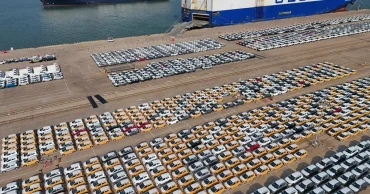
China’s exports rise 5.9% in November despite U.S. shipments falling sharply
China’s exports bounced back in November after a surprising decline in October, although shipments to the United States fell nearly 29% year-on-year for the eighth consecutive month of double-digit drops.
Customs data released Monday showed overall exports grew 5.9% in dollar terms to $330.3 billion, surpassing economists’ expectations. This followed a 1.1% contraction in October. While exports to the U.S. remain weak, shipments to other regions, including Southeast Asia, Africa, and Latin America, have surged.
China’s imports also rose 1.9% in November, an improvement over October’s 1% growth, despite ongoing pressure from the property sector affecting consumer spending and business investment.
The growth follows a year-long trade truce between China and the U.S., reached during a late-October meeting in South Korea between President Donald Trump and Chinese leader Xi Jinping. As part of the truce, the U.S. reduced tariffs on Chinese goods, and China agreed to halt certain export controls on rare earths.
Japan revises GDP figures, showing deeper July–September economic slump
“While the trade truce and U.S. tariff reductions should support Chinese exports, we are entering a period of unfavorable base effects,” wrote ING Bank economists Lynn Song and Deepali Bhargava, noting strong export growth last year ahead of Trump’s tariff hikes. “This should keep trade growth modest.”
Despite exports holding up, China’s factory activity contracted for the eighth consecutive month, and economists say it is too early to determine whether the trade truce has sparked a real rebound in external demand. Analysts generally expect China to meet its annual growth target of around 5% this year.
Chinese leaders recently outlined plans to focus on advanced manufacturing over the next five years, with details expected at an upcoming economic planning meeting. However, BNP Paribas strategist Chi Lo warned that a stable global trade environment is unlikely, given the ongoing stalemate in China-U.S. relations.
Still, some economists are optimistic about China’s long-term export prospects. Morgan Stanley forecasts that by 2030, China’s share of global exports could rise to 16.5% from about 15% today, driven by strengths in advanced manufacturing and high-growth sectors such as electric vehicles, robotics, and batteries.
Putin and Modi announce $100 Billion trade target by 2030
“Despite trade tensions, protectionism, and active industrial policies in G20 economies, we believe China will continue gaining share in the global goods export market,” said Morgan Stanley Chief Asia Economist Chetan Ahya.
Source: AP
7 months ago
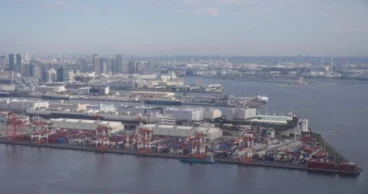
Japan revises GDP figures, showing deeper July–September economic slump
Japan’s economy shrank more sharply than initially estimated in the July–September quarter, contracting at an annualized rate of 2.3% as exports weakened under U.S. President Donald Trump’s tariff measures and public investment slowed.
Revised government data released Monday show the economy fell 0.6% from the previous quarter — a steeper downturn than the preliminary estimate last month, which pointed to a 1.8% annualized contraction or a 0.4% quarterly decline, according to the Cabinet Office.
The annualized figure reflects how the economy would perform if the quarter’s pace continued for a full year.
Exports dropped 1.2% from the previous quarter, unchanged from the earlier estimate, while private residential investment slid 8.2%, a milder fall than the initially reported 9.4%.
The tariffs imposed by Trump earlier this year have weighed heavily on Japan, particularly duties targeting automobiles — a key sector. Although the U.S. scaled back planned tariff surcharges on Japanese goods to 15% in September, the trade pressure has already disrupted business confidence. During negotiations, Japan pledged to invest $550 billion in the U.S. as a conciliatory gesture.
Analysts attribute the significant drop in residential investment partly to updated building regulations that curbed housing starts earlier this year.
China and France pledge closer cooperation on global crises and trade
Revised data also show imports dipping 0.4% during the quarter, while private consumption edged up 0.2%.
The ongoing tariff disputes have strained Japan’s relations with its most critical ally, the United States.
Meanwhile, Japan’s first female prime minister, Sanae Takaichi, continues to enjoy strong public support, known for her assertive nationalist rhetoric and promises of economic revitalization — though analysts say the outlook remains uncertain.
Source: AP
7 months ago
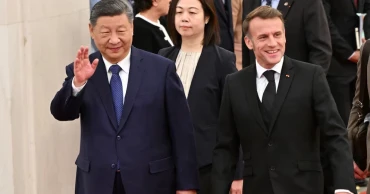
China and France pledge closer cooperation on global crises and trade
China and France on Thursday pledged deeper collaboration on global challenges such as the war in Ukraine and trade, as France prepares to assume the presidency of the Group of Seven next year.
French President Emmanuel Macron met Chinese President Xi Jinping during a three-day state visit focused on diplomacy and economic ties. Macron urged Beijing to join international efforts to pressure Russia toward a ceasefire, particularly a moratorium on strikes targeting critical infrastructure. Xi did not directly respond but emphasized China’s support for peace efforts and called for agreements acceptable to all parties. Xi also announced $100 million in aid to support Gaza’s humanitarian crisis and reconstruction.
The leaders highlighted stronger trade and economic cooperation, agreeing on 12 deals covering aerospace, nuclear energy, green industries, AI, panda conservation, and higher education exchanges. Xi emphasized China’s commitment to expanding market access and promoting mutually beneficial collaboration with France and the EU.
Xi and Macron vow to deepen cooperation on global crises and trade
Experts noted that Beijing may use bilateral agreements to strengthen ties with France individually, potentially undermining broader EU cohesion. Macron’s visit also includes engagements in Chengdu, including the giant panda research center, where France returned pandas last month that had been living in the country for 13 years.
The visit underscores France and China’s intent to combine diplomatic engagement with economic initiatives while navigating global crises.
Source: AP
7 months ago

Thailand permits afternoon alcohol sales ahead of year-end holidays
Thailand on Wednesday lifted a 53-year-old restriction on the afternoon retail sale of alcoholic beverages, a move aimed at boosting year-end tourism and supporting businesses such as bars and convenience stores.
The prohibition on selling beer, wine, and spirits between 2 p.m. and 5 p.m., first introduced in 1972 during military rule, will be lifted on a 180-day trial, after which authorities will assess its impact. The amendment, published in the Royal Gazette on Tuesday, allows alcohol sales from 11 a.m. to midnight, with patrons at nightlife venues permitted to drink until 1 a.m.
While Thailand is largely Buddhist, discouraging alcohol consumption, drinking remains widespread. Authorities had expressed concerns that extending sales could worsen drunk-driving incidents.
Previously, afternoon alcohol sales were inconsistently enforced, with exemptions for airports, hotels, and certain entertainment venues. Temporary bans were also imposed during the COVID-19 pandemic to curb virus spread. The trial aims to balance public safety with economic benefits during the holiday season.
Source: AP
7 months ago