world-business
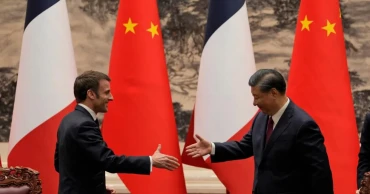
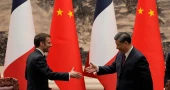
Macron visits China to boost trade ties
French President Emmanuel Macron will travel to China on Wednesday for a three-day state visit focused on trade cooperation and high-level diplomacy, with a key goal of encouraging Beijing to help push Russia toward agreeing to a ceasefire in Ukraine.
Macron’s office said the trip aims to strengthen economic ties and promote a more balanced trading relationship that supports “sustainable, solid growth that benefits everyone.” France hopes to draw greater Chinese investment and widen access for French exports. Both sides are expected to sign agreements in sectors including energy, aviation and the food industry.
The French president also plans to defend “fair and reciprocal market access” amid ongoing trade tensions between the European Union and China. The EU recorded a trade deficit of more than 300 billion euros ($348 billion) with China last year, while China alone accounts for nearly half of France’s total trade gap.
Recent disputes have ranged from electric vehicle subsidies to China’s retaliatory probes into European brandy, pork and dairy imports. Paris welcomed China’s recent decision to exempt most cognac producers from punitive measures, noting France remains China’s top supplier of wine and spirits.
Russia’s frozen assets become key bargaining chip in Ukraine peace negotiations
Macron will also discuss Russia’s war in Ukraine with President Xi Jinping, following talks on Monday in Paris with Ukrainian President Volodymyr Zelenskyy about possible ceasefire terms. A senior French diplomatic official said Paris wants Beijing to use its influence to push Russia toward “a ceasefire as quickly as possible,” followed by negotiations that guarantee Ukraine’s long-term security. France also expects China to avoid supplying Russia with any materials that could prolong the conflict.
China’s Foreign Ministry has reiterated that Beijing supports “dialogue and negotiation” and claims it has played a “constructive role” since the war began.
Macron, accompanied by his wife Brigitte, will arrive in Beijing on Wednesday evening and visit the newly restored Qianlong Garden in the Forbidden City. On Thursday, he will meet Xi at the Great Hall of the People before taking part in a Franco-Chinese business forum. He will later meet Zhao Leji, chairman of the National People’s Congress, and Premier Li Qiang.
The French presidential couple will then travel to Chengdu in Sichuan province. On Friday, Macron and Xi will meet in Dujiangyan, home to one of the world’s oldest irrigation systems, before Macron visits students at Sichuan University.
Chengdu also hosts the Conservation and Research Center for the Giant Panda, where Yuan Meng — the first giant panda born in France and named by Brigitte Macron — now resides. France recently returned a pair of pandas that had lived in the country for 13 years and produced three cubs.
Source: AP
8 months ago

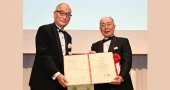
46th Honda Prize Award Ceremony held in honor of recipient, Dr. Kenichi Iga of Japan
For Pioneering Contributions to Conception and Development of Vertical-Cavity Surface-Emitting Laser (VCSEL) and Leadership in Its Practical Application -On November 17, 2025, the Honda Foundation held the 46th Honda Prize Award Ceremony and a commemorative lecture at the Imperial Hotel in Tokyo.
The foundation awarded the prize medal and diploma to this year’s laureate, Dr. Kenichi Iga (honorary professor at the Institute of Science Tokyo, and 18th president of the former Tokyo Institute of Technology), for his pioneering conception and development of the Vertical-Cavity Surface-Emitting Laser (VCSEL).
The foundation is a public interest incorporated foundation established by Soichiro Honda, founder of Honda Motor Co., Ltd., and his younger brother Benjiro.
At the opening of the ceremony, Hiroto Ishida, President of the Honda Foundation, delivered opening remarks: "The surface-emitting laser conceived and promoted by Dr. Iga is now indispensable to people's lives. It supports our society in many areas, including high-speed data communication and facial recognition on smartphones. Dr. Iga’s efforts, from the conception of this new technology to leading its fundamental research, practical application, and subsequent widespread adoption, represent a great achievement that truly embodies the spirit of the Honda Prize."
Following the ceremony, Dr. Iga delivered a commemorative lecture titled "Vertical-Cavity Surface-Emitting Laser (VCSEL): Born Small and Grown Big -- From Smartphones to Huge Data Centers." In the lecture, Dr. Iga shared episodes from his journey, starting with his boyhood in Kure City, Hiroshima Prefecture, western Japan. Raised in a nature-rich environment, he became interested in electricity and electronics after building his own radio. He also reflected on his university days, where he devoted himself to research with the support of a scholarship from "SAKKOKAI," a foundation established in 1961 by Honda founders Soichiro Honda and Takeo Fujisawa to support young researchers.
8 months ago

Russia’s frozen assets become key bargaining chip in Ukraine peace negotiations
For Europe, money is as crucial to Ukraine’s survival as weapons and intelligence. But the EU’s most realistic funding solution relies on accessing billions of dollars in frozen Russian assets — the same assets U.S. President Donald Trump has suggested taking control of.
An early draft of Trump’s 28-point peace proposal envisioned a reconstruction fund for Ukraine managed by the U.S., financed by $100 billion in frozen Russian assets and matched by another $100 billion from the European Union — with half of the profits flowing back to Washington.
The idea caught European officials off guard, especially after years of internal arguments over what to do with Russia’s immobilized financial reserves.
These assets form the backbone of European Commission President Ursula von der Leyen’s strategy to tighten pressure on Moscow and boost support for Ukraine, even as unexplained drone incidents and sabotage make governments across Europe uneasy.
“I cannot imagine a future where European taxpayers foot this bill alone,” von der Leyen told lawmakers in Strasbourg on Wednesday, drawing applause.
The EU has already committed close to $197 billion to Ukraine since Russia’s invasion in 2022. While countries remain divided on new funding, nearly all agree on tapping Russian assets to meet Kyiv’s projected $153 billion budget and defense needs for 2026–27. Most of those assets — worth about $225 billion — sit at Euroclear, a major financial clearinghouse in Brussels.
A plan with perks — for Washington
Trump’s assertive style has left many EU officials convinced the U.S. wants a fast settlement that leaves Europe to finance and facilitate it, while the U.S. benefits financially. Analysts describe the initial proposal as a U.S. attempt to seize control of the assets just as Washington and Brussels reopen trade talks.
Agathe Demarais of the European Council on Foreign Relations compared the idea to a “signing bonus” for a peace deal leaning heavily in Moscow’s favor. Fabian Zuleeg of the European Policy Centre called the proposed U.S. takeover “outrageous,” though he noted Europeans might still accept it “if that’s the price of a genuinely good agreement.”
Following high-level discussions among the U.S., Germany, France, the U.K. and the European Commission, the investment scheme was removed from the latest draft. Russia has already dismissed the new version outright.
Kirill Dmitriev emerges as key figure in Russia’s Ukraine peace plan
Belgium’s pivotal role
Experts say the EU could strengthen its negotiating leverage by moving quickly to claim the frozen assets before Washington intervenes.
“If the EU acts first, it may sharply reduce Trump’s appetite for a poor-quality deal,” Demarais argued.
Von der Leyen’s Commission wants the EU to take legal ownership of the assets and issue Ukraine a loan to be repaid only if Russia pays war reparations.
But much depends on Belgium. Euroclear — where most of the funds are held — is based there, and Belgian Prime Minister Bart De Wever has long refused to approve using the assets as collateral for major Ukraine loans, warning of potential Russian retaliation.
“We are a small country, and retaliation could hit us hard,” he said in October.
Belgium’s hesitation has also been tied to internal political disputes over high national debt. With a domestic compromise reached last week, EU officials from across the bloc hope De Wever may now soften his stance.
After a meeting in Brussels on Wednesday, Sweden’s Foreign Minister Maria Malmer Stenergard stressed urgency: “Time is running out. This is the only realistic financing option that truly matters and the fairest for taxpayers.”
EU foreign policy chief Kaja Kallas echoed that sentiment, noting strong support for Belgium. “It would send the clearest message to Moscow that it cannot wait us out. We must act quickly,” she said.
EU leaders, including De Wever, will revisit the issue at a Dec. 18 summit in Brussels, where seizing Russia’s frozen assets will be a major topic of debate.
Source: AP
8 months ago
Alibaba sees 34% surge in cloud revenue as AI demand accelerates
Alibaba Group reported a strong 34% rise in cloud business revenue for the July–September quarter, powered by soaring demand for artificial intelligence technologies.
However, the company’s overall performance grew at a slower pace. Total revenue increased only 5% year-on-year to 247.8 billion yuan ($35 billion), while profit tumbled 52% as aggressive price competition in China’s e-commerce and food delivery markets weighed on short-term earnings. Rival JD.com also saw its net profit drop 55% over the same period.
Once focused mainly on e-commerce, Alibaba has shifted heavily toward cloud services and AI. Earlier this year, it committed to investing at least 380 billion yuan ($53 billion) over three years to strengthen its AI and cloud infrastructure.
CEO Eddie Wu said Tuesday that heavy investments in AI were a major factor behind the cloud division’s rapid growth, which outpaced the 26% increase recorded in the previous quarter. The company noted that AI demand continues to rise sharply and hinted that total AI investment may ultimately exceed its initial 380 billion yuan target.
Alibaba also announced Monday that its upgraded AI chatbot, Qwen — pitched as a competitor to OpenAI’s ChatGPT — reached 10 million downloads within a week of its public release.
China's Alibaba sees revenue surge on back of artificial intelligence, e-commerce
Investor sentiment was positive: Alibaba’s Hong Kong-listed shares rose 2% on Tuesday, while its U.S.-listed shares climbed 2.4% before the New York trading session. The stock has surged more than 90% this year amid confidence in the company’s AI momentum.
Across the broader tech sector, Chinese firms have been rapidly advancing in AI, especially since startup DeepSeek disrupted the landscape and challenged U.S. dominance. Recent earnings have varied: Tencent posted a robust 15% revenue increase, while Baidu saw a 7% decline compared with last year.
Analysts, meanwhile, continue to warn of a potential AI bubble, though strong results from Nvidia last week provided some reassurance.
Source: AP
8 months ago
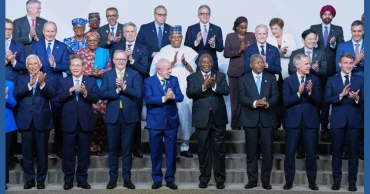
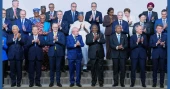
Leaders approve declaration as South Africa opens G20 Summit despite US boycott
The G20 summit in South Africa began with an unexpected development on Saturday as world leaders endorsed a joint declaration at the outset of the meeting, even as the United States boycotted the two-day event in protest against the host nation.
South African President Cyril Ramaphosa’s spokesperson, Vincent Magwenya, confirmed that all participating members backed the 122-point document when the summit opened in Johannesburg. Typically, G20 declarations are signed at the close of proceedings. The agreement, heavily shaped by South Africa, calls for greater international support for vulnerable nations facing climate-driven disasters and mounting debt—areas the hosts had championed as priorities for the first G20 summit held on African soil.
The U.S., absent on the orders of President Donald Trump, had reportedly urged South Africa not to move forward with a leaders’ declaration in its absence. The summit has been clouded by the U.S. boycott, part of a broader diplomatic dispute with Pretoria.
As Ramaphosa began what was supposed to be a closed-door session, his remarks about adopting the declaration were inadvertently broadcast, prompting South Africa’s foreign minister to intervene and remind him that cameras were still live.
While the South African government insisted the declaration was unanimously approved, Argentina distanced itself from the document. President Javier Milei also skipped the summit in solidarity with Trump, sending his foreign minister as a representative instead.
Talks on Ukraine on the sidelines
Officials from France, Germany, the U.K., Canada and Japan held discussions on the margins of the summit regarding a U.S.-brokered peace plan for the Russia-Ukraine conflict. German Chancellor Friedrich Merz said representatives from several European countries, the EU, the U.S., and Ukraine would meet in Switzerland on Sunday to continue talks. The proposal, shaped by Washington and Moscow, includes concessions that Ukrainian President Volodymyr Zelenskyy has rejected, such as ceding territory.
Deals and diplomacy mark Trump–Saudi Crown Prince meeting
A joint statement from multiple Western nations said the plan required further work and reaffirmed that national borders “must not be changed by force.”
South Africa pushes for support for poorer nations
Holding the rotating G20 presidency, South Africa used the summit to call for stronger global commitments to help developing countries rebuild after climate-linked disasters, reduce debt burdens, move toward renewable energy, and benefit from their own natural resources.
But Washington's absence loomed large. Trump accused South Africa of violently targeting its Afrikaner white minority and has opposed the summit's agenda, particularly its emphasis on climate change and inequality.
Despite the tension, several leaders urged cooperation. “I regret it,” French President Emmanuel Macron said of Trump’s boycott, “but it should not stop our work.”
The G20—comprising 19 nations, the European Union and the African Union—represents the bulk of the world’s economy and population, yet relies on consensus, which is often difficult to achieve among powers with competing interests.
Strains over the declaration and U.S. handover
G7 ministers reaffirm support for Ukraine, sidestep trade and military strike debates
South Africa said the U.S. had pressured it to water down the summit declaration into a non-binding host’s statement. Ramaphosa responded firmly, saying the country “will not be bullied.”
The U.S. is set to assume the G20 presidency after the summit, but only a U.S. embassy official will attend the handover ceremony, which South African officials described as disrespectful and said may not be conducted formally.
Source: AP
8 months ago
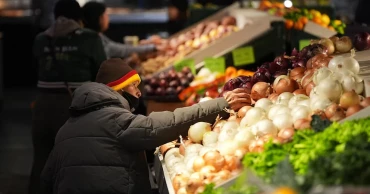
U.S. trade deficit falls 24% in Aug as tariffs curb imports
The U.S. trade deficit dropped nearly 24% in August as President Donald Trump’s broad tariffs on global imports drove down purchases from other countries.
The Commerce Department reported Wednesday that the gap between U.S. imports and exports fell to $59.6 billion in August from $78.2 billion in July. The report, delayed more than seven weeks due to a federal government shutdown, showed imports of goods and services declined 5% to $340.4 billion, following a July surge when companies stocked up ahead of Trump’s tariffs, which took effect on Aug. 7. Exports edged up 0.1% to $280.8 billion.
Trump has long argued that persistent trade deficits reflect foreign countries taking advantage of the U.S., prompting him to abandon decades of free-trade policy and impose double-digit tariffs on most imports. Specific goods, including steel, copper, and automobiles, have faced separate levies.
Despite the August drop, the U.S. trade deficit for 2025 remains higher than last year, totaling $713.6 billion through August — a 25% increase from $571.1 billion in the same period of 2024.
Economists note that lower imports can boost economic growth since foreign goods are subtracted from gross domestic product (GDP). “August’s smaller trade deficit will support third-quarter real GDP because more U.S. spending went toward domestic goods and services rather than foreign ones,” said Bill Adams, chief economist at Comerica Bank. He added that while the report is somewhat dated due to the shutdown, it reinforces evidence of robust third-quarter growth.
Trump has defended the tariffs as a way to protect U.S. industries and encourage domestic manufacturing. Importers typically pass the added costs to consumers, which economists say has contributed to inflation remaining above the Federal Reserve’s 2% target.
Asian shares mostly slip after Wall Street’s weak finish
Following voter concerns about high living costs, the president recently removed tariffs on products including beef, coffee, tea, fruit juice, cocoa, spices, bananas, oranges, tomatoes, and some fertilizers. Meanwhile, the legality of Trump’s tariffs faces a Supreme Court challenge, with justices questioning whether the president can impose unlimited import taxes by declaring a national emergency.
Source: AP
8 months ago
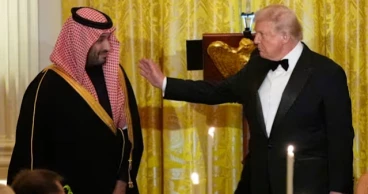
Deals and diplomacy mark Trump–Saudi Crown Prince meeting
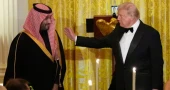
President Donald Trump hosted Saudi Crown Prince Mohammed bin Salman at the White House on Tuesday in a meeting marked by friendliness, elaborate ceremony and major announcements on defense and investment. Trump praised the crown prince’s leadership, downplayed concerns about Saudi Arabia’s human rights record and touted sweeping new Saudi commitments to the United States.
The visit was steeped in pomp. Fighter jets performed a flyover as the two leaders watched from a red carpet, an honor guard arrived on horseback, and an opulent dinner followed in the East Room.
During a joint appearance in the Oval Office—occurring seven years after U.S. intelligence linked the crown prince to the killing of journalist Jamal Khashoggi—the two fielded numerous questions from the press, including from one reporter whom Trump repeatedly berated.
Progress on defense cooperationTrump confirmed that the U.S. would move ahead with the sale of F-35 fighter jets to Saudi Arabia, saying Israel’s concerns about preserving its qualitative military edge would be addressed. Some Pentagon officials have opposed the deal due to fears that sensitive technology could reach China, a close Saudi partner.
Trump insisted both Israel and Saudi Arabia “should get top of the line” equipment, and Israeli officials have indicated they could accept the sale if Saudi Arabia normalizes ties with Israel under the Abraham Accords. Prince Mohammed reiterated that his country would join the framework only if a credible path to a Palestinian state is secured.
Trump also said Washington and Riyadh were finalizing a broader security agreement and would continue pursuing a civilian nuclear cooperation deal. The two nations additionally signed an agreement for Saudi Arabia to purchase nearly 300 U.S.-made tanks. At the evening dinner, Trump designated Saudi Arabia a major non-NATO ally, a symbolic status that enables certain defense and trade benefits.
Khashoggi’s murder largely brushed asideThe crown prince’s visit was his first to the White House since the 2018 murder of Khashoggi, a U.S. resident and Washington Post columnist. U.S. intelligence assessed that Prince Mohammed likely approved the operation.
When questioned about the killing and Saudi involvement in the 9/11 attacks, Trump attacked the reporter asking the questions. He described Khashoggi as “extremely controversial” and insisted the crown prince “knew nothing about it.”
Trump plans to sell F-35s to Saudi Arabia ahead of Crown Prince’s visit
Prince Mohammed again denied involvement and said Saudi Arabia had undertaken investigations and reforms. “It’s been painful,” he said. “We’ve improved our system to ensure nothing like that happens again.”
Trump also commended the kingdom for human rights progress, without specifying which reforms he meant.
Full ceremonial welcomeTrump welcomed the crown prince on the South Lawn with an embrace-like gesture and a full red-carpet reception, complete with a military band and a tour of White House decorations.
Calling the prince “a very respected man” and “a longtime friend,” Trump also criticized former President Joe Biden for greeting the prince with a fist bump in 2022. “You shake his hand,” Trump said, demonstrating the gesture.
The evening dinner featured high-profile guests including Nvidia CEO Jensen Huang, Tesla founder Elon Musk, Apple CEO Tim Cook, golfer Bryson DeChambeau and football star Cristiano Ronaldo. Guests were served pistachio-crusted rack of lamb and a chocolate mousse pear dessert.
Broad but undefined economic promisesPrince Mohammed told Trump that Saudi Arabia would increase its investment commitments in the U.S. from $600 billion—announced during Trump’s May trip to Riyadh—to $1 trillion. Specifics were not disclosed but are expected to involve technology, artificial intelligence, jet engines and other sectors.
Source: AP
8 months ago
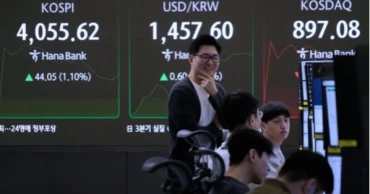
Asian shares mostly slip after Wall Street’s weak finish
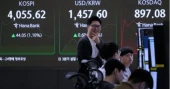
Asian markets were mostly lower Monday as U.S. futures edged higher following a lackluster performance on Wall Street last week. Tokyo’s Nikkei 225 fell 0.3% to 50,226.67 after data showed Japan’s economy contracted 1.8% annually in July-September. The dollar rose slightly against the yen to 154.65 from 154.58.
Chinese markets also declined, with Hong Kong’s Hang Seng down 0.8% at 26,359.22 and Shanghai Composite off 0.4% at 3,973.31, amid heightened tensions between China and Japan over Taiwan-related comments by Japan’s Prime Minister Sanae Takaichi.
In contrast, South Korea’s Kospi gained 1.7%, led by tech stocks, including SK Hynix (+6.8%) and Samsung Electronics (+3.3%), after collaboration plans with Nvidia on artificial intelligence development. Australia’s S&P/ASX 200 fell slightly to 8,628.60, while Taiwan’s Taiex rose 0.4% and India’s Sensex added 0.3%.
G7 foreign ministers gather in Canada amid rising trade tensions with Trump
U.S. futures showed moderate gains, with the S&P 500 up 0.5% and the Dow Jones Industrial Average up 0.1%, following mixed trading last Friday. Treasury yields and investor uncertainty remain influenced by Federal Reserve policy, interest rate expectations, and inflation trends.
Crude oil prices dipped, while Bitcoin rose 1.1% to $95,400. The euro declined slightly to $1.1602.
Source: AP
8 months ago
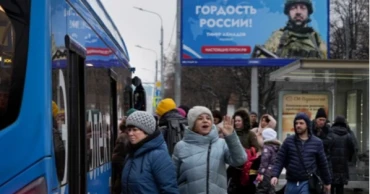
Slowing wartime economy forces Kremlin to seek more revenue from consumers
After two years of rapid, war-fueled growth, Russia’s economy is losing momentum. Oil revenues have dropped, the budget deficit has widened and defense spending — the engine of recent expansion — has plateaued.
Facing growing financial pressures, the Kremlin is turning to ordinary consumers and small businesses for additional revenue, signaling where President Vladimir Putin plans to find the money to stabilize state finances.
A proposed increase in value-added tax (VAT) from 20% to 22% could add up to 1 trillion rubles ($12.3 billion) to government coffers. The measure is already advancing through the Russian parliament and is slated to take effect on Jan. 1.
More tax hikes and higher fees expectedThe legislation also lowers the sales-revenue threshold for businesses required to collect VAT, dropping gradually to 10 million rubles ($123,000) by 2028 from the current 60 million rubles ($739,000). The move aims partly to prevent firms from splitting operations to dodge the tax — but it will also pull in many small enterprises such as neighborhood shops and beauty salons.
Other proposed measures include higher excise taxes on spirits, wine, beer, cigarettes and vapes. The tax on strong liquor like vodka would rise by 84 rubles per liter of pure alcohol — roughly 17 rubles (20 cents) for a half-liter bottle, or about 5% of the minimum retail price.
Fees for driver’s license renewals and international licenses are also set to increase, while a major tax break on imported cars will be scrapped. Russian media report that officials are considering a new technology tax of up to 5,000 rubles ($61.50) on high-end devices such as smartphones and laptops.
G7 ministers reaffirm support for Ukraine, sidestep trade and military strike debates
The unfolding tax measures underscore the trade-offs Putin faces as the war in Ukraine enters its fourth year: the tension between sustaining military spending and protecting household purchasing power.
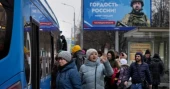
Public reaction: frustration mixed with resignationOn a Moscow street, residents told The Associated Press the changes will strain household budgets, particularly in poorer regions.
Pensioner Svetlana Martynova warned that forcing smaller firms to collect VAT could backfire.“I think small and medium businesses will fold,” she said. “The budget will get less, not more.”
Higher car registration costs add to the burdenThe VAT hike arrives alongside changes to the recycling fee for registering cars — a cost increase that will hit owners of higher-powered imported vehicles. Starting Dec. 1, individuals will lose access to a concessionary rate of 3,400 rubles ($42) on cars above 160 horsepower and must pay the commercial rate, potentially hundreds of thousands of rubles.
But this will do little to spur domestic auto manufacturing, said Andrei Olkhovsky, head of the Avtodom auto group, citing high interest rates and the relatively small Russian market compared to China, now the main supplier of imported vehicles.
He expects sales to dip in the short term and then return to current levels.“Taxes and fees will influence prices,” Olkhovsky said. “Consumers will adapt — and demand higher wages. That will raise the cost of everything around us.”
Slower growth widens deficitRussia’s economy contracted early this year and is projected to grow only about 1% in 2025 — a sharp slowdown from the more than 4% logged in both 2023 and 2024. High central bank interest rates, now 16.5%, are dampening activity as policymakers try to curb inflation running at 8% after years of heavy wartime spending.
Oil revenues have fallen roughly 20% due to lower global prices, according to the Kyiv School of Economics Institute. Western sanctions continue to drag on investment and raise production costs.
As a result, the budget deficit has been revised upward to 2.6% of GDP, compared with 1.7% last year. Unlike many countries, Russia cannot borrow on global bond markets and must rely on domestic banks.
Finance Minister Anton Siluanov has argued that raising revenue is preferable to borrowing, saying excessive debt would fuel inflation and force even higher interest rates — further weakening growth.
SoftBank sells Nvidia stake for $5.8 billion to boost investments in OpenAI
While the VAT increase may briefly push prices higher, economists say it could later ease inflation by reducing demand.
Kremlin still has cash, but choices ahead grow harderThe tax increases mark a shift away from the earlier wartime economic model, in which higher oil prices and soaring defense spending boosted wages and kept consumer demand strong. Death payments and recruitment bonuses also pumped money into poorer regions.
Putin is not at imminent risk of running short, said Alexandra Prokopenko of the Carnegie Russia Eurasia Center in Berlin.
“Growth is slowing, but companies are paying taxes, people are consuming and earning salaries, and paying taxes on those incomes,” she said. “For the next 12 to 14 months, Putin has enough money to sustain the war and current spending levels.”
Beyond that point, she added, the Kremlin may confront tough decisions.“He will need to choose between maintaining military spending and preserving consumer living standards so people don’t fully feel the impact of the war.”
Source: AP
8 months ago
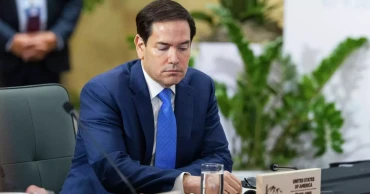
G7 ministers reaffirm support for Ukraine, sidestep trade and military strike debates
Foreign ministers from the Group of Seven (G7) nations reaffirmed their united support for Ukraine and condemned escalating violence in Sudan on Wednesday but avoided divisive issues such as U.S. trade tensions with Canada and recent American military strikes in the Caribbean.
At the two-day meeting, the G7 ministers met with Ukraine’s Foreign Minister Andriy Sybiha, who urged continued international support as his country braces for a harsh winter amid intensified Russian attacks. In a joint statement, the ministers pledged to increase economic pressure on Moscow and target those financing its war.
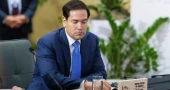
Canada and the UK announced new sanctions and energy aid for Ukraine, while U.S. Secretary of State Marco Rubio said discussions focused on strengthening Ukraine’s defense.
The gathering came shortly after President Donald Trump halted trade talks with Canada over a provincial advertisement that angered Washington. Canadian Foreign Minister Anita Anand declined to discuss the issue, emphasizing that the focus was on G7 cooperation.
G7 foreign ministers gather in Canada amid rising trade tensions with Trump
Rubio also confirmed that U.S. military operations against alleged drug-smuggling vessels “didn’t come up once” in discussions, dismissing reports of intelligence-sharing tensions with Britain.
The G7 ministers also issued a strong condemnation of Sudan’s worsening conflict, with Rubio calling for urgent action to stop the flow of weapons to the paramilitary Rapid Support Forces.
The G7 includes Canada, the U.S., Britain, France, Germany, Italy and Japan, with ministers from Australia, India, Brazil, Saudi Arabia, Mexico, South Korea, South Africa and Ukraine also invited.
Source: AP
8 months ago