world-business
China vows to stand firm against Trump's 100% tariff threat
China signaled Sunday that it would not back down in the face of a 100% tariff threat from President Donald Trump, urging the U.S. to resolve differences through negotiations instead of threats. U.S. Vice President JD Vance defended Trump's position and seemed to warn China not to be aggressive in its response.
“China’s stance is consistent,” the Commerce Ministry said in a statement posted online. “We do not want a tariff war but we are not afraid of one.”
It was China's first official comment on Trump's threat to jack up the tax on imports from China by Nov. 1 in response to new Chinese restrictions on the export of rare earths, which are vital to a wide range of consumer and military products.
The back and forth threatens to derail a possible meeting between Trump and Chinese leader Xi Jinping and end a truce in a trade war in which new tariffs from both sides briefly topped 100% in April.
In response, Vance said Sunday that Trump is committed to protecting America's economic livelihoods while making the United States more self-sufficient. He said the fact that China has “so much control over critical supply in the United States of America" is the definition of a national emergency and therefore justifies Trump's move to impose tough tariffs.
“It’s going to be delicate dance and a lot of it is going to depend on how the Chinese respond. If they respond in a highly aggressive manner, I guarantee you the president of the United States has far more cards than the People’s Republic of China,” Vance said on Fox News Channel's “Sunday Morning Futures.”
“If, however, they’re willing to be reasonable, then Donald Trump is always willing to be a reasonable negotiator. We’re going to find out a lot in the weeks to come about whether China wants to start a trade war with us or whether they actually want to be reasonable,” Vance continued. "I hope they choose the path of reason. The president of the United States is going to defend America regardless.”
Trump has raised taxes on imports from many U.S. trading partners since taking office in January, seeking to win concessions. China has been one of the few countries that hasn't backed down, relying on its economic clout.
“Frequently resorting to the threat of high tariffs is not the correct way to get along with China,” the Commerce Ministry said in its post, which was presented as a series of answers from an unnamed spokesperson to four questions from unspecified media outlets.
The statement called for addressing any concerns through dialogue.
“If the U.S. side obstinately insists on its practice, China will be sure to resolutely take corresponding measures to safeguard its legitimate rights and interests,” the post said.
In addition to the 100% tariff, Trump threatened to impose export controls on what he called “critical software,” without specifying what that means.
Both sides accuse the other of violating the spirit of the truce by imposing new restrictions on trade.
Trump said in a social media post that China is “becoming very hostile” and that it is holding the world captive by restricting access to rare earth metals and magnets.
The Chinese Commerce Ministry post said the U.S. has introduced several new restrictions in recent weeks, including expanding the number of Chinese companies subject to U.S. export controls.
On rare earths, the ministry said that export licenses would be granted for legitimate civilian uses, noting that the minerals also have military applications.
The new regulations include a requirement that foreign companies get Chinese government approval to export items that contain rare earths sourced from China, no matter where the products are manufactured.
China accounts for nearly 70% of the world’s rare earths mining and controls roughly 90% of their global processing. Access to the material is a key point of contention in trade talks between Washington and Beijing.
The critical minerals go into many products, from jet engines, radar systems and electric vehicles to consumer electronics including laptops and phones. China’s export controls have hit European and other manufacturers, as well as American ones.
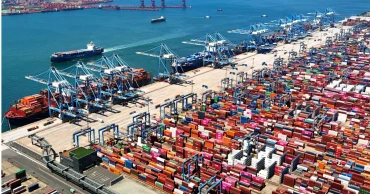
The Commerce Ministry statement said that the U.S. is also ignoring Chinese concerns by going forward with new port fees on Chinese ships that take effect Tuesday. China announced Friday that it would impose port fees on American ships in response.
9 months ago
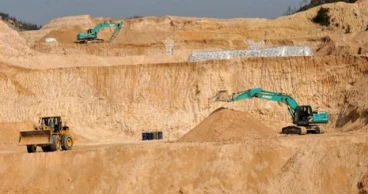
China tightens export controls on rare earths and related technologies ahead of Trump-Xi meeting
China has announced new restrictions on exports of rare earth elements and related technologies, extending its control over materials vital to global high-tech and defense industries. The move comes just weeks before a planned meeting between US President Donald Trump and Chinese leader Xi Jinping.
The Ministry of Commerce said Thursday that foreign companies will now require special approval to export products containing even trace amounts of rare earths sourced from China. The new rules also include licensing requirements for technologies related to mining, smelting, recycling, and magnet production — with military-related applications expected to be denied outright.
China produces nearly 70% of the world’s rare earths and handles about 90% of global processing, giving Beijing significant leverage in global supply chains. Analysts say the tighter controls underscore China’s strategic use of critical minerals amid ongoing trade tensions with Washington.
“Beijing’s rare earth policy has become a powerful tool of economic and geopolitical influence,” said Gracelin Baskaran of the Center for Strategic and International Studies.
Tesla launches cheaper Model Y and Model 3, but investors remain unimpressed
US-based analysts warned the new measures could accelerate investments to build independent “mine-to-magnet” supply chains outside China. American companies, including MP Materials and Noveon, are already working to reduce reliance on Chinese suppliers, supported by over $500 million in recent US government investments.
The European Commission also voiced concern, urging China to remain a “reliable partner” and ensure predictable access to critical raw materials.
Global markets steady as AI surge lifts tech shares; IBM jumps on Anthropic partnership
Experts view Beijing’s decision as both a strategic move and an escalation in the ongoing trade war. “This should be a wake-up call for Washington to rebuild its rare earths industrial base,” said former US Commerce Department official Nazak Nikakhtar.
Source: AP
9 months ago

Tesla launches cheaper Model Y and Model 3, but investors remain unimpressed
Tesla has unveiled lower-priced versions of its Model Y and Model 3 electric vehicles in an effort to boost slowing sales, but the move failed to impress investors, sending its stock down on Tuesday.
The new Model Y, priced just under $40,000, features a simplified interior and reduced specifications. The release comes during a challenging year for the company, which faces a maturing product lineup, growing competition from foreign EV makers, and boycotts linked to CEO Elon Musk.
Market analysts said the new versions are unlikely to provide the spark investors were hoping for. “Investors were looking for something truly different, not an iteration of an old product,” said Edmunds analyst Ivan Drury, as Tesla shares dropped sharply near the close of trading.
Tesla also introduced a cheaper Model 3 starting below $37,000, which falls under $35,000 in New York after state rebates. However, both models remain above the $25,000 price point Tesla once promised for a mass-market vehicle.
The rollout coincides with declining EV demand in the U.S. following the expiration of a $7,500 federal tax credit, prompting many customers to delay purchases.
Tesla stock slid 4.5% to $443.09 on Tuesday, erasing gains from the previous day when anticipation of the new models had pushed shares up over 5%.
The new Model Y offers a shorter 321-mile range, fewer speakers, and a fabric interior instead of microsuede. It also lacks features like a panoramic glass roof and rear touchscreen, placing it in competition with EVs such as Ford’s Mustang Mach-E, Chevrolet’s Equinox EV, and Hyundai’s Ioniq 5.
Similarly, the new Model 3 reduces driving range, ambient lighting, and other premium features.
9 months ago

Japan’s Nikkei surges 4.5% after ruling party picks ultra-conservative leader Sanae Takaichi
Japan’s benchmark Nikkei 225 index soared 4.5% on Monday after the ruling Liberal Democratic Party (LDP) elected ultra-conservative Sanae Takaichi as its new leader, positioning her to become Japan’s first woman prime minister.
Other major Asian markets also traded mostly higher.
Takaichi, 64, a close ally of former Prime Minister Shinzo Abe, is widely expected to continue his market-friendly “Abenomics” policies. Admired by former British Prime Minister Margaret Thatcher, Takaichi has long backed Abe’s conservative vision for Japan.
Although the LDP does not hold a full majority in the lower house, its dominance and a fragmented opposition virtually guarantee her appointment as prime minister.
Takaichi faces several daunting challenges, including revitalizing Japan’s competitiveness, strengthening its industrial base, and tackling an aging population and mounting public debt, according to analysts at BMI of Fitch Solutions.
Despite these challenges, investor sentiment turned sharply positive. Neil Newman, head of strategy at Astris Advisory Japan, said foreign investors appeared to drive Monday’s rally.
“Obviously investors like what she has been saying, and judging by which stocks moved, it seems like foreigners are leading the charge so far,” Newman said.Market optimism was also boosted by reports suggesting U.S. President Donald Trump might consider easing some tariffs on auto parts and manufacturing materials — news that sent automakers’ shares higher. Toyota rose 4.9% and Honda gained 4.7% in Tokyo trading.
Japan’s first female LDP leader Takaichi sparks gender equality concerns
By midday, the Nikkei 225 was up 4.5% at 47,835.36, while Hong Kong’s Hang Seng index slipped 0.8% to 27,930.45. The Japanese yen weakened to 149.88 per U.S. dollar from 149.33, as expectations grew that Takaichi’s policies could lead to increased government spending and inflationary pressure. The euro eased slightly to $1.1720.
Australia’s S&P/ASX 200 edged down 0.1% to 8,977.10, while markets in mainland China, Taiwan, and South Korea remained closed for holidays.
On Wall Street, U.S. stocks ended Friday mixed but near record highs. The S&P 500 gained less than 0.1% to 6,715.79, marking its seventh positive week in the last nine. The Dow Jones Industrial Average rose 0.5% to 46,758.28, while the Nasdaq slipped 0.3% to 22,780.51.
The U.S. government shutdown, now in its third day, delayed the release of key monthly jobs data that investors were watching closely for clues about the Federal Reserve’s next moves on interest rates.
Meanwhile, oil prices rose after OPEC+ members agreed to a modest production increase of 137,000 barrels per day for November, matching October’s output hike. U.S. benchmark crude gained 88 cents to $61.76 per barrel, and Brent crude climbed 92 cents to $65.45.
Source: AP
9 months ago
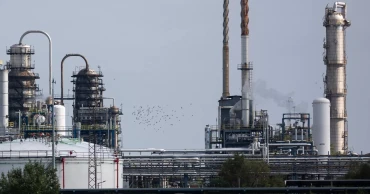
Hungary defies EU and NATO pressure, holds tight to Russian oil and gas
As the European Union moves to end its dependence on Russian energy and U.S. President Donald Trump’s administration urges NATO members to cut ties with Moscow’s oil, Hungary remains a staunch outlier.
Prime Minister Viktor Orbán’s government insists Russian energy is vital for Hungary’s economy, arguing that shifting to alternative suppliers would trigger an immediate economic collapse.
Orbán — widely viewed as the Kremlin’s closest ally in the EU — has consistently opposed sanctions on Moscow since Russia’s invasion of Ukraine in February 2022. He has also denounced EU efforts to target Russia’s energy revenue, saying such steps harm Europe more than they help Ukraine.
While most European countries have drastically reduced their reliance on Russian fuel, Hungary has gone the other way — maintaining, and in some cases expanding, its imports. Critics say Orbán’s loyalty to Russian energy stems more from political alignment than genuine economic necessity.
Orbán warns of ‘economic collapse’ without Russian fuelHungary’s leaders argue that, as a landlocked nation surrounded by other countries, it has no practical alternative to pipelines built during the Soviet era.
“If Hungary is cut off from Russian oil and natural gas, then immediately, within a minute, Hungarian economic performance will drop by 4%,” Orbán said on state radio in September. “This would be catastrophic — the Hungarian economy would be on its knees.”
However, energy expert László Miklós dismissed that claim, telling The Associated Press there was “no rational explanation” for Hungary’s reluctance to diversify. He said the infrastructure already exists to import non-Russian energy.
Cyberattack cripples operations of Japanese beverage giant Asahi
“Disconnecting from Russian supplies should not be a problem in an integrated European market,” Miklós said. “All the conditions are there — it’s the political will that’s missing.”
EU’s energy cutoff and Hungary’s exemptionFollowing Russia’s 2022 invasion of Ukraine, the EU imposed an embargo on Russian oil and announced plans to phase out all Russian fossil fuel imports by 2027.
However, the bloc granted temporary exemptions to three landlocked nations — Hungary, Slovakia, and the Czech Republic — for pipeline-delivered oil. Miklós argued that this exemption has enabled Hungary’s government and state oil company MOL to reap major profits while continuing to funnel billions to Russia’s war budget.
“People think Hungary buys Russian energy because it’s cheaper,” he said. “That’s wrong. Hungary buys Russian energy because the government wants to help Russia arm itself — the profits for MOL and the government are just a byproduct.”
Alternatives through the AdriaticHungary has insisted that its limited infrastructure prevents it from ending reliance on Moscow. Foreign Minister Péter Szijjártó said in September that geography determines energy choices. “We can dream about buying gas and oil from places that are not connected by pipelines, but we cannot heat our homes or run factories with dreams,” he said.
Yet neighboring countries have already made the switch. The Czech Republic, once heavily dependent on Russia’s Druzhba pipeline, declared “oil independence” earlier this year after boosting capacity through an Italian pipeline.
Hungary also has access to the Adriatic pipeline from Croatia, known as the Adria. While MOL claims the pipeline cannot meet Hungary’s full annual demand of roughly 14 million tons of crude, Croatia’s oil company Janaf disputes that, saying it can easily supply both Hungary and Slovakia.
Even if Adria cannot cover all of Hungary’s needs, Miklós said it could still significantly reduce Russian imports. “If they need 14 to 15 million tons per year, they could take 10 million through Adria and the rest via Druzhba,” he said.
The cost of alternativesOrbán’s government has warned that cutting off Russian energy would double household electricity bills and nearly triple gas costs.
Asian shares rise on Wall Street gains as tech stocks rally despite U.S. government shutdown
But according to energy analyst Borbála Takácsné Tóth, Hungarian consumers already pay prices linked to European benchmarks, meaning Russian gas is not substantially cheaper. She said a shift away from Russian supplies would likely raise prices only slightly — by 1.5 to 2 euros per megawatt hour, or less than 5%.
Despite the government’s rhetoric, Hungary’s national energy firm MOL has already invested heavily to diversify its supply routes. The company said its $500 million modernization project will allow it to process a wider range of crude by the end of 2026.
Miklós said that whatever Orbán’s political stance, the EU’s ongoing regulations will ultimately force Hungary to adapt.
“Things will not go back to the way they were,” he said. “Europe has learned that Russia cannot be trusted. Breaking away from Russian energy is a political decision — and every other country in Europe is already paying that price.”
Source: AP
9 months ago

Cyberattack cripples operations of Japanese beverage giant Asahi
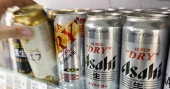
Japanese beverage giant Asahi Group Holdings said Friday that its operations have remained disrupted for five consecutive days following a cyberattack earlier this week, with reports of shortages of its popular beer and other drinks emerging in some stores.
The company said its computer systems were hit on Monday, causing glitches that affected orders, shipments, and a customer call center in Japan. Overseas operations were not impacted.
A company spokeswoman, speaking on condition of anonymity as is customary for Japanese firms, said the problem had yet to be resolved. While some emergency shipments were made Wednesday, employees have been forced to manually enter data into systems.
Asian shares rise on Wall Street gains as tech stocks rally despite U.S. government shutdown
Japanese media reported that convenience stores were facing delivery delays, with some shelves running low or selling out of Asahi products. A 7-Eleven outlet in Tokyo still had stocks on Friday evening but expected shortages soon.
Asahi has canceled promotional events and postponed product launches amid the disruption. Some media reports suggested ransomware could be behind the attack, but the company declined to comment on the cause or motive.
Founded in 1949, Tokyo-based Asahi produces the globally popular Super Dry beer, as well as cider, juices, candy, baby food and other products.
Source: AP
10 months ago

Asian shares rise on Wall Street gains as tech stocks rally despite U.S. government shutdown
Asian shares advanced on Thursday, following Wall Street’s record-setting gains, as investors shrugged off the U.S. government shutdown and technology stocks led the rally.
South Korea’s Kospi jumped 2.9% to 3,555.63 after Samsung Electronics and SK Hynix announced a partnership with OpenAI to supply memory chips for its Stargate data hubs. Samsung shares rose 4.6%, while SK Hynix surged 10.8%. Taiwan-based TSMC gained 3.3%, lifting the Taiex by 1.7%. Japan’s Nikkei 225 added 0.3% to 44,675.96, while Hong Kong’s Hang Seng rose 1.3% to 27,206.18. Markets in mainland China remained closed for a national holiday. Australia’s S&P/ASX 200 climbed 1%, led by gold mining stocks, and India’s BSE Sensex gained 0.9% after the Reserve Bank of India kept its benchmark interest rate unchanged.
Australian PM urges China to resume iron ore imports after reported trade halt
In U.S. trading on Wednesday, the S&P 500 rose 0.3% to 6,711.20, the Dow Jones Industrial Average added 0.1% to 46,441.10, and the Nasdaq climbed 0.4% to 22,755.16. Investors are weighing the impact of the government shutdown and upcoming economic reports on the Federal Reserve’s interest rate decisions.
Crude oil prices inched higher, with U.S. benchmark crude at $62.08 per barrel and Brent crude at $65.65. The U.S. dollar strengthened against the yen, while gold eased slightly from record highs.
Source: AP
10 months ago

Australian PM urges China to resume iron ore imports after reported trade halt
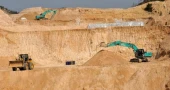
Prime Minister Anthony Albanese has urged China to allow the import of Australian iron ore without barriers following reports that a state-run Chinese company has asked steelmakers and traders to suspend purchases from mining giant BHP.
According to media reports, China Mineral Resources Group Co. directed domestic buyers to temporarily stop buying dollar-denominated seaborne shipments from BHP, escalating a dispute over contract negotiations.
Albanese said he was concerned by the reports, stressing that iron ore exports are vital to both economies.“I want Australian iron ore to be exported into China without hindrance. It makes a major contribution to China’s economy, as well as to Australia’s,” he told reporters.
He described the measures as “disappointing,” adding, “Sometimes when people negotiate over price, these things occur. But I want to see this resolved quickly.”
The suspension means new deals cannot be signed, even for shipments already sent from BHP’s mines in Australia. The Chinese company, created to strengthen Beijing’s influence in the global iron ore market, did not comment.
BHP also declined to comment on the negotiations.
Treasurer Jim Chalmers said he plans to meet BHP chief executive Mike Henry regarding the issue. “These are concerning reports, but ultimately they involve commercial arrangements between companies. Still, our government will continue to advocate for Australia’s interests and work through these matters calmly,” he said.
North Korean, Chinese foreign ministers vow to deepen ties, resist hegemonism
Since Albanese’s government took office in 2022, China has lifted a number of trade barriers worth up to 20 billion Australian dollars ($13 billion) annually. Iron ore, however, had previously been spared because of its importance to Chinese steelmakers.
Analyst Kaan Peker from RBC Capital Markets noted that China cannot easily stop buying BHP ore without drastically cutting steel output. He said global suppliers, including Brazil’s Vale, Australia’s Fortescue, and Rio Tinto, are already producing at full capacity.
“It seems more like a negotiation tactic, possibly aimed at securing lower prices,” Peker said.
Source: AP
10 months ago

Global markets mostly lower as investors worry over potential US government shutdown
Global shares slipped in cautious trading on Tuesday as investors weighed the possibility of a U.S. government shutdown.
In Europe, France’s CAC 40 fell 0.5% to 7,845.73, Germany’s DAX dipped 0.1% to 23,718.17, and Britain’s FTSE 100 lost 0.2% to 9,282.13. U.S. stock futures also pointed lower, with Dow futures down 0.2% at 46,518.00 and S&P 500 futures falling 0.2% to 6,703.75.
Asian markets showed mixed movements. Japan’s Nikkei 225 declined nearly 0.3% to close at 44,932.63. China released weak factory activity data for September, highlighting ongoing economic pressure amid U.S. trade tensions. In contrast, Hong Kong’s Hang Seng rose 0.9% to 26,855.56, while the Shanghai Composite gained 0.5% to 3,882.78. Australia’s S&P/ASX 200 slipped 0.2% to 8,848.80, and South Korea’s Kospi edged down nearly 0.2% to 3,424.60.
The U.S. federal government faces a looming budget deadline that could lead to a shutdown. Previous shutdowns were usually brief and had limited market impact. However, prolonged political deadlock between Democrats and Republicans could delay key economic reports, including data on employment and inflation. This potential shutdown may be more severe if the White House moves to implement large-scale federal worker layoffs.
North Korean, Chinese foreign ministers vow to deepen ties, resist hegemonism
Stephen Innes, managing partner at SPI Asset Management, said, “The market has explored every angle of the government shutdown story, yet with less than 24 hours remaining before the deadline, the narrative continues to dominate investor attention.”
Investors are also eyeing Friday’s report on U.S. job creation and layoffs. Balanced numbers could support the Federal Reserve’s plan to continue lowering interest rates, while unexpectedly strong data might reduce the likelihood of further rate cuts, putting pressure on stock prices that have already surged in recent months.
In commodities, U.S. benchmark crude fell 97 cents to $62.48 per barrel, while Brent crude dropped $1.02 to $66.95 per barrel. In currency markets, the U.S. dollar rose to 148.87 Japanese yen from 148.60 yen, and the euro increased to $1.1761 from $1.1727.
Source: AP
10 months ago

North Korean, Chinese foreign ministers vow to deepen ties, resist hegemonism
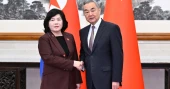
The foreign ministers of North Korea and China agreed Sunday in Beijing to strengthen bilateral relations and jointly oppose hegemonism and unilateralism, a pointed reference to their shared tensions with the United States.
The meeting came three weeks after North Korean leader Kim Jong Un and Chinese President Xi Jinping held their first summit in more than six years, pledging closer cooperation. Both leaders, alongside Russian President Vladimir Putin, had earlier attended a massive military parade in Beijing marking the end of World War II, signaling a show of potential three-way unity against Washington.
In talks with Chinese Foreign Minister Wang Yi, North Korea’s Choe Son Hui reiterated Kim’s stance that advancing ties with China is Pyongyang’s “unwavering position,” according to the North’s Korean Central News Agency (KCNA). Wang responded that Beijing is committed to consolidating relations, boosting strategic communications and exchanges.
China’s Xinhua News Agency quoted Wang as saying Beijing opposes “all forms of hegemonism” and is ready to work with North Korea on regional and global issues. Choe, for her part, expressed willingness to “closely cooperate with China in multilateral affairs, jointly resist unilateralism and power politics, and promote a fairer world order.”
Trump’s moves to consolidate power, target foes draw comparisons to countries
Analysts say the statements reflect both countries’ ongoing confrontations with Washington — Beijing over strategic competition and Pyongyang over its nuclear weapons program. KCNA reported that Choe and Wang reached “complete consensus” on regional and international issues but gave no details.
Kim’s participation in the Beijing parade marked his first appearance at a major multilateral event in his 14-year rule. While Pyongyang has in recent years leaned on Moscow by supplying troops and munitions for the Ukraine war, experts note Kim also seeks to reinforce ties with China, North Korea’s top trading partner and aid benefactor, as he prepares for shifting dynamics when the war eventually ends.
Asian markets fall after Trump announces new tariffs on drugs and goods
Attention is now on the level of delegation China may send to Pyongyang for the 80th founding anniversary of North Korea’s ruling Workers’ Party next month, when the North is expected to stage a military parade showcasing new weapons aimed at the U.S. and its allies.
Source: Agency
10 months ago