world-business
Trump hints at approval of Nippon-US Steel deal, HQ to stay in Pittsburgh
President Donald Trump on Friday said that US Steel will keep its headquarters in Pittsburgh as part of what he called a “planned partnership” that seemed to signal that he’ll approve a bid by Japan-based Nippon Steel to make a big investment in the iconic American steelmaker, if not buy it outright.
Still, Trump's statement left it vague as to whether he is approving Nippon Steel's bid after he vowed repeatedly to block the deal to prevent US Steel from being foreign-owned, AP reports.
More recently, Trump suggested that Nippon Steel would invest in US Steel, not buy it, and one union official suggested Friday that the federal government will have a role in the company's management going forward.
But investors seemed to take Trump's statement as a sign that he's approving some sort of merger, sharply pushing up US Steel's shares, and the companies issued approving statements.
Nippon Steel said the partnership is a “game changer — for US Steel and all of its stakeholders, including the American steel industry, and the broader American manufacturing base.”
Trump tariff threats on EU, Apple, send US futures and global markets skidding
US Steel said it “will remain American, and we will grow bigger and stronger through a partnership with Nippon Steel that brings massive investment, new technologies and thousands of jobs over the next four years."
Nippon Steel's nearly $15 billion bid to buy US Steel was blocked by former President Joe Biden on his way out of office and, after Trump became president, subject to another national security review by the Committee on Foreign Investment in the United States.
In his statement Friday, Trump said that “after much consideration and negotiation, US Steel will REMAIN in America, and keep its Headquarters in the Great City of Pittsburgh.”
What Trump called a “planned partnership” will add $14 billion to the US economy, he said, although it wasn't clear what the terms of the deal would be or who would control US Steel under the arrangement. Neither company explained Friday how the partnership would be structured.
Japan’s chief tariff negotiator Ryosei Akazawa told reporters Friday that he was closely watching the development. He said Nippon Steel has made a proposal that could win support from US Steel and make a good investment for both Japan and the US.
Josh Spoores, the Pennsylvania-based head of steel Americas analysis for commodity researcher CRU, said that, from what he’s seeing, “this ‘partnership’ is a green light for the acquisition.”
Shares of US Steel jumped 21% on the news, and continued rising in aftermarket trading.
1 year ago
Trump tariff threats on EU, Apple, send US futures and global markets skidding
Markets on Wall Street and in Europe declined rapidly early Friday morning after President Donald Trump posted a pair of tariff threats on social media, one aimed at Apple and the other at the European Union.
Futures for the S&P 500 and the Dow Jones Industrial Average slid 1.5% and Nasdaq futures tumbled 1.7% before the bell. Oil prices fell and Treasury yields sank as well, AP reports.
Markets took a sharp turn downward after Trump posted on social media that he wants “a straight 50% Tariff” on the EU beginning June 1 because representatives of the bloc have been difficult in negotiations.
European markets fell nearly immediately after Trump's post on his own Truth Social site. Germany’s DAX quickly swung to a 1.9% loss, while the CAC 40 in Paris fell 2.4%. London's FTSE 100 shed 1.1%.
Global shares slip as investors register their worries about U.S. debt
Trump has dialled back or paused many of his tariff threats in recent weeks, bringing some peace to markets which had been swinging wildly in both directions for weeks as Trump fired off tariff threats.
Shares of Apple were down 3.8% in morning trading after Trump threatened to put a 25% tariff on Apple products unless the company moves its iPhone manufacturing to the United States.
The threat delivered over social media could dramatically increase the price of iPhones, potentially hurting sales and the profits of one of America’s leading technology companies.
US benchmark crude oil tumbled $1.07, or 1.3%, to $60.13 per barrel while Brent crude, the international standard, fell 99 cents to $63.45 per barrel.
1 year ago

Trump hosts top crypto investors as some industry leaders fear he's putting personal profits first
President Donald Trump rewarded top investors in one of his cryptocurrency projects with a swanky dinner on Thursday night, an event that showed the ascendance of an emerging financial industry — and also the president's willingness to mix public office with personal profit.
Some 220 of the biggest investors in the $TRUMP meme coin were invited to Trump's luxury golf club in Northern Virginia, where they dined on filet mignon and halibut. According to participants' posts on social media, Trump spoke for about half an hour before dancing to the song “YMCA.”
Despite the White House insisting that Trump would be attending the event “in his personal time,” he stood behind a lectern with the presidential seal as he touted an industry that's generating profits for his family business.
After feeling unfairly targeted under President Joe Biden, the crypto industry has quickly become a powerful political force, donating huge sums to help Trump and friendly lawmakers. The U.S. Senate is advancing key pro-crypto legislation while bitcoin prices soar.
However, even some pro-Trump crypto enthusiasts worry that the president's personal involvement may be undermining their efforts to establish credibility and stability for the industry.
“It’s distasteful and an unnecessary distraction,” said Nic Carter, a Trump supporter and partner at the crypto investment firm Castle Island Ventures, who said the president is “hugging us to death” with his private crypto businesses. “We would much rather that he passes common sense legislation and leave it at that.”
As the president uses crypto as a platform to make money for his brand in unprecedented ways, it's also creating an opportunity for potentially shadowy buyers to use the anonymity of the internet to buy access to the president. The lack of transparency was evident on a poster board at the dinner, where participants signed a ranking of top investors. Some used their real names; others used pseudonyms.
No media was allowed into the dinner, and the president was at his golf club for only about an hour. Protesters gathered outside the club holding signs that said “stop crypto corruption” and “no corrupt fools.”
Text messaging scammers stole $2M in cryptocurrency from victims
Trump said the event was “good, very good” as he returned to the White House.
Concerns about Trump’s crypto ventures predate Inauguration Day
Three days before Trump took office on Jan. 20, he announced the creation of the $TRUMP meme coin at the fancy Crypto Ball held down the street from the White House. He described it as a way for his supporters to “have fun.”
Meme coins are the crypto sector’s black sheep. They are often created as a joke, with no real utility and prone to extremely wild price swings that tend to enrich a small group of insiders at the expense of less sophisticated investors.
The president's meme coin is different, however, and has a clear utility: access to Trump. In addition to Thursday's dinner, the top 25 were invited to a private reception with the president, with the top four getting $100,000 crypto-themed and Trump-branded watches.
Trump’s meme coin saw an initial spike in value, followed by a steep drop. Its creators, which include an entity controlled by the Trump Organization, have made hundreds of millions of dollars by collecting fees on trades.
First lady Melania Trump has her own meme coin, and Trump’s sons, Eric and Don Jr. — who are running the Trump Organization while their father is president — announced they are partnering with an existing firm to create a crypto mining company.
The Trump family also holds about a 60% stake in World Liberty Financial, a crypto project that provides yet another avenue where investors are buying in and enriching the president’s relatives. World Liberty has launched its own stablecoin, USD1. The project got a boost recently when World Liberty announced an investment fund in the United Arab Emirates would be using $2 billion worth of USD1 to purchase a stake in Binance, the world’s largest cryptocurrency exchange.
Stablecoins have values pegged to fixed assets like the U.S. dollar. Issuers profit by collecting the interest on the Treasury bonds and other assets used to back the stablecoins.
Crypto is now one of the most significant sources of the Trump family’s wealth.
“He’s becoming a salesman-in-chief,” said James Thurber, an American University professor emeritus who has long studied and taught about corruption around the world. “It allows for huge conflicts of interest.”
How Trump changed his mind on crypto
“I’m a big crypto fan,” Trump told reporters aboard Air Force One during last week’s trip to the Middle East. “I’ve been that from the beginning, right from the campaign.”
China declares all cryptocurrency transactions illegal
That wasn’t always true. During his first term, Trump posted in July 2019 that cryptocurrencies were “not money” and had value that was “highly volatile and based on thin air.”
“Unregulated Crypto Assets can facilitate unlawful behavior, including drug trade,” he added then. Even after leaving office in 2021, Trump told Fox Business Network that bitcoin, the world’s most popular cryptocurrency, “seems like a scam.”
Trump began to shift during a crypto event at his Mar-a-Lago club in Florida in May 2024, receiving assurances that industry backers would spend lavishly to get him reelected. Another major milestone came last June, when Trump attended a high-dollar fundraiser at the San Francisco home of David Sacks.
Those close to Trump, including his sons and billionaire Elon Musk, helped further push his embrace of the industry. Sacks is now the Trump administration’s crypto czar, and many Cabinet members — including Commerce Secretary Howard Lutnick and Defense Secretary Pete Hegseth — have long been enthusiastic crypto boosters.
“I don’t have faith in the dollar,” Transportation Secretary Sean Duffy said in a 2023 interview. “I’m bullish on bitcoin.”
Trump + crypto: A political marriage of convenience
Many top crypto backers were naturally wary of traditional politics, but gravitated toward Trump last year. They bristled at how Biden's Securities and Exchange Commission aggressively brought civil suits against several major crypto companies.
Since Trump took office, many such cases have been dropped or paused, including one alleging that Justin Sun, a China-born crypto entrepreneur, and his company engaged in market manipulation and paid celebrities for undisclosed promotions.
Sun, who once paid $6.2 million for a piece of art involving a banana taped to a wall, and then ate the banana, helped the Trumps start World Liberty Financial with an early $75 million investment.
Sun has disclosed on social media that he is the biggest holder of $TRUMP meme coins and is attending Thursday’s dinner.
Coinbase is here: A cryptocurrency exchange goes public
“I’m excited to connect with everyone, talk crypto, and discuss the future of our industry,” Sun said in advance.
He posted a video of Trump entering the private reception.
“Did you get to see the helicopter?” Trump said.
“Yeah! Super cool,” Sun responded.
Are Trump family profits hurting other crypto investors?
Trump has signed executive orders promoting the industry, including calls to create a government bitcoin reserve. In March, Trump convened the first cryptocurrency summit at the White House.
But some of the industry’s biggest names, often brash and outspoken, have kept mostly mum on Trump’s meme coins and other projects.
“It’s not my place to really comment on President Trump’s activity,” Coinbase CEO Brian Armstrong said at a recent public event.
Meanwhile, a top legislative priority for crypto-backers, a bill clarifying how digital assets are to be regulated, has advanced in the Senate. But some Democrats have tried to stall other pro-crypto legislation over the president's personal dealings — and see the dinner as a particularly egregious case.
Sen. Richard Blumenthal, a Connecticut Democrat, said the gathering was “in effect, putting a ‘for sale’ sign on the White House.”
“It’s auctioning off access,” Blumenthal said on a Thursday press call.
White House press secretary Karoline Leavitt said the president is attending “in his personal time.” The White House has also said it has nothing to do with Trump's meme coin.
1 year ago

Global shares slip as investors register their worries about U.S. debt
Global shares fell Thursday as investors reacted to growing worries over surging U.S. debt.
France's CAC 40 slipped 0.8% to 7,849.87, while Germany's DAX declined 0.7% to 23,962.00. Britain's FTSE 100 fell 0.7% to 8,728.84.
The future for the Dow Jones Industrial Average inched 0.1% lower while that for the S&P 500 gained nearly 0.2%.
In Asian trading, Japan's benchmark Nikkei 225 shed 0.8% to finish at 36,985.87.
Hong Kong’s Hang Seng lost 1.2% to 23,544.31, while the Shanghai Composite edged down 0.2% to 3,380.19.
Australia's S&P/ASX 200 slipped 0.5% to 8,348.70. South Korea's Kospi dropped 1.2% to 2,593.67.
Shares skidded Wednesday on Wall Street after the U.S. government released the results for its latest auction of 20-year bonds. Such bonds help to pay government bills and the auction had to offer a yield of more than 5% to attract enough buyers.
China launches crackdown on online defamation, extortion targeting businesses
The S&P 500 fell 1.6% for a second straight drop after breaking a six-day winning streak. The Dow lost 1.9%, while the Nasdaq composite sank 1.4%.
Rising yields for U.S. Treasury bonds are a canary in the coal mine, Stephen Innes of SPI Asset Management said in a commentary.
“The U.S. still has the biggest markets, the deepest liquidity, and the dollar’s inertia working in its favor. But even inertia can’t outrun compound interest and structural deficits forever,” he wrote.
The declining U.S. dollar also weighed on Asian regional markets, according to some analysts, because some Asian nations have significant holdings in dollars. It also affects Asian exporters, such as Japanese automakers and electronics companies, by reducing the value of their overseas earnings when they are converted into yen.
In currency trading, the U.S. dollar fell to 143.04 Japanese yen from 143.68 yen. It had been trading at 150 yen levels a year ago. The euro stood unchanged at $1.1330.
Investors remain worried over President Donald Trump's actions, including tariff policies that directly affect Asian companies and decisions on major legislation such as a funding bill now in Congress.
“U.S. equities slumped in a ‘Sell America’ move as things turned ugly on Trump’s ‘big, beautiful tax bill.’ ” said Tan Jing Yi, analyst at Mizuho Bank in Singapore.
U.S. stocks had recently recovered most of their steep losses from earlier in the year after Trump delayed or rolled back many of his stiff tariffs. Investors are hopeful that Trump will lower his tariffs more permanently after reaching trade deals with other countries.
India's steel expansion threatens climate goals and global efforts to clean up industry: report
In energy trading, benchmark U.S. crude lost 55 cents to $61.02 a barrel. Brent crude, the international standard, fell 61 cents to $64.30 a barrel.
1 year ago
China launches crackdown on online defamation, extortion targeting businesses
China's top internet regulator has launched a two-month nationwide campaign to tackle online defamation, extortion, and malicious marketing that harm businesses and entrepreneurs.
Announced Thursday by the Office of the Central Cyberspace Affairs Commission, the campaign aims to clean up the digital environment and support a healthier business climate amid the country's drive for high-quality development, Xinhua reports.
The initiative targets so-called "black mouths" -- online accounts or influencers who spread false or damaging content about companies for profit or leverage.
Key issues include fabricating negative claims about product quality or finances, and demanding "deletion" or "PR" fees in exchange for removing harmful posts.
India's steel expansion threatens climate goals and global efforts to clean up industry: report
Authorities also flagged abuse of online influence disguised as "public supervision," particularly around sensitive business moments like product launches or stock listings.
The campaign will address malicious manipulation of public data and online impersonation, misquotation, and privacy violations involving business leaders.
As part of the internet regulator's broader 2025 operation to promote a more orderly, credible and law-abiding online space, the initiative urges internet platforms to enhance content management, improve the handling of corporate-related complaints, and take greater responsibility for curbing online abuse.
1 year ago
How much did Mideast countries promise to invest in the US? Trump keeps jacking up the number
President Donald Trump loves big numbers — and he's always happy to talk them up.
Trump, who coined the phrase “truthful hyperbole” in his book “The Art of the Deal,” over the last few days has been steadily increasing the amount of money he says that countries in the Mideast pledged to invest in the U.S. when he visited the region last week. He didn't provide underlying details.
The figure has gone from $2 trillion last week to potentially as much as $7 trillion as of Tuesday, according to statements by Trump and the White House.
A look at how the number has bounced around:
THURSDAY: With his Mideast trip still under way, Trump told reporters on Air Force One: “We just took in $4 trillion.”
Opulence, business deals and a $400M plane from Qatar: Takeaways from Trump’s Mideast tour
FRIDAY: A White House statement said Trump’s “first official trip was a huge success, locking in over $2 trillion in great deals.”
MONDAY: “We brought back about $5.1 trillion," Trump said in remarks to the Kennedy Center's leadership. “That’s not bad. And, it’s being credited as one of the, maybe, the most successful visit that anybody's ever made to any place. There's never been anything like this.”
TUESDAY: “They’re spending $5.1 trillion, probably it’s going to be $7 trillion by the time we stop,” Trump said before a U.S. Capitol meeting with Republican House members.
TUESDAY: “You know, we took in $5.1 trillion in the last four days from the Middle East,” Trump said later in the afternoon in the Oval Office.
The White House did not respond to a request to explain the sources of Trump's escalating claims.
The White House did provide a breakdown on the $2 trillion in its Friday statement. It included $600 billion in investment from Saudi Arabia, which the country announced in January as part of a four-year commitment. There would also be a $1.2 trillion economic exchange with Qatar, as well as $243.5 billion in commercial and defense deals with that country. The United Arab Emirates committed to $200 billion in deals with the U.S., putting the initial White House total at $2.24 trillion, provided all those commitments are actually fulfilled.
Not all of the investment commitments or promised jobs are sure to materialize, so the final tally might not be as much as promised.
Tariffs, oil prices and other uncertainties weighing down Mideast economies, IMF says
Trump said in 2017 that the electronics manufacturer Foxconn would build a $10 billion factory in Wisconsin employing 13,000 people, only for the company to back down from that commitment in 2019.
1 year ago
India's steel expansion threatens climate goals and global efforts to clean up industry: report
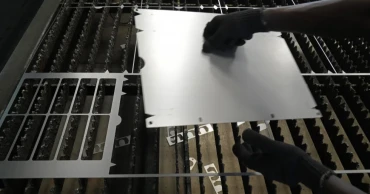
India’s plans to double steel production by the end of the decade could jeopardize its national climate goals and a key global target to reduce planet-heating gas emissions from the steel industry, according to a report released Tuesday.
The report by Global Energy Monitor, an organization that tracks energy projects around the globe, said efforts to decarbonize steelmaking are gaining traction around the world. However, in India, which is the world's second largest steel-producing nation, overwhelming reliance on coal-based technologies presents a big challenge.
“India is now the bellwether of global steel decarbonization,” said Astrid Grigsby-Schulte, project manager of the Global Iron and Steel Tracker at GEM and report co-author. “If the country does not increase its plans for green steel production, the entire sector will miss an important milestone. So goes India, so goes the world.”
Currently, up to 12% of India’s greenhouse gas emissions, which go into the atmosphere and heat the planet, come from steelmaking. That number could double in five years if steel is produced in line with the government’s plans, according to the report.
At the same time, India wants to produce 500 gigawatts of clean power — enough to power nearly 300 million Indian homes — by the end of this decade. The South Asian nation recently crossed the milestone of installing 100 gigawatts of solar power, most of which was installed in the last 10 years.
Qatar Airways reports earning a $2.15 billion profit in its last fiscal year, a record for carrier
By 2070, India also aims to go net zero, that is, it will either eliminate all carbon dioxide pollution it emits or cancel it out by using other methods, such as planting trees that absorb carbon.
Steel production is one of the most carbon polluting industries, responsible for nearly 9% of global greenhouse gas emissions. The International Energy Agency has set a target for 37% of global steelmaking capacity to rely on lower-emission electric arc furnaces by 2030. Current projections by GEM show the world reaching just 36% — a shortfall largely due to India’s coal-heavy pipeline.
India plans to expand its steel production capacity from 200 million to over 330 million tonnes per year by 2030. According to the new data, over 40% of global capacity in development — about 352 million tonnes per annum — is in India, with more than half of that using coal-based capacity.
“India is the only major steel-producing nation that has so much coal-based capacity in the pipeline,” said Henna Khadeeja, a research analyst with GEM who also worked on the report.
India’s steel sector releases approximately 2.6 tons of carbon dioxide per ton of steel, roughly 25% more than the global average. China, the world’s largest steelmaker, has managed to keep its emissions lower per ton by producing more scrap-based steel and retiring older coal-based plants.
India’s heavy dependence on coal for steelmaking is driven by a combination of factors: low-cost domestic coal, a relatively young fleet of blast furnaces that still have 20–25 years of operational life left, and a lack of natural gas and steel scrap. The country’s scrap recycling ecosystem remains informal, and high-quality iron ore is scarce.
“There is potential for India to change course,” said Khadeeja of GEM. “Much of the planned capacity is still on paper. Only 8% of it has actually broken ground. This means there is still a window to shift toward lower-emission technologies.”
Trump’s tariffs may mean Walmart shoppers pay more, his treasury chief acknowledges
The consequences of producing carbon polluting steel may go beyond climate goals. While India’s steel exports are only a small share of its overall production, they could suffer as major markets like the European Union begin enforcing carbon border taxes next year.
“India may be better off tolerating some short-term pain of technological upgrading to make its steel cleaner for long-term competitiveness gain,” said Easwaran Narassimhan of the New Delhi-based think tank Sustainable Futures Collaborative.
1 year ago
Qatar Airways reports earning a $2.15 billion profit in its last fiscal year, a record for carrier
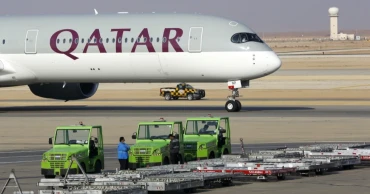
The holding company that owns Qatar Airways reported Monday it earned a $2.15 billion profit in its last fiscal year, its highest-ever profit off the back of record passenger numbers as global aviation bounces back after the coronavirus pandemic.
The state-owned carrier reported revenues of $23.4 billion overall in the results, up from $22.1 billion the year before. Its fiscal year profits in the prior reporting period were $1.6 billion.
“These record-breaking results are a testament to the hard work, skill and dedication of teams across all of Qatar Airways Group," said group CEO Badr Mohammed al-Meer in a statement.
Qatar Airways, along with Abu Dhabi-based Emirates and Dubai's Emirates, are long-haul carriers that link East-West travel. Their location on the Arabian Peninsula between Europe and Asia have made them a key link in global transit. Qatar Airways also got a boost when the small, energy-rich nation hosted soccer's 2022 FIFA World Cup.
Qatar Airways reported carrying 43.1 million passengers, up from the prior financial year's 40 million. Its fleet includes over 230 aircraft, which is a mix of Airbus and Boeing long-haul and medium-range planes.
12 people injured after Qatar Airways plane hits turbulence on way to Dublin
The Qatar Airways Group includes the airline, its cargo service, the country's airport operator and Qatar Duty Free. Its financial year runs from April 1 to March 31.
The announcement follows long-haul carrier Emirates earlier this month saying that it earned annual profits of $5.2 billion, with the state-owned firm declaring itself the world’s most profitable airline.
1 year ago
Trump's tariff onslaught casts shadow over European economy, even in best case scenario
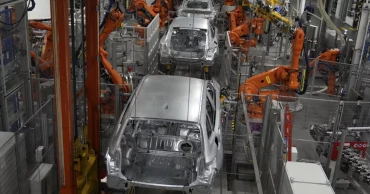
U.S. President Donald Trump's tariff offensive has led European officials to cut back their growth forecasts for this year and next — even in a best-case scenario in which the highest rates on most goods could be negotiated away.
The forecast for this year for the 20 countries that use the euro currency was cut to 0.9% from the previous forecast in November of 1.3%, the European Union's executive commission said Monday in its regular spring forecast.
The forecast for 2026 was cut to 1.4% from 1.6%.
One reason for the lower growth estimate was the stagnating economy in Germany, where growth is expected to be zero this year after two years of shrinking output. Germany's economy is heavily dependent on exports but has faced strong headwinds from higher energy costs after the loss of Russian natural gas due to the invasion of Ukraine as well from lack of pro-growth infrastructure spending and competition from China in autos and industrial machinery.
Trump’s tariffs may mean Walmart shoppers pay more, his treasury chief acknowledges
The proposal for a 20% U.S. tariff on imported goods from Europe in addition to its suspension for 90 days have meant uncertainty “not seen since the darkest days of the COVID-19 pandemic,” said Economy Commissioner Valdis Dombrovskis. He said the European economy remained “resilient” and that the jobs market remained robust, with the commission predicting a fall in unemployment to a record low 5.7% next year.
And the risks are “tilted to the downside,” he said. One reason: The forecast assumes that the proposed 20% rate can be reduced through negotiations with Washington to the base tariff rate imposed on all countries of 10%.
While the EU's top trade official, Maros Sefcovic, has spoken several times with administration officials it remains uncertain how willing Trump might be to reduce the rate.
Trump warns Walmart: Don’t raise prices due to my tariffs but do eat the costs from those taxes
The forecast assumed that 25% tariffs on steel and autos from all countries will remain in place, as would exemptions on computer chips and pharmaceuticals.
1 year ago
Trump’s tariffs may mean Walmart shoppers pay more, his treasury chief acknowledges
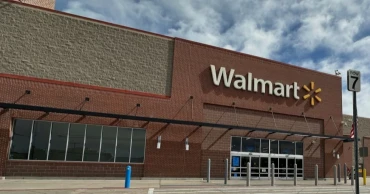
Treasury Secretary Scott Bessent admitted on Sunday that Walmart—the nation’s largest retailer—might pass some of the costs from President Donald Trump’s tariffs on to consumers by raising prices.
Bessent’s comments followed a conversation with Walmart’s CEO, which came just one day after Trump warned the company against increasing prices and pledged to closely monitor its response to the tariffs.
Trump warns Walmart: Don’t raise prices due to my tariffs but do eat the costs from those taxes
Amid ongoing skepticism about Trump’s handling of the economy, Bessent dismissed inflation concerns, defended Trump’s unpredictability as a deliberate strategy in trade negotiations, and downplayed the U.S. credit downgrade issued by Moody’s Ratings on Friday.
However, despite Trump’s insistence that Walmart and China would fully absorb the impact of the tariffs, the retailer seems unwilling to shoulder the full financial burden on its own.
Bessent said he spoke Saturday with Walmart CEO Doug McMillon, stressing in two news show interviews that what he thought really mattered for Walmart customers was the decline in gasoline prices. Gas is averaging roughly $3.18 a gallon, down from a year ago but also higher over the past week, according to AAA.
“Walmart will be absorbing some of the tariffs, some may get passed on to consumers,” Bessent said on CNN. “Overall, I would expect inflation to remain in line. But I don’t blame consumers for being skittish after what happened to them for years under Biden,” a reference to inflation hitting a four-decade high in June 2022 under then President Joe Biden as the recovery from the pandemic, government spending and the Russian invasion of Ukraine pushed up costs.
Walmart did not comment on Bessent’s description of his conversation with McMillon.
In a social media post on Saturday morning, Trump said Walmart should not charge its customers more money to offset the new tariff costs. “I’ll be watching, and so will your customers!!!” he posted.
Bessent said Walmart on its earnings call on Thursday had been obligated under federal regulations “to give the worst-case scenario so that they’re not sued,” suggesting in an NBC interview that the price increases would not be severe in his view.
But Walmart executives said last week that higher prices began to appear on their shelves in late April and accelerated this month.
“We’re wired to keep prices low, but there’s a limit to what we can bear, or any retailer for that matter,” Chief Financial Officer John David Rainey told The Associated Press on Thursday.
Share markets slump again, indices fall in Dhaka and Chattogram
Bessent maintained that the ratings downgrade was a “lagging indicator” as the financial markets had already priced in the costs of a total federal debt of roughly $36 trillion. Still, the tax plan being pushed by Trump would add more roughly $3.3 trillion to deficits over the next decade, including a $600 billion increase in 2027 alone, according to the Committee for a Responsible Federal Budget.
The treasury secretary maintained that deficits would not be a problem because the economy would grow faster than the debt accumulation, reducing its increase as a size of the overall economy.
Most independent analysts are skeptical of the administration’s claims that it can achieve 3% average growth as Trump’s 2018 tax cuts failed to do so. Those tax cuts from Trump’s first term did boost economic growth before the pandemic, but they also raised the budget deficit relative to previous estimates by the Congressional Budget Office.
On tariffs, the Trump administration is still trying to determine rates with roughly 40 major trading partners before a July deadline. It’s also in the early stages of a 90-day negotiation with China, after agreed a week ago to reset tariffs on that country from 145% to 30% so that talks can proceed.
Bessent said any worries about tariffs by small business owners most likely reflected the higher rate previously being charged on China. Still, the uncertainty has been a major drag for consumers and businesses trying to make spending plans in the weeks, months and years ahead.
“Strategic uncertainty is a negotiating tactic,” Bessent said. “So, if we were to give too much certainty to the other countries, then they would play us in the negotiations.”
Bessent appeared on NBC’s “Meet the Press” and CNN’s “State of the Union.”
1 year ago