world-business
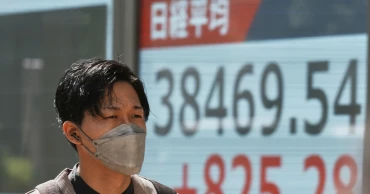
Asian shares gain after Wall Street’s rally, but hopes are tempered by trade war uncertainties
Asian markets moved higher on Tuesday after China and the United States agreed to a 90-day pause in their ongoing trade conflict. However, the momentum was limited by lingering uncertainty, as analysts cautioned that President Donald Trump’s policies could still shift unexpectedly.
In a joint announcement, both countries said they would lower tariffs — the U.S. reducing duties on Chinese imports to 30% from a peak of 145%, while China would drop its tariffs on American goods to 10% from 125%. The temporary truce allows additional time for continued negotiations following recent talks in Geneva, Switzerland, which the U.S. described as having made "substantial progress."
“The result exceeded most expectations and offered reassurance to investors,” said Stephen Innes of SPI Asset Management.
“Make no mistake, this was highly stage-managed diplomacy. But the optics are good and the implications real. It signals that even this administration recognizes the economic drag of unrelenting tariffs,” he said in a commentary.
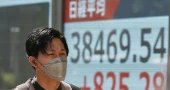
Tokyo’s Nikkei 225 jumped 1.8% to 38,326.37. Automakers were among the big gainers, with Toyota Motor Corp. up 3.7% and Suzuki Motor Corp. 4.6% higher.
Nissan Motor Co. added 3.2% after Japan’s national broadcaster NHK said it plans to lay off more than 10,000 of its workers, raising the total to 20,000, as part of its restructuring efforts. The company was due to announce its financial results for the last fiscal year later Tuesday.
The Kospi in South Korea gained 0.2% to 2,612.30.
Gold price reduced by Tk3137 per bhori, effective from Tuesday
Hong Kong’s Hang Seng, which gained 3% a day earlier after Chinese and U.S. officials announced the agreement to pause tariffs and reduce them, fell 0.7% to 23,374.06 on heavy selling of technology shares.
The Shanghai Composite index edged 0.2% higher to 3,374.93. Taiwan’s Taiex jumped 1.9%.
Australia’s S&P/ASX 200 climbed 0.6% to 8,281.40.
On Monday, the world’s two largest economies agreed to take down temporarily most of their tariffs against each other.
The S&P 500 shot up 3.3% to pull back within 5% of its all-time high set in February. It’s been roaring higher since falling nearly 20% below the mark last month on hopes that President Donald Trump will lower his tariffs after reaching trade deals with other countries.
Closing at 5,844.19, the index at the heart of many 401(k) accounts is back above where it was on April 2, Trump’s “Liberation Day,” when he announced stiff worldwide tariffs that ignited worries about a potentially self-inflicted recession.
The Dow Jones Industrial Average jumped 1,160 points, or 2.8%, to 42,410.10. The Nasdaq composite surged 4.3% to 18,708.34.
A global economy less burdened by tariffs will likely burn more fuel, so the agreement to scale back tariffs by more than what many investors expected also boosted oil prices. But early Tuesday, they fell back. U.S. benchmark crude oil lost 6 cents to $61.89 per barrel. Brent crude, the international standard, shed 8 cents to $64.88 per barrel.
The value of the U.S. dollar strengthened against everything from the euro to the Japanese yen to the Swiss franc. And Treasury yields jumped on expectations that the Federal Reserve won’t have to cut interest rates as deeply this year as earlier expected.
Early Tuesday, the dollar was trading at 147.98 Japanese yen, down from 148.47 yen. But it gained against the euro, climbing to $1.1101 from $1.088.
The move announced Monday could add 0.4 percentage points to the U.S. economy’s growth this year, according to Jonathan Pingle, U.S. chief economist at UBS. The U.S. economy shrank at a 0.3% annual rate in the first three months of the year.
1 year ago

US touts ‘substantial progress’ in tariff talks with China, but details are still scarce
The lead U.S. negotiator in the trade discussions with China praised the progress made over two days of meetings in Switzerland, noting "a great deal of productivity" in addressing ongoing disputes between the world's two largest economies. The talks followed a recent escalation in tensions after President Donald Trump imposed heavy tariffs on Chinese goods, prompting retaliatory measures from Beijing.
U.S. Treasury Secretary Scott Bessent described the weekend negotiations as making “substantial progress,” though he provided few specifics about the discussions. He indicated that more details would be shared during a scheduled press briefing on Monday.
U.S. Trade Representative Jamieson Greer also hinted at a breakthrough, suggesting that an agreement had been reached, but he, too, declined to elaborate. Both Bessent and Greer briefly spoke to reporters outside the Swiss ambassador’s official residence in Geneva, where the meetings took place, but did not answer questions.
Greer emphasized the swift resolution of some key issues, implying that the gap between the two sides may not have been as wide as previously assumed. He underscored the Trump administration’s priority of narrowing the U.S. trade deficit with China, which hit a record $263 billion last year.
“We believe the agreement we’ve reached with our Chinese counterparts will help address that serious national concern,” Greer said.
Following the talks, the White House released a statement titled “U.S. Announces China Trade Deal in Geneva,” which reiterated quotes from Bessent and Greer but offered no additional insight into the deal’s content.
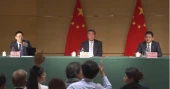
China’s delegation later held its own press conference, characterizing the discussions as “candid, in-depth and constructive.” Chinese Vice Premier He Lifeng said both parties agreed to create a consultation mechanism to support continued dialogue on trade and economic issues.
Additionally, Chinese officials confirmed that both sides would issue a joint statement on Monday, although the exact timing remained uncertain.
Bank ordinance gazette published keeping provision to take over any bank
“No matter when the statement is released, I believe it will be welcomed as good news for the international community,” said Li Chenggang, China’s ambassador to the World Trade Organization.
Trump was anxious to declare the sessions a win. Even before the final day of talks opened on Sunday, the president posed on his social media site that “GREAT PROGRESS” was being made toward what he suggested could be a “total reset” on the tariffs that have put the global economy on edge.
Beijing, however, appeared largely more measured about the negotiations’ overall direction, noting in a Saturday night editorial published before the second day of negotiations kicked off, that it would “firmly reject any proposal that compromises core principles or undermines the broader cause of global equity.”
During the Sunday evening news conference, He said “global trade wars that were provoked or initiated by the U.S. have captured global attention“ but “China’s position towards this trade war has been clear and consistent, and that is: China doesn’t want to fight a trade war, because trade wars produce no winners.”
“But if the U.S. insists on forcing this war upon us, China will not be afraid of it and will fight to the end,” the vice premier said, before adding: “We are ready to work together.”
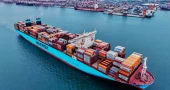
Negotiations could go a long way toward stabilizing world markets roiled by the U.S.-China standoff that has ships in port with goods from China unwilling to unload until they get final word on tariffs.
Trump last month raised U.S. tariffs on China to a combined 145%, and China retaliated by hitting American imports with a 125% levy. Tariffs that high essentially amount to the countries’ boycotting each other’s products, disrupting trade that last year topped $660 billion.
Still, top members of the Trump administration were following the president’s lead in insisting that a hard reset of U.S.-China trade relations could be in the offing.
“Secretary Bessent has made clear that one of his objectives is to de-escalate,” U.S. Commerce Secretary Howard Lutnick, who wasn’t in Geneva, said on “Fox News Sunday.” He added that the U.S. and China have both imposed tariffs that are “too high to do business, but that’s why they are talking right now.”
“We are the consumer of the world. Everybody wants to sell their goods here,” Lutnick said. So they need to do business with America and we’re using the power of our economy to open their economy to our exporters.”
Kevin Hassett, director of the White House National Economic Council, told Fox News Channel’s “Sunday Morning Futures” that “what’s going to happen in all likelihood is that relationships are going to be rebooted. It looks like the Chinese are very, very eager to play ball and to renormalize things.”
“We’re essentially starting over, starting from scratch with the Chinese,” Hassett said “and they seem to think that they really want to rebuild a relationship that’s great for both of us.”
The talks mark the first time the sides have met face-to-face to discuss the issues. The prospects for a major breakthrough still appear slight, but even a small drop in tariffs — particularly if taken simultaneously — could help restore some confidence.
1 year ago

US-China tariff talks to continue Sunday, an official tells AP, as Trump touts 'great progress made'
President Donald Trump said “great progress” was being made in ongoing U.S.-China talks over tariffs menacing the global economy, and even suggested a “total reset" was on the table as tariff negotiations are set to continue Sunday in Switzerland.
No major breakthrough was announced in discussions that lasted over 10 hours between U.S. officials, including Treasury Secretary Scott Bessent, U.S. Trade Representative Jamieson Greer, and a delegation led by Chinese Vice Premier He Lifeng. Still, Trump struck an upbeat tone.
“A very good meeting today with China, in Switzerland. Many things discussed, much agreed to. A total reset negotiated in a friendly, but constructive, manner,” the president wrote on his Truth Social platform. “We want to see, for the good of both China and the U.S., an opening up of China to American business. GREAT PROGRESS MADE!!!”
He gave no further details, and officials at the White House also offered little information during and after the opening day of discussions.
Trump's post followed an official telling The Associated Press that talks would continue Sunday. The official requested anonymity because of the sensitivity of the discussions, which could help stabilize world markets roiled by the U.S.-China standoff. They've been shrouded in secrecy, and neither side made comments to reporters as they left.
In an editorial late Saturday, China's official Xinhua News Agency said the talks had come about “at the request of the U.S. side” — noting an earlier point of contention — and said China agreed to them “after taking full account of global expectations, national interests and appeals from U.S. businesses and consumers.”
“Whether the road ahead involves negotiation or confrontation, one thing is clear: China’s determination to safeguard its development interests is unshakable, and its stance on maintaining the global economic and trade order remains unwavering,” Xinhua said.
“Talks should never be a pretext for continued coercion or extortion, and China will firmly reject any proposal that compromises core principles or undermines the broader cause of global equity,” it added.
China's exports rose a higher than expected 8% in April as new US tariffs took effect
Several convoys of black vehicles left the residence of the Swiss ambassador to the U.N. in Geneva, which hosted the talks aimed at de-escalating trade tensions between the world’s two biggest economies. Diplomats from both sides also confirmed that the talks took place.
The opening day of negotiations were held in the sumptuous 18th-century “Villa Saladin” overlooking Lake Geneva. The former estate was bequeathed to the Swiss state in 1973, according to the Geneva government.
Trump's assessment aside, prospects for a major breakthrough appeared dim when the talks opened. Still, there is hope that the two countries will scale back the massive taxes — tariffs — they have slapped on each other’s goods, a move that would relieve world financial markets and companies on both sides of the Pacific Ocean that depend on U.S.-China trade.
Trump last month raised U.S. tariffs on China to a combined 145%, and China retaliated by hitting American imports with a 125% levy. Tariffs that high essentially amount to the countries’ boycotting each other’s products, disrupting trade that last year topped $660 billion.
And even before talks got underway, Trump suggested Friday that the U.S. could lower its tariffs on China, saying in a Truth Social post that “ 80% Tariff seems right! Up to Scott.″
Sun Yun, director of the China program at the Stimson Center, noted it will be the first time He and Bessent have talked. She doubts the Geneva meeting will produce any substantive results.
“The best scenario is for the two sides to agree to de-escalate on the ... tariffs at the same time,” she said, adding even a small reduction would send a positive signal. “It cannot just be words.”
Since returning to the White House in January, Trump has aggressively used tariffs as his favorite economic weapon. He has, for example, imposed a 10% tax on imports from almost every country in the world.
But the fight with China has been the most intense. His tariffs on China include a 20% charge meant to pressure Beijing into doing more to stop the flow of the synthetic opioid fentanyl into the United States.
The remaining 125% involve a dispute that dates back to Trump’s first term and comes atop tariffs he levied on China back then, which means the total tariffs on some Chinese goods can exceed 145%.
During Trump's first term, the U.S. alleged that China uses unfair tactics to give itself an edge in advanced technologies such as quantum computing and driverless cars. These include forcing U.S. and other foreign companies to hand over trade secrets in exchange for access to the Chinese market; using government money to subsidize domestic tech firms; and outright theft of sensitive technologies.
Those issues were never fully resolved. After nearly two years of negotiation, the United States and China reached a so-called Phase One agreement in January 2020. The U.S. agreed then not to go ahead with even higher tariffs on China, and Beijing agreed to buy more American products. The tough issues — such as China’s subsidies — were left for future negotiations.
But China didn’t come through with the promised purchases, partly because COVID-19 disrupted global commerce just after the Phase One truce was announced.
The fight over China's tech policy now resumes.
Trump is also agitated by America's massive trade deficit with China, which came to $263 billion last year.
Trump slaps hefty tariffs on Switzerland
Tariffs, oil prices and other uncertainties weighing down Mideast economies, IMF says
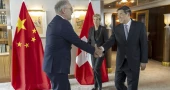
In Switzerland Friday, Bessent and Greer also met with Swiss President Karin Keller-Sutter.
Trump last month suspended plans to slap hefty 31% tariffs on Swiss goods -- more than the 20% levies he plastered on exports from European Union. For now, he has reduced those taxes to 10% but could raise them again.
The government in Bern is taking a cautious approach. But it has warned of the impact on crucial Swiss industries like watches, coffee capsules, cheese and chocolate.
“An increase in trade tensions is not in Switzerland’s interests. Countermeasures against U.S. tariff increases would entail costs for the Swiss economy, in particular by making imports from the USA more expensive,” the government said last week, adding that the executive branch “is therefore not planning to impose any countermeasures at the present time.”
The government said Swiss exports to the United States on Saturday were subject to an additional 10% tariff, and another 21% beginning Wednesday.
The United States is Switzerland’s second-biggest trading partner after the EU – the 27-member-country bloc that nearly surrounds the wealthy Alpine country of more than 9 million. U.S.-Swiss trade in goods and services has quadrupled over the last two decades, the government said.
The Swiss government said Switzerland abolished all industrial tariffs on Jan. 1 last year, meaning that 99% of all goods from the United States can be imported into Switzerland duty-free.
1 year ago
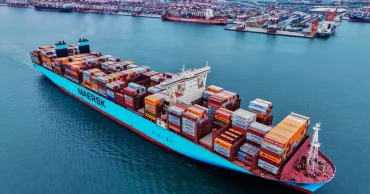
China's exports rose a higher than expected 8% in April as new US tariffs took effect
China's exports rose 8.1% in April from the year before, much more than economists were expecting, in the tail end of a rush by companies and consumers to beat higher U.S. tariffs that took effect last month.
Most forecasts were that exports in April would grow about 2%, down from a whopping 12.4% year-on-year increase in March.
Imports fell 0.2% in April from the year before.
China’s politically sensitive trade surplus with the United States was nearly $20.5 billion in April.
Exports to the United States form just a part of China's total exports, and trade with the rest of the world has remained resilient. Preliminary data also show that U.S. imports from other countries not subject to U.S. President Donald Trump's 145% tariff on Chinese products are rising quickly.
China’s exports to other countries and regions rose at a robust pace in the first four months of the year. Exports to Southeast Asian countries were up 11.5% from a year earlier. Exports to Latin America also climbed 11.5%. Shipments to India jumped nearly 16% by value, and exports to Africa surged 15%.
China launches a blitz of policies to help its economy, plans talks with the US on trade
In the first four months of the year, exports to the United States were down 2.5% from a year earlier, while imports from the U.S. fell 4.7%.
But figures for the beginning of 2025 show the tariffs and other measures related to Trump's trade war are having an impact. Measured on a monthly basis, in April China's total exports rose just 0.6% from March, while imports increased by nearly 4%.
1 year ago

Dubai International Chamber launches new representative office in Dhaka
Dubai International Chamber, one of the three chambers operating under the umbrella of Dubai Chambers, has announced the launch of a new international representative office in Dhaka to further strengthen trade and investment relations between the business communities in Dubai and Bangladesh.
The opening of the new office increases the chamber’s network of international representative offices to 35 worldwide.
This expansion is part of the ‘Dubai Global’ initiative which seeks to establish 50 international representative offices by 2030 and aims to reinforce Dubai’s position as a leading global business hub by attracting foreign direct investment and supporting the international expansion of local companies into 30 priority markets across the globe.
The new office was officially inaugurated during a ceremony in Dhaka which was attended by Abdulla Ali Abdulla Alhmoudi, ambassador of the United Arab Emirates (UAE) to Bangladesh, together with a significant gathering of representatives from the Bangladeshi business community.
Lutfey Siddiqi, the chief adviser's special envoy for International affairs was present in the opening ceremony as the Chief Guest.
Top global port operators tapped to boost Bangladesh’s infrastructure: BIDA chief
The launch comes at a time of growing economic cooperation between Dubai and Bangladesh.
Non-oil trade between the two markets reached a value of $ 1.71 billion in 2024, representing a year-over-year growth of nine percent compared to the $ 1.58 billion recorded in 2023.
Commenting on the opening, Mohammad Ali Rashed Lootah, president and CEO of Dubai Chambers, said, “Bangladesh is a dynamic and fast-growing market that offers significant opportunities for Dubai-based companies. The launch of our new office in Dhaka represents a major step forward in strengthening the economic partnership between our markets that will play a key role in building connections between businesses, facilitating trade relations, and attracting investment – all of which contribute to consolidating Dubai’s position as a leading global business hub. We are confident that this office will open up new horizons for fruitful economic cooperation.”
1 year ago
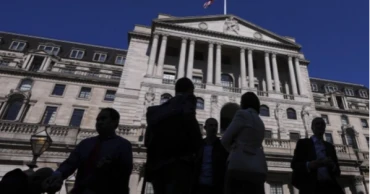
The Bank of England is expected to cut interest rates in the face of US tariffs threat
The Bank of England is widely expected to look past near-term inflationary pressures in the British economy and opt to cut interest rates on Thursday as a result of the potential shock to growth emanating from the tariff policies of the Trump administration.
Most economists believe it's a near-certainty that the nine-member Monetary Policy Committee will sanction a quarter-point reduction in the bank's main interest rate, to 4.25%. The decision is to be announced at 12:02 p.m., two minutes later than usual as a result of the two-minute silence for Victory in Europe Day. There's some speculation that some members may opt for an even bigger half-point cut.
Economists are going to be particularly interested in the bank's accompanying economic forecasts as they will be the first since U.S. President Donald Trump made his tariff announcement in early April. Though most tariffs were paused for 90 days following the ensuing market turmoil, including the 10% baseline tariff applied to U.K. goods entering the United States, the backdrop for the global economy remain highly uncertains.
Stocks rebound sharply after 150-point plunge in previous session
“With U.S. trade policy presenting a new demand shock, there have been early signs that the MPC is willing to adopt a more proactive approach to loosening policy,” said Edward Allenby, U.K. economist at Oxford Economics.
The forecasts, particularly those regarding growth and inflation, will provide a steer as to whether a more proactive approach is likely. Since it started cutting interest rates in August 2024 from the 16-year high of 5.25%, the MPC has been consistent in lowering borrowing costs every three months.
The imposition of U.S. tariffs on British goods, and the potential for a wider global trade war, has the potential to weigh on growth as well as oil prices, which would consequently depress price pressures by lowering demand.
Though U.K inflation stands at 2.6% and could well hit double the bank’s target rate of 2% in coming months as a result of a raft of price increases in April, such as domestic energy and water bills, economists think rate-setters will opt for a cut, given the anticipated slowdown.
Unlike the Bank of England, and the European Central Bank, which last month cut interest rates too, the U.S. Federal Reserve kept rates unchanged Wednesday as its policymakers wait to see how Trump’s tariffs affect the U.S. economy before making any moves.
Inflation rates around the world are way down from levels seen a couple of years ago, partly because central banks dramatically increased borrowing costs from the near zero rates during the coronavirus pandemic. Prices then began to shoot up, first as a result of supply chain issues and later because of Russia’s full-scale invasion of Ukraine, which pushed energy costs higher.
As inflation rates have declined from multidecade highs, central banks, including the Fed, have started cutting interest rates, though few, if any, economists think that rates will fall back to the super-low levels that persisted in the years after the global financial crisis of 2008-2009 and during the pandemic.
1 year ago

Foxconn-backed Foxtron to build EVs for Mitsubishi Motors
Foxtron, an automaker partly owned by Taiwan iPhone manufacturer Hon Hai Technology Group, and Mitsubishi Motors of Japan said Wednesday they have agreed to develop an electric vehicle to be sold in Australia and New Zealand.
Hon Hai, also known as Foxconn, is one of a growing number of technology companies that are leveraging their knowhow in electronics and communications to try to break into the EV market, snapping up links in the automotive supply chain, according to an AP report.
Foxtron is a joint venture between Hon Hai and Taiwan's Yulon Motor Co Yulon makes Nissan vehicles under license.
There was speculation earlier this year, when talks on a possible merger between Nissan and Honda Motor Corp. fell through, that Hon Hai might make a bid for Mitsubishi’s alliance partner Nissan Motor Co.
The two companies said Wednesday that the EV developed by Foxtron will be produced by Yulon and introduced in Oceania in the second half of 2026.
Foxtron and Mitsubishi Motors gave no financial details and said their memorandum of understanding would be followed by further talks.
Japanese automakers like Mitsubishi have been stepping up efforts to compete in the EV segment as they contend with intense competition from their Chinese rivals.
China launches a blitz of policies to help its economy, plans talks with the US on trade
Mitsubishi has set a target for having all of its product lineup be EVs or hybrids by 2035.
Foxtron showcased its Model B, a sleek EV hatchback, and its automotive electronics at the Consumer Electronics Show in Las Vegas in January.
Foxconn lists 11 vehicle models on its website, including its Model T bus, Model V pickup truck, Model N van, its Model B, and its “luxury flagship” Model E sedan.
1 year ago
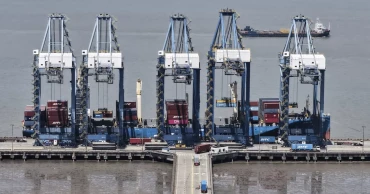
China launches a blitz of policies to help its economy, plans talks with the US on trade
China has announced a barrage of measures meant to counter the blow to its economy from U.S. President Donald Trump ’s trade war, as the two sides prepare for talks later this week.
Beijing's central bank governor and other top financial officials outlined plans to cut interest rates and reduce bank reserve requirements to help free up more funding for lending. They also said the government would increase the amount of money available for factory upgrades and other innovation and for elder care and other service businesses.
High tariffs imposed by Trump have begun to take a toll on China’s export-dependent economy, which was already under pressure from a prolonged downturn in the property sector.
Late Tuesday, China and the U.S. announced plans for talks between Treasury Secretary Scott Bessent, U.S. Trade Representative Jamieson Greer and Chinese Vice Premier He Lifeng later this week in Geneva, Switzerland.
The agreement to talk comes at a time when both sides have remained adamant, at least in public, about not compromising on the tariffs. The talks “could be the pivot point that either locks in fragile confidence or re-ignites the ‘trade war’ inferno,” Stephen Innes of SPI Asset Management said in a report.
Both the U.S. and Chinese economies have been showing signs of strain, after a spurt of activity as companies and consumers rushed to beat tariff increases.
The U.S. economy contracted by 0.3% in January-March. The Chinese economy grew at a 5.4% annual pact in the first quarter of the year, as factories ramped up production to fill a spike in orders. But economists question the validity of the statistics, and more recent reports show a deterioration in new export orders and business sentiment.
Among the support announced by China on Wednesday:
First automated driving zone in China aims to demonstrate ‘vehicle-road coordination’
People's Bank of China Gov. Pan Gongsheng said China's reverse repo rate, the rate on commercial banks’ deposits with the central bank, was reduced to 1.4% from 1.5%.
The PBOC's lending rate to commercial banks was cut by 0.25 percentage points to 1.5%.
The required reserve ratio, or portion of funds banks must hold in their reserves, was cut by 0.5%. Pan said that would free up 1 trillion yuan ($137.6 billion) in extra cash.
The central bank also reduced interest rates on five-year housing loans.
Financial markets have been reeling as the world's two largest economies remained embroiled in a standoff over Trump's tariffs of as high as 145% on imports of most Chinese products. China has retaliated with tariff hikes of up to 125% on U.S. goods and stopped buying most American farm products.
The news of the extra boost for the economy and markets, plus the plans for China-U.S. trade talks, pushed share prices up more than 2% in Hong Kong and 0.5% in Shanghai early Wednesday. U.S. futures also advanced.
Japan China and South Korea discuss trilateral cooperation
The muted movements were to be expected, Tan Jing Yi of Mizuho Bank said in a commentary.
“We do not expect reaction to be euphoric,” Tan said. “Point being, any trade resolution would likely take a long time and in the near term, there may be some piecemeal exemptions or tariff reductions on certain goods.”
1 year ago
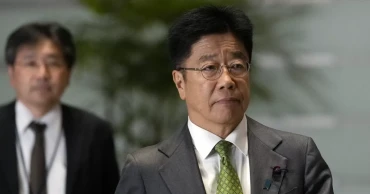
Threatened by Trump tariffs, Japan walks a delicate tightrope between US and China
As Japan’s top trade envoy headed to Washington last week for another round of negotiations on tariffs, a separate bipartisan group under the banner of “Japan-China Friendship” concluded a diplomatic visit to Beijing.
Just a week prior, the leader of Japan’s junior ruling coalition party had visited Beijing, where he delivered a letter from Prime Minister Shigeru Ishiba to Chinese President Xi Jinping. While the contents of the message remain undisclosed, the discussions reportedly touched on U.S. tariffs as well as other bilateral matters.
Amid China’s outreach to U.S. allies in its trade standoff with Washington, Japan presents a particularly distinctive case.
Its strong allegiance to the United States, paired with a complex and sometimes tense relationship with China—largely rooted in lingering historical grievances from 20th-century wartime events—make its position especially notable.
“Japan and China are neighbors and have deep economic ties, with much that links them,” said Matthew Goodman, director of the Greenberg Center for Geoeconomics at the Council on Foreign Relations. “But at the same time, there are clear boundaries to how closely Japan is willing to align with China.”
While Japan won’t walk away from its alliance with the United States, the linchpin of the Asian country’s diplomacy and security policies, “it’s also true that the tariffs and uncertainty that Trump has created for Japan is really shaking things up in Tokyo,” Goodman said.
Last month, President Donald Trump announced a 24% tariff on Japanese goods in a sweeping plan to levy duties on about 90 countries. The White House has since paused the tariffs but a 10% baseline duty on all countries except China, allowing time for negotiations. Still, Trump’s 25% tax on aluminum, steel and auto exports have gone into effect for Japan.
The tariff moves, as well as Trump’s “America First” agenda, have cast doubts among the Japanese if the United States is still a dependable ally, while China is rallying support from tariff-threatened countries — including Japan.
In Beijing, Japan sees positive signs
When Tetsuo Saito led Japan’s Komeito Party delegation to Beijing in late April, China hinted at difficulty in its tariff dispute with the United States, signaling its willingness to improve ties with Tokyo. An unnamed senior Chinese official said his country was “in trouble” when discussing Trump’s 145% tariff on Chinese products, according to Japanese reports.
Saito’s visit was soon followed by that of the bipartisan delegation of Japan-China Friendship Parliamentarians’ Union. Zhao Leji, Beijing’s top legislator, told the delegation that China’s National People’s Congress would be “willing to carry out various forms of dialogue and exchanges.”
Beijing did not lift a ban on Japan’s seafood imports as the Japanese delegates hoped, but it signaled positive signs on its assessment of the safety of the discharges of treated radioactive wastewater from the Fukushima Daiichi nuclear power plant. Beijing banned Japan’s seafood products in 2023, citing those concerns.
Ties between Tokyo and Beijing have long been rocky. In the past several years, they squabbled not only over the seafood ban but also long-standing territorial disputes over the Senkaku, or Diaoyu, islands in the East China Sea, Beijing’s growing military assertiveness and violence against Japanese nationals in China — an issue complicated by the nations’ uneasy history.
Tokyo’s closer ties with Washington during Joe Biden’s presidency also upset Beijing, which saw it as part of the U.S. strategy to contain China and has lectured Tokyo to “face squarely and reflect on the history of aggression.”
An imperial power in Asia for centuries, China fell behind Japan in the 19th century when Japan began to embrace Western industrialization and grew into a formidable economic and military power. It invaded China in the 1930s and controlled the northeastern territory known as Manchuria. War atrocities, including the Nanking Massacre and the use of chemical and biological weapons and human medical experiments in Manchuria, have left deep scars in China. They have yet to be healed, though Japan’s conservative politicians today still attempt to deny the aggression.
Ishiba, elected Japan’s prime minister in October, has a more neutral view on his country’s wartime history than the late Prime Minister Shinzo Abe and his two successors. Weeks after taking office, Ishiba held talks with Xi on the sidelines of a leaders’ summit.
Warren Buffett will remain chairman at Berkshire Hathaway when Greg Abel takes over as CEO in 2026
Chinese scholars, however, see Tokyo’s recent engagements with Beijing as a pragmatic move to hedge against U.S. protectionism and not a long-term strategy for stability with China.
The odds are low for Japan to move into China’s orbit, Goodman said. “They have for a long time had to manage an important but challenging relationship with China,” he said. “And that is, again, a long-standing problem for Japan, going back centuries or millennia.”
Seeking tariff deals and stable ties in the US
While Japan might welcome the friendlier tone from Beijing, it is trying to stabilize Japan-U.S. relations under Trump’s “America First” agenda, and it is hoping to settle the tariff dispute without confronting Washington, with an eye on preventing Beijing from exploiting any fallout in Japan-U.S. relations.
Japan was among the first countries to hold tariff talks with Washington. During the first round in mid-April, Trump inserted himself into the discussions, a sign of the high stakes for the United States to reach a deal with Japan. The Trump administration reportedly pushed for Japan to buy more U.S.-made cars and open its market to U.S. beef, rice and potatoes.
After the second round of negotiation in Washington last week, Ryosei Akazawa, the country’s chief tariff negotiator, said he pushed Japan’s request that the U.S. drop tariffs and was continuing efforts toward an agreement acceptable to both sides. He said Japan’s auto industry was already hurting from the 25% tariff and that he needed to be “thorough but fast.”
Asked about China, Akazawa said only that his country keeps watching the U.S.-China tariff development “with great interest.” He noted Japan’s deep trade ties with China.
1 year ago
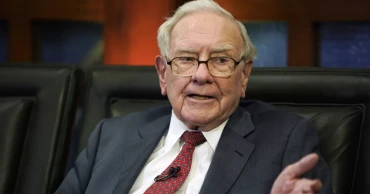
Warren Buffett will remain chairman at Berkshire Hathaway when Greg Abel takes over as CEO in 2026
Billionaire Warren Buffett will remain chairman of the board at Berkshire Hathaway when vice chairman Greg Abel takes over for Buffett as CEO at the start of 2026.
The board of directors at the cash-rich conglomerate voted Sunday to keep the legendary 94-year-old investor as head of the board, a decision likely to relieve investors worried about maintaining Berkshire’s remarkable winning streak as U.S. and global economies are beset by tariff shocks, financial turmoil and a growing risk of recession.
The board in the same meeting also approved Buffett’s chosen successor as CEO, veteran Berkshire executive Greg Abel, 62. In a surprise announcement Saturday, Buffett said he would step down from that top spot at the end of the year.
Berkshire Class B shares fell more than 5% Monday after hitting an all-time high Friday.
Macrae Sykes, portfolio manager at Gabelli Funds, praised the company's transparency after Buffett announced the succession and does not believe Buffett is going anywhere.
“I think it gives Warren a little more bandwidth instead of running this conglomerate," Sykes said in an interview with The Associated Press. "It gives Greg more transparency on the opps with also Warren still being his mentor as chairman,”
Unmatched track record of success
In six decades at the helm, Buffett turned a Massachusetts textile company into a sprawling but nimble conglomerate that owns everything from Daily Queen and See’s Candies to BNSF Railway and massive insurance companies. As the company grew, Warren's reputation grew with it as shares of Berkshire Hathaway climbed steadily, exceeding major indexes by wide margins and returning an average 19.9% each year to investors versus 10.4% for the Standard & Poor’s 500.
The decision to continue with the Oracle of Omaha, as Buffett is known, as head of the board differs from the succession plans laid out in the event of Buffett's death. The billionaire has long said that Howard Buffett, the second-born of the investor’s three children, should become chairman when he is gone to protect Berkshire's culture.
Warren Buffett shocks shareholders by announcing his intention to retire at the end of the year
Abel will take over with big questions hover overing the company, including trade wars launched by the U.S., but he has managed all of Berkshire's non-insurance businesses since 2018. Buffett says President Donald Trump’s tariffs were a big mistake. There are also worries that Berkshire might not able to avoid the fate of most conglomerates—forced to break up to recapture focus.
So much money, so few places to put it
Then there is Berkshire’s $348 billion in cash.
Buffett says he doesn’t see many bargains to invest that money in now, not even Berkshire’s own stock, but he assured some of the estimated 40,000 attendees of the company’s annual meeting in Omaha, Nebraska, over the weekend that one day the company would be “bombarded with opportunities.”
Abel, a low-key Canadian with a love a hockey, has already shown he is a more hands-on manager than Buffett, asking managers tough questions and encouraging them to collaborate with other subsidiaries when it makes sense. He will now take on oversight of the insurance businesses and responsibility for investing the company’s cash. Vice Chairman Ajit Jain, 73, will stay on for now to help manage the insurance businesses that include Geico and massive reinsurers like General Re.
Abel said Saturday that he wouldn't change the Berkshire's approach to investing, which he learned from Buffett. Maintaining Berkshire's fortress-like balance sheet will always be a priority, he said.
Eventually, Berkshire might have to consider paying a dividend, which Buffett always resisted because he believed he could deliver better returns by reinvesting the cash. For now, Buffett and Abel want to keep building cash, so they are prepared when opportunities arise.
High praise for Abel
Buffett endorsed Abel by saying he would keep all of his shares that give him control of 30% of Berkshire Hathaway and praised Abel during the shareholder meeting..
“It’s way better with Greg than with me because I didn’t want to work as hard as he works and I can get away with it because we’ve got a basically good business -- a very good business -- and I wasn’t in danger of you firing me by virtue of the ownership and the fact that we could do pretty well,” Buffett said. “But the fact that you can do pretty well doesn’t mean you couldn’t do better, and Greg can do better at many things.”
Warren Buffett offers lessons on investing in his annual Berkshire Hathaway letter
The CEOs of Berkshire subsidiaries who report to Abel have praised his management style which holds them accountable while allowing them autonomy. See's Candy CEO Pat Egan worked with Abel at Berkshire's utility unit for years before he took over six years ago and said Abel makes sure he's considered every contingency.
“He’s allowed me to make a lot of decisions that he may or may not have agreed with, but he’ll support us at the end of the day, no matter what as long as we’re operating with integrity and principles and the long game," Egan said.
Buffett's philanthropy continues
Buffett has always delegated the decisions about how to distribute his fortune, worth nearly $170 billion today, to others by giving shares annually to the Gates Foundation and four family foundations run by his children.
The Gates Foundation has received the biggest donations worth more than $40 billion since he started giving away his fortune in 2006.
He said last summer that his three children will decide how to distribute his remaining fortune after his death but that the Gates Foundation won’t get any more donations at that point.
Howard, 70, has his own foundation through which he has donated billions to humanitarian and food security causes, including helping coffee farms in El Salvador and war-torn Ukraine. Howard Buffett's foundation expects to top $1 billion in gifts to Ukraine — more than most countries — later this year.
Buffett's lasting impact on business
Tributes to Buffett came tumbling in over the weekend praising his investment savvy and folksy management style.
“There’s never been someone like Warren, and countless people, myself included, have been inspired by his wisdom,” Apple CEO Tim Cook posted on X. “It’s been one of the great privileges of my life to know him.”
JP Morgan’s CEO Jamie Dimon said Buffett represented “everything that is good about American capitalism and America itself,” and praised his “integrity, optimism and common sense.”
1 year ago